MAJ LAICY FERNANDEZ
Know the basic premises of
management theories
Understand the context for
the evolution and development
of these theories
Know place of these concepts
in nursing management
The Evolution of Management
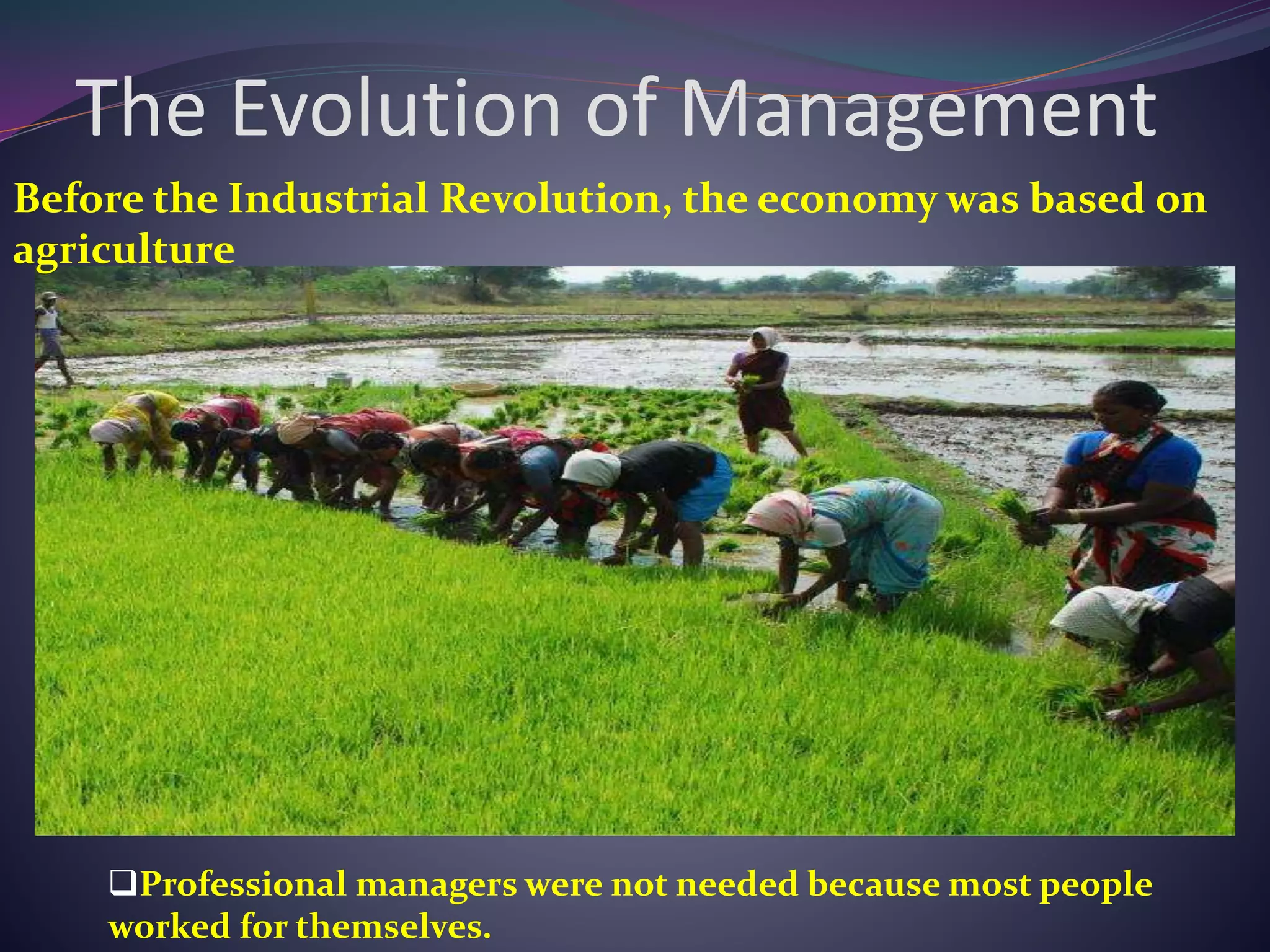
Before the Industrial Revolution, the economy was based on
agriculture
Professional managers were not needed because most people
worked for themselves.
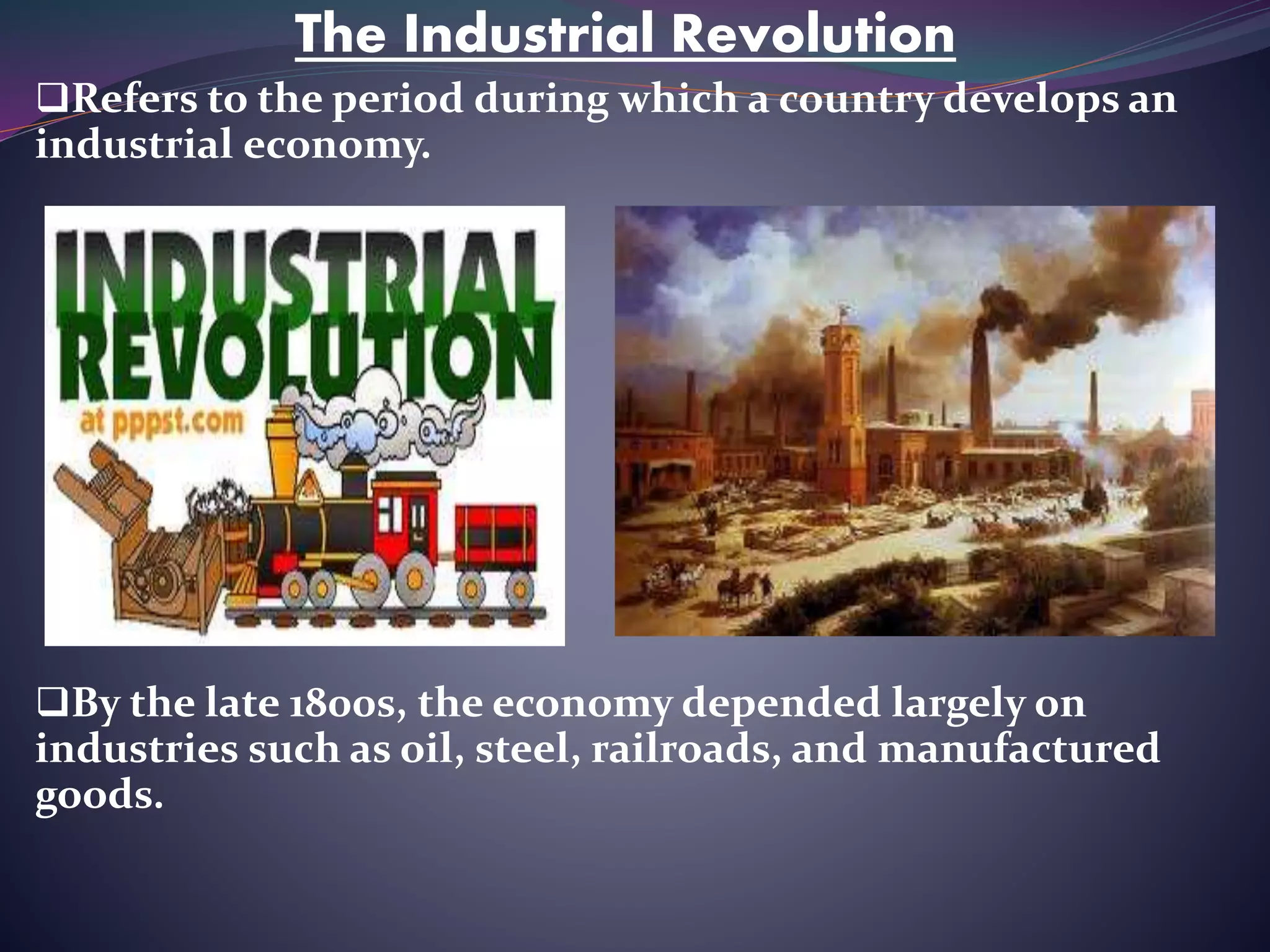
The Industrial Revolution
Refers to the period during which a country develops an
industrial economy.
By the late 1800s, the economy depended largely on
industries such as oil, steel, railroads, and manufactured
goods.
Many people left their farms to take jobs in
factories, where professional managers supervised
their work.
The new industrial enterprises that emerged in the
nineteenth century demanded management skills
that had not been necessary earlier.
The task of planning,
coordinating, motivating and
controlling the efforts of others
towards a specific objective.
-JAMES L LUNDY
A set of assumptions,
propositions, or accepted
facts that attempts to provide
a rational explanation
(The Oxford Dict)
As a process
As an activity
As an economic resource
As a team
As an academic discipline
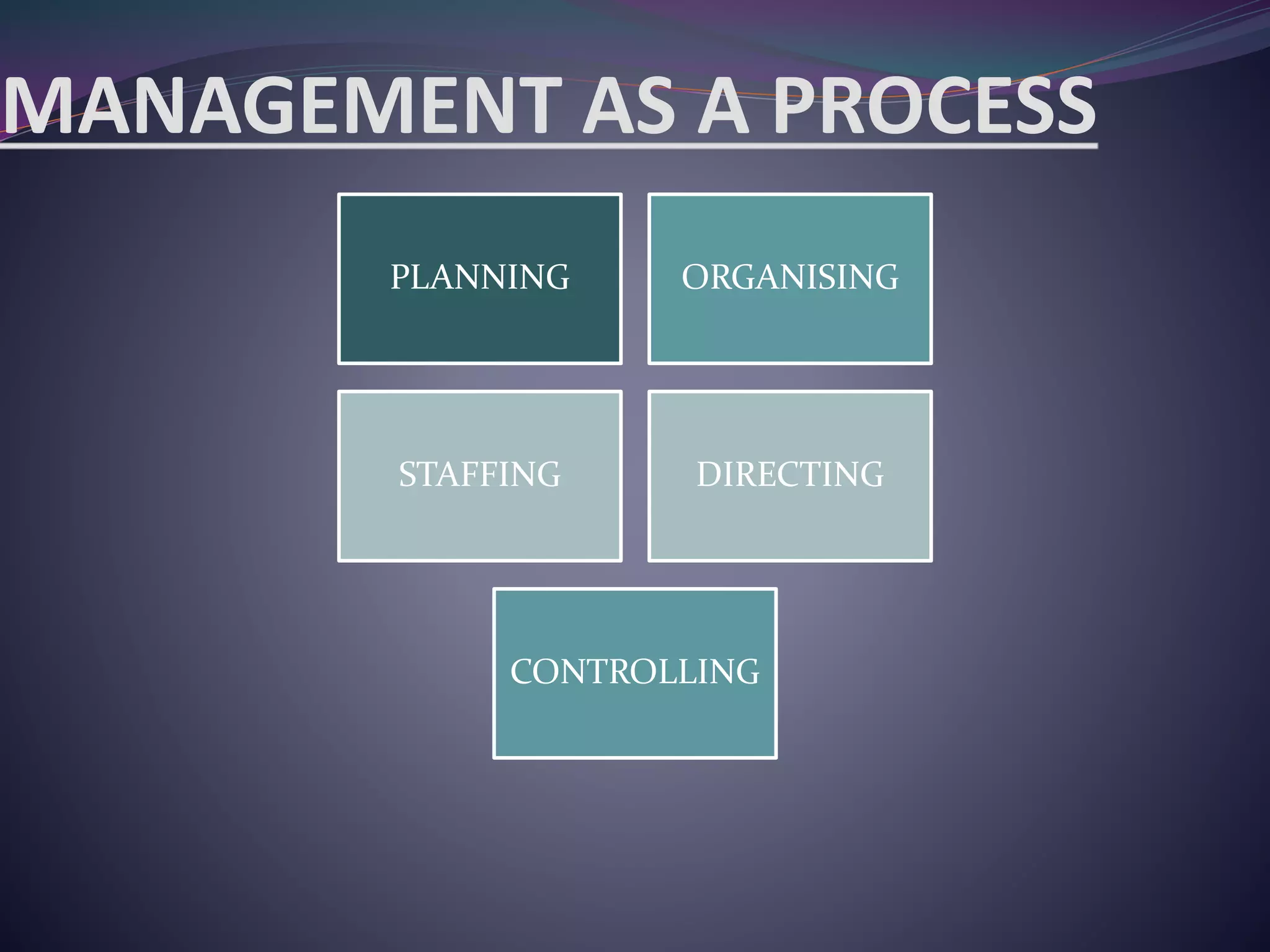
MANAGEMENT AS A PROCESS
PLANNING ORGANISING
STAFFING DIRECTING
CONTROLLING
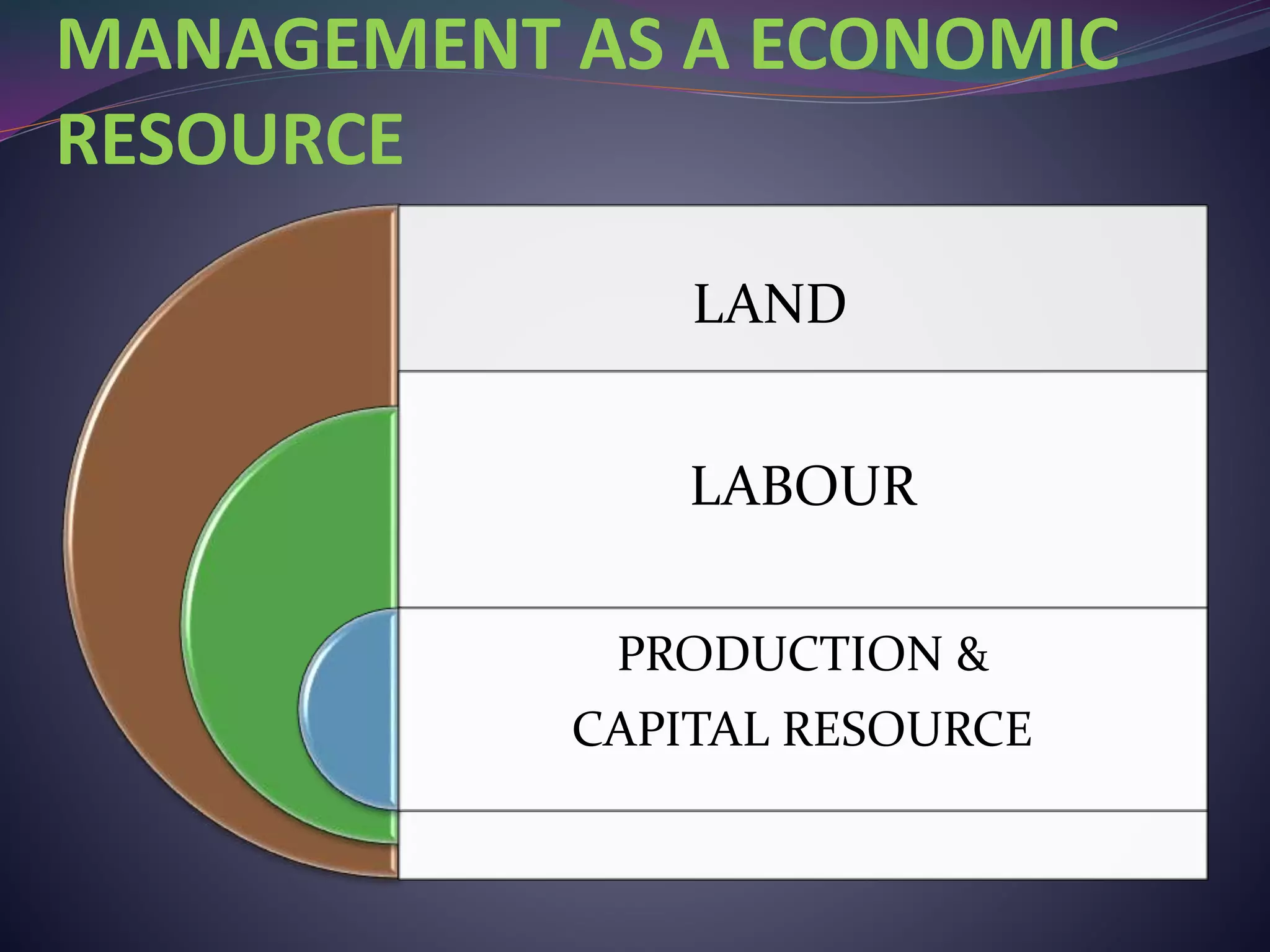
MANAGEMENT AS A ECONOMIC
RESOURCE
LAND
LABOUR
PRODUCTION &
CAPITAL RESOURCE
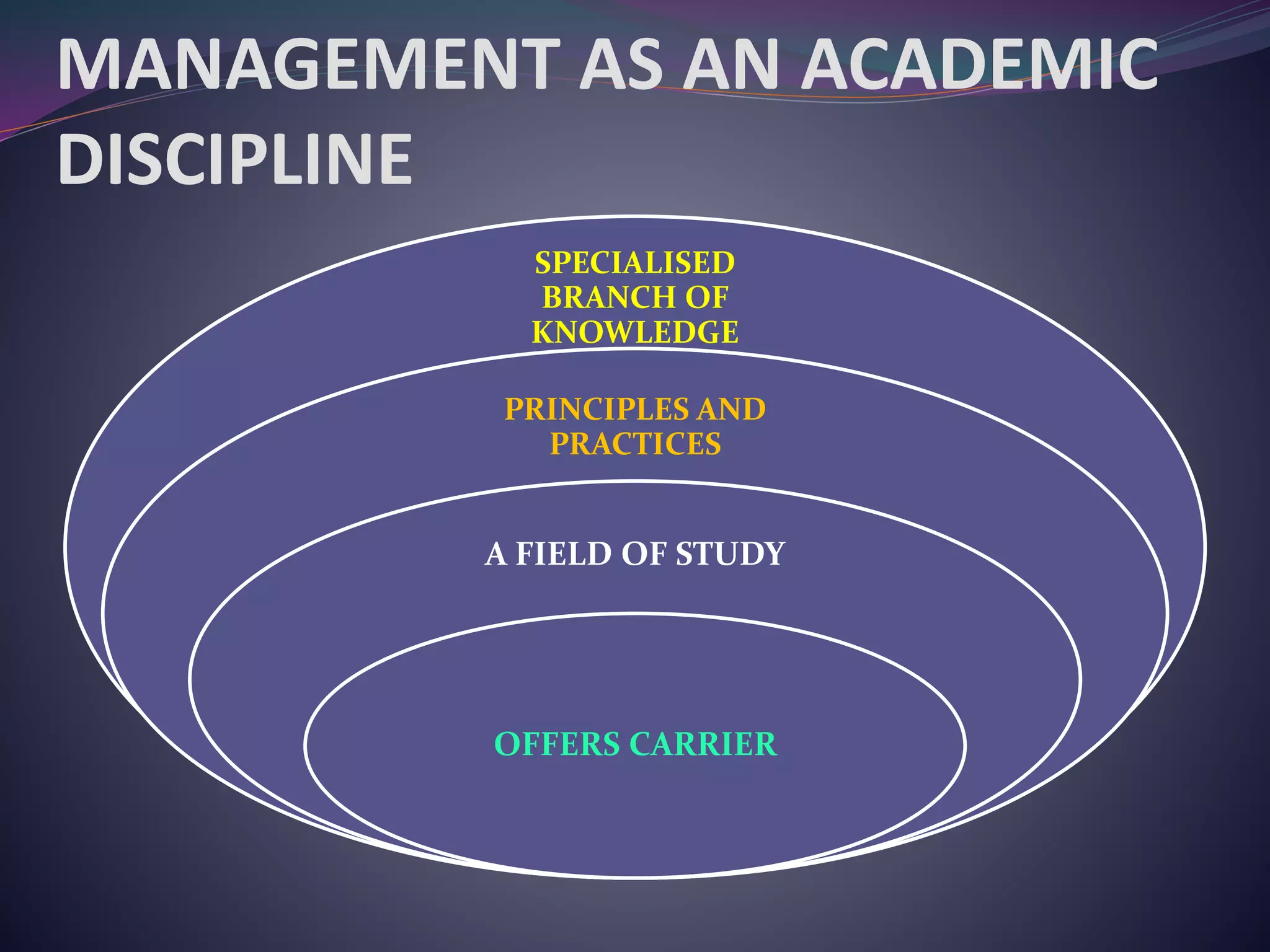
MANAGEMENT AS AN ACADEMIC
DISCIPLINE
SPECIALISED
BRANCH OF
KNOWLEDGE
PRINCIPLES AND
PRACTICES
A FIELD OF STUDY
OFFERS CARRIER
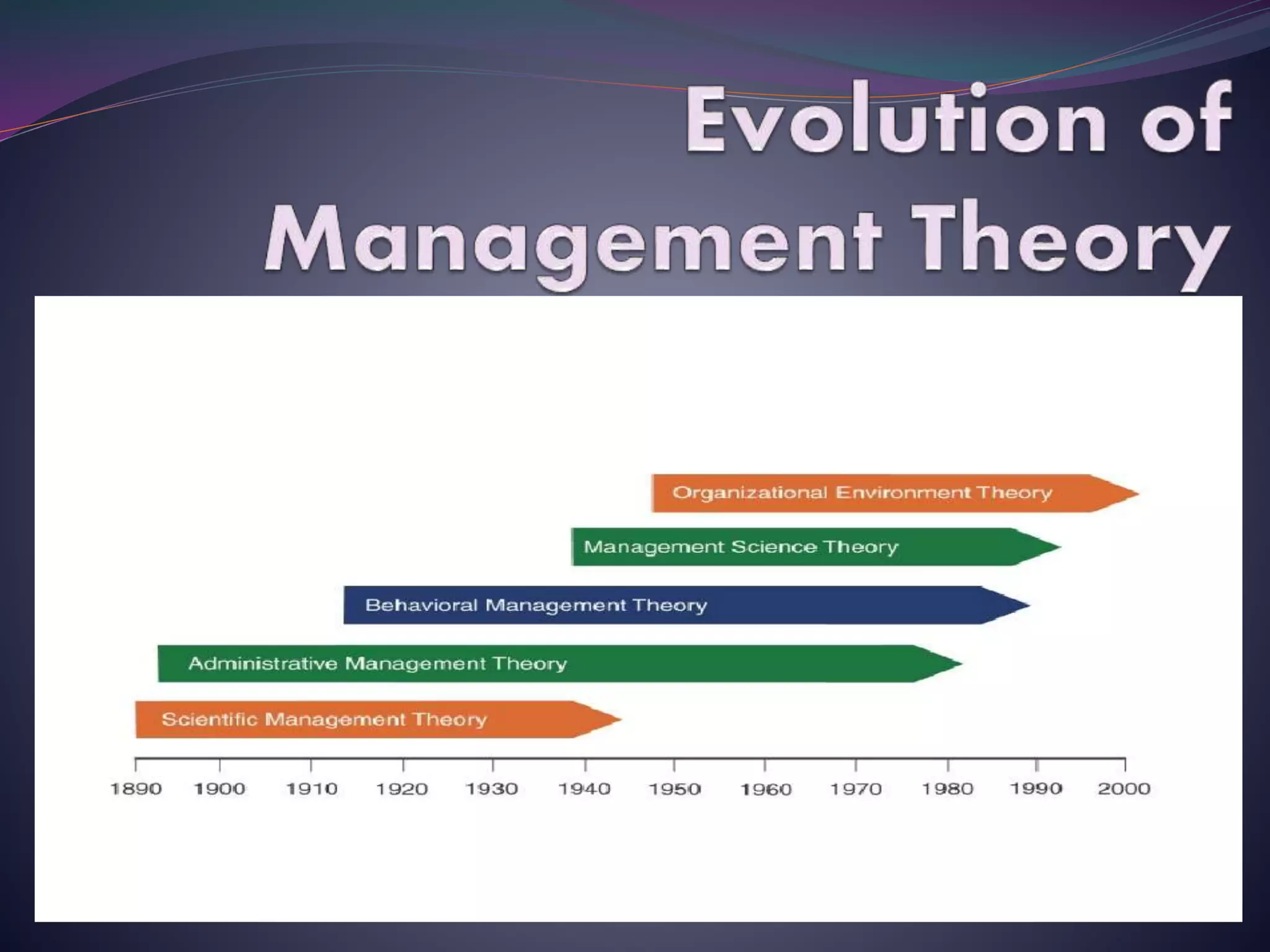
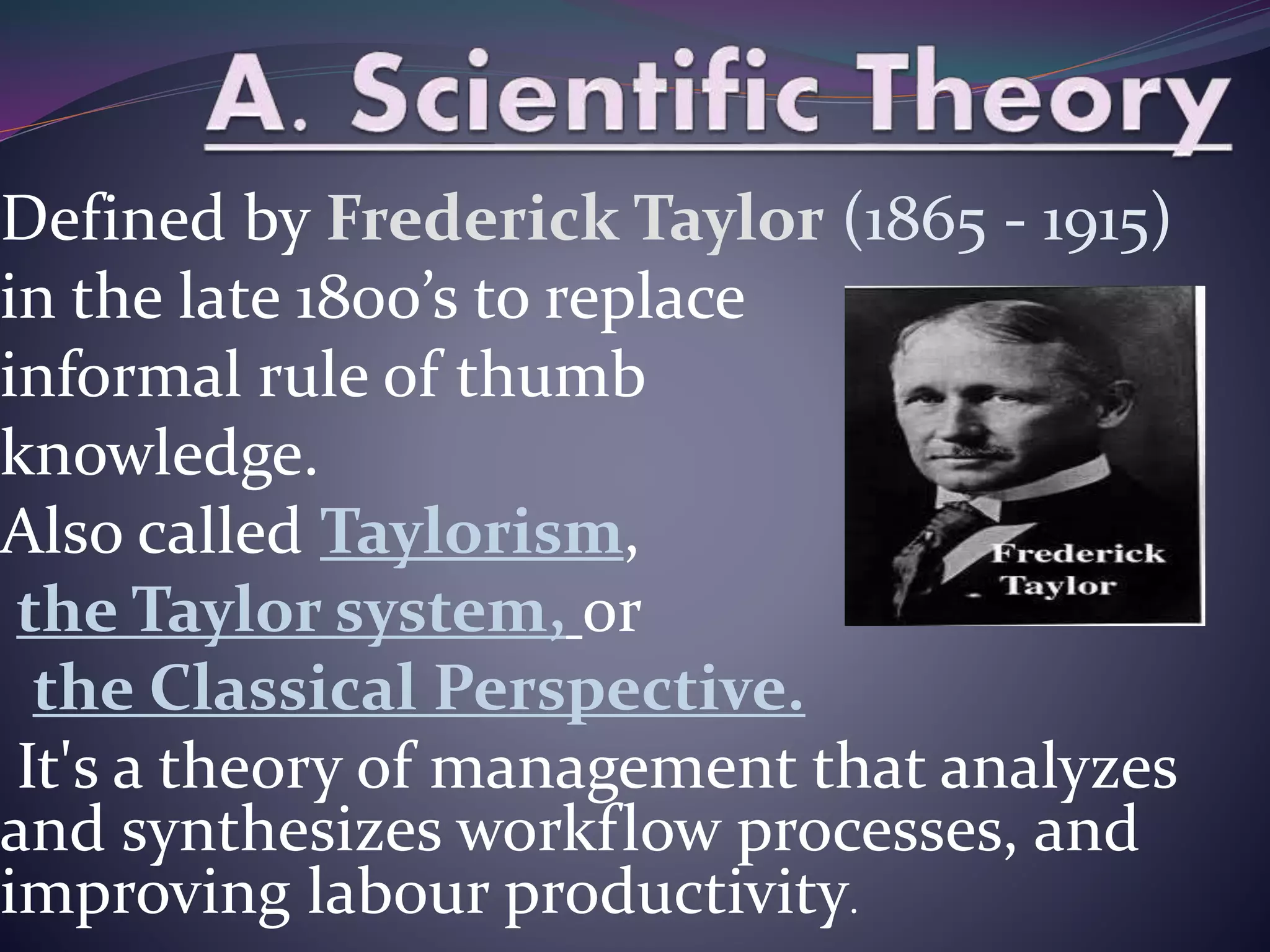
Defined by Frederick Taylor (1865 - 1915)
in the late 1800’s to replace
informal rule of thumb
knowledge.
Also called Taylorism,
the Taylor system, or
the Classical Perspective.
It's a theory of management that analyzes
and synthesizes workflow processes, and
improving labour productivity.
Jobs should be designed according to scientific rules
rather than rule-of-thumb methods.
Employees should be selected and trained according
to scientific methods. Employers should also train
employees in order to improve their performance.
The principles of scientific management should be
explained to workers.
Management and workers should be interdependent
so that they cooperate.
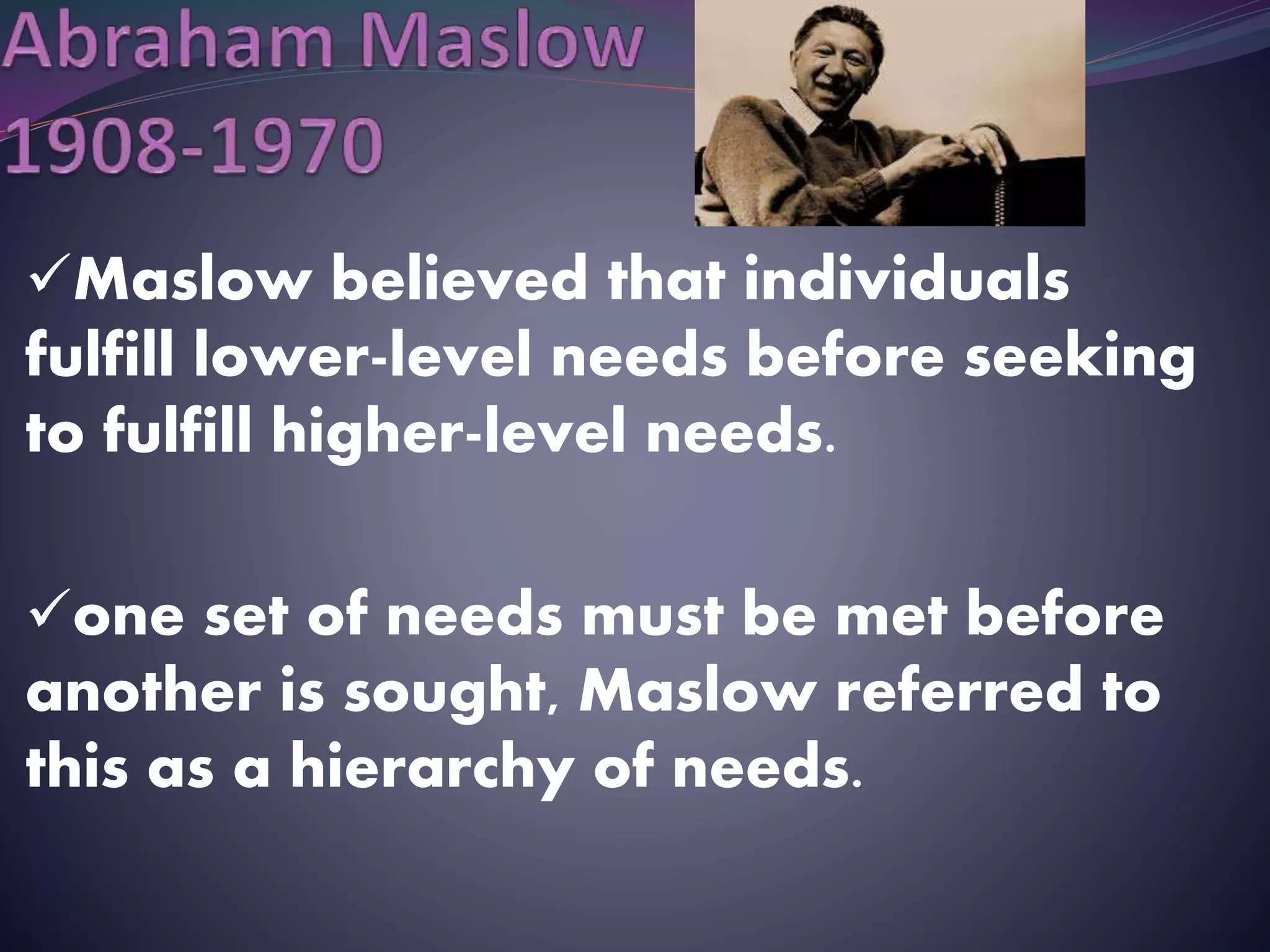
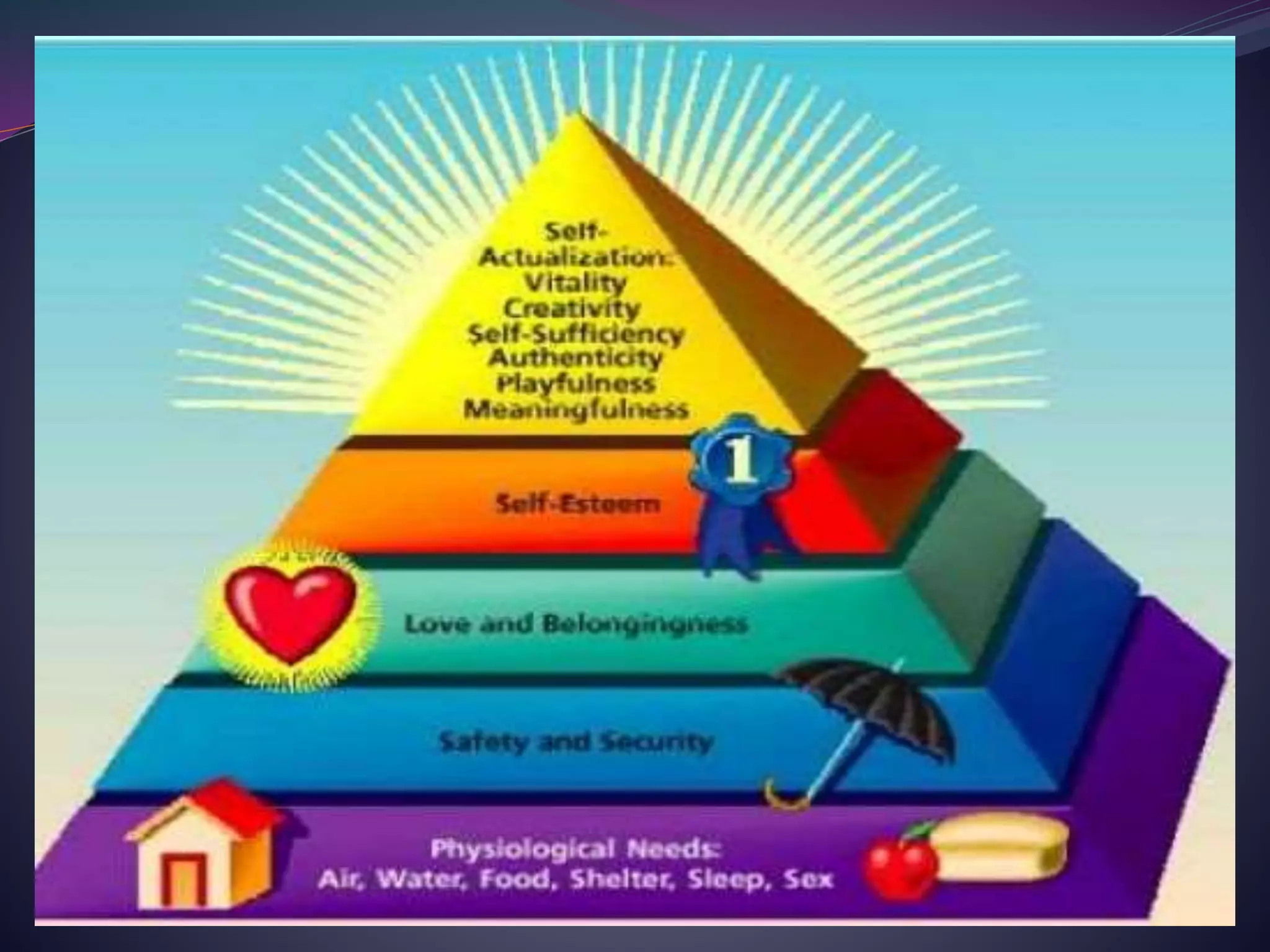
Maslow believed that individuals
fulfill lower-level needs before seeking
to fulfill higher-level needs.
one set of needs must be met before
another is sought, Maslow referred to
this as a hierarchy of needs.
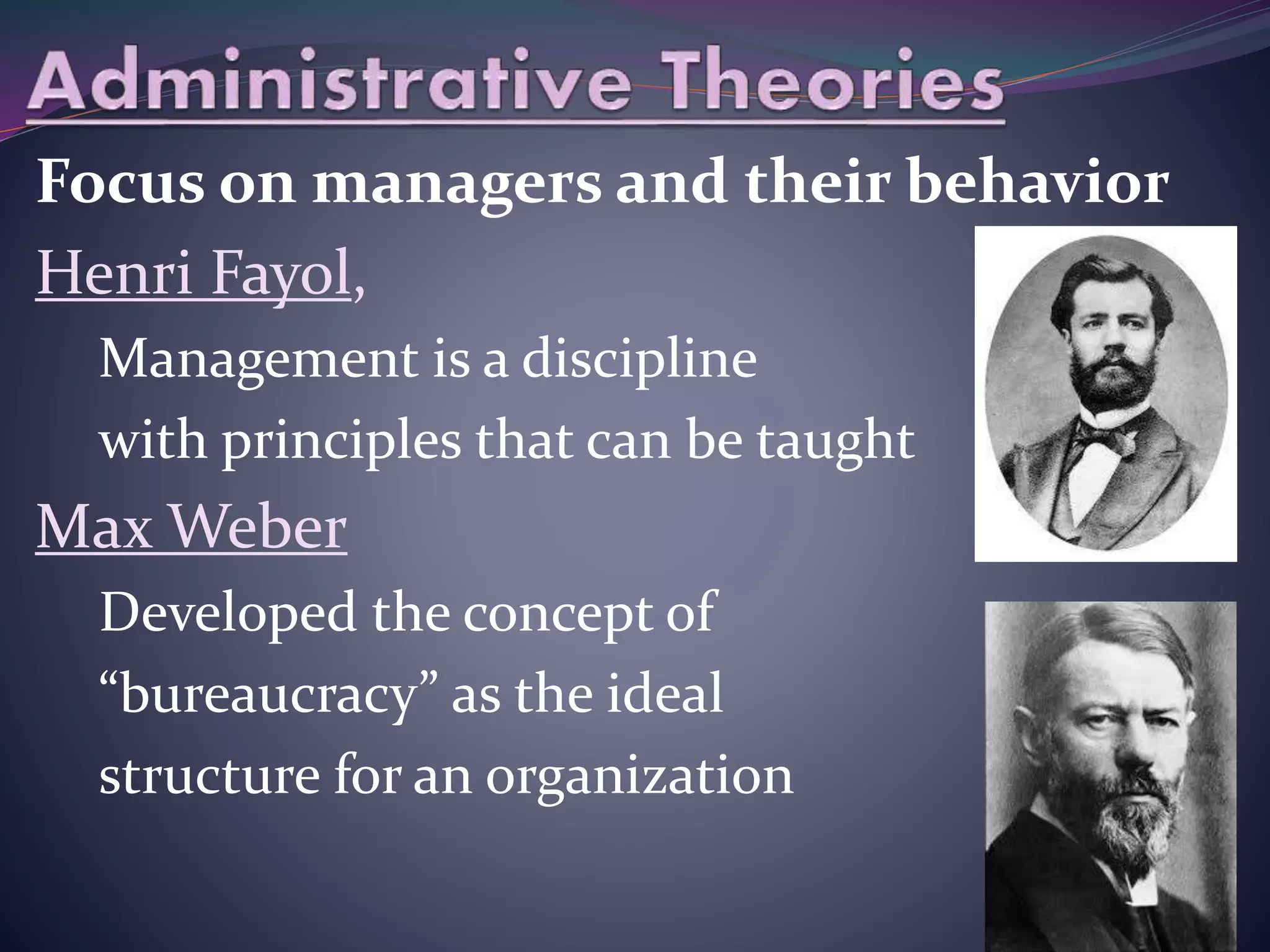
Focus on managers and their behavior
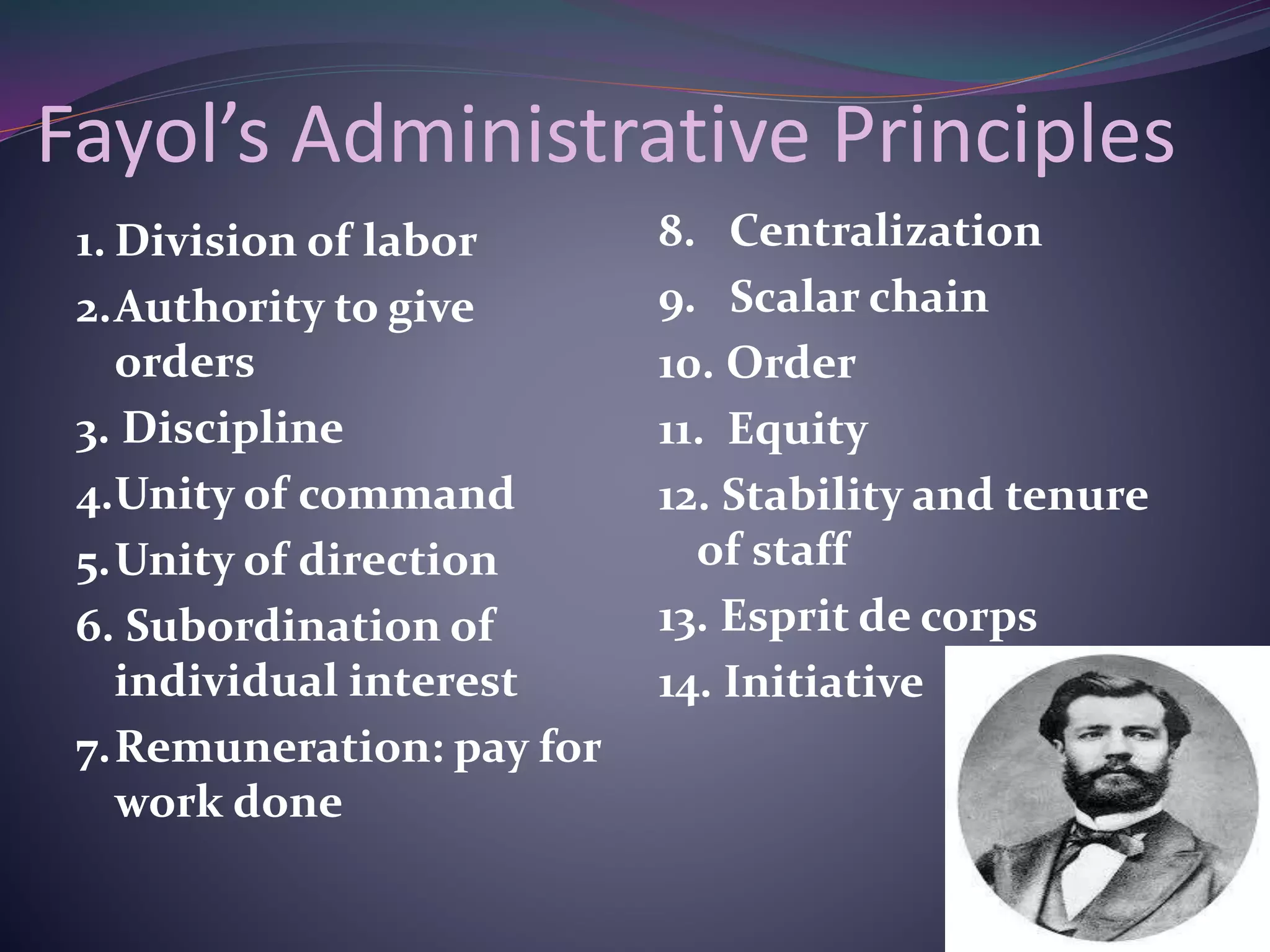
Henri Fayol,
Management is a discipline
with principles that can be taught
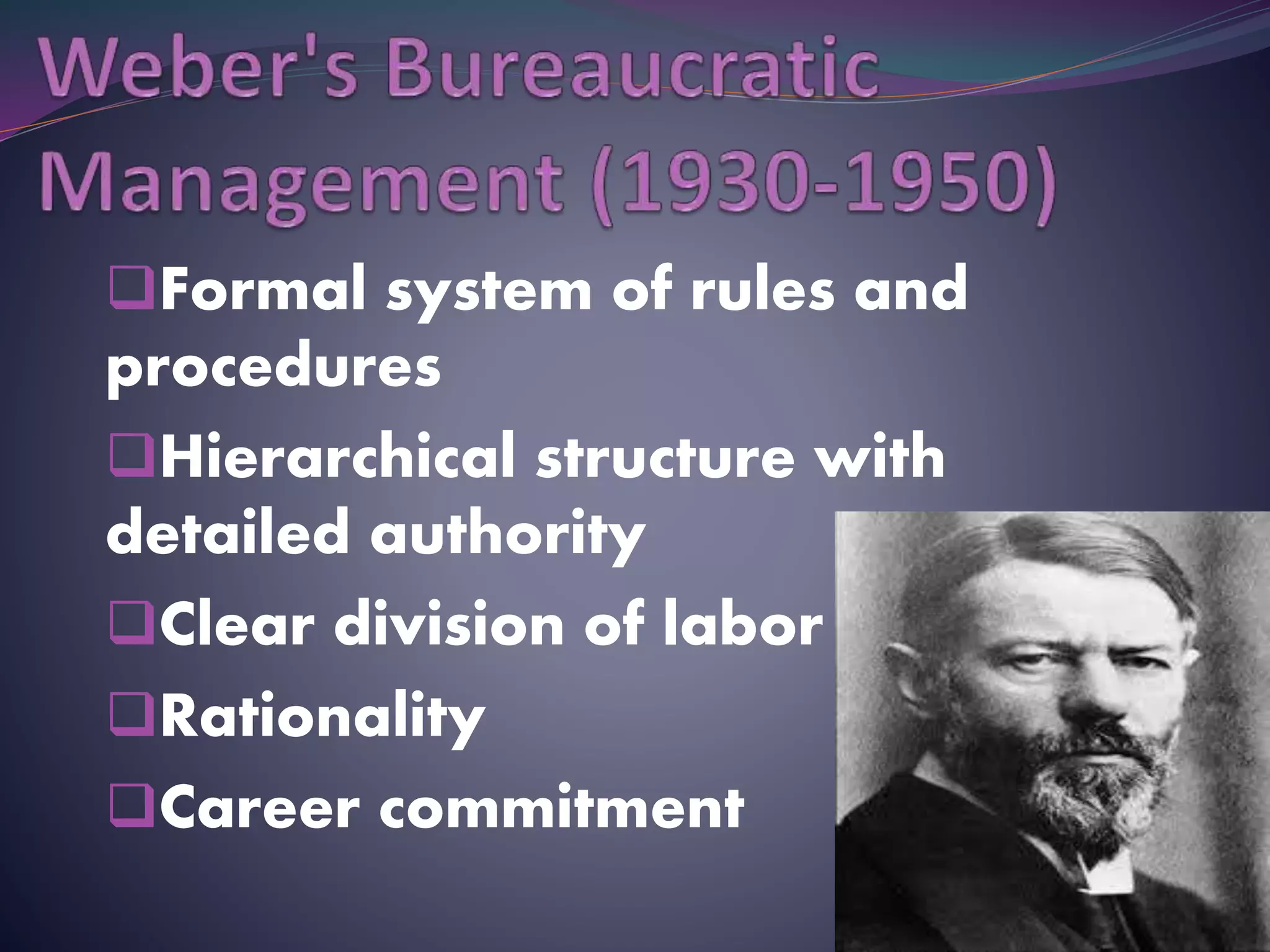
Max Weber
Developed the concept of
“bureaucracy” as the ideal
structure for an organization
Fayol’s Administrative Principles
1. Division of labor
2.Authority to give
orders
3. Discipline
4.Unity of command
5.Unity of direction
6. Subordination of
individual interest
7.Remuneration: pay for
work done
8. Centralization
9. Scalar chain
10. Order
11. Equity
12. Stability and tenure
of staff
13. Esprit de corps
14. Initiative
Formal system of rules and
procedures
Hierarchical structure with
detailed authority
Clear division of labor
Rationality
Career commitment
establishing strong lines of
authority and control.
He suggested organizations
develop comprehensive and
detailed standard operating
procedures for all routinized
tasks.
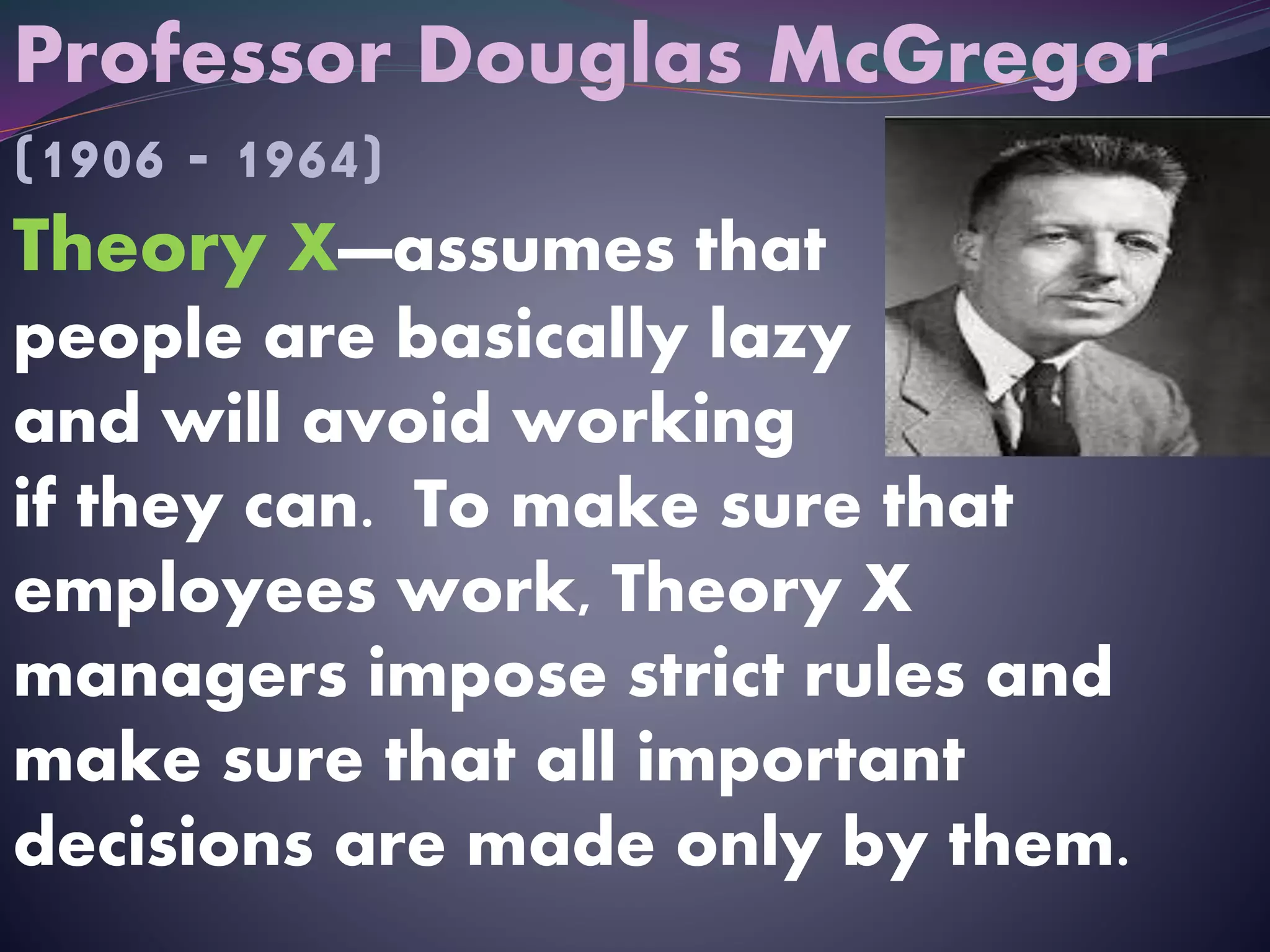
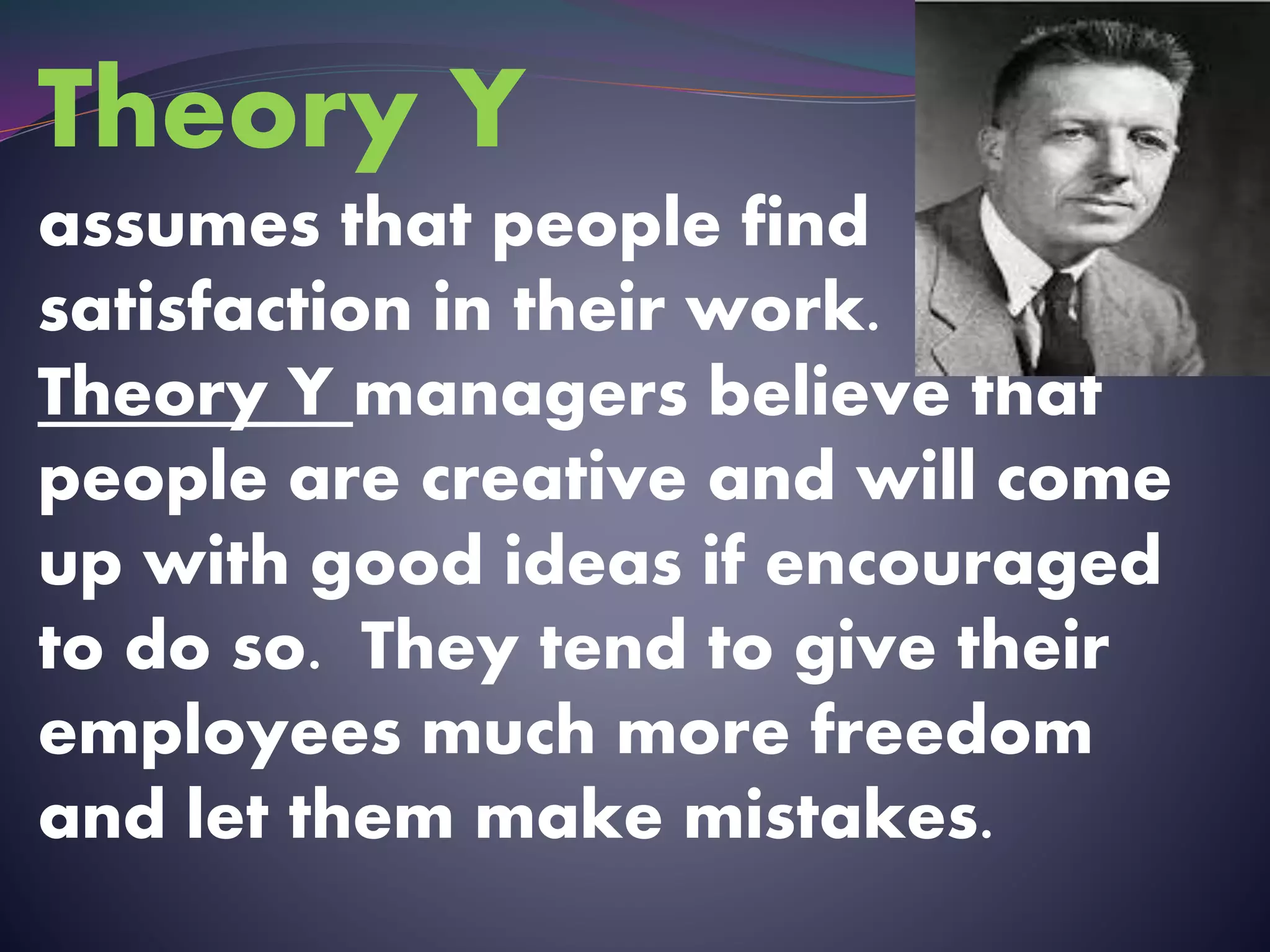
Professor Douglas McGregor
(1906 - 1964)
Theory X—assumes that
people are basically lazy
and will avoid working
if they can. To make sure that
employees work, Theory X
managers impose strict rules and
make sure that all important
decisions are made only by them.
Theory Y
assumes that people find
satisfaction in their work.
Theory Y managers believe that
people are creative and will come
up with good ideas if encouraged
to do so. They tend to give their
employees much more freedom
and let them make mistakes.
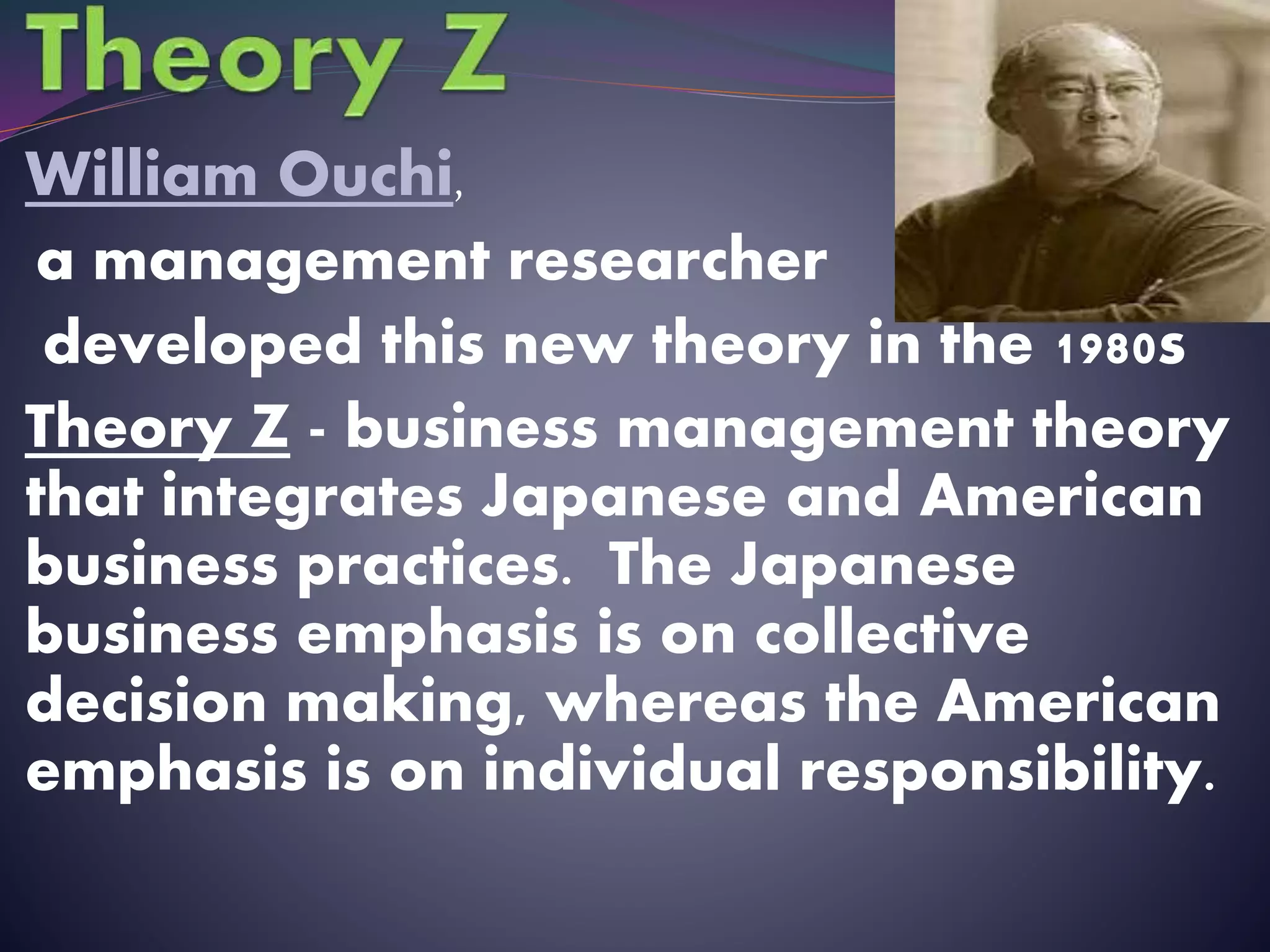
William Ouchi,
a management researcher
developed this new theory in the 1980s
Theory Z - business management theory
that integrates Japanese and American
business practices. The Japanese
business emphasis is on collective
decision making, whereas the American
emphasis is on individual responsibility.
Focuses on the human aspects of organizations
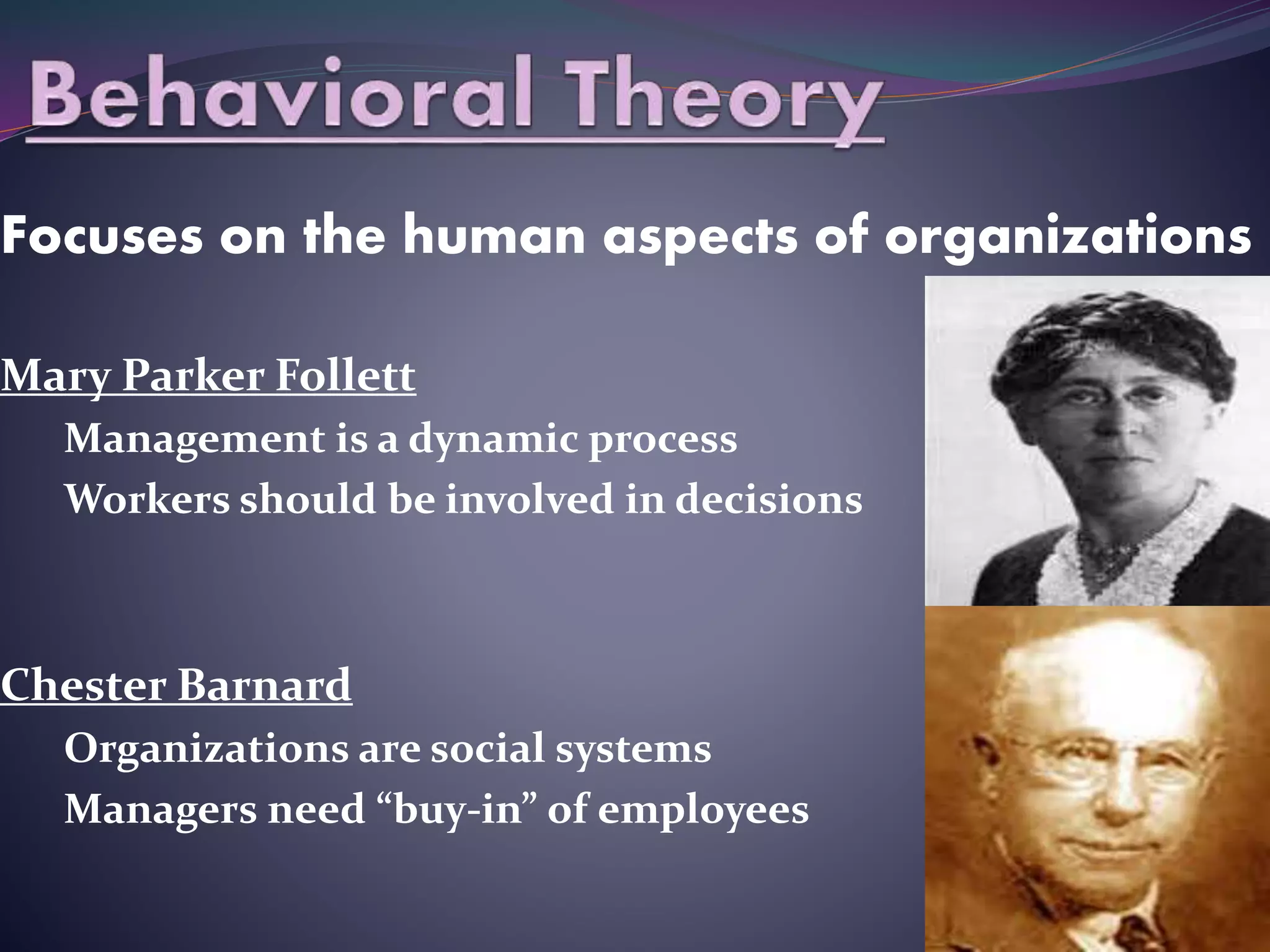
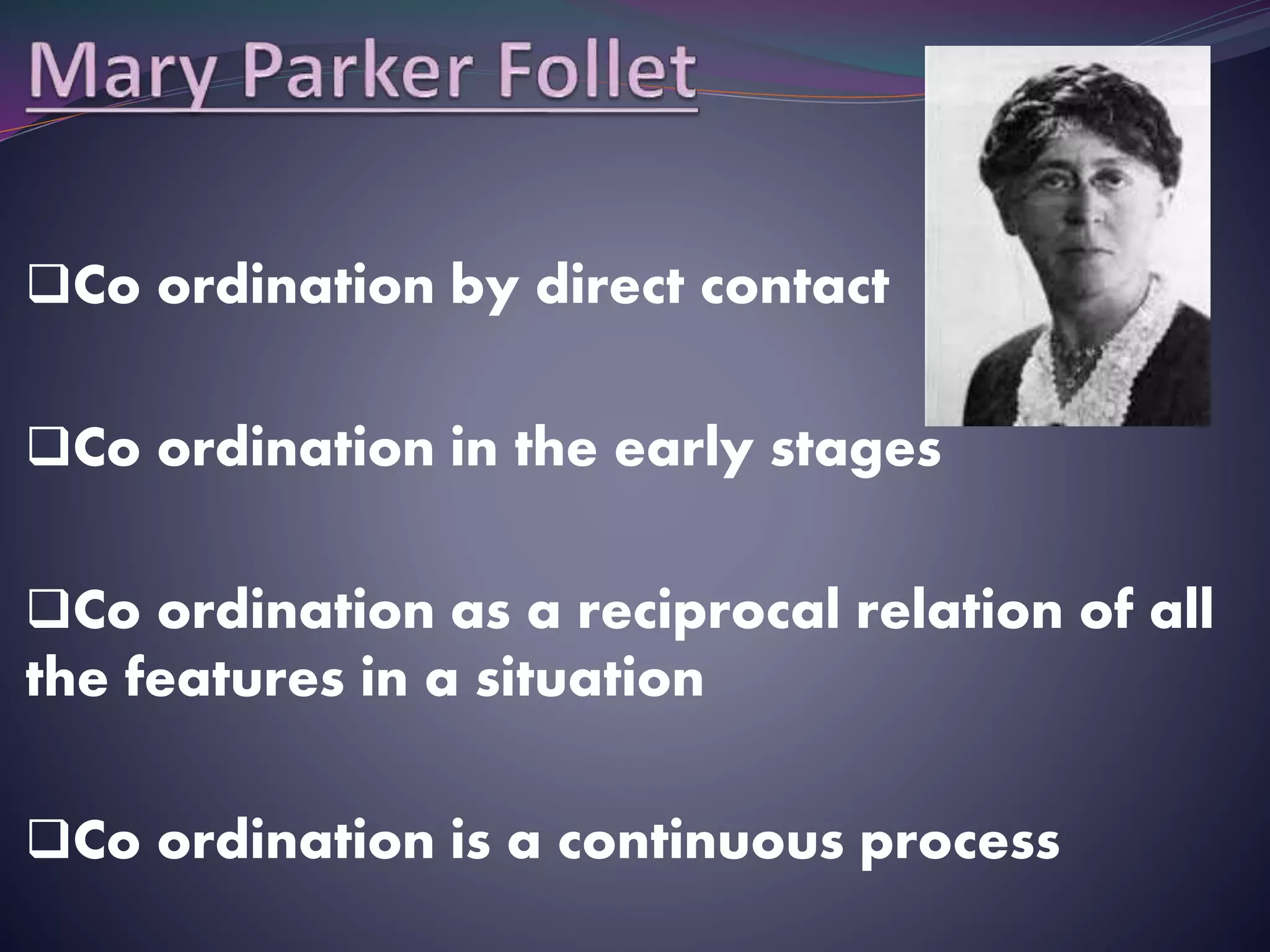
Mary Parker Follett
Management is a dynamic process
Workers should be involved in decisions
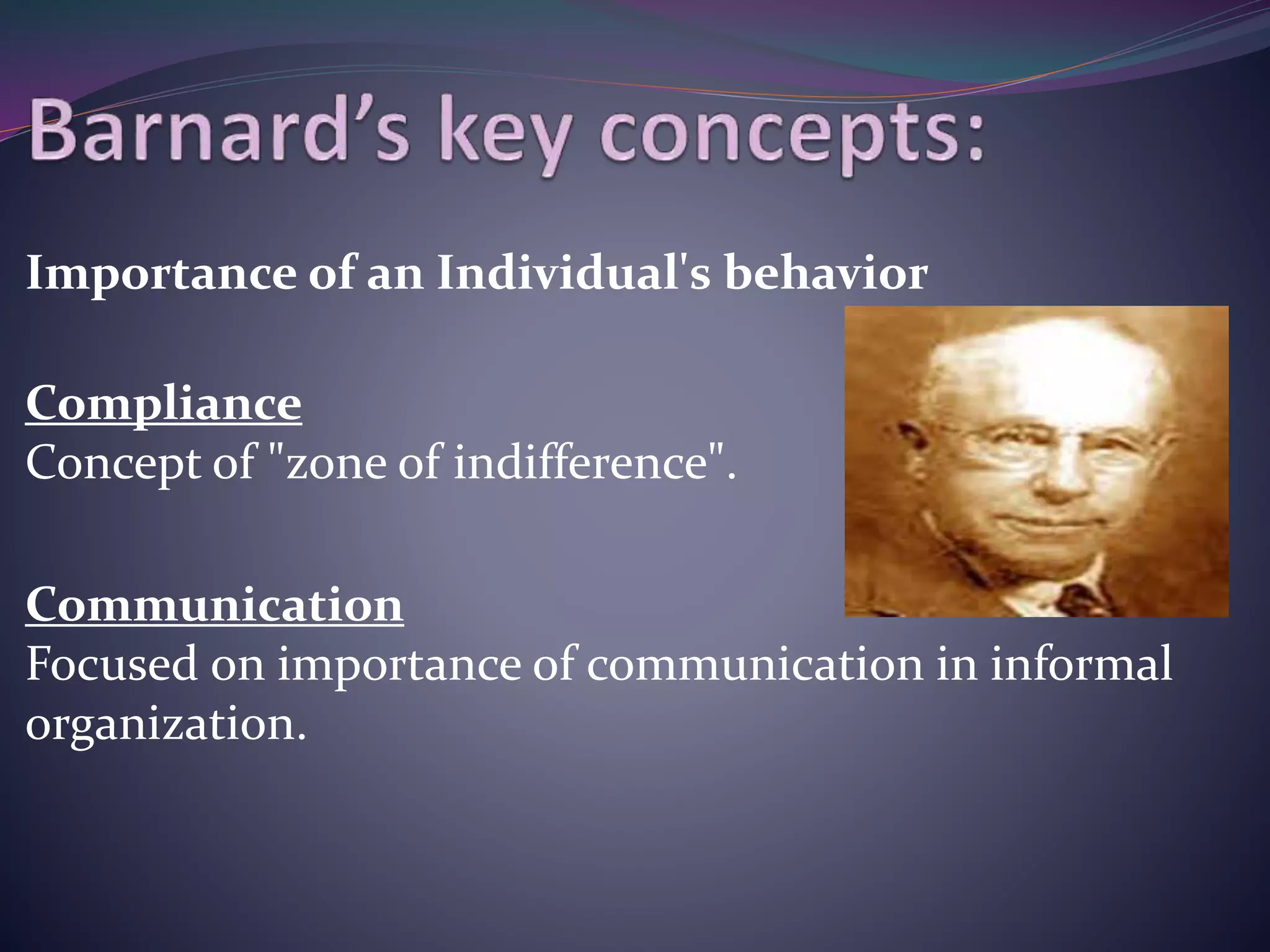
Chester Barnard
Organizations are social systems
Managers need “buy-in” of employees
Co ordination by direct contact
Co ordination in the early stages
Co ordination as a reciprocal relation of all
the features in a situation
Co ordination is a continuous process
Importance of an Individual's behavior
Compliance
Concept of "zone of indifference".
Communication
Focused on importance of communication in informal
organization.
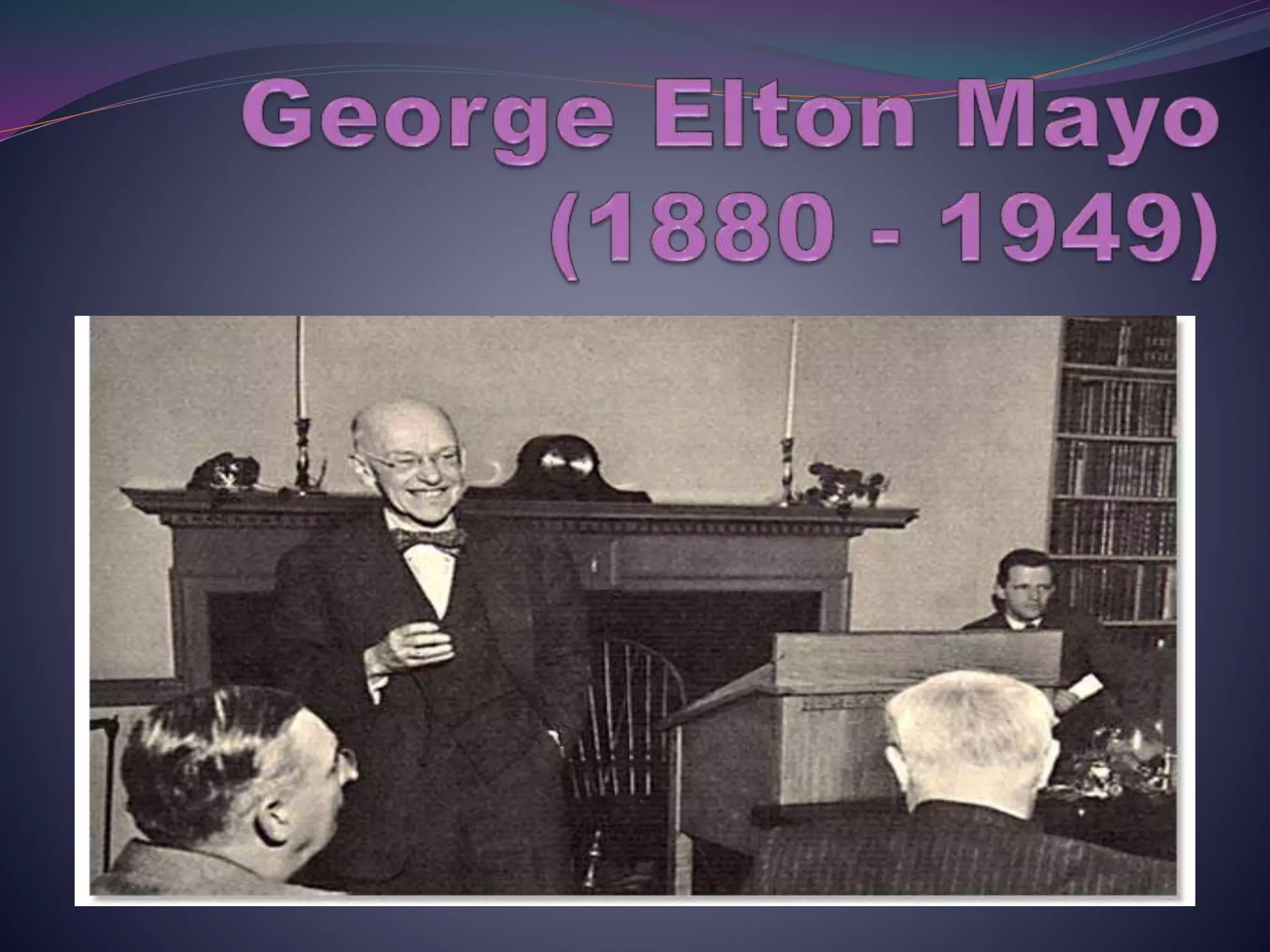
• Social man and the need for this in the work
place.
• Mayo found that workers acted according to
sentiments and emotion.
• He felt that if you treated the worker with
respect and tried to meet their needs than
they would be a better worker for you and
both management and the employee would
benefit.
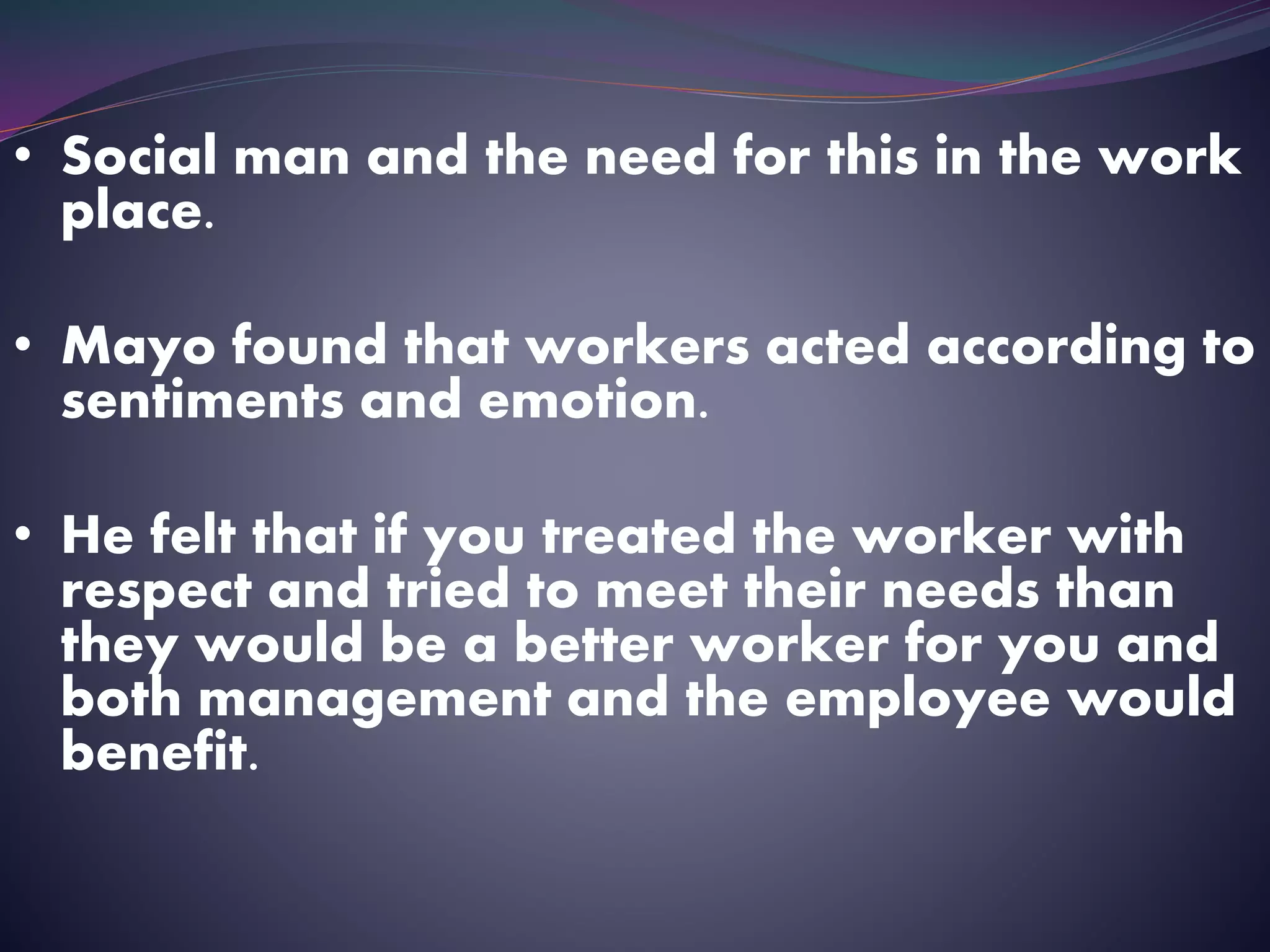
IMPORTANCE ?
SCIENTIFIC THEORY- Measured Functional Aspect
ADMINISTRATIVE THEORY- Related to roles and functions of the nurse
BEHAVIORAL THEORY- Involves alterations and modifications in
behaviour
THEORY OF MOTIVATION-An important path to assess success.
WHAT IS MANAGEMENT
HISTORY OF MANAGEMENT
IMPORTANT THEORIES OF MANAGEMENT
THEIR APPLICATION IN NURSING
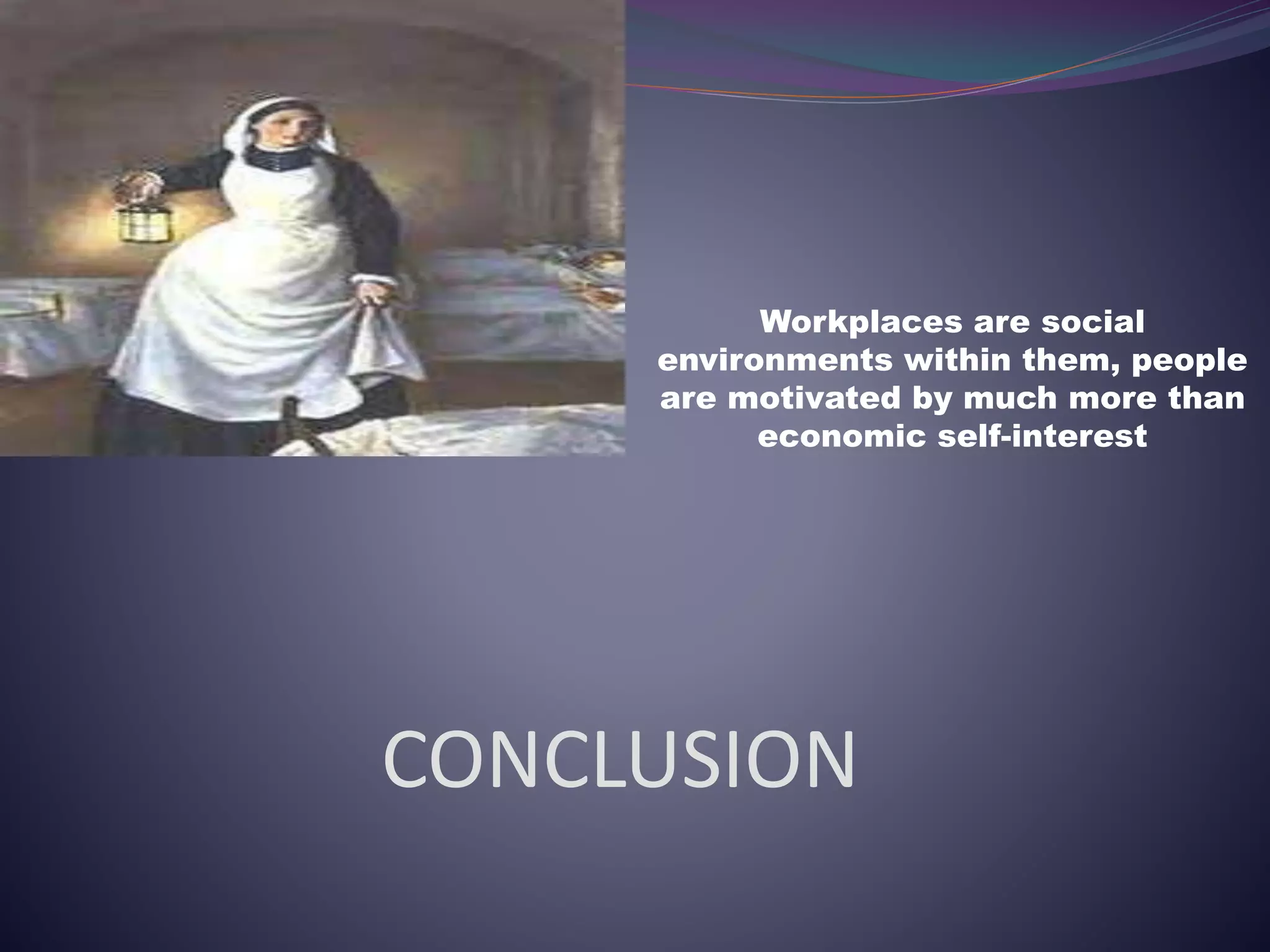
CONCLUSION
Workplaces are social
environments within them, people
are motivated by much more than
economic self-interest
Theories and concepts of management

Theories and concepts of management

  • 2.
  • 3.
    Know the basicpremises of management theories Understand the context for the evolution and development of these theories Know place of these concepts in nursing management
  • 4.
    The Evolution ofManagement Before the Industrial Revolution, the economy was based on agriculture Professional managers were not needed because most people worked for themselves.
  • 5.
    The Industrial Revolution Refersto the period during which a country develops an industrial economy. By the late 1800s, the economy depended largely on industries such as oil, steel, railroads, and manufactured goods.
  • 6.
    Many people lefttheir farms to take jobs in factories, where professional managers supervised their work. The new industrial enterprises that emerged in the nineteenth century demanded management skills that had not been necessary earlier.
  • 7.
    The task ofplanning, coordinating, motivating and controlling the efforts of others towards a specific objective. -JAMES L LUNDY
  • 8.
    A set ofassumptions, propositions, or accepted facts that attempts to provide a rational explanation (The Oxford Dict)
  • 9.
    As a process Asan activity As an economic resource As a team As an academic discipline
  • 10.
    MANAGEMENT AS APROCESS PLANNING ORGANISING STAFFING DIRECTING CONTROLLING
  • 11.
    MANAGEMENT AS AECONOMIC RESOURCE LAND LABOUR PRODUCTION & CAPITAL RESOURCE
  • 12.
    MANAGEMENT AS ANACADEMIC DISCIPLINE SPECIALISED BRANCH OF KNOWLEDGE PRINCIPLES AND PRACTICES A FIELD OF STUDY OFFERS CARRIER
  • 14.
    Defined by FrederickTaylor (1865 - 1915) in the late 1800’s to replace informal rule of thumb knowledge. Also called Taylorism, the Taylor system, or the Classical Perspective. It's a theory of management that analyzes and synthesizes workflow processes, and improving labour productivity.
  • 15.
    Jobs should bedesigned according to scientific rules rather than rule-of-thumb methods. Employees should be selected and trained according to scientific methods. Employers should also train employees in order to improve their performance. The principles of scientific management should be explained to workers. Management and workers should be interdependent so that they cooperate.
  • 16.
    Maslow believed thatindividuals fulfill lower-level needs before seeking to fulfill higher-level needs. one set of needs must be met before another is sought, Maslow referred to this as a hierarchy of needs.
  • 18.
    Focus on managersand their behavior Henri Fayol, Management is a discipline with principles that can be taught Max Weber Developed the concept of “bureaucracy” as the ideal structure for an organization
  • 19.
    Fayol’s Administrative Principles 1.Division of labor 2.Authority to give orders 3. Discipline 4.Unity of command 5.Unity of direction 6. Subordination of individual interest 7.Remuneration: pay for work done 8. Centralization 9. Scalar chain 10. Order 11. Equity 12. Stability and tenure of staff 13. Esprit de corps 14. Initiative
  • 20.
    Formal system ofrules and procedures Hierarchical structure with detailed authority Clear division of labor Rationality Career commitment
  • 21.
    establishing strong linesof authority and control. He suggested organizations develop comprehensive and detailed standard operating procedures for all routinized tasks.
  • 22.
    Professor Douglas McGregor (1906- 1964) Theory X—assumes that people are basically lazy and will avoid working if they can. To make sure that employees work, Theory X managers impose strict rules and make sure that all important decisions are made only by them.
  • 23.
    Theory Y assumes thatpeople find satisfaction in their work. Theory Y managers believe that people are creative and will come up with good ideas if encouraged to do so. They tend to give their employees much more freedom and let them make mistakes.
  • 24.
    William Ouchi, a managementresearcher developed this new theory in the 1980s Theory Z - business management theory that integrates Japanese and American business practices. The Japanese business emphasis is on collective decision making, whereas the American emphasis is on individual responsibility.
  • 25.
    Focuses on thehuman aspects of organizations Mary Parker Follett Management is a dynamic process Workers should be involved in decisions Chester Barnard Organizations are social systems Managers need “buy-in” of employees
  • 26.
    Co ordination bydirect contact Co ordination in the early stages Co ordination as a reciprocal relation of all the features in a situation Co ordination is a continuous process
  • 27.
    Importance of anIndividual's behavior Compliance Concept of "zone of indifference". Communication Focused on importance of communication in informal organization.
  • 29.
    • Social manand the need for this in the work place. • Mayo found that workers acted according to sentiments and emotion. • He felt that if you treated the worker with respect and tried to meet their needs than they would be a better worker for you and both management and the employee would benefit.
  • 30.
  • 31.
    SCIENTIFIC THEORY- MeasuredFunctional Aspect ADMINISTRATIVE THEORY- Related to roles and functions of the nurse BEHAVIORAL THEORY- Involves alterations and modifications in behaviour THEORY OF MOTIVATION-An important path to assess success.
  • 32.
    WHAT IS MANAGEMENT HISTORYOF MANAGEMENT IMPORTANT THEORIES OF MANAGEMENT THEIR APPLICATION IN NURSING
  • 33.
    CONCLUSION Workplaces are social environmentswithin them, people are motivated by much more than economic self-interest