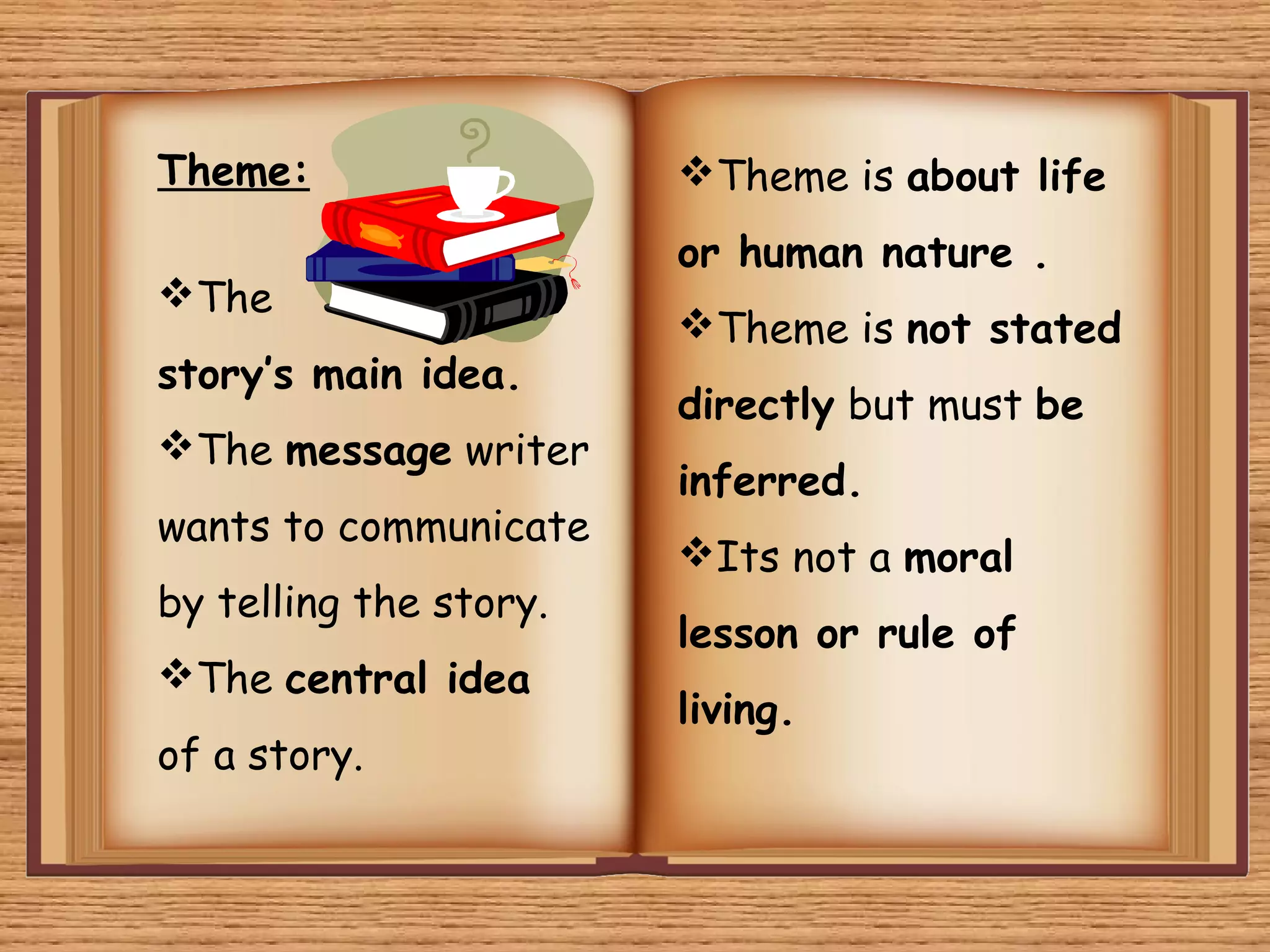
Theme:
The
story’s main idea.
The message writer
wants to communicate
by telling the story.
The central idea
of a story.
Theme is about life
or human nature .
Theme is not stated
directly but must be
inferred.
Its not a moral
lesson or rule of
living.
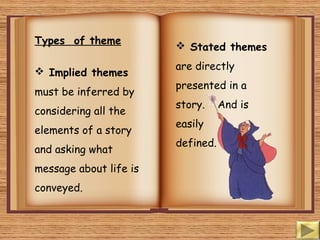
Types of theme
 Implied themes
must be inferred by
considering all the
elements of a story
and asking what
message about life is
conveyed.
 Stated themes
are directly
presented in a
story. And is
easily
defined.
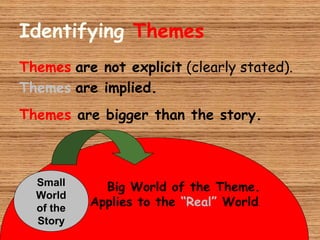
Big World of the Theme.
Applies to the “Real” World.
Identifying Themes
Themes are not explicit (clearly stated).
Themes are implied.
Themes are bigger than the story.
Small
World
of the
Story
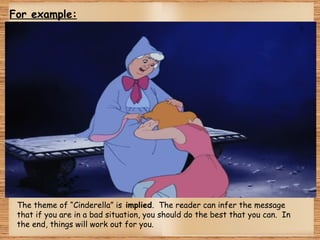
For example:
The theme of “Cinderella” is implied. The reader can infer the message
that if you are in a bad situation, you should do the best that you can. In
the end, things will work out for you.
 
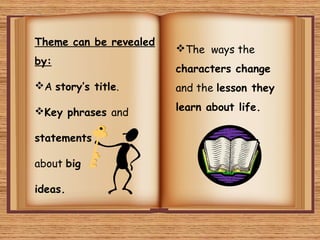
Theme can be revealed
by:
A story’s title.
Key phrases and
statements
about big
ideas.
The ways the
characters change
and the lesson they
learn about life.
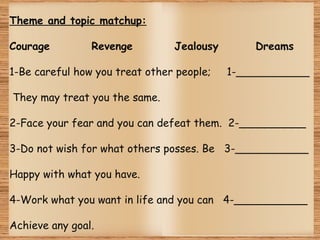
Theme and topic matchup:
Courage Revenge Jealousy Dreams
1-Be careful how you treat other people; 1-___________
They may treat you the same.
2-Face your fear and you can defeat them. 2-__________
3-Do not wish for what others posses. Be 3-___________
Happy with what you have.
4-Work what you want in life and you can 4-___________
Achieve any goal.
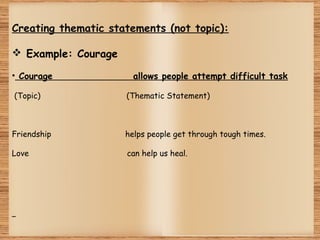
Creating thematic statements (not topic):
 Example: Courage
• Courage allows people attempt difficult task
 (Topic) (Thematic Statement)
Friendship helps people get through tough times.
Love can help us heal.
 
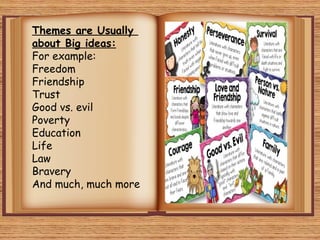
Themes are Usually
about Big ideas:
For example:
Freedom
Friendship
Trust
Good vs. evil
Poverty
Education
Life
Law
Bravery
And much, much more
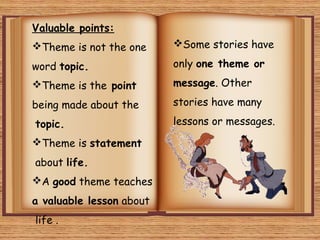
Valuable points:
Theme is not the one
word topic.
Theme is the point
being made about the
topic.
Theme is statement
about life.
A good theme teaches
a valuable lesson about
life .
Some stories have
only one theme or
message. Other
stories have many
lessons or messages.
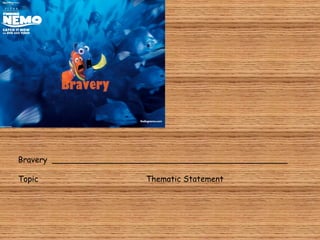
Bravery _______________________________________________
Topic Thematic Statement
Creating thematic statements (not topic): The Crayon
Box that Talked
 (Topic) (Thematic Statement)
 
Creating thematic statements (not topic): Crunch Munch
Dinosaur Lunch
 (Topic) (Thematic Statement)
 
Creating thematic statements (not topic):Red or Blue I
Like You
 (Topic) (Thematic Statement)
 
Creating thematic statements (not topic): Miss Spider’s
Tea Party
 (Topic) (Thematic Statement)
 
Review
1. Theme is what we can learn from a
story.
2. Themes must be inferred.
3. Themes are about the BIG world.

Theme1

  • 1.
    Theme: The story’s main idea. Themessage writer wants to communicate by telling the story. The central idea of a story. Theme is about life or human nature . Theme is not stated directly but must be inferred. Its not a moral lesson or rule of living.
  • 2.
    Types of theme Implied themes must be inferred by considering all the elements of a story and asking what message about life is conveyed.  Stated themes are directly presented in a story. And is easily defined.
  • 3.
    Big World ofthe Theme. Applies to the “Real” World. Identifying Themes Themes are not explicit (clearly stated). Themes are implied. Themes are bigger than the story. Small World of the Story
  • 4.
    For example: The themeof “Cinderella” is implied. The reader can infer the message that if you are in a bad situation, you should do the best that you can. In the end, things will work out for you.  
  • 5.
    Theme can berevealed by: A story’s title. Key phrases and statements about big ideas. The ways the characters change and the lesson they learn about life.
  • 6.
    Theme and topicmatchup: Courage Revenge Jealousy Dreams 1-Be careful how you treat other people; 1-___________ They may treat you the same. 2-Face your fear and you can defeat them. 2-__________ 3-Do not wish for what others posses. Be 3-___________ Happy with what you have. 4-Work what you want in life and you can 4-___________ Achieve any goal.
  • 7.
    Creating thematic statements(not topic):  Example: Courage • Courage allows people attempt difficult task  (Topic) (Thematic Statement) Friendship helps people get through tough times. Love can help us heal.  
  • 8.
    Themes are Usually aboutBig ideas: For example: Freedom Friendship Trust Good vs. evil Poverty Education Life Law Bravery And much, much more
  • 9.
    Valuable points: Theme isnot the one word topic. Theme is the point being made about the topic. Theme is statement about life. A good theme teaches a valuable lesson about life . Some stories have only one theme or message. Other stories have many lessons or messages.
  • 10.
  • 11.
    Creating thematic statements(not topic): The Crayon Box that Talked  (Topic) (Thematic Statement)  
  • 12.
    Creating thematic statements(not topic): Crunch Munch Dinosaur Lunch  (Topic) (Thematic Statement)  
  • 13.
    Creating thematic statements(not topic):Red or Blue I Like You  (Topic) (Thematic Statement)  
  • 14.
    Creating thematic statements(not topic): Miss Spider’s Tea Party  (Topic) (Thematic Statement)  
  • 15.
    Review 1. Theme iswhat we can learn from a story. 2. Themes must be inferred. 3. Themes are about the BIG world.