Science Fiction
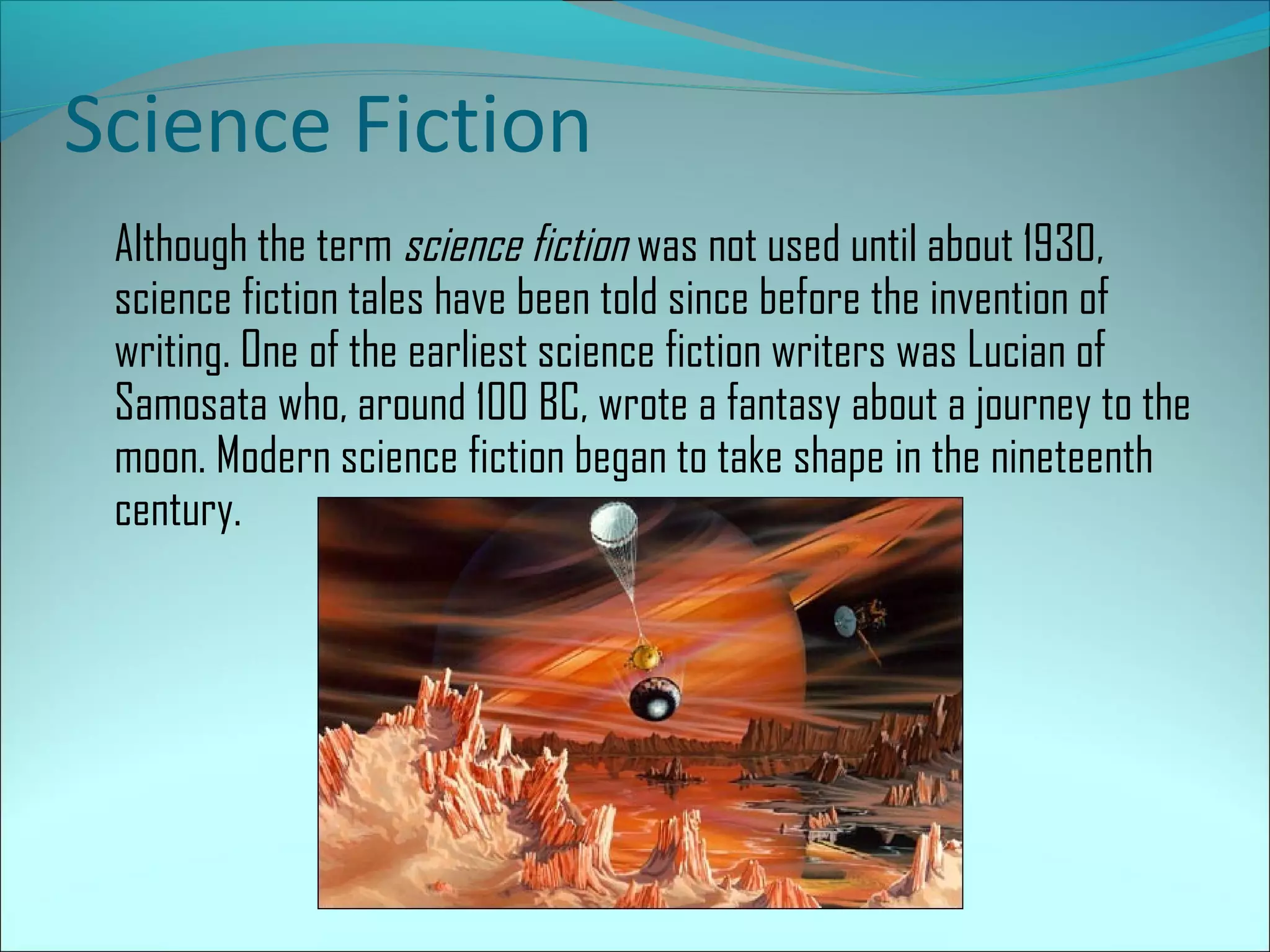
Although the term science fiction was not used until about 1930,
science fiction tales have been told since before the invention of
writing. One of the earliest science fiction writers was Lucian of
Samosata who, around 100 BC, wrote a fantasy about a journey to the
moon. Modern science fiction began to take shape in the nineteenth
century.
Science Fiction
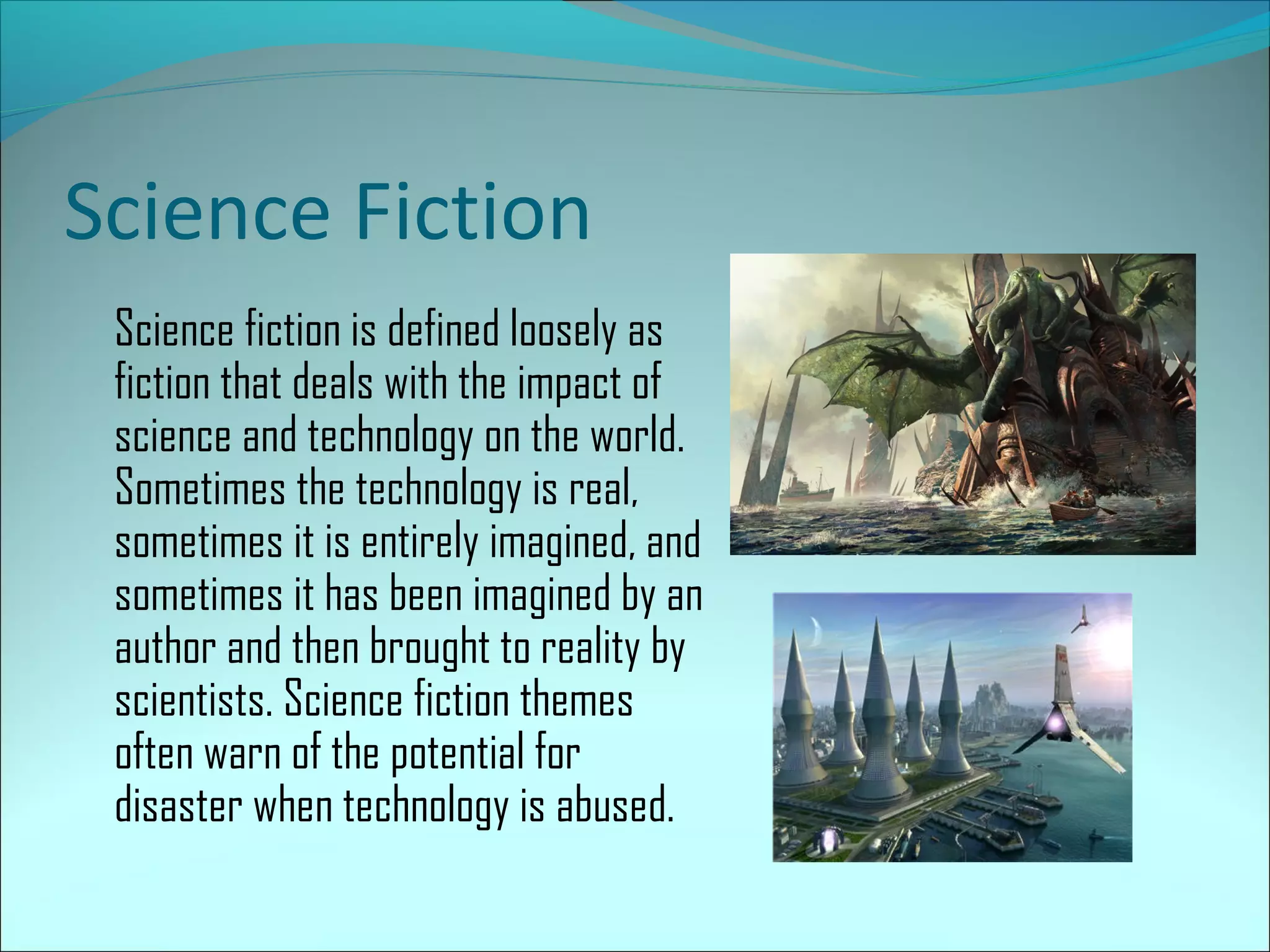
Science fiction is defined loosely as
fiction that deals with the impact of
science and technology on the world.
Sometimes the technology is real,
sometimes it is entirely imagined, and
sometimes it has been imagined by an
author and then brought to reality by
scientists. Science fiction themes
often warn of the potential for
disaster when technology is abused.
The Literature of Change
It's often said that Science Fiction is the literature of change. When a
culture is undergoing a lot of changes due to scientific advances and
technological developments, and expects to undergo more, it's hardly
surprising if stories about these changes become popular as a way of
expressing people's feelings (optimistic or otherwise) about change.
Note that the changes may be in our ability to control the world, or
just in our understanding of it. For example, some "post-holocaust"
portray cultures that understand and control less of the world than we
do; the scientific element consists of our understanding of their world,
and of how it arose out of our world. Other stories offer future
technologies that we can hope for based on present-day science, but
haven't developed yet, such as fusion-powered spaceships. Yet others
go beyond this to dazzle us with future science that differs from what
is now believed, but they retain some recognizable elements of the
world we live in, so we can at least believe that the world depicted in
the story might some day come to be.
Elements of Science Fiction
.
 science
 technology and invention
 the future and the remote past, including all time travel
stories
 extrapolation (speculation based on signs or omens)
 scientific method
 other places--planets, dimensions, etc., including visitors
from the above
 catastrophes, natural or manmade
a story with at least three of the above elements is
generally perceived to be science fiction; stories with two
elements were borderline; stories with one or no
elements were not science fiction.
More Elements of Science Fiction

A time setting in the future, in alternative timelines, or in a historical
past that contradicts known facts of history or
the archaeological record.A spatial setting or scenes in outer
space (e.g. spaceflight), on other worlds, or on subterranean earth.
Characters that include aliens, mutants, androids,
or humanoid robots.
Futuristic technology such as ray guns, teleportation machines, and
humanoid computers.
Scientific principles that are new or that contradict accepted laws of
nature, for example time travel,wormholes, or faster-than-light travel.
New and different political or social systems, e.g. dystopian, post-
scarcity, or post-apocalyptic.
Paranormal abilities such as mind control, telepathy, telekinesis,
and teleportation.
Other universes or dimensions and travel between them.
Key Themes in Sci-Fi
The first theme:
concerns the contention between the individual and
the larger society. Explores contemporary issues such
as individual rights, social demands, our culture
coming under increasing surveillance, popular
culture, and rampant anti-intellectualism.
Key Themes in Sci-Fi
The second theme we will explore looks into rapidly
evolving computer technology and artificial
intelligence.
Related Genres
Utopian Literature
The word utopia resembles both the Greek words "no place",
"outopos", and "good place", "eutopos". A vision of an ideal
society.
Dystopian Literature
Dystopia is defined as a society characterized by a focus on
mass poverty, squalor, suffering, or oppression. Most authors
of dystopian fiction explore at least one reason why things
are that way, often as an analogy for similar issues in the real
world.
Ecotopian Literature
where the author posits either a utopian or dystopian world
revolving around environmental conservation or destruction.
Subgenres Related genres
Cyberpunk
Alternate history
Superhuman
Apocalyptic
Time Travel
Fantasy
Horror
Super hero fiction
Subgenres Related genres
Cyberpunk
Alternate history
Superhuman
Apocalyptic
Time Travel
Fantasy
Horror
Super hero fiction

Science fiction

  • 1.
    Science Fiction Although theterm science fiction was not used until about 1930, science fiction tales have been told since before the invention of writing. One of the earliest science fiction writers was Lucian of Samosata who, around 100 BC, wrote a fantasy about a journey to the moon. Modern science fiction began to take shape in the nineteenth century.
  • 2.
    Science Fiction Science fictionis defined loosely as fiction that deals with the impact of science and technology on the world. Sometimes the technology is real, sometimes it is entirely imagined, and sometimes it has been imagined by an author and then brought to reality by scientists. Science fiction themes often warn of the potential for disaster when technology is abused.
  • 3.
    The Literature ofChange It's often said that Science Fiction is the literature of change. When a culture is undergoing a lot of changes due to scientific advances and technological developments, and expects to undergo more, it's hardly surprising if stories about these changes become popular as a way of expressing people's feelings (optimistic or otherwise) about change. Note that the changes may be in our ability to control the world, or just in our understanding of it. For example, some "post-holocaust" portray cultures that understand and control less of the world than we do; the scientific element consists of our understanding of their world, and of how it arose out of our world. Other stories offer future technologies that we can hope for based on present-day science, but haven't developed yet, such as fusion-powered spaceships. Yet others go beyond this to dazzle us with future science that differs from what is now believed, but they retain some recognizable elements of the world we live in, so we can at least believe that the world depicted in the story might some day come to be.
  • 4.
    Elements of ScienceFiction .  science  technology and invention  the future and the remote past, including all time travel stories  extrapolation (speculation based on signs or omens)  scientific method  other places--planets, dimensions, etc., including visitors from the above  catastrophes, natural or manmade a story with at least three of the above elements is generally perceived to be science fiction; stories with two elements were borderline; stories with one or no elements were not science fiction.
  • 5.
    More Elements ofScience Fiction  A time setting in the future, in alternative timelines, or in a historical past that contradicts known facts of history or the archaeological record.A spatial setting or scenes in outer space (e.g. spaceflight), on other worlds, or on subterranean earth. Characters that include aliens, mutants, androids, or humanoid robots. Futuristic technology such as ray guns, teleportation machines, and humanoid computers. Scientific principles that are new or that contradict accepted laws of nature, for example time travel,wormholes, or faster-than-light travel. New and different political or social systems, e.g. dystopian, post- scarcity, or post-apocalyptic. Paranormal abilities such as mind control, telepathy, telekinesis, and teleportation. Other universes or dimensions and travel between them.
  • 6.
    Key Themes inSci-Fi The first theme: concerns the contention between the individual and the larger society. Explores contemporary issues such as individual rights, social demands, our culture coming under increasing surveillance, popular culture, and rampant anti-intellectualism.
  • 7.
    Key Themes inSci-Fi The second theme we will explore looks into rapidly evolving computer technology and artificial intelligence.
  • 8.
    Related Genres Utopian Literature Theword utopia resembles both the Greek words "no place", "outopos", and "good place", "eutopos". A vision of an ideal society. Dystopian Literature Dystopia is defined as a society characterized by a focus on mass poverty, squalor, suffering, or oppression. Most authors of dystopian fiction explore at least one reason why things are that way, often as an analogy for similar issues in the real world. Ecotopian Literature where the author posits either a utopian or dystopian world revolving around environmental conservation or destruction.
  • 9.
    Subgenres Related genres Cyberpunk Alternatehistory Superhuman Apocalyptic Time Travel Fantasy Horror Super hero fiction
  • 10.
    Subgenres Related genres Cyberpunk Alternatehistory Superhuman Apocalyptic Time Travel Fantasy Horror Super hero fiction