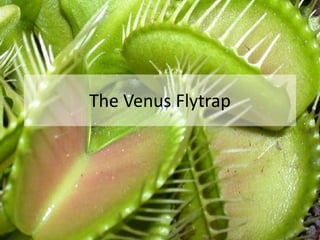
The Venus Flytrap
Description
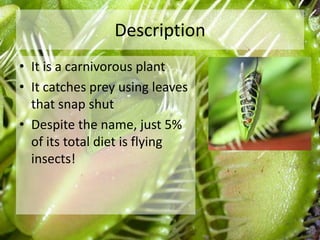
• It is a carnivorous plant
• It catches prey using leaves
  that snap shut
• Despite the name, just 5%
  of its total diet is flying
  insects!
Habitat
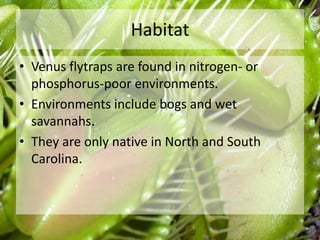
• Venus flytraps are found in nitrogen- or
  phosphorus-poor environments.
• Environments include bogs and wet
  savannahs.
• They are only native in North and South
  Carolina.
Adaptations
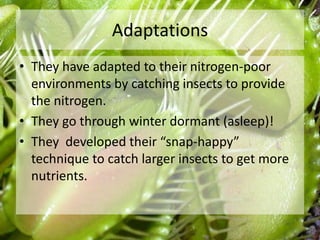
• They have adapted to their nitrogen-poor
  environments by catching insects to provide
  the nitrogen.
• They go through winter dormant (asleep)!
• They developed their “snap-happy”
  technique to catch larger insects to get more
  nutrients.
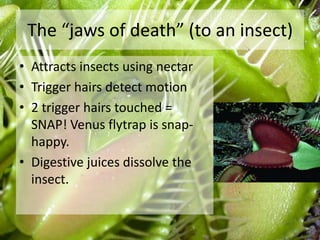
The “jaws of death” (to an insect)
• Attracts insects using nectar
• Trigger hairs detect motion
• 2 trigger hairs touched =
  SNAP! Venus flytrap is snap-
  happy.
• Digestive juices dissolve the
  insect.

The venus flytrap

  • 1.
  • 2.
    Description • It isa carnivorous plant • It catches prey using leaves that snap shut • Despite the name, just 5% of its total diet is flying insects!
  • 3.
    Habitat • Venus flytrapsare found in nitrogen- or phosphorus-poor environments. • Environments include bogs and wet savannahs. • They are only native in North and South Carolina.
  • 4.
    Adaptations • They haveadapted to their nitrogen-poor environments by catching insects to provide the nitrogen. • They go through winter dormant (asleep)! • They developed their “snap-happy” technique to catch larger insects to get more nutrients.
  • 5.
    The “jaws ofdeath” (to an insect) • Attracts insects using nectar • Trigger hairs detect motion • 2 trigger hairs touched = SNAP! Venus flytrap is snap- happy. • Digestive juices dissolve the insect.