The Theory of Development and the EgoBy Erik Erikson
Erikson’s Psychological TheoryThe developmental changes throughout the human life span.
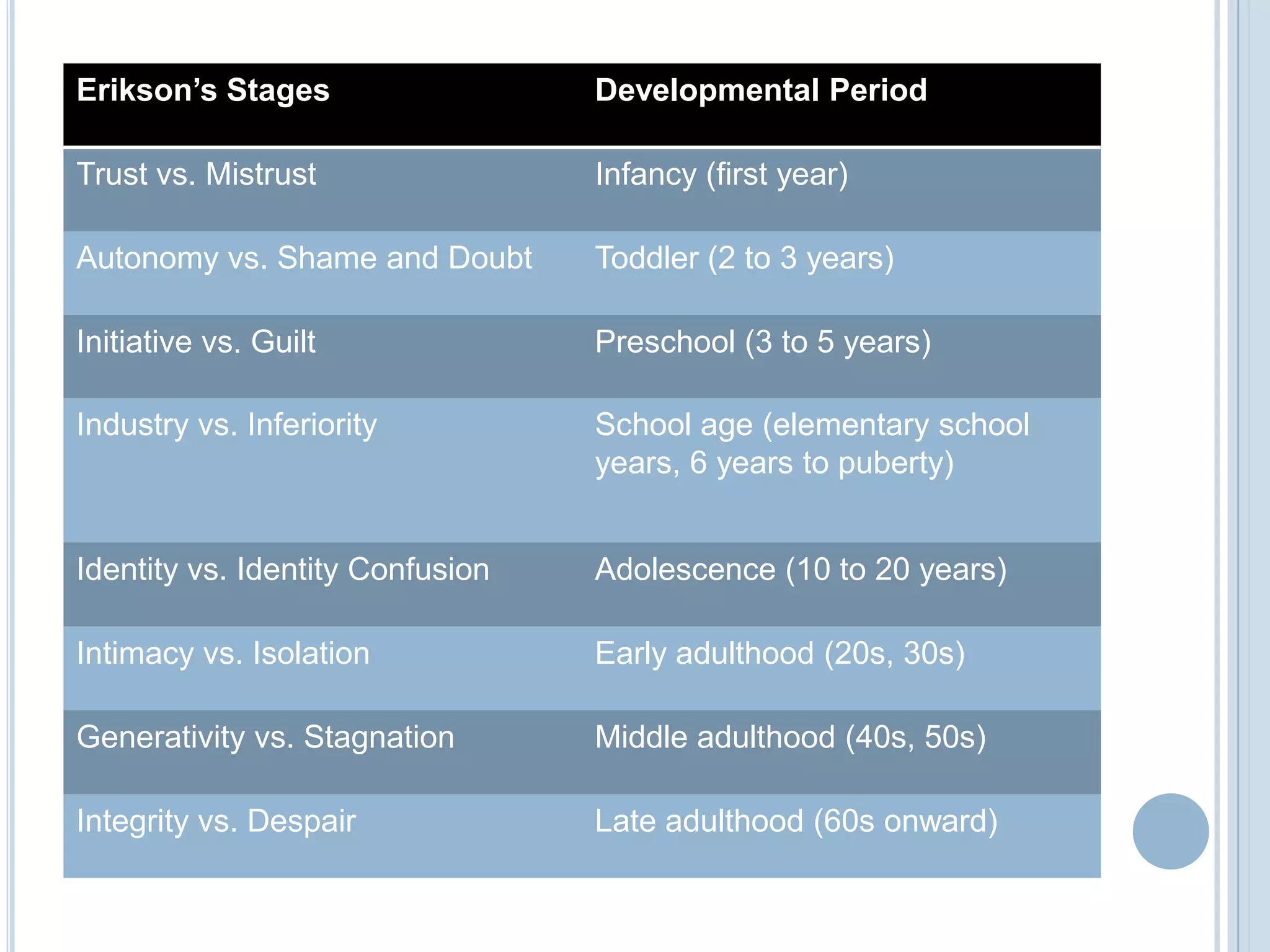
Eight stages of human development.
Each stage consists of a unique developmental task that confronts individuals with a crisis, which is a turning point of increased vulnerability and enhanced potential that must be resolved.
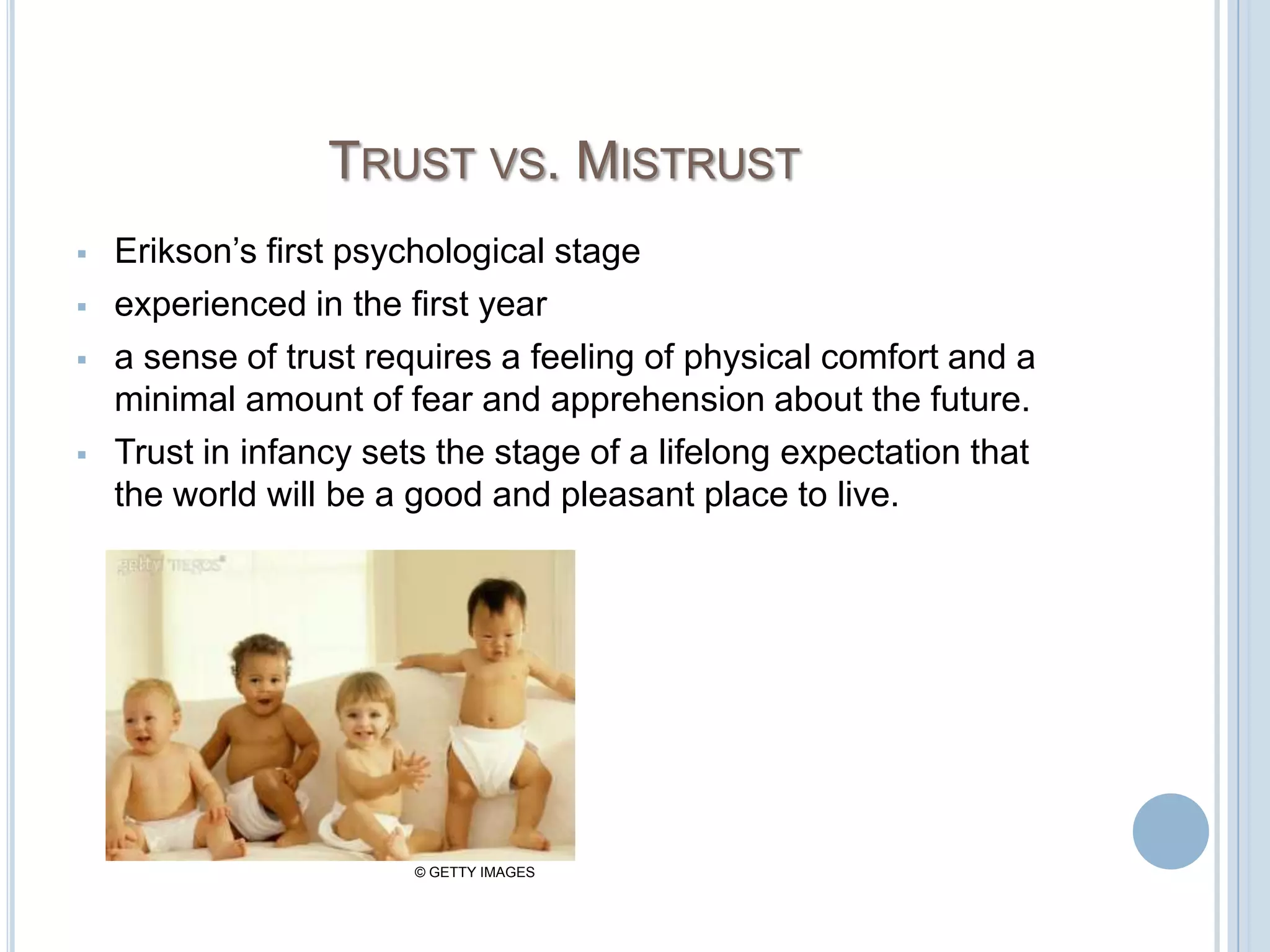
Trust vs. Mistrust	Erikson’s first psychological stage
experienced in the first year
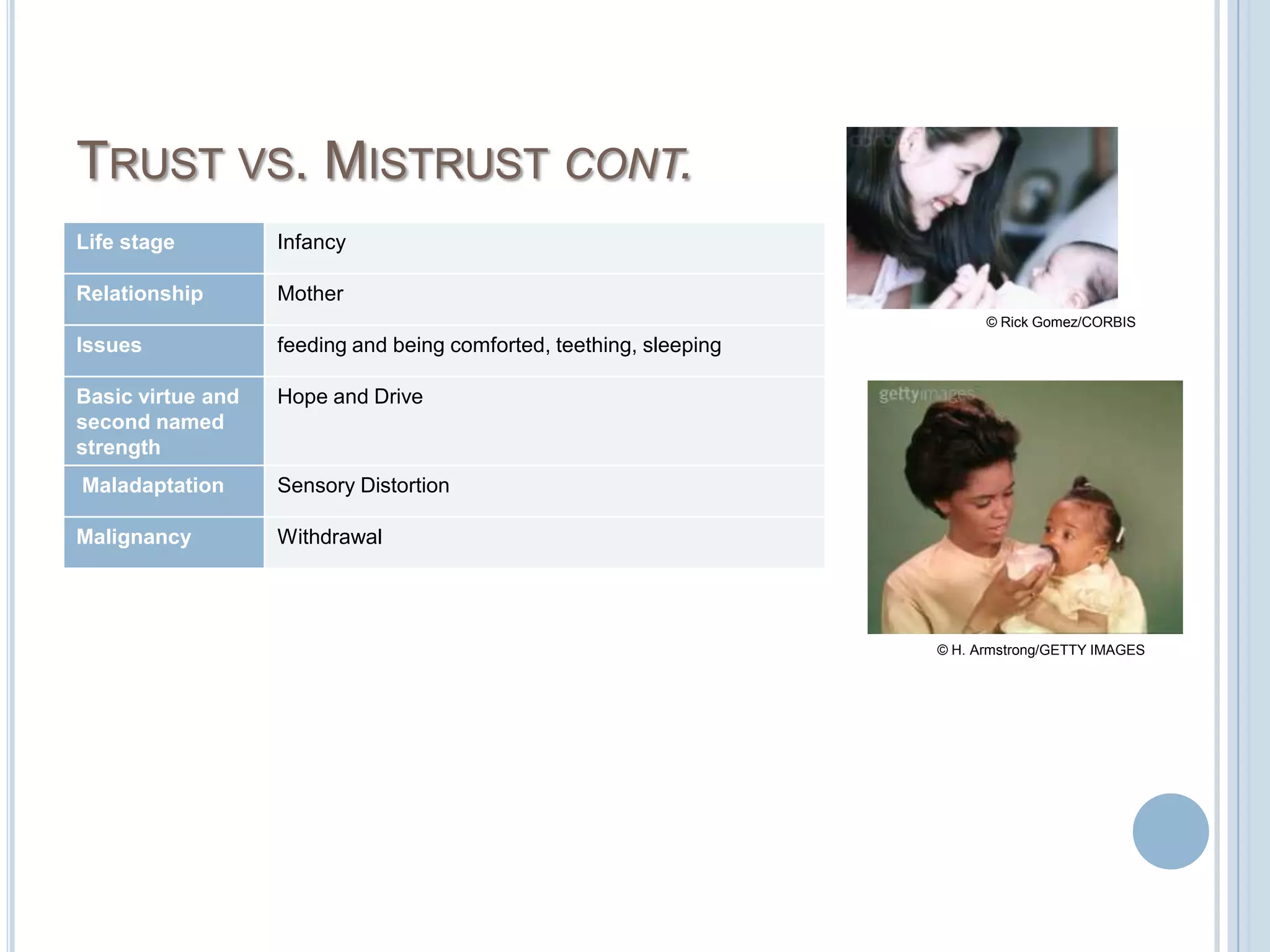
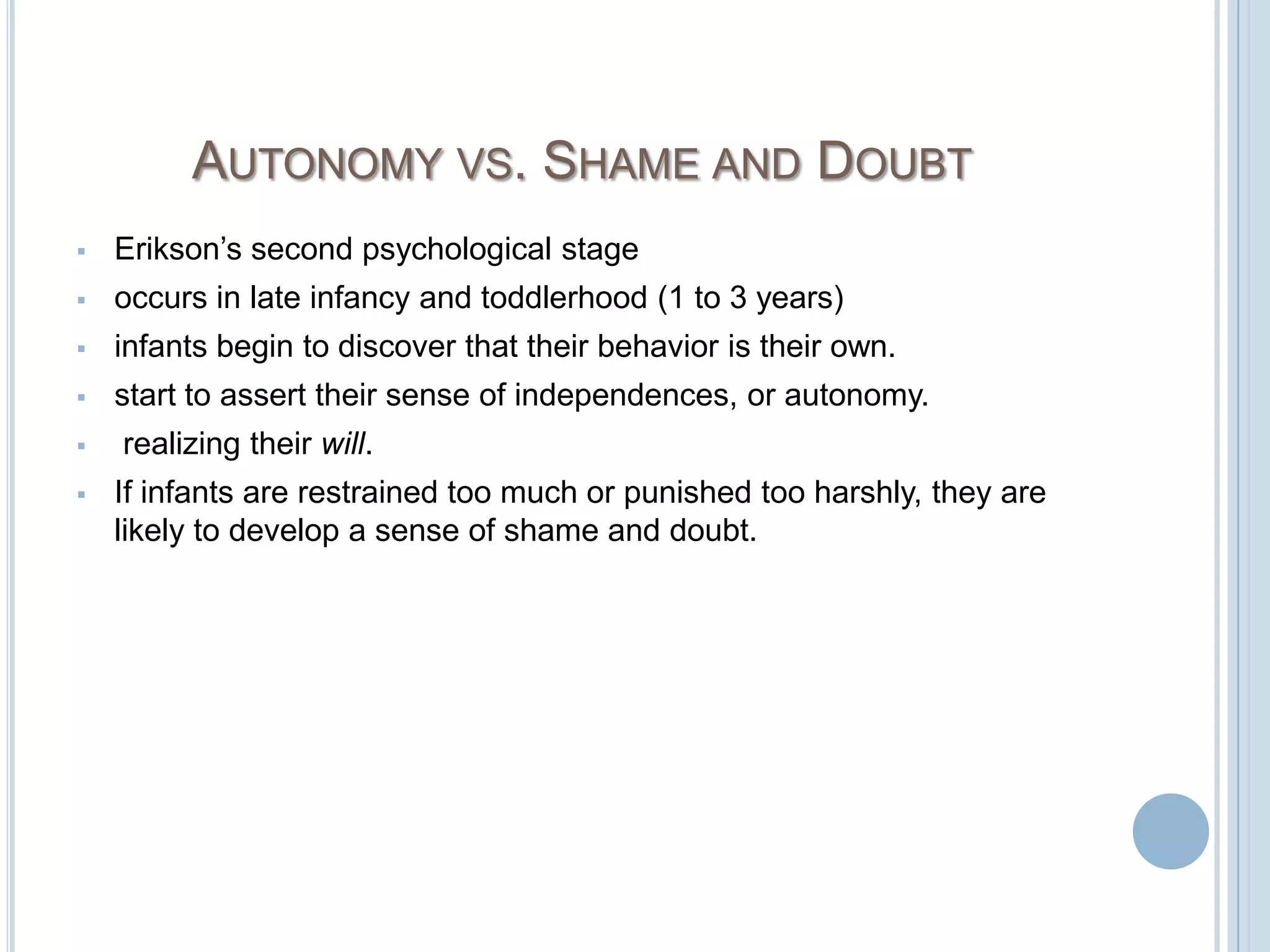
a sense of trust requires a feeling of physical comfort and a minimal amount of fear and apprehension about the future.
Trust in infancy sets the stage of a lifelong expectation that the world will be a good and pleasant place to live. © GETTY IMAGES
Trust vs. Mistrust cont. © Rick Gomez/CORBIS                 © H. Armstrong/GETTY IMAGES
Autonomy vs. Shame and DoubtErikson’s second psychological stage
occurs in late infancy and toddlerhood (1 to 3 years)
infants begin to discover that their behavior is their own.
start to assert their sense of independences, or autonomy.
 realizing their will.
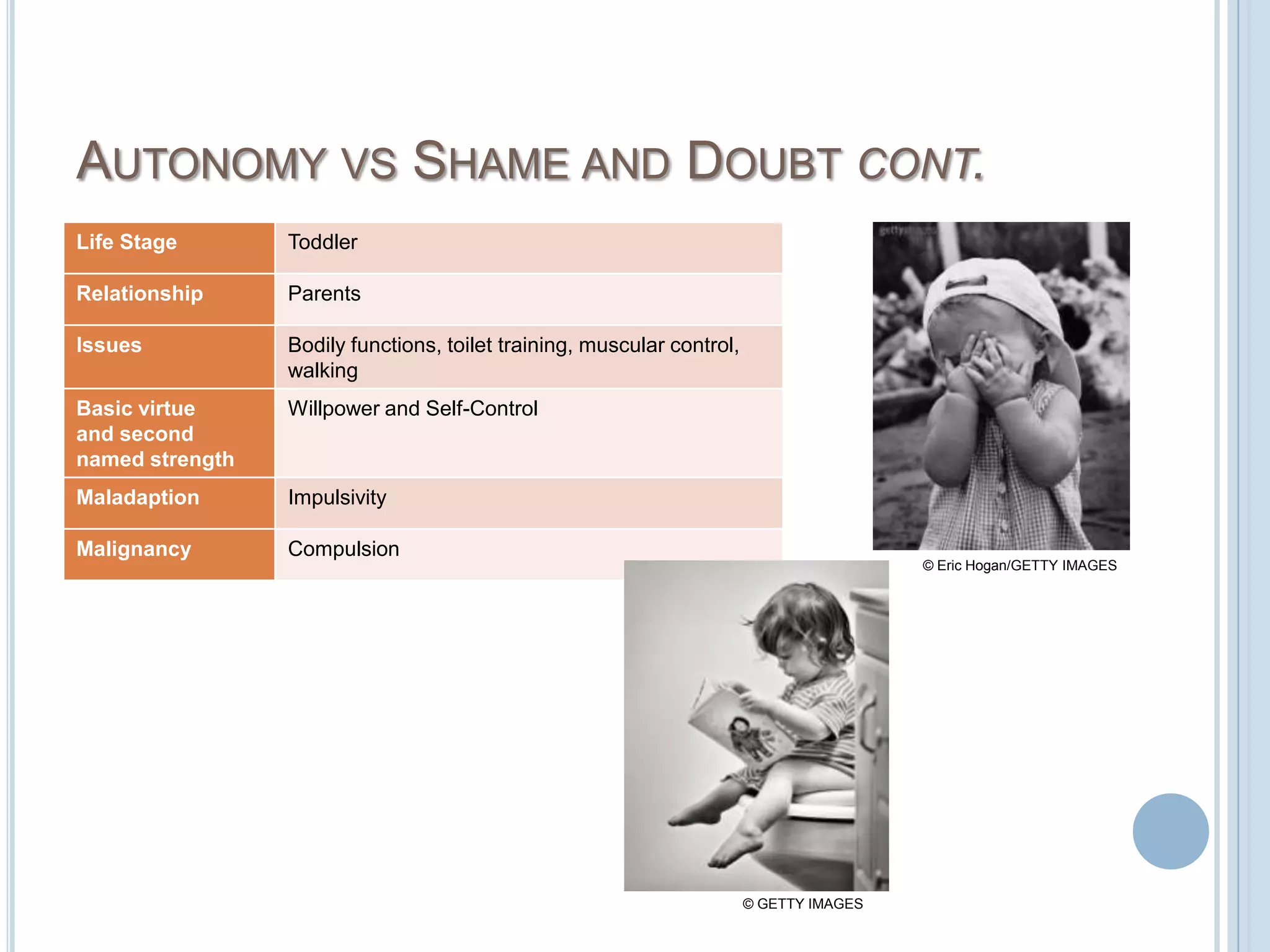
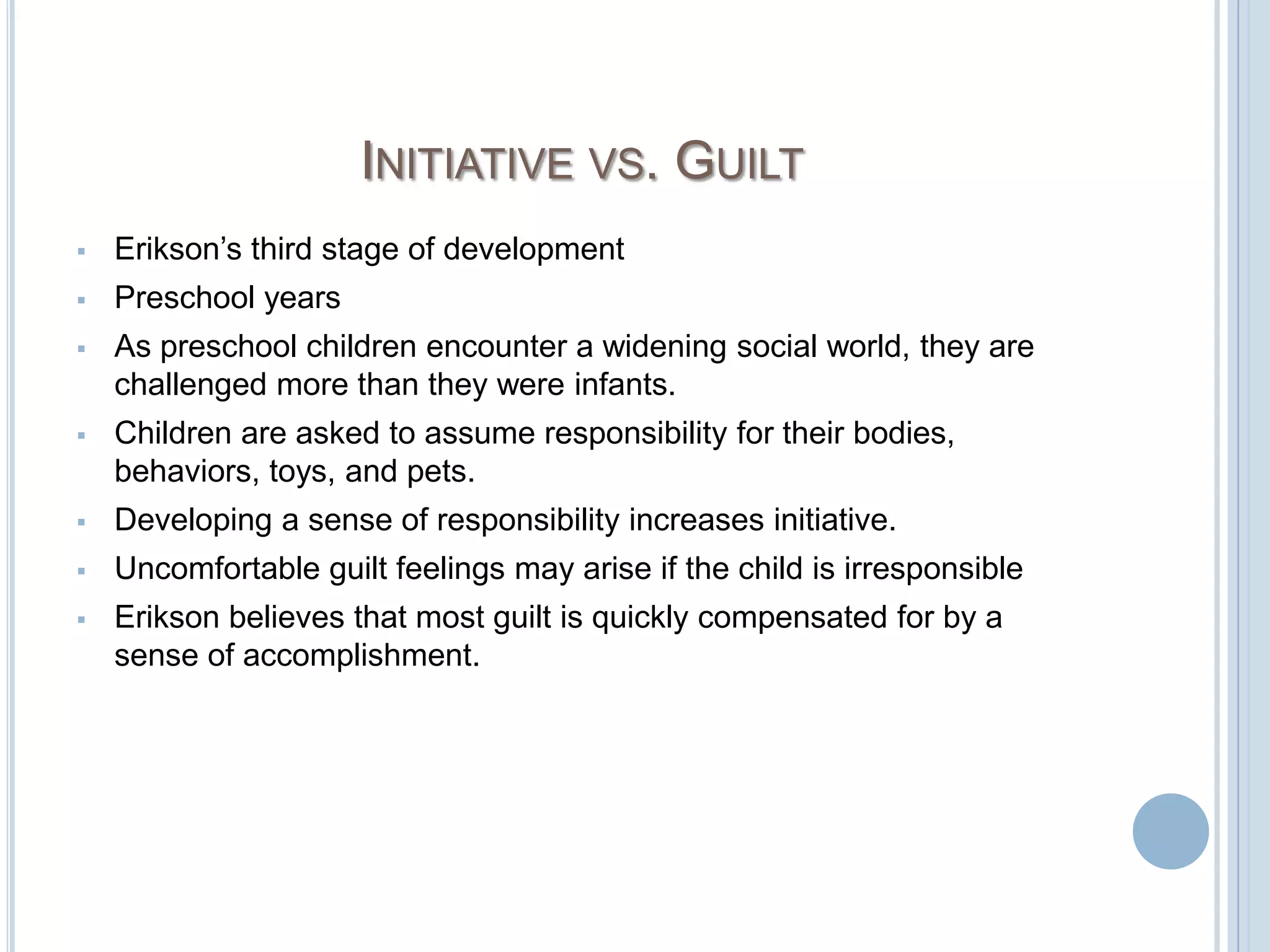
If infants are restrained too much or punished too harshly, they are likely to develop a sense of shame and doubt.  Autonomy vs Shame and Doubt cont.© Eric Hogan/GETTY IMAGES© GETTY IMAGES
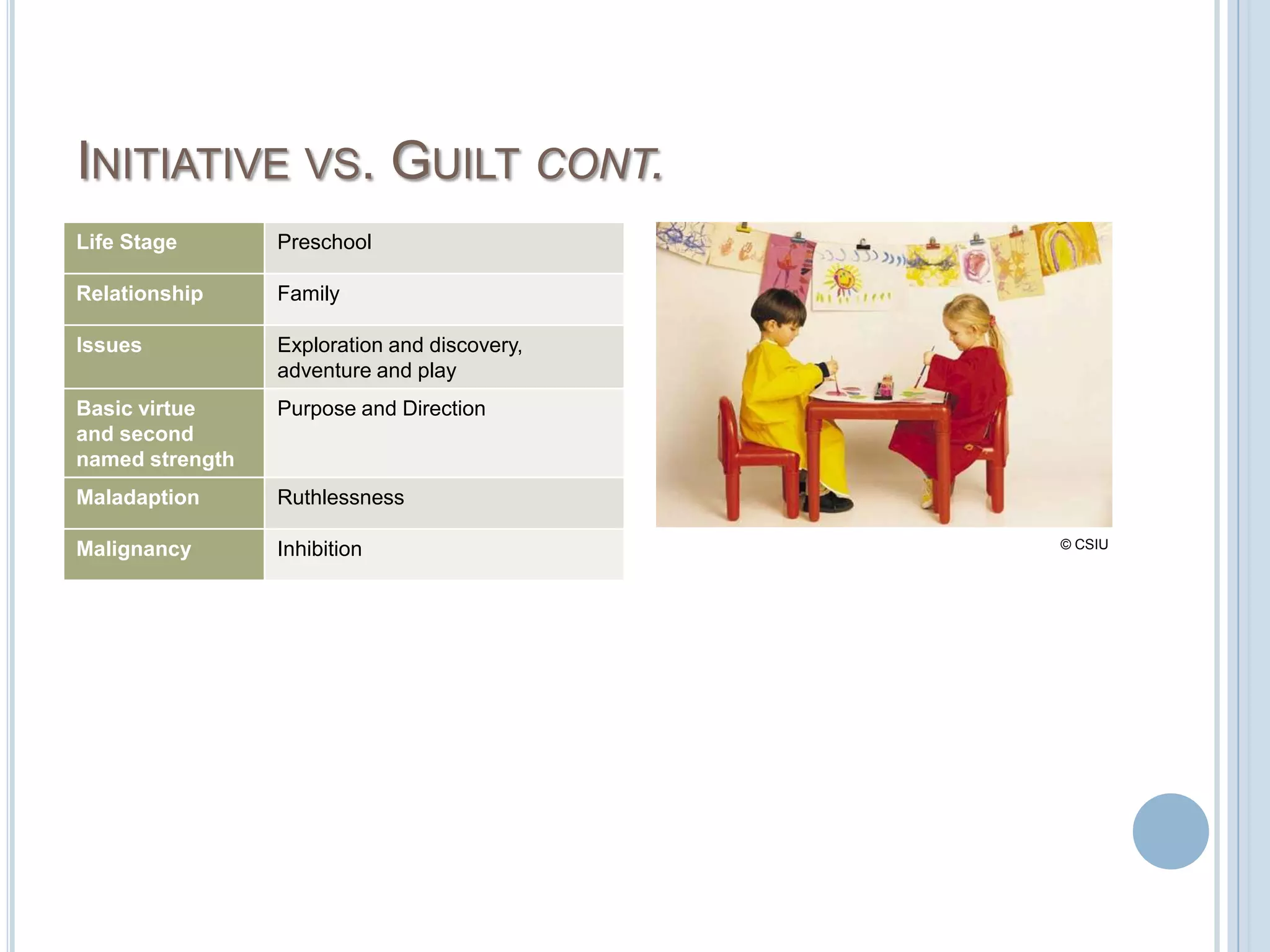
Initiative vs. GuiltErikson’s third stage of development
Preschool years
As preschool children encounter a widening social world, they are challenged more than they were infants.
Children are asked to assume responsibility for their bodies, behaviors, toys, and pets.
Developing a sense of responsibility increases initiative.

The theory of development and the ego

  • 1.
    The Theory ofDevelopment and the EgoBy Erik Erikson
  • 2.
    Erikson’s Psychological TheoryThedevelopmental changes throughout the human life span.
  • 3.
    Eight stages ofhuman development.
  • 4.
    Each stage consistsof a unique developmental task that confronts individuals with a crisis, which is a turning point of increased vulnerability and enhanced potential that must be resolved.
  • 5.
    Trust vs. Mistrust Erikson’sfirst psychological stage
  • 6.
  • 7.
    a sense oftrust requires a feeling of physical comfort and a minimal amount of fear and apprehension about the future.
  • 8.
    Trust in infancysets the stage of a lifelong expectation that the world will be a good and pleasant place to live. © GETTY IMAGES
  • 9.
    Trust vs. Mistrustcont. © Rick Gomez/CORBIS © H. Armstrong/GETTY IMAGES
  • 10.
    Autonomy vs. Shameand DoubtErikson’s second psychological stage
  • 11.
    occurs in lateinfancy and toddlerhood (1 to 3 years)
  • 12.
    infants begin todiscover that their behavior is their own.
  • 13.
    start to asserttheir sense of independences, or autonomy.
  • 14.
  • 15.
    If infants arerestrained too much or punished too harshly, they are likely to develop a sense of shame and doubt. Autonomy vs Shame and Doubt cont.© Eric Hogan/GETTY IMAGES© GETTY IMAGES
  • 16.
    Initiative vs. GuiltErikson’sthird stage of development
  • 17.
  • 18.
    As preschool childrenencounter a widening social world, they are challenged more than they were infants.
  • 19.
    Children are askedto assume responsibility for their bodies, behaviors, toys, and pets.
  • 20.
    Developing a senseof responsibility increases initiative.
  • 21.
    Uncomfortable guilt feelingsmay arise if the child is irresponsible
  • 22.
    Erikson believes thatmost guilt is quickly compensated for by a sense of accomplishment. Initiative vs. Guilt cont.© CSIU
  • 23.
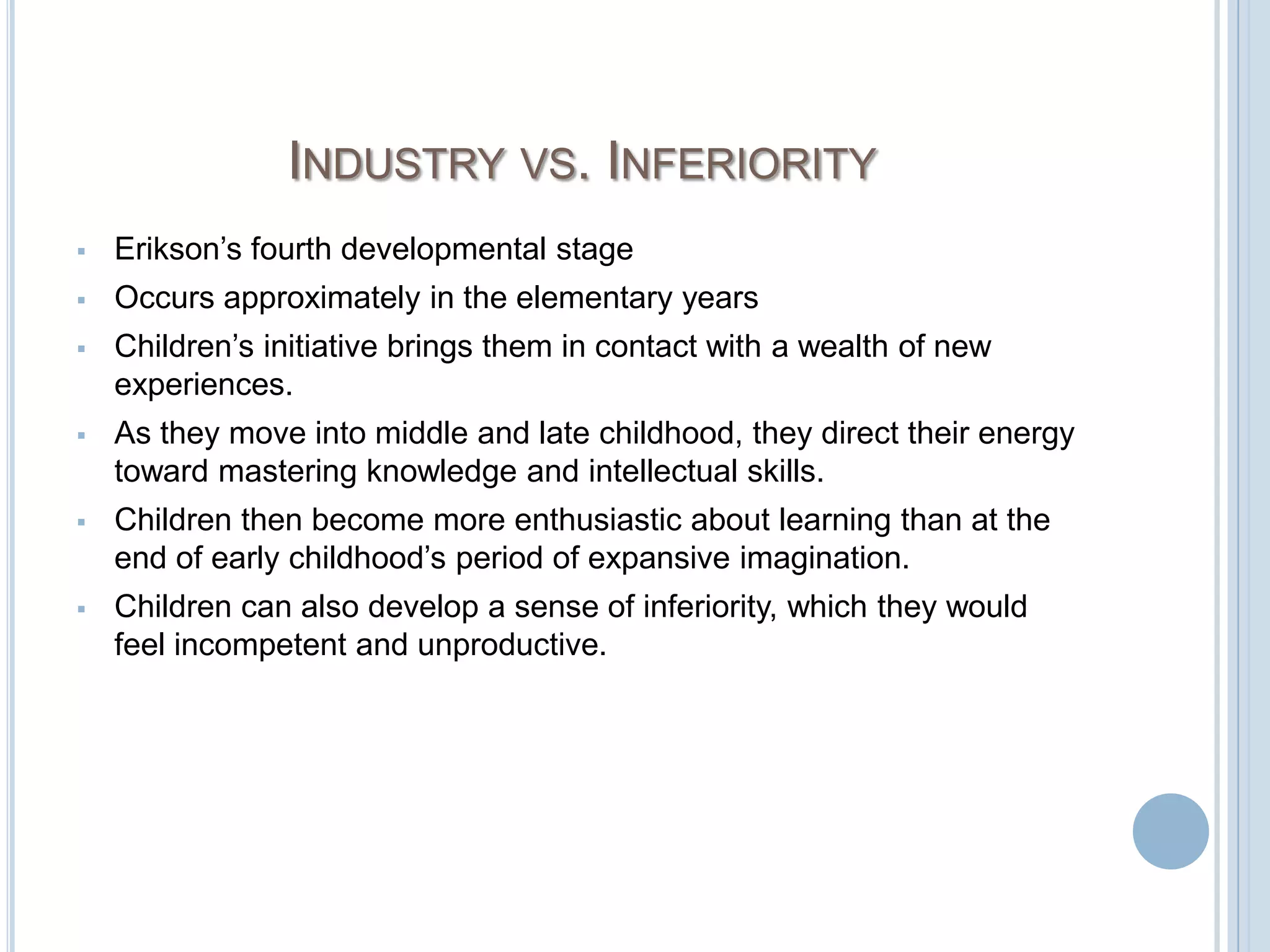
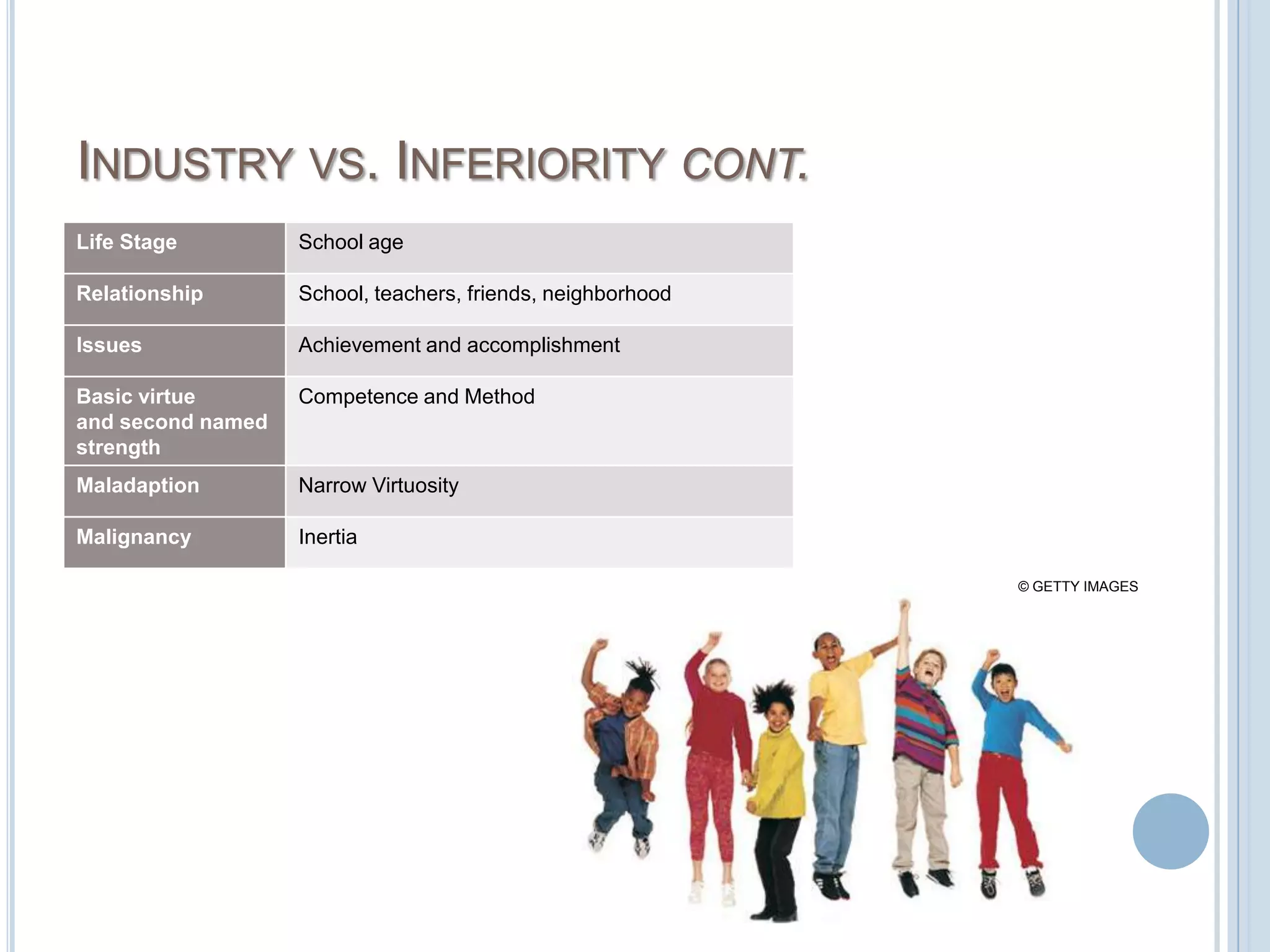
    Industry vs. InferiorityErikson’sfourth developmental stage
  • 24.
    Occurs approximately inthe elementary years
  • 25.
    Children’s initiative bringsthem in contact with a wealth of new experiences.
  • 26.
    As they moveinto middle and late childhood, they direct their energy toward mastering knowledge and intellectual skills.
  • 27.
    Children then becomemore enthusiastic about learning than at the end of early childhood’s period of expansive imagination.
  • 28.
    Children can alsodevelop a sense of inferiority, which they would feel incompetent and unproductive. Industry vs. Inferiority cont.© GETTY IMAGES
  • 29.
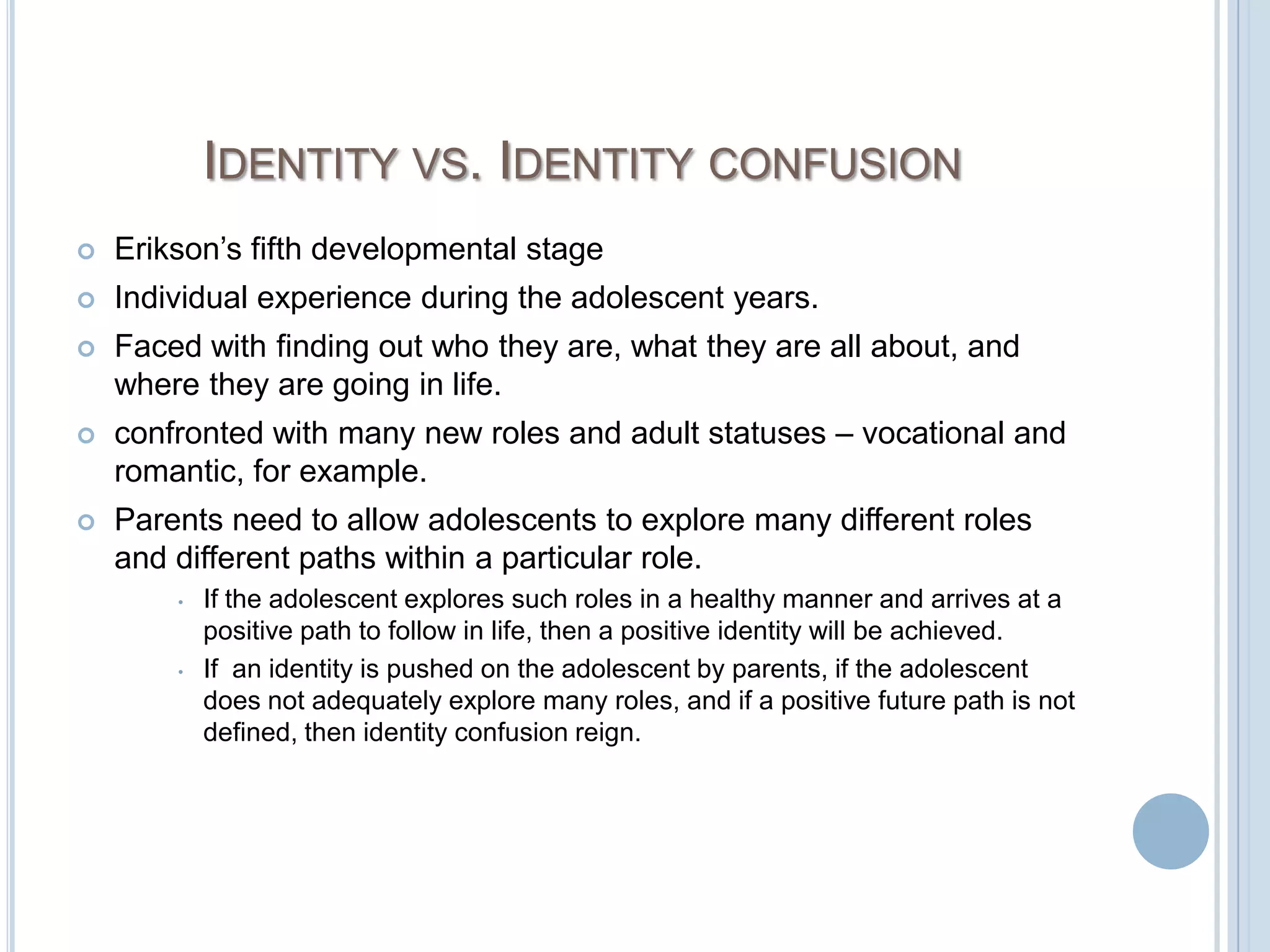
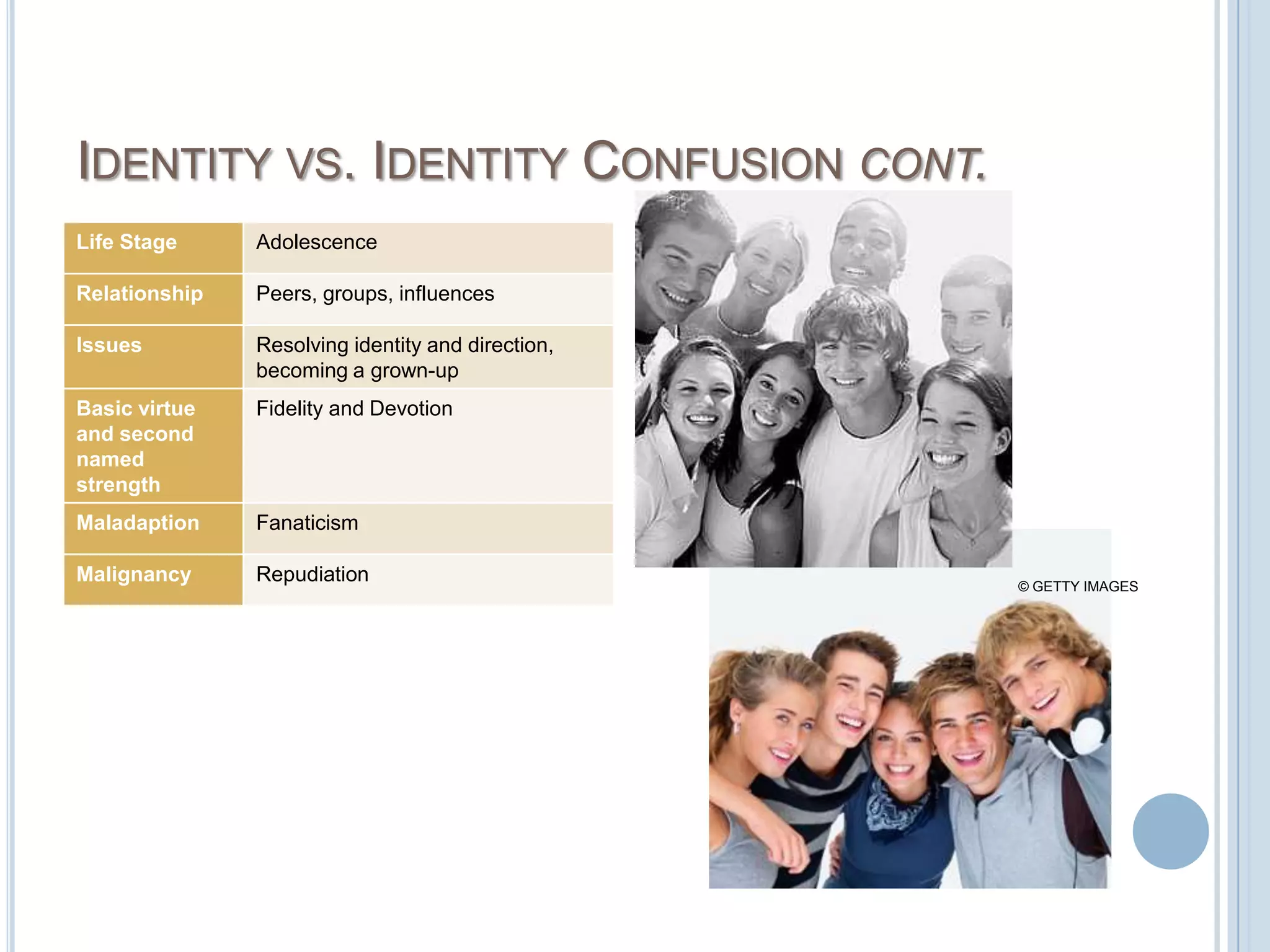
    Identity vs. Identityconfusion Erikson’s fifth developmental stageIndividual experience during the adolescent years.Faced with finding out who they are, what they are all about, and where they are going in life.confronted with many new roles and adult statuses – vocational and romantic, for example. Parents need to allow adolescents to explore many different roles and different paths within a particular role.If the adolescent explores such roles in a healthy manner and arrives at a positive path to follow in life, then a positive identity will be achieved.
  • 30.
    If anidentity is pushed on the adolescent by parents, if the adolescent does not adequately explore many roles, and if a positive future path is not defined, then identity confusion reign. Identity vs. Identity Confusion cont. © GETTY IMAGES
  • 31.
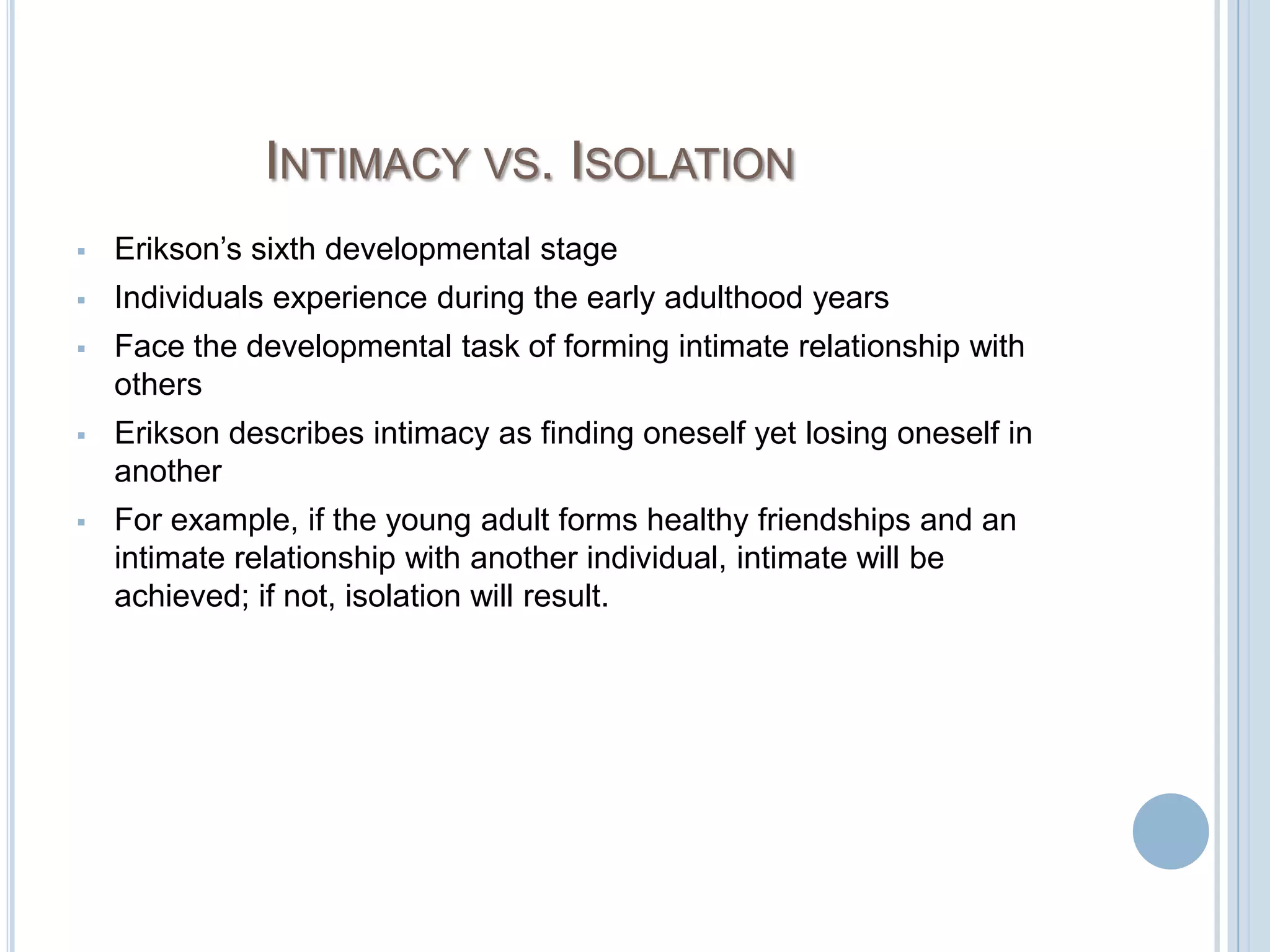
    Intimacy vs. IsolationErikson’ssixth developmental stage
  • 32.
    Individuals experience duringthe early adulthood years
  • 33.
    Face the developmentaltask of forming intimate relationship with others
  • 34.
    Erikson describes intimacyas finding oneself yet losing oneself in another
  • 35.
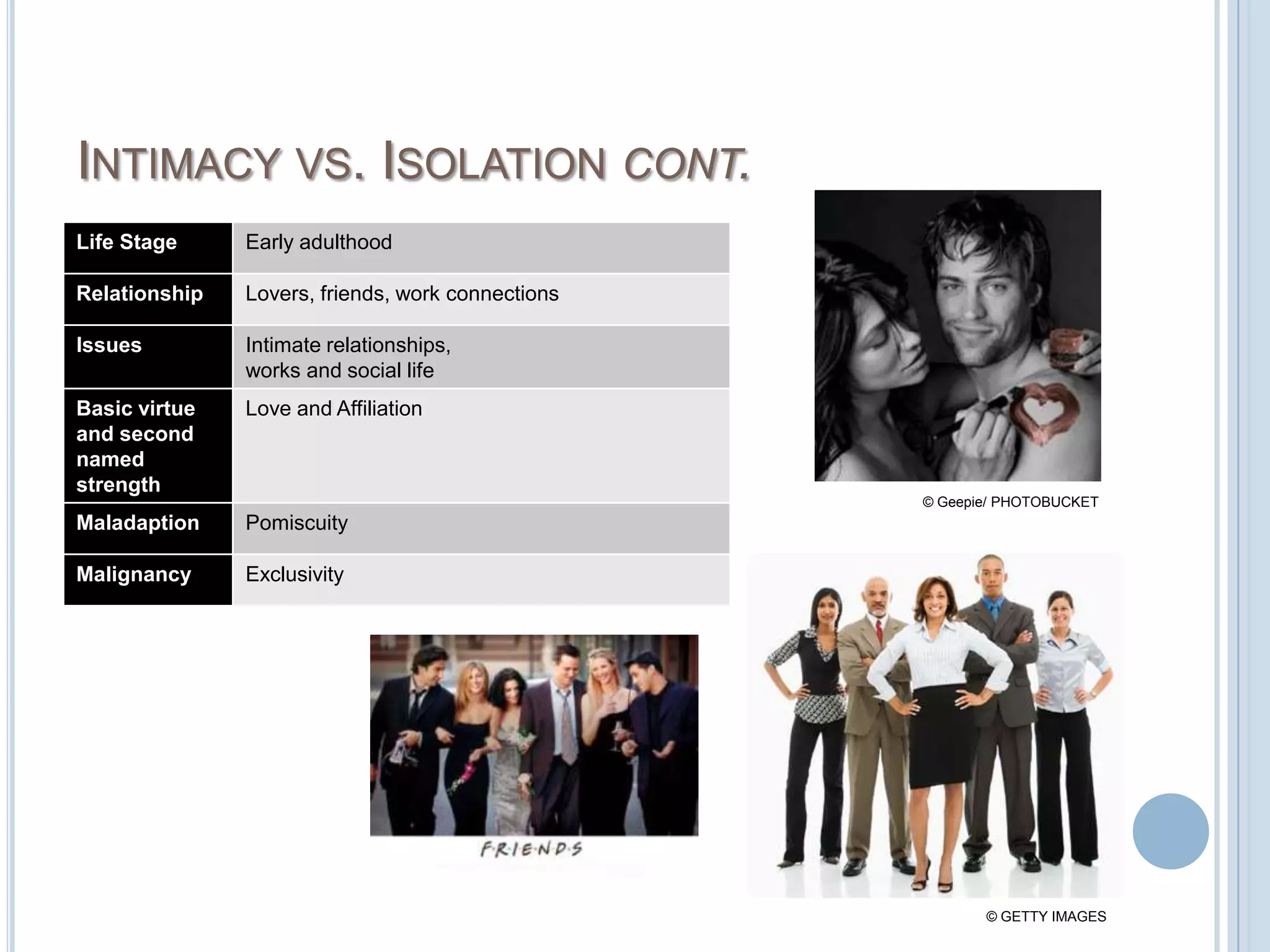
    For example, ifthe young adult forms healthy friendships and an intimate relationship with another individual, intimate will be achieved; if not, isolation will result.Intimacy vs. Isolation cont.© Geepie/ PHOTOBUCKET© GETTY IMAGES
  • 36.
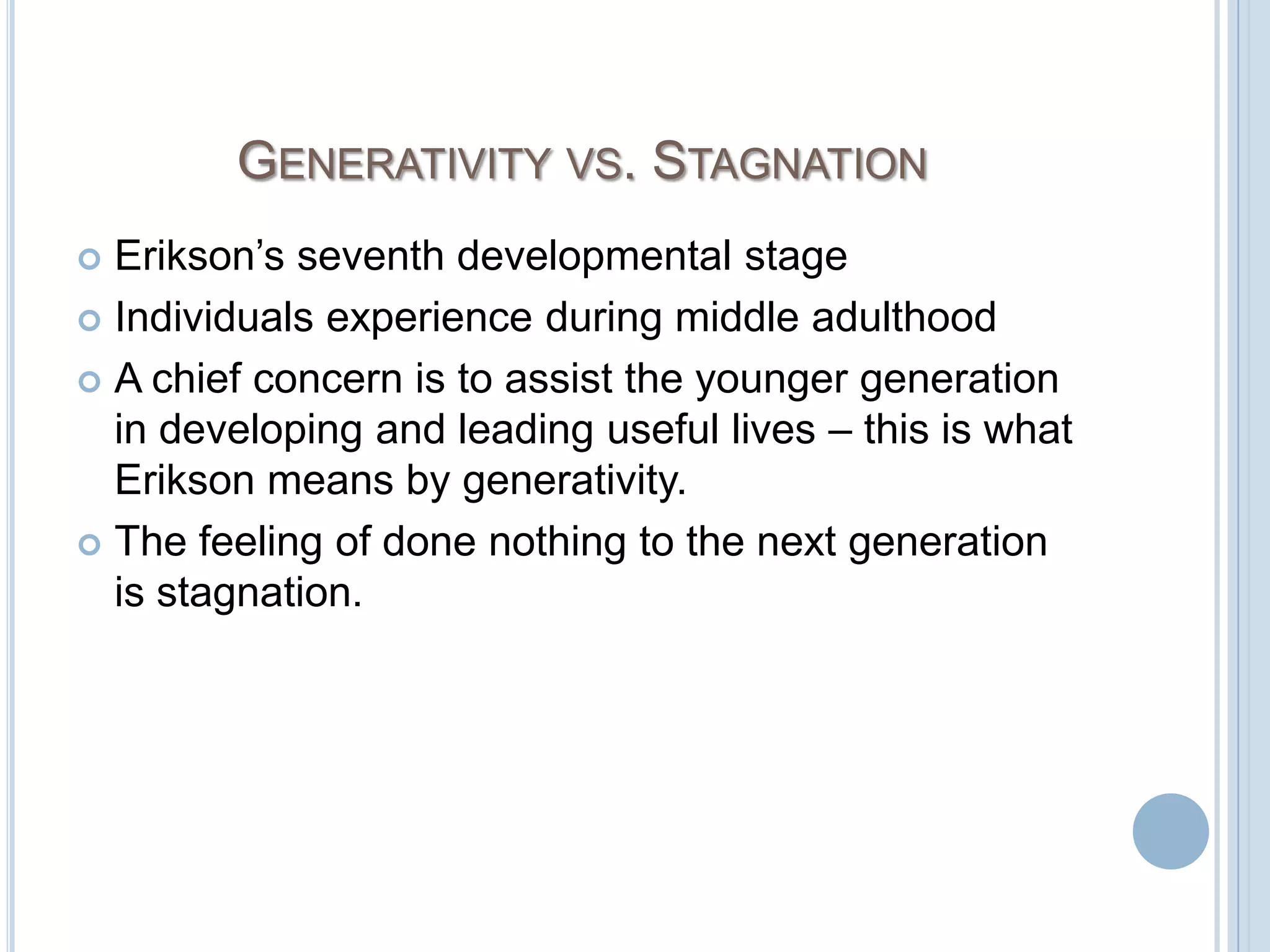
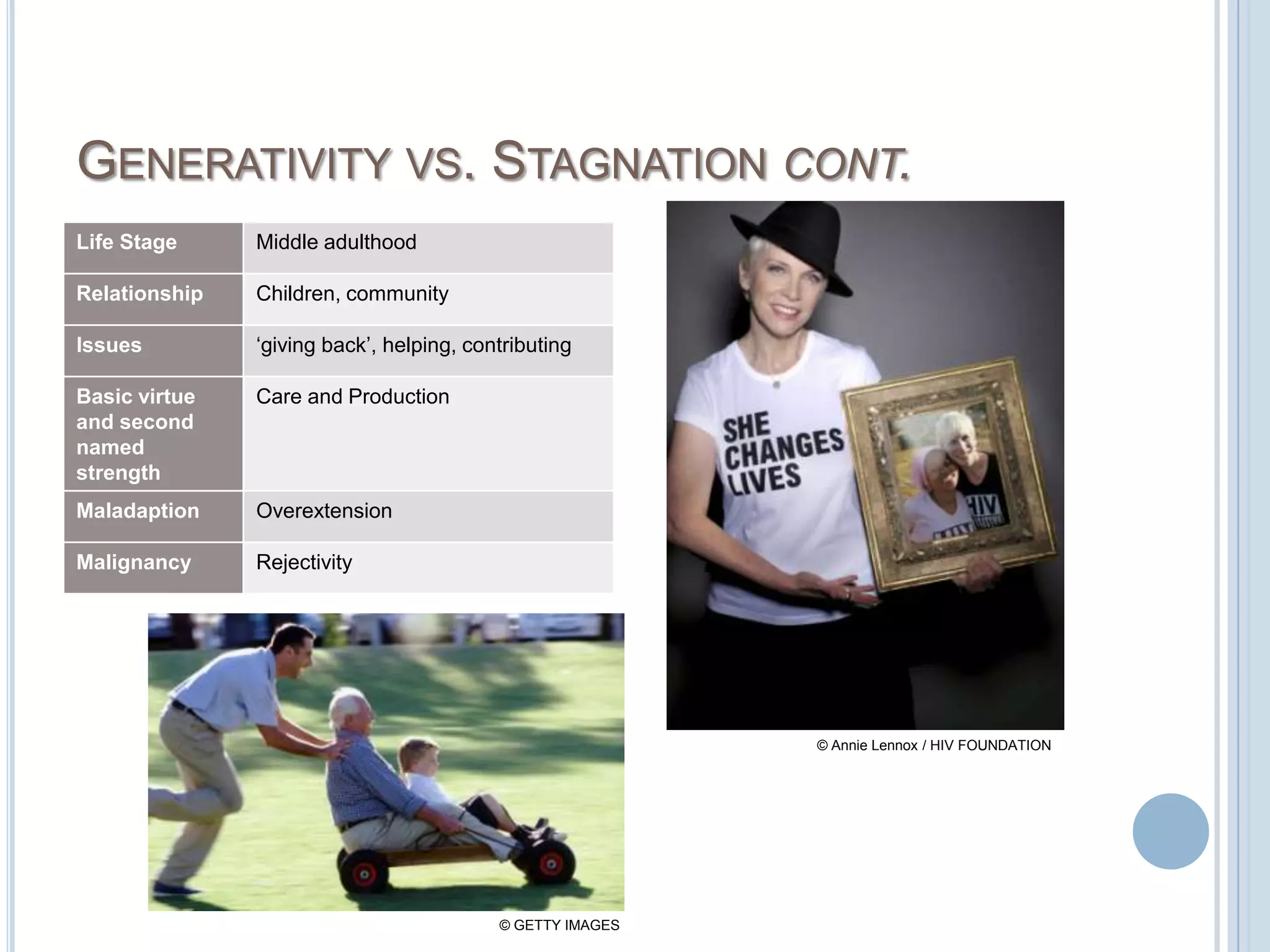
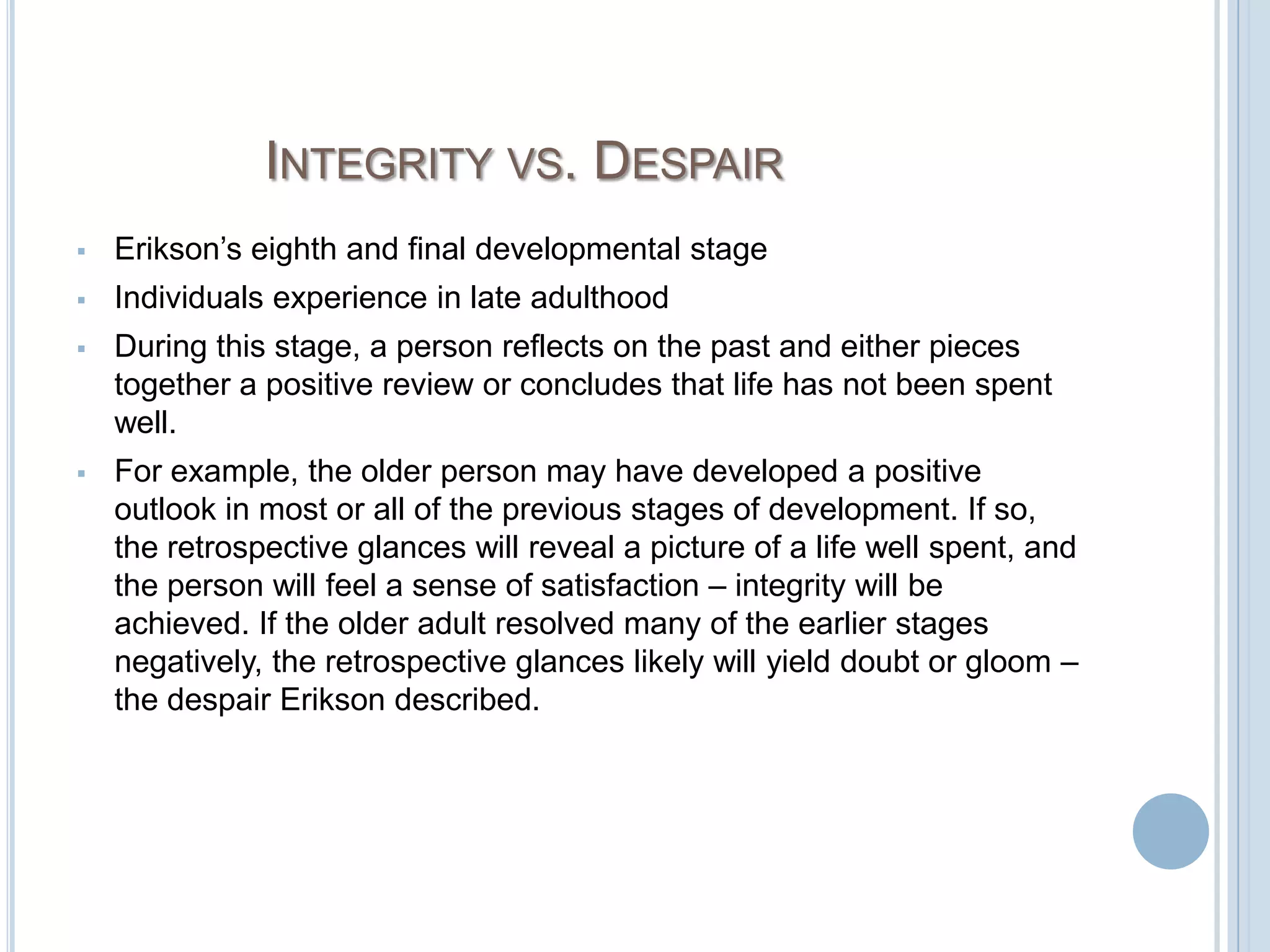
    Generativity vs. StagnationErikson’sseventh developmental stageIndividuals experience during middle adulthoodA chief concern is to assist the younger generation in developing and leading useful lives – this is what Erikson means by generativity.The feeling of done nothing to the next generation is stagnation.
  • 37.
    Generativity vs. Stagnationcont.© Annie Lennox / HIV FOUNDATION© GETTY IMAGES
  • 38.
    Integrity vs. DespairErikson’seighth and final developmental stage
  • 39.
  • 40.
    During this stage,a person reflects on the past and either pieces together a positive review or concludes that life has not been spent well.
  • 41.
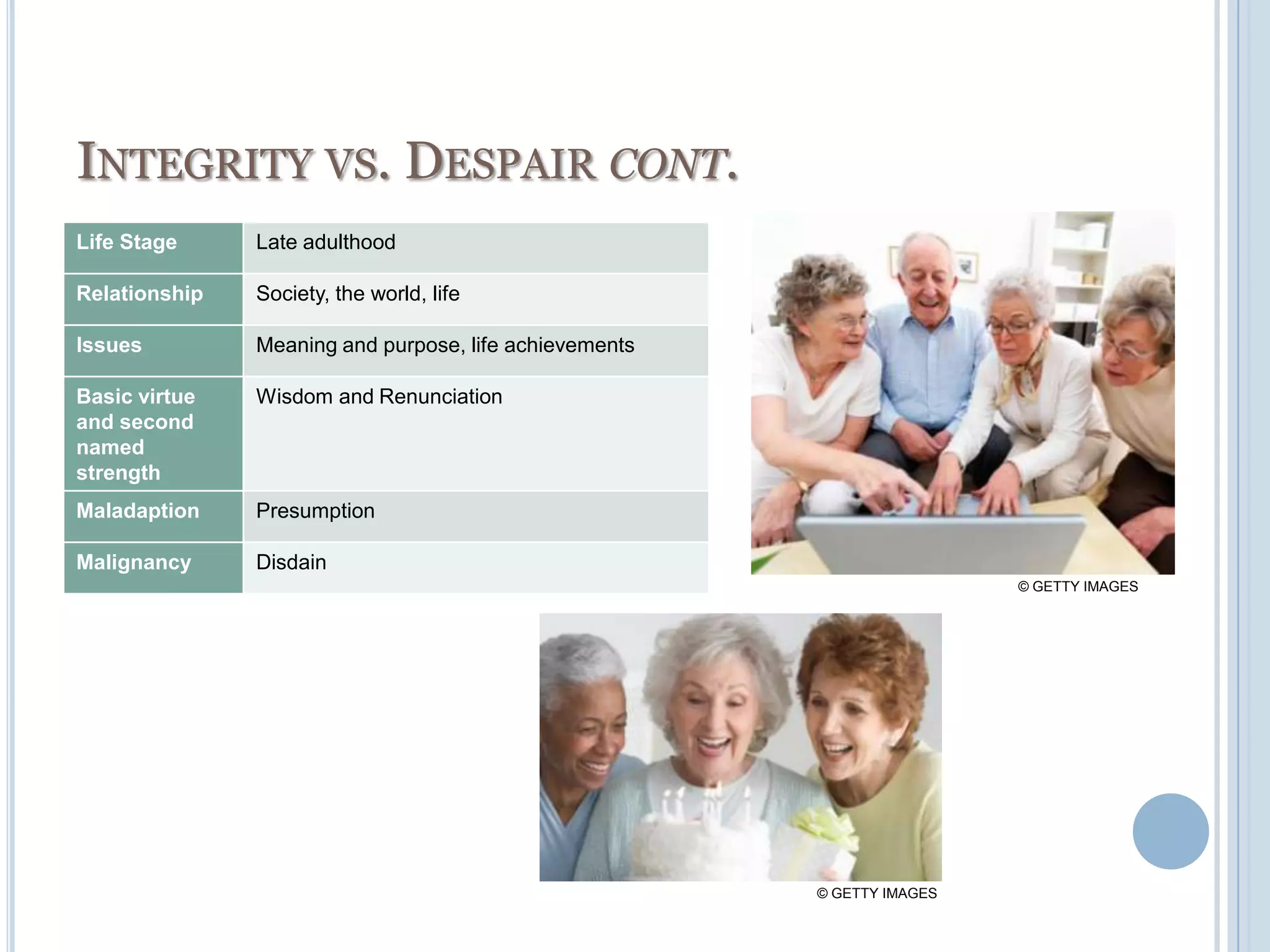
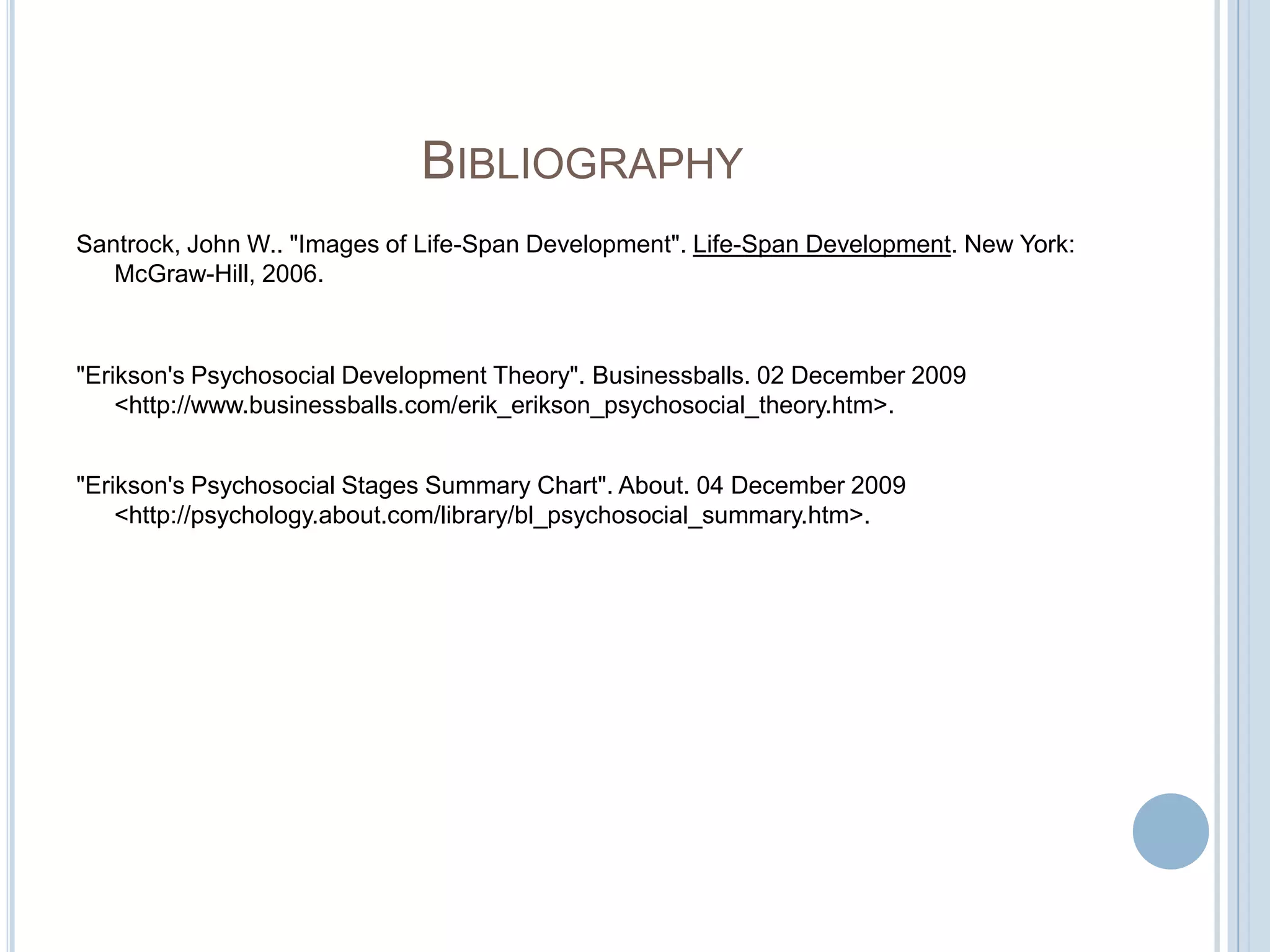
    For example, theolder person may have developed a positive outlook in most or all of the previous stages of development. If so, the retrospective glances will reveal a picture of a life well spent, and the person will feel a sense of satisfaction – integrity will be achieved.If the older adult resolved many of the earlier stages negatively, the retrospective glances likely will yield doubt or gloom – the despair Erikson described. Integrity vs. Despair cont. © GETTY IMAGES© GETTY IMAGES
  • 42.
    BibliographySantrock, John W.."Images of Life-Span Development". Life-Span Development. New York: McGraw-Hill, 2006. "Erikson's Psychosocial Development Theory". Businessballs. 02 December 2009 <http://www.businessballs.com/erik_erikson_psychosocial_theory.htm>. "Erikson's Psychosocial Stages Summary Chart". About. 04 December 2009 <http://psychology.about.com/library/bl_psychosocial_summary.htm>.