I ndirect and  R eported  Q uestions
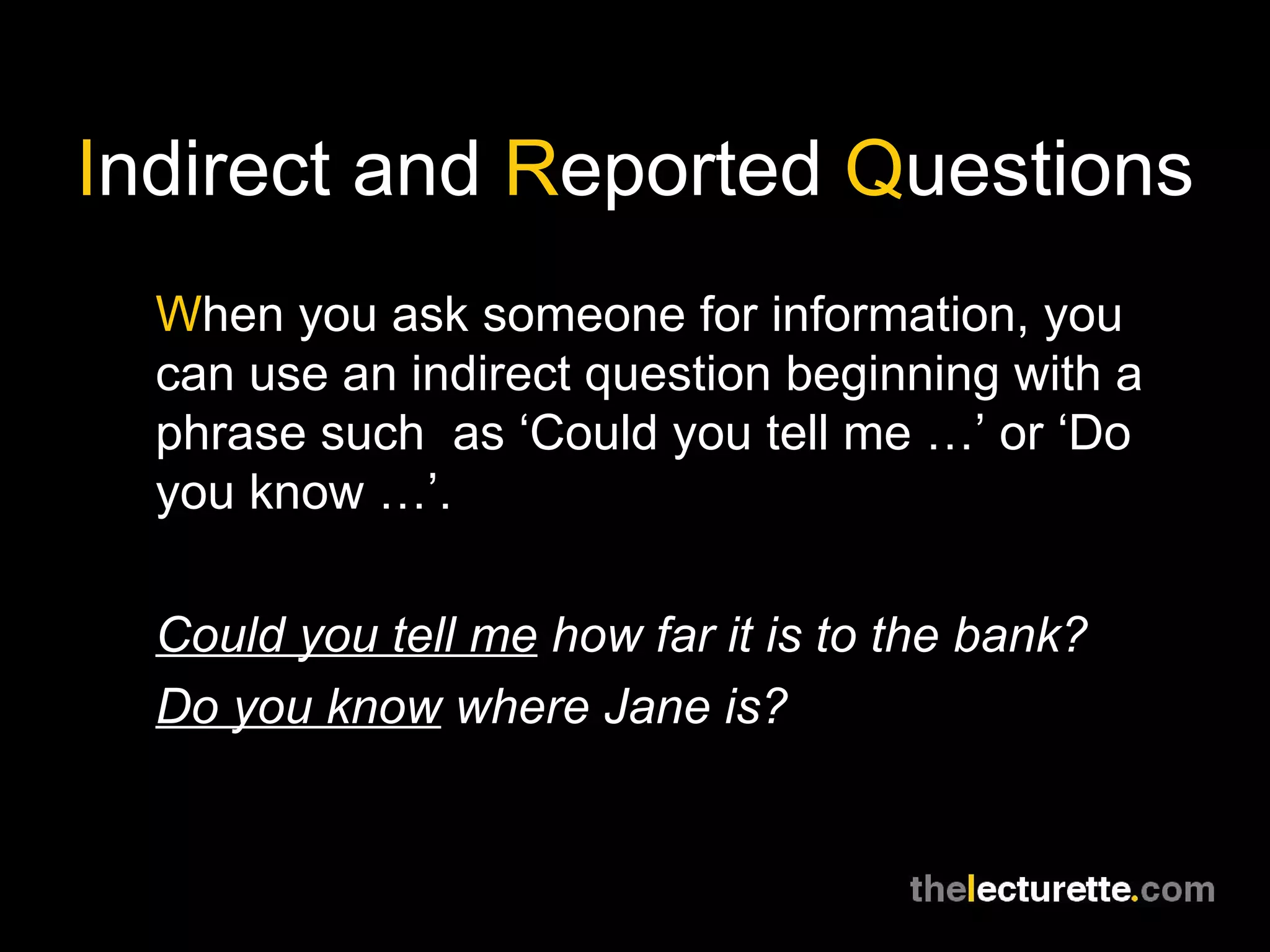
I ndirect and  R eported  Q uestions W hen you ask someone for information, you can use an indirect question beginning with a phrase such  as ‘Could you tell me …’ or ‘Do you know …’. Could you tell me  how far it is to the bank? Do you know  where Jane is?
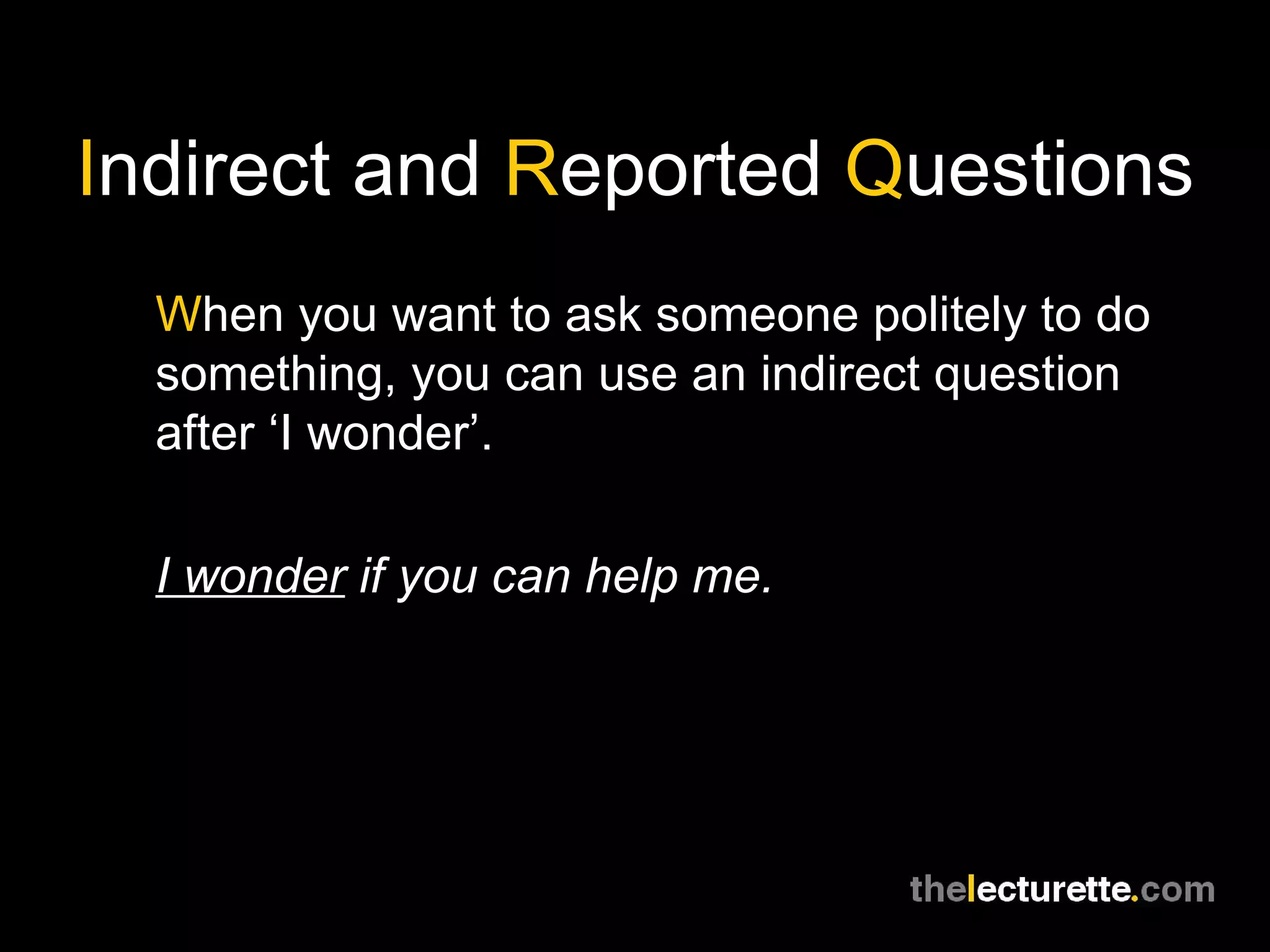
I ndirect and  R eported  Q uestions W hen you want to ask someone politely to do something, you can use an indirect question after ‘I wonder’. I wonder  if you can help me.
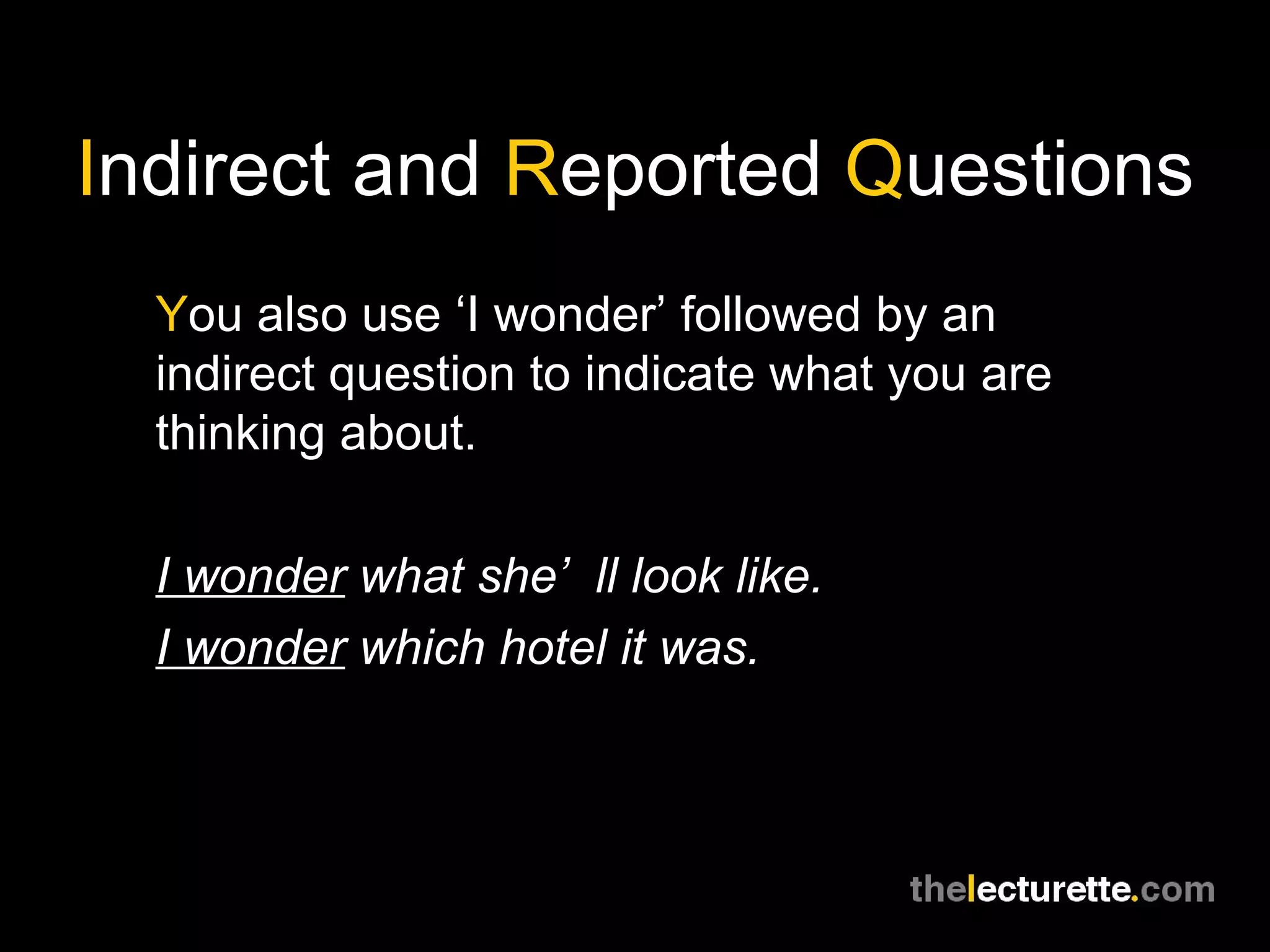
I ndirect and  R eported  Q uestions Y ou also use ‘I wonder’ followed by an indirect question to indicate what you are thinking about. I wonder  what she’ll look like. I wonder  which hotel it was.
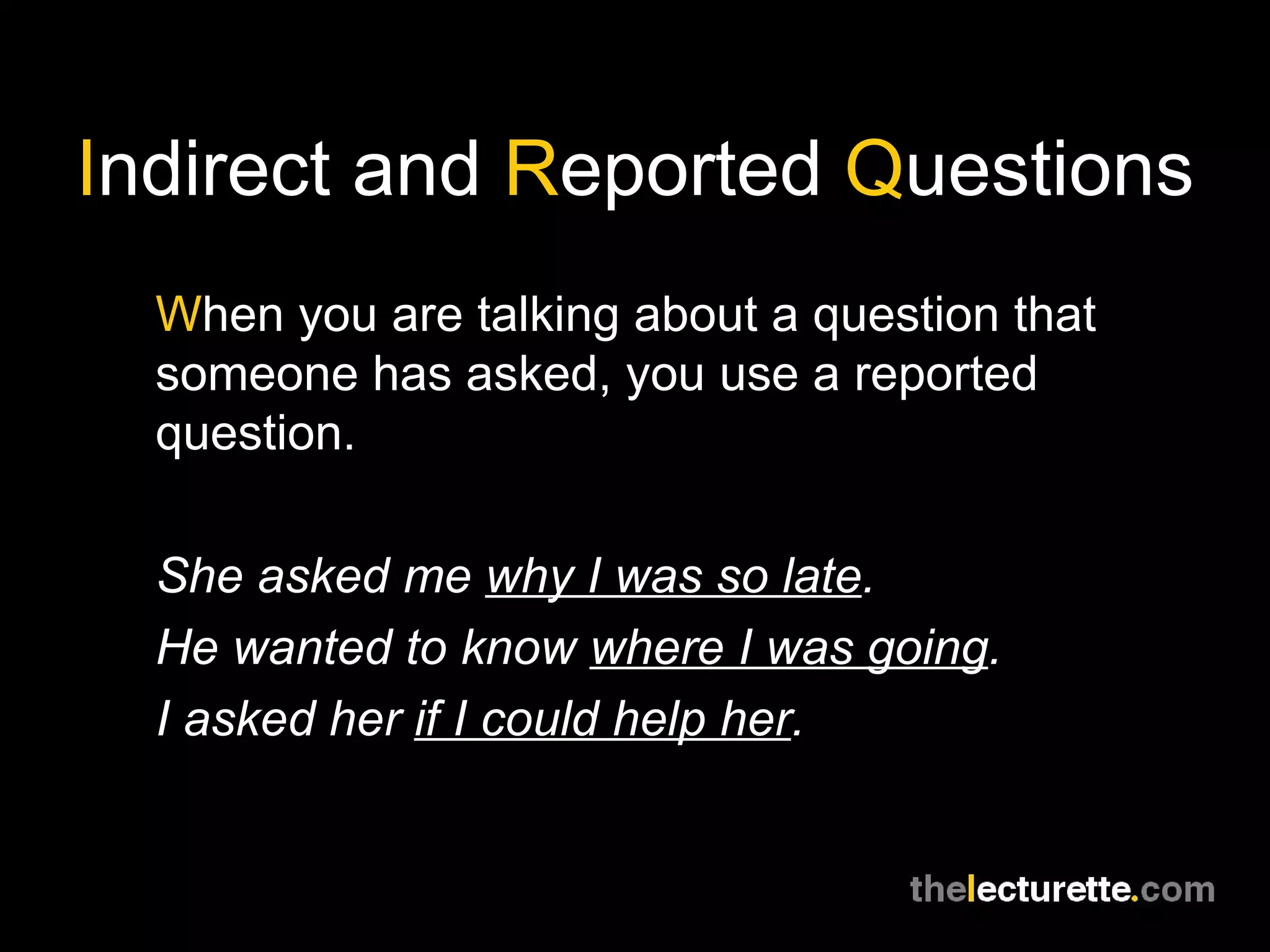
I ndirect and  R eported  Q uestions W hen you are talking about a question that someone has asked, you use a reported question. She asked me  why I was so late . He wanted to know  where I was going . I asked her  if I could help her .
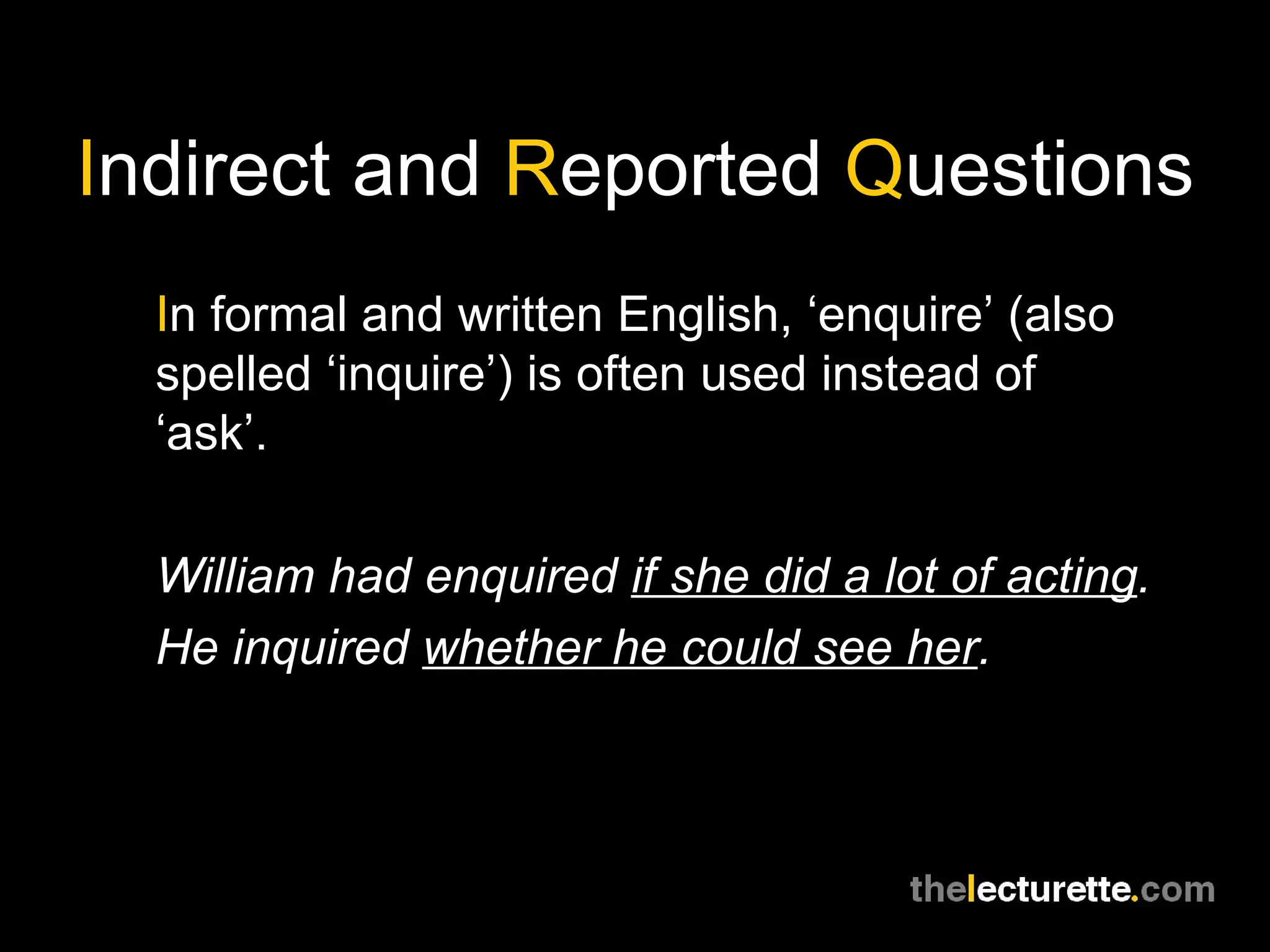
I ndirect and  R eported  Q uestions I n formal and written English, ‘enquire’ (also spelled ‘inquire’) is often used instead of ‘ask’. William had enquired  if she did a lot of acting . He inquired  whether he could see her .
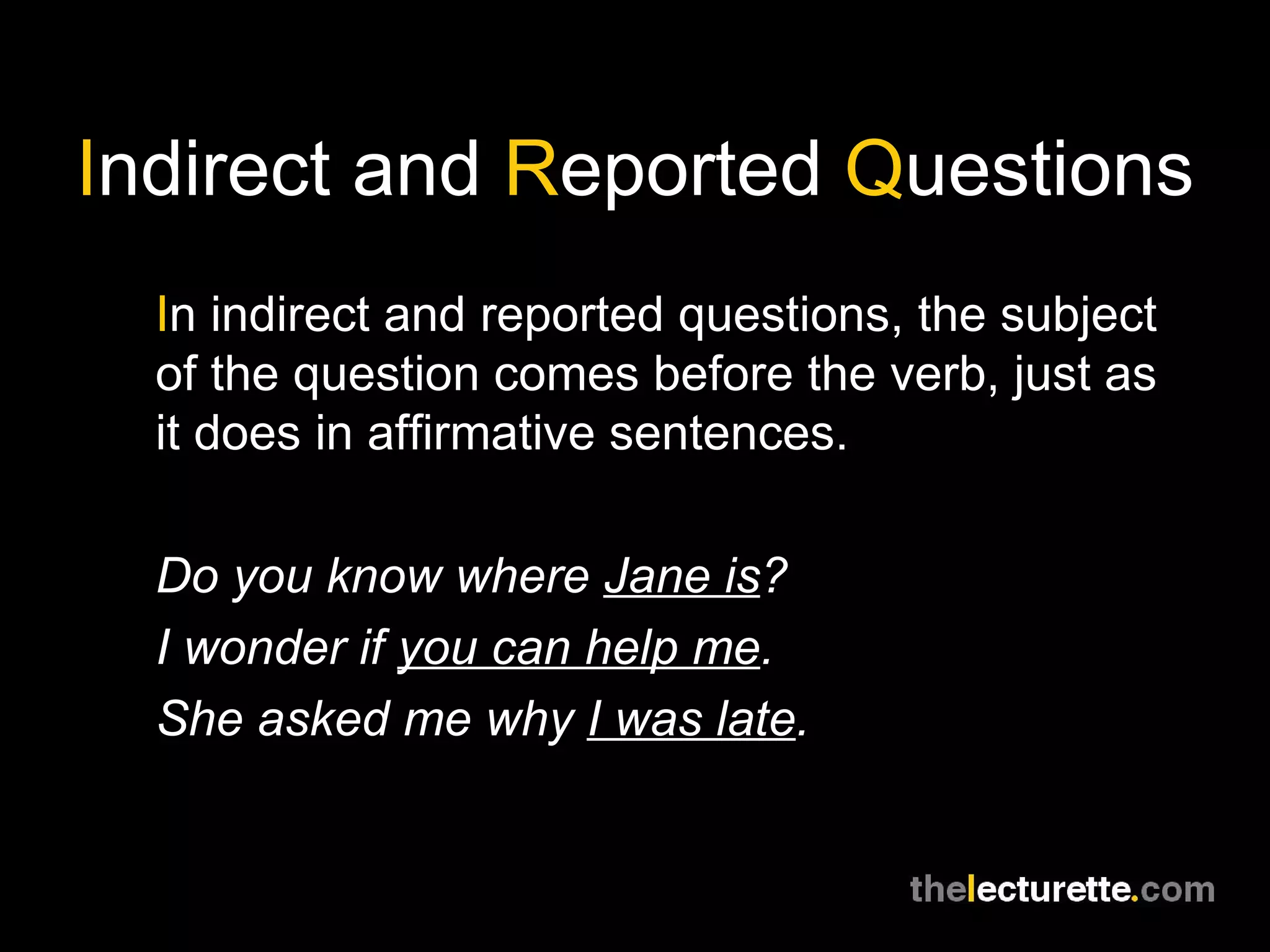
I ndirect and  R eported  Q uestions I n indirect and reported questions, the subject of the question comes before the verb, just as it does in affirmative sentences. Do you know where  Jane is ? I wonder if  you can help me . She asked me why  I was late .
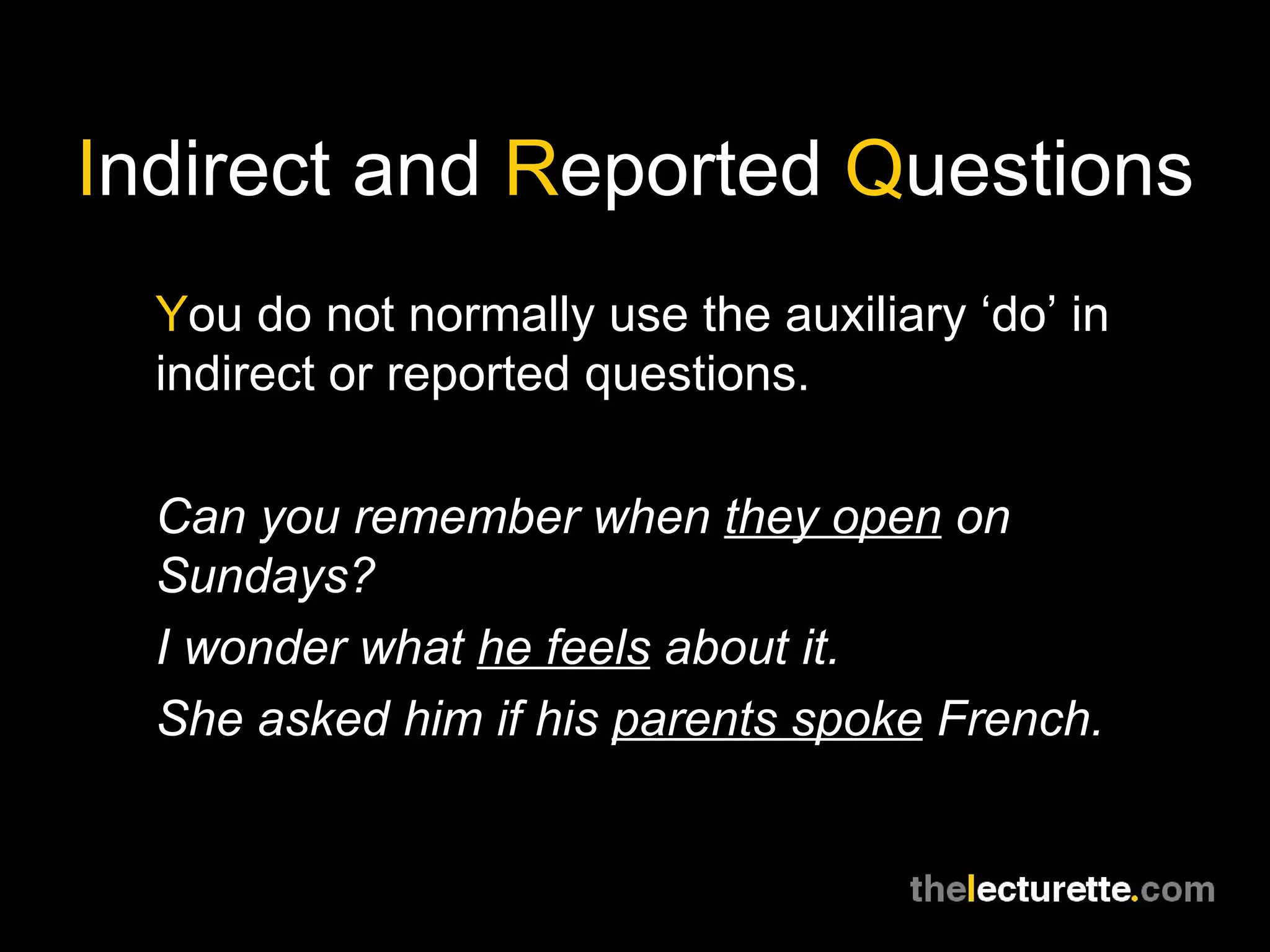
I ndirect and  R eported  Q uestions Y ou do not normally use the auxiliary ‘do’ in indirect or reported questions. Can you remember when  they open  on Sundays? I wonder what  he feels  about it. She asked him if his  parents spoke  French.
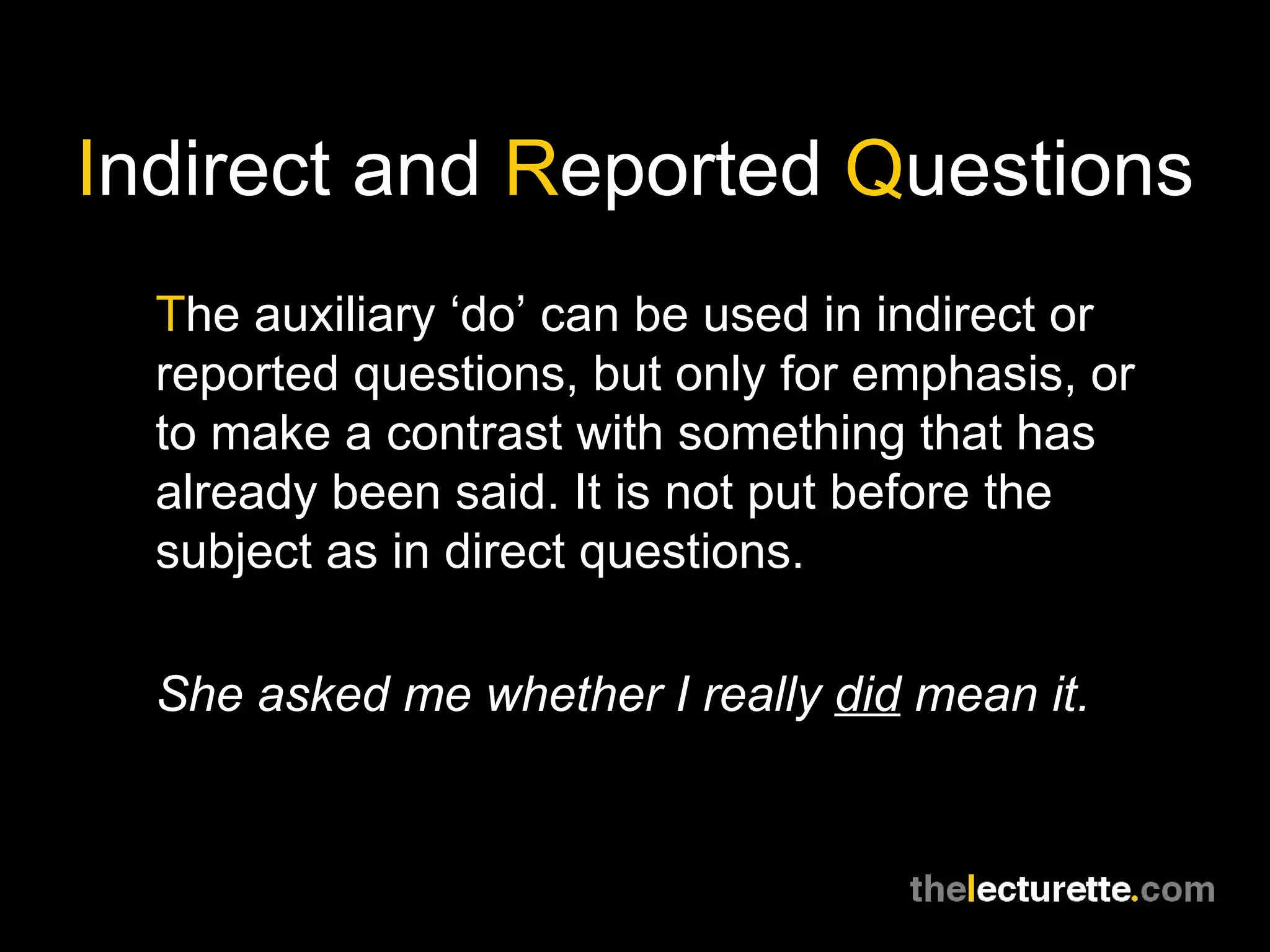
I ndirect and  R eported  Q uestions T he auxiliary ‘do’ can be used in indirect or reported questions, but only for emphasis, or to make a contrast with something that has already been said. It is not put before the subject as in direct questions. She asked me whether I really  did  mean it.
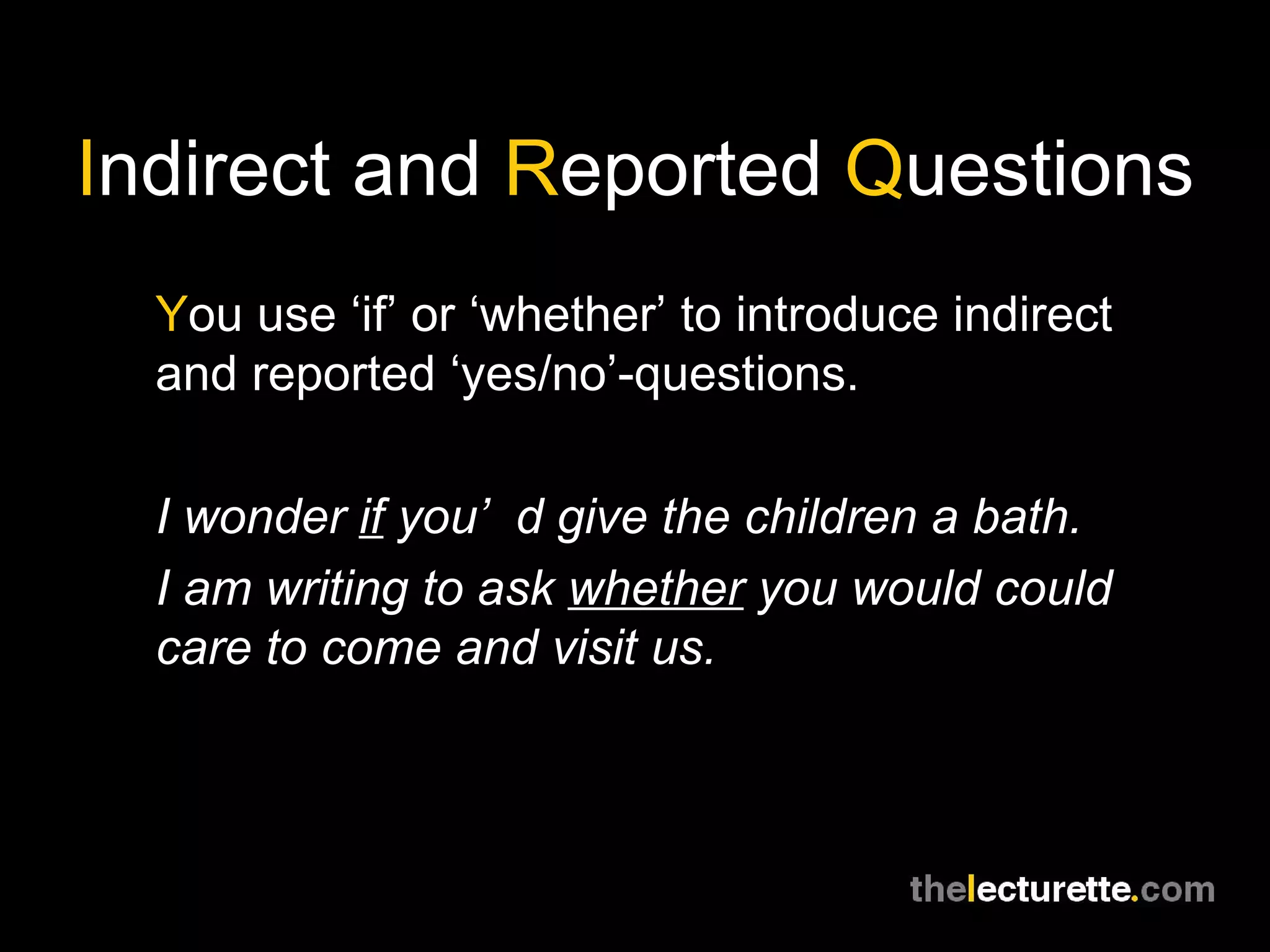
I ndirect and  R eported  Q uestions Y ou use ‘if’ or ‘whether’ to introduce indirect and reported ‘yes/no’-questions. I wonder  if  you’d give the children a bath. I am writing to ask  whether  you would could care to come and visit us.
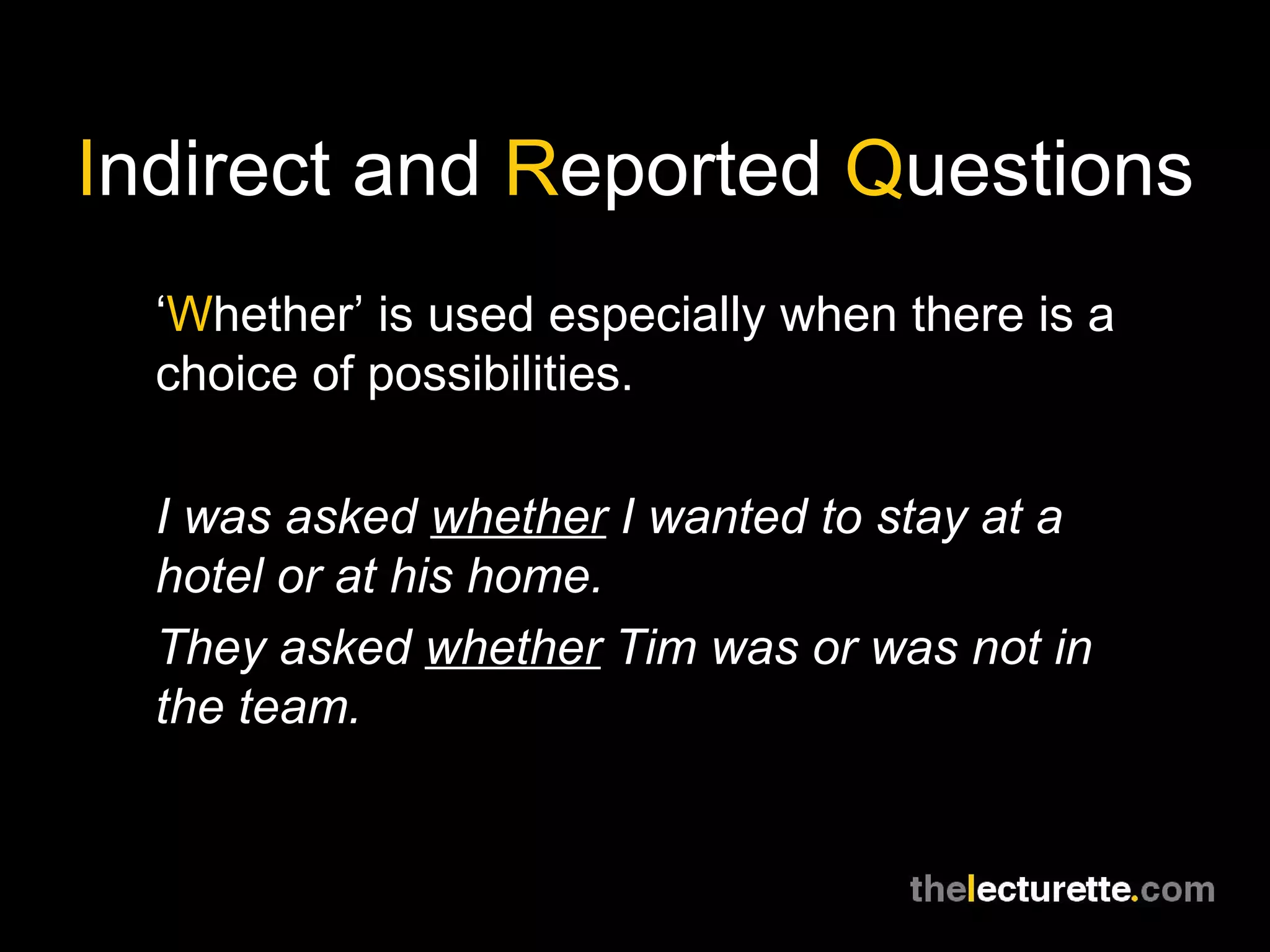
I ndirect and  R eported  Q uestions ‘ W hether’ is used especially when there is a choice of possibilities. I was asked  whether  I wanted to stay at a hotel or at his home. They asked  whether  Tim was or was not in the team.
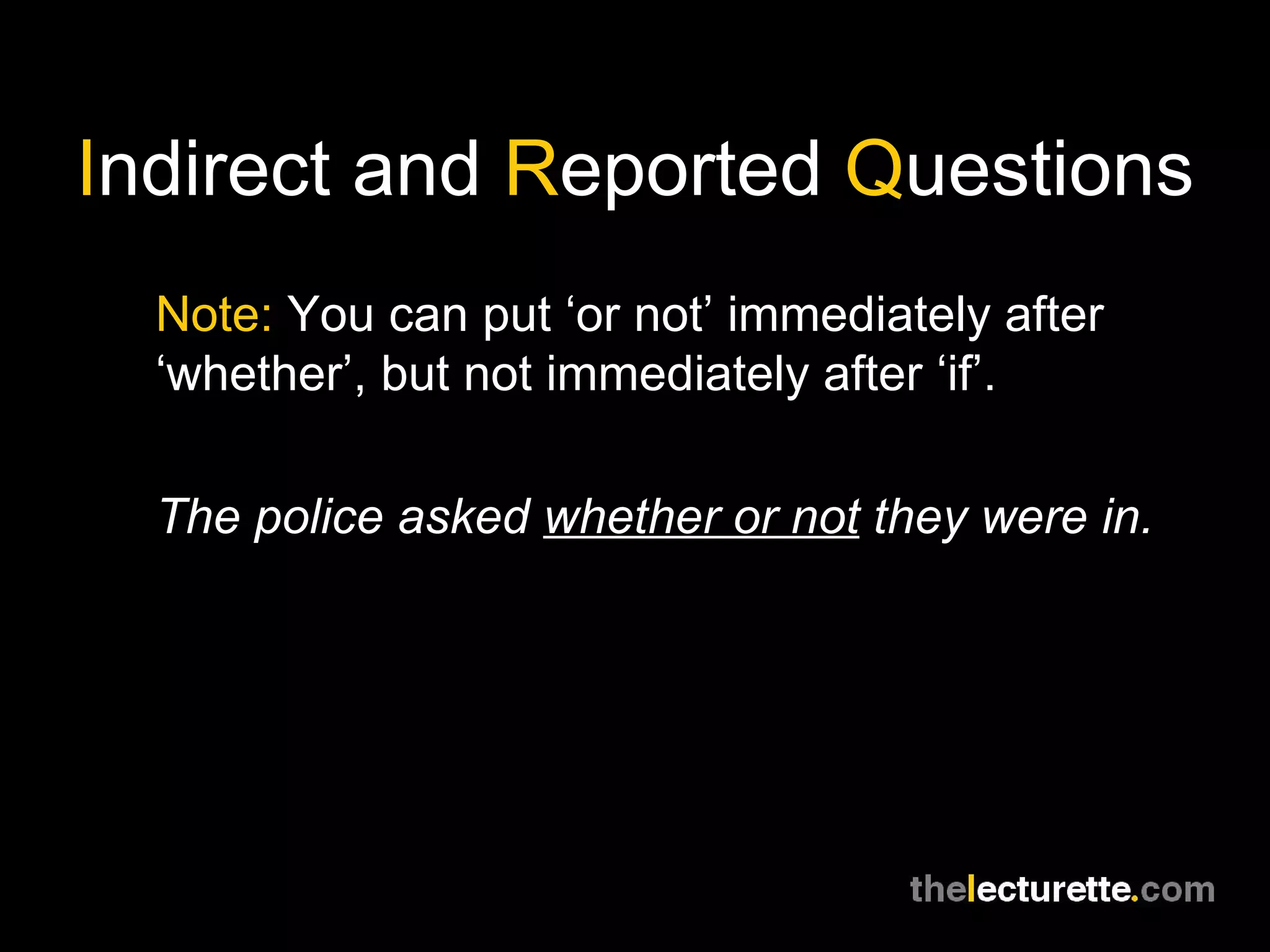
I ndirect and  R eported  Q uestions Note:  You can put ‘or not’ immediately after ‘whether’, but not immediately after ‘if’. The police asked  whether or not  they were in.
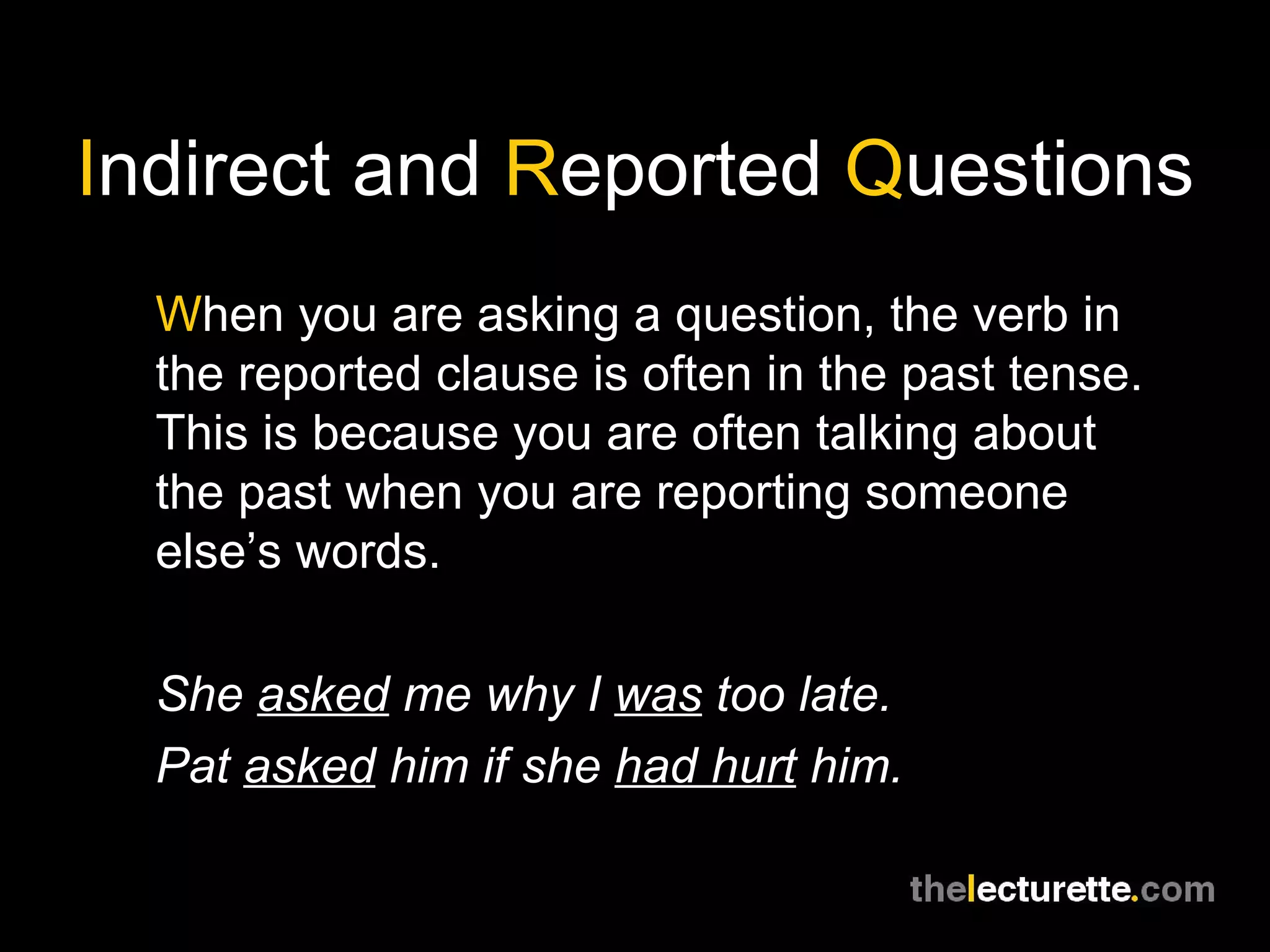
I ndirect and  R eported  Q uestions W hen you are asking a question, the verb in the reported clause is often in the past tense. This is because you are often talking about the past when you are reporting someone else’s words. She  asked  me why I  was  too late. Pat  asked  him if she  had hurt  him.
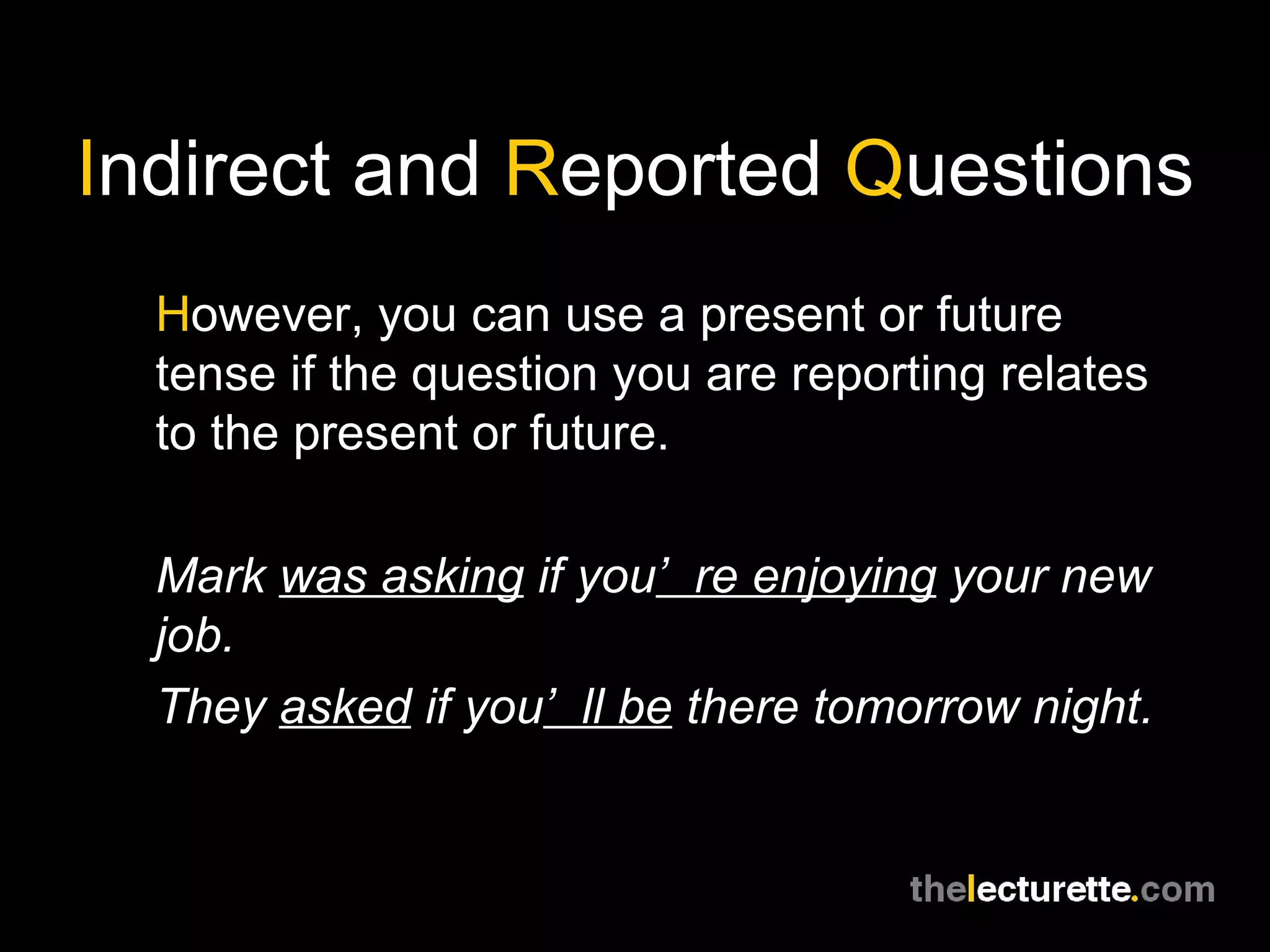
I ndirect and  R eported  Q uestions H owever, you can use a present or future tense if the question you are reporting relates to the present or future. Mark  was asking  if you ’re enjoying  your new job. They  asked  if you ’ll be  there tomorrow night.
Q uestions? For more slide presentations visit:

Indirect and Reported Questions

  • 1.
    I ndirect and R eported Q uestions
  • 2.
    I ndirect and R eported Q uestions W hen you ask someone for information, you can use an indirect question beginning with a phrase such as ‘Could you tell me …’ or ‘Do you know …’. Could you tell me how far it is to the bank? Do you know where Jane is?
  • 3.
    I ndirect and R eported Q uestions W hen you want to ask someone politely to do something, you can use an indirect question after ‘I wonder’. I wonder if you can help me.
  • 4.
    I ndirect and R eported Q uestions Y ou also use ‘I wonder’ followed by an indirect question to indicate what you are thinking about. I wonder what she’ll look like. I wonder which hotel it was.
  • 5.
    I ndirect and R eported Q uestions W hen you are talking about a question that someone has asked, you use a reported question. She asked me why I was so late . He wanted to know where I was going . I asked her if I could help her .
  • 6.
    I ndirect and R eported Q uestions I n formal and written English, ‘enquire’ (also spelled ‘inquire’) is often used instead of ‘ask’. William had enquired if she did a lot of acting . He inquired whether he could see her .
  • 7.
    I ndirect and R eported Q uestions I n indirect and reported questions, the subject of the question comes before the verb, just as it does in affirmative sentences. Do you know where Jane is ? I wonder if you can help me . She asked me why I was late .
  • 8.
    I ndirect and R eported Q uestions Y ou do not normally use the auxiliary ‘do’ in indirect or reported questions. Can you remember when they open on Sundays? I wonder what he feels about it. She asked him if his parents spoke French.
  • 9.
    I ndirect and R eported Q uestions T he auxiliary ‘do’ can be used in indirect or reported questions, but only for emphasis, or to make a contrast with something that has already been said. It is not put before the subject as in direct questions. She asked me whether I really did mean it.
  • 10.
    I ndirect and R eported Q uestions Y ou use ‘if’ or ‘whether’ to introduce indirect and reported ‘yes/no’-questions. I wonder if you’d give the children a bath. I am writing to ask whether you would could care to come and visit us.
  • 11.
    I ndirect and R eported Q uestions ‘ W hether’ is used especially when there is a choice of possibilities. I was asked whether I wanted to stay at a hotel or at his home. They asked whether Tim was or was not in the team.
  • 12.
    I ndirect and R eported Q uestions Note: You can put ‘or not’ immediately after ‘whether’, but not immediately after ‘if’. The police asked whether or not they were in.
  • 13.
    I ndirect and R eported Q uestions W hen you are asking a question, the verb in the reported clause is often in the past tense. This is because you are often talking about the past when you are reporting someone else’s words. She asked me why I was too late. Pat asked him if she had hurt him.
  • 14.
    I ndirect and R eported Q uestions H owever, you can use a present or future tense if the question you are reporting relates to the present or future. Mark was asking if you ’re enjoying your new job. They asked if you ’ll be there tomorrow night.
  • 15.
    Q uestions? Formore slide presentations visit: