Unravelling low-flow, low-gradient
aortic stenosis
The Role of Imaging
Prof. Fausto J. Pinto, FESC, FACC
Head, Cardiology Dpt/University Hospital Sta Maria-HPV
University of Lisbon, Portugal
• No conflict of interest to declare regarding
this talk.
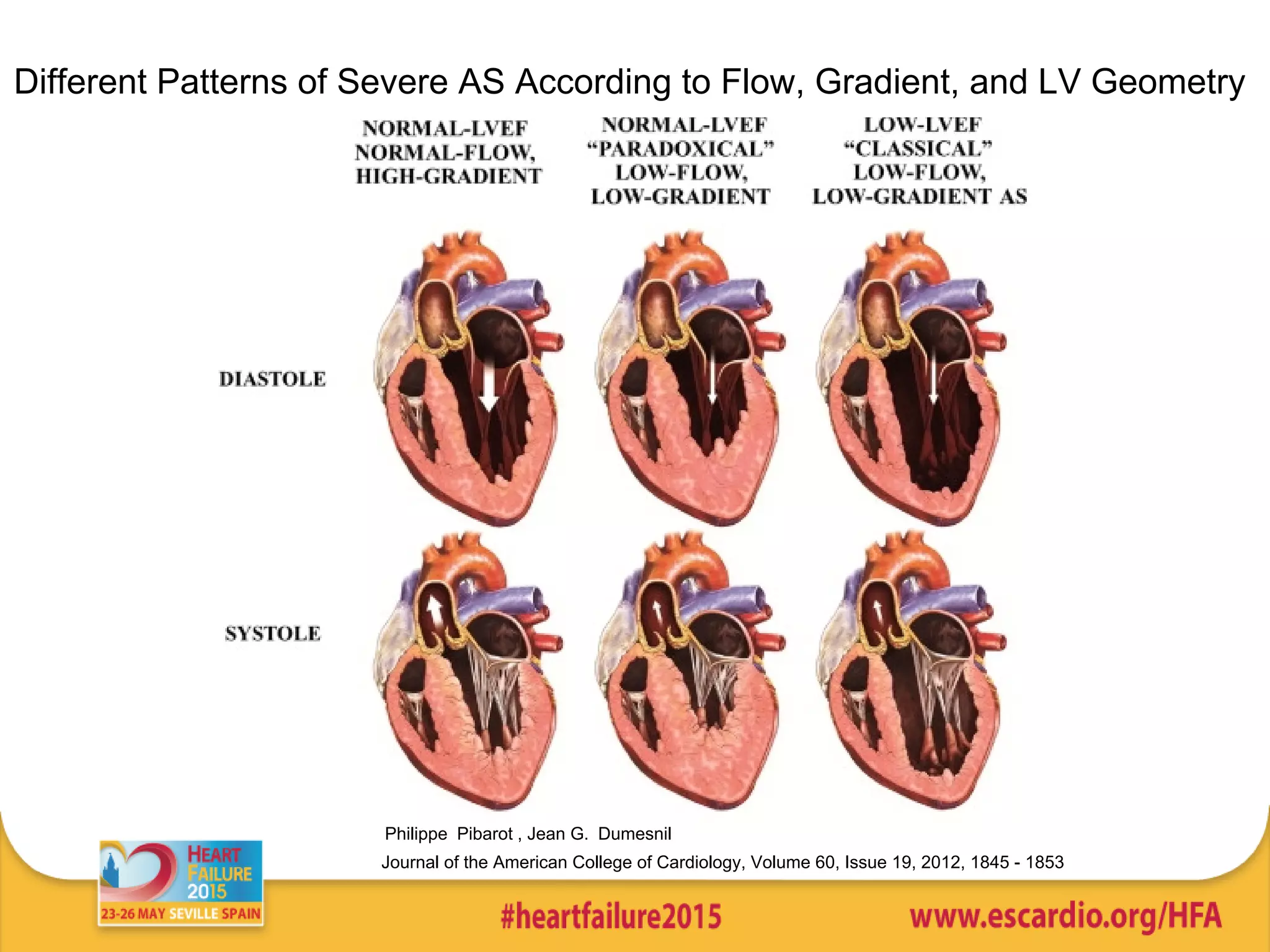
Philippe Pibarot , Jean G. Dumesnil
Different Patterns of Severe AS According to Flow, Gradient, and LV Geometry
Journal of the American College of Cardiology, Volume 60, Issue 19, 2012, 1845 - 1853
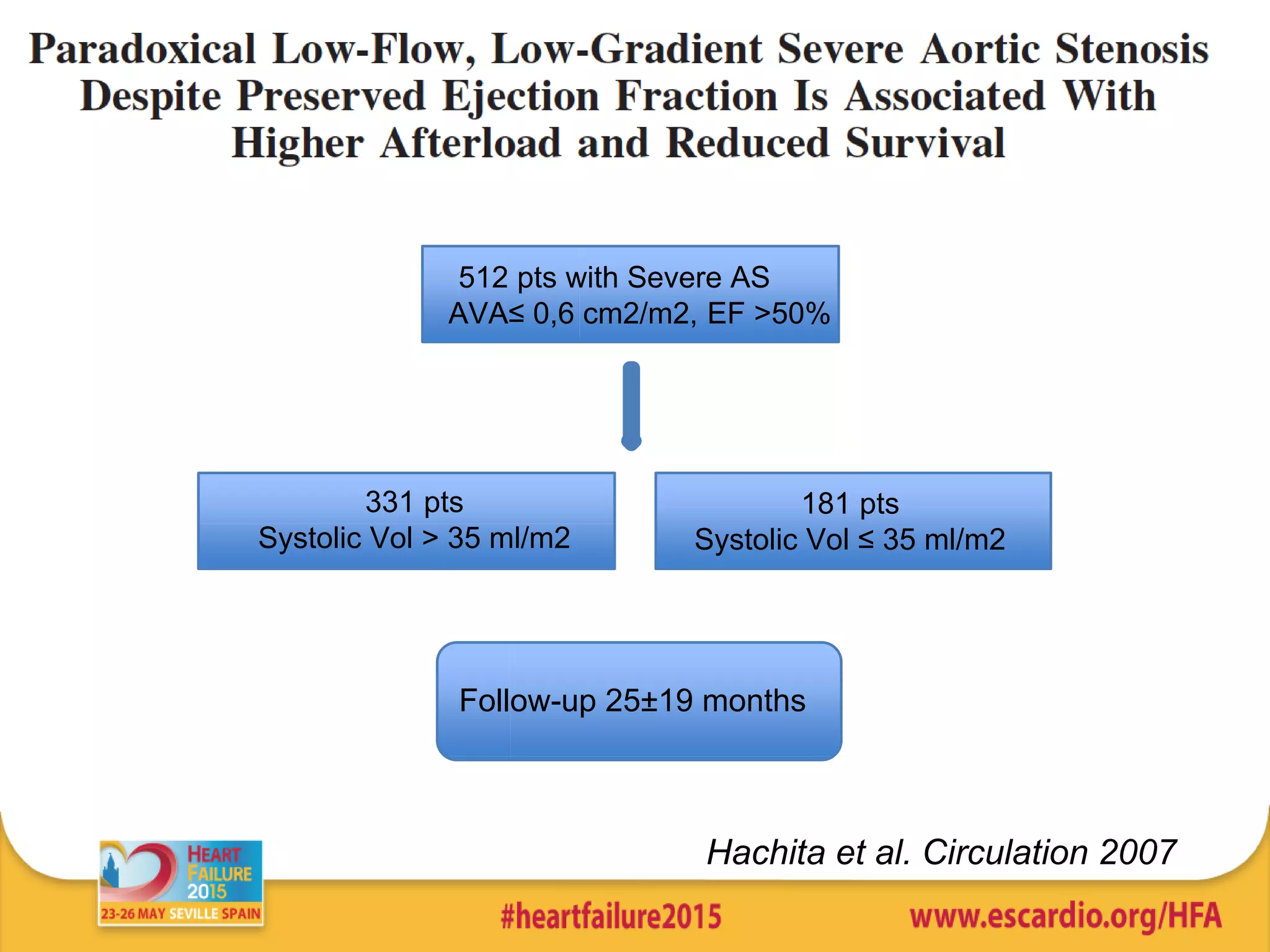
Hachita et al. Circulation 2007
512 pts with Severe AS
AVA≤ 0,6 cm2/m2, EF >50%
331 pts
Systolic Vol > 35 ml/m2
181 pts
Systolic Vol ≤ 35 ml/m2
Follow-up 25±19 months
Hachita et al. Circulation 2007
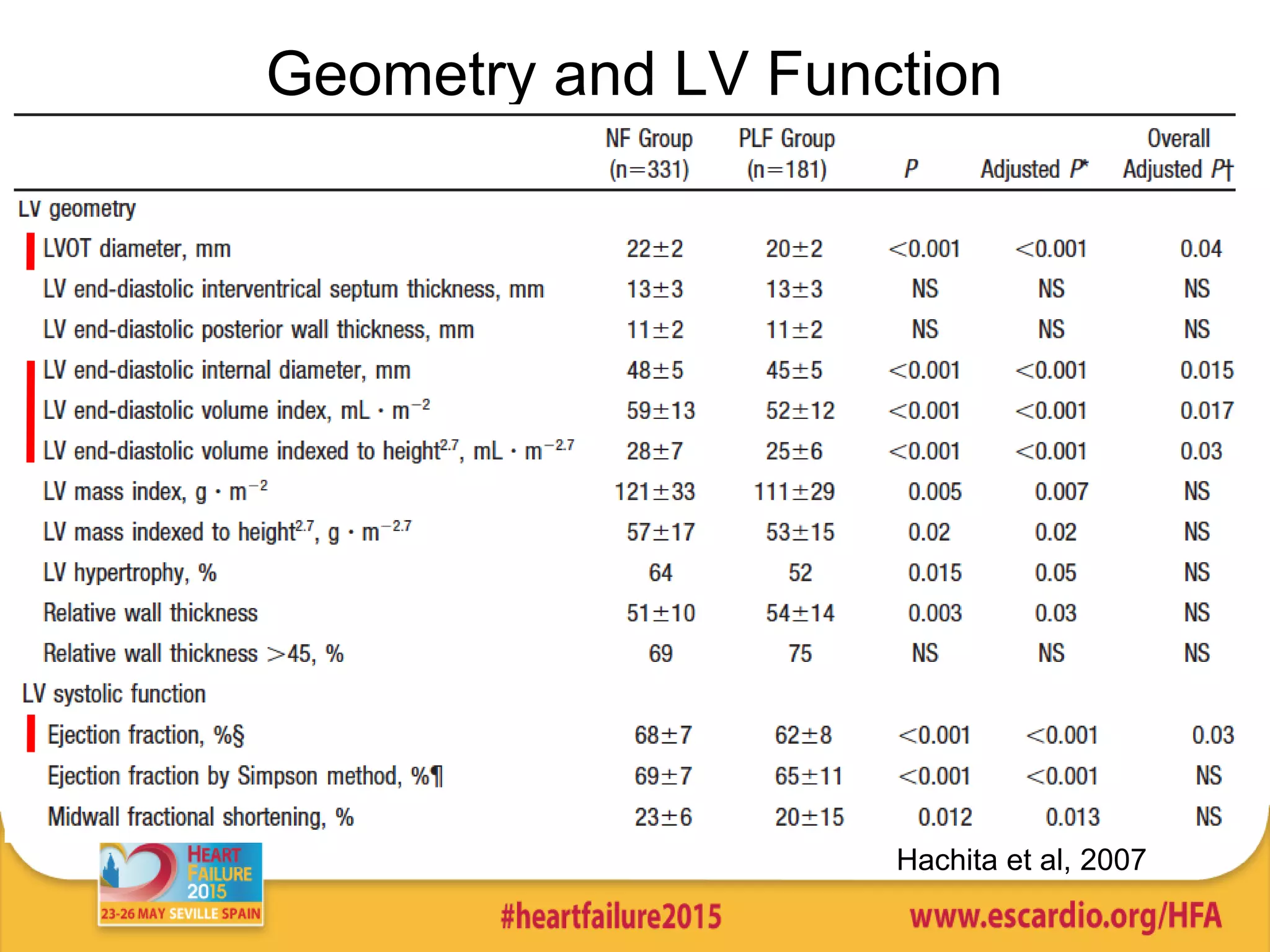
Geometry and LV Function
Hachita et al, 2007
Survival
Hachita et al. Circulation 2007
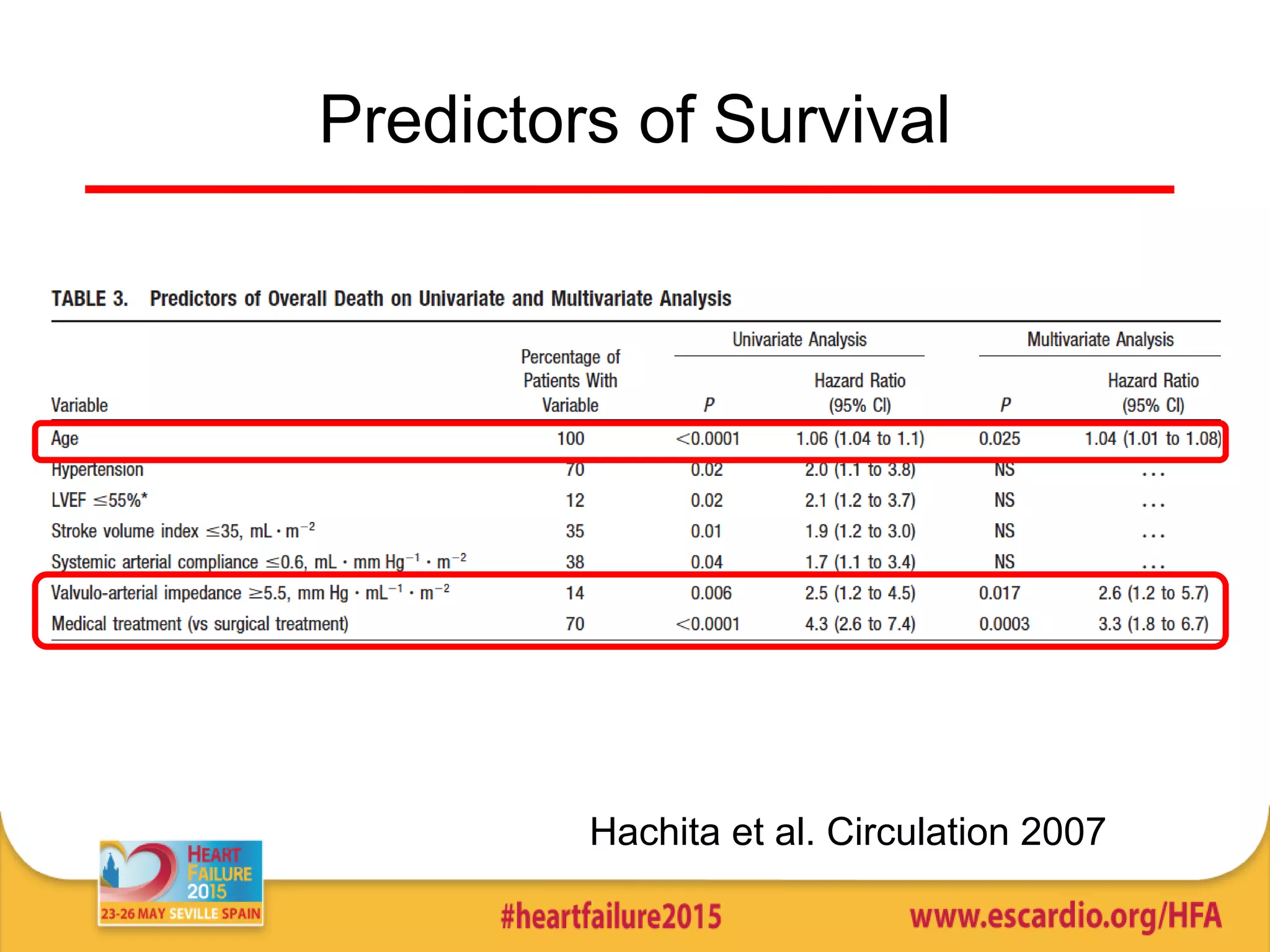
Predictors of Survival
Hachita et al. Circulation 2007
Pts with severe AS and low flow Pts com Severe AS, low flow and
normal EF
Ann Throrac Surg 2009
These studies suggest…
• A significant proportion of pts with reduced
AVA may have low flow and low gradient
despite preserved EF.
• A pattern of increased afterload, concentric
LVH and impaired survival suggests a more
advanced stage of AS.
• This situation may be under diagnosed and
not be timely treated with surgery.
Questions
• What is the mechanism underlying low flow/low
gradient in pts with severe AS and preserved
EF?
• Can we identify those pts using the currently
available techniques and criteria?
– Inconsistencies of echocg for the current criteria?
– Different severity criteria?
• What is the prognosis and treatment?
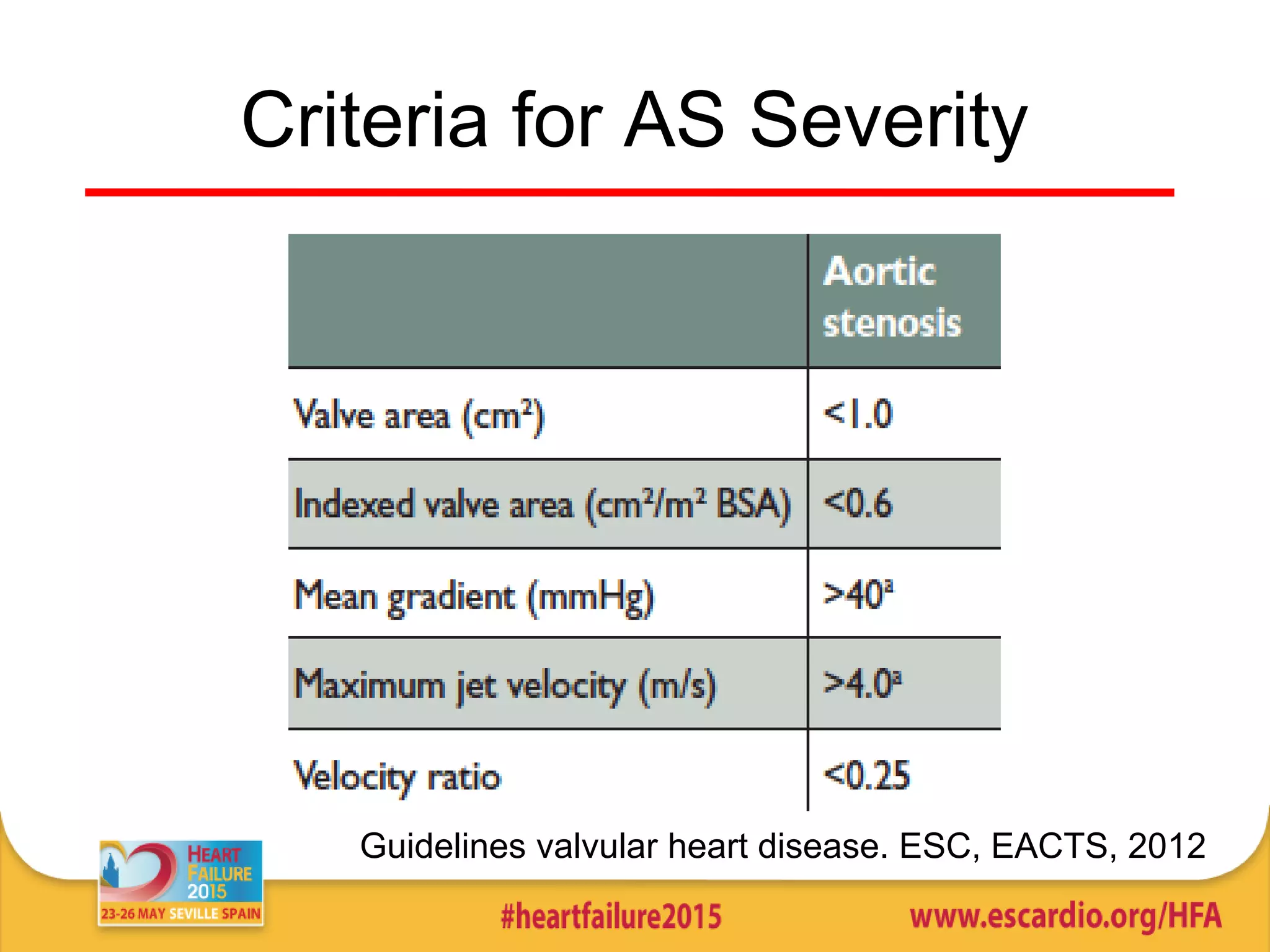
Criteria for AS Severity
Guidelines valvular heart disease. ESC, EACTS, 2012
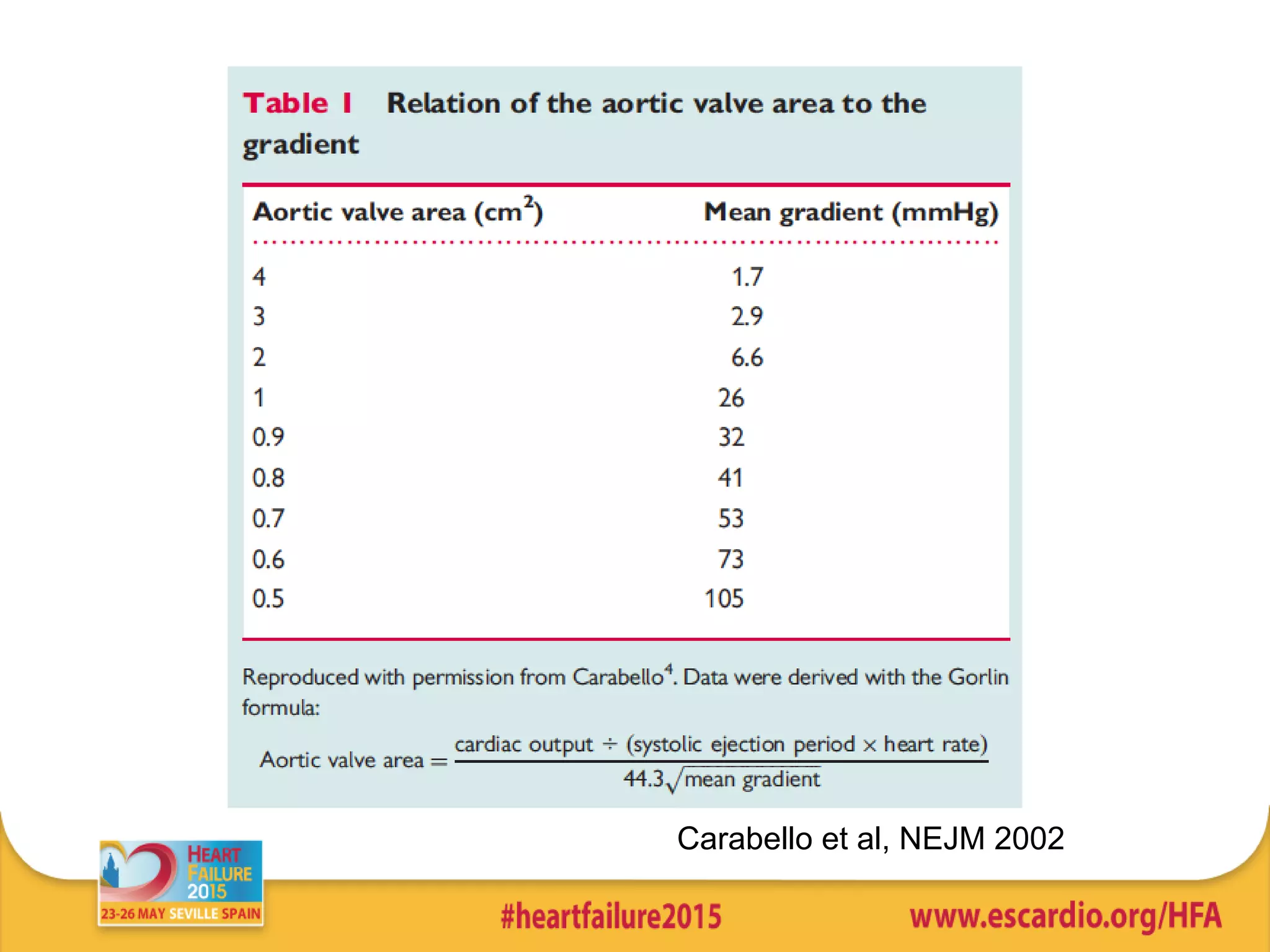
Carabello et al, NEJM 2002
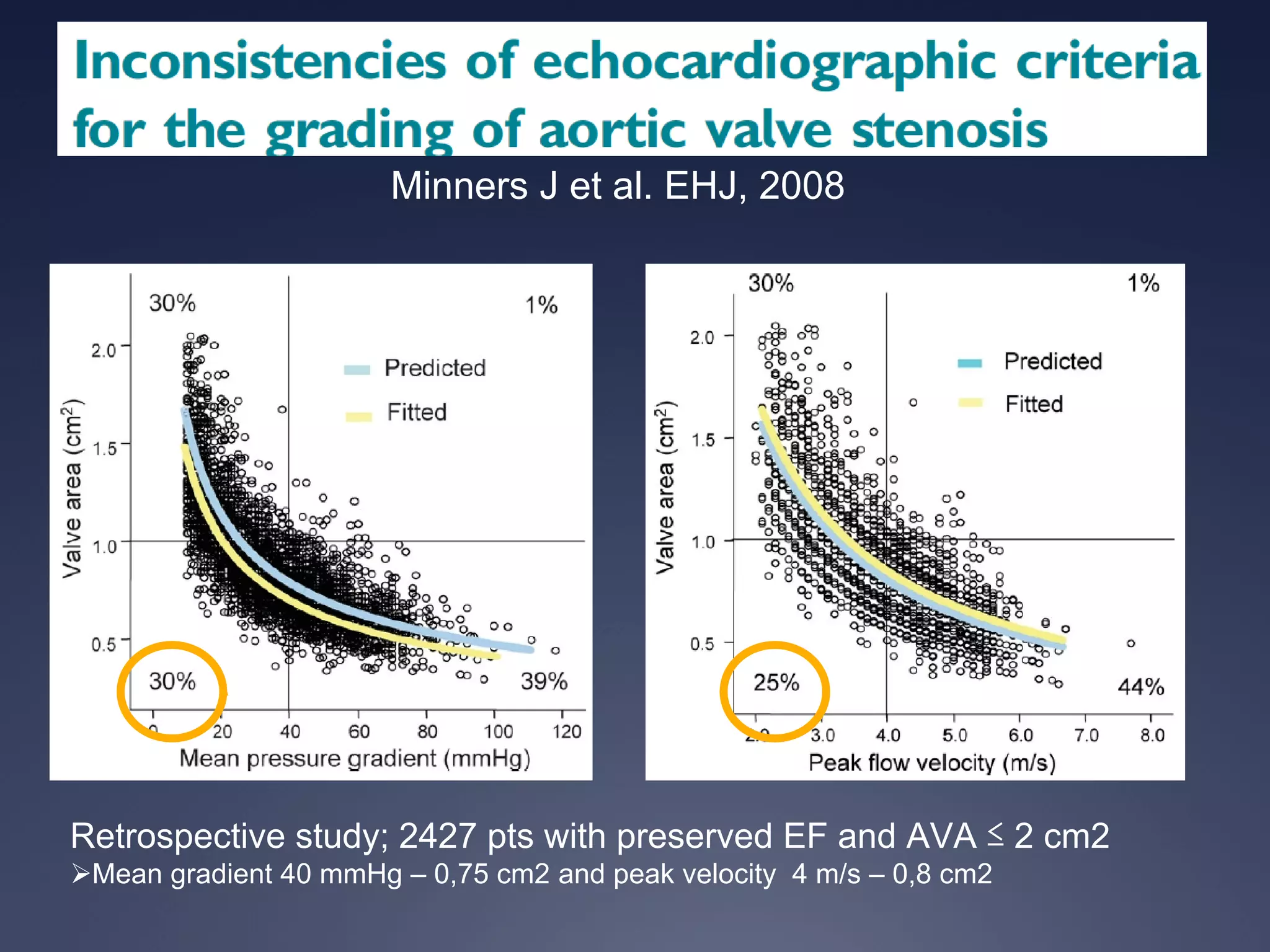
Minners J et al. EHJ, 2008
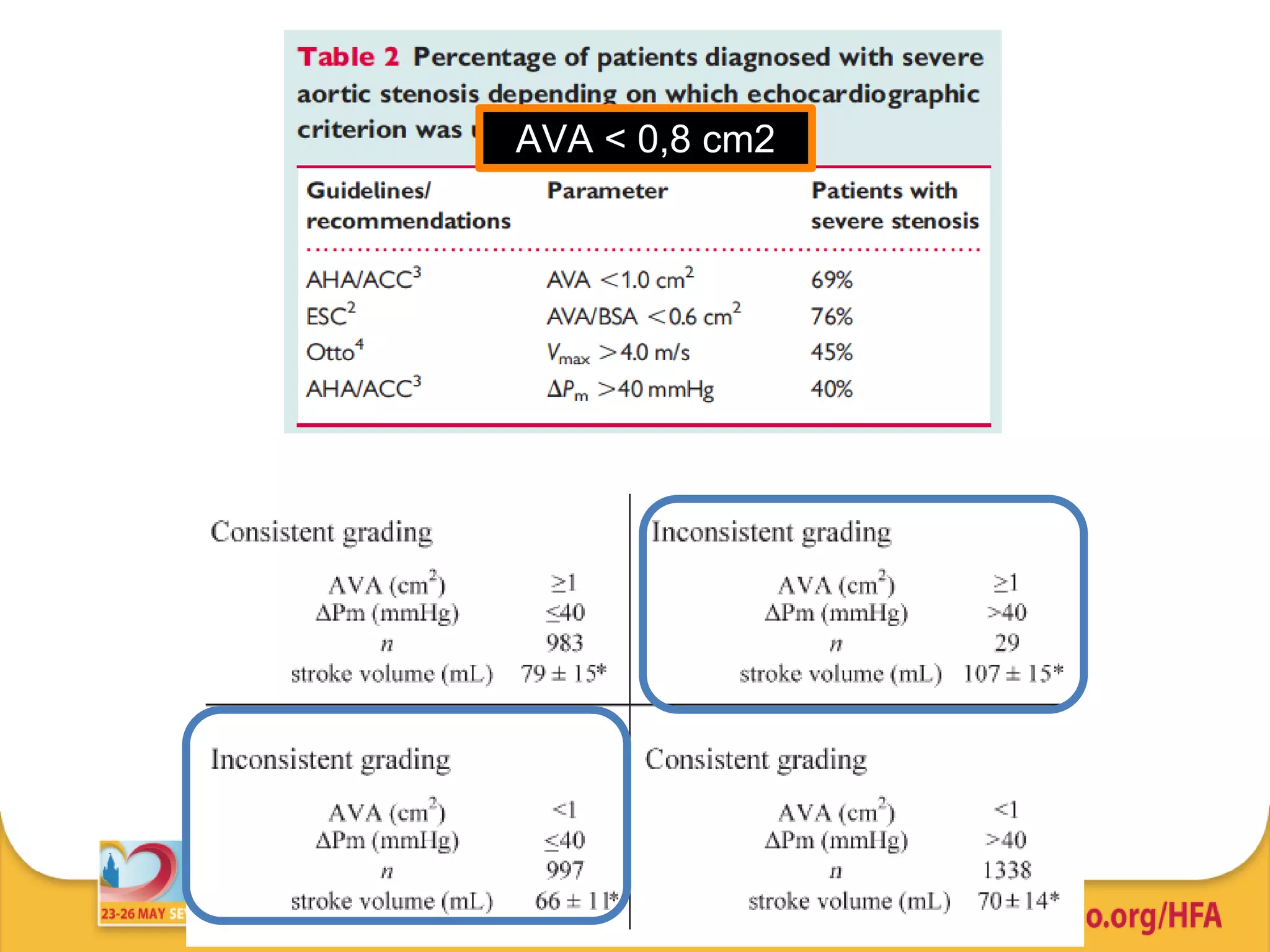
Retrospective study; 2427 pts with preserved EF and AVA ≤ 2 cm2
ØMean gradient 40 mmHg – 0,75 cm2 and peak velocity 4 m/s – 0,8 cm2
AVA < 0,8 cm2
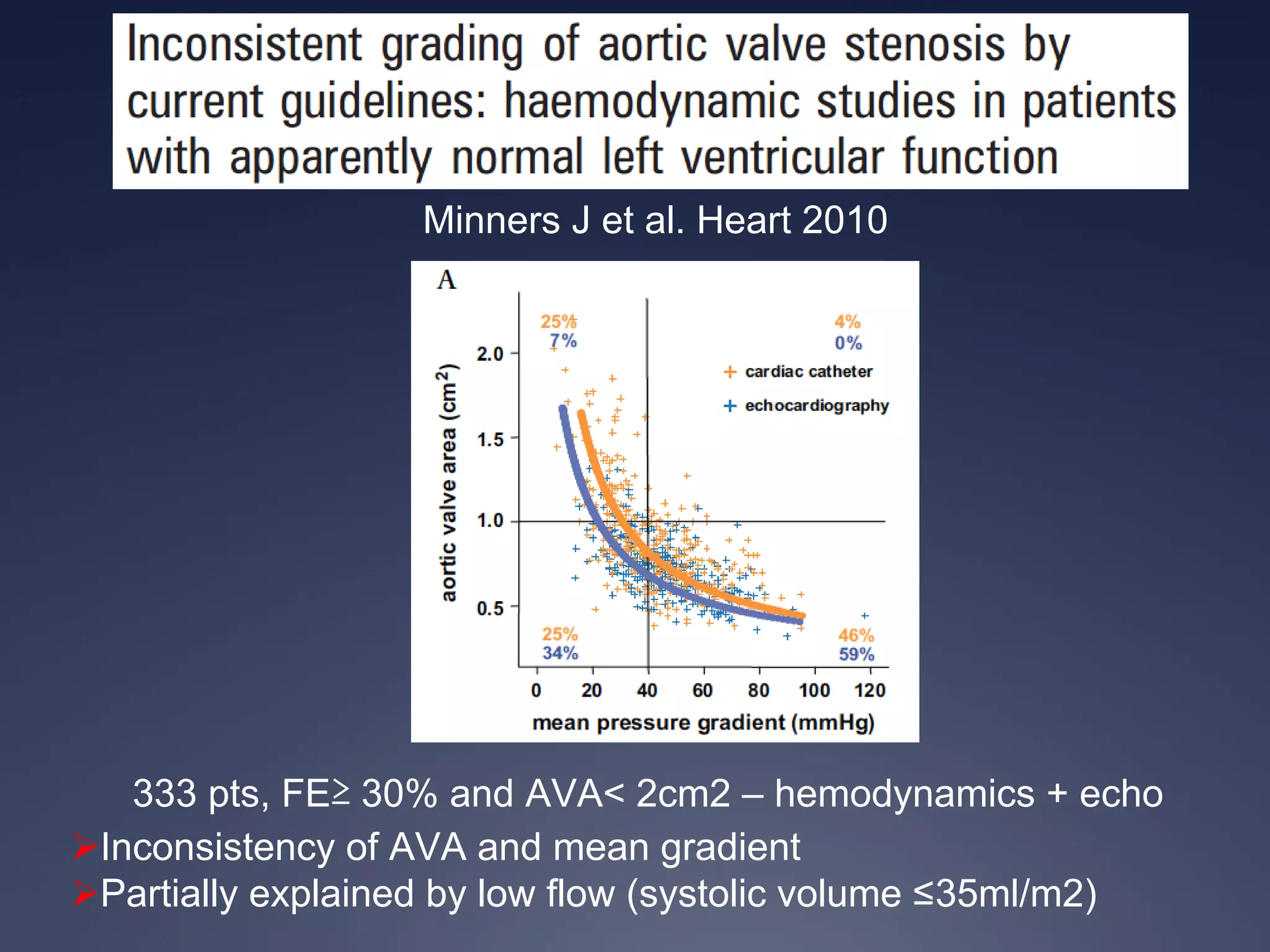
333 pts, FE≥ 30% and AVA< 2cm2 – hemodynamics + echo
ØInconsistency of AVA and mean gradient
ØPartially explained by low flow (systolic volume ≤35ml/m2)
Minners J et al. Heart 2010
ØThe underestimation of LVOT is one of the factors
that may lead to a false diagnosis of low flow
Estimated area 381 mm2 Estimated area 581 mm2
Inadequate measurement of LVOT/ellipsoid configuration (eco 3D, CT, MRI)
Utsunomiya et al. Int J Cardiol 2011
- Handgrip and fenilefrine
- Presence of HTN  pseudodiagnosis of low flow impair the AoV
resistance and AVA, regardless of aortic compliance; in addition the gradient
has an inconsistent variability
Litle SH et al. Heart 2007
If we exclude the
inconsistencies how to
explain?
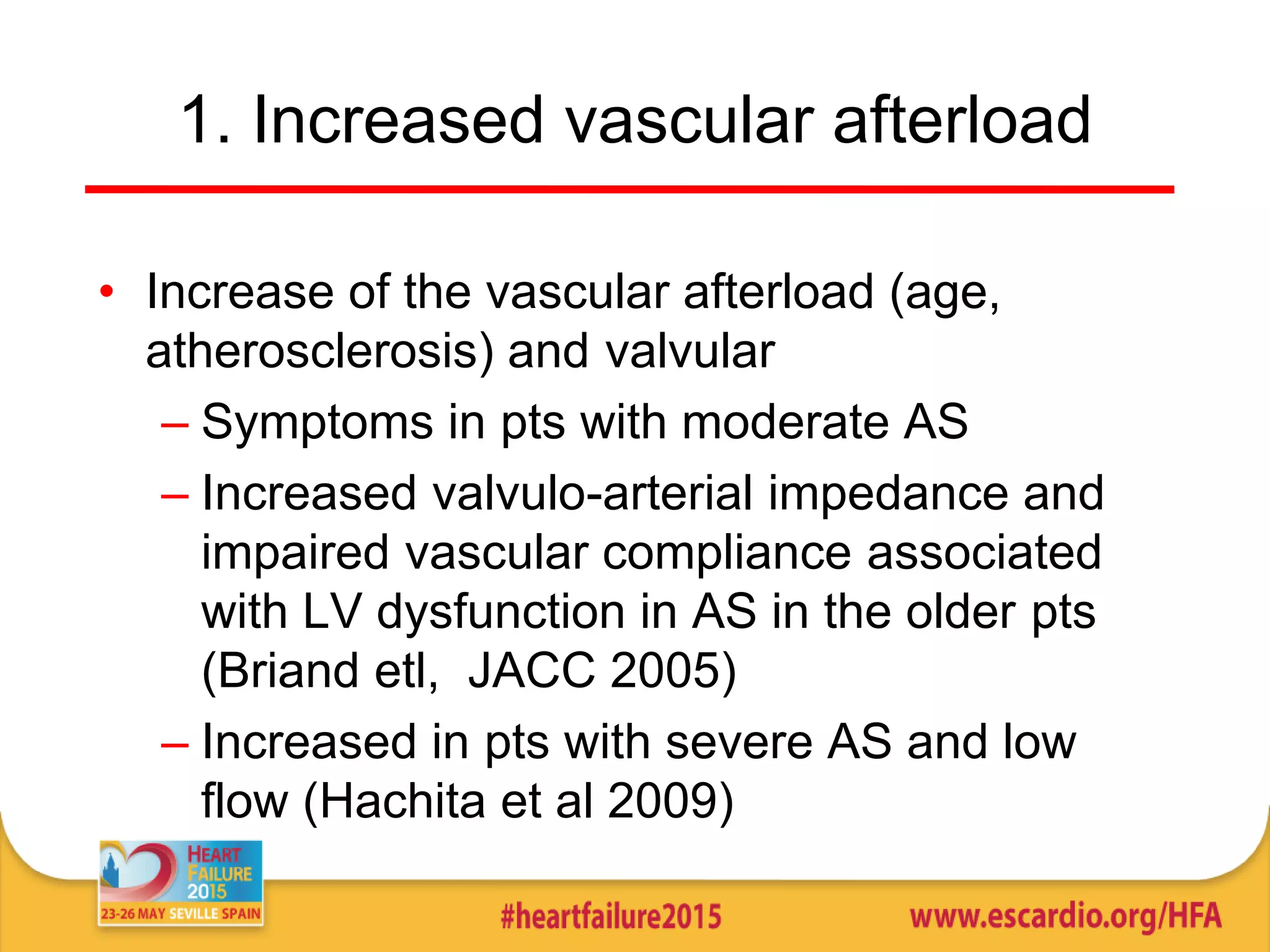
1. Increased vascular afterload
• Increase of the vascular afterload (age,
atherosclerosis) and valvular
– Symptoms in pts with moderate AS
– Increased valvulo-arterial impedance and
impaired vascular compliance associated
with LV dysfunction in AS in the older pts
(Briand etl, JACC 2005)
– Increased in pts with severe AS and low
flow (Hachita et al 2009)
2. Diastolic Dysfunction
• Geometry:
– Small size LV (<50 mm, < 60 ml/m2),
– Hypertrophy
• Diastolic Compromise
• Incremental effect if associated to
increased systemic afterload + valvular
Dumesnil et al. Eur Heart J 2010
3. FEJ preservada ≠ Função
preservada
FEJ=55% SL global=-15%
AS / low flow and 2D strain
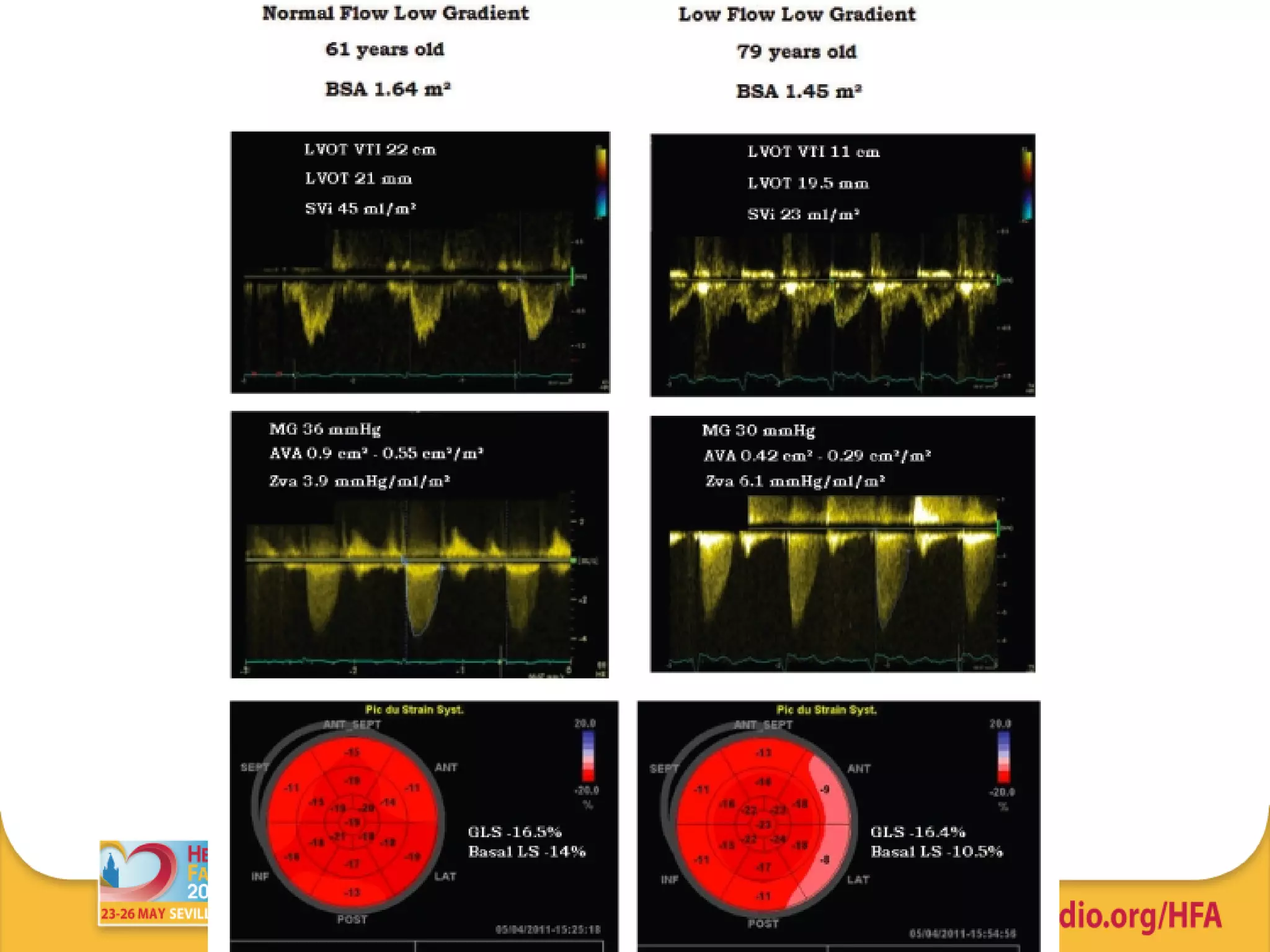
120 pts with severe AS, EF > 50%, with normal vs low flow
Pts with low flow had impaired longitudinal strain = LV Dysfunction
Mielot. EHJ 2009
u Prospective multicentric study
u 340 consecutives pts, severe AS
(AVA<0,6 cm2/m2) and EF> 50%
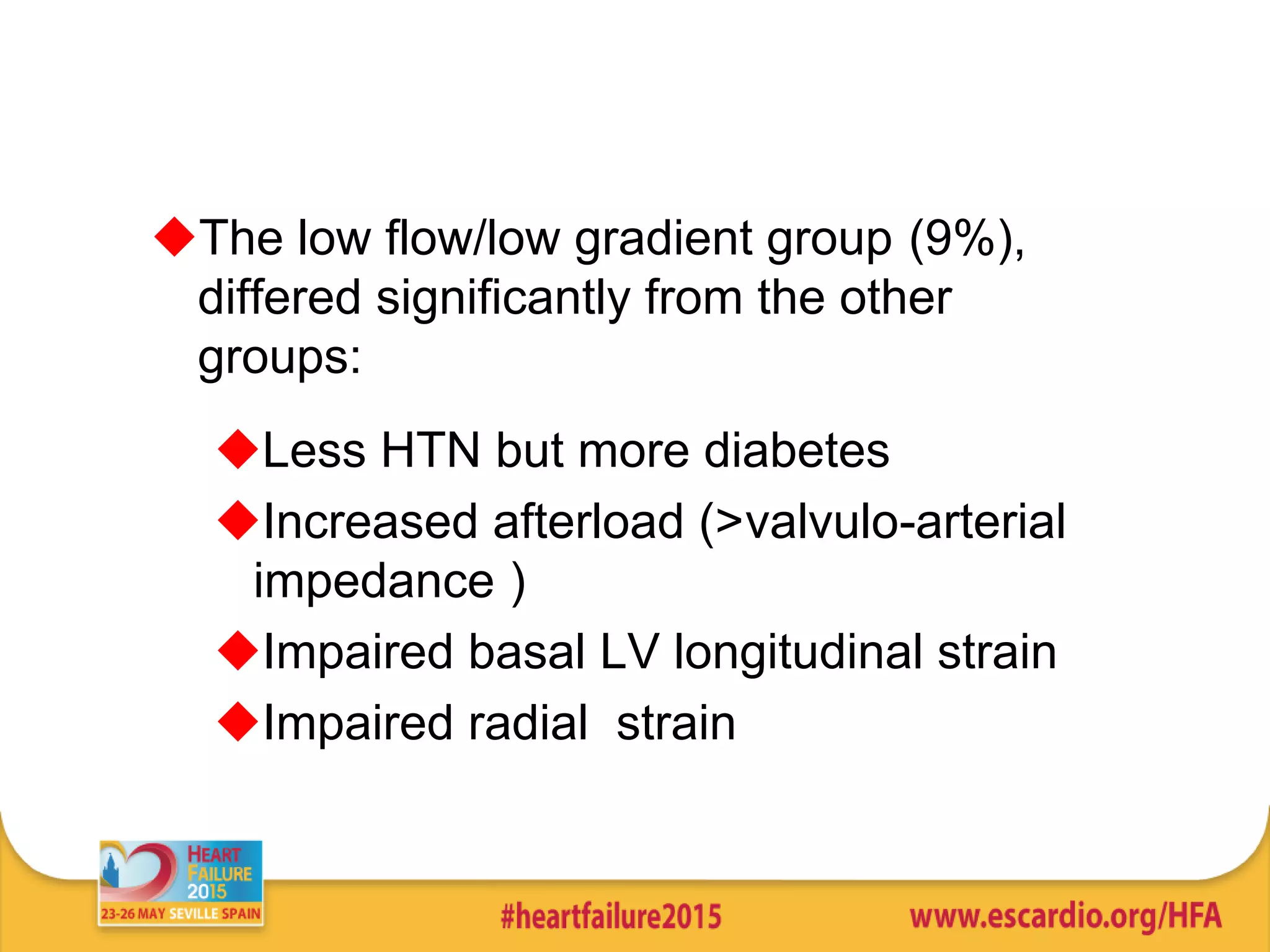
uThe low flow/low gradient group (9%),
differed significantly from the other
groups:
uLess HTN but more diabetes
uIncreased afterload (>valvulo-arterial
impedance )
uImpaired basal LV longitudinal strain
uImpaired radial strain
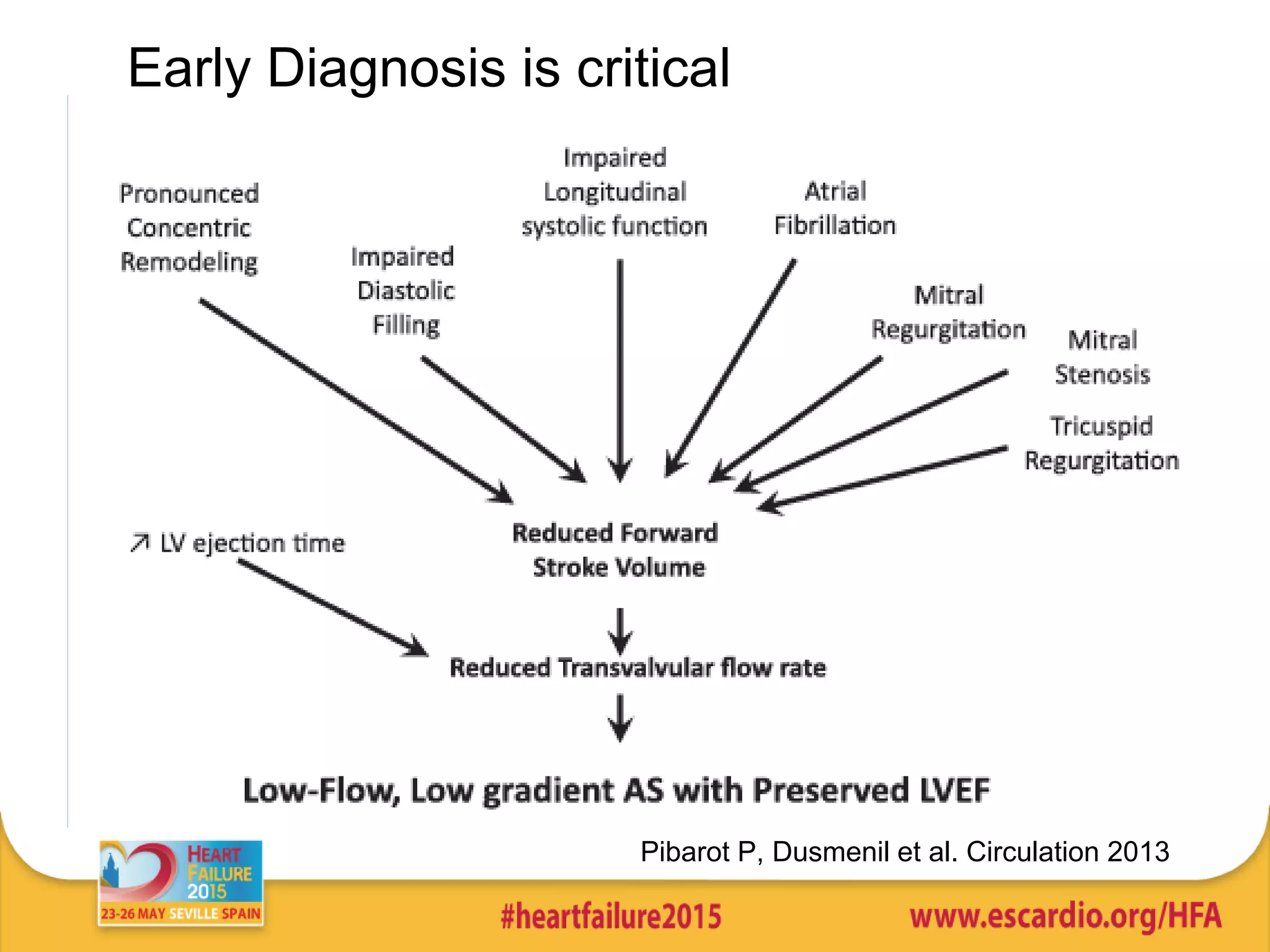
Pibarot P, Dusmenil et al. Circulation 2013
Early Diagnosis is critical
How to Assess - I
• 1. Exclude pitfals
– LVOT measurement,
– Assess EF by two different
– Use CMR and CT (LVOT; LV function)
• 2. Assess the indices of myocardial deformation
• 3. Confirm low flow low output;
• 4. Assess biomarkers
Dumesnil et al. EHJ 2010
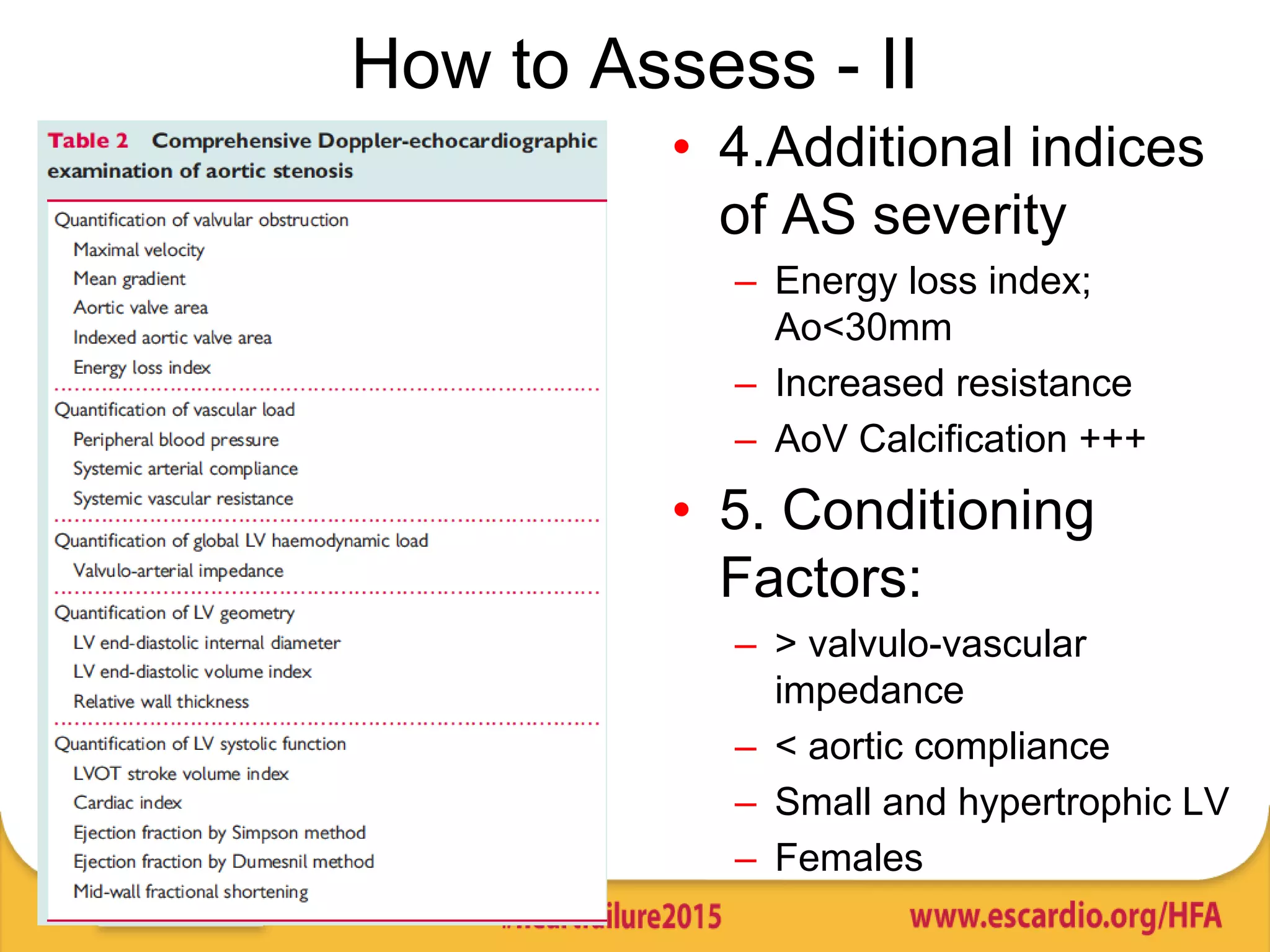
How to Assess - II
• 4.Additional indices
of AS severity
– Energy loss index;
Ao<30mm
– Increased resistance
– AoV Calcification +++
• 5. Conditioning
Factors:
– > valvulo-vascular
impedance
– < aortic compliance
– Small and hypertrophic LV
– Females
Conclusions
• Severe AS with low flow and preserved
EF may represent up to 25% of the AS
Population
• Medical treatment is associated with an
increased event rate and mortality but
surgery can improve the diagnosis
• Its identification and diagnosis are crucial
• Imaging plays a central role in the correct
diagnosis and patient management

The Role of imaging

  • 1.
    Unravelling low-flow, low-gradient aorticstenosis The Role of Imaging Prof. Fausto J. Pinto, FESC, FACC Head, Cardiology Dpt/University Hospital Sta Maria-HPV University of Lisbon, Portugal
  • 2.
    • No conflictof interest to declare regarding this talk.
  • 3.
    Philippe Pibarot ,Jean G. Dumesnil Different Patterns of Severe AS According to Flow, Gradient, and LV Geometry Journal of the American College of Cardiology, Volume 60, Issue 19, 2012, 1845 - 1853
  • 4.
    Hachita et al.Circulation 2007 512 pts with Severe AS AVA≤ 0,6 cm2/m2, EF >50% 331 pts Systolic Vol > 35 ml/m2 181 pts Systolic Vol ≤ 35 ml/m2 Follow-up 25±19 months
  • 5.
    Hachita et al.Circulation 2007
  • 6.
    Geometry and LVFunction Hachita et al, 2007
  • 7.
    Survival Hachita et al.Circulation 2007
  • 8.
    Predictors of Survival Hachitaet al. Circulation 2007
  • 9.
    Pts with severeAS and low flow Pts com Severe AS, low flow and normal EF Ann Throrac Surg 2009
  • 10.
    These studies suggest… •A significant proportion of pts with reduced AVA may have low flow and low gradient despite preserved EF. • A pattern of increased afterload, concentric LVH and impaired survival suggests a more advanced stage of AS. • This situation may be under diagnosed and not be timely treated with surgery.
  • 11.
    Questions • What isthe mechanism underlying low flow/low gradient in pts with severe AS and preserved EF? • Can we identify those pts using the currently available techniques and criteria? – Inconsistencies of echocg for the current criteria? – Different severity criteria? • What is the prognosis and treatment?
  • 12.
    Criteria for ASSeverity Guidelines valvular heart disease. ESC, EACTS, 2012
  • 13.
  • 14.
    Minners J etal. EHJ, 2008 Retrospective study; 2427 pts with preserved EF and AVA ≤ 2 cm2 ØMean gradient 40 mmHg – 0,75 cm2 and peak velocity 4 m/s – 0,8 cm2
  • 15.
  • 16.
    333 pts, FE≥30% and AVA< 2cm2 – hemodynamics + echo ØInconsistency of AVA and mean gradient ØPartially explained by low flow (systolic volume ≤35ml/m2) Minners J et al. Heart 2010
  • 17.
    ØThe underestimation ofLVOT is one of the factors that may lead to a false diagnosis of low flow Estimated area 381 mm2 Estimated area 581 mm2 Inadequate measurement of LVOT/ellipsoid configuration (eco 3D, CT, MRI) Utsunomiya et al. Int J Cardiol 2011
  • 18.
    - Handgrip andfenilefrine - Presence of HTN  pseudodiagnosis of low flow impair the AoV resistance and AVA, regardless of aortic compliance; in addition the gradient has an inconsistent variability Litle SH et al. Heart 2007
  • 19.
    If we excludethe inconsistencies how to explain?
  • 20.
    1. Increased vascularafterload • Increase of the vascular afterload (age, atherosclerosis) and valvular – Symptoms in pts with moderate AS – Increased valvulo-arterial impedance and impaired vascular compliance associated with LV dysfunction in AS in the older pts (Briand etl, JACC 2005) – Increased in pts with severe AS and low flow (Hachita et al 2009)
  • 21.
    2. Diastolic Dysfunction •Geometry: – Small size LV (<50 mm, < 60 ml/m2), – Hypertrophy • Diastolic Compromise • Incremental effect if associated to increased systemic afterload + valvular Dumesnil et al. Eur Heart J 2010
  • 22.
    3. FEJ preservada≠ Função preservada FEJ=55% SL global=-15%
  • 23.
    AS / lowflow and 2D strain 120 pts with severe AS, EF > 50%, with normal vs low flow Pts with low flow had impaired longitudinal strain = LV Dysfunction Mielot. EHJ 2009
  • 24.
    u Prospective multicentricstudy u 340 consecutives pts, severe AS (AVA<0,6 cm2/m2) and EF> 50%
  • 26.
    uThe low flow/lowgradient group (9%), differed significantly from the other groups: uLess HTN but more diabetes uIncreased afterload (>valvulo-arterial impedance ) uImpaired basal LV longitudinal strain uImpaired radial strain
  • 28.
    Pibarot P, Dusmenilet al. Circulation 2013 Early Diagnosis is critical
  • 29.
    How to Assess- I • 1. Exclude pitfals – LVOT measurement, – Assess EF by two different – Use CMR and CT (LVOT; LV function) • 2. Assess the indices of myocardial deformation • 3. Confirm low flow low output; • 4. Assess biomarkers Dumesnil et al. EHJ 2010
  • 30.
    How to Assess- II • 4.Additional indices of AS severity – Energy loss index; Ao<30mm – Increased resistance – AoV Calcification +++ • 5. Conditioning Factors: – > valvulo-vascular impedance – < aortic compliance – Small and hypertrophic LV – Females
  • 31.
    Conclusions • Severe ASwith low flow and preserved EF may represent up to 25% of the AS Population • Medical treatment is associated with an increased event rate and mortality but surgery can improve the diagnosis • Its identification and diagnosis are crucial • Imaging plays a central role in the correct diagnosis and patient management