Modern Conceptions of Education
Education for the rich and full life
Italian or Individualistic Humanism
The Renaissance Education
Page 2
Stressed personal culture,
individual freedom, and
development as the best way
toward full and rich lives
Page 3
Aims
 Academic freedom
 Abundant Living
 Liberal education
 to secure rich and full life for each individual through contacts either
the ancient
 Development of a liberal man who would be able to appreciate the
past as well as enjoy the present
Page 4
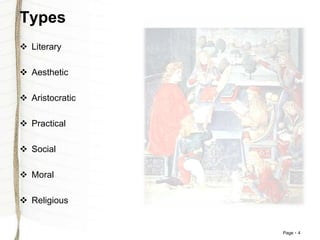
Types
 Literary
 Aesthetic
 Aristocratic
 Practical
 Social
 Moral
 Religious
Page 5
Agency
 Elementary
 Court schools
 Secondary schools
 Grammar schools
 University
 School of Vittorino da Feltre
Page 6
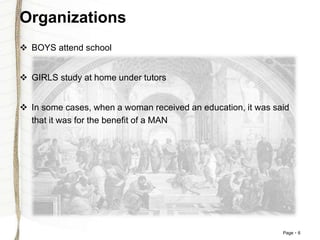
Organizations
 BOYS attend school
 GIRLS study at home under tutors
 In some cases, when a woman received an education, it was said
that it was for the benefit of a MAN
Page 7
Contents
 3 worlds:
o World of the past,
o subjective world of emotion
o World of grammar, rhetoric and mathematics
 Biblical Literature
 Nature
 Physical training
 Music
 Dancing
Page 8
Methods
 Text study to replace lectures
 Written themes replaced oral disposition
 Self-activity
 Self-expression
 Double translation
Page 9
Effects
 Classical learning was revived.
 Education was very aristocratic.
 Served as foundation of modern academic freedom.
Page 10
Proponents
Vittorino da Feltre
Humanist and Teacher
Education:
Philosophy
A degree in Arts, Latin Composition
And Logic and Theology
As a student, He supported himself by tutoring
Page 11
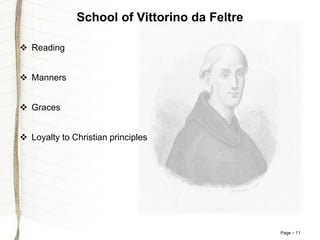
School of Vittorino da Feltre
 Reading
 Manners
 Graces
 Loyalty to Christian principles
Page 12
Methods of Education
 Adapting the work of the individual to his needs and capacities
 Developing a balance between mental activity and physical activity
 Developing the power to think
 The inclusion of play in the curricula
Page 13
Modern Conceptions of Education
Education for the rich and full life
Northern or Social Humanism
The Renaissance Education
Page 15
Stressed manual and social reform
as the best means for providing
rich and free live for the masses as
well as for the elite
Page 16
Aims
 Social reform
 Religious
 Moral
 Literacy
 Literary
 Democracy
 Rich and full life for the society as a whole
Page 17
Types
 Religious
 Moral
 Social education
Page 18
Agency
 Court schools
 Elementary
 Secondary schools
 Universities
Page 19
Organizations
 Secondary and University open only to MALES
Page 20
Contents
 Classical literature
 Biblical literature
 Church catechism
 Little study of physical education, music, and art
Page 21
Methods
 Individualized instruction
 Importance of Games and Exercise
 Social relevance
 Repetition and Mastery
 Motivation, praise, and Rewards
 Gentleness
Page 22
Effects
 Religious Revolution
Page 23
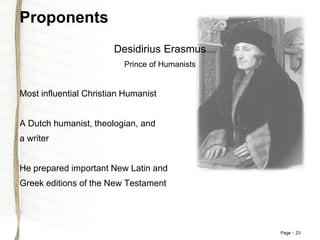
Proponents
Desidirius Erasmus
Prince of Humanists
Most influential Christian Humanist
A Dutch humanist, theologian, and
a writer
He prepared important New Latin and
Greek editions of the New Testament
Page 24
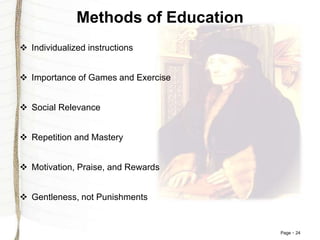
Methods of Education
 Individualized instructions
 Importance of Games and Exercise
 Social Relevance
 Repetition and Mastery
 Motivation, Praise, and Rewards
 Gentleness, not Punishments
Page 25
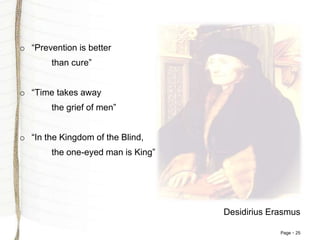
o “Prevention is better
than cure”
o “Time takes away
the grief of men”
o “In the Kingdom of the Blind,
the one-eyed man is King”
Desidirius Erasmus
Page 26
Proponents
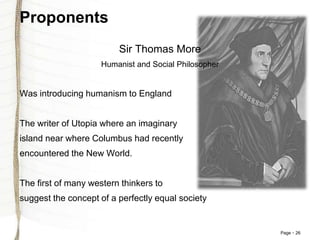
Sir Thomas More
Humanist and Social Philosopher
Was introducing humanism to England
The writer of Utopia where an imaginary
island near where Columbus had recently
encountered the New World.
The first of many western thinkers to
suggest the concept of a perfectly equal society
Page 27
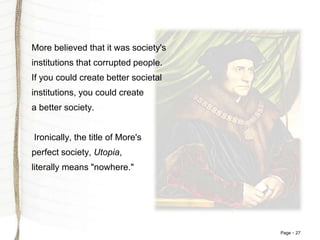
More believed that it was society's
institutions that corrupted people.
If you could create better societal
institutions, you could create
a better society.
Ironically, the title of More's
perfect society, Utopia,
literally means "nowhere."
Page 28
Page 29
Synthesis
 Education became person-oriented in approach.
 The development of the mind, body and moral was enhanced.
 The principal of freedom of thought and creativity became the basis
of education.
 Learning starts from concrete to abstract.
 The natural interests and the characteristics of the learners were
considered.
 Education emphasized the process of learning and not on the things
learned.
 The principles of human growth and development were considered
for teaching and learning effects.
Page 30
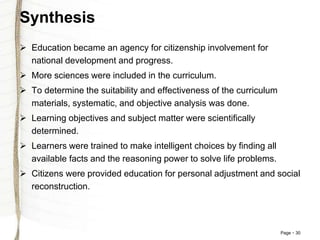
Synthesis
 Education became an agency for citizenship involvement for
national development and progress.
 More sciences were included in the curriculum.
 To determine the suitability and effectiveness of the curriculum
materials, systematic, and objective analysis was done.
 Learning objectives and subject matter were scientifically
determined.
 Learners were trained to make intelligent choices by finding all
available facts and the reasoning power to solve life problems.
 Citizens were provided education for personal adjustment and social
reconstruction.
Page 31
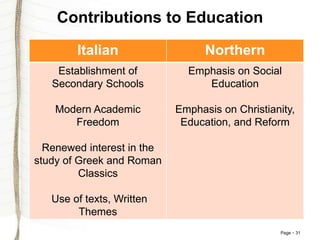
Contributions to Education
Italian Northern
Establishment of
Secondary Schools
Modern Academic
Freedom
Renewed interest in the
study of Greek and Roman
Classics
Use of texts, Written
Themes
Emphasis on Social
Education
Emphasis on Christianity,
Education, and Reform
Foundations of Education
Presented by:
Talaboc, Clarice Anne D.
II-6 AB/BSE Literature
The renaissance Education
Thank you for listening!

The Renaissance Education

  • 1.
    Modern Conceptions ofEducation Education for the rich and full life Italian or Individualistic Humanism The Renaissance Education
  • 2.
    Page 2 Stressed personalculture, individual freedom, and development as the best way toward full and rich lives
  • 3.
    Page 3 Aims  Academicfreedom  Abundant Living  Liberal education  to secure rich and full life for each individual through contacts either the ancient  Development of a liberal man who would be able to appreciate the past as well as enjoy the present
  • 4.
    Page 4 Types  Literary Aesthetic  Aristocratic  Practical  Social  Moral  Religious
  • 5.
    Page 5 Agency  Elementary Court schools  Secondary schools  Grammar schools  University  School of Vittorino da Feltre
  • 6.
    Page 6 Organizations  BOYSattend school  GIRLS study at home under tutors  In some cases, when a woman received an education, it was said that it was for the benefit of a MAN
  • 7.
    Page 7 Contents  3worlds: o World of the past, o subjective world of emotion o World of grammar, rhetoric and mathematics  Biblical Literature  Nature  Physical training  Music  Dancing
  • 8.
    Page 8 Methods  Textstudy to replace lectures  Written themes replaced oral disposition  Self-activity  Self-expression  Double translation
  • 9.
    Page 9 Effects  Classicallearning was revived.  Education was very aristocratic.  Served as foundation of modern academic freedom.
  • 10.
    Page 10 Proponents Vittorino daFeltre Humanist and Teacher Education: Philosophy A degree in Arts, Latin Composition And Logic and Theology As a student, He supported himself by tutoring
  • 11.
    Page 11 School ofVittorino da Feltre  Reading  Manners  Graces  Loyalty to Christian principles
  • 12.
    Page 12 Methods ofEducation  Adapting the work of the individual to his needs and capacities  Developing a balance between mental activity and physical activity  Developing the power to think  The inclusion of play in the curricula
  • 13.
  • 14.
    Modern Conceptions ofEducation Education for the rich and full life Northern or Social Humanism The Renaissance Education
  • 15.
    Page 15 Stressed manualand social reform as the best means for providing rich and free live for the masses as well as for the elite
  • 16.
    Page 16 Aims  Socialreform  Religious  Moral  Literacy  Literary  Democracy  Rich and full life for the society as a whole
  • 17.
    Page 17 Types  Religious Moral  Social education
  • 18.
    Page 18 Agency  Courtschools  Elementary  Secondary schools  Universities
  • 19.
    Page 19 Organizations  Secondaryand University open only to MALES
  • 20.
    Page 20 Contents  Classicalliterature  Biblical literature  Church catechism  Little study of physical education, music, and art
  • 21.
    Page 21 Methods  Individualizedinstruction  Importance of Games and Exercise  Social relevance  Repetition and Mastery  Motivation, praise, and Rewards  Gentleness
  • 22.
  • 23.
    Page 23 Proponents Desidirius Erasmus Princeof Humanists Most influential Christian Humanist A Dutch humanist, theologian, and a writer He prepared important New Latin and Greek editions of the New Testament
  • 24.
    Page 24 Methods ofEducation  Individualized instructions  Importance of Games and Exercise  Social Relevance  Repetition and Mastery  Motivation, Praise, and Rewards  Gentleness, not Punishments
  • 25.
    Page 25 o “Preventionis better than cure” o “Time takes away the grief of men” o “In the Kingdom of the Blind, the one-eyed man is King” Desidirius Erasmus
  • 26.
    Page 26 Proponents Sir ThomasMore Humanist and Social Philosopher Was introducing humanism to England The writer of Utopia where an imaginary island near where Columbus had recently encountered the New World. The first of many western thinkers to suggest the concept of a perfectly equal society
  • 27.
    Page 27 More believedthat it was society's institutions that corrupted people. If you could create better societal institutions, you could create a better society. Ironically, the title of More's perfect society, Utopia, literally means "nowhere."
  • 28.
  • 29.
    Page 29 Synthesis  Educationbecame person-oriented in approach.  The development of the mind, body and moral was enhanced.  The principal of freedom of thought and creativity became the basis of education.  Learning starts from concrete to abstract.  The natural interests and the characteristics of the learners were considered.  Education emphasized the process of learning and not on the things learned.  The principles of human growth and development were considered for teaching and learning effects.
  • 30.
    Page 30 Synthesis  Educationbecame an agency for citizenship involvement for national development and progress.  More sciences were included in the curriculum.  To determine the suitability and effectiveness of the curriculum materials, systematic, and objective analysis was done.  Learning objectives and subject matter were scientifically determined.  Learners were trained to make intelligent choices by finding all available facts and the reasoning power to solve life problems.  Citizens were provided education for personal adjustment and social reconstruction.
  • 31.
    Page 31 Contributions toEducation Italian Northern Establishment of Secondary Schools Modern Academic Freedom Renewed interest in the study of Greek and Roman Classics Use of texts, Written Themes Emphasis on Social Education Emphasis on Christianity, Education, and Reform
  • 32.
    Foundations of Education Presentedby: Talaboc, Clarice Anne D. II-6 AB/BSE Literature The renaissance Education Thank you for listening!