TheRealEstateDevelopmentProcess:
UnderstandingtheRisksand Milestones
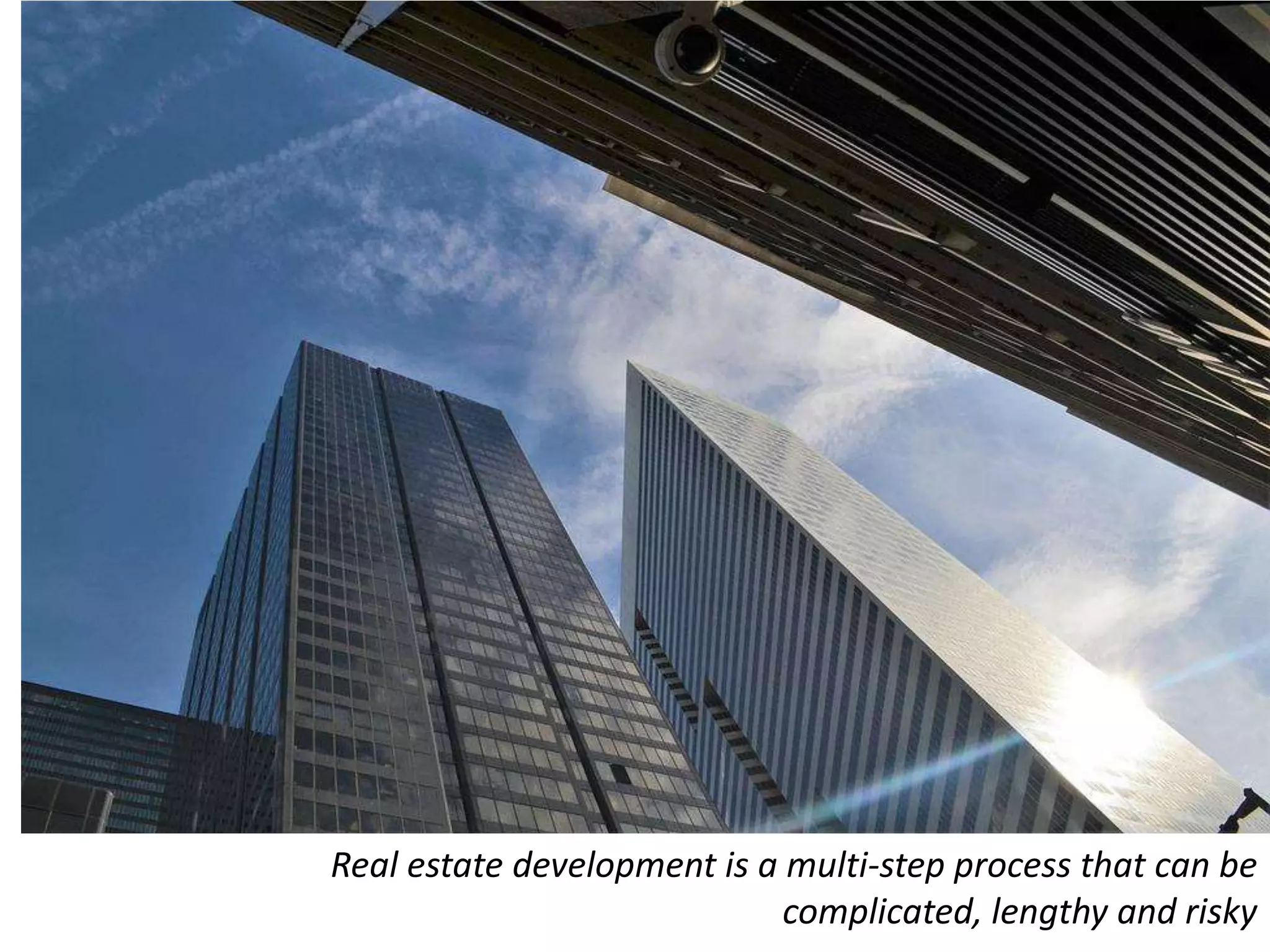
Real estate development is a multi-step process that can be
complicated, lengthy and risky
It can take years to bring a project from the
starting planning stage to construction and
the final completion, and there are plenty of
obstacles that can pop up along the way
Development
projects provide
the opportunity to
deliver a product
that does not
currently exist into
the market, often
providing the fresh
new supply to
improve future
developments and
plans
Investors can more confidently assess some of the risks associated with
construction by better understanding the concept, cycle and ideas of a
development project.
Risk AcrossProject
TypeandStage
Two factors can play a big role in the risk of a given project: the project
type and stage.
As each step in a development project is completed, the overall project
risk lessens
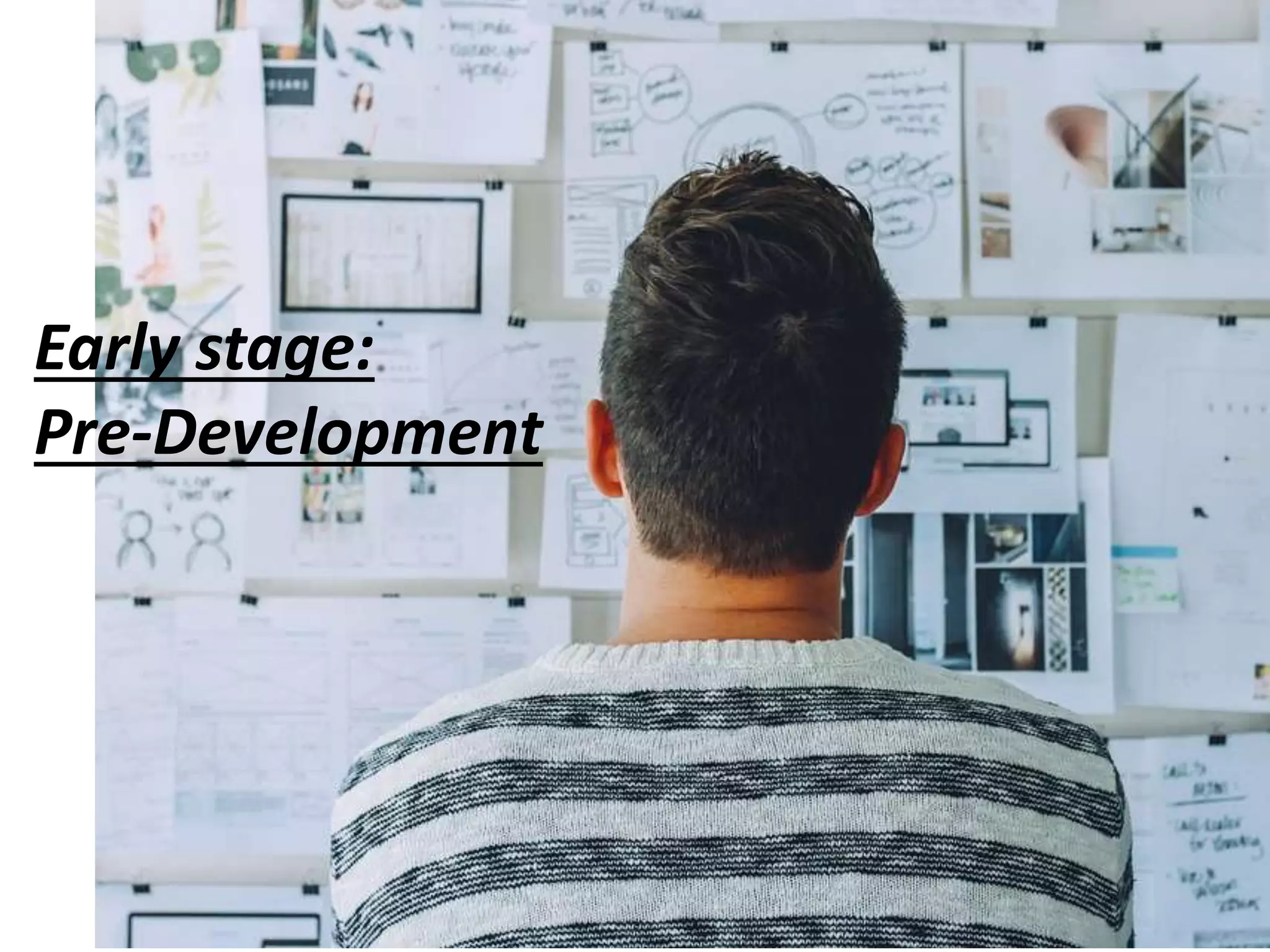
Early stage:
Pre-Development
The early stage of a project focuses on
research and permitting. It is often the most
unpredicted in terms of duration. Investing
and research at this stage carries the
greatest risks, because there are many
unknowns.
Because this stage is the riskiest, pre-development work is usually
financed by the project sponsor or any other sources
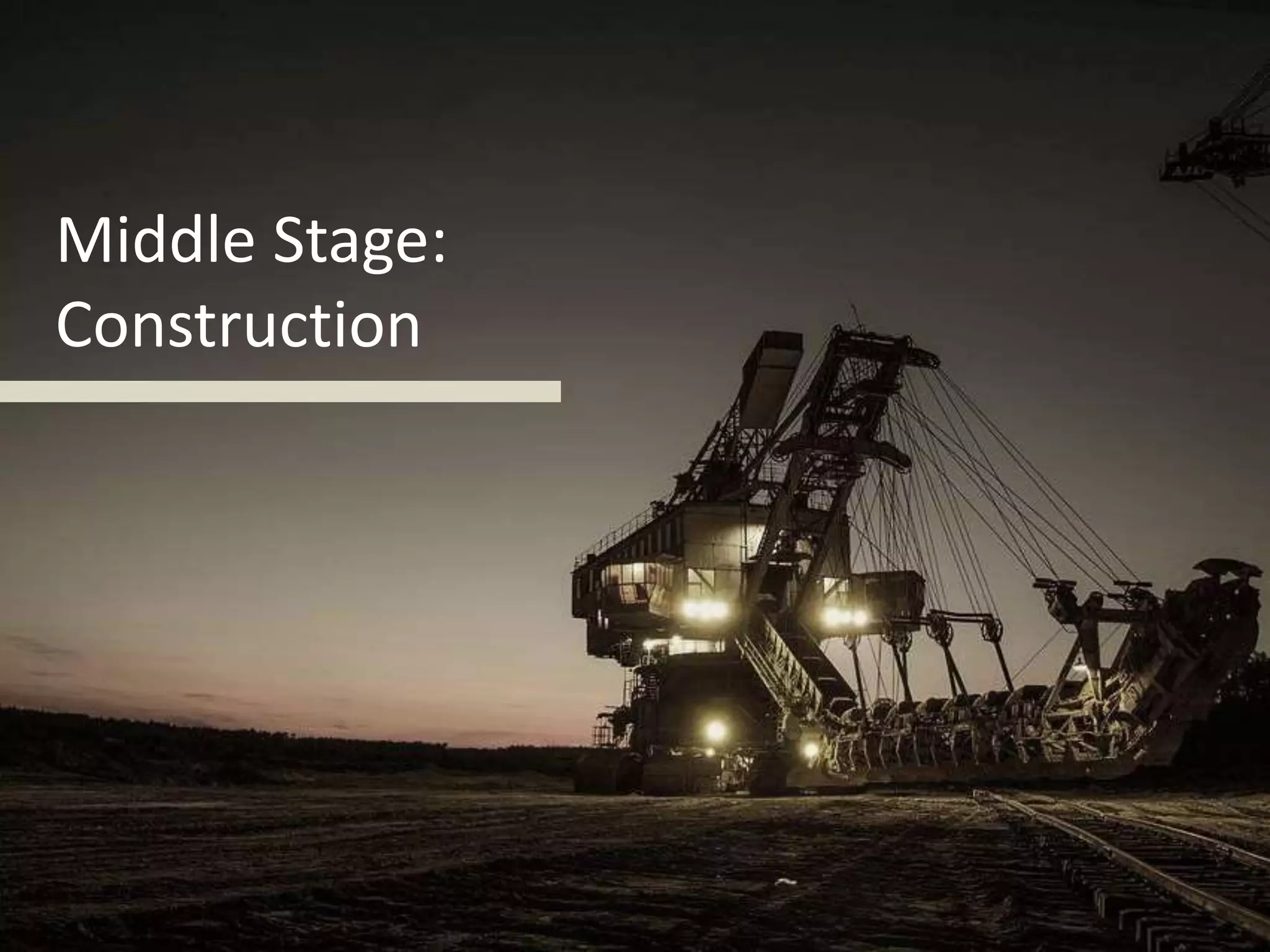
Middle Stage:
Construction
The middle stage involves
constructing the
improvements. Since the pre-
development tasks have been
completed, the project risks
at this stage are greatly
reduced but certainly not
eliminated.
The project typically is financed at this stage by the sponsor, outside
investors, and a short-term construction loan.
Final Stage:
Operation
The final stage of the
development process,
operation, is the first stage of
the building’s life. While the
pre-development and
construction risks may be
removed by this point,
obtaining tenants is still at risk
It is then highly recommended to seek construction advisors
in order for your project to run as planned.
Depending upon the amount of pre-leasing that was accomplished
during construction, this can be the least risky stage. For this reason,
permanent loans and equity investments will provide the lowest
returns.
many of the same risks
applicable to the purchase
or refinancing of an existing
building, such as sponsor
solvency and expertise,
economic conditions, and
market factors also apply

The Real Estate Development Process

  • 1.
  • 2.
    Real estate developmentis a multi-step process that can be complicated, lengthy and risky
  • 3.
    It can takeyears to bring a project from the starting planning stage to construction and the final completion, and there are plenty of obstacles that can pop up along the way
  • 4.
    Development projects provide the opportunityto deliver a product that does not currently exist into the market, often providing the fresh new supply to improve future developments and plans
  • 5.
    Investors can moreconfidently assess some of the risks associated with construction by better understanding the concept, cycle and ideas of a development project.
  • 6.
  • 7.
    Two factors canplay a big role in the risk of a given project: the project type and stage. As each step in a development project is completed, the overall project risk lessens
  • 8.
  • 9.
    The early stageof a project focuses on research and permitting. It is often the most unpredicted in terms of duration. Investing and research at this stage carries the greatest risks, because there are many unknowns.
  • 10.
    Because this stageis the riskiest, pre-development work is usually financed by the project sponsor or any other sources
  • 11.
  • 12.
    The middle stageinvolves constructing the improvements. Since the pre- development tasks have been completed, the project risks at this stage are greatly reduced but certainly not eliminated.
  • 13.
    The project typicallyis financed at this stage by the sponsor, outside investors, and a short-term construction loan.
  • 14.
  • 15.
    The final stageof the development process, operation, is the first stage of the building’s life. While the pre-development and construction risks may be removed by this point, obtaining tenants is still at risk
  • 16.
    It is thenhighly recommended to seek construction advisors in order for your project to run as planned. Depending upon the amount of pre-leasing that was accomplished during construction, this can be the least risky stage. For this reason, permanent loans and equity investments will provide the lowest returns.
  • 17.
    many of thesame risks applicable to the purchase or refinancing of an existing building, such as sponsor solvency and expertise, economic conditions, and market factors also apply