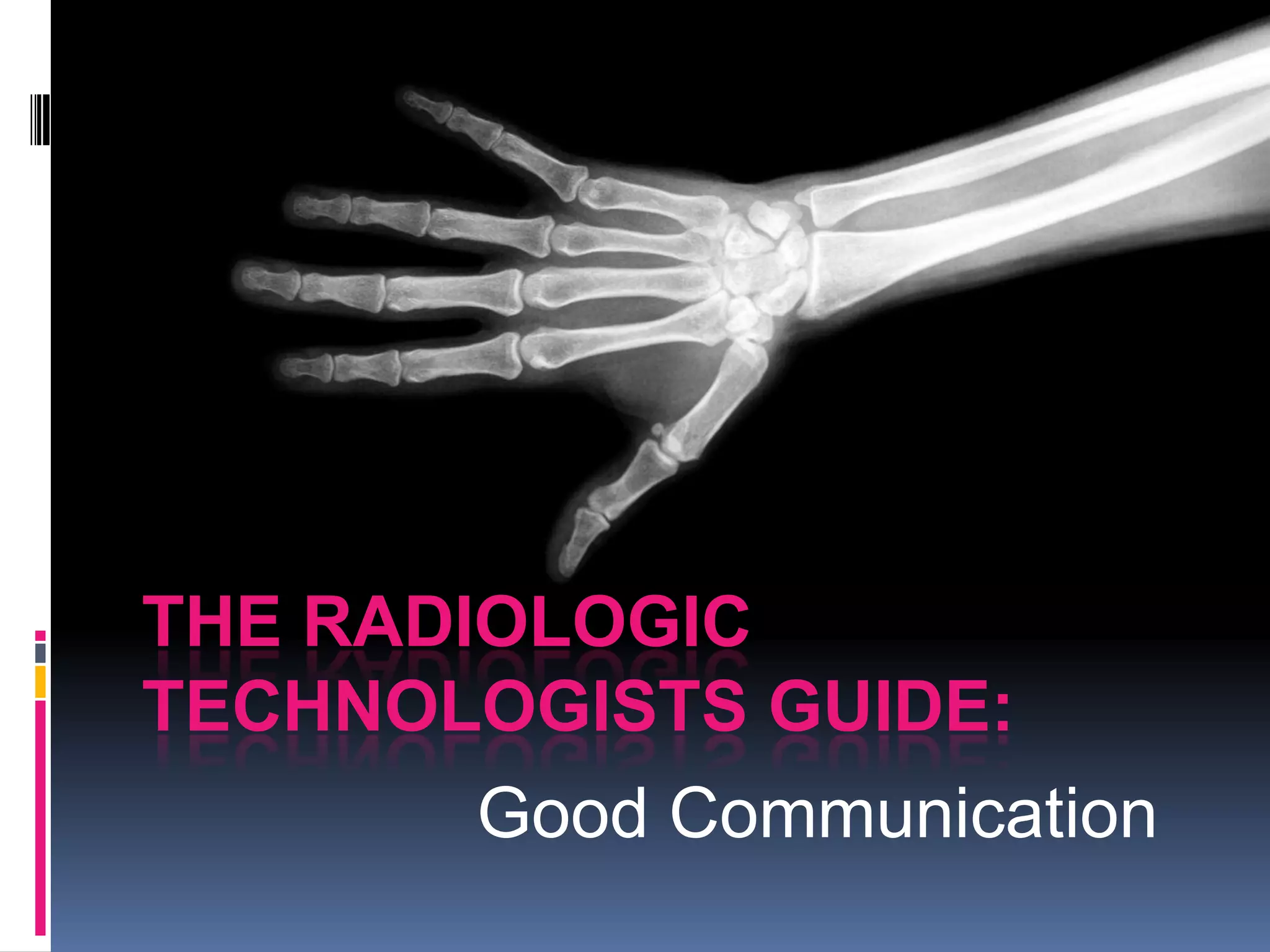
THE RADIOLOGIC
TECHNOLOGISTS GUIDE:
       Good Communication
Trust
 You will have to provide personal care, medical
  attention, and emotional support, to patients.
 So there needs to be a bond of trust between the
  radiologic technologist and the patient.
 To achieve this bond you must be sensitive,
  compassionate, honest, and must be willing to listen.
Social Attributes
  of Effective
Communicator
People in the medical field have to interact with many
different types of people all day long, whether they are
colleagues, patients, or a patient’s family. Some of these
people aren’t so friendly, understanding or open-minded.

It is imperative that a radiologic technologist has all of the
social attributes to effectively communicate with all types of
people without getting upset, or angry. These include oral
expression, active listening, service orientation, social
sensitivity, and oral comprehension.
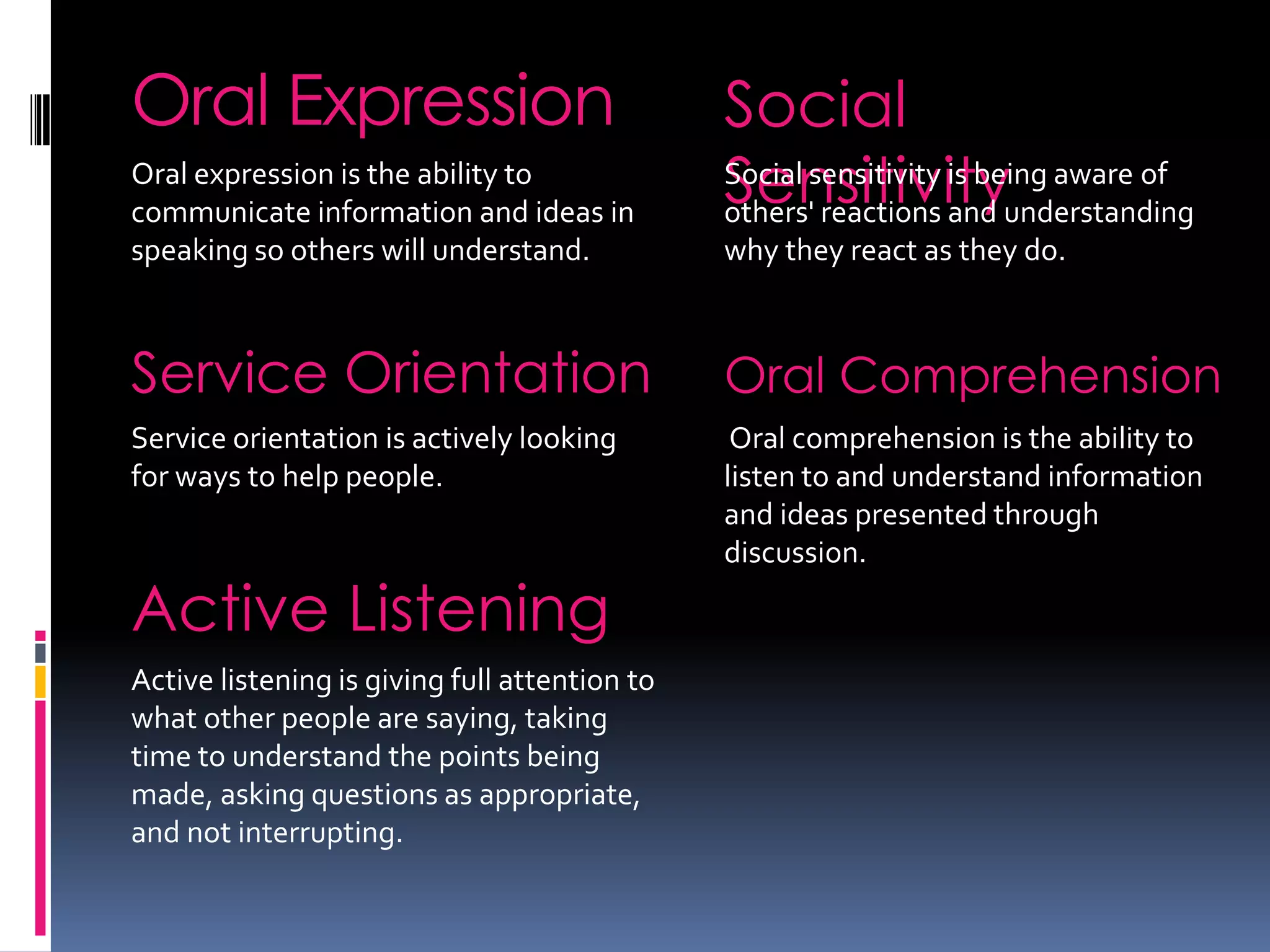
Oral Expression                                Social
Oral expression is the ability to
communicate information and ideas in
                                               Sensitivityunderstanding
                                               Social sensitivity is being aware of
                                               others' reactions and
speaking so others will understand.            why they react as they do.


Service Orientation                            Oral Comprehension
Service orientation is actively looking         Oral comprehension is the ability to
for ways to help people.                       listen to and understand information
                                               and ideas presented through
                                               discussion.

Active Listening
Active listening is giving full attention to
what other people are saying, taking
time to understand the points being
made, asking questions as appropriate,
and not interrupting.
In obtaining your education for this field of work you should
take certain social interaction classes such as communication
and psychology to ensure that you possess and can practice all
of these qualities of good communication.

There will always be people that you don’t agree with or
necessarily adore but the most important thing is to stay as
civilized and professional as possible.
Procedures

 Before starting the procedure it is important
  to make the patient feel comfortable.
 Fully explain the procedure to the patient.
 Keep the patient updated on what is going on
  as the procedure moves along.
Communicating with
 other professionals
Written Communication
   Writing is the most important means for communicating medical work
    because physicians and the radiologic technologists rarely ever come
    face to face.
   It is the radiologic technologists job to simply take the images whether it
    is an x-ray, MRI, CAT scan, sonogram, etc.
   It is the radiologist/Physician’s job to interpret the image and either clear
    the patient or make a diagnosis.
   The most important trait to have when dealing with written
    communication is writing in such a way that is understandable as well as
    thorough.
    Good reading comprehension or being able to clearly understand the
    written word is also very important.
   In college most of us will acquire these characteristics in our English
    classes through practicing written communication.
Patient Charts
The key type of written communication utilized in radiology as well as the entire
medical field is the patient history charts.

These contain the patient’s entire medical history at that facility. They include the
patient’s doctor, the dates of every visit the patient has made to that facility and for
what, every former medical condition, and every illness the patient has had.

Patient charts are a vital part of the practice.

They communicate the patient information to and from the radiologist technician
and the radiologist themselves.

Charts need to be updated upon every patient visit and need to be as precise as
possible to ensure that the right procedures are being done to the right patient and
no former condition may be a cause for concern in the procedure and diagnosis.

The Radiologic Technologists Guide: Good Communication

  • 1.
  • 2.
    Trust  You willhave to provide personal care, medical attention, and emotional support, to patients.  So there needs to be a bond of trust between the radiologic technologist and the patient.  To achieve this bond you must be sensitive, compassionate, honest, and must be willing to listen.
  • 3.
    Social Attributes of Effective Communicator
  • 4.
    People in themedical field have to interact with many different types of people all day long, whether they are colleagues, patients, or a patient’s family. Some of these people aren’t so friendly, understanding or open-minded. It is imperative that a radiologic technologist has all of the social attributes to effectively communicate with all types of people without getting upset, or angry. These include oral expression, active listening, service orientation, social sensitivity, and oral comprehension.
  • 5.
    Oral Expression Social Oral expression is the ability to communicate information and ideas in Sensitivityunderstanding Social sensitivity is being aware of others' reactions and speaking so others will understand. why they react as they do. Service Orientation Oral Comprehension Service orientation is actively looking Oral comprehension is the ability to for ways to help people. listen to and understand information and ideas presented through discussion. Active Listening Active listening is giving full attention to what other people are saying, taking time to understand the points being made, asking questions as appropriate, and not interrupting.
  • 6.
    In obtaining youreducation for this field of work you should take certain social interaction classes such as communication and psychology to ensure that you possess and can practice all of these qualities of good communication. There will always be people that you don’t agree with or necessarily adore but the most important thing is to stay as civilized and professional as possible.
  • 7.
    Procedures  Before startingthe procedure it is important to make the patient feel comfortable.  Fully explain the procedure to the patient.  Keep the patient updated on what is going on as the procedure moves along.
  • 8.
  • 9.
    Written Communication  Writing is the most important means for communicating medical work because physicians and the radiologic technologists rarely ever come face to face.  It is the radiologic technologists job to simply take the images whether it is an x-ray, MRI, CAT scan, sonogram, etc.  It is the radiologist/Physician’s job to interpret the image and either clear the patient or make a diagnosis.  The most important trait to have when dealing with written communication is writing in such a way that is understandable as well as thorough.  Good reading comprehension or being able to clearly understand the written word is also very important.  In college most of us will acquire these characteristics in our English classes through practicing written communication.
  • 10.
    Patient Charts The keytype of written communication utilized in radiology as well as the entire medical field is the patient history charts. These contain the patient’s entire medical history at that facility. They include the patient’s doctor, the dates of every visit the patient has made to that facility and for what, every former medical condition, and every illness the patient has had. Patient charts are a vital part of the practice. They communicate the patient information to and from the radiologist technician and the radiologist themselves. Charts need to be updated upon every patient visit and need to be as precise as possible to ensure that the right procedures are being done to the right patient and no former condition may be a cause for concern in the procedure and diagnosis.