THE NERVOUS SYSTEM
            Presentation by: Julie Samano
                           Prof. Abdullah
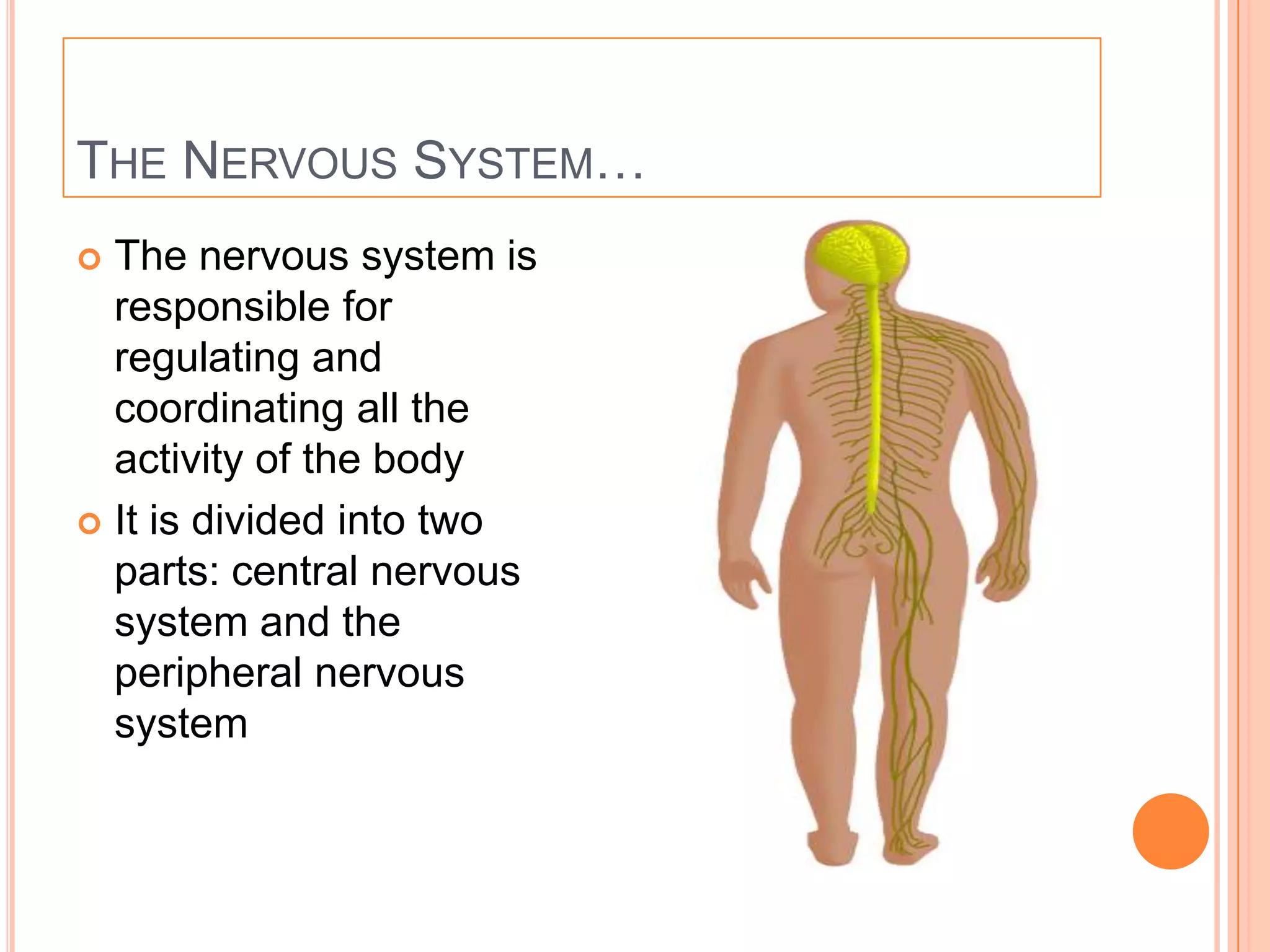
THE NERVOUS SYSTEM…
 The nervous system is
  responsible for
  regulating and
  coordinating all the
  activity of the body
 It is divided into two
  parts: central nervous
  system and the
  peripheral nervous
  system
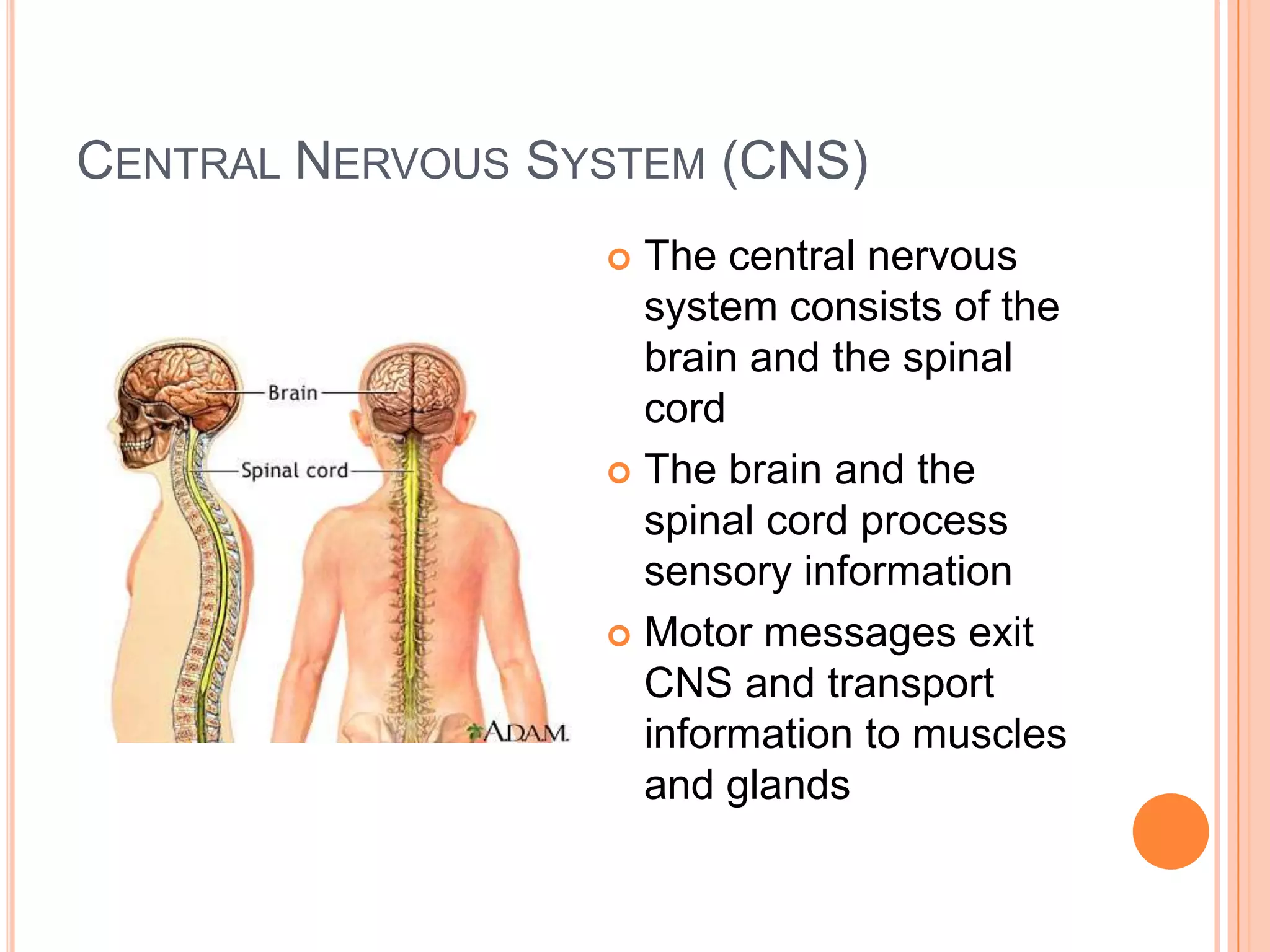
CENTRAL NERVOUS SYSTEM (CNS)
                   The central nervous
                    system consists of the
                    brain and the spinal
                    cord
                   The brain and the
                    spinal cord process
                    sensory information
                   Motor messages exit
                    CNS and transport
                    information to muscles
                    and glands
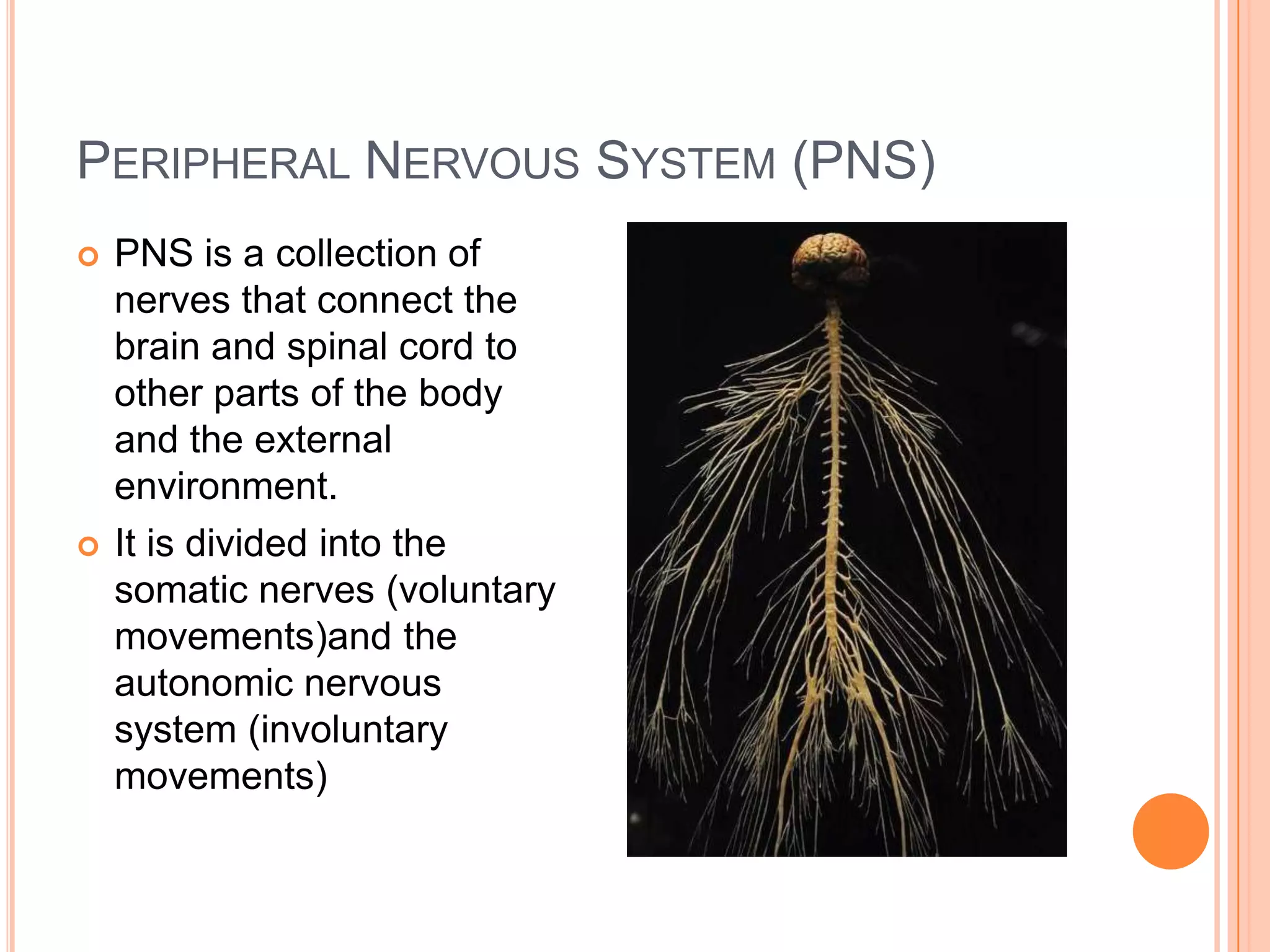
PERIPHERAL NERVOUS SYSTEM (PNS)
   PNS is a collection of
    nerves that connect the
    brain and spinal cord to
    other parts of the body
    and the external
    environment.
   It is divided into the
    somatic nerves (voluntary
    movements)and the
    autonomic nervous
    system (involuntary
    movements)
-PLEGIA
   The suffix –plegia means
    paralysis
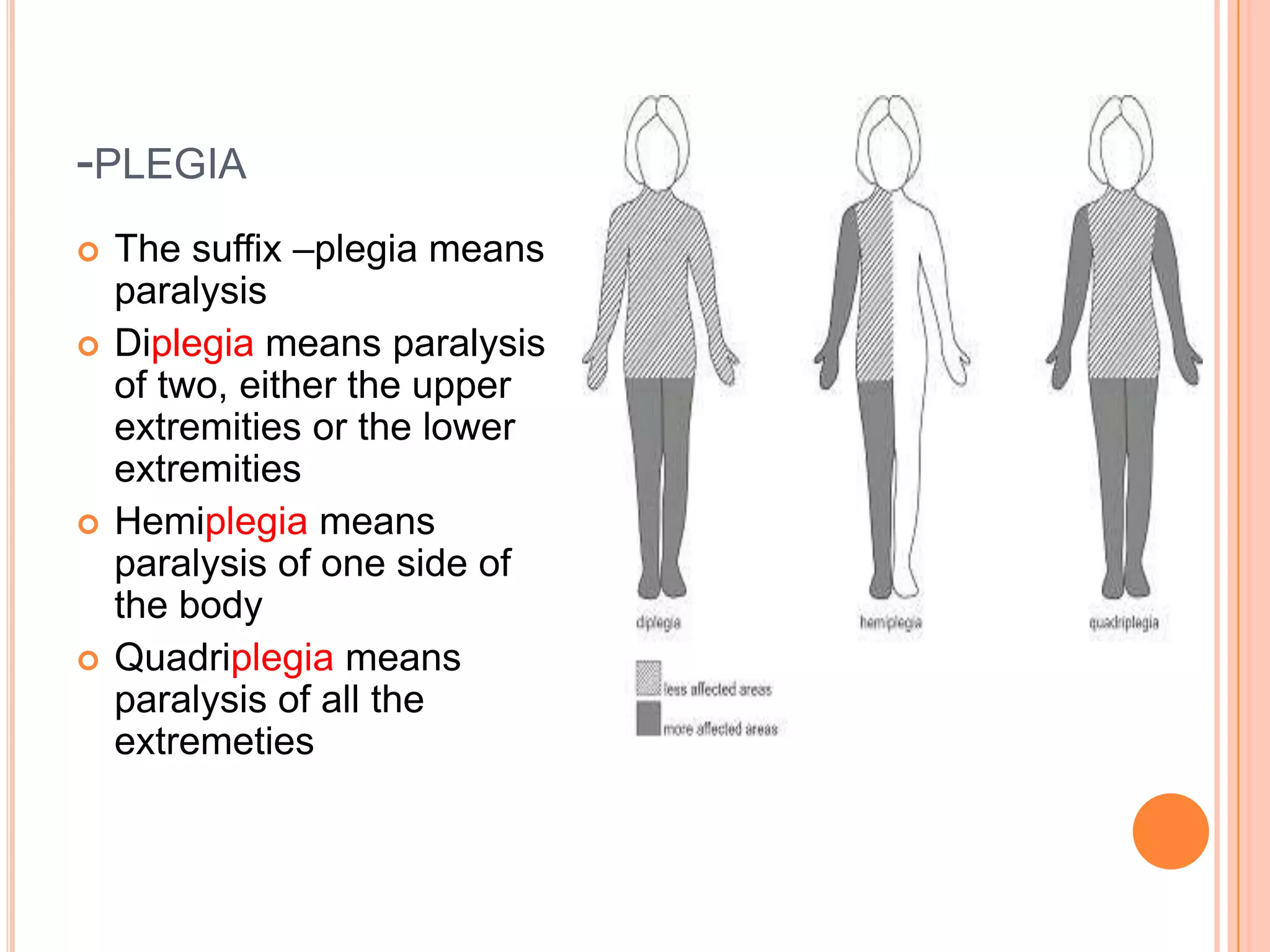
   Diplegia means paralysis
    of two, either the upper
    extremities or the lower
    extremities
   Hemiplegia means
    paralysis of one side of
    the body
   Quadriplegia means
    paralysis of all the
    extremeties
-ESTHESIA
 The suffix –esthesia
  means nervous
  sensation
 Anesthesia means
  lack of sensations
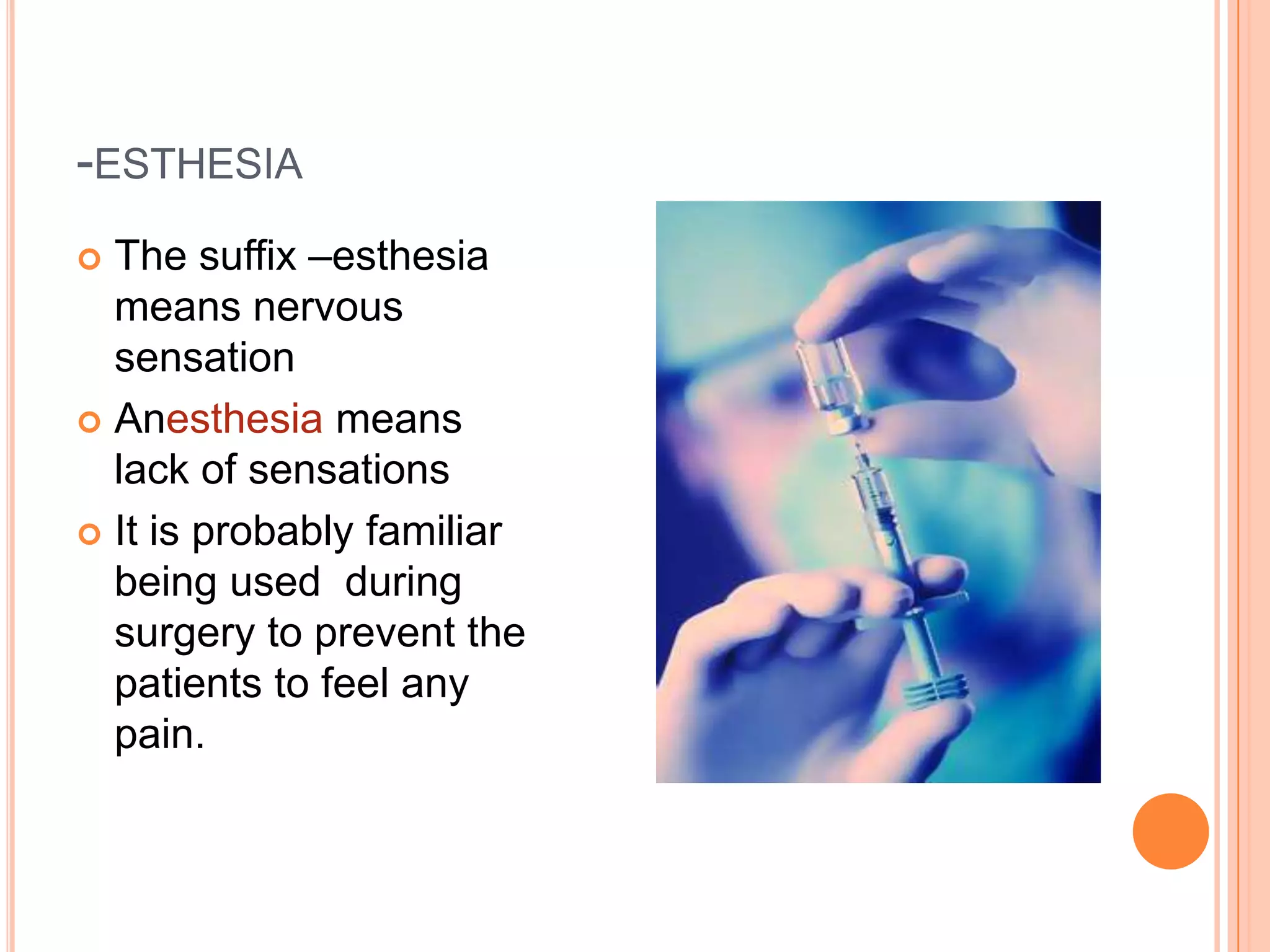
 It is probably familiar
  being used during
  surgery to prevent the
  patients to feel any
  pain.

The Nervous System

  • 1.
    THE NERVOUS SYSTEM Presentation by: Julie Samano Prof. Abdullah
  • 2.
    THE NERVOUS SYSTEM… The nervous system is responsible for regulating and coordinating all the activity of the body  It is divided into two parts: central nervous system and the peripheral nervous system
  • 3.
    CENTRAL NERVOUS SYSTEM(CNS)  The central nervous system consists of the brain and the spinal cord  The brain and the spinal cord process sensory information  Motor messages exit CNS and transport information to muscles and glands
  • 4.
    PERIPHERAL NERVOUS SYSTEM(PNS)  PNS is a collection of nerves that connect the brain and spinal cord to other parts of the body and the external environment.  It is divided into the somatic nerves (voluntary movements)and the autonomic nervous system (involuntary movements)
  • 5.
    -PLEGIA  The suffix –plegia means paralysis  Diplegia means paralysis of two, either the upper extremities or the lower extremities  Hemiplegia means paralysis of one side of the body  Quadriplegia means paralysis of all the extremeties
  • 6.
    -ESTHESIA  The suffix–esthesia means nervous sensation  Anesthesia means lack of sensations  It is probably familiar being used during surgery to prevent the patients to feel any pain.