General Science
Objectives
Standard 3
The Life Cycle
.
The Life Cycle
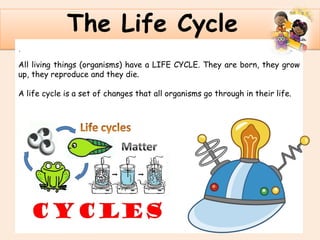
All living things (organisms) have a LIFE CYCLE. They are born, they grow
up, they reproduce and they die.
A life cycle is a set of changes that all organisms go through in their life.
.
Metamorphosis
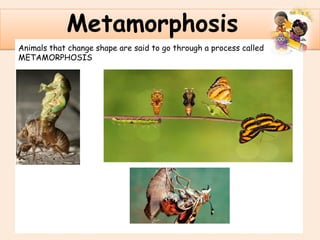
Animals that change shape are said to go through a process called
METAMORPHOSIS
.
The Cycle of the Butterfly
The butterfly and moth develop through a process called metamorphosis.
Eggs are laid on plants by the adult female butterfly. These plants will then
become the food for the hatching caterpillars.
Eggs can be laid from spring, summer or fall.
This depends on the species of butterfly. Females lay a lot of eggs at once
so that at least some of them survive.
Butterfly eggs can be very small.
The Egg
.
The Cycle of the Butterfly
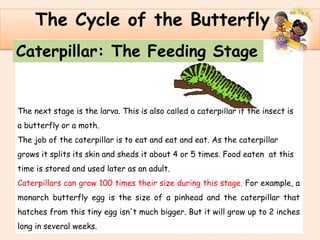
The next stage is the larva. This is also called a caterpillar if the insect is
a butterfly or a moth.
The job of the caterpillar is to eat and eat and eat. As the caterpillar
grows it splits its skin and sheds it about 4 or 5 times. Food eaten at this
time is stored and used later as an adult.
Caterpillars can grow 100 times their size during this stage. For example, a
monarch butterfly egg is the size of a pinhead and the caterpillar that
hatches from this tiny egg isn't much bigger. But it will grow up to 2 inches
long in several weeks.
Caterpillar: The Feeding Stage
.
The Cycle of the Butterfly
Pupa: The Transition Stage
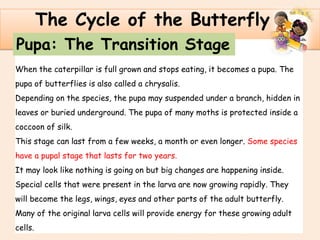
When the caterpillar is full grown and stops eating, it becomes a pupa. The
pupa of butterflies is also called a chrysalis.
Depending on the species, the pupa may suspended under a branch, hidden in
leaves or buried underground. The pupa of many moths is protected inside a
coccoon of silk.
This stage can last from a few weeks, a month or even longer. Some species
have a pupal stage that lasts for two years.
It may look like nothing is going on but big changes are happening inside.
Special cells that were present in the larva are now growing rapidly. They
will become the legs, wings, eyes and other parts of the adult butterfly.
Many of the original larva cells will provide energy for these growing adult
cells.
.
The Cycle of the Butterfly
Adult: The Reproductive Stage
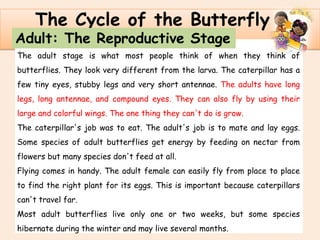
The adult stage is what most people think of when they think of
butterflies. They look very different from the larva. The caterpillar has a
few tiny eyes, stubby legs and very short antennae. The adults have long
legs, long antennae, and compound eyes. They can also fly by using their
large and colorful wings. The one thing they can't do is grow.
The caterpillar's job was to eat. The adult's job is to mate and lay eggs.
Some species of adult butterflies get energy by feeding on nectar from
flowers but many species don't feed at all.
Flying comes in handy. The adult female can easily fly from place to place
to find the right plant for its eggs. This is important because caterpillars
can't travel far.
Most adult butterflies live only one or two weeks, but some species
hibernate during the winter and may live several months.
.
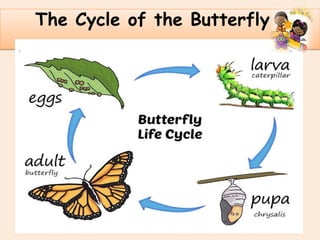
The Cycle of the Butterfly
.
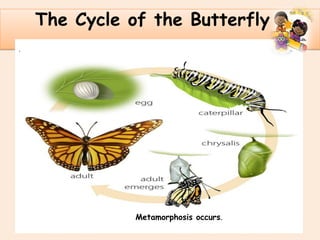
The Cycle of the Butterfly
Metamorphosis occurs.
.
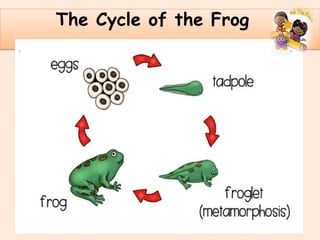
The Cycle of the Frog
.
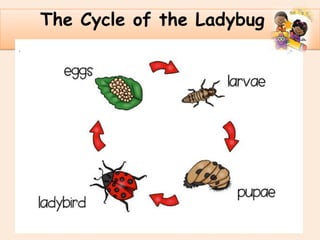
The Cycle of the Ladybug
.
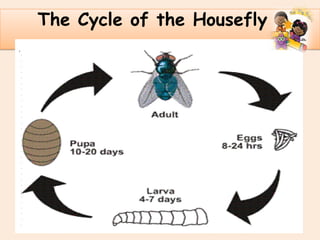
The Cycle of the Housefly
.
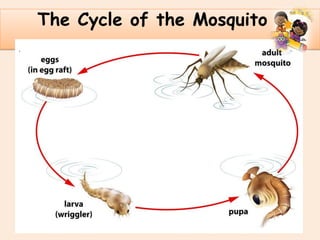
The Cycle of the Mosquito
The Life Cycle: The Stages of the Metamorphosis Process

The Life Cycle: The Stages of the Metamorphosis Process

  • 1.
  • 2.
    . The Life Cycle Allliving things (organisms) have a LIFE CYCLE. They are born, they grow up, they reproduce and they die. A life cycle is a set of changes that all organisms go through in their life.
  • 3.
    . Metamorphosis Animals that changeshape are said to go through a process called METAMORPHOSIS
  • 4.
    . The Cycle ofthe Butterfly The butterfly and moth develop through a process called metamorphosis. Eggs are laid on plants by the adult female butterfly. These plants will then become the food for the hatching caterpillars. Eggs can be laid from spring, summer or fall. This depends on the species of butterfly. Females lay a lot of eggs at once so that at least some of them survive. Butterfly eggs can be very small. The Egg
  • 5.
    . The Cycle ofthe Butterfly The next stage is the larva. This is also called a caterpillar if the insect is a butterfly or a moth. The job of the caterpillar is to eat and eat and eat. As the caterpillar grows it splits its skin and sheds it about 4 or 5 times. Food eaten at this time is stored and used later as an adult. Caterpillars can grow 100 times their size during this stage. For example, a monarch butterfly egg is the size of a pinhead and the caterpillar that hatches from this tiny egg isn't much bigger. But it will grow up to 2 inches long in several weeks. Caterpillar: The Feeding Stage
  • 6.
    . The Cycle ofthe Butterfly Pupa: The Transition Stage When the caterpillar is full grown and stops eating, it becomes a pupa. The pupa of butterflies is also called a chrysalis. Depending on the species, the pupa may suspended under a branch, hidden in leaves or buried underground. The pupa of many moths is protected inside a coccoon of silk. This stage can last from a few weeks, a month or even longer. Some species have a pupal stage that lasts for two years. It may look like nothing is going on but big changes are happening inside. Special cells that were present in the larva are now growing rapidly. They will become the legs, wings, eyes and other parts of the adult butterfly. Many of the original larva cells will provide energy for these growing adult cells.
  • 7.
    . The Cycle ofthe Butterfly Adult: The Reproductive Stage The adult stage is what most people think of when they think of butterflies. They look very different from the larva. The caterpillar has a few tiny eyes, stubby legs and very short antennae. The adults have long legs, long antennae, and compound eyes. They can also fly by using their large and colorful wings. The one thing they can't do is grow. The caterpillar's job was to eat. The adult's job is to mate and lay eggs. Some species of adult butterflies get energy by feeding on nectar from flowers but many species don't feed at all. Flying comes in handy. The adult female can easily fly from place to place to find the right plant for its eggs. This is important because caterpillars can't travel far. Most adult butterflies live only one or two weeks, but some species hibernate during the winter and may live several months.
  • 8.
    . The Cycle ofthe Butterfly
  • 9.
    . The Cycle ofthe Butterfly Metamorphosis occurs.
  • 10.
  • 11.
    . The Cycle ofthe Ladybug
  • 12.
    . The Cycle ofthe Housefly
  • 13.
    . The Cycle ofthe Mosquito