
Agricultural Science
Objectives
Standard 3
The Self Watering Planter
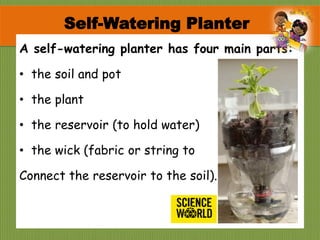
A self-watering planter has four main parts:
• the soil and pot
• the plant
• the reservoir (to hold water)
• the wick (fabric or string to
Connect the reservoir to the soil).
Self-Watering Planter
How to make a self-Watering Planter:
1. Using scissors, cut a 2 inch wide strip of cloth as long as your bottle,
then carefully cut the pop bottle in half.
2. Turn the top part of the bottle upside down and sit it into the
reservoir. The top half will be the planter and the bottom half will be
the reservoir.
3. Feed the cloth through the hole at the top of the bottle (bottom of the
planter), until it touches the bottom of the reservoir.
4. Holding the cloth upright, carefully fill the planter with a few inches of
soil. Curl the remaining cloth into a circle around the planter and cover
in soil.
5. Plant your plant (or seeds) in the planter and fill the reservoir, ensuring
that the cloth is sitting in the water. The cloth will now begin its work
as the wick, providing a pathway for water to move from the reservoir
into the soil.
6. Place your plant in a sunny location. Re-fill the reservoir with water as
needed.
Self-Watering Planter
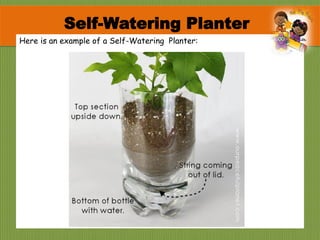
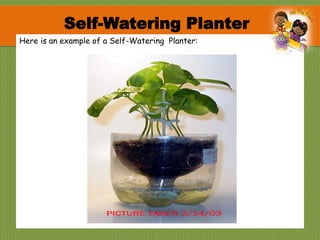
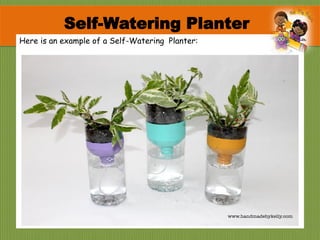
Here is an example of a Self-Watering Planter:
Self-Watering Planter
Here is an example of a Self-Watering Planter:
Self-Watering Planter
Here is an example of a Self-Watering Planter:
Self-Watering Planter
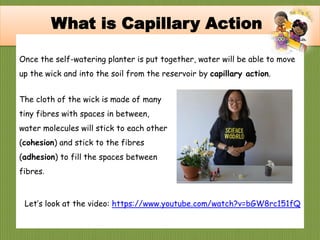
Once the self-watering planter is put together, water will be able to move
up the wick and into the soil from the reservoir by capillary action.
What is Capillary Action
The cloth of the wick is made of many
tiny fibres with spaces in between,
water molecules will stick to each other
(cohesion) and stick to the fibres
(adhesion) to fill the spaces between
fibres.
Let’s look at the video: https://www.youtube.com/watch?v=bGW8rc151fQ
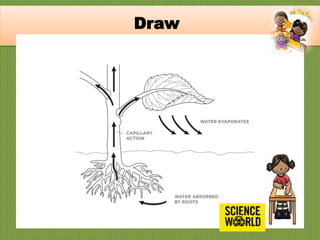
Water tends to move from areas of more water to areas of less water
(osmosis).
When water is lost due to evaporation from leaves, it is replaced as plant
roots pull water from the soil. In this planter, water is moved into the soil
out of the reservoir via the wick.
What is Osmosis
Draw
Ask yourself the question:
1. How does the wick move water?
2. Why do plants need water? What will happen to the plant if the
reservoir dries up?
3. Where does the water go?
4. How does capillary action overcome gravity?
• Because of the clear bottle, you will be able to watch the plants roots
grow. This is especially interesting with seeds.
• Instead of a pop bottle, any set of containers will do as long has you
have a hole for the wick and the planter can sit above the reservoir
with the wick in place.
Self-Watering Planter
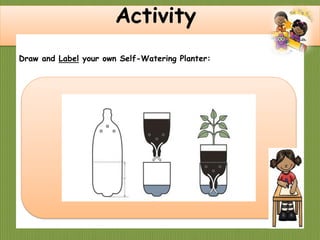
Activity
Draw and Label your own Self-Watering Planter:
Capillary action or wicking: the ability of a liquid to
flow in narrow spaces without the assistance of, or
even in opposition to, external forces like gravity.
• Osmosis: the movement of water from an area with
more water to an area of less water, through a
selectively permeable membrane.
• Evaporation: the process by which water changes
from a liquid to a gas or vapour.
Glossary
Cohesion: The attraction of water molecules to each
other. Water molecules tend to stick to each other in a
regular pattern due to the extensive hydrogen bonding.
This phenomenon, called cohesion, is easily observed
when you carefully overfill a glass with water (by just a
little bit!) and observe the water molecules holding
together above the rim; this is called a meniscus
(eventually, however, gravity overcomes the hydrogen
bonds and the water molecules spill down the side of
the glass). Likewise, the cohesive property of water
allows tall trees to bring water to their highest leaves
from underground sources.
Glossary
Adhesion: the attraction of water molecules to other
substances. This is the reason water “sticks” to surfaces
and makes things “wet”. The attraction of water
molecules to other substances. This is the reason water
“sticks” to surfaces and makes things “wet”.
Glossary
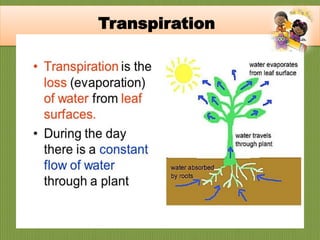
Transpiration
Transpiration
Transpiration is the process by which moisture leaves the green plants
through small openings in their leaves called stomata. Stomata are
present on leaves and stems of plants and are outlets for plants to
exchange water and gases.
Root hair present at the terminal ends of roots absorb moisture from
surrounding soil and transport it to the leaves through the stem. Leaves
release this absorbed moisture into the atmosphere by transpiration.
In dry weather conditions, the stomata expand and open wide to release
water vapor during transpiration to keep the plant cool and also pulls up
groundwater through their roots to the leaves. During wet and cool
weather conditions, the openings of stomata shrink to prevent
transpiration, reducing absorption of groundwater through roots.
q
• Plants need water to grow and maintain their structure.
They absorb groundwater, that is, water collected below
ground level due to percolation of rain water, through
their root system. During precipitation, water that falls on
the ground is absorbed deep into the soil by plant roots.
• Vegetation plays an important role in the water cycle by
preventing soil erosion and increasing groundwater levels.
In areas with thick vegetation cover, the foliage cover
breaks the force of precipitation falling on the ground,
which may otherwise cause erosion. Green plants also
release water vapour in the air as a by-product of
photosynthesis, thus involving groundwater in the water
cycle.
The Role of the Plant
in the Water Cycle
q
• The role of plants in the water cycle is easily demonstrated by
comparing tropical rainforests and places that have been heavily
deforested. Rainforests are densely packed with different types of
vegetation, from tall trees to ground level grasses. Plants in such
areas have high transpiration rates, and water vapour released from
plants is visible in the form of steam rising from the vegetation.
This expelled water vapour helps to cool the area and retain
moisture.
• On the other hand, many urban areas have cut down vast forest land
for constructing buildings and procuring raw materials for various
manufacturing industries. Lack of forest cover results in soil
erosion and depleted groundwater reserves as there are not plant
roots to absorb water deep into the soil.
Effects of Plants
on the Water Cycle
q
Over time, deforested areas become arid and often get
flooded or face droughts. Without plants, there is no
way for surface runoff to percolate deep into the
ground and therefore, the groundwater level keeps
getting depleted. Moreover, no transpiration occurs in
deforested area, eventually leading to low moisture
content in the atmosphere and dry arid environmental
conditions.
Effects of Plants
on the Water Cycle
All About the Self - Watering Planter

All About the Self - Watering Planter

  • 1.
  • 2.
    A self-watering planterhas four main parts: • the soil and pot • the plant • the reservoir (to hold water) • the wick (fabric or string to Connect the reservoir to the soil). Self-Watering Planter
  • 3.
    How to makea self-Watering Planter: 1. Using scissors, cut a 2 inch wide strip of cloth as long as your bottle, then carefully cut the pop bottle in half. 2. Turn the top part of the bottle upside down and sit it into the reservoir. The top half will be the planter and the bottom half will be the reservoir. 3. Feed the cloth through the hole at the top of the bottle (bottom of the planter), until it touches the bottom of the reservoir. 4. Holding the cloth upright, carefully fill the planter with a few inches of soil. Curl the remaining cloth into a circle around the planter and cover in soil. 5. Plant your plant (or seeds) in the planter and fill the reservoir, ensuring that the cloth is sitting in the water. The cloth will now begin its work as the wick, providing a pathway for water to move from the reservoir into the soil. 6. Place your plant in a sunny location. Re-fill the reservoir with water as needed. Self-Watering Planter
  • 4.
    Here is anexample of a Self-Watering Planter: Self-Watering Planter
  • 5.
    Here is anexample of a Self-Watering Planter: Self-Watering Planter
  • 6.
    Here is anexample of a Self-Watering Planter: Self-Watering Planter
  • 7.
    Once the self-wateringplanter is put together, water will be able to move up the wick and into the soil from the reservoir by capillary action. What is Capillary Action The cloth of the wick is made of many tiny fibres with spaces in between, water molecules will stick to each other (cohesion) and stick to the fibres (adhesion) to fill the spaces between fibres. Let’s look at the video: https://www.youtube.com/watch?v=bGW8rc151fQ
  • 8.
    Water tends tomove from areas of more water to areas of less water (osmosis). When water is lost due to evaporation from leaves, it is replaced as plant roots pull water from the soil. In this planter, water is moved into the soil out of the reservoir via the wick. What is Osmosis
  • 9.
  • 10.
    Ask yourself thequestion: 1. How does the wick move water? 2. Why do plants need water? What will happen to the plant if the reservoir dries up? 3. Where does the water go? 4. How does capillary action overcome gravity? • Because of the clear bottle, you will be able to watch the plants roots grow. This is especially interesting with seeds. • Instead of a pop bottle, any set of containers will do as long has you have a hole for the wick and the planter can sit above the reservoir with the wick in place. Self-Watering Planter
  • 11.
    Activity Draw and Labelyour own Self-Watering Planter:
  • 12.
    Capillary action orwicking: the ability of a liquid to flow in narrow spaces without the assistance of, or even in opposition to, external forces like gravity. • Osmosis: the movement of water from an area with more water to an area of less water, through a selectively permeable membrane. • Evaporation: the process by which water changes from a liquid to a gas or vapour. Glossary
  • 13.
    Cohesion: The attractionof water molecules to each other. Water molecules tend to stick to each other in a regular pattern due to the extensive hydrogen bonding. This phenomenon, called cohesion, is easily observed when you carefully overfill a glass with water (by just a little bit!) and observe the water molecules holding together above the rim; this is called a meniscus (eventually, however, gravity overcomes the hydrogen bonds and the water molecules spill down the side of the glass). Likewise, the cohesive property of water allows tall trees to bring water to their highest leaves from underground sources. Glossary
  • 14.
    Adhesion: the attractionof water molecules to other substances. This is the reason water “sticks” to surfaces and makes things “wet”. The attraction of water molecules to other substances. This is the reason water “sticks” to surfaces and makes things “wet”. Glossary
  • 15.
  • 16.
    Transpiration Transpiration is theprocess by which moisture leaves the green plants through small openings in their leaves called stomata. Stomata are present on leaves and stems of plants and are outlets for plants to exchange water and gases. Root hair present at the terminal ends of roots absorb moisture from surrounding soil and transport it to the leaves through the stem. Leaves release this absorbed moisture into the atmosphere by transpiration. In dry weather conditions, the stomata expand and open wide to release water vapor during transpiration to keep the plant cool and also pulls up groundwater through their roots to the leaves. During wet and cool weather conditions, the openings of stomata shrink to prevent transpiration, reducing absorption of groundwater through roots.
  • 17.
    q • Plants needwater to grow and maintain their structure. They absorb groundwater, that is, water collected below ground level due to percolation of rain water, through their root system. During precipitation, water that falls on the ground is absorbed deep into the soil by plant roots. • Vegetation plays an important role in the water cycle by preventing soil erosion and increasing groundwater levels. In areas with thick vegetation cover, the foliage cover breaks the force of precipitation falling on the ground, which may otherwise cause erosion. Green plants also release water vapour in the air as a by-product of photosynthesis, thus involving groundwater in the water cycle. The Role of the Plant in the Water Cycle
  • 18.
    q • The roleof plants in the water cycle is easily demonstrated by comparing tropical rainforests and places that have been heavily deforested. Rainforests are densely packed with different types of vegetation, from tall trees to ground level grasses. Plants in such areas have high transpiration rates, and water vapour released from plants is visible in the form of steam rising from the vegetation. This expelled water vapour helps to cool the area and retain moisture. • On the other hand, many urban areas have cut down vast forest land for constructing buildings and procuring raw materials for various manufacturing industries. Lack of forest cover results in soil erosion and depleted groundwater reserves as there are not plant roots to absorb water deep into the soil. Effects of Plants on the Water Cycle
  • 19.
    q Over time, deforestedareas become arid and often get flooded or face droughts. Without plants, there is no way for surface runoff to percolate deep into the ground and therefore, the groundwater level keeps getting depleted. Moreover, no transpiration occurs in deforested area, eventually leading to low moisture content in the atmosphere and dry arid environmental conditions. Effects of Plants on the Water Cycle