

RENAL REPLACEMENT
THERAPY
DR. KAJAREE GIRI
THE TOPIC WILL
BE DISCUSSED IN
THE FOLLOWING
SUB-HEADINGS:
 TYPES OF RRT AND
PRINCIPLES
 VASCULAR ACCESS FOR
DIALYTIC THERAPIES
 HEMODIALYSIS – PRINCIPLES
AND TECHNIQUES
 HEMODIALYSIS – OUTCOMES
AND ADEQUACY
 ACUTE COMPLICATIONS
DURING HD
 DIALYTIC THERAPIES IN
DRUG OVERDOSE
 RENAL TRANSPLANTATION
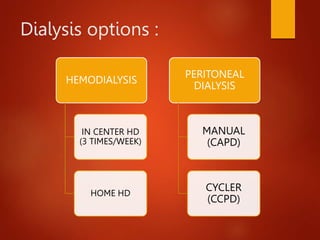
Dialysis options :
HEMODIALYSIS
IN CENTER HD
(3 TIMES/WEEK)
HOME HD
PERITONEAL
DIALYSIS
MANUAL
(CAPD)
CYCLER
(CCPD)
EARLY VACCINATION FOR HEPATITIS
B- Too often forgotten:
 Patients with ESRD have decrease response to vaccination
 After Hepatitis B vaccination in ESRD patients :
 50-60% develop antibodies compared to >90% in patients
without renal failure
 Have lower titers
 Have protective levels for shorter duration
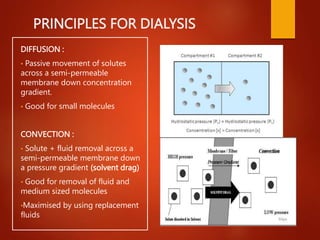
PRINCIPLES FOR DIALYSIS
DIFFUSION :
• Passive movement of solutes
across a semi-permeable
membrane down concentration
gradient.
• Good for small molecules
CONVECTION :
• Solute + fluid removal across a
semi-permeable membrane down
a pressure gradient (solvent drag)
• Good for removal of fluid and
medium sized molecules
•Maximised by using replacement
fluids
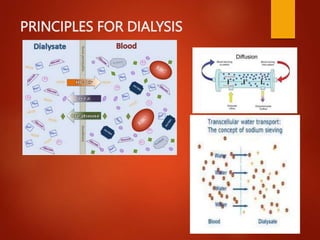
PRINCIPLES FOR DIALYSIS
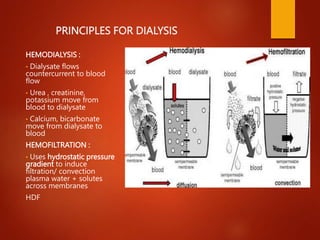
HEMODIALYSIS :
• Dialysate flows
countercurrent to blood
flow
• Urea , creatinine,
potassium move from
blood to dialysate
• Calcium, bicarbonate
move from dialysate to
blood
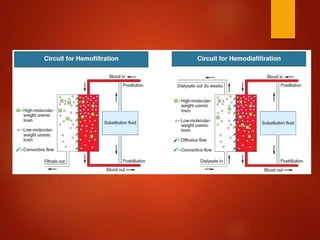
HEMOFILTRATION :
• Uses hydrostatic pressure
gradient to induce
filtration/ convection
plasma water + solutes
across membranes
HDF
HOME DIALYSIS:
Components :
• Dialyser
• Composition of the
dialysate
• Blood delivery system
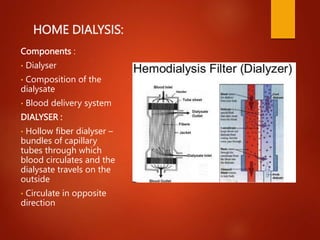
DIALYSER :
• Hollow fiber dialyser –
bundles of capillary
tubes through which
blood circulates and the
dialysate travels on the
outside
• Circulate in opposite
direction
DIALYSIS
MEMBRANE
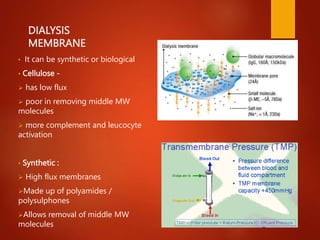
• It can be synthetic or biological
• Cellulose -
 has low flux
 poor in removing middle MW
molecules
 more complement and leucocyte
activation
• Synthetic :
 High flux membranes
Made up of polyamides /
polysulphones
Allows removal of middle MW
molecules
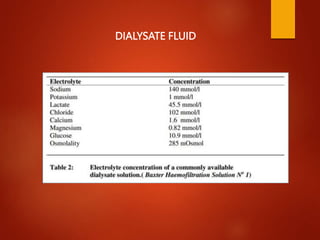
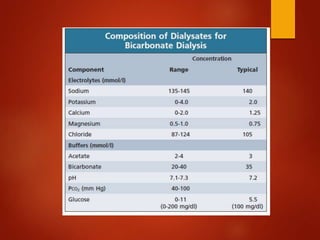
DIALYSATE FLUID
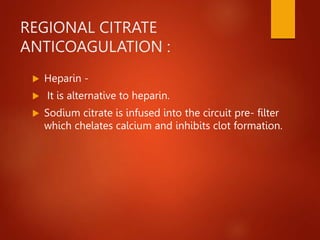
REGIONAL CITRATE
ANTICOAGULATION :
 Heparin -
 It is alternative to heparin.
 Sodium citrate is infused into the circuit pre- filter
which chelates calcium and inhibits clot formation.
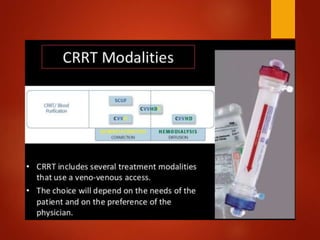
CONTINUOUS RENAL REPLACEMENT
THERAPY :
 Dialyse patients more physiologically
 Avoids accumulation of waste products
 Avoids the rapid shifts in volume and osmolarity
 Avoids disadvantages of PD
CONTINUOUS RENAL REPLACEMENT
THERAPY :
ADVANTAGES
 Precise volume control
 Suitable for
hemodynamically unstable
patients
 Very effective control of
uremia / hyperkalemi/
metabolic acidosis
 Safer for patients with TBI/
CVA
 Improve nutritional
support
DISADVANTAGES
 Expensive
 Anticoagulation
 Hypothermia
 Severe depletion of
electrolytes – K/ PO4
 Complications of line
insertion/ sepsis/ line
disconnection
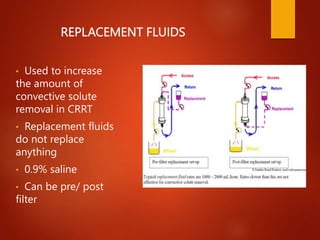
REPLACEMENT FLUIDS
• Used to increase
the amount of
convective solute
removal in CRRT
• Replacement fluids
do not replace
anything
• 0.9% saline
• Can be pre/ post
filter
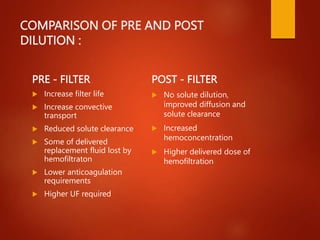
COMPARISON OF PRE AND POST
DILUTION :
PRE - FILTER
 Increase filter life
 Increase convective
transport
 Reduced solute clearance
 Some of delivered
replacement fluid lost by
hemofiltraton
 Lower anticoagulation
requirements
 Higher UF required
POST - FILTER
 No solute dilution,
improved diffusion and
solute clearance
 Increased
hemoconcentration
 Higher delivered dose of
hemofiltration
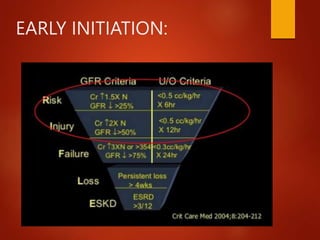
EARLY INITIATION:
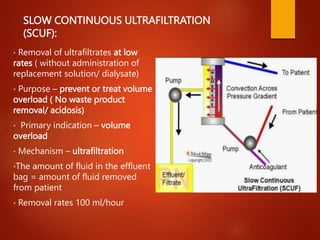
SLOW CONTINUOUS ULTRAFILTRATION
(SCUF):
• Removal of ultrafiltrates at low
rates ( without administration of
replacement solution/ dialysate)
• Purpose – prevent or treat volume
overload ( No waste product
removal/ acidosis)
• Primary indication – volume
overload
• Mechanism – ultrafiltration
•The amount of fluid in the effluent
bag = amount of fluid removed
from patient
• Removal rates 100 ml/hour
LET’S REVISE..
 Primary therapeutic goal – safe management of
fluid
 Primary indication
 Principle
 Characterestics
 Blood flow – 80-200 ml/min
 Ultrafilration – 20- 100ml/hour
 No dialysate/ replacement fluid
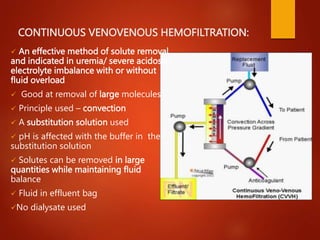
CONTINUOUS VENOVENOUS HEMOFILTRATION:
 An effective method of solute removal
and indicated in uremia/ severe acidosis/
electrolyte imbalance with or without
fluid overload
 Good at removal of large molecules
 Principle used – convection
 A substitution solution used
 pH is affected with the buffer in the
substitution solution
 Solutes can be removed in large
quantities while maintaining fluid
balance
 Fluid in effluent bag
No dialysate used
LET’S REVISE..
 Primary therapeutic goal – solute removal plus safe fluid
management
 Primary Indications
 Principle used
 Characteristics
 CVVH dosage –
 Blood flow – 80-200 ml/min
 Ultrafiltration – 20-100 ml/hour
 Replacement fluid – 30 ml/kg/hour ( divided in pre and post
filter)
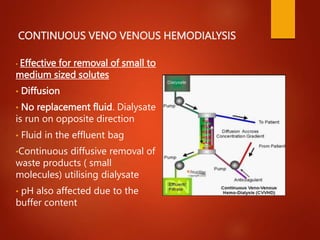
CONTINUOUS VENO VENOUS HEMODIALYSIS
• Effective for removal of small to
medium sized solutes
• Diffusion
• No replacement fluid. Dialysate
is run on opposite direction
• Fluid in the effluent bag
•Continuous diffusive removal of
waste products ( small
molecules) utilising dialysate
• pH also affected due to the
buffer content
LET’S REVISE..
 Primary therapeutic goal : solute removal and safe
management of fluid volume
 Indications
 Principle
 Characteristics
 Blood flow – 80-200 ml/min
 Ultrafiltration – 20-100 ml/hour
 Anticoagulation
 Dialysate : 45ml/kg/hour
 No replacement fluid
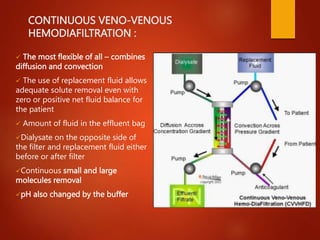
CONTINUOUS VENO-VENOUS
HEMODIAFILTRATION :
 The most flexible of all – combines
diffusion and convection
 The use of replacement fluid allows
adequate solute removal even with
zero or positive net fluid balance for
the patient
 Amount of fluid in the effluent bag
Dialysate on the opposite side of
the filter and replacement fluid either
before or after filter
Continuous small and large
molecules removal
pH also changed by the buffer
LET’S REVISE..
 Primary therapeutic goal : solute removal and safe fluid
management
 Indications
 Principle used
 Characteristics
 Effective in removing small, medium and large molecules
 Dialysate and replacement fluid dosage :
45 ml/kg/hour : ½ as dialysate and ½ as replacement fluid I
divided into pre and post filter)
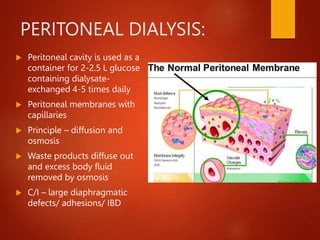
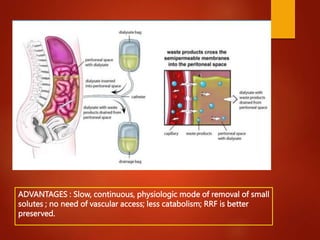
PERITONEAL DIALYSIS:
 Peritoneal cavity is used as a
container for 2-2.5 L glucose
containing dialysate-
exchanged 4-5 times daily
 Peritoneal membranes with
capillaries
 Principle – diffusion and
osmosis
 Waste products diffuse out
and excess body fluid
removed by osmosis
 C/I – large diaphragmatic
defects/ adhesions/ IBD
ADVANTAGES : Slow, continuous, physiologic mode of removal of small
solutes ; no need of vascular access; less catabolism; RRF is better
preserved.
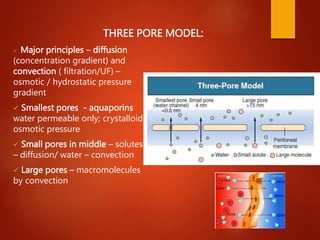
THREE PORE MODEL:
 Major principles – diffusion
(concentration gradient) and
convection ( filtration/UF) –
osmotic / hydrostatic pressure
gradient
 Smallest pores - aquaporins
water permeable only; crystalloid
osmotic pressure
 Small pores in middle – solutes
– diffusion/ water – convection
 Large pores – macromolecules
by convection
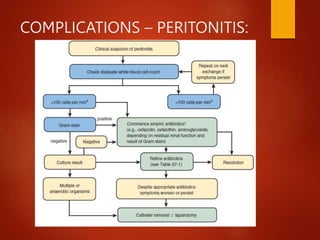
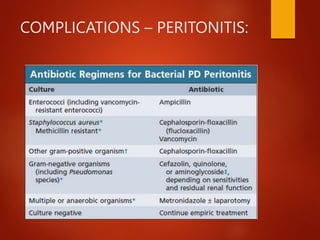
COMPLICATIONS – PERITONITIS:
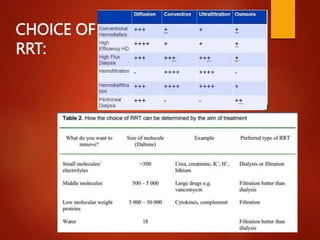
CHOICE OF
RRT:
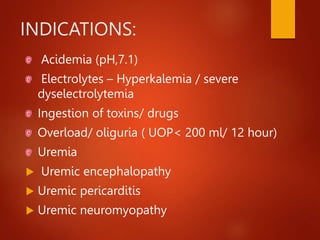
INDICATIONS:
Acidemia (pH,7.1)
Electrolytes – Hyperkalemia / severe
dyselectrolytemia
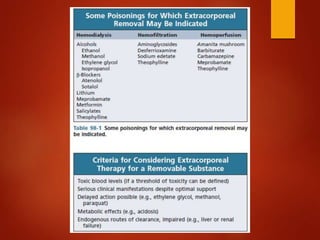
Ingestion of toxins/ drugs
Overload/ oliguria ( UOP< 200 ml/ 12 hour)
Uremia
 Uremic encephalopathy
 Uremic pericarditis
 Uremic neuromyopathy
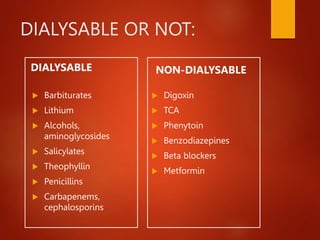
DIALYSABLE OR NOT:
DIALYSABLE
 Barbiturates
 Lithium
 Alcohols,
aminoglycosides
 Salicylates
 Theophyllin
 Penicillins
 Carbapenems,
cephalosporins
NON-DIALYSABLE
 Digoxin
 TCA
 Phenytoin
 Benzodiazepines
 Beta blockers
 Metformin
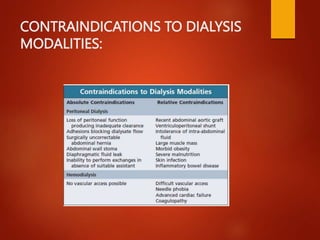
CONTRAINDICATIONS TO DIALYSIS
MODALITIES:
HEMODIALYSIS :
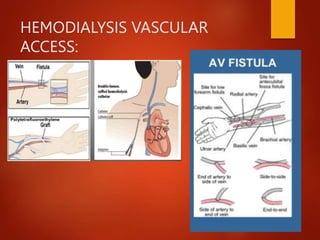
HEMODIALYSIS VASCULAR
ACCESS:
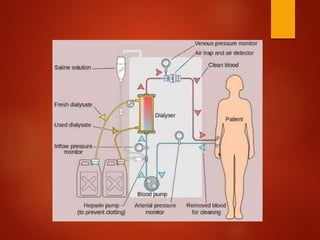
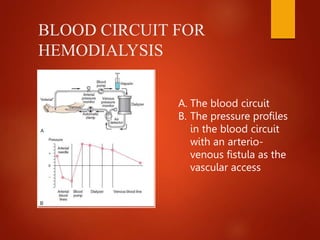
BLOOD CIRCUIT FOR
HEMODIALYSIS
A. The blood circuit
B. The pressure profiles
in the blood circuit
with an arterio-
venous fistula as the
vascular access
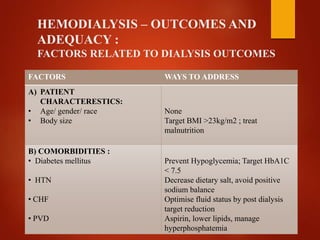
HEMODIALYSIS – OUTCOMES AND
ADEQUACY :
FACTORS RELATED TO DIALYSIS OUTCOMES
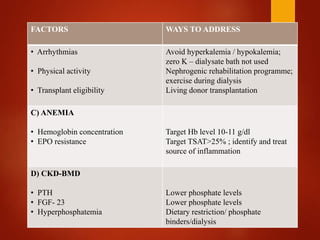
FACTORS WAYS TO ADDRESS
A) PATIENT
CHARACTERESTICS:
• Age/ gender/ race
• Body size
None
Target BMI >23kg/m2 ; treat
malnutrition
B) COMORBIDITIES :
• Diabetes mellitus
• HTN
• CHF
• PVD
Prevent Hypoglycemia; Target HbA1C
< 7.5
Decrease dietary salt, avoid positive
sodium balance
Optimise fluid status by post dialysis
target reduction
Aspirin, lower lipids, manage
hyperphosphatemia
FACTORS WAYS TO ADDRESS
• Arrhythmias
• Physical activity
• Transplant eligibility
Avoid hyperkalemia / hypokalemia;
zero K – dialysate bath not used
Nephrogenic rehabilitation programme;
exercise during dialysis
Living donor transplantation
C) ANEMIA
• Hemoglobin concentration
• EPO resistance
Target Hb level 10-11 g/dl
Target TSAT>25% ; identify and treat
source of inflammation
D) CKD-BMD
• PTH
• FGF- 23
• Hyperphosphatemia
Lower phosphate levels
Dietary restriction/ phosphate
binders/dialysis
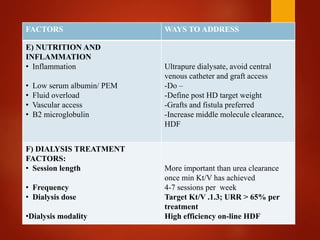
FACTORS WAYS TO ADDRESS
E) NUTRITION AND
INFLAMMATION
• Inflammation
• Low serum albumin/ PEM
• Fluid overload
• Vascular access
• B2 microglobulin
Ultrapure dialysate, avoid central
venous catheter and graft access
-Do –
-Define post HD target weight
-Grafts and fistula preferred
-Increase middle molecule clearance,
HDF
F) DIALYSIS TREATMENT
FACTORS:
• Session length
• Frequency
• Dialysis dose
•Dialysis modality
More important than urea clearance
once min Kt/V has achieved
4-7 sessions per week
Target Kt/V .1.3; URR > 65% per
treatment
High efficiency on-line HDF
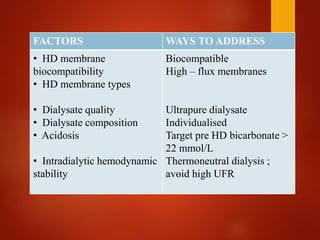
FACTORS WAYS TO ADDRESS
• HD membrane
biocompatibility
• HD membrane types
• Dialysate quality
• Dialysate composition
• Acidosis
• Intradialytic hemodynamic
stability
Biocompatible
High – flux membranes
Ultrapure dialysate
Individualised
Target pre HD bicarbonate >
22 mmol/L
Thermoneutral dialysis ;
avoid high UFR
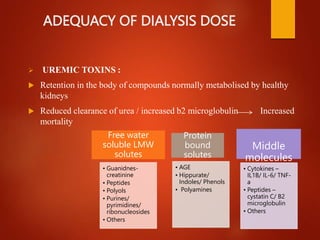
ADEQUACY OF DIALYSIS DOSE
 UREMIC TOXINS :
 Retention in the body of compounds normally metabolised by healthy
kidneys
 Reduced clearance of urea / increased b2 microglobulin Increased
mortality
Free water
soluble LMW
solutes
• Guanidnes-
creatinine
• Peptides
• Polyols
• Purines/
pyrimidines/
ribonucleosides
• Others
Protein
bound
solutes
• AGE
• Hippurate/
Indoles/ Phenols
• Polyamines
Middle
molecules
• Cytokines –
IL1B/ IL-6/ TNF-
a
• Peptides –
cystatin C/ B2
microglobulin
• Others
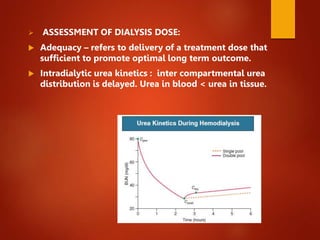
 ASSESSMENT OF DIALYSIS DOSE:
 Adequacy – refers to delivery of a treatment dose that
sufficient to promote optimal long term outcome.
 Intradialytic urea kinetics : inter compartmental urea
distribution is delayed. Urea in blood < urea in tissue.
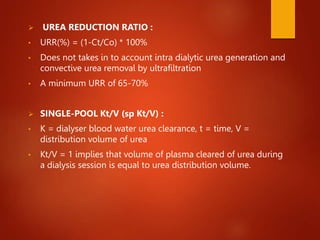
 UREA REDUCTION RATIO :
• URR(%) = (1-Ct/Co) * 100%
• Does not takes in to account intra dialytic urea generation and
convective urea removal by ultrafiltration
• A minimum URR of 65-70%
 SINGLE-POOL Kt/V (sp Kt/V) :
• K = dialyser blood water urea clearance, t = time, V =
distribution volume of urea
• Kt/V = 1 implies that volume of plasma cleared of urea during
a dialysis session is equal to urea distribution volume.
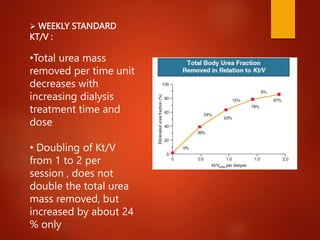
 WEEKLY STANDARD
KT/V :
•Total urea mass
removed per time unit
decreases with
increasing dialysis
treatment time and
dose
• Doubling of Kt/V
from 1 to 2 per
session , does not
double the total urea
mass removed, but
increased by about 24
% only
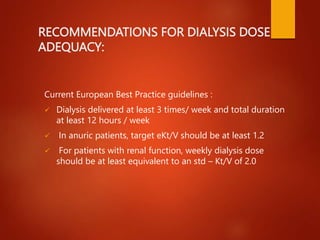
RECOMMENDATIONS FOR DIALYSIS DOSE
ADEQUACY:
Current European Best Practice guidelines :
 Dialysis delivered at least 3 times/ week and total duration
at least 12 hours / week
 In anuric patients, target eKt/V should be at least 1.2
 For patients with renal function, weekly dialysis dose
should be at least equivalent to an std – Kt/V of 2.0
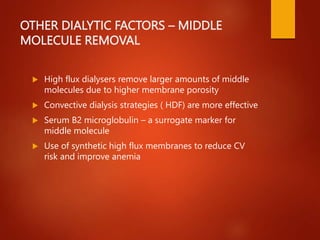
OTHER DIALYTIC FACTORS – MIDDLE
MOLECULE REMOVAL
 High flux dialysers remove larger amounts of middle
molecules due to higher membrane porosity
 Convective dialysis strategies ( HDF) are more effective
 Serum B2 microglobulin – a surrogate marker for
middle molecule
 Use of synthetic high flux membranes to reduce CV
risk and improve anemia
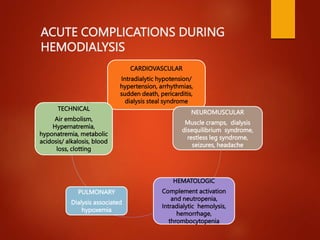
ACUTE COMPLICATIONS DURING
HEMODIALYSIS
CARDIOVASCULAR
Intradialytic hypotension/
hypertension, arrhythmias,
sudden death, pericarditis,
dialysis steal syndrome
NEUROMUSCULAR
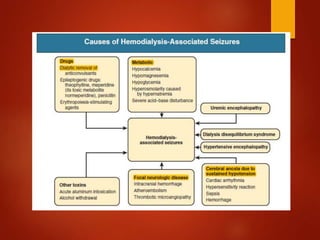
Muscle cramps, dialysis
disequilibrium syndrome,
restless leg syndrome,
seizures, headache
HEMATOLOGIC
Complement activation
and neutropenia,
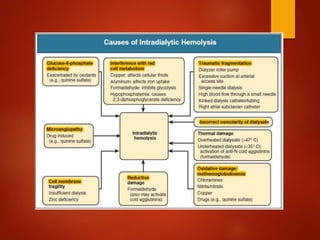
Intradialytic hemolysis,
hemorrhage,
thrombocytopenia
PULMONARY
Dialysis associated
hypoxemia
TECHNICAL
Air embolism,
Hypernatremia,
hyponatremia, metabolic
acidosis/ alkalosis, blood
loss, clotting
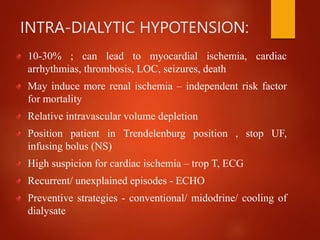
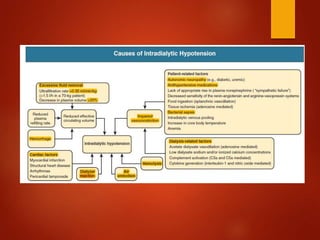
INTRA-DIALYTIC HYPOTENSION:
10-30% ; can lead to myocardial ischemia, cardiac
arrhythmias, thrombosis, LOC, seizures, death
May induce more renal ischemia – independent risk factor
for mortality
Relative intravascular volume depletion
Position patient in Trendelenburg position , stop UF,
infusing bolus (NS)
High suspicion for cardiac ischemia – trop T, ECG
Recurrent/ unexplained episodes - ECHO
Preventive strategies - conventional/ midodrine/ cooling of
dialysate
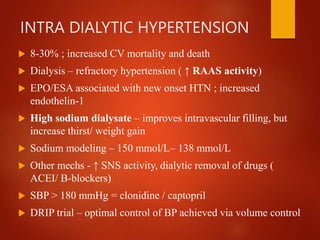
INTRA DIALYTIC HYPERTENSION
 8-30% ; increased CV mortality and death
 Dialysis – refractory hypertension ( ↑ RAAS activity)
 EPO/ESA associated with new onset HTN ; increased
endothelin-1
 High sodium dialysate – improves intravascular filling, but
increase thirst/ weight gain
 Sodium modeling – 150 mmol/L– 138 mmol/L
 Other mechs - ↑ SNS activity, dialytic removal of drugs (
ACEI/ B-blockers)
 SBP > 180 mmHg = clonidine / captopril
 DRIP trial – optimal control of BP achieved via volume control
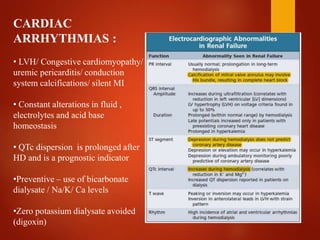
CARDIAC
ARRHYTHMIAS :
• LVH/ Congestive cardiomyopathy/
uremic pericarditis/ conduction
system calcifications/ silent MI
• Constant alterations in fluid ,
electrolytes and acid base
homeostasis
• QTc dispersion is prolonged after
HD and is a prognostic indicator
•Preventive – use of bicarbonate
dialysate / Na/K/ Ca levels
•Zero potassium dialysate avoided
(digoxin)
SUDDEN CARDIAC DEATH :
 More common in elderly, DM, using central
venous catheters
 80% is due to VF
 Hyperkalemia – Profound generalised muscle
weakness may be a warning sign
 Technical errors – air embolism / unsafe
dialysate
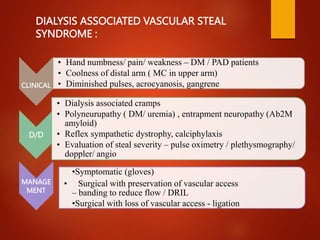
CLINICAL
• Hand numbness/ pain/ weakness – DM / PAD patients
• Coolness of distal arm ( MC in upper arm)
• Diminished pulses, acrocyanosis, gangrene
D/D
• Dialysis associated cramps
• Polyneurupathy ( DM/ uremia) , entrapment neuropathy (Ab2M
amyloid)
• Reflex sympathetic dystrophy, calciphylaxis
• Evaluation of steal severity – pulse oximetry / plethysmography/
doppler/ angio
MANAGE
MENT
•Symptomatic (gloves)
• Surgical with preservation of vascular access
– banding to reduce flow / DRIL
•Surgical with loss of vascular access - ligation
DIALYSIS ASSOCIATED VASCULAR STEAL
SYNDROME :
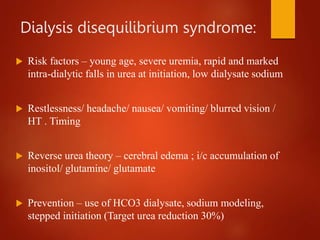
Dialysis disequilibrium syndrome:
 Risk factors – young age, severe uremia, rapid and marked
intra-dialytic falls in urea at initiation, low dialysate sodium
 Restlessness/ headache/ nausea/ vomiting/ blurred vision /
HT . Timing
 Reverse urea theory – cerebral edema ; i/c accumulation of
inositol/ glutamine/ glutamate
 Prevention – use of HCO3 dialysate, sodium modeling,
stepped initiation (Target urea reduction 30%)
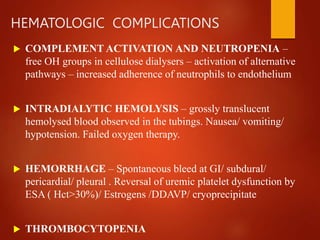
HEMATOLOGIC COMPLICATIONS
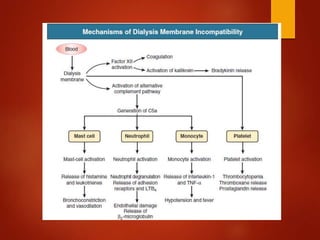
 COMPLEMENT ACTIVATION AND NEUTROPENIA –
free OH groups in cellulose dialysers – activation of alternative
pathways – increased adherence of neutrophils to endothelium
 INTRADIALYTIC HEMOLYSIS – grossly translucent
hemolysed blood observed in the tubings. Nausea/ vomiting/
hypotension. Failed oxygen therapy.
 HEMORRHAGE – Spontaneous bleed at GI/ subdural/
pericardial/ pleural . Reversal of uremic platelet dysfunction by
ESA ( Hct>30%)/ Estrogens /DDAVP/ cryoprecipitate
 THROMBOCYTOPENIA
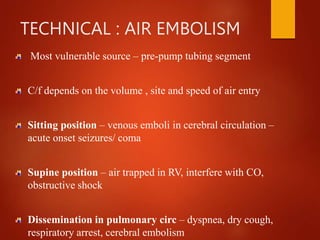
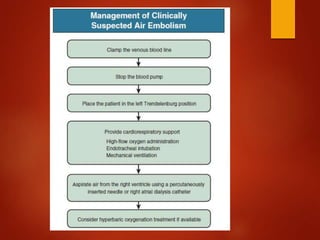
TECHNICAL : AIR EMBOLISM
Most vulnerable source – pre-pump tubing segment
C/f depends on the volume , site and speed of air entry
Sitting position – venous emboli in cerebral circulation –
acute onset seizures/ coma
Supine position – air trapped in RV, interfere with CO,
obstructive shock
Dissemination in pulmonary circ – dyspnea, dry cough,
respiratory arrest, cerebral embolism
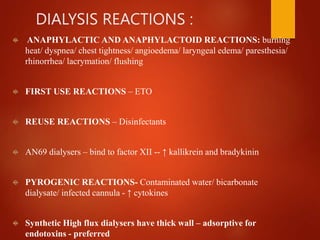
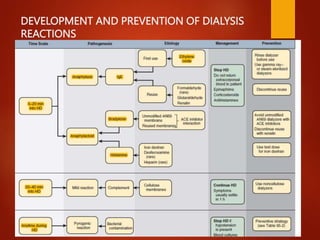
DIALYSIS REACTIONS :
ANAPHYLACTIC AND ANAPHYLACTOID REACTIONS: burning
heat/ dyspnea/ chest tightness/ angioedema/ laryngeal edema/ paresthesia/
rhinorrhea/ lacrymation/ flushing
FIRST USE REACTIONS – ETO
REUSE REACTIONS – Disinfectants
AN69 dialysers – bind to factor XII -- ↑ kallikrein and bradykinin
PYROGENIC REACTIONS- Contaminated water/ bicarbonate
dialysate/ infected cannula - ↑ cytokines
Synthetic High flux dialysers have thick wall – adsorptive for
endotoxins - preferred
DEVELOPMENT AND PREVENTION OF DIALYSIS
REACTIONS
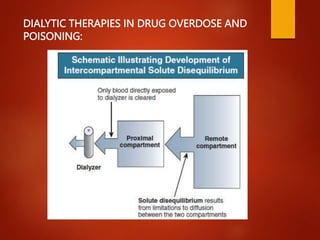
DIALYTIC THERAPIES IN DRUG OVERDOSE AND
POISONING:
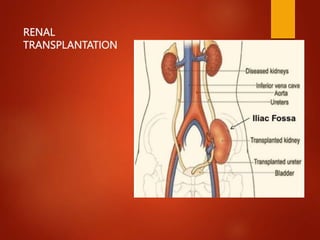
RENAL
TRANSPLANTATION

RENAL REPLACEMENT THERAPY part2.pptx

  • 1.
  • 2.
    THE TOPIC WILL BEDISCUSSED IN THE FOLLOWING SUB-HEADINGS:  TYPES OF RRT AND PRINCIPLES  VASCULAR ACCESS FOR DIALYTIC THERAPIES  HEMODIALYSIS – PRINCIPLES AND TECHNIQUES  HEMODIALYSIS – OUTCOMES AND ADEQUACY  ACUTE COMPLICATIONS DURING HD  DIALYTIC THERAPIES IN DRUG OVERDOSE  RENAL TRANSPLANTATION
  • 3.
    Dialysis options : HEMODIALYSIS INCENTER HD (3 TIMES/WEEK) HOME HD PERITONEAL DIALYSIS MANUAL (CAPD) CYCLER (CCPD)
  • 4.
    EARLY VACCINATION FORHEPATITIS B- Too often forgotten:  Patients with ESRD have decrease response to vaccination  After Hepatitis B vaccination in ESRD patients :  50-60% develop antibodies compared to >90% in patients without renal failure  Have lower titers  Have protective levels for shorter duration
  • 5.
    PRINCIPLES FOR DIALYSIS DIFFUSION: • Passive movement of solutes across a semi-permeable membrane down concentration gradient. • Good for small molecules CONVECTION : • Solute + fluid removal across a semi-permeable membrane down a pressure gradient (solvent drag) • Good for removal of fluid and medium sized molecules •Maximised by using replacement fluids
  • 6.
  • 8.
    PRINCIPLES FOR DIALYSIS HEMODIALYSIS: • Dialysate flows countercurrent to blood flow • Urea , creatinine, potassium move from blood to dialysate • Calcium, bicarbonate move from dialysate to blood HEMOFILTRATION : • Uses hydrostatic pressure gradient to induce filtration/ convection plasma water + solutes across membranes HDF
  • 9.
    HOME DIALYSIS: Components : •Dialyser • Composition of the dialysate • Blood delivery system DIALYSER : • Hollow fiber dialyser – bundles of capillary tubes through which blood circulates and the dialysate travels on the outside • Circulate in opposite direction
  • 10.
    DIALYSIS MEMBRANE • It canbe synthetic or biological • Cellulose -  has low flux  poor in removing middle MW molecules  more complement and leucocyte activation • Synthetic :  High flux membranes Made up of polyamides / polysulphones Allows removal of middle MW molecules
  • 11.
  • 12.
    REGIONAL CITRATE ANTICOAGULATION : Heparin -  It is alternative to heparin.  Sodium citrate is infused into the circuit pre- filter which chelates calcium and inhibits clot formation.
  • 13.
    CONTINUOUS RENAL REPLACEMENT THERAPY:  Dialyse patients more physiologically  Avoids accumulation of waste products  Avoids the rapid shifts in volume and osmolarity  Avoids disadvantages of PD
  • 14.
    CONTINUOUS RENAL REPLACEMENT THERAPY: ADVANTAGES  Precise volume control  Suitable for hemodynamically unstable patients  Very effective control of uremia / hyperkalemi/ metabolic acidosis  Safer for patients with TBI/ CVA  Improve nutritional support DISADVANTAGES  Expensive  Anticoagulation  Hypothermia  Severe depletion of electrolytes – K/ PO4  Complications of line insertion/ sepsis/ line disconnection
  • 15.
    REPLACEMENT FLUIDS • Usedto increase the amount of convective solute removal in CRRT • Replacement fluids do not replace anything • 0.9% saline • Can be pre/ post filter
  • 16.
    COMPARISON OF PREAND POST DILUTION : PRE - FILTER  Increase filter life  Increase convective transport  Reduced solute clearance  Some of delivered replacement fluid lost by hemofiltraton  Lower anticoagulation requirements  Higher UF required POST - FILTER  No solute dilution, improved diffusion and solute clearance  Increased hemoconcentration  Higher delivered dose of hemofiltration
  • 17.
  • 19.
    SLOW CONTINUOUS ULTRAFILTRATION (SCUF): •Removal of ultrafiltrates at low rates ( without administration of replacement solution/ dialysate) • Purpose – prevent or treat volume overload ( No waste product removal/ acidosis) • Primary indication – volume overload • Mechanism – ultrafiltration •The amount of fluid in the effluent bag = amount of fluid removed from patient • Removal rates 100 ml/hour
  • 20.
    LET’S REVISE..  Primarytherapeutic goal – safe management of fluid  Primary indication  Principle  Characterestics  Blood flow – 80-200 ml/min  Ultrafilration – 20- 100ml/hour  No dialysate/ replacement fluid
  • 21.
    CONTINUOUS VENOVENOUS HEMOFILTRATION: An effective method of solute removal and indicated in uremia/ severe acidosis/ electrolyte imbalance with or without fluid overload  Good at removal of large molecules  Principle used – convection  A substitution solution used  pH is affected with the buffer in the substitution solution  Solutes can be removed in large quantities while maintaining fluid balance  Fluid in effluent bag No dialysate used
  • 22.
    LET’S REVISE..  Primarytherapeutic goal – solute removal plus safe fluid management  Primary Indications  Principle used  Characteristics  CVVH dosage –  Blood flow – 80-200 ml/min  Ultrafiltration – 20-100 ml/hour  Replacement fluid – 30 ml/kg/hour ( divided in pre and post filter)
  • 23.
    CONTINUOUS VENO VENOUSHEMODIALYSIS • Effective for removal of small to medium sized solutes • Diffusion • No replacement fluid. Dialysate is run on opposite direction • Fluid in the effluent bag •Continuous diffusive removal of waste products ( small molecules) utilising dialysate • pH also affected due to the buffer content
  • 24.
    LET’S REVISE..  Primarytherapeutic goal : solute removal and safe management of fluid volume  Indications  Principle  Characteristics  Blood flow – 80-200 ml/min  Ultrafiltration – 20-100 ml/hour  Anticoagulation  Dialysate : 45ml/kg/hour  No replacement fluid
  • 25.
    CONTINUOUS VENO-VENOUS HEMODIAFILTRATION : The most flexible of all – combines diffusion and convection  The use of replacement fluid allows adequate solute removal even with zero or positive net fluid balance for the patient  Amount of fluid in the effluent bag Dialysate on the opposite side of the filter and replacement fluid either before or after filter Continuous small and large molecules removal pH also changed by the buffer
  • 26.
    LET’S REVISE..  Primarytherapeutic goal : solute removal and safe fluid management  Indications  Principle used  Characteristics  Effective in removing small, medium and large molecules  Dialysate and replacement fluid dosage : 45 ml/kg/hour : ½ as dialysate and ½ as replacement fluid I divided into pre and post filter)
  • 27.
    PERITONEAL DIALYSIS:  Peritonealcavity is used as a container for 2-2.5 L glucose containing dialysate- exchanged 4-5 times daily  Peritoneal membranes with capillaries  Principle – diffusion and osmosis  Waste products diffuse out and excess body fluid removed by osmosis  C/I – large diaphragmatic defects/ adhesions/ IBD
  • 28.
    ADVANTAGES : Slow,continuous, physiologic mode of removal of small solutes ; no need of vascular access; less catabolism; RRF is better preserved.
  • 29.
    THREE PORE MODEL: Major principles – diffusion (concentration gradient) and convection ( filtration/UF) – osmotic / hydrostatic pressure gradient  Smallest pores - aquaporins water permeable only; crystalloid osmotic pressure  Small pores in middle – solutes – diffusion/ water – convection  Large pores – macromolecules by convection
  • 30.
  • 31.
  • 32.
  • 33.
    INDICATIONS: Acidemia (pH,7.1) Electrolytes –Hyperkalemia / severe dyselectrolytemia Ingestion of toxins/ drugs Overload/ oliguria ( UOP< 200 ml/ 12 hour) Uremia  Uremic encephalopathy  Uremic pericarditis  Uremic neuromyopathy
  • 34.
    DIALYSABLE OR NOT: DIALYSABLE Barbiturates  Lithium  Alcohols, aminoglycosides  Salicylates  Theophyllin  Penicillins  Carbapenems, cephalosporins NON-DIALYSABLE  Digoxin  TCA  Phenytoin  Benzodiazepines  Beta blockers  Metformin
  • 35.
  • 36.
  • 37.
  • 38.
    BLOOD CIRCUIT FOR HEMODIALYSIS A.The blood circuit B. The pressure profiles in the blood circuit with an arterio- venous fistula as the vascular access
  • 42.
    HEMODIALYSIS – OUTCOMESAND ADEQUACY : FACTORS RELATED TO DIALYSIS OUTCOMES FACTORS WAYS TO ADDRESS A) PATIENT CHARACTERESTICS: • Age/ gender/ race • Body size None Target BMI >23kg/m2 ; treat malnutrition B) COMORBIDITIES : • Diabetes mellitus • HTN • CHF • PVD Prevent Hypoglycemia; Target HbA1C < 7.5 Decrease dietary salt, avoid positive sodium balance Optimise fluid status by post dialysis target reduction Aspirin, lower lipids, manage hyperphosphatemia
  • 43.
    FACTORS WAYS TOADDRESS • Arrhythmias • Physical activity • Transplant eligibility Avoid hyperkalemia / hypokalemia; zero K – dialysate bath not used Nephrogenic rehabilitation programme; exercise during dialysis Living donor transplantation C) ANEMIA • Hemoglobin concentration • EPO resistance Target Hb level 10-11 g/dl Target TSAT>25% ; identify and treat source of inflammation D) CKD-BMD • PTH • FGF- 23 • Hyperphosphatemia Lower phosphate levels Lower phosphate levels Dietary restriction/ phosphate binders/dialysis
  • 44.
    FACTORS WAYS TOADDRESS E) NUTRITION AND INFLAMMATION • Inflammation • Low serum albumin/ PEM • Fluid overload • Vascular access • B2 microglobulin Ultrapure dialysate, avoid central venous catheter and graft access -Do – -Define post HD target weight -Grafts and fistula preferred -Increase middle molecule clearance, HDF F) DIALYSIS TREATMENT FACTORS: • Session length • Frequency • Dialysis dose •Dialysis modality More important than urea clearance once min Kt/V has achieved 4-7 sessions per week Target Kt/V .1.3; URR > 65% per treatment High efficiency on-line HDF
  • 45.
    FACTORS WAYS TOADDRESS • HD membrane biocompatibility • HD membrane types • Dialysate quality • Dialysate composition • Acidosis • Intradialytic hemodynamic stability Biocompatible High – flux membranes Ultrapure dialysate Individualised Target pre HD bicarbonate > 22 mmol/L Thermoneutral dialysis ; avoid high UFR
  • 46.
    ADEQUACY OF DIALYSISDOSE  UREMIC TOXINS :  Retention in the body of compounds normally metabolised by healthy kidneys  Reduced clearance of urea / increased b2 microglobulin Increased mortality Free water soluble LMW solutes • Guanidnes- creatinine • Peptides • Polyols • Purines/ pyrimidines/ ribonucleosides • Others Protein bound solutes • AGE • Hippurate/ Indoles/ Phenols • Polyamines Middle molecules • Cytokines – IL1B/ IL-6/ TNF- a • Peptides – cystatin C/ B2 microglobulin • Others
  • 47.
     ASSESSMENT OFDIALYSIS DOSE:  Adequacy – refers to delivery of a treatment dose that sufficient to promote optimal long term outcome.  Intradialytic urea kinetics : inter compartmental urea distribution is delayed. Urea in blood < urea in tissue.
  • 48.
     UREA REDUCTIONRATIO : • URR(%) = (1-Ct/Co) * 100% • Does not takes in to account intra dialytic urea generation and convective urea removal by ultrafiltration • A minimum URR of 65-70%  SINGLE-POOL Kt/V (sp Kt/V) : • K = dialyser blood water urea clearance, t = time, V = distribution volume of urea • Kt/V = 1 implies that volume of plasma cleared of urea during a dialysis session is equal to urea distribution volume.
  • 49.
     WEEKLY STANDARD KT/V: •Total urea mass removed per time unit decreases with increasing dialysis treatment time and dose • Doubling of Kt/V from 1 to 2 per session , does not double the total urea mass removed, but increased by about 24 % only
  • 51.
    RECOMMENDATIONS FOR DIALYSISDOSE ADEQUACY: Current European Best Practice guidelines :  Dialysis delivered at least 3 times/ week and total duration at least 12 hours / week  In anuric patients, target eKt/V should be at least 1.2  For patients with renal function, weekly dialysis dose should be at least equivalent to an std – Kt/V of 2.0
  • 52.
    OTHER DIALYTIC FACTORS– MIDDLE MOLECULE REMOVAL  High flux dialysers remove larger amounts of middle molecules due to higher membrane porosity  Convective dialysis strategies ( HDF) are more effective  Serum B2 microglobulin – a surrogate marker for middle molecule  Use of synthetic high flux membranes to reduce CV risk and improve anemia
  • 53.
    ACUTE COMPLICATIONS DURING HEMODIALYSIS CARDIOVASCULAR Intradialytichypotension/ hypertension, arrhythmias, sudden death, pericarditis, dialysis steal syndrome NEUROMUSCULAR Muscle cramps, dialysis disequilibrium syndrome, restless leg syndrome, seizures, headache HEMATOLOGIC Complement activation and neutropenia, Intradialytic hemolysis, hemorrhage, thrombocytopenia PULMONARY Dialysis associated hypoxemia TECHNICAL Air embolism, Hypernatremia, hyponatremia, metabolic acidosis/ alkalosis, blood loss, clotting
  • 54.
    INTRA-DIALYTIC HYPOTENSION: 10-30% ;can lead to myocardial ischemia, cardiac arrhythmias, thrombosis, LOC, seizures, death May induce more renal ischemia – independent risk factor for mortality Relative intravascular volume depletion Position patient in Trendelenburg position , stop UF, infusing bolus (NS) High suspicion for cardiac ischemia – trop T, ECG Recurrent/ unexplained episodes - ECHO Preventive strategies - conventional/ midodrine/ cooling of dialysate
  • 56.
    INTRA DIALYTIC HYPERTENSION 8-30% ; increased CV mortality and death  Dialysis – refractory hypertension ( ↑ RAAS activity)  EPO/ESA associated with new onset HTN ; increased endothelin-1  High sodium dialysate – improves intravascular filling, but increase thirst/ weight gain  Sodium modeling – 150 mmol/L– 138 mmol/L  Other mechs - ↑ SNS activity, dialytic removal of drugs ( ACEI/ B-blockers)  SBP > 180 mmHg = clonidine / captopril  DRIP trial – optimal control of BP achieved via volume control
  • 57.
    CARDIAC ARRHYTHMIAS : • LVH/Congestive cardiomyopathy/ uremic pericarditis/ conduction system calcifications/ silent MI • Constant alterations in fluid , electrolytes and acid base homeostasis • QTc dispersion is prolonged after HD and is a prognostic indicator •Preventive – use of bicarbonate dialysate / Na/K/ Ca levels •Zero potassium dialysate avoided (digoxin)
  • 58.
    SUDDEN CARDIAC DEATH:  More common in elderly, DM, using central venous catheters  80% is due to VF  Hyperkalemia – Profound generalised muscle weakness may be a warning sign  Technical errors – air embolism / unsafe dialysate
  • 59.
    CLINICAL • Hand numbness/pain/ weakness – DM / PAD patients • Coolness of distal arm ( MC in upper arm) • Diminished pulses, acrocyanosis, gangrene D/D • Dialysis associated cramps • Polyneurupathy ( DM/ uremia) , entrapment neuropathy (Ab2M amyloid) • Reflex sympathetic dystrophy, calciphylaxis • Evaluation of steal severity – pulse oximetry / plethysmography/ doppler/ angio MANAGE MENT •Symptomatic (gloves) • Surgical with preservation of vascular access – banding to reduce flow / DRIL •Surgical with loss of vascular access - ligation DIALYSIS ASSOCIATED VASCULAR STEAL SYNDROME :
  • 60.
    Dialysis disequilibrium syndrome: Risk factors – young age, severe uremia, rapid and marked intra-dialytic falls in urea at initiation, low dialysate sodium  Restlessness/ headache/ nausea/ vomiting/ blurred vision / HT . Timing  Reverse urea theory – cerebral edema ; i/c accumulation of inositol/ glutamine/ glutamate  Prevention – use of HCO3 dialysate, sodium modeling, stepped initiation (Target urea reduction 30%)
  • 62.
    HEMATOLOGIC COMPLICATIONS  COMPLEMENTACTIVATION AND NEUTROPENIA – free OH groups in cellulose dialysers – activation of alternative pathways – increased adherence of neutrophils to endothelium  INTRADIALYTIC HEMOLYSIS – grossly translucent hemolysed blood observed in the tubings. Nausea/ vomiting/ hypotension. Failed oxygen therapy.  HEMORRHAGE – Spontaneous bleed at GI/ subdural/ pericardial/ pleural . Reversal of uremic platelet dysfunction by ESA ( Hct>30%)/ Estrogens /DDAVP/ cryoprecipitate  THROMBOCYTOPENIA
  • 64.
    TECHNICAL : AIREMBOLISM Most vulnerable source – pre-pump tubing segment C/f depends on the volume , site and speed of air entry Sitting position – venous emboli in cerebral circulation – acute onset seizures/ coma Supine position – air trapped in RV, interfere with CO, obstructive shock Dissemination in pulmonary circ – dyspnea, dry cough, respiratory arrest, cerebral embolism
  • 66.
    DIALYSIS REACTIONS : ANAPHYLACTICAND ANAPHYLACTOID REACTIONS: burning heat/ dyspnea/ chest tightness/ angioedema/ laryngeal edema/ paresthesia/ rhinorrhea/ lacrymation/ flushing FIRST USE REACTIONS – ETO REUSE REACTIONS – Disinfectants AN69 dialysers – bind to factor XII -- ↑ kallikrein and bradykinin PYROGENIC REACTIONS- Contaminated water/ bicarbonate dialysate/ infected cannula - ↑ cytokines Synthetic High flux dialysers have thick wall – adsorptive for endotoxins - preferred
  • 67.
    DEVELOPMENT AND PREVENTIONOF DIALYSIS REACTIONS
  • 68.
    DIALYTIC THERAPIES INDRUG OVERDOSE AND POISONING:
  • 70.