
The Importance of Talk for 
Mathematical Learning in the Early 
Years 
Denise Neal 
November, 2014 
Image sourced from: 
http://docs.education.gov.au/system/files/doc/other/belonging_being_and_becoming_the_early_years_learning_framework_for_australia.pdf
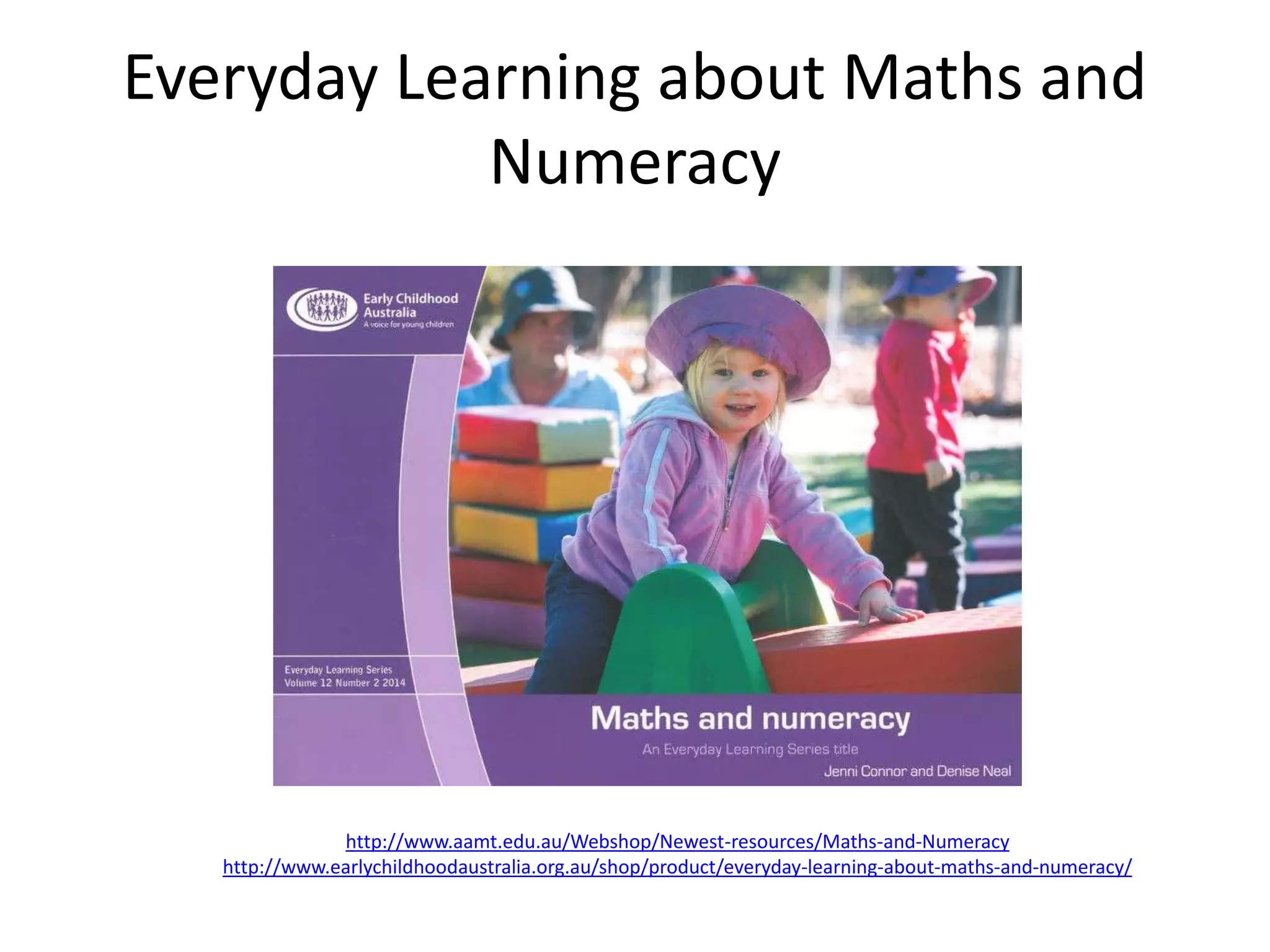
Everyday Learning about Maths and 
Numeracy 
http://www.aamt.edu.au/Webshop/Newest-resources/Maths-and-Numeracy 
http://www.earlychildhoodaustralia.org.au/shop/product/everyday-learning-about-maths-and-numeracy/
Key Message from the book 
If we talk about mathematics and numeracy and show 
positive attitudes to using their ideas to solve everyday 
problems, children will want to learn more about it and 
understand that learning isn’t always easy, but when we 
solve problems and get past the confusion, we have the 
satisfaction of learning something new. 
When children tackle new challenges with appropriate 
levels of support, they develop as curious, persistent, 
highly engaged and successful learners. …. 
Talk supports and extends this learning
Introduction 
Overview 
• The importance of talk 
• Links to curriculum frameworks 
• Promoting talk in the learning environment 
(strategies and prompts) 
• Talk as way to assess student learning 
• References/resources 
• Conclusion 
• Questions
Source: Tracey Muir webinar- Connect with Maths, August 26th, 2014
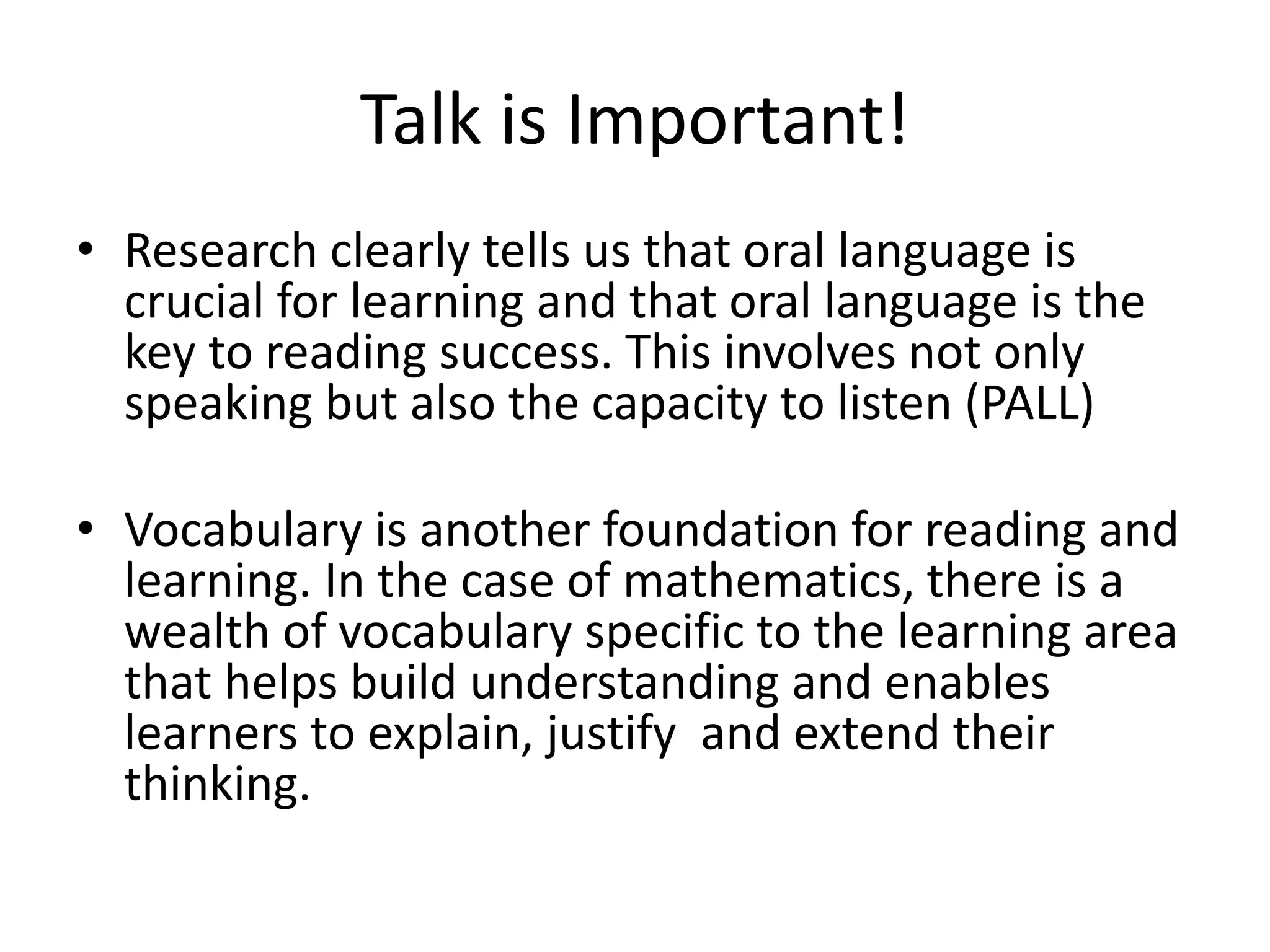
Talk is Important! 
• Research clearly tells us that oral language is 
crucial for learning and that oral language is the 
key to reading success. This involves not only 
speaking but also the capacity to listen (PALL) 
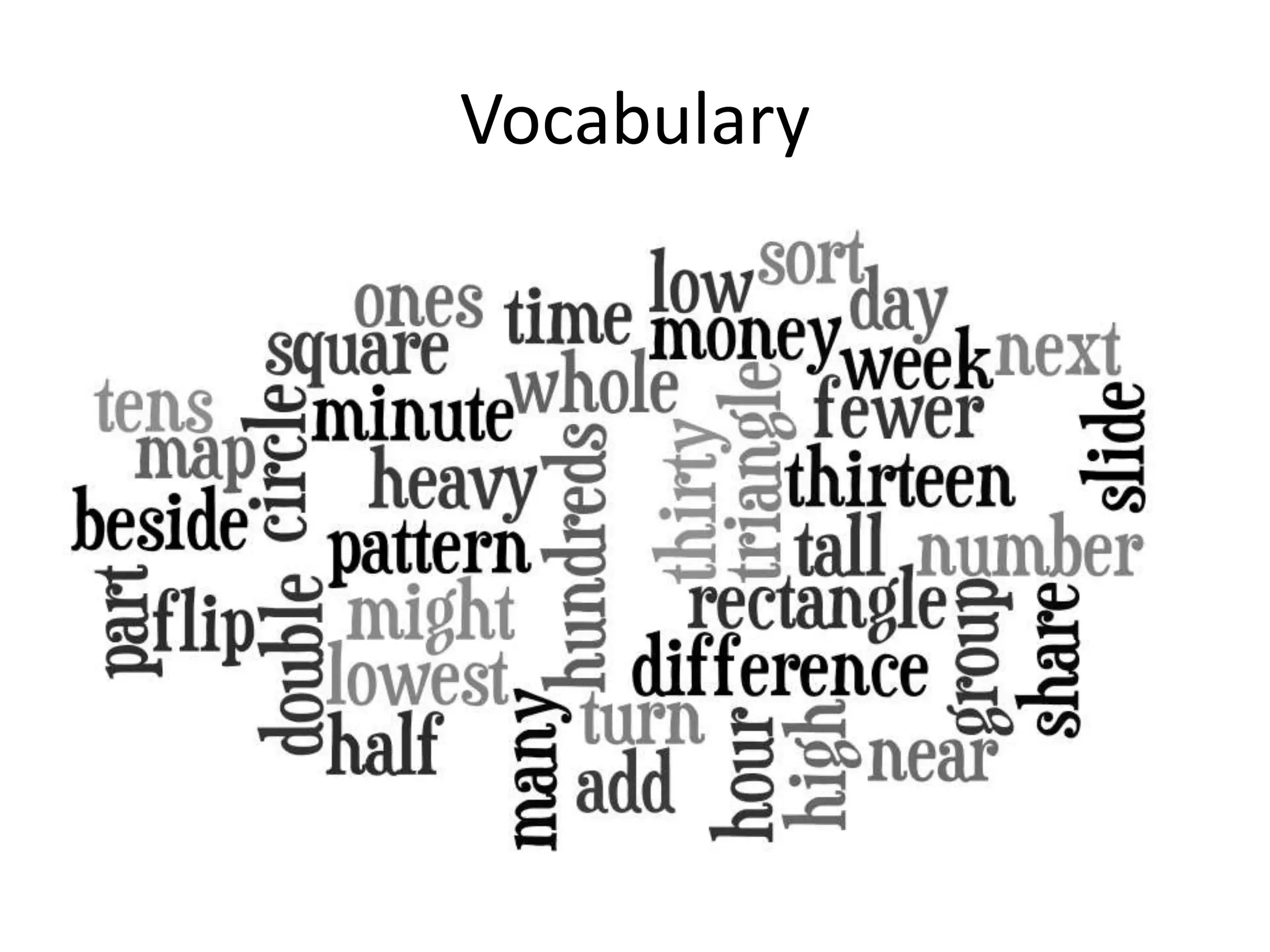
• Vocabulary is another foundation for reading and 
learning. In the case of mathematics, there is a 
wealth of vocabulary specific to the learning area 
that helps build understanding and enables 
learners to explain, justify and extend their 
thinking.
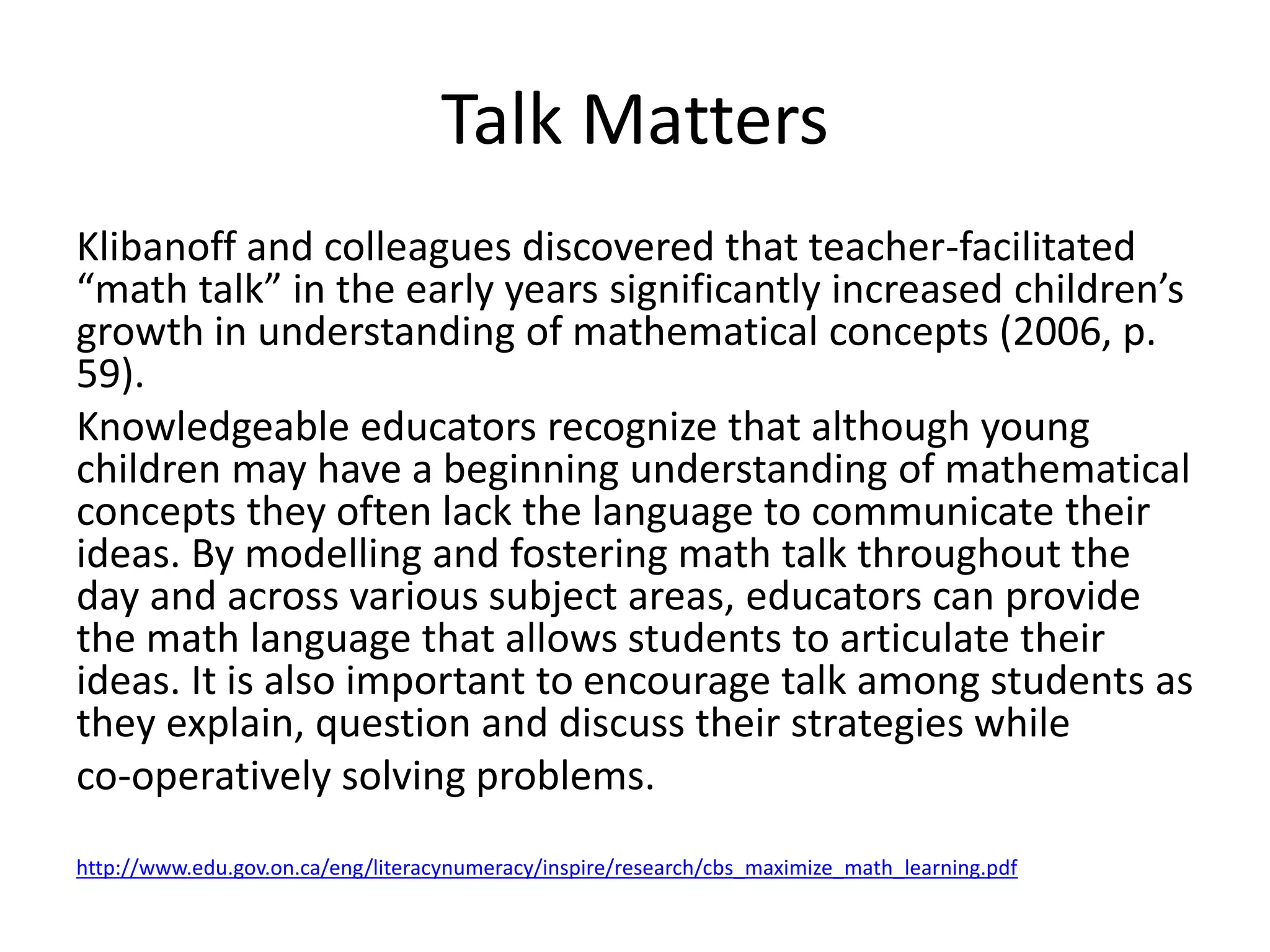
Talk Matters 
Klibanoff and colleagues discovered that teacher-facilitated 
“math talk” in the early years significantly increased children’s 
growth in understanding of mathematical concepts (2006, p. 
59). 
Knowledgeable educators recognize that although young 
children may have a beginning understanding of mathematical 
concepts they often lack the language to communicate their 
ideas. By modelling and fostering math talk throughout the 
day and across various subject areas, educators can provide 
the math language that allows students to articulate their 
ideas. It is also important to encourage talk among students as 
they explain, question and discuss their strategies while 
co-operatively solving problems. 
http://www.edu.gov.on.ca/eng/literacynumeracy/inspire/research/cbs_maximize_math_learning.pdf
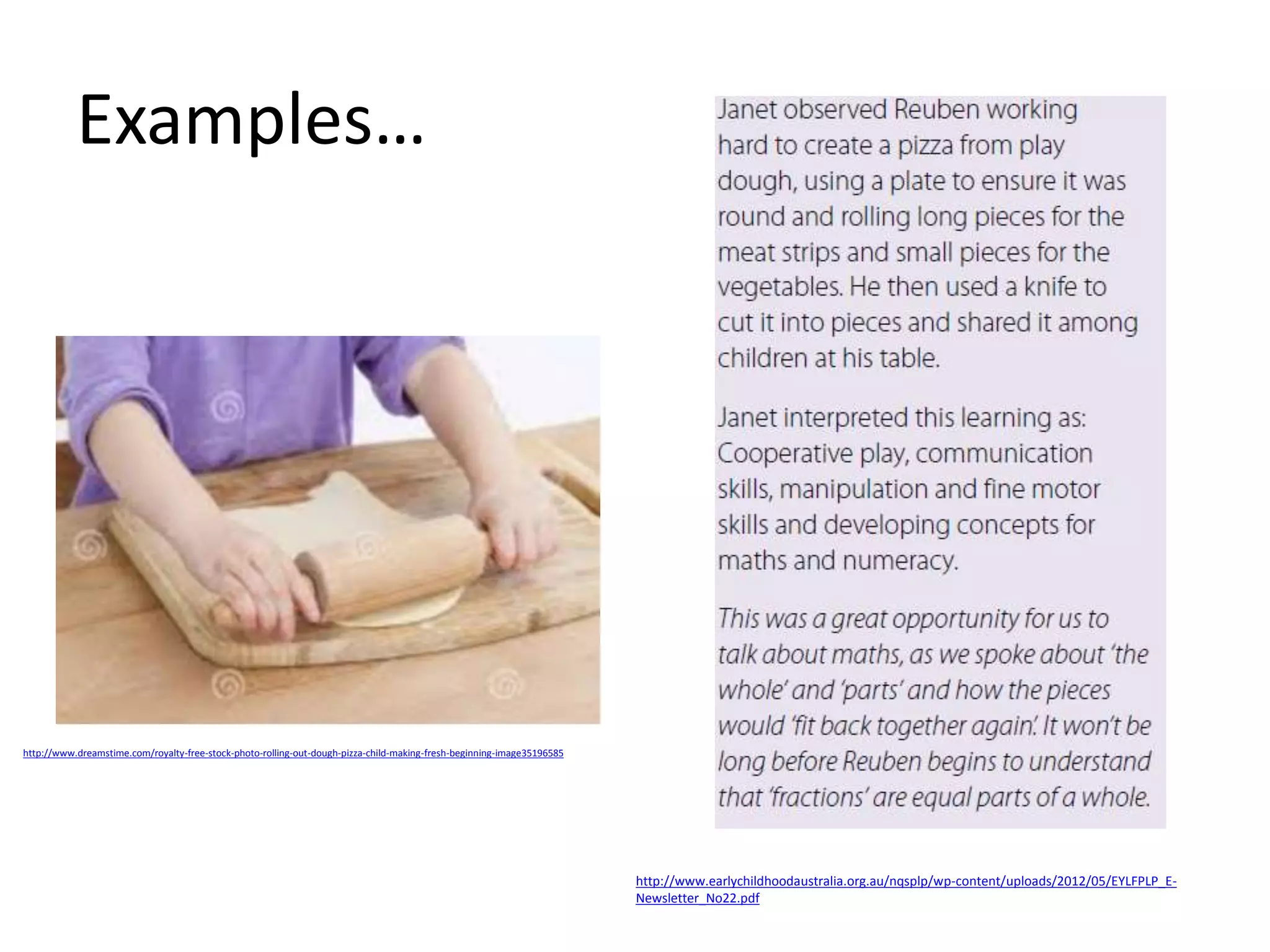
Examples… 
http://www.earlychildhoodaustralia.org.au/nqsplp/wp-content/uploads/2012/05/EYLFPLP_E-Newsletter_ 
No22.pdf 
http://www.dreamstime.com/royalty-free-stock-photo-rolling-out-dough-pizza-child-making-fresh-beginning-image35196585
Curriculum 
Both the Early Years Framework for Australia 
and the Australian Curriculum value and 
promote the importance of communication.
The EYLF 
..educators are also responsive to children’s 
ideas and play, which form an important basis 
for curriculum decision-making. In response to 
children’s evolving ideas and interests, 
educators assess, anticipate and extend 
children’s learning via open ended questioning, 
providing feedback, challenging their thinking 
and guiding their learning. They make use of 
spontaneous ‘teachable moments’ to scaffold 
children’s learning.
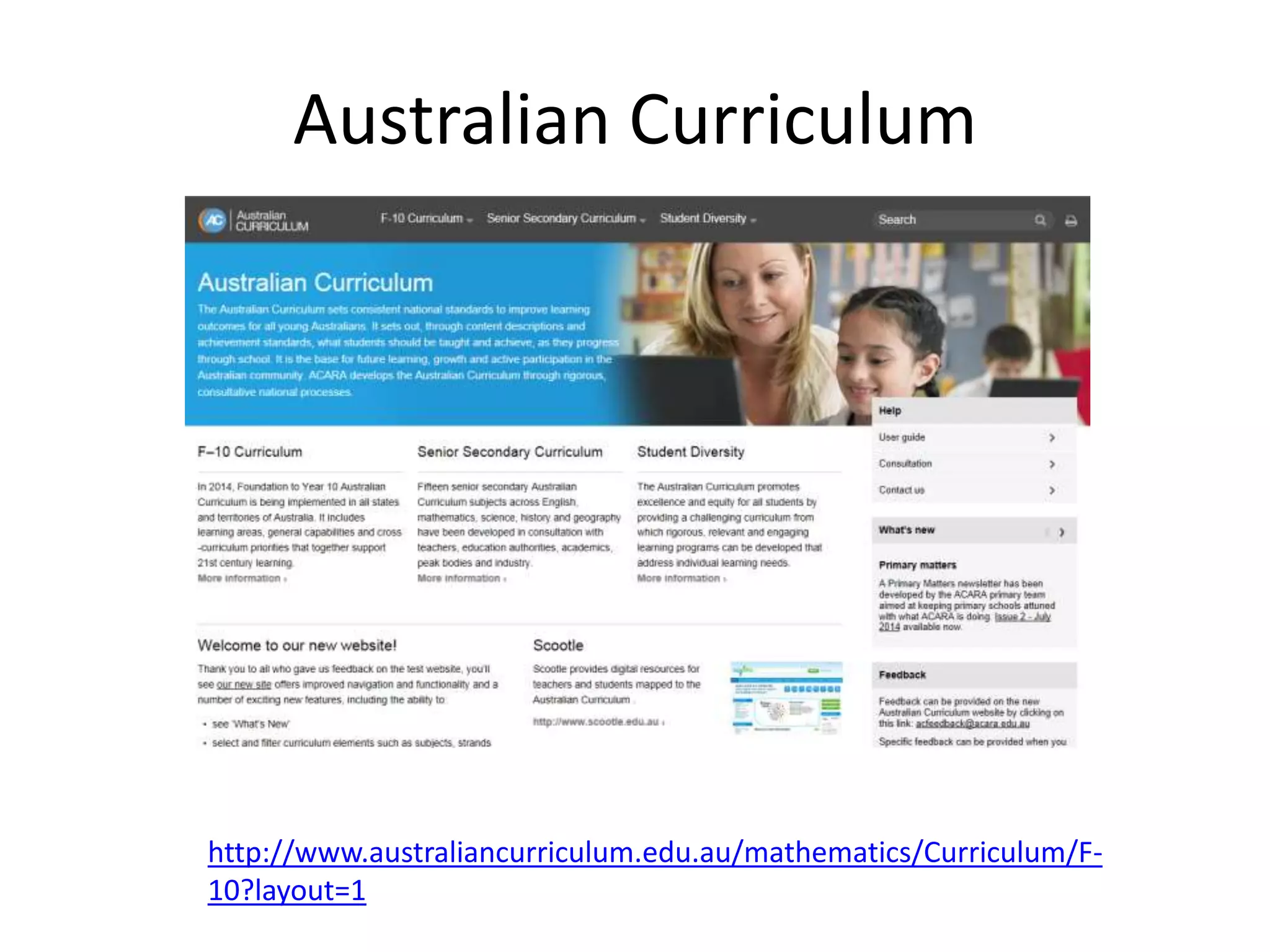
Australian Curriculum 
http://www.australiancurriculum.edu.au/mathematics/Curriculum/F- 
10?layout=1
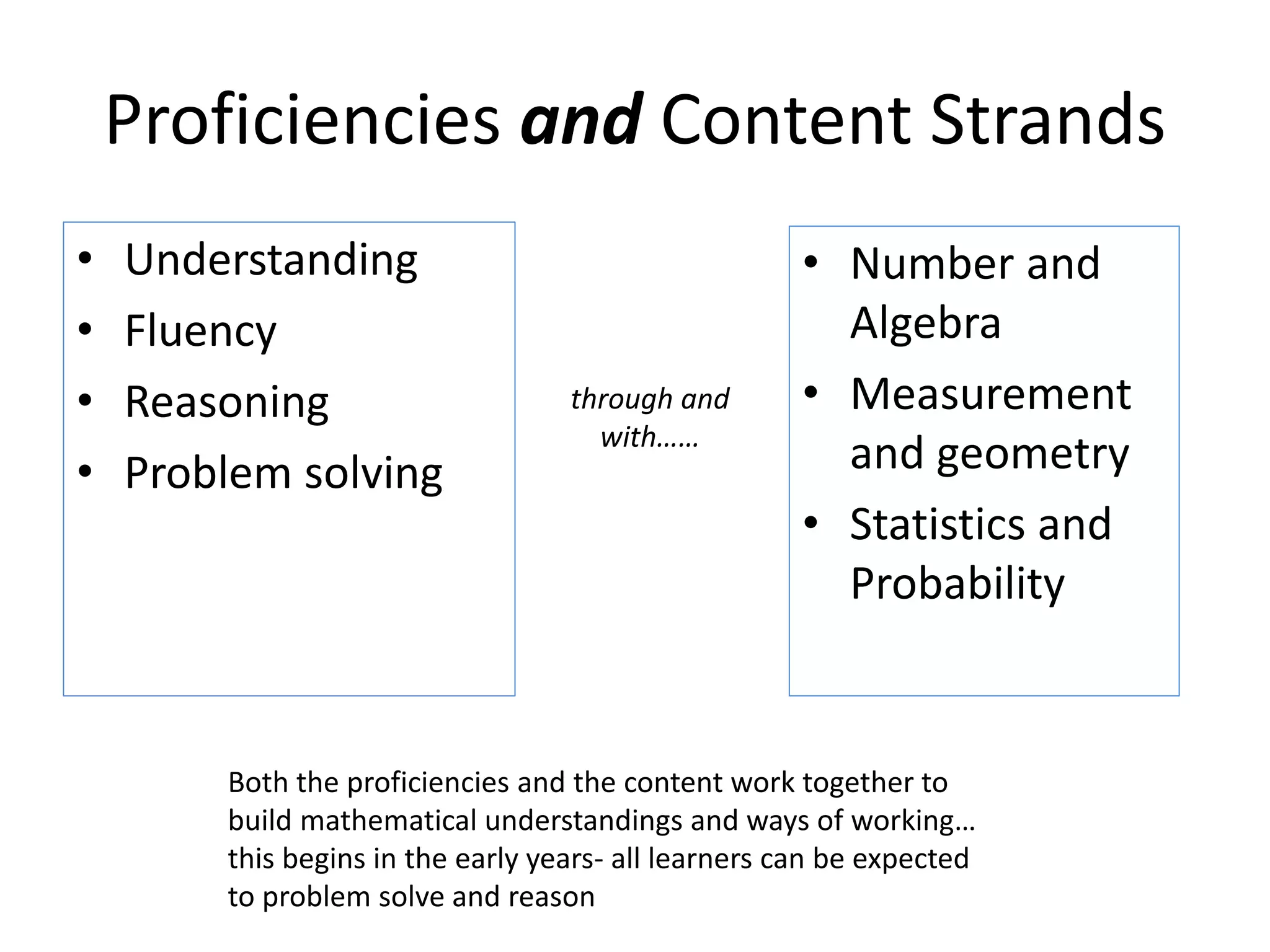
Proficiencies and Content Strands 
• Understanding 
• Fluency 
• Reasoning 
• Problem solving 
• Number and 
Algebra 
• Measurement 
and geometry 
• Statistics and 
Probability 
through and 
with…… 
Both the proficiencies and the content work together to 
build mathematical understandings and ways of working… 
this begins in the early years- all learners can be expected 
to problem solve and reason
Building Dispositions 
…enduring habits of mind and actions, and 
tendencies to respond in characteristic ways to 
situations, for example, maintaining an 
optimistic outlook, being willing to persevere, 
approaching new experiences with confidence. 
(Carr, 2001)
Reasoning 
Reasoning mathematically is a habit of mind, and like all habits, it must be 
developed through consistent use in many contexts. 
From children's earliest experiences with mathematics, it is important to help 
them understand that assertions should always have reasons. Questions such 
as "Why do you think it is true?" and "Does anyone think the answer is 
different, and why do you think so?" help students see that statements need to 
be supported or refuted by evidence. Young children may wish to appeal to 
others as sources for their reasons ("My sister told me so") or even to vote to 
determine the best explanation, but students need to learn and agree on what 
is acceptable as an adequate argument in the mathematics classroom. These 
are the first steps toward realizing that mathematical reasoning is based on 
specific assumptions and rules. 
http://www.fayar.net/east/teacher.web/math/standards/document/chapter3/reas.htm
Mathematizing 
The educator can play an integral role by making 
meaningful connections between the mathematical 
strands, the real world and other disciplines, and most 
importantly, “between the intuitive informal mathematics 
that students have learned through their own 
experiences and the mathematics they are learning in 
school” (For example, as a child naturally creates and 
extends a pattern while making a necklace, the educator 
can effectively pose questions that provoke the student 
not only to describe the pattern, but also to make 
predictions and generalizations). 
http://www.edu.gov.on.ca/eng/literacynumeracy/inspire/research/cbs_maximize_math_learning.pdf
The importance of discussion 
Research has shown, however, that “manipulatives 
themselves do not magically carry mathematical 
understanding. Rather, they provide concrete ways 
for students to give meaning to new knowledge” 
Students need the opportunity to reflect upon their 
actions with manipulatives, and through discussion, 
articulate the meaning they generate, so that the 
link between their representations and the key 
mathematical ideas is apparent 
(Clements & Sarama, 2009, p. 274).
Pause and talk… 
• Questions? 
• Comments? 
• Your experiences?
Talking AND Listening 
We have a lot of talk and attention to speaking and listening 
and while many classrooms have gone a long way to 
improving children’s speaking in mathematics lessons, I think 
we still have a way to go in promoting deep listening (Askew, 
2012) 
Classrooms can support student learning by ensuring that 
solutions proposed by students are built on. 
Collective mathematical meaning is built when teachers 
carefully listen to students and select solutions to be shared 
which will build and develop collective understanding.
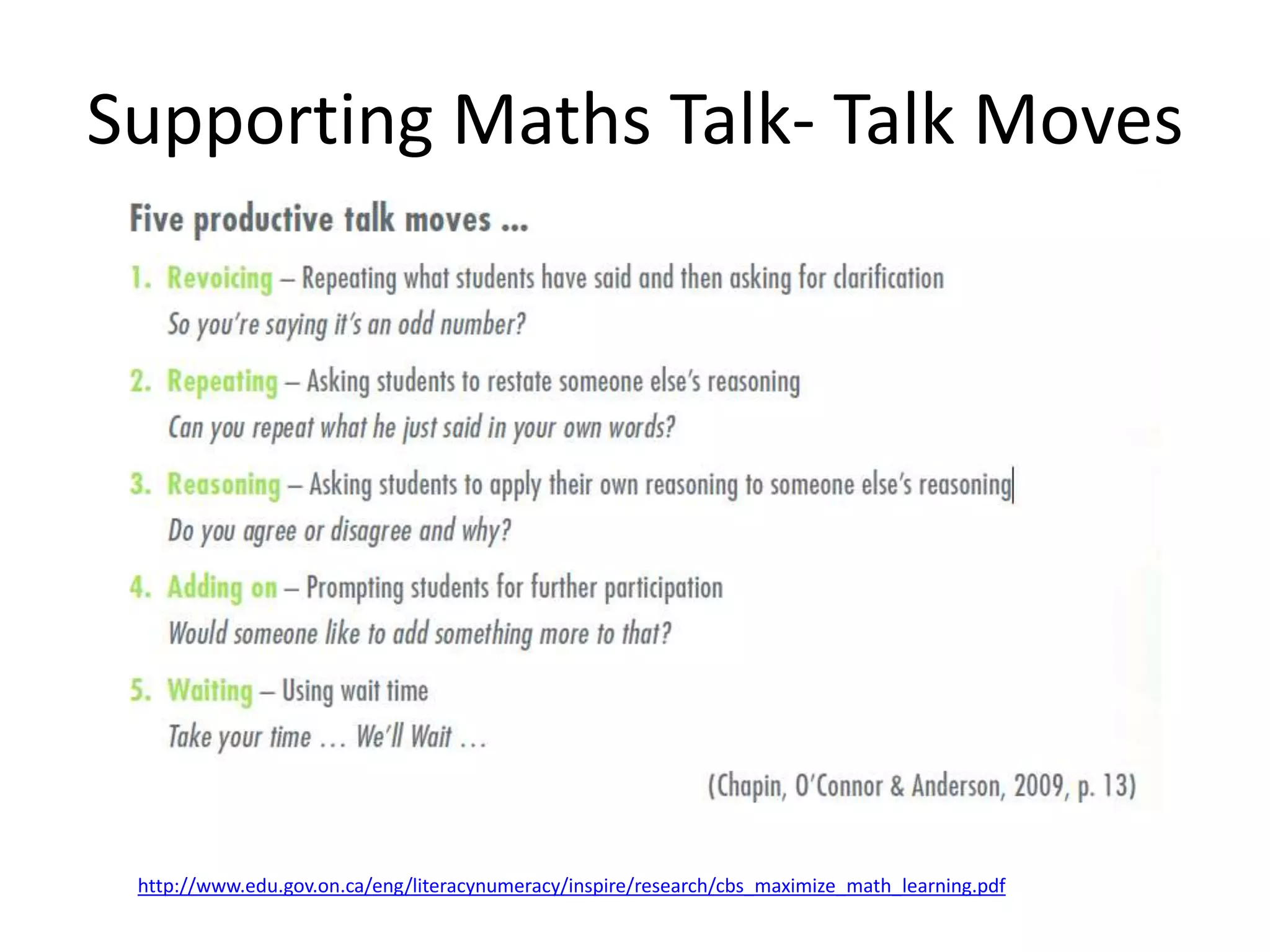
Supporting maths talk 
Suzanne Chapin proposes five effective talk moves which 
help to create meaningful mathematics discussions. 
Revoicing is one move that is particularly useful when a 
student’s explanation is confusing or hard for others to 
understand. The teacher repeats all or some of what the 
child said and then asks for clarification, which in turn 
provokes the child to clarify and offer further explanation. 
This also gives the educator an opportunity to embed 
mathematics vocabulary so the child can further explain 
his/her thinking (2009, p. 14). 
http://www.edu.gov.on.ca/eng/literacynumeracy/inspire/research/cbs_maximize_math_learning.pdf
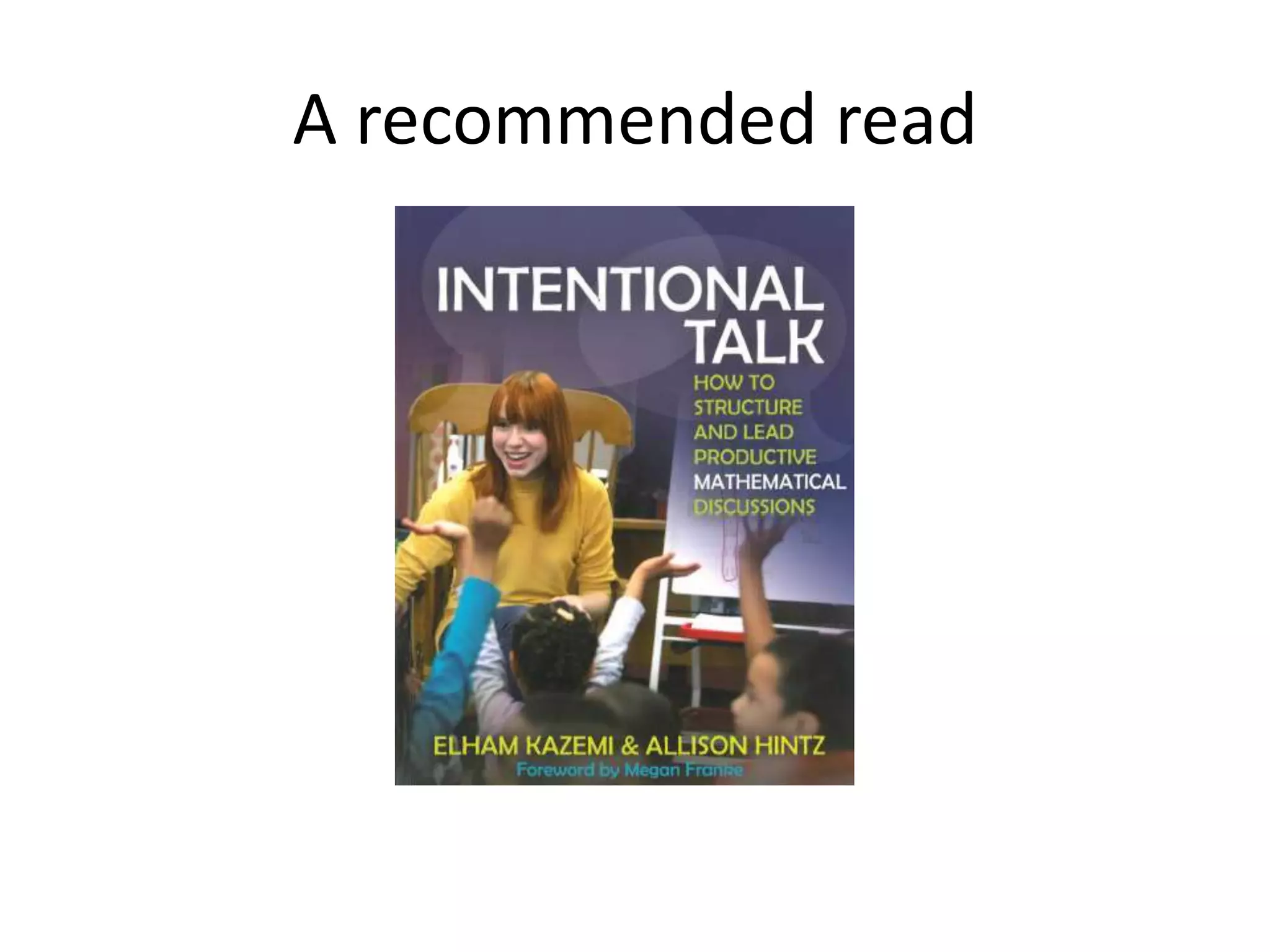
A recommended read 
Askew, M (2012) Transforming Primary Mathematics, Milton Park, UK: 
Routledge.
A recommended read
Supporting Maths Talk- Talk Moves 
http://www.edu.gov.on.ca/eng/literacynumeracy/inspire/research/cbs_maximize_math_learning.pdf
Building talk 
• Making sense of problems by explaining them to 
someone else, putting them into your own words 
and comparing your answers with others all helps 
meaning to emerge. 
• Talking mathematics means that mathematical 
vocabulary becomes part of the classroom 
discourse- much more than a list of words! 
Askew, M (2012) Transforming Primary Mathematics, Milton Park, UK: Routledge
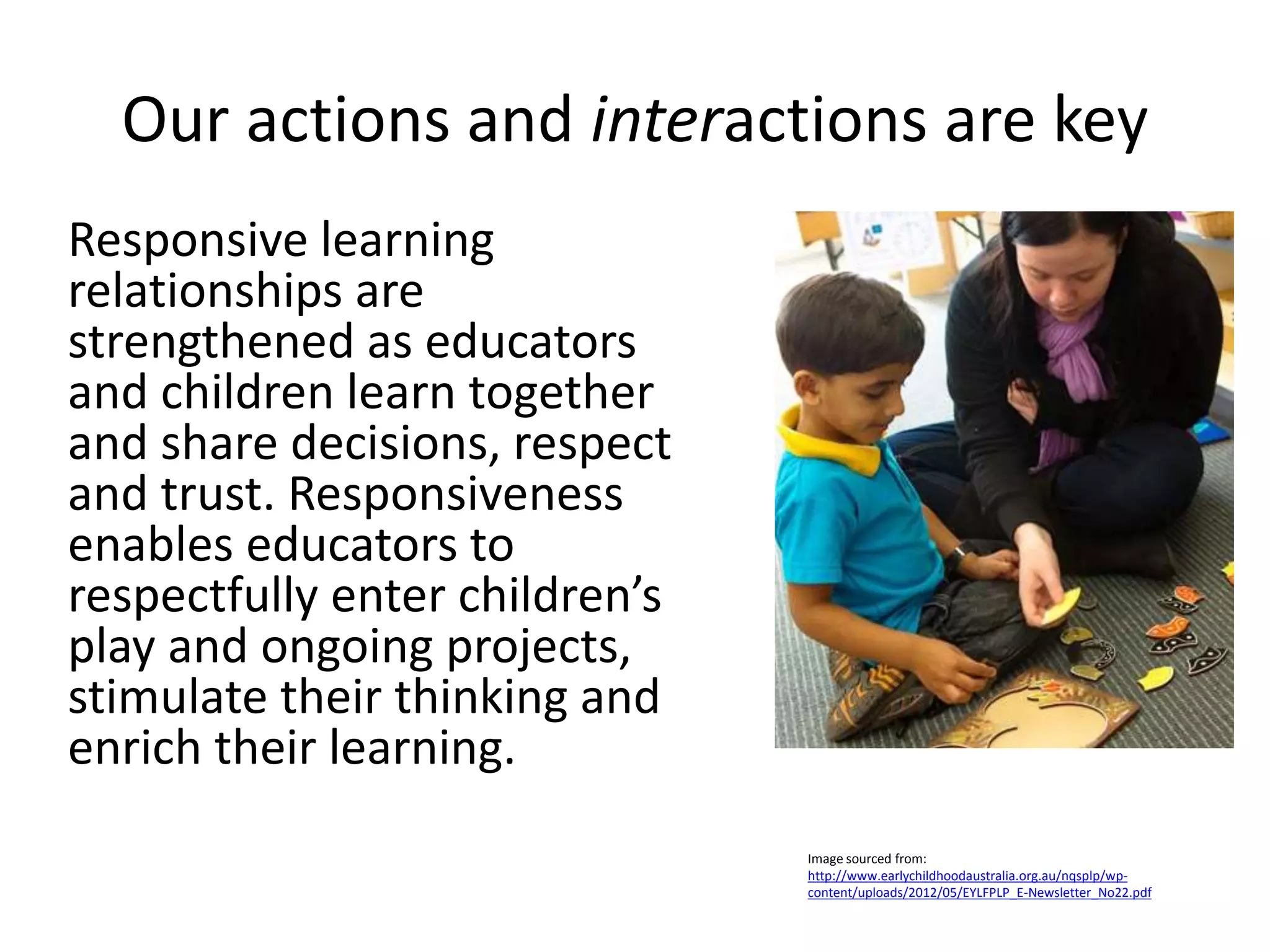
Our actions and interactions are key 
Responsive learning 
relationships are 
strengthened as educators 
and children learn together 
and share decisions, respect 
and trust. Responsiveness 
enables educators to 
respectfully enter children’s 
play and ongoing projects, 
stimulate their thinking and 
enrich their learning. 
Image sourced from: 
http://www.earlychildhoodaustralia.org.au/nqsplp/wp-content/ 
uploads/2012/05/EYLFPLP_E-Newsletter_No22.pdf
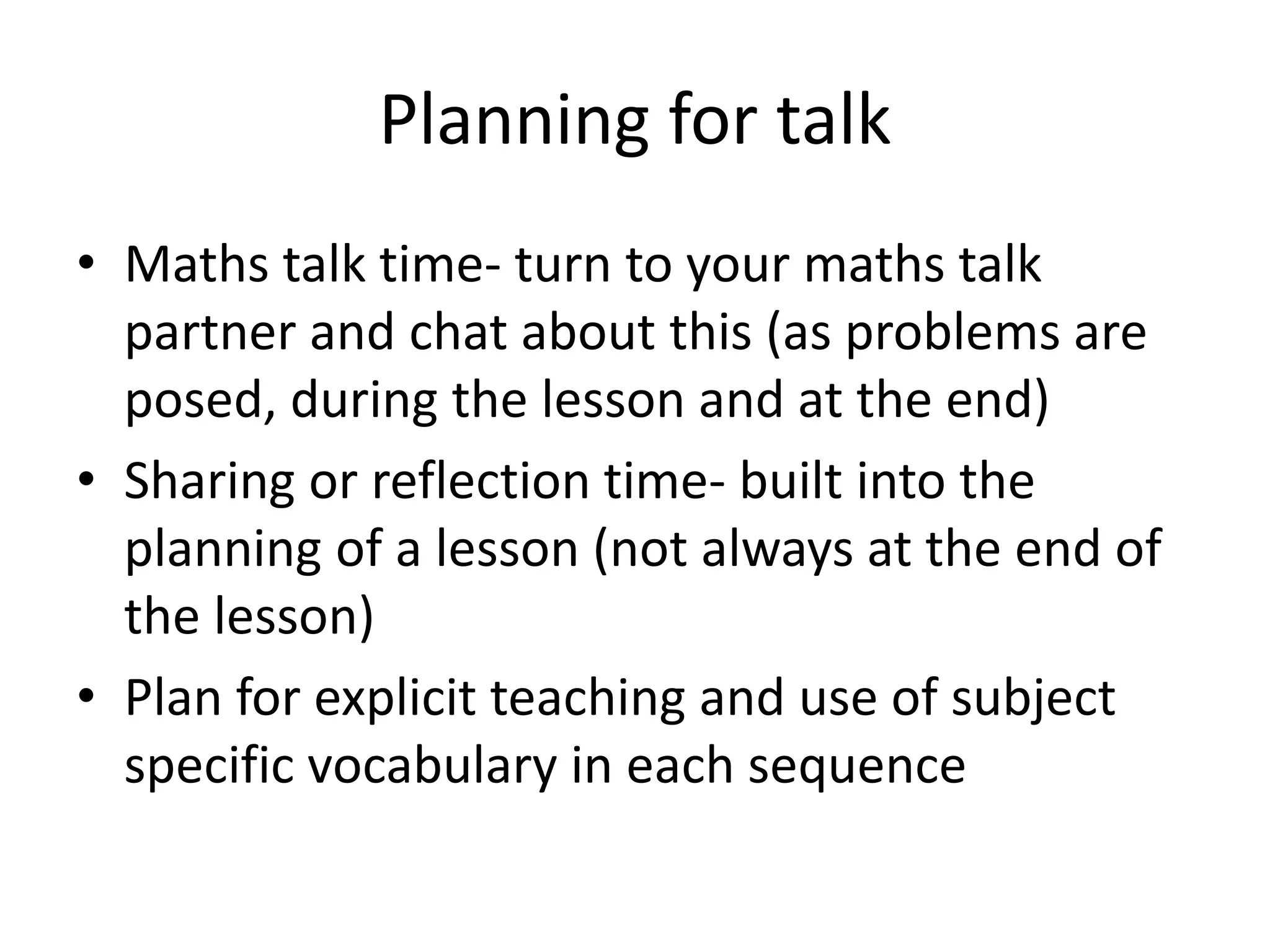
Planning for talk 
• Maths talk time- turn to your maths talk 
partner and chat about this (as problems are 
posed, during the lesson and at the end) 
• Sharing or reflection time- built into the 
planning of a lesson (not always at the end of 
the lesson) 
• Plan for explicit teaching and use of subject 
specific vocabulary in each sequence
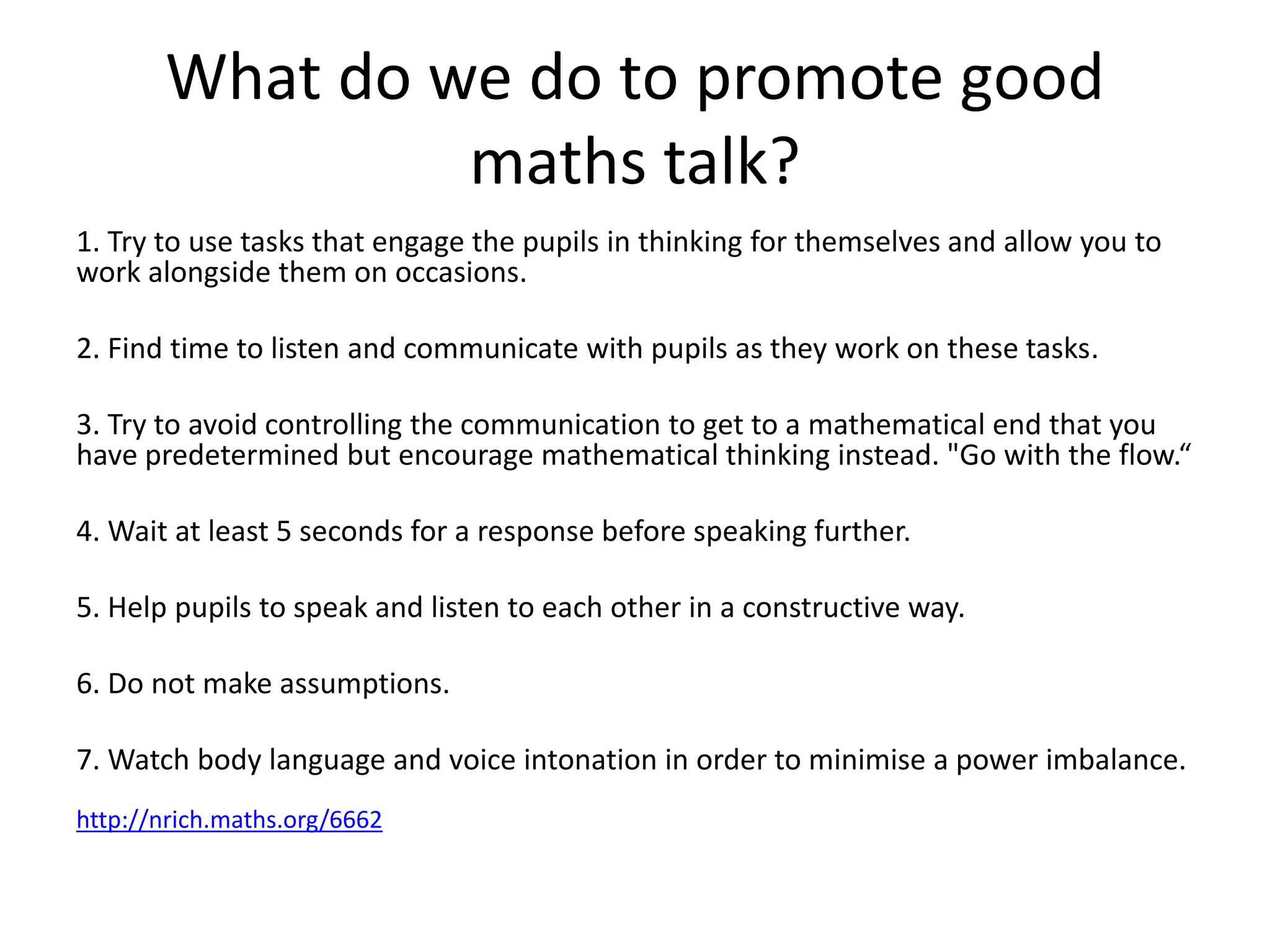
What do we do to promote good 
maths talk? 
1. Try to use tasks that engage the pupils in thinking for themselves and allow you to 
work alongside them on occasions. 
2. Find time to listen and communicate with pupils as they work on these tasks. 
3. Try to avoid controlling the communication to get to a mathematical end that you 
have predetermined but encourage mathematical thinking instead. "Go with the flow.“ 
4. Wait at least 5 seconds for a response before speaking further. 
5. Help pupils to speak and listen to each other in a constructive way. 
6. Do not make assumptions. 
7. Watch body language and voice intonation in order to minimise a power imbalance. 
http://nrich.maths.org/6662
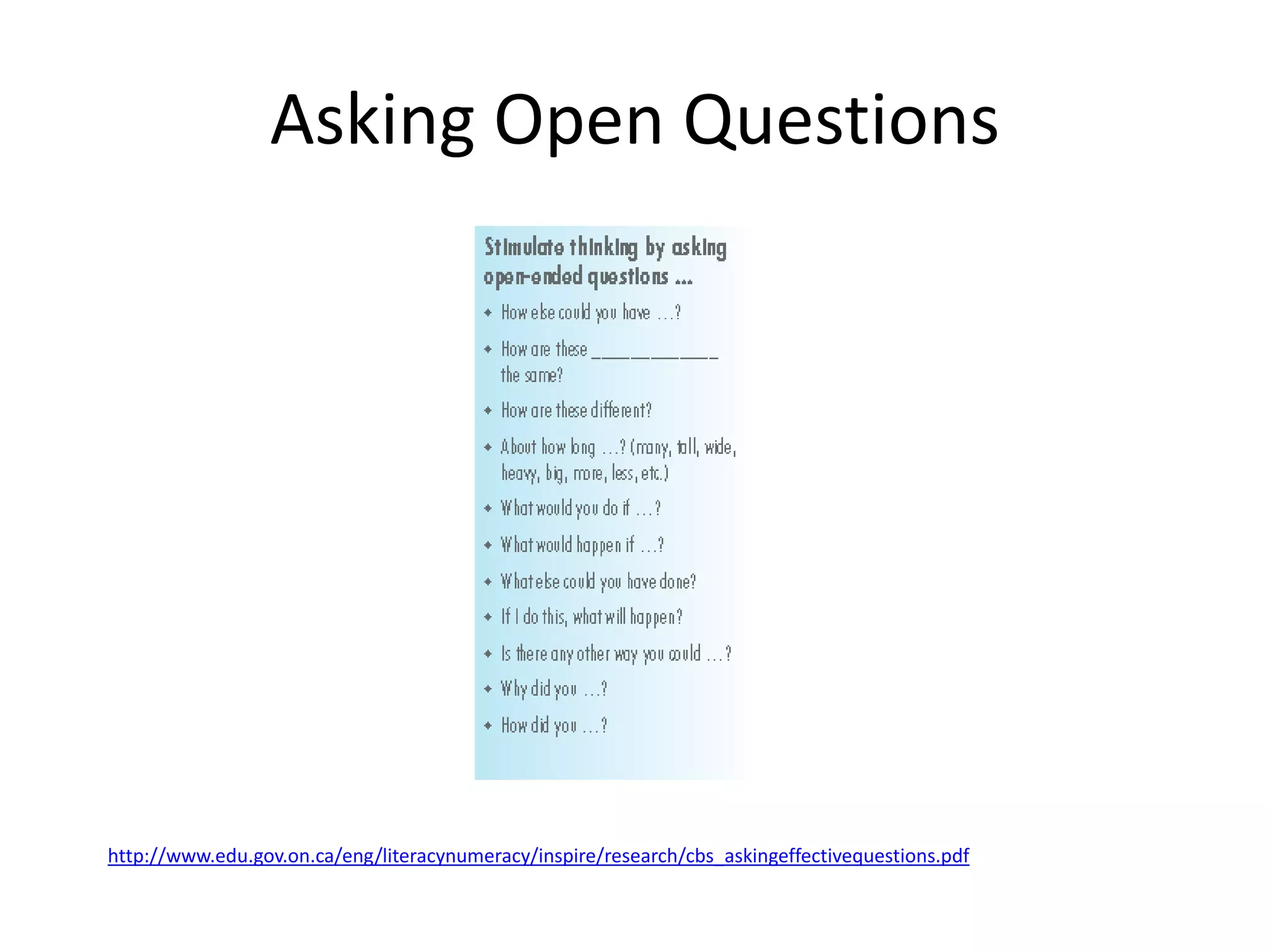
Asking Open Questions 
http://www.edu.gov.on.ca/eng/literacynumeracy/inspire/research/cbs_askingeffectivequestions.pdf
Building a Learning Culture 
Learning cultures either promote or constrain 
talk…
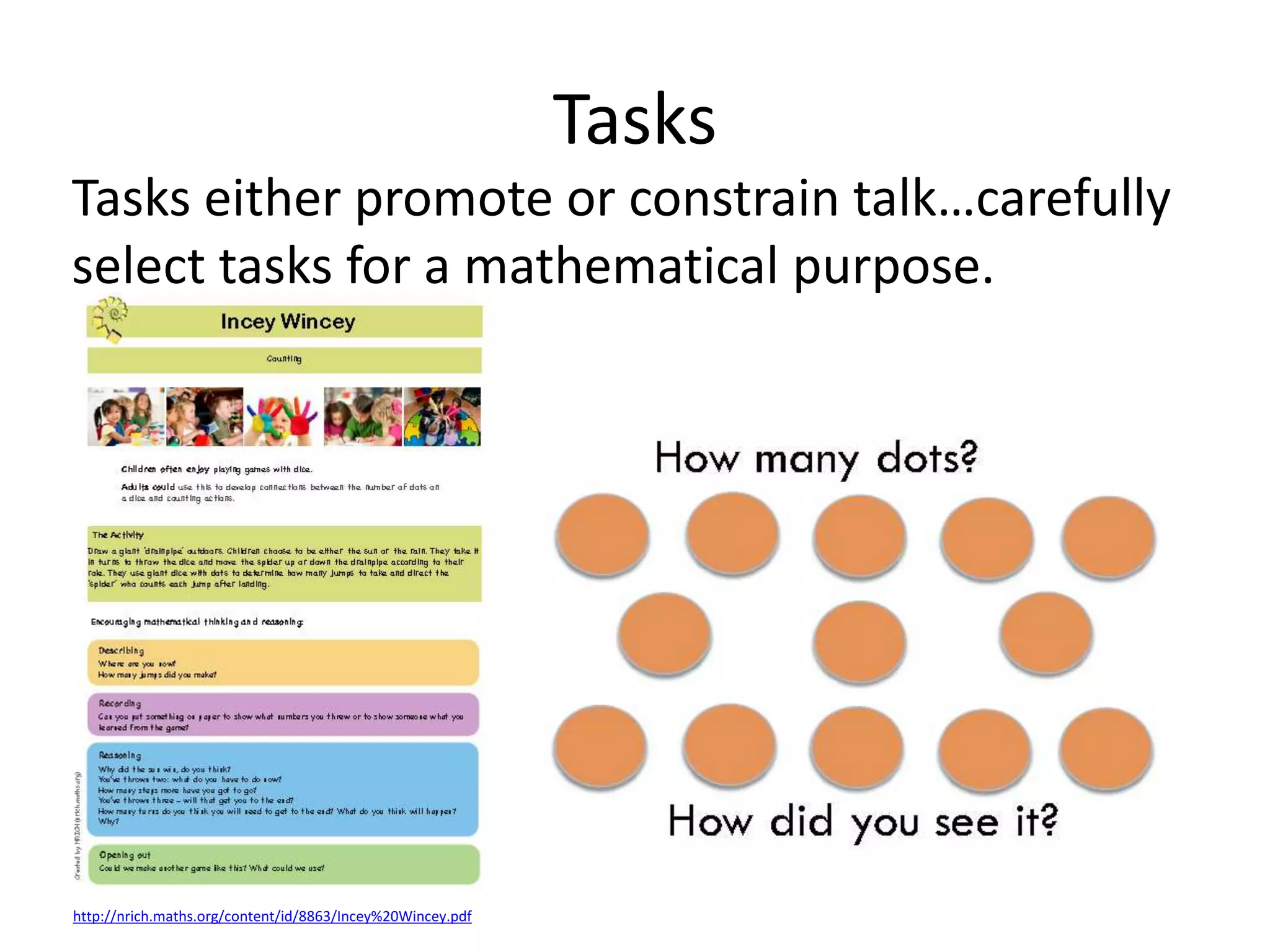
Tasks 
Tasks either promote or constrain talk…carefully 
select tasks for a mathematical purpose. 
http://nrich.maths.org/content/id/8863/Incey%20Wincey.pdf
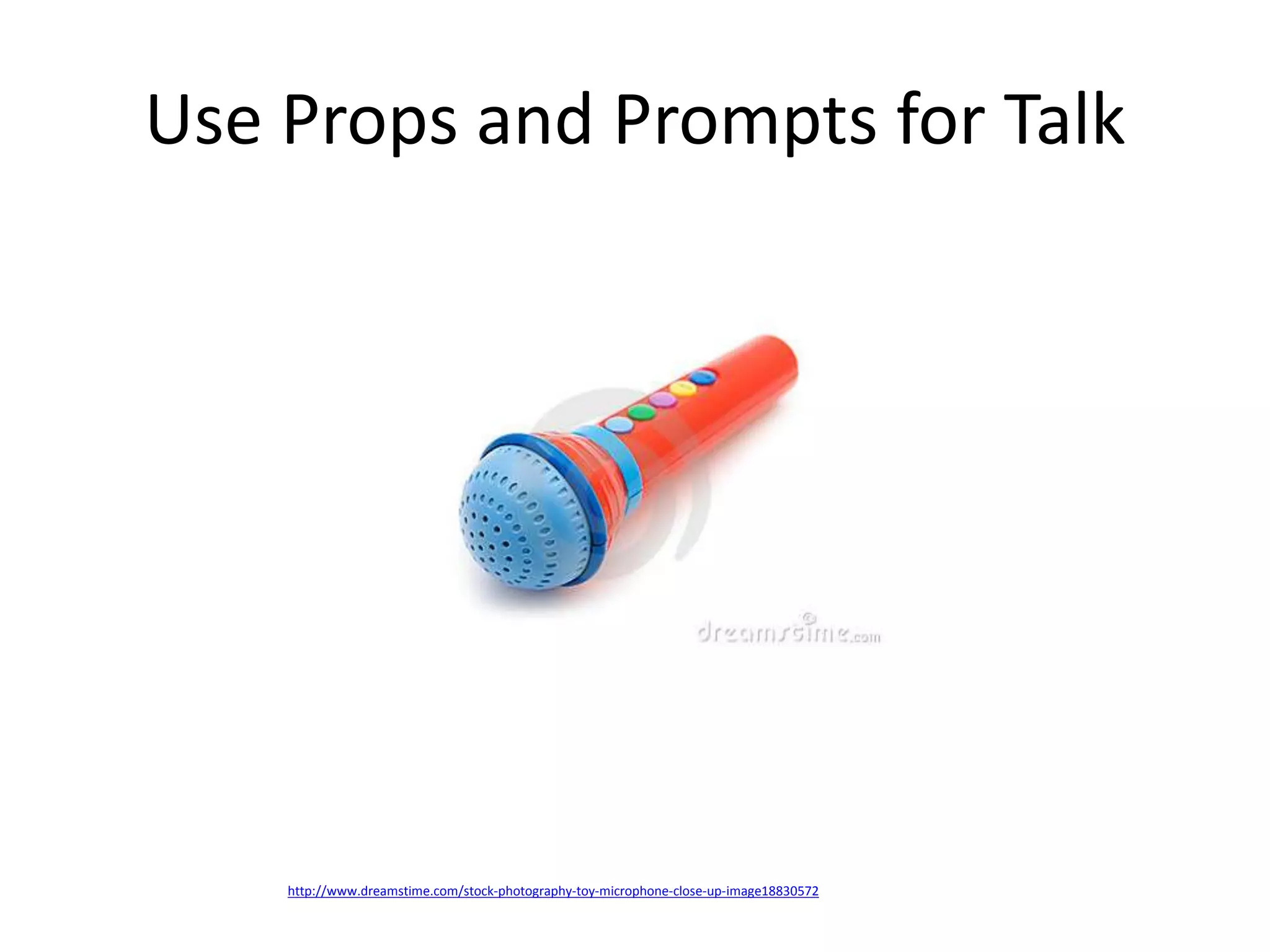
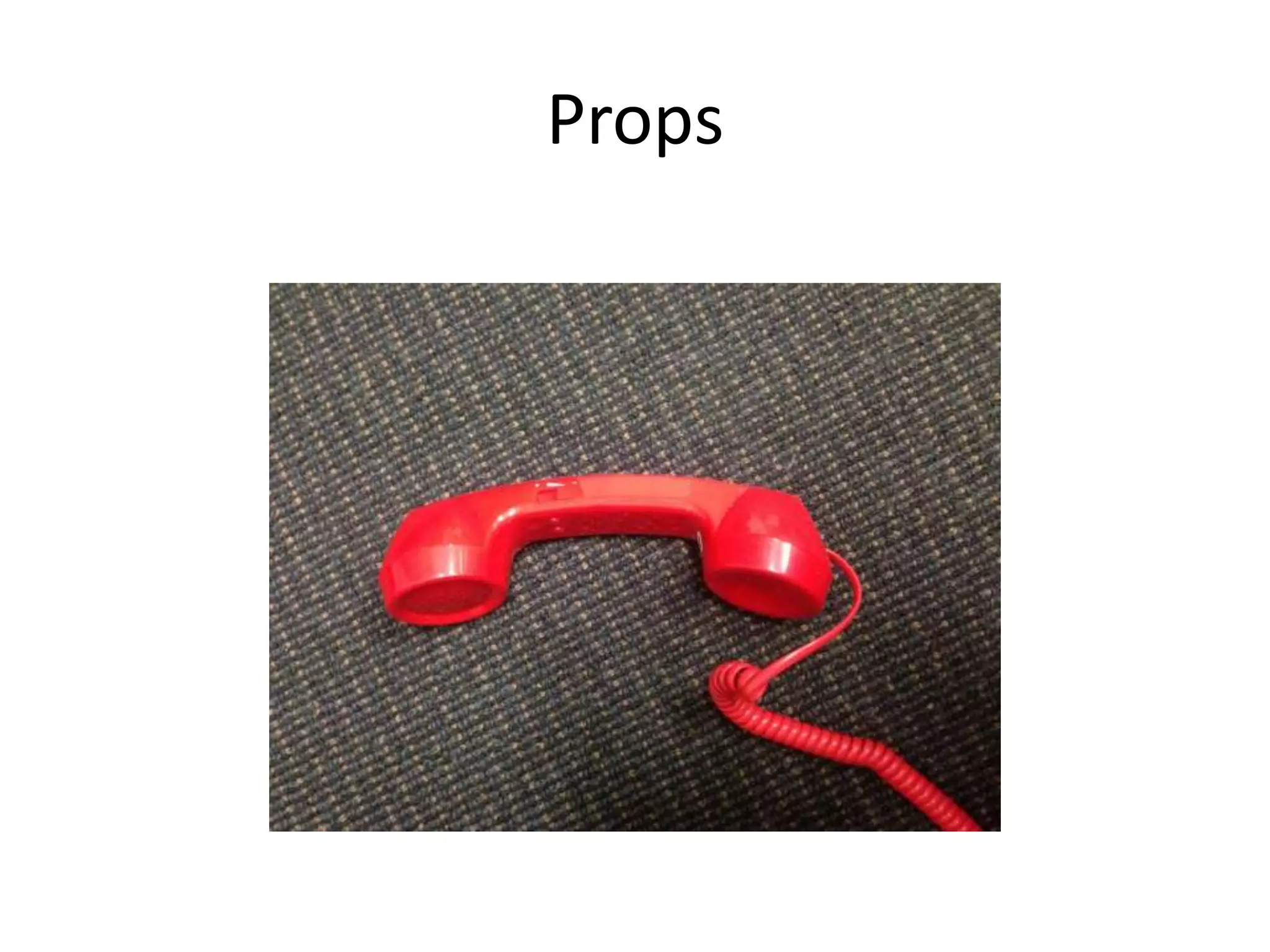
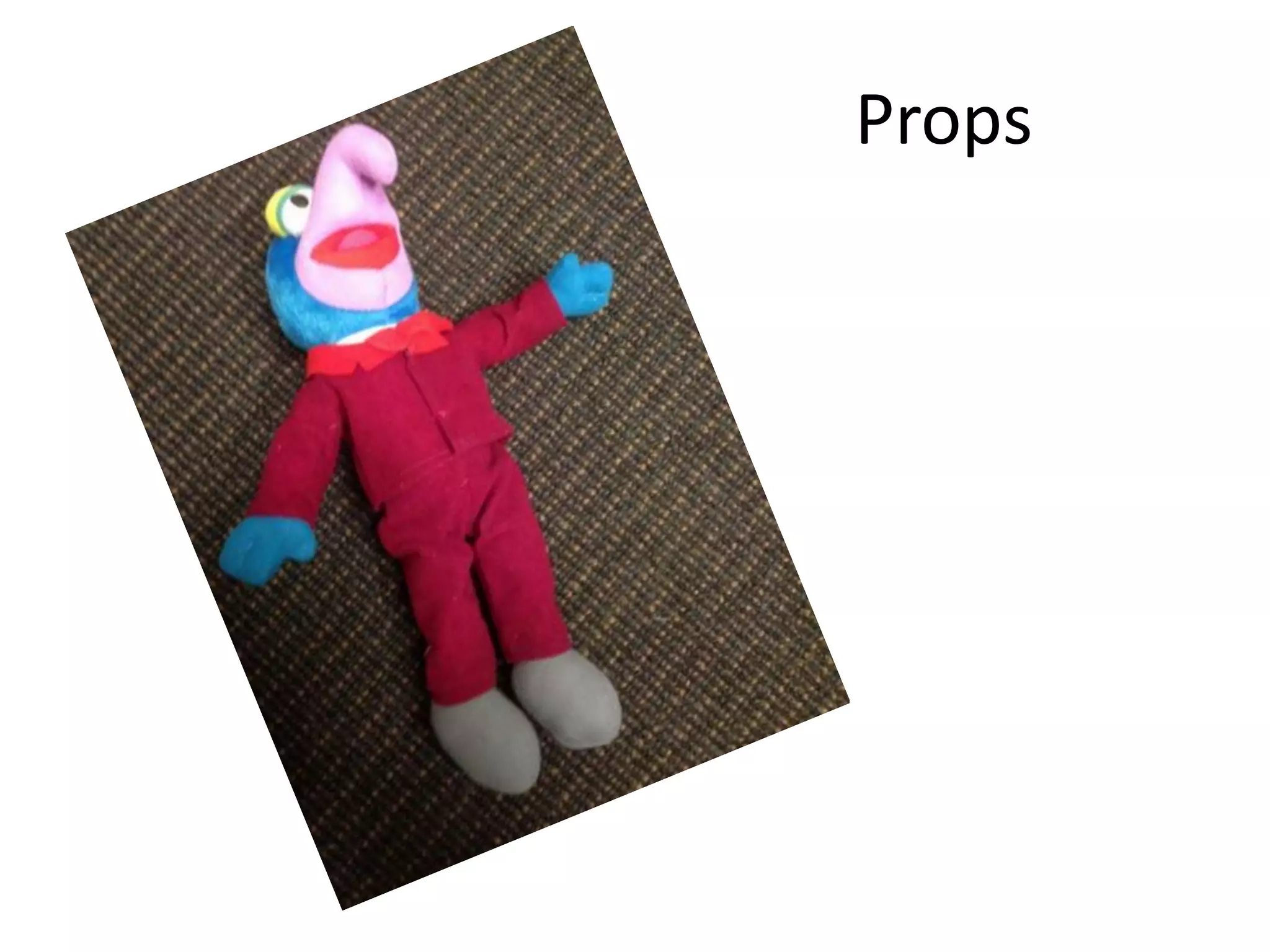
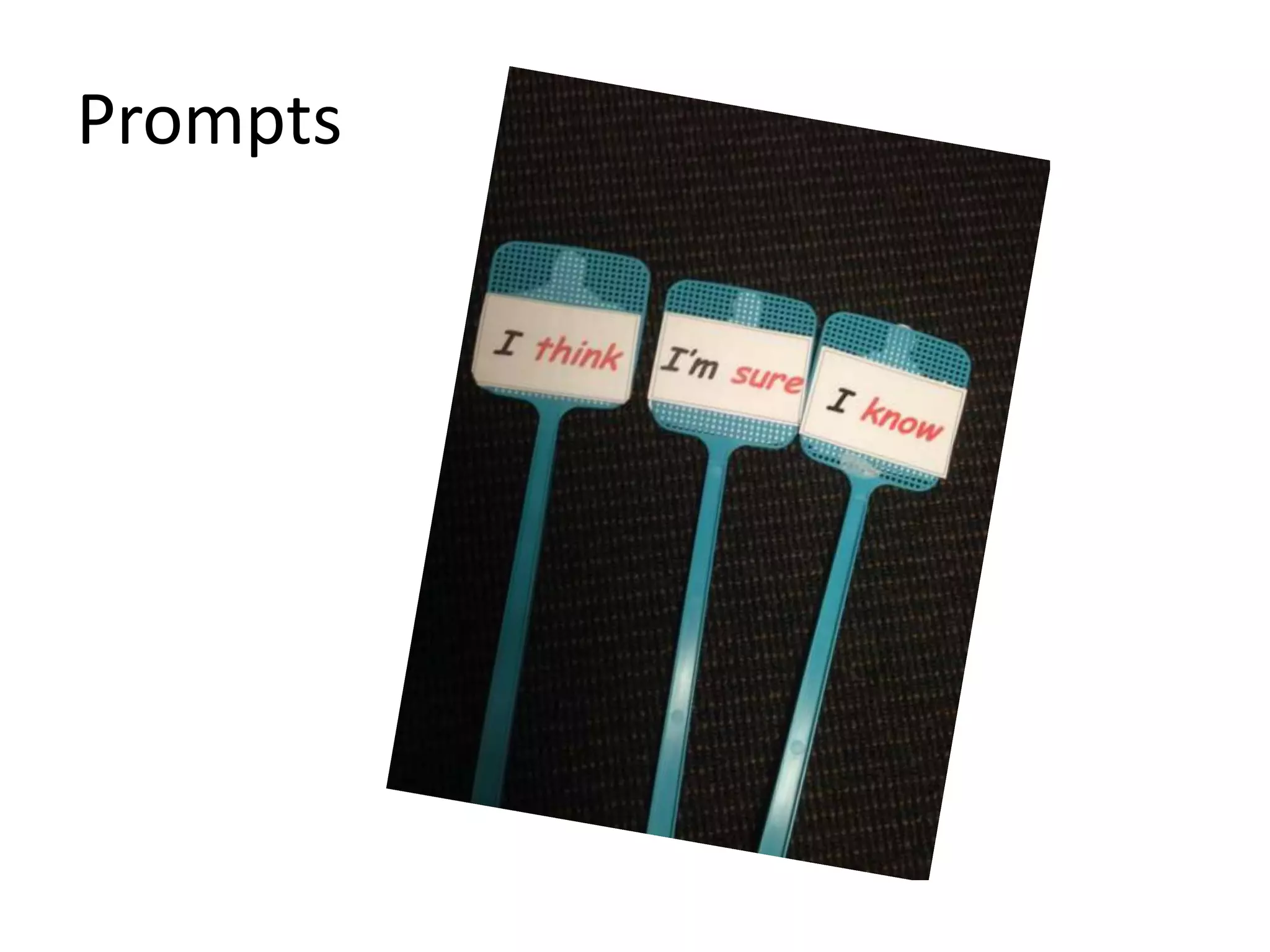
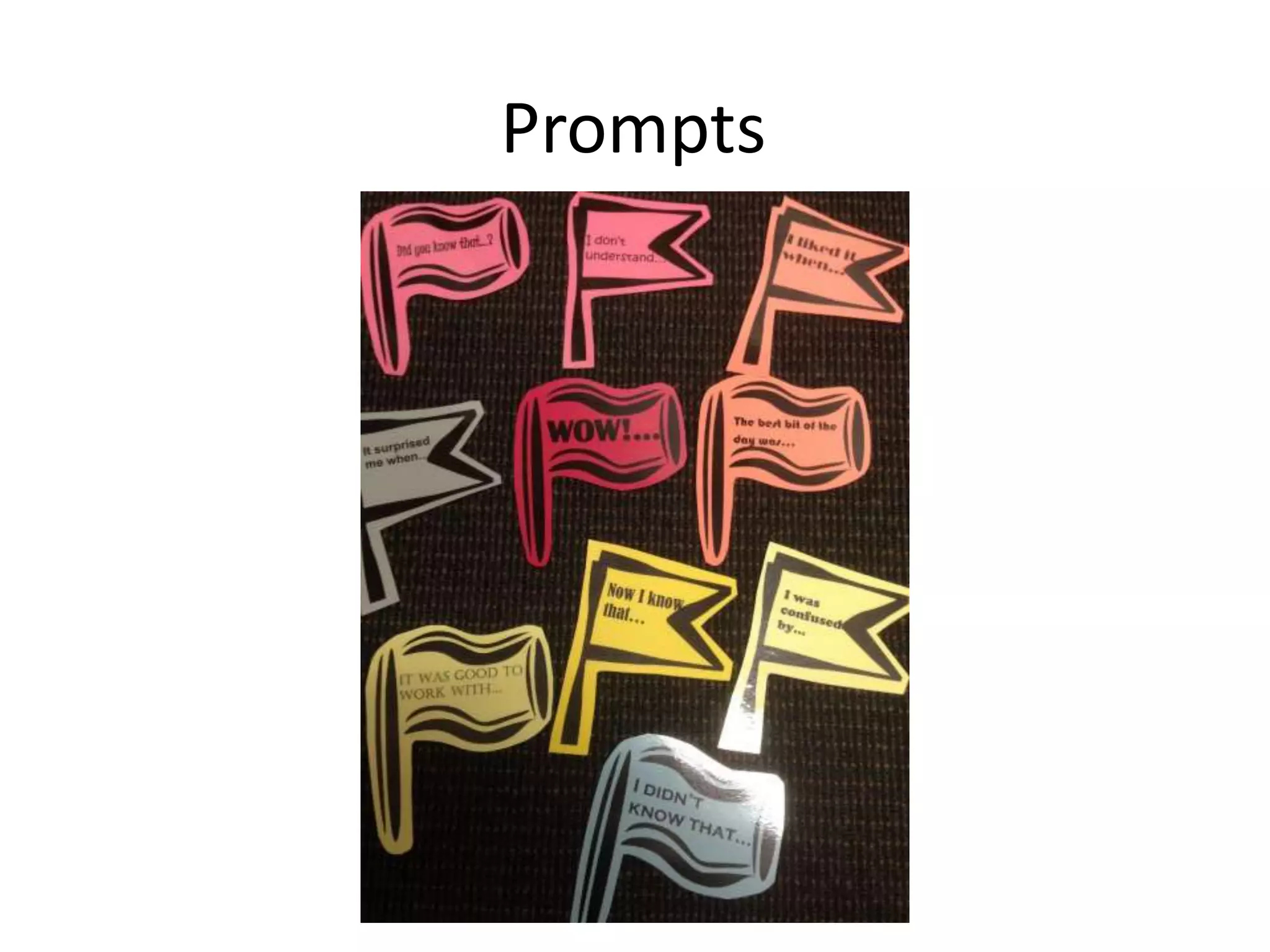
Use Props and Prompts for Talk 
http://www.dreamstime.com/stock-photography-toy-microphone-close-up-image18830572
Props
Props
Props
Prompts
Prompts
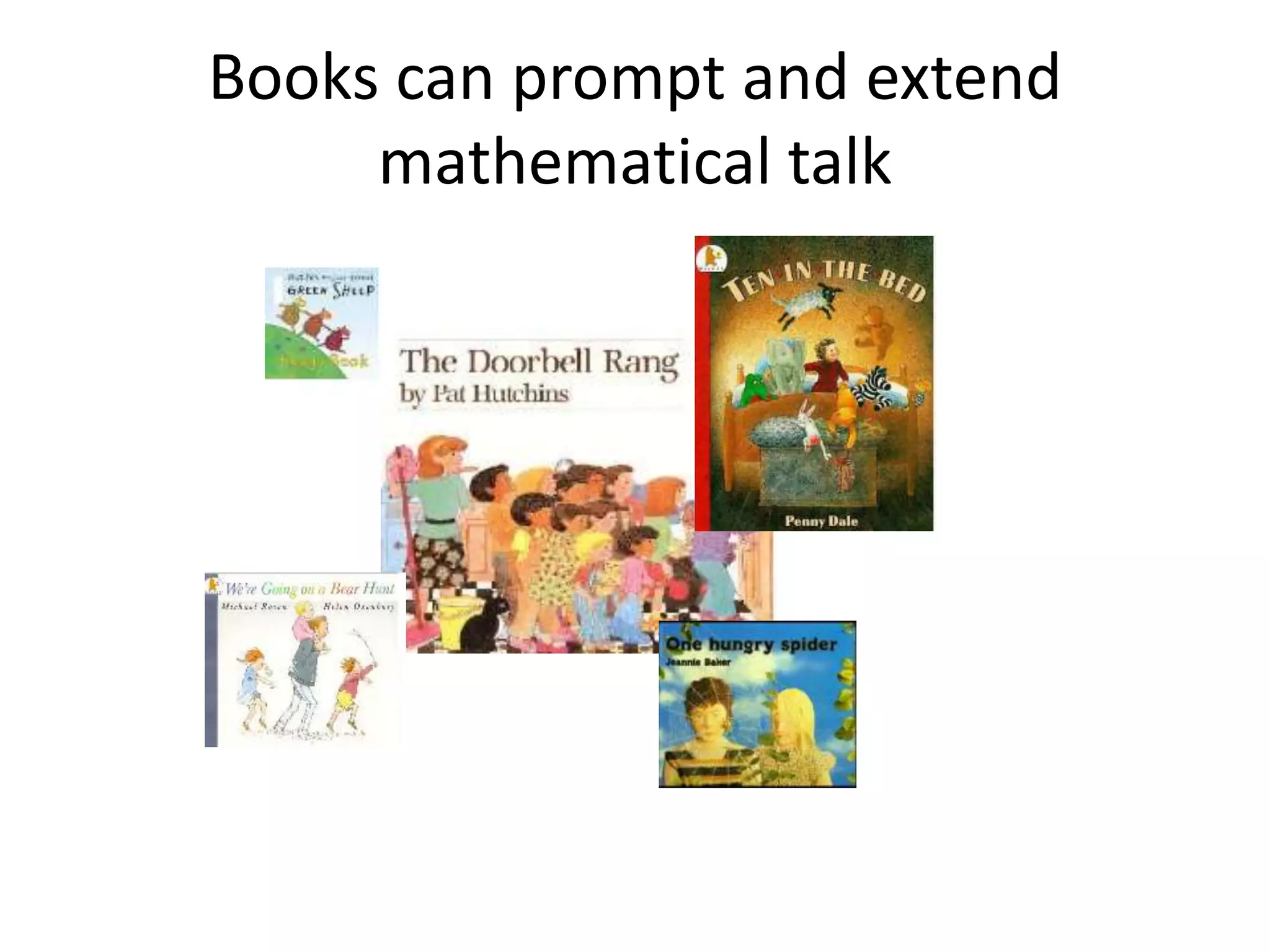
Books can prompt and extend 
mathematical talk
Vocabulary is Important 
We support children’s mathematical vocabulary 
development by: 
• Using and modelling correct mathematical 
language 
• Planning for the language required in units of 
work/lessons 
• Expecting children to use correct 
mathematical language
Vocabulary
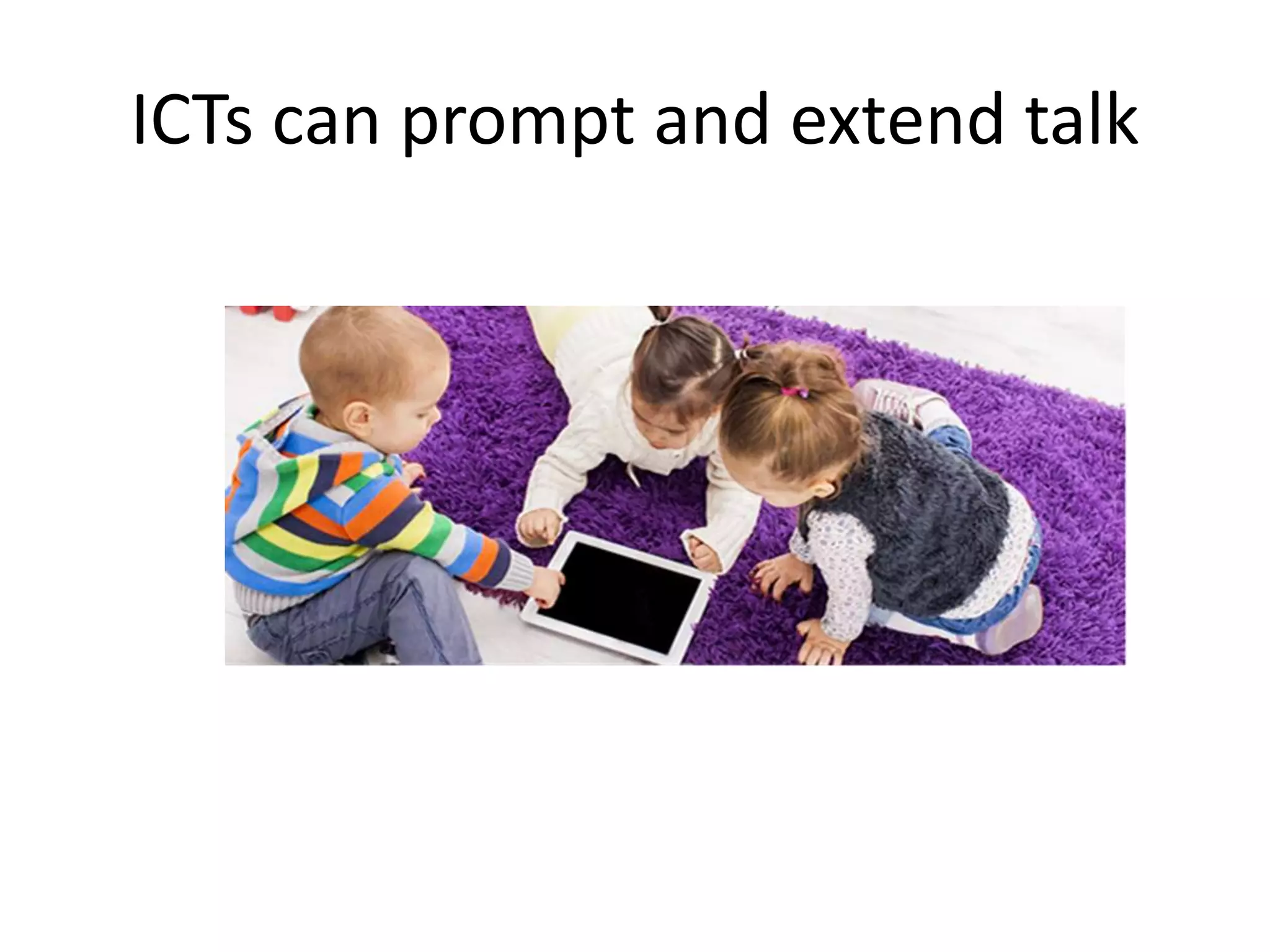
ICTs can prompt and extend talk
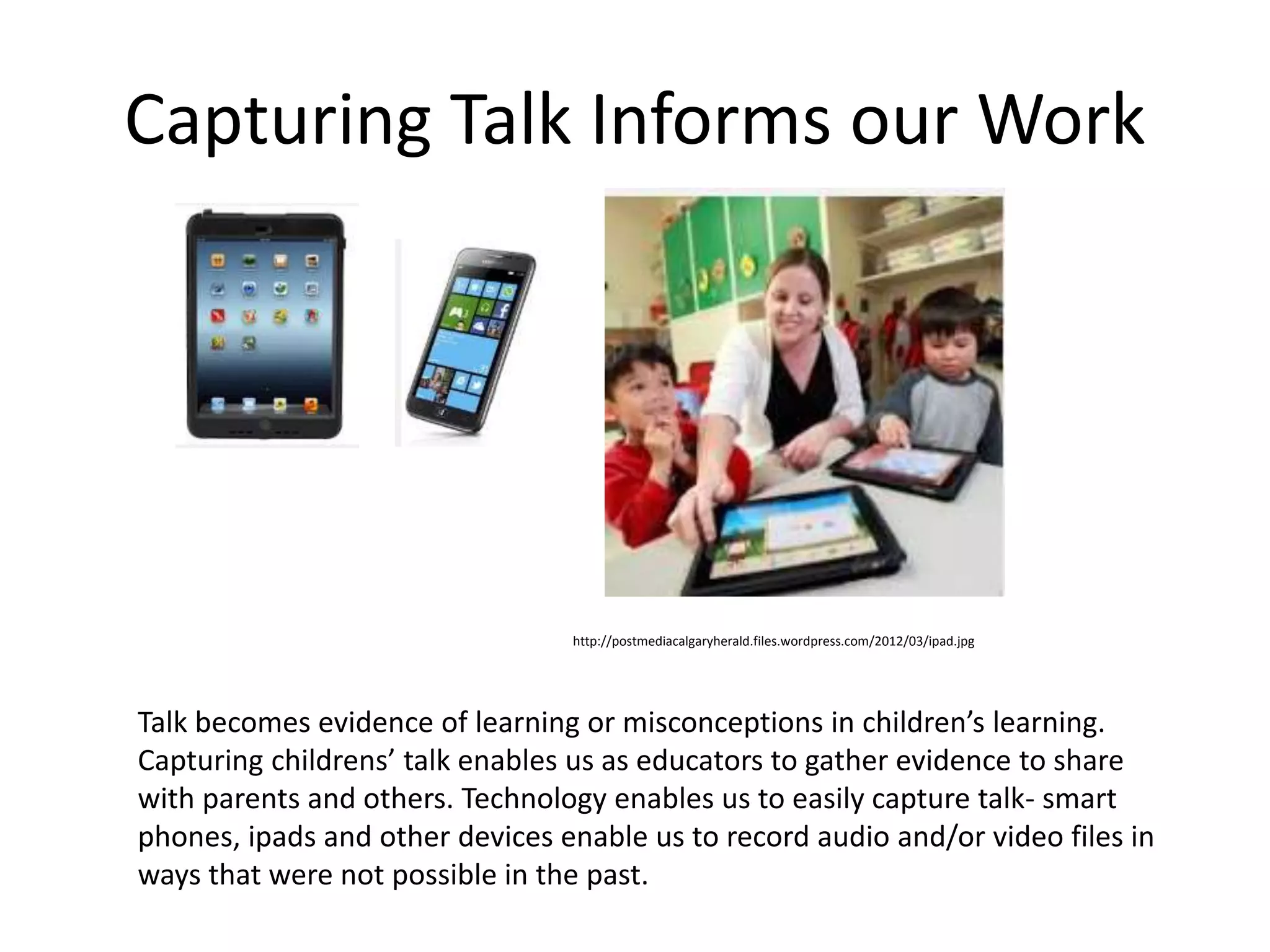
Capturing Talk Informs our Work 
http://postmediacalgaryherald.files.wordpress.com/2012/03/ipad.jpg 
Talk becomes evidence of learning or misconceptions in children’s learning. 
Capturing childrens’ talk enables us as educators to gather evidence to share 
with parents and others. Technology enables us to easily capture talk- smart 
phones, ipads and other devices enable us to record audio and/or video files in 
ways that were not possible in the past.
Talk is important for assessment 
We once thought that it was what children could 
put on paper that mattered. We made 
assessment decisions based on this. We now 
know that we need to value and promote talk as 
a way of both communicating and assessing 
mathematical understanding.
Talking to assess 
We learn so much about what children know, understand 
and are able to do through interacting with them and 
listening to their explanations. Many assessment tools 
such as 
Count Me in Too http://www.curriculumsupport.education.nsw.gov.au/countmein/assesment.html 
The Early Years Numeracy Interview 
https://www.eduweb.vic.gov.au/edulibrary/public/teachlearn/student/mathscontinuum/onlineinterviewbklet.pdf 
Assessment for Common Misunderstandings 
http://www.education.vic.gov.au/school/teachers/teachingresources/discipline/maths/assessment/pages/misunderstandings.aspx 
Use talk and one-on-one interviews to assess childrens’ 
mathematical thinking. Such opportunities provide a 
window into childrens’ thinking as they explain their 
answers and the processes they have used.
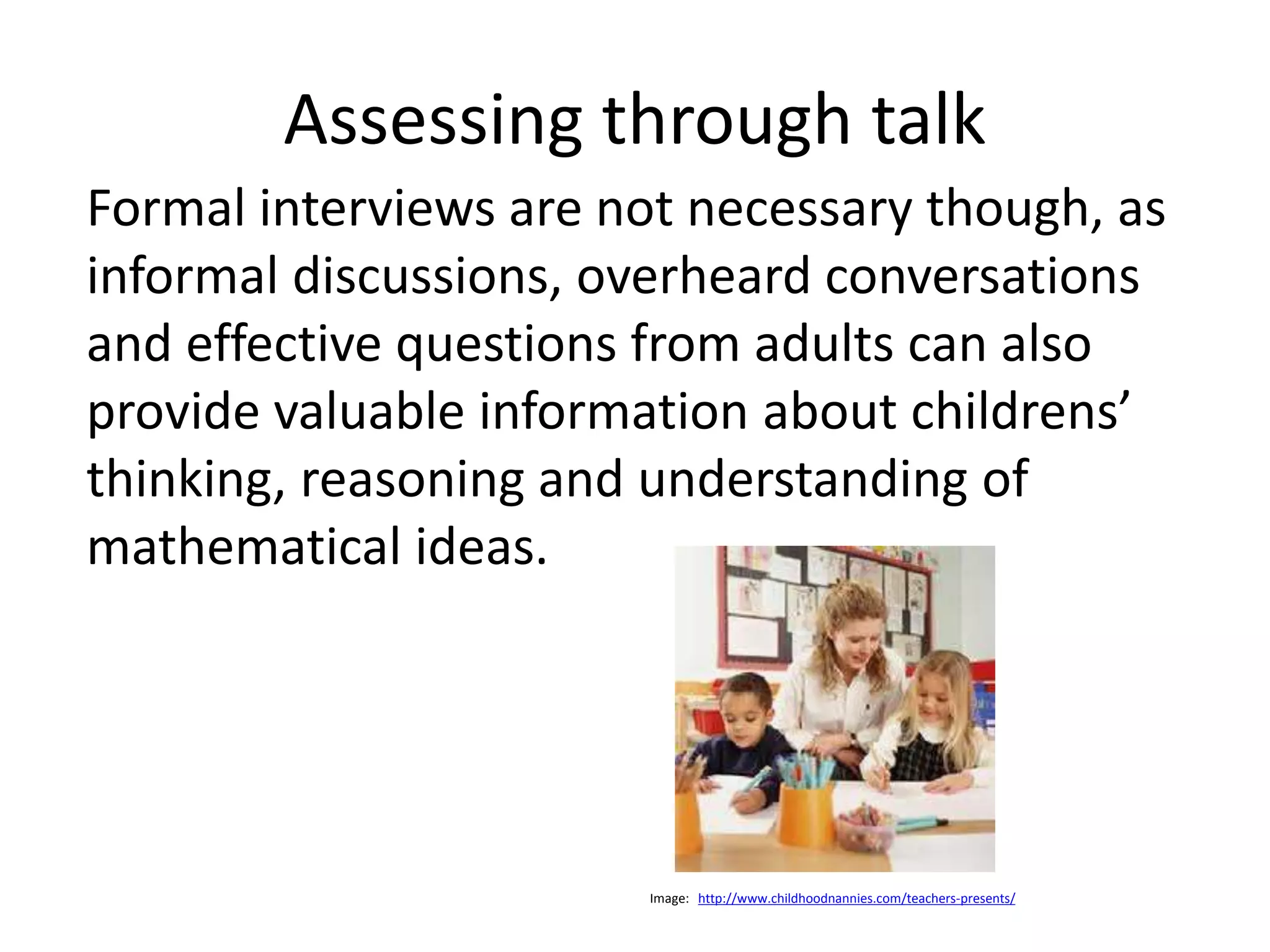
Assessing through talk 
Formal interviews are not necessary though, as 
informal discussions, overheard conversations 
and effective questions from adults can also 
provide valuable information about childrens’ 
thinking, reasoning and understanding of 
mathematical ideas. 
Image: http://www.childhoodnannies.com/teachers-presents/
Our Aim: Mindful mathematics 
learning 
In mindful mathematics lessons the shift is to: 
- Someone explaining 
- Everyone following the explanation 
- It’s not that the teacher never explains, but 
that everyone in the community gets to be the 
teacher and learner, whether they are adult or 
child.
Conclusion 
Good maths classrooms are talking classrooms! 
Effective talk requires thoughtful planning and careful 
listening 
Students should be expected to reason and explain from the 
early years and can be assessed on their capacity to reason 
and justify using mathematical language. 
The mathematical proficiencies help us to plan for tasks , to 
make assessment judgements and to build mathematical 
behaviour and dispositions.
Conclusion 
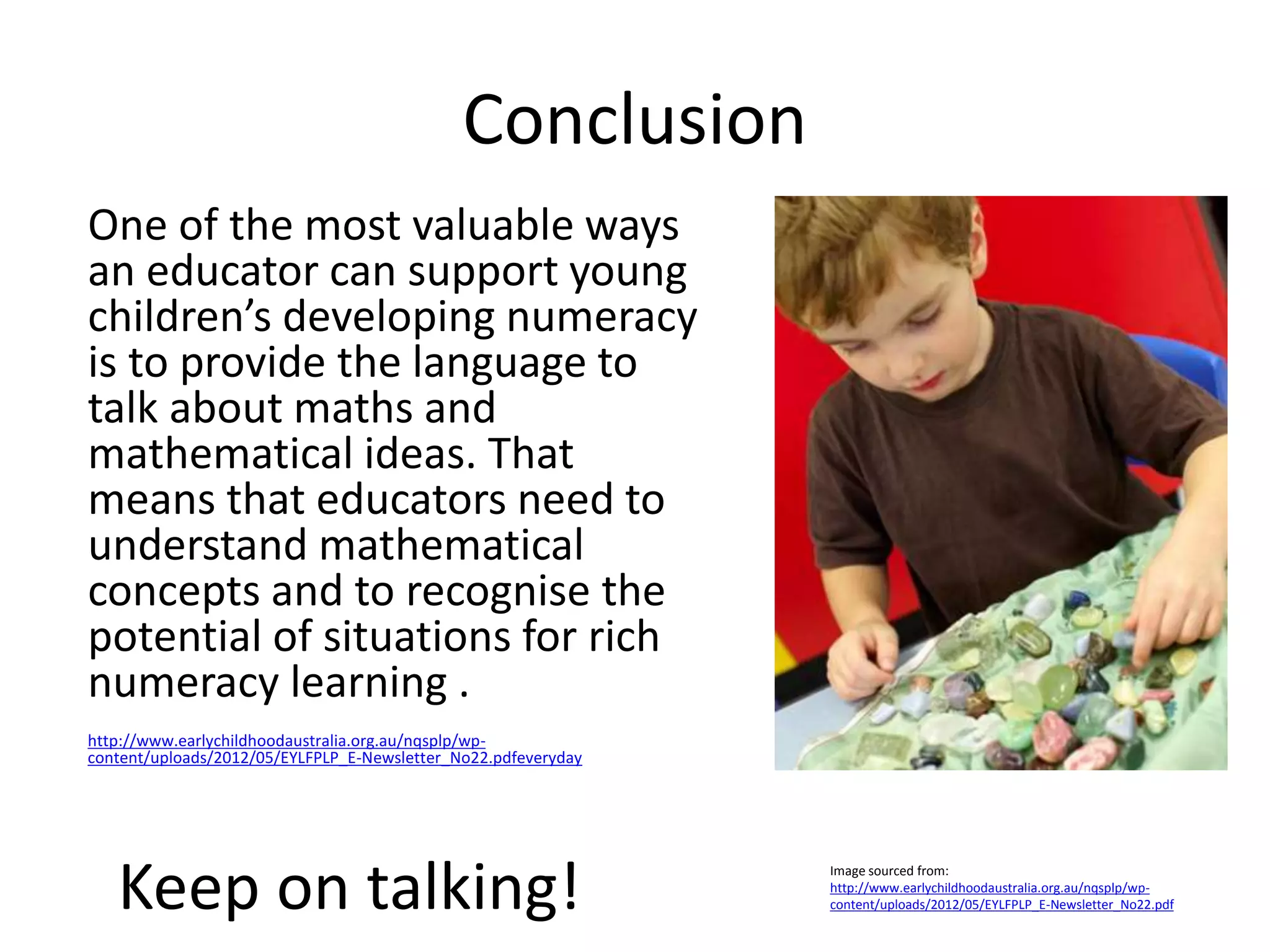
One of the most valuable ways 
an educator can support young 
children’s developing numeracy 
is to provide the language to 
talk about maths and 
mathematical ideas. That 
means that educators need to 
understand mathematical 
concepts and to recognise the 
potential of situations for rich 
numeracy learning . 
http://www.earlychildhoodaustralia.org.au/nqsplp/wp-content/ 
uploads/2012/05/EYLFPLP_E-Newsletter_No22.pdfeveryday 
Keep on talking! 
Image sourced from: 
http://www.earlychildhoodaustralia.org.au/nqsplp/wp-content/ 
uploads/2012/05/EYLFPLP_E-Newsletter_No22.pdf
Useful References 
Australian Government Department of Education, Employment and Workplace Relations (2007)Early Childhood Literacy and 
Numeracy- building good practice, http://www.vcaa.vic.edu.au/documents/earlyyears/buildinggoodpractice.pdf (accessed August 
26, 2014) 
Early Childhood Australia (2011) Being Numerate: Early Years Learning Framework Professional Learning, Newsletter 22 
http://www.earlychildhoodaustralia.org.au/nqsplp/wp-content/uploads/2012/05/EYLFPLP_E-Newsletter_No22.pdf (Accessed 
August 26, 2014) 
Ontario Ministry of Education, Student Achievement Division, Capacity Building Series, Special edition 22, Maximizing Student 
Mathematical Learning in the Early Years (2011) 
http://www.edu.gov.on.ca/eng/literacynumeracy/inspire/research/cbs_maximize_math_learning.pdf (accessed August 26, 2014) 
Ontario Ministry of Education, Student Achievement Division, Capacity Building Series, Special edition 21, Asking Effective 
Questions (July, 2011) 
http://www.edu.gov.on.ca/eng/literacynumeracy/inspire/research/cbs_askingeffectivequestions.pdf 
Building Mathematical Competencies in Early Childhood https://www.youtube.com/watch?v=iVFP-4iw_r4 
https://www.youtube.com/watch?v=BMoF-hiH3J8 
https://www.youtube.com/watch?v=rsKNrnlfXt4&list=PLVVQEyDnsoWVRYxJSIO3RoET9R0P1gtcx&index=3 
https://www.youtube.com/watch?v=xssBJpOBecs&list=PLVVQEyDnsoWVRYxJSIO3RoET9R0P1gtcx&index=4 
https://www.youtube.com/watch?v=WVfwBQe_IJE&list=PLVVQEyDnsoWVRYxJSIO3RoET9R0P1gtcx&index=5 
https://www.youtube.com/watch?v=1IjesoJJTp0 
Five Practices for Orchestrating Productive Mathematics Discussions (Smith & Stein) 
http://www.aamt.edu.au/Webshop/Newest-resources/Five-Practices 
http://nrich.maths.org/early-years Nrich early years site

AAMT Connect with Maths webinar: The importance of talk for mathematical learning in early childhood education

  • 1.
    The Importance ofTalk for Mathematical Learning in the Early Years Denise Neal November, 2014 Image sourced from: http://docs.education.gov.au/system/files/doc/other/belonging_being_and_becoming_the_early_years_learning_framework_for_australia.pdf
  • 2.
    Everyday Learning aboutMaths and Numeracy http://www.aamt.edu.au/Webshop/Newest-resources/Maths-and-Numeracy http://www.earlychildhoodaustralia.org.au/shop/product/everyday-learning-about-maths-and-numeracy/
  • 3.
    Key Message fromthe book If we talk about mathematics and numeracy and show positive attitudes to using their ideas to solve everyday problems, children will want to learn more about it and understand that learning isn’t always easy, but when we solve problems and get past the confusion, we have the satisfaction of learning something new. When children tackle new challenges with appropriate levels of support, they develop as curious, persistent, highly engaged and successful learners. …. Talk supports and extends this learning
  • 4.
    Introduction Overview •The importance of talk • Links to curriculum frameworks • Promoting talk in the learning environment (strategies and prompts) • Talk as way to assess student learning • References/resources • Conclusion • Questions
  • 5.
    Source: Tracey Muirwebinar- Connect with Maths, August 26th, 2014
  • 6.
    Talk is Important! • Research clearly tells us that oral language is crucial for learning and that oral language is the key to reading success. This involves not only speaking but also the capacity to listen (PALL) • Vocabulary is another foundation for reading and learning. In the case of mathematics, there is a wealth of vocabulary specific to the learning area that helps build understanding and enables learners to explain, justify and extend their thinking.
  • 7.
    Talk Matters Klibanoffand colleagues discovered that teacher-facilitated “math talk” in the early years significantly increased children’s growth in understanding of mathematical concepts (2006, p. 59). Knowledgeable educators recognize that although young children may have a beginning understanding of mathematical concepts they often lack the language to communicate their ideas. By modelling and fostering math talk throughout the day and across various subject areas, educators can provide the math language that allows students to articulate their ideas. It is also important to encourage talk among students as they explain, question and discuss their strategies while co-operatively solving problems. http://www.edu.gov.on.ca/eng/literacynumeracy/inspire/research/cbs_maximize_math_learning.pdf
  • 8.
    Examples… http://www.earlychildhoodaustralia.org.au/nqsplp/wp-content/uploads/2012/05/EYLFPLP_E-Newsletter_ No22.pdf http://www.dreamstime.com/royalty-free-stock-photo-rolling-out-dough-pizza-child-making-fresh-beginning-image35196585
  • 9.
    Curriculum Both theEarly Years Framework for Australia and the Australian Curriculum value and promote the importance of communication.
  • 10.
    The EYLF ..educatorsare also responsive to children’s ideas and play, which form an important basis for curriculum decision-making. In response to children’s evolving ideas and interests, educators assess, anticipate and extend children’s learning via open ended questioning, providing feedback, challenging their thinking and guiding their learning. They make use of spontaneous ‘teachable moments’ to scaffold children’s learning.
  • 11.
  • 12.
    Proficiencies and ContentStrands • Understanding • Fluency • Reasoning • Problem solving • Number and Algebra • Measurement and geometry • Statistics and Probability through and with…… Both the proficiencies and the content work together to build mathematical understandings and ways of working… this begins in the early years- all learners can be expected to problem solve and reason
  • 13.
    Building Dispositions …enduringhabits of mind and actions, and tendencies to respond in characteristic ways to situations, for example, maintaining an optimistic outlook, being willing to persevere, approaching new experiences with confidence. (Carr, 2001)
  • 14.
    Reasoning Reasoning mathematicallyis a habit of mind, and like all habits, it must be developed through consistent use in many contexts. From children's earliest experiences with mathematics, it is important to help them understand that assertions should always have reasons. Questions such as "Why do you think it is true?" and "Does anyone think the answer is different, and why do you think so?" help students see that statements need to be supported or refuted by evidence. Young children may wish to appeal to others as sources for their reasons ("My sister told me so") or even to vote to determine the best explanation, but students need to learn and agree on what is acceptable as an adequate argument in the mathematics classroom. These are the first steps toward realizing that mathematical reasoning is based on specific assumptions and rules. http://www.fayar.net/east/teacher.web/math/standards/document/chapter3/reas.htm
  • 15.
    Mathematizing The educatorcan play an integral role by making meaningful connections between the mathematical strands, the real world and other disciplines, and most importantly, “between the intuitive informal mathematics that students have learned through their own experiences and the mathematics they are learning in school” (For example, as a child naturally creates and extends a pattern while making a necklace, the educator can effectively pose questions that provoke the student not only to describe the pattern, but also to make predictions and generalizations). http://www.edu.gov.on.ca/eng/literacynumeracy/inspire/research/cbs_maximize_math_learning.pdf
  • 16.
    The importance ofdiscussion Research has shown, however, that “manipulatives themselves do not magically carry mathematical understanding. Rather, they provide concrete ways for students to give meaning to new knowledge” Students need the opportunity to reflect upon their actions with manipulatives, and through discussion, articulate the meaning they generate, so that the link between their representations and the key mathematical ideas is apparent (Clements & Sarama, 2009, p. 274).
  • 17.
    Pause and talk… • Questions? • Comments? • Your experiences?
  • 18.
    Talking AND Listening We have a lot of talk and attention to speaking and listening and while many classrooms have gone a long way to improving children’s speaking in mathematics lessons, I think we still have a way to go in promoting deep listening (Askew, 2012) Classrooms can support student learning by ensuring that solutions proposed by students are built on. Collective mathematical meaning is built when teachers carefully listen to students and select solutions to be shared which will build and develop collective understanding.
  • 19.
    Supporting maths talk Suzanne Chapin proposes five effective talk moves which help to create meaningful mathematics discussions. Revoicing is one move that is particularly useful when a student’s explanation is confusing or hard for others to understand. The teacher repeats all or some of what the child said and then asks for clarification, which in turn provokes the child to clarify and offer further explanation. This also gives the educator an opportunity to embed mathematics vocabulary so the child can further explain his/her thinking (2009, p. 14). http://www.edu.gov.on.ca/eng/literacynumeracy/inspire/research/cbs_maximize_math_learning.pdf
  • 20.
    A recommended read Askew, M (2012) Transforming Primary Mathematics, Milton Park, UK: Routledge.
  • 21.
  • 22.
    Supporting Maths Talk-Talk Moves http://www.edu.gov.on.ca/eng/literacynumeracy/inspire/research/cbs_maximize_math_learning.pdf
  • 23.
    Building talk •Making sense of problems by explaining them to someone else, putting them into your own words and comparing your answers with others all helps meaning to emerge. • Talking mathematics means that mathematical vocabulary becomes part of the classroom discourse- much more than a list of words! Askew, M (2012) Transforming Primary Mathematics, Milton Park, UK: Routledge
  • 24.
    Our actions andinteractions are key Responsive learning relationships are strengthened as educators and children learn together and share decisions, respect and trust. Responsiveness enables educators to respectfully enter children’s play and ongoing projects, stimulate their thinking and enrich their learning. Image sourced from: http://www.earlychildhoodaustralia.org.au/nqsplp/wp-content/ uploads/2012/05/EYLFPLP_E-Newsletter_No22.pdf
  • 25.
    Planning for talk • Maths talk time- turn to your maths talk partner and chat about this (as problems are posed, during the lesson and at the end) • Sharing or reflection time- built into the planning of a lesson (not always at the end of the lesson) • Plan for explicit teaching and use of subject specific vocabulary in each sequence
  • 26.
    What do wedo to promote good maths talk? 1. Try to use tasks that engage the pupils in thinking for themselves and allow you to work alongside them on occasions. 2. Find time to listen and communicate with pupils as they work on these tasks. 3. Try to avoid controlling the communication to get to a mathematical end that you have predetermined but encourage mathematical thinking instead. "Go with the flow.“ 4. Wait at least 5 seconds for a response before speaking further. 5. Help pupils to speak and listen to each other in a constructive way. 6. Do not make assumptions. 7. Watch body language and voice intonation in order to minimise a power imbalance. http://nrich.maths.org/6662
  • 27.
    Asking Open Questions http://www.edu.gov.on.ca/eng/literacynumeracy/inspire/research/cbs_askingeffectivequestions.pdf
  • 28.
    Building a LearningCulture Learning cultures either promote or constrain talk…
  • 29.
    Tasks Tasks eitherpromote or constrain talk…carefully select tasks for a mathematical purpose. http://nrich.maths.org/content/id/8863/Incey%20Wincey.pdf
  • 30.
    Use Props andPrompts for Talk http://www.dreamstime.com/stock-photography-toy-microphone-close-up-image18830572
  • 31.
  • 32.
  • 33.
  • 34.
  • 35.
  • 36.
    Books can promptand extend mathematical talk
  • 37.
    Vocabulary is Important We support children’s mathematical vocabulary development by: • Using and modelling correct mathematical language • Planning for the language required in units of work/lessons • Expecting children to use correct mathematical language
  • 38.
  • 39.
    ICTs can promptand extend talk
  • 40.
    Capturing Talk Informsour Work http://postmediacalgaryherald.files.wordpress.com/2012/03/ipad.jpg Talk becomes evidence of learning or misconceptions in children’s learning. Capturing childrens’ talk enables us as educators to gather evidence to share with parents and others. Technology enables us to easily capture talk- smart phones, ipads and other devices enable us to record audio and/or video files in ways that were not possible in the past.
  • 41.
    Talk is importantfor assessment We once thought that it was what children could put on paper that mattered. We made assessment decisions based on this. We now know that we need to value and promote talk as a way of both communicating and assessing mathematical understanding.
  • 42.
    Talking to assess We learn so much about what children know, understand and are able to do through interacting with them and listening to their explanations. Many assessment tools such as Count Me in Too http://www.curriculumsupport.education.nsw.gov.au/countmein/assesment.html The Early Years Numeracy Interview https://www.eduweb.vic.gov.au/edulibrary/public/teachlearn/student/mathscontinuum/onlineinterviewbklet.pdf Assessment for Common Misunderstandings http://www.education.vic.gov.au/school/teachers/teachingresources/discipline/maths/assessment/pages/misunderstandings.aspx Use talk and one-on-one interviews to assess childrens’ mathematical thinking. Such opportunities provide a window into childrens’ thinking as they explain their answers and the processes they have used.
  • 43.
    Assessing through talk Formal interviews are not necessary though, as informal discussions, overheard conversations and effective questions from adults can also provide valuable information about childrens’ thinking, reasoning and understanding of mathematical ideas. Image: http://www.childhoodnannies.com/teachers-presents/
  • 44.
    Our Aim: Mindfulmathematics learning In mindful mathematics lessons the shift is to: - Someone explaining - Everyone following the explanation - It’s not that the teacher never explains, but that everyone in the community gets to be the teacher and learner, whether they are adult or child.
  • 45.
    Conclusion Good mathsclassrooms are talking classrooms! Effective talk requires thoughtful planning and careful listening Students should be expected to reason and explain from the early years and can be assessed on their capacity to reason and justify using mathematical language. The mathematical proficiencies help us to plan for tasks , to make assessment judgements and to build mathematical behaviour and dispositions.
  • 46.
    Conclusion One ofthe most valuable ways an educator can support young children’s developing numeracy is to provide the language to talk about maths and mathematical ideas. That means that educators need to understand mathematical concepts and to recognise the potential of situations for rich numeracy learning . http://www.earlychildhoodaustralia.org.au/nqsplp/wp-content/ uploads/2012/05/EYLFPLP_E-Newsletter_No22.pdfeveryday Keep on talking! Image sourced from: http://www.earlychildhoodaustralia.org.au/nqsplp/wp-content/ uploads/2012/05/EYLFPLP_E-Newsletter_No22.pdf
  • 47.
    Useful References AustralianGovernment Department of Education, Employment and Workplace Relations (2007)Early Childhood Literacy and Numeracy- building good practice, http://www.vcaa.vic.edu.au/documents/earlyyears/buildinggoodpractice.pdf (accessed August 26, 2014) Early Childhood Australia (2011) Being Numerate: Early Years Learning Framework Professional Learning, Newsletter 22 http://www.earlychildhoodaustralia.org.au/nqsplp/wp-content/uploads/2012/05/EYLFPLP_E-Newsletter_No22.pdf (Accessed August 26, 2014) Ontario Ministry of Education, Student Achievement Division, Capacity Building Series, Special edition 22, Maximizing Student Mathematical Learning in the Early Years (2011) http://www.edu.gov.on.ca/eng/literacynumeracy/inspire/research/cbs_maximize_math_learning.pdf (accessed August 26, 2014) Ontario Ministry of Education, Student Achievement Division, Capacity Building Series, Special edition 21, Asking Effective Questions (July, 2011) http://www.edu.gov.on.ca/eng/literacynumeracy/inspire/research/cbs_askingeffectivequestions.pdf Building Mathematical Competencies in Early Childhood https://www.youtube.com/watch?v=iVFP-4iw_r4 https://www.youtube.com/watch?v=BMoF-hiH3J8 https://www.youtube.com/watch?v=rsKNrnlfXt4&list=PLVVQEyDnsoWVRYxJSIO3RoET9R0P1gtcx&index=3 https://www.youtube.com/watch?v=xssBJpOBecs&list=PLVVQEyDnsoWVRYxJSIO3RoET9R0P1gtcx&index=4 https://www.youtube.com/watch?v=WVfwBQe_IJE&list=PLVVQEyDnsoWVRYxJSIO3RoET9R0P1gtcx&index=5 https://www.youtube.com/watch?v=1IjesoJJTp0 Five Practices for Orchestrating Productive Mathematics Discussions (Smith & Stein) http://www.aamt.edu.au/Webshop/Newest-resources/Five-Practices http://nrich.maths.org/early-years Nrich early years site