What is the
importance of data?
David Henderson
It has none.
“Data is only useful if it
informs decision
making”
- Every Carnegie Mellon University
professor of public policy
There are lots of cool analytic techniques
• Econometric modeling
• Linear programming
• Machine learning
• Social network analysis
• Etc.
• Selecting data points
• Assigning value to data
I will focus on two data prerequisites
Selecting data points
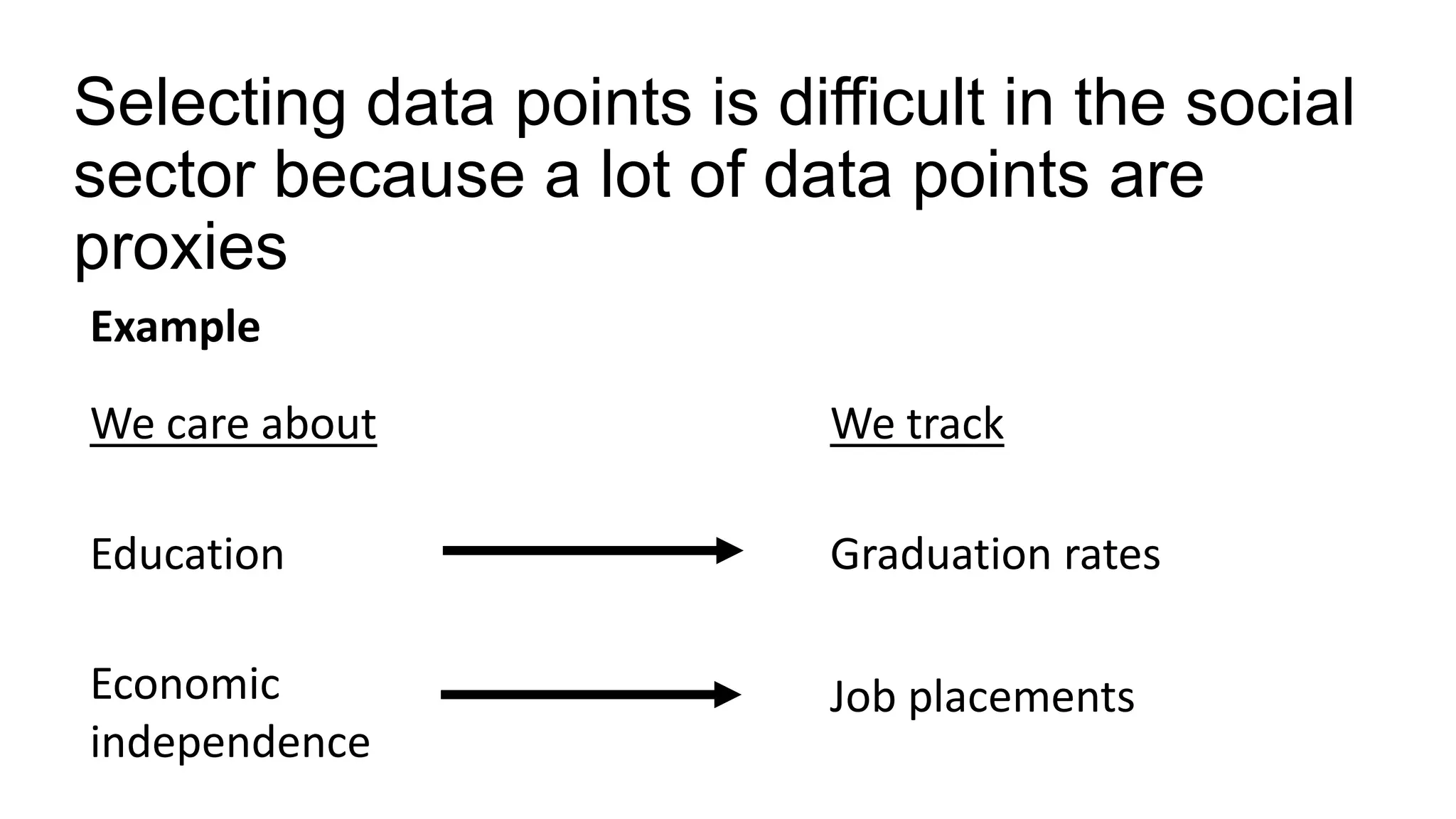
Selecting data points is difficult in the social
sector because a lot of data points are
proxies
Example
We trackWe care about
Graduation ratesEducation
Job placementsEconomic
independence
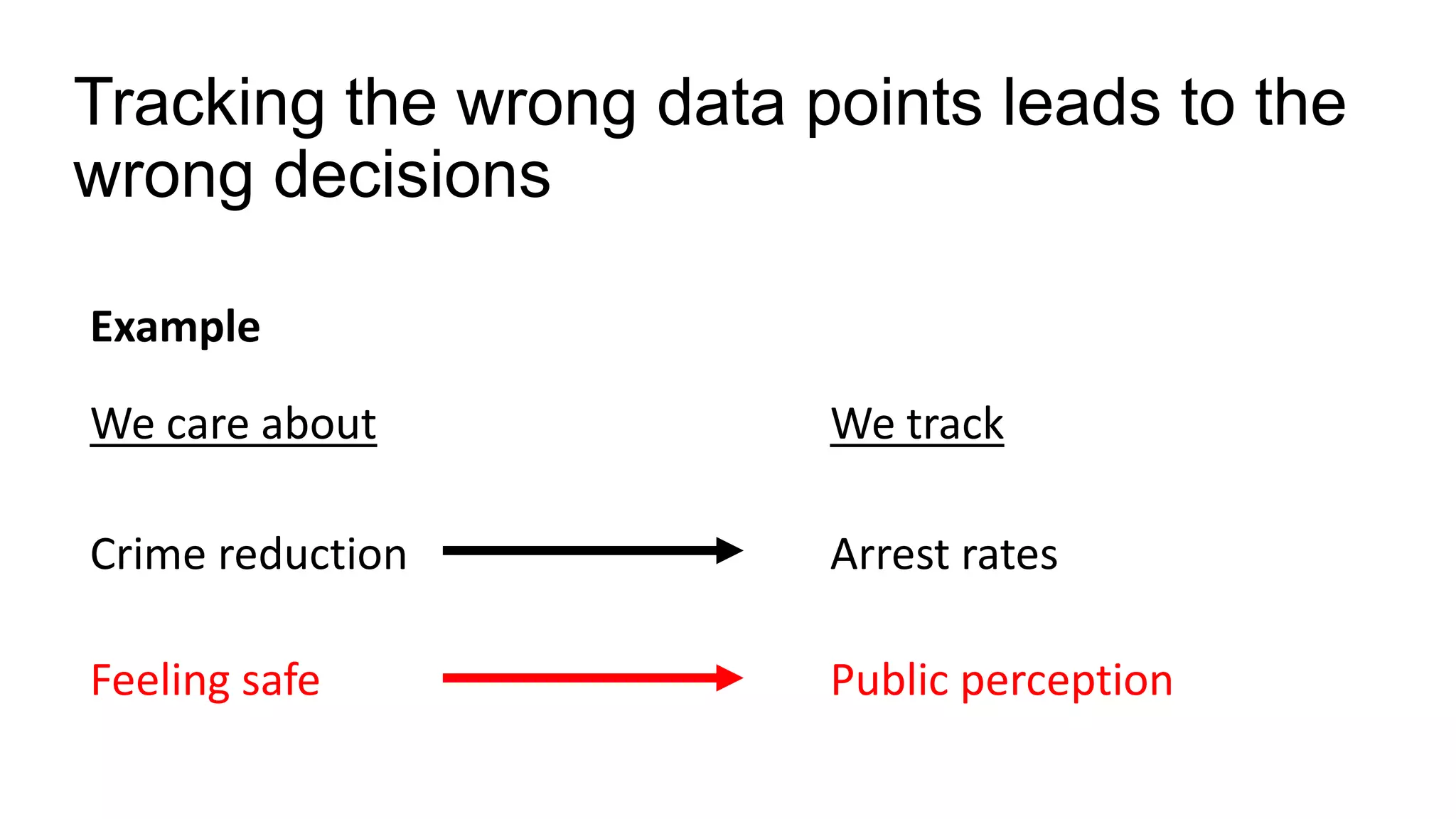
Tracking the wrong data points leads to the
wrong decisions
Example
We trackWe care about
Arrest ratesCrime reduction
Public perceptionFeeling safe
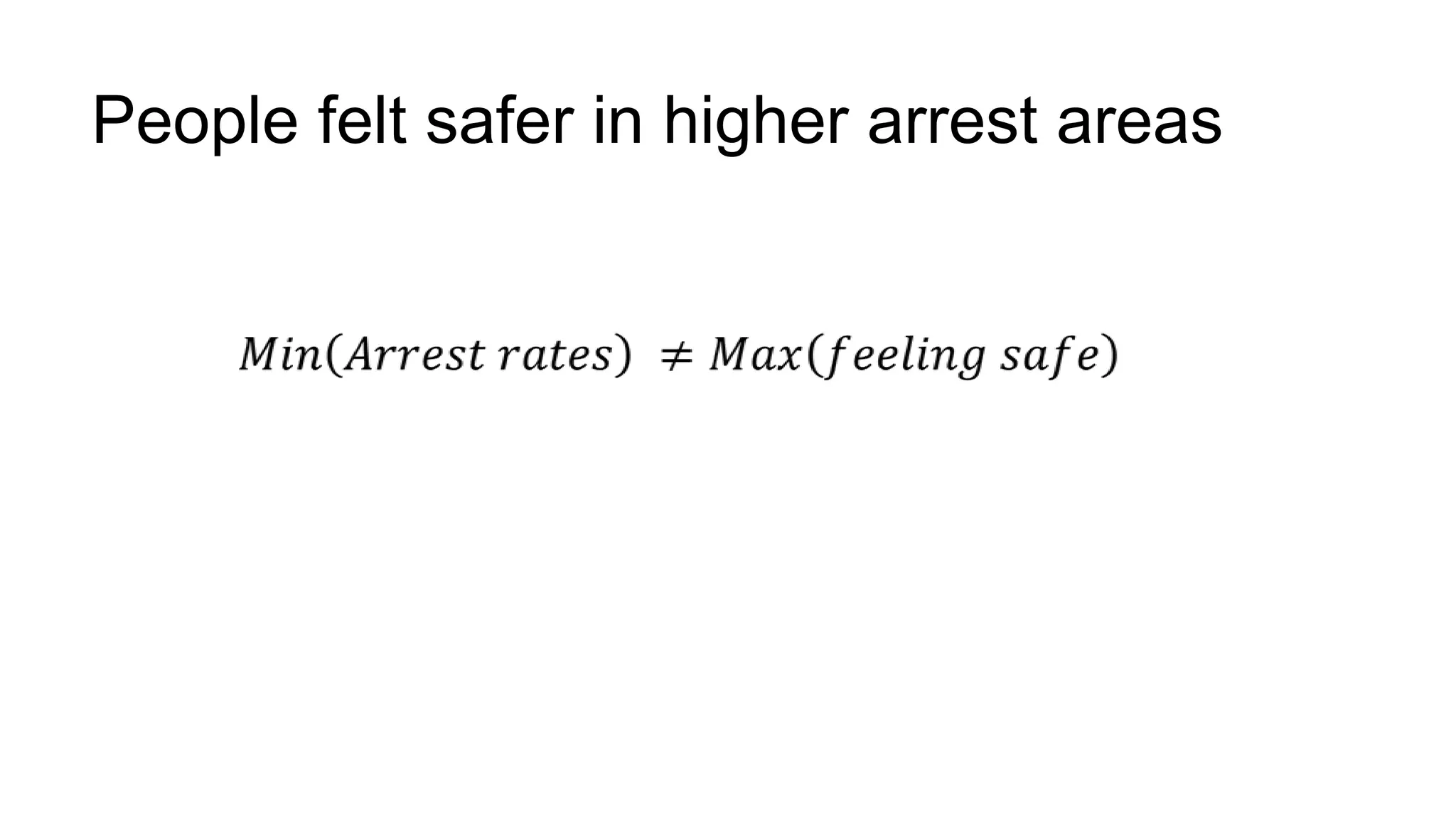
People felt safer in higher arrest areas
Focusing on the wrong indicators
can lead to negative (but rational!)
decisions
Funder wanted a workforce development
program to maximize job placements
Assigning value to data
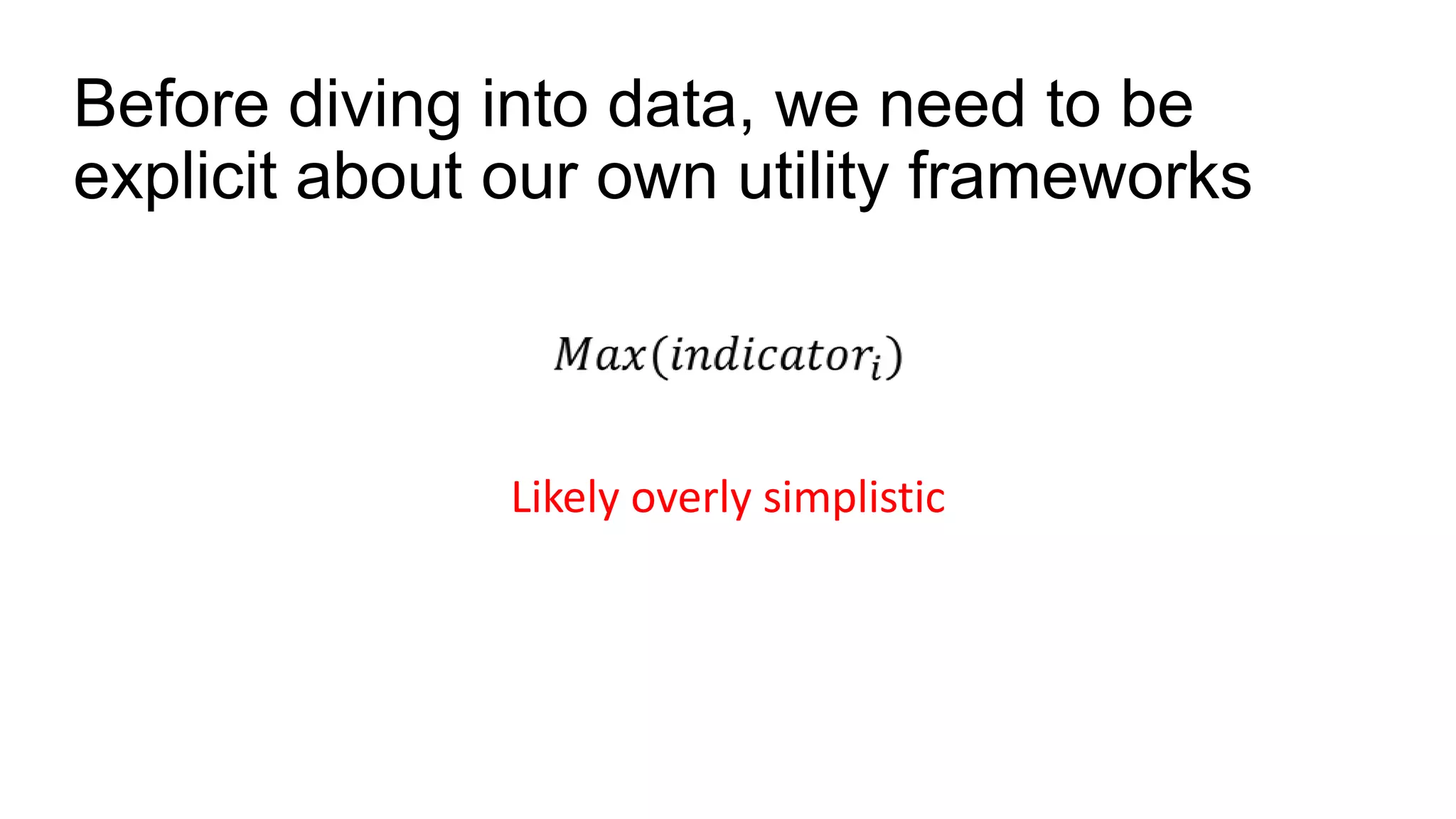
Before diving into data, we need to be
explicit about our own utility frameworks
Likely overly simplistic
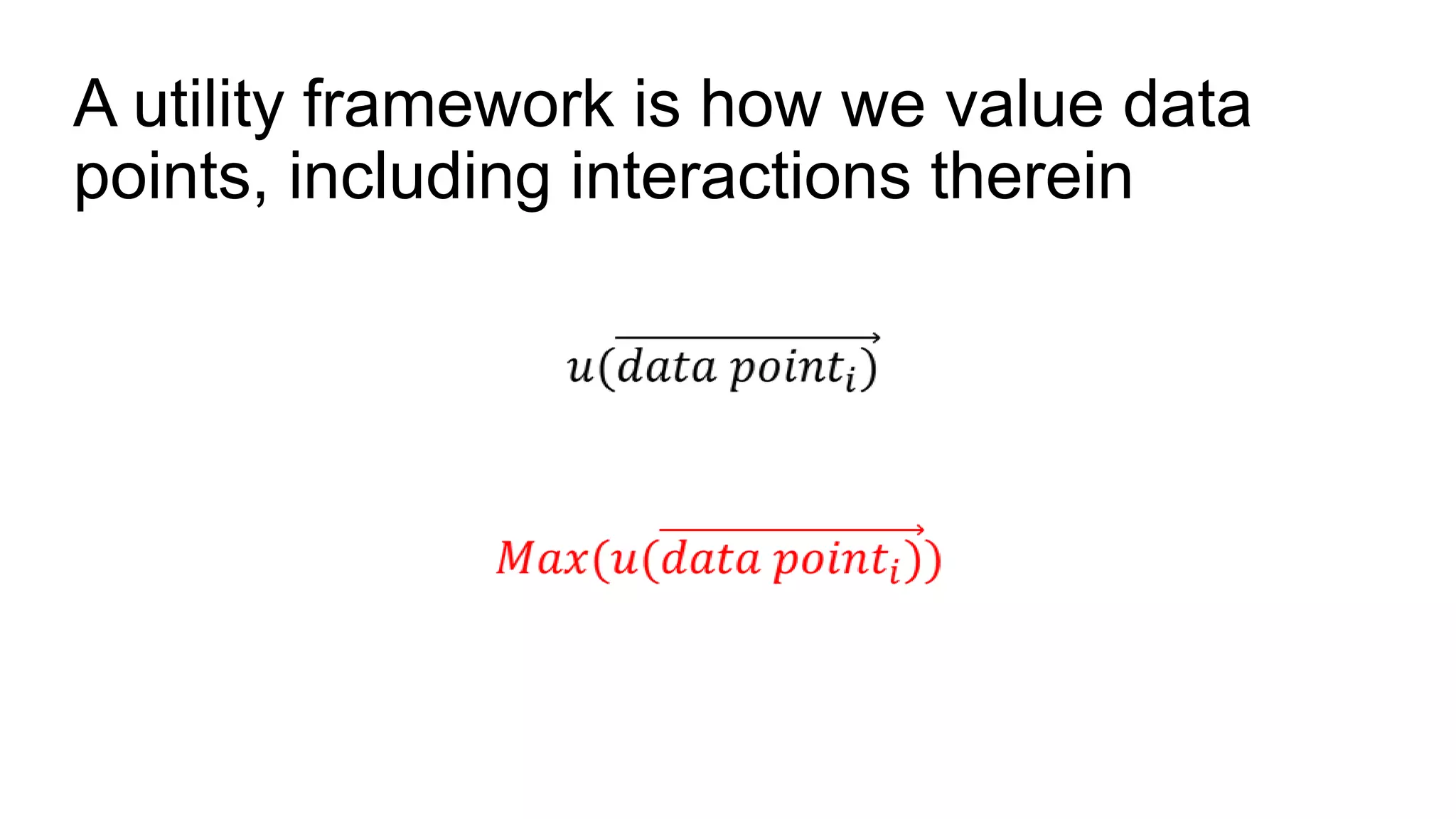
A utility framework is how we value data
points, including interactions therein
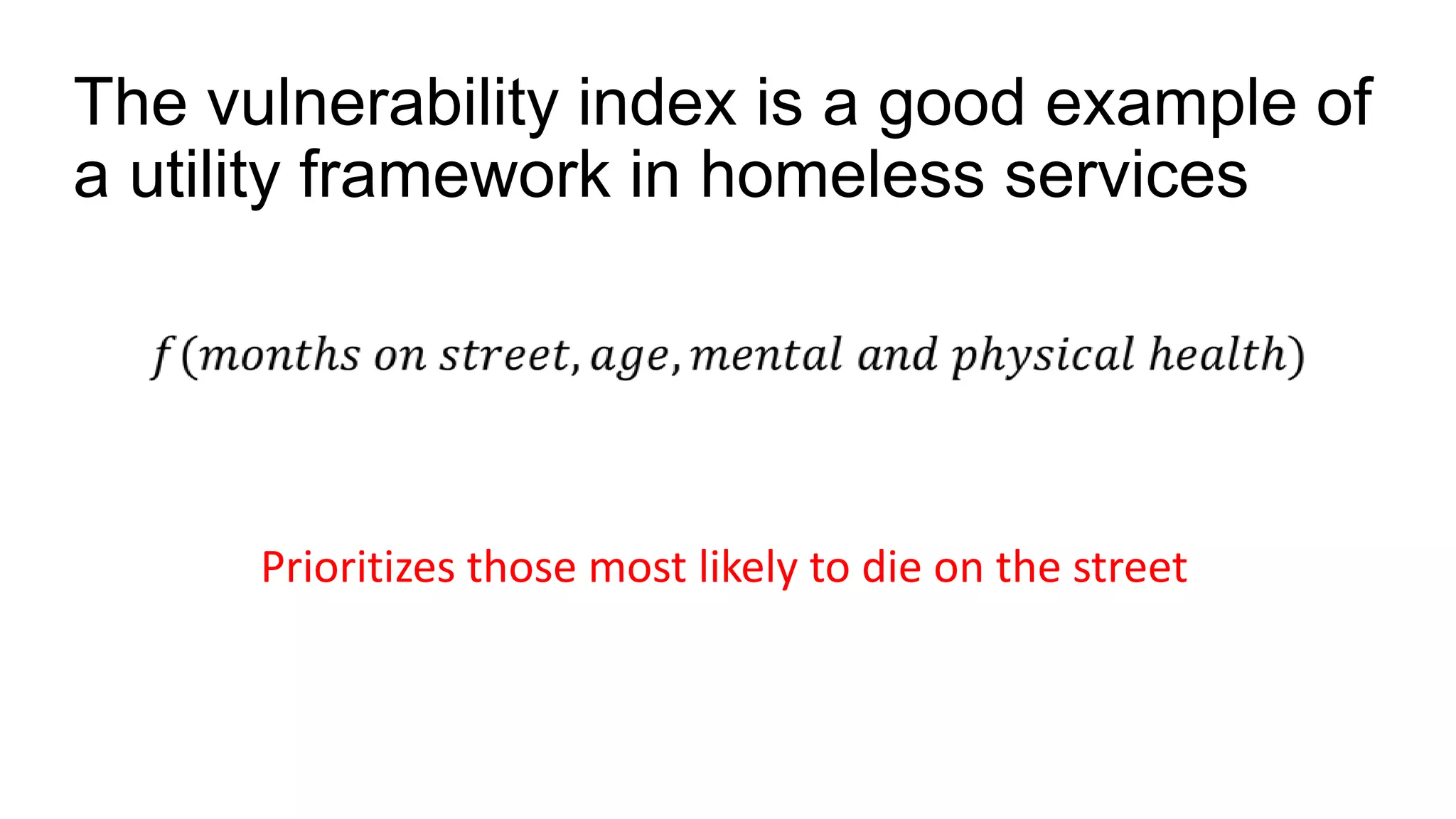
The vulnerability index is a good example of
a utility framework in homeless services
Prioritizes those most likely to die on the street
Without establishing an organizational utility
framework, everyone makes decisions
according to their own values
Different utility functions + same data
=
Different decisions
How do we model a utility framework?
Utility elicitation is common in the
business world
Model a decision maker’s risk reward preferences through
a series of hypothetical investment scenarios
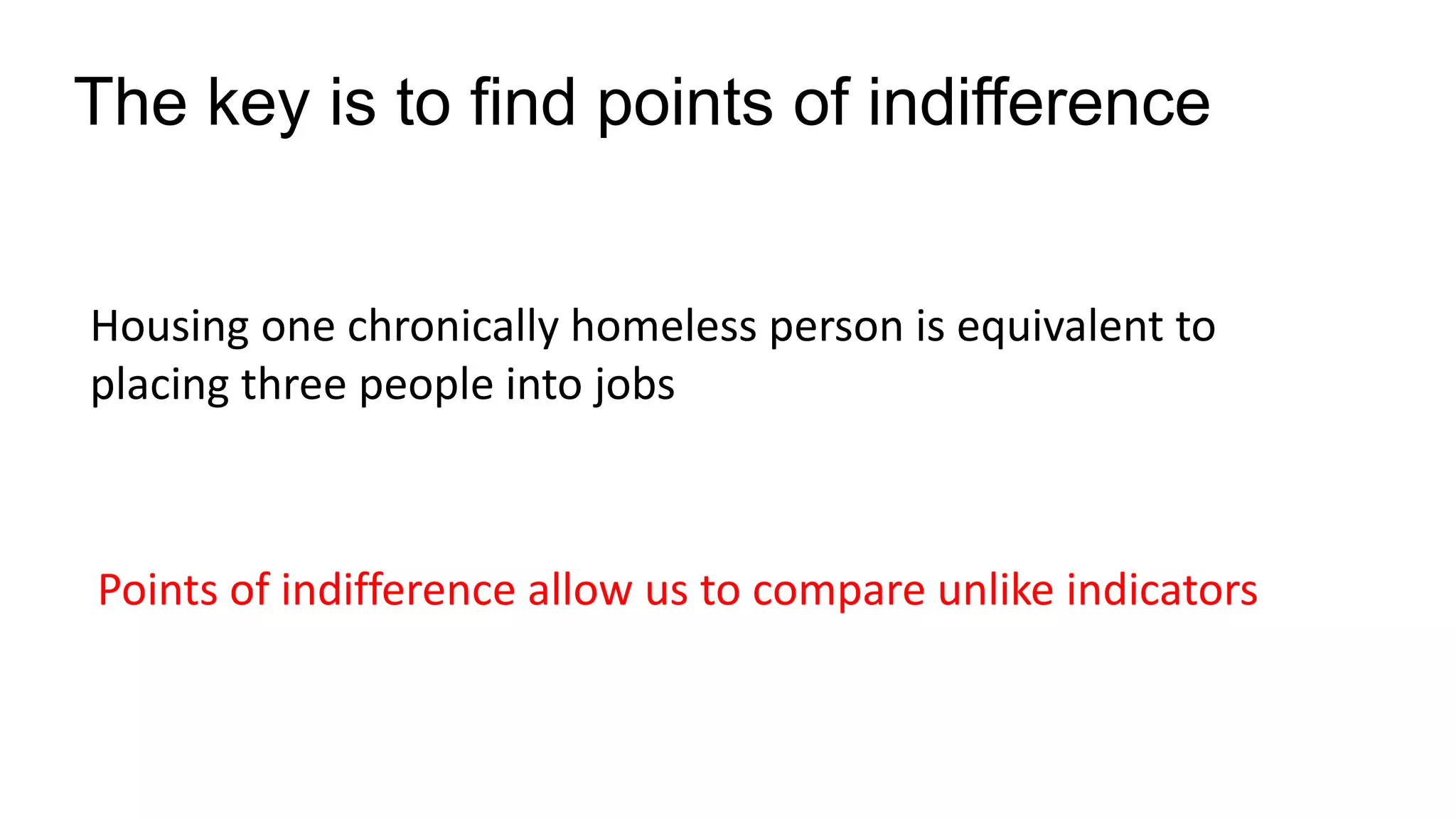
The key is to find points of indifference
Housing one chronically homeless person is equivalent to
placing three people into jobs
Points of indifference allow us to compare unlike indicators
Developing a utility framework enforces
consistent investment decisions
Makes investment priorities clear
Can be tested and refined through time
• Select (likely a series) of data points that approximate
what we really care about
• Build a model that assigns value to data points, and
update it through time
Before diving into data:
End

The importance of data

  • 1.
    What is the importanceof data? David Henderson
  • 2.
  • 3.
    “Data is onlyuseful if it informs decision making” - Every Carnegie Mellon University professor of public policy
  • 4.
    There are lotsof cool analytic techniques • Econometric modeling • Linear programming • Machine learning • Social network analysis • Etc.
  • 5.
    • Selecting datapoints • Assigning value to data I will focus on two data prerequisites
  • 6.
  • 7.
    Selecting data pointsis difficult in the social sector because a lot of data points are proxies Example We trackWe care about Graduation ratesEducation Job placementsEconomic independence
  • 8.
    Tracking the wrongdata points leads to the wrong decisions Example We trackWe care about Arrest ratesCrime reduction Public perceptionFeeling safe
  • 9.
    People felt saferin higher arrest areas
  • 10.
    Focusing on thewrong indicators can lead to negative (but rational!) decisions
  • 11.
    Funder wanted aworkforce development program to maximize job placements
  • 12.
  • 13.
    Before diving intodata, we need to be explicit about our own utility frameworks Likely overly simplistic
  • 14.
    A utility frameworkis how we value data points, including interactions therein
  • 15.
    The vulnerability indexis a good example of a utility framework in homeless services Prioritizes those most likely to die on the street
  • 16.
    Without establishing anorganizational utility framework, everyone makes decisions according to their own values Different utility functions + same data = Different decisions
  • 17.
    How do wemodel a utility framework?
  • 18.
    Utility elicitation iscommon in the business world Model a decision maker’s risk reward preferences through a series of hypothetical investment scenarios
  • 19.
    The key isto find points of indifference Housing one chronically homeless person is equivalent to placing three people into jobs Points of indifference allow us to compare unlike indicators
  • 20.
    Developing a utilityframework enforces consistent investment decisions Makes investment priorities clear Can be tested and refined through time
  • 21.
    • Select (likelya series) of data points that approximate what we really care about • Build a model that assigns value to data points, and update it through time Before diving into data:
  • 22.