
The Health Triangle
Dr. Yousef Elshrek
• What does it mean to have good health?
• Your “total health” refers to three kinds of health — physical
health, mental health, and social health.
• These three things are called the “Health Triangle” model.
• When people think of their health, it is easy to just think of just
their body.
• Someone might think their health is good just because they think
they are in good shape, or may not have any injuries right now.
• But your emotional and social health are just as important as
your body.
• That is why it is good to think of your health as a Health
Triangle.
• A triangle has three sides, and so does your health
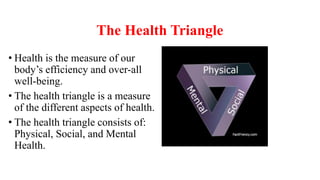
The Health Triangle
• Health is the measure of our
body’s efficiency and over-all
well-being.
• The health triangle is a measure
of the different aspects of health.
• The health triangle consists of:
Physical, Social, and Mental
Health.
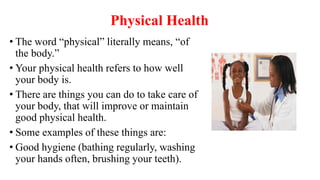
Physical Health
• The word “physical” literally means, “of
the body.”
• Your physical health refers to how well
your body is.
• There are things you can do to take care of
your body, that will improve or maintain
good physical health.
• Some examples of these things are:
• Good hygiene (bathing regularly, washing
your hands often, brushing your teeth).
• Exercising daily
• Getting enough rest daily
• Eating a diet of healthy foods
• Taking medications if a doctor prescribed them to
you
• Always being safe and following safety rules
• Seeing your doctor, dentist, or other kinds of
medical professionals for regular check-ups, and
to treat any injuries, cavities, or other kinds of
corrections your body may need
Physical Health
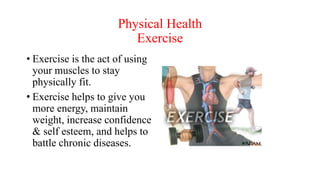
Exercise
• Exercise is the act of using
your muscles to stay
physically fit.
• Exercise helps to give you
more energy, maintain
weight, increase confidence
& self esteem, and helps to
battle chronic diseases.
Physical Health
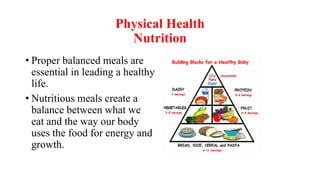
Nutrition
• Proper balanced meals are
essential in leading a healthy
life.
• Nutritious meals create a
balance between what we
eat and the way our body
uses the food for energy and
growth.
Physical Health
Sleep
• It is recommended that the
average person get at least
8 hours of sleep.
• The human body likes
regularity, so try to go to
bed and wake up at the
same time daily.
Physical Health
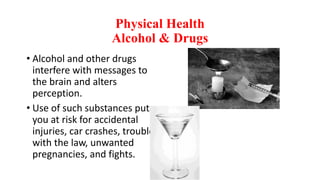
Alcohol & Drugs
• Alcohol and other drugs
interfere with messages to
the brain and alters
perception.
• Use of such substances puts
you at risk for accidental
injuries, car crashes, trouble
with the law, unwanted
pregnancies, and fights.
Physical Health
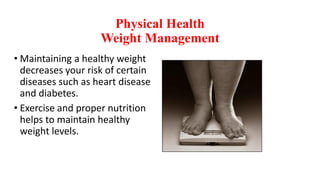
Weight Management
• Maintaining a healthy weight
decreases your risk of certain
diseases such as heart disease
and diabetes.
• Exercise and proper nutrition
helps to maintain healthy
weight levels.
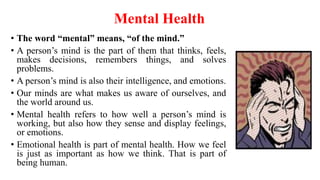
Mental Health
• The word “mental” means, “of the mind.”
• A person’s mind is the part of them that thinks, feels,
makes decisions, remembers things, and solves
problems.
• A person’s mind is also their intelligence, and emotions.
• Our minds are what makes us aware of ourselves, and
the world around us.
• Mental health refers to how well a person’s mind is
working, but also how they sense and display feelings,
or emotions.
• Emotional health is part of mental health. How we feel
is just as important as how we think. That is part of
being human.
• There are ways you can take care of and improve mental and
emotional health:
1. Studying, researching, and learning (like you are doing right
now!)
2. Reading
3. Listening to music
4. Talking about your feelings at appropriate times; telling others
how you feel about them
5. Going to see a mental health counselor when you need to, just
like you would see a dentist for a cavity
6. Getting the right amount of uninterrupted sleep every night
(which is also good for physical health — both your body and
mind need rest in order to repair and regenerate itself)
Mental Health
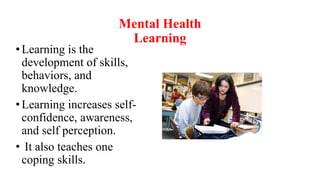
Learning
• Learning is the
development of skills,
behaviors, and
knowledge.
• Learning increases self-
confidence, awareness,
and self perception.
• It also teaches one
coping skills.
Mental Health
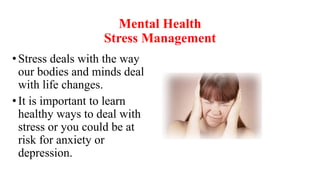
Stress Management
•Stress deals with the way
our bodies and minds deal
with life changes.
•It is important to learn
healthy ways to deal with
stress or you could be at
risk for anxiety or
depression.
Mental Health
Mental Disorders
• Stress and problems with
school, friends, and family
can cause mental illnesses.
•Mental illnesses include:
depression, bipolar disorder,
schizophrenia, and
phobias.
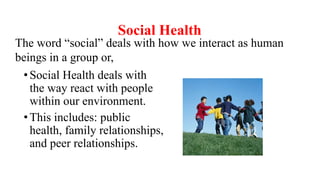
Social Health
•Social Health deals with
the way react with people
within our environment.
•This includes: public
health, family relationships,
and peer relationships.
The word “social” deals with how we interact as human
beings in a group or,
Social Health
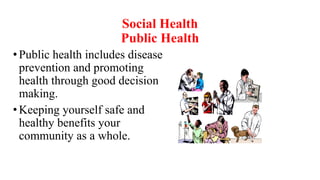
Public Health
• Public health includes disease
prevention and promoting
health through good decision
making.
• Keeping yourself safe and
healthy benefits your
community as a whole.
Social Health
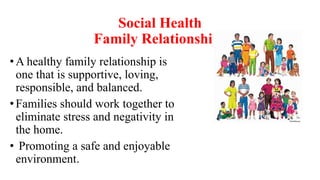
Family Relationships
•A healthy family relationship is
one that is supportive, loving,
responsible, and balanced.
•Families should work together to
eliminate stress and negativity in
the home.
• Promoting a safe and enjoyable
environment.
Social Health
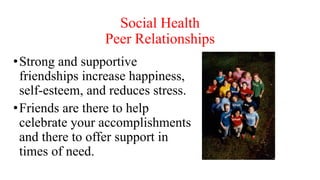
Peer Relationships
•Strong and supportive
friendships increase happiness,
self-esteem, and reduces stress.
•Friends are there to help
celebrate your accomplishments
and there to offer support in
times of need.
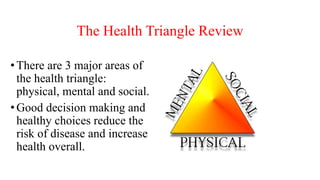
The Health Triangle Review
• There are 3 major areas of
the health triangle:
physical, mental and social.
•Good decision making and
healthy choices reduce the
risk of disease and increase
health overall.

The health triangle (4)

  • 1.
  • 2.
    • What doesit mean to have good health? • Your “total health” refers to three kinds of health — physical health, mental health, and social health. • These three things are called the “Health Triangle” model. • When people think of their health, it is easy to just think of just their body. • Someone might think their health is good just because they think they are in good shape, or may not have any injuries right now. • But your emotional and social health are just as important as your body. • That is why it is good to think of your health as a Health Triangle. • A triangle has three sides, and so does your health
  • 3.
    The Health Triangle •Health is the measure of our body’s efficiency and over-all well-being. • The health triangle is a measure of the different aspects of health. • The health triangle consists of: Physical, Social, and Mental Health.
  • 4.
    Physical Health • Theword “physical” literally means, “of the body.” • Your physical health refers to how well your body is. • There are things you can do to take care of your body, that will improve or maintain good physical health. • Some examples of these things are: • Good hygiene (bathing regularly, washing your hands often, brushing your teeth).
  • 5.
    • Exercising daily •Getting enough rest daily • Eating a diet of healthy foods • Taking medications if a doctor prescribed them to you • Always being safe and following safety rules • Seeing your doctor, dentist, or other kinds of medical professionals for regular check-ups, and to treat any injuries, cavities, or other kinds of corrections your body may need
  • 6.
    Physical Health Exercise • Exerciseis the act of using your muscles to stay physically fit. • Exercise helps to give you more energy, maintain weight, increase confidence & self esteem, and helps to battle chronic diseases.
  • 7.
    Physical Health Nutrition • Properbalanced meals are essential in leading a healthy life. • Nutritious meals create a balance between what we eat and the way our body uses the food for energy and growth.
  • 8.
    Physical Health Sleep • Itis recommended that the average person get at least 8 hours of sleep. • The human body likes regularity, so try to go to bed and wake up at the same time daily.
  • 9.
    Physical Health Alcohol &Drugs • Alcohol and other drugs interfere with messages to the brain and alters perception. • Use of such substances puts you at risk for accidental injuries, car crashes, trouble with the law, unwanted pregnancies, and fights.
  • 10.
    Physical Health Weight Management •Maintaining a healthy weight decreases your risk of certain diseases such as heart disease and diabetes. • Exercise and proper nutrition helps to maintain healthy weight levels.
  • 11.
    Mental Health • Theword “mental” means, “of the mind.” • A person’s mind is the part of them that thinks, feels, makes decisions, remembers things, and solves problems. • A person’s mind is also their intelligence, and emotions. • Our minds are what makes us aware of ourselves, and the world around us. • Mental health refers to how well a person’s mind is working, but also how they sense and display feelings, or emotions. • Emotional health is part of mental health. How we feel is just as important as how we think. That is part of being human.
  • 12.
    • There areways you can take care of and improve mental and emotional health: 1. Studying, researching, and learning (like you are doing right now!) 2. Reading 3. Listening to music 4. Talking about your feelings at appropriate times; telling others how you feel about them 5. Going to see a mental health counselor when you need to, just like you would see a dentist for a cavity 6. Getting the right amount of uninterrupted sleep every night (which is also good for physical health — both your body and mind need rest in order to repair and regenerate itself)
  • 13.
    Mental Health Learning • Learningis the development of skills, behaviors, and knowledge. • Learning increases self- confidence, awareness, and self perception. • It also teaches one coping skills.
  • 14.
    Mental Health Stress Management •Stressdeals with the way our bodies and minds deal with life changes. •It is important to learn healthy ways to deal with stress or you could be at risk for anxiety or depression.
  • 15.
    Mental Health Mental Disorders •Stress and problems with school, friends, and family can cause mental illnesses. •Mental illnesses include: depression, bipolar disorder, schizophrenia, and phobias.
  • 16.
    Social Health •Social Healthdeals with the way react with people within our environment. •This includes: public health, family relationships, and peer relationships. The word “social” deals with how we interact as human beings in a group or,
  • 17.
    Social Health Public Health •Public health includes disease prevention and promoting health through good decision making. • Keeping yourself safe and healthy benefits your community as a whole.
  • 18.
    Social Health Family Relationships •Ahealthy family relationship is one that is supportive, loving, responsible, and balanced. •Families should work together to eliminate stress and negativity in the home. • Promoting a safe and enjoyable environment.
  • 19.
    Social Health Peer Relationships •Strongand supportive friendships increase happiness, self-esteem, and reduces stress. •Friends are there to help celebrate your accomplishments and there to offer support in times of need.
  • 20.
    The Health TriangleReview • There are 3 major areas of the health triangle: physical, mental and social. •Good decision making and healthy choices reduce the risk of disease and increase health overall.