Green +
There has never been a greater need for the people planning
and running our cities, as well as the residents who pay for
it, to understand the critical significance of green space in our
urban environment.

Working with green is a way to respond to the true needs of
                                                                              The Green City Guidelines
people when designing buildings, the public realm, transport
and communications infrastructure. This is a goal to which
                                                                              Techniques for a healthy liveable city
every professional can apply themselves. These guidelines
are a starting point so interested parties can come together                  Michelle de Roo | landscape and urban designer
internationally and discuss techniques for urban development.


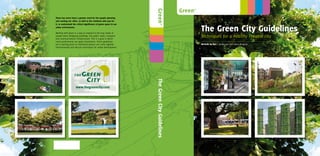
                     www.thegreencity.com
Green +                                      Foreword

                                             Welcome to this volume of
                                                     The Green City Guidelines – the first of its kind!

                                             There has never been a greater need for the people planning         A group of leading researchers and practitioners have
                                             and running our cities, as well as the residents themselves,        contributed to this volume and it is to be used as a
                                             to understand the critical significance of green space in our       stimulus for the global adoption of the Green City Philosophy.
                                             urban environment.                                                  This book is the beginning of a process that could see green
                                                                                                                 infrastructure responses fully incorporated into policy and
                                             Working with green is a way to respond to the true needs of         practice – in effect become a ‘universal green city standard’.
                                             people when designing buildings, the public realm, transport        The authors and contributors hope that you will be part of
                                             and communications infrastructure. This is a goal to which every    that process.
                                             professional can apply themselves. These guidelines are a start-
                                             ing point so interested parties can come together internationally   The ‘guidelines’ project has been made possible with
                                             and discuss techniques for urban development.                       funding from the Dutch Ministry of Economic Affairs,
                                                                                                                 Agriculture and Innovation (EL&I) and with the active
                                             What this set of guidelines shows is that the knowledge is          support and co-operation of the Dutch nursery stock industry,
                                             already there. The theory, substantiated by empirical scientific    Plant Publicity Holland (PPH), the International Association of
                                             research, proves that green infrastructure is a key element         Horticultural Producers (AIPH) and Niek Roozen bv landscape
                                             in constructing living spaces that work.                            architects.
                                             This is powerful information at a time when budgets are
                                             being cut and every cost scrutinised. This set of guidelines and             signed by
                                             techniques will demonstrate to practitioners that investment
                                             and maintenance in green infrastructure is not a cost but brings
                                             value from a social, economic and environmental point of view –
                                             in summary the ‘Green City Philosophy’.                                 Marcel Vernooij (EL&I)          Doeke Faber (AIPH)


The Hague, NL | Fotobureau Hendriksen/Valk                                                                           Jaap Spros (PPH)                 Niek Roozen
Green +                                                                 Table of contents

                                                                            Introduction                                 4    3 Green streets                           57
                                                                                                                              18 Green plazas                           58
                                                                            Guidelines                                   8    19 Air circulation & ventilation          60
                                                                                                                              20 Street layout                          62
                                                                             1 Green cities                              9    21 Right tree, right place                64
                                                                              1 The planning process                    10    22 Use existing trees                     66
                                                                             2   Invest together                        12    23 Big healthy trees                      68
                                                                             3   Filtering for fresh air                14    24 Growing conditions                     70
                                                                             4   Green network                          18    25 Quality maintenance                    72
                                                                             5   Within walking distance                20    Case study: London 2012 Olympics          74
                                                                             6   The art of nature                      22
                                                                             Case study: Shenyang Hunnan District       24    4 Green buildings                         77
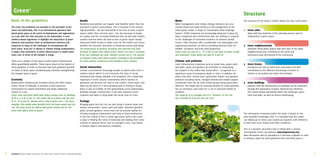
    Housing development with newly planted trees | Photo PPH
                                                                                                                              26 Green oriented to buildings            78
                                                                             2 Green neighbourhoods                     27    27 Buildings blend into landscape         80
                                                                             7   Microclimate parks                     28    28 Green roofs                            82
                                                                             8   Resident participation                 32    29 Green walls                            84
                                                                             9   Recreation                             34    30 Green indoors                          86
                                                                             10 Playgrounds and schoolyards             36    Case study: Vancouver Convention Centre   88
                                                                             11 Views of green                          38
                                                                             12 Private green                           40   Conclusion                                 91
                                                                             13 Semi-private green                      42
                                                                             14 Green business parks                    44   Literature List                            93
                                                                             15 Urban farming                           46   Expert Team Participants                   96
                                                                             16 Water runoff                            48   Photo Credits                              97
                                                                             17 Biodiversity                            52
                                                                             Case study: The High Line, New York City   54   Colophon                                   99
    Housing development with mature trees | Photo collage: Niek Roozen bv


2                                                                                                                                                                            3
Green +                                                                                             Introduction
                                                                                                           The ‘Green City Guidelines’ project is an internationally                                                                                                                                                               Objectives of this book
                                                                                                           targeted initiative that aims to provide practitioners and                                                                                                                                                              This book is written to provide a wide range of professionals with
                                                                                                           decision-makers with the essential information they need                                                                                                                                                                the stimulus to ask ‘how green is my city?’ It provides tools in
                                                                                                           to understand and communicate the benefits of urban                                                                                                                                                                     the form of practical pointers that show how the contribution of
                                                                                                           green space or more accurately green infrastructure.                                                                                                                                                                    green infrastructure can be enhanced for the benefit of all. This
                                                                                                           The purpose of this project is to bring this information                                                                                                                                                                applies both now and for future generations. It is written in the
                                                                                                           more into the mainstream in a form that is immediately                                                                                                                                                                  knowledge that the term ‘green city’ has a range of meanings
                                                                                                           accessible, yet at the same time supported by the                                                                                                                                                                       but deliberately focuses on the physical, living green, plants
                                                                                                           evidence-based substance that practitioners globally need                                                                                                                                                               as well as green spaces. The plant features are the elements
                                                                                                           to implement successful green infrastructure responses.                                                                                                                                                                 that underpin the rest of the settlement and can deliver those
                                                                                                                                                                                                                                                                                                                                   essential ‘ecosystem services’ that are our life-support systems.
                                                                                                           The Green City movement has in its heart the belief that
                                                                                                           the green element is critical to the long-term functioning                                                                                                                                                              “Ecosystem Services” is a term to describe any beneficial
                                                                                                           of healthy, successful, liveable urban spaces. Statisticians                                                                                                                                                            function provided by green space that would otherwise require
                                                                                                           from the United Nations estimated that 50% of the world’s                                                                                                                                                               a technical response (flood defence, air quality, countering the
                                                                                                           population would live in urban areas by 2008, with 70%                                                                                                                                                                  urban heat island) or that offers a cultural or other benefit (e.g.
                                                                                                           by approximately 2047. For this reason, it is essential that                                                                                                                                                            biodiversity or aesthetic/heritage benefits). Valuation of ecosystem
                                                                                                           the true value of urban green space is globally understood                                                                                                                                                              services is emerging as an important concept for securing
    De Tussentuin, Rotterdam, NL | Photo: Wolbert van Dijk                                                 and that decision-makers have the tools to guarantee                                                                                                                                                                    investment in green space.
                                                                                                           its position.
                                                                                                                                                                                                                                                                                                                                   In itself, this book does not seek to provide all the answers.
                                                                                                                                                                                                                                                                                                                                   However it offers case studies, references and guidance relating
                                                                                                                                                                                                                                                                                                                                   to those subject areas where green infrastructure plays a part
                                                                                                                                                                                                                                                                                                                                   in the successful functioning of the human urban environment.
                                                                                                           Amount of green per resident in selected cities                                                                                                                                                                         The reader can follow up on these as required depending on
                                                                                                                                                                                                                                                                                                                                   site-specific needs.
                                                                                                                                                                                                                                                                                                                                                                                                          “...the relationship between the amount of green space in the
                                                                                                                                                                                                                                                                                                                                   Rationale                                                              living environment and health should not be underestimated.
                                                                                                                                                                                                                                                                                                                                   Green infrastructure offers solutions to a wide range of the           Most of the diseases that were found to be related to the
                                                                                                              m2 green space


                                                                                                                                                                                                                                                                                                                                   challenges faced by contemporary society. By applying green            amount of green space in the living environment are highly
                                                                                                                                                                                                                                                                                                                                   space solutions with reference to scientifically and economically      prevalent in society and are subject of large-scale prevention
                                                                                                                                                                                                                                                                                                                                   proven models, outcomes can be predicted. This is an essential         programmes in many countries. Furthermore, diseases of the
                                                                                                                                                                                                                                                                                                                                   stage in the acceptance of green infrastructure as a mature and        circulatory system, mental disorders and diseases of the


                                                                                                                                                                                                                                                                                                         Seattle
                                                                                                                                                                                                                                                                                                                   New York City
                                                                                                                               Århus

                                                                                                                                       Ancona
                                                                                                                                                Hannover

                                                                                                                                                           Munich
                                                                                                                                                                    G30

                                                                                                                                                                          Luxembourg
                                                                                                                                                                                       Bologna

                                                                                                                                                                                                 Jacksonville
                                                                                                                                                                                                                London

                                                                                                                                                                                                                         Brussels

                                                                                                                                                                                                                                    Kansas City

                                                                                                                                                                                                                                                  Rome

                                                                                                                                                                                                                                                         Amsterdam

                                                                                                                                                                                                                                                                     Milan
                                                                                                                                                                                                                                                                             Memphis

                                                                                                                                                                                                                                                                                       Washington D.C.
                                                                                                                                                                                                                                                                                                                                   credible tool that can be utilised as a problem-solver in diverse      digestive system, for which we found a relationship with the
                                                                                                                                                                                                                                                                                                                                   situations all over the world. The case studies in this book serve     amount of green space, are among the most expensive
                                                                                                                                                                                                                                                                                                                                   to demonstrate the potential of a range of responses and               diseases in terms of health care costs in many countries
                                                                                                                                              World cities and G30 (30 selected cities in The Netherlands)                                                                                                                         approaches. By bringing them together in one place, they are           (Heijink et. al., 2006). Thirdly, the results indicate that people
                                                                                                                                       [red line indicates the recommended 35 m2 of green space per resident]
                                                                                                                                                                                                                                                                                                                                   convenient and accessible. They can be used by practitioners           who live in a greener living environment generally feel safer...”
    London, UK | Photo: Trees for Cities                                                                                                                                                                                                                                                                                           to stimulate thought and to win arguments. They will have              Jolanda Maas in Vitamine G
                                                                                                           Source: Groene Meters: Peter Visschedijk en Veroniek Bezemer (Alterra – Wageningen UR)                                                                                                                                  greater impact because they have been collated.


4   Introduction written by Mark Long (Director, UK Green Forum) | Sources: Groene Meters II; Vitamine G                                                                                                                                                                                                                                                                                                                                                                       5
Green +                                                                                                                                                                                                                                   Structure
    Basis of the guidelines                                                                          Health                                                                   Water                                                              The structure of the book is broken down into four scale levels:
                                                                                                     Residents and workers are happier and healthier when they live           Water management and climate change resilience are very
    The Green City Guidelines are founded on the principles of the                                   and work in green surroundings. This is because of the psycho-           closely linked and relate directly to the management of the
    Green City philosophy. This is an international approach that                                    logical benefits – we are hard-wired to be more at ease in green         urban green estate. A range of ‘Sustainable Urban Drainage         1 Green cities
    places green space at the centre of development and regeneration,                                spaces rather than concrete ones – but also because of shade,            System’ (SUDS) responses are increasingly being put in place by       deals with key elements of the planning process and its
    on a par with red, blue and grey on the masterplan. It uses                                      air quality and the increased likelihood that we will take healthy       water companies and communities who are seeking to respond            relationship to green space.
    evidence-based arguments to highlight the importance of green                                    outdoor exercise when we have access to green space nearby.              to the challenges of increased incidence of extreme rainfall
    elements and positions them as fundamental solutions and                                         Improved health results in lower costs for the health-care sector,       events. SUDS solutions offer considerable cost advantages over
    responses to many of the challenges of contemporary life –                                       benefits the economy and leads to enhanced human well-being.             engineering solutions, as well as providing amenity areas for      2 Green neighbourhoods
    from stress, burn-out or obesity to climate-change preparedness.                                 The productivity of workers increases and reported sick days             wildlife, recreation and even food production.                        examines those green spaces that form part of the wider
    It argues that investment in green infrastructure is repaid many                                 decrease in offices with indoor green, which can save a company          Green roofs can save K 10 – K 19 per m2 per year on water runoff      neighbourhood and contribute to the social and
    times over in terms of the benefits it brings.                                                   K 837 per employee per year. Patients recover up to 10% quicker          and treatment. Green parks can save K 19 per m2.                      catchment-scale functioning of the community.
                                                                                                     in hospital rooms with views of green, resulting in the possiblility
    There are a number of key areas in which green infrastructure                                    for more patient turnaround and therefore more revenue.                  Climate and pollution
    offers quantifiable benefits. These topics return at the bottom of                                                                                                        Green infrastructure responses such as street trees, green roofs   3 Green Streets
    every guideline in order to illustrate how each guideline benefits                               Social interaction                                                       and walls, parks and gardens all contribute to moderating             introduces the role of street trees and plants and their
    so many of these topics simultaneously, therefore strengthening                                  Greener environments encourage people to spend more time in              the impacts of the urban heat island effect – recognised as a         contribution to the effective functioning of streets in
    the integral value of green.                                                                     outdoor spaces which in turn increases the rates of social               significant cause of premature death in cities. In addition all       relation to air quality and urban microclimate.
                                                                                                     interaction and mixing. Valuable in all situations, this is especially   plants and trees remove dust (particulate matter) and gaseous
    Economy                                                                                          important in multi-cultural communities where barriers of                pollution including ozone, nitrogen dioxide and volatile organic
    Quality green infrastructure increases house and office values                                   ignorance and distrust can lead to real conflict. Green space and        compounds from the air, with certain groups being particularly     4 Green Buildings
    (either rental or freehold). It provides a more attractive                                       what can be done in it (from growing food to fishing to flying           effective. The shade and air-cleaning benefits of urban greenery      explores how the performance of buildings can be enhanced
    environment for inward investment and draws additional                                           kites) is also an enabler of inter-generational social relationships.    has an enormous cash-value for a city in improved health of           through the application of green infrastructure elements.
    visitors to a city.                                                                              Building stronger communities in this way improves social                residents.                                                            This could include positioning within the landscape, green
    Green roofs and green walls help reduce energy costs in buildings                                cohesion and helps to bring down the social costs of crime.              The capacity of an average tree in a “hotspot” in the city            roofs and walls, as well as interior landscaping.
    by K 0.71 to K 19 per m2. The longer life of a green roof can save                                                                                                        has a benefit of K 40 per year per tree.
    K 18 – K 43 per m2. Houses with a view of green are 1–15% more                                   Ecology
    valuable. This added value benefits both the home owner and the                                  Bringing green into the city can also bring in diverse plant and
    city. The lease prices for offices with green nearby can be 10%                                  animal communities. Green roofs and walls, allotment gardens,
    more than offices with no green.                                                                 parks, private gardens, street trees can all provide habitat for
                                                                                                     thriving ecological communities and help to boost biodiversity                                                                              The information contained within this book is based on the
                                                                                                     in the city. Linked to this is urban agriculture which has a part                                                                           best available knowledge now. It is intended that the reader
                                                                                                     to play in feeding the cities of tomorrow and making them more                                                                              can follow-up on these case studies as required, with reference
                                                                                                     resilient to external forces such as transport costs, crop failure                                                                          to their own local climate and other conditions.
                                                                                                     in distant regions and political instability.
                                                                                                                                                                                                                                                 This is a dynamic document that is linked with a central,
                                                                                                                                                                                                                                                 international Green City website: www.thegreencity.com
                                                                                                                                                                                                                                                 New information will be uploaded as it becomes available in order
                                                                                                                                                                                                                                                 to enhance what has been gathered here and build upon it.


6   Introduction written by Mark Long (Director, UK Green Forum) economic benefits: Greenspots Reloaded                                                                                                                                                                                                              7
1
    Explanation of the symbols

                                                                                              Green + cities
                Urban green (in the form of parks, gardens, trees, rooftops and
                walls) plays an important role in the liveability, attractiveness
                and sustainability of a city, neighbourhood, street or building.
                The benefits of each guideline are sometimes limited to two
                or three topics, but often span the entire spectrum of topics
                including economy, health, social interactions, ecology, water,
                climate and pollution.

                Green cities, neighbourhoods, streets and buildings:
                                                                                                   1 The planning process
                increase the value of real estate, reduce energy costs, reduce
                water runoff costs                                                                 2 Invest together
                                                                                                   3 Filtering for fresh air
                provide opportunities for relaxation and recreation, improve
                mental and physical health and the well-being of people                            4 Green network
                                                                                                   5 Within walking distance
                increase social cohesion resulting in stronger communities with
                less criminality and anti-social behaviour                                         6 The art of nature
                                                                                                      Case study: Shenyang Hunnan District
                increase habitats for ecological communities, biodiversity and
                opportunities for urban residents to experience nature


                decrease the amount of impervious surfaces and provide water
                retention possibilities on site, thus reducing peak runoff problems


                filter pollutants and dust from the air and regulate temperature
                extremes

                These topics return at the bottom of every guideline in order to illustrate
                how each guideline benefits so many of these topics simultaneously,
                therefore strengthening the integral value of green. Each one of these
                functions contains an ecosystem service element.


8                                                                                                                                                9
Green + cities                                                                                    1 The planning process
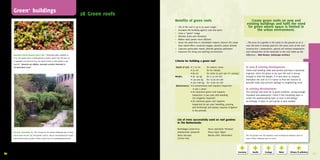
                                                                                                          “Grey” plans based on green                                                                     Benefits of planning & green
                                                                                                          Infrastructure projects should incorporate green early on in the                                                                                          ...Why Invest in Landscape? is a new campaign from the
                                                                                                          design of new roads, transit facilities and other projects by                                   • Image                                                   Landscape Institute, which shows how towns and cities
                                                                                                          assuring ample space (both above ground and underground)                                          creates a green and healthy image for the city          around the UK are seeing a good return on their investment
                                                                                                          and budget for trees and other green. Higher density develop-                                   • Value of real estate                                    in public space. From the small scale of a single town square
                                                                                                          ment which brings people closer to mass transit and takes                                         increases in the vicinity of green                      up to plans for whole new settlements, the returns on
                                                                                                          people out of their cars also increases the “greenness” of an                                   • Air quality                                             investment are clear. When landscape is placed at the
                                                                                                          area. The pedestrian experience is therefore very important                                       filters pollutants and dust from the air                heart of the development process, communities and local
                                                                                                          and can be improved by aesthetic and functional green.                                          • Health                                                  businesses reap the economic benefits...
                                                                                                                                                                                                            provides opportunities for relaxation, social contact   www.landscapeinstitute.org/invest/index.php
                                                                                                          “Red” plans based on green                                                                        and recreation, and increases health and well-being
                                                                                                          New development of residential and business areas should                                        • Aesthetics
                                                                                                          incorporate urban forests into the design and use green as                                        beautifies streets and neighbourhoods
                                                                                                          a building block. An urban forest is a collection of trees in                                   • Climate
                                                                                                          the urban environment and can vary anywhere from a forest,                                        reduces the greenhouse effect by absorbing CO2          In new & existing development:
                                                                                                          ecological corridor, park or recreational green space to a green                                • Microclimate                                            Inform decision makers of the benefits of green in urban
                                                                                                          roof garden, street, plaza or front garden. A liveable neighbour-                                 regulates temperature extremes through shade and        areas so it becomes just as standard an element in projects
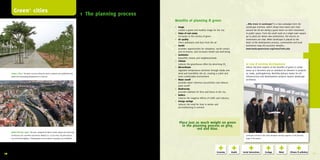
     Suzhou, China | The green structure along the street is planted and established long                 hood in a compact city contains 15-20% green in the direct                                        wind and humidifies the air, creating a cooler and      as roads, parkingdensity. Multidisciplinary teams for all
     before the surrounding development it is built for.                                                  living environment.                                                                               more comfortable environment                            infrastructure and development projects require landscape
                                                                                                                                                                                                          • Water runoff                                            architects.
                                                                                                          “Blue” plans based on green                                                                       provides water retention possibilities and reduces
                                                                                                          The water structure should be designed within a team of engineers                                 peak runoff
                                                                                                          plus urban designers, landscape architects and ecologists so                                    • Biodiversity
                                                                                                          green is incorporated into the design.                                                            provides habitats for flora and fauna in the city
                                                                                                                                                                                                          • Buffers
                                                                                                          Consider the multifunctionality of green                                                          reduces the negative effects of traffic and industry
                                                                                                          Use green not only for aesthetics but also for its ability to raise                             • Energy savings
                                                                                                          the value of houses, improve the health of residents and workers,                                 reduces the need for heat in winter and
                                                                                                          encourage social interactions, regulate temperatures, retain                                      airconditioning in summer
                                                                                                          water, increase biodiversity, reduce energy needs in buildings
                                                                                                          and remove air pollutants.

                                                                                                          Convince decision makers to demand green
                                                                                                          A long term cost-benefit analysis should be undertaken to help                                      Place just as much weight on green
                                                                                                          convince decision-makers that green elements are essential in                                         in the planning process as grey,
                                                                                                          all urban projects. The development of green spaces should                                                      red and blue.
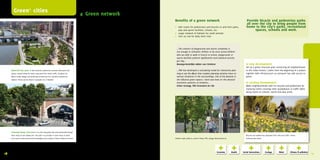
     Madrid RIO Park, Spain | The park, designed by West 8 urban design and landscape                     also play a central role in policies related to health, nature
     architecture B.V. and Mrio arquitectos, Madrid is a 150 ha inner city park built on                  conservation and spatial planning.                                                                                                                        Landscape architects and urban designers working together at the planning
     top of the M30 highway. | Photographer: Jeroen Musch (copyright city of Madrid)                                                                                                                                                                                stage of the project.


     Experts: Eva Stache (Stache architects), Fred Tonneijck (Triple E & Knooppunt Innovatief Groen), Mark Hinshaw (LMN Architects), Vincent Kuypers and Barry de Vries (Alterra – Wageningen UR);
     Arda van Helsdingen (Copijn Tuin- en Landschapsarchitecten) | Sources: Groen Loont!; Alle extra groen helpt de luchtkwaliteit verbeteren; Recht op Groen; Vegetation in relation to air quality in
10   Shanghai; Leidraad Luchtzuiverend Groen; Vitamine G; www.landscapeinstitute.org; www.west8.nl                                                                                                                                                                                                                                              11
Green + cities                                                                                 2 Invest together
                                                                                                       Communicate the benefits to various parties                                                 Partners who have an interest / experience /           Combine the needs of various
                                                                                                       Parties such as the health sector, businesses, engineers, designers,                        or can benefit from quality green:                    parties in order to optimize the
                                                                                                       the building sector, developers, cities / local governments and                                                                                    funding sources for a project
                                                                                                       of course the residents themselves can all gain from green in                                   Policy makers                                            with (more) green
                                                                                                       the city. Emphasize the long term benefits.
                                                                                                                                                                                                   •    Local governments
                                                                                                       The cost of green is an investment                                                          •    Regional governments
                                                                                                       Costs for green should be seen as an investment just like                                   •    Water authorities
                                                                                                       any other building investment. Approach a green project as a                                •    Waste management                          “Investing in green cities is investing in a healthy
                                                                                                       business case and ask the question: what is the joint ambition                              •    Social affairs                            population and a healthy economy, with high financial
                                                                                                       and how can it be achieved together? Only then will green have                              •    Infrastructure                            and social returns.”
                                                                                                       added value. And the costs will be seen as an investment that                               •    Transportation                            Henk Bleker, Minister of Foreign Trade and Agriculture
                                                                                                       earns itself back.                                                                          •    Urban planners
                                                                                                                                                                                                   •    Engineers and designers
                                                                                                       Businesses benefit from quality public projects
                                                                                                       Businesses tend to look at the public sector that is responsible for                            Investors
                                                                                                       the surroundings we live in. By co-investing in public projects
                                                                                                       they can help improve their business location as well as make                               •    Local and regional governments
        Bioscience Park, Leiden, NL | Companies pay yearly dues to a collective fund                   the city more liveable for their employees and new talent.                                  •    Businesses                                In new & existing development:
        which pays for joint improvements of the business park, including the artwork.                                                                                                             •    Private sector                            Create a high quality catalyst green project with a
        The green business park behind the central train station attracts bioscience-                  Real estate near green is more valuable                                                     •    Building sector                           multidisciplinary team and market it to the various parties
        related businesses from all over the world.                                                    Developers should be aware that houses with quality green in the                            •    Healthcare sector                         in order to create enthusiasm and encourage future team
                                                                                                       neighbourhood are worth 4-12% more than houses of the same                                  •    Wellness sector                           investments.
                                                                                                       type in non-green neighbourhoods and therefore calculate green                              •    Tourism sector
     Benefits of investing together                                                                    into the total budget. The range depends on whether the property                            •    Education sector
                                                                                                       is adjacent to green, has a view of green or is near green.                                 •    NGO’s
     • More sources of funding for projects is available
     • A broad spread of ownership increases the                                                       Regulation incentives encourage good development                                                Users
       willingness to invest                                                                           Invite businesses who are looking to invest in green (People-
     • Various parties become responsible for the liveability                                          Planet-Profit) to locate their business in the city and invest                              •    Local governments
       of their own city                                                                               locally. Give incentives such as a shorter permit process to                                •    Regional governments
     • Improve the image of a company and/or city                                                      projects that incorporate green (a technique used sucessfully                               •    Water authorities
                                                                                                       in Chicago). Most new buildings in the US now seek certification                            •    Waste management
     “By using sophisticated modelling systems, cash values can be                                     under the LEED program. Developers and agencies even use it                                 •    Social affairs
     applied to ecosystem services such as moderating temperature                                      in their real estate marketing efforts.                                                     •    Infrastructure                            Philadelphia, USA | According to a study carried out by the Trust for Public
     fluctuations, improving air quality and buffering intense rainfall                                                                                                                            •    Transportation                            Land, green space saves the city annually a total of $1,155,722.00. The total
     events. By using this approach trough computer models such as                                                                                                                                 •    Urban planners                            increase in wealth for the city arising from green infrastructure is $729,112.00.
     STRATUM (US Forest Service) New York City is able to show that                                                                                                                                •    Engineers and designers                   The residents also benefit as a result of higher property values and an
     every $1 invested in planting generates more than $ in direct                                                                                                                                                                                enhanced sense of well being.
     benefits. Who said money doesn’t grow on trees?


     Experts: Sjerp de Vries (Alterra – Wageningen UR), Eva Stache (Stache architects), Bastiaan de Roo (Chamber of Commerce The Hague); | Sources: Integrale beplantingsmethode levert geslaagd
     Prins Bernhardbos op; Groen Loont!; Beweegvriendelijke wijken voor kinderen; Rotterdam gezond groen, gewoon doen; The Green City Post 2011; How much value does the city of Philadelphia
12   receive from its park and recreation system?; Who said money doesn’t grow on trees?; www.impala-eu.org                                                                                                                                                                                                                           13
Green + cities                                                                                   3 Filtering for fresh air
                                                                                                         Improve regional air quality with large scale green                                              Some trees are better at cleaning the air                                       the large surface area of needles and the fact that the trees
                                                                                                         spaces                                                                                           Gaseous air pollution such as nitrous oxide (NOX) and particulate               keep their needles all year round.
                                                                                                         The filtering effect of large scale green is the best way to improve                             matter (PM10) can be removed from the air by leaves.
                                                                                                         air quality at the regional level. Forests are especially suitable                                                                                                               Ozone (O3) concentrations are reduced in the presence of trees
                                                                                                         for reducing background concentrations before the pollution even                                 Nitrous oxides (NOX), sulfur dioxide (SO2) and ozone (O3) are                   because they not only absorb ozone themselves to varying
                                                                                                         reaches the city. By providing as much leaf volume as possible in                                absorbed by the stomata of leaves. Deciduous trees with a large                 degrees, but they also absorb NO2 , keeping humidity higher and
                                                                                                         an area as big as possible, the general air quality can increase.                                leaf volume are most effective. Organic compounds such as                       temperatures lower so ozone does not have a chance to form.
                                                                                                         This way the air that reaches the urban area has more capacity                                   polychlorinated biphenyl (PCB’s), dioxins and furans are taken
                                                                                                         to filter pollution from traffic and other local sources at neigh-                               up by the cuticles of leaves (even at night).                                   Do not use any tree species that are sensitive to air
                                                                                                         bourhood and street level. The capturing of particulate matter                                                                                                                   pollution (NOX) and limit the use of trees which emit
                                                                                                         only actually occurs at the edges and tops of a forest, but because                              Particulate matter (PM10) is captured on the surface of leaves,                 biogenic volatile organic compounds (VOC).
                                                                                                         they usually cover a large surface area, they are very effective.                                called impaction, and travels to the ground through wind,
                                                                                                                                                                                                          rainwater or fallen leaves. After the particulates hit the ground,              Plant a variety of trees and plants
                                                                                                         Plant big trees with more leaf area                                                              they are either washed away with runoff or fixed in the soil by                 Include a mix of evergreen and deciduous tree species
                                                                                                         Bigger trees and more leaf area are more effective at cleaning                                   organic decomposition. Conifers are most effective because of                   in the design with different characteristics so the air is
                                                                                                         the air. An average tree in the city (with a trunk diameter of                                                                                                                   filtered of more than one type of air pollution. Include
                                                                                                         +/- 30 cm) is able to capture about 100g particulate matter                                                                                                                      green at different heights / levels to catch more pollutants
                                                                                                         (PM10) while a mature tree captures as much as 1.4kg in The                                                                                                                      that would otherwise blow under the canopy of the trees.
                                                                                                         Netherlands [Tonneijck, 2008]. 100g PM10 equals the particulate
        Chicago, USA | Study by DJ Nowak (1994): Trees were able to remove 1%                            matter emission from a private car that travels 1,500 km. 1.4kg                                                                                                                  Green roofs and green walls also filter the air
        of the pollutants from the air within the city:                                                  PM10 equals 20,000 km. The porosity of the canopy should be                                                                                                                      Green on roof gardens and green walls are also very
        0.3 kg / ha / year of CO2              1.4 kg / ha / year of SO2                                 above 50% so the leaves inside the canopy can also help.                                                                                                                         effective at removing pollutants from the air. Green walls
        1.5 kg / ha / year of NOX              3.5 kg / ha / year of PM10                                Combine trees with broad canopies and undergrowth of                                                                                                                             planted with vines have a very dense leaf area per square
        3.1 kg / ha / year of O3                                                                         herbaceous plants and shrubs to have effective leaves at                                                                                                                         metre and thus are good in removing PM10. A wall with
                                                                                                         all levels. Green roofs and green walls also contribute to                                                                                                                       Parthenocissus tricuspidata can catch 4g of PM10 per m2
                                                                                                         air filtering.                                                                                                                                                                   of wall and Hedera helix can catch 6g.


     Table of air pollution types and leaf effectiveness:
                                                                                                                                                                                                                                                                                                                             Continued on the next page -->
                                               SO2 NOX O3                                                PM10                                                 VOC

        Method                                 absorption                                                impaction                                            adsorption
        Best tree type                         broad leafed evergreen trees                              conifer trees (evergreen)                            conifer trees
        Leaf characteristics                   flat, wide, glossy leaves                                 cone-shaped needles                                  needles with a fatty toplayer
                                                                                                                                                              (cuticle)

        Other good tree type                   deciduous trees                                           deciduous trees                                                                                    Hedera helix vines can catch 6g of PM10 per square meter wall area. Because
        Leaf characteristics                   flat, wide, glossy leaves                                 course, hairy, sticky leaves                                                                       they are evergreen, they are effective all year long.


     Experts: Ceciel van Iperen (CROW), Fred Tonneijck (Triple E & Knooppunt Innovatief Groen), Pauline de Koning and Peter Schildwacht (BELW Advies bv), Arda van Helsdingen (Copijn Tuin-
     en Landschapsarchitecten), Jelle Hiemstra (Applied Plant Research WUR); ES Consulting | Sources: Groen Loont!; Alle extra groen helpt de luchtkwaliteit verbeteren; Meetproef Groen; Vegetation in
14   relation to air quality in Shanghai; Stadsbomen voor een goede luchtkwaliteit; Bomen, een verademing voor de stad; Leidraad Luchtzuiverend Groen                                                                                                                                                                                                         15
Green + cities
                                                                                                                                                                                                        Benefits of green infrastructure for air filtering                 Use trees and plants to reduce
                                                                                                             Trees, shrubs and vines* that are effective                                                                                                                  background concentrations of air
                                                                                                             in capturing PM10                                                                          • Less health complaints and premature                          pollution. All plants contribute to the
                                                                                                             Picea abies                                        Hedera                                    deaths due to short-term exposure to air                           improvement of air quality.
                                                                                                             Pinus mugo                                         Prunus padus                              pollutants such as PM10 and ozone                               Some species are more effective
                                                                                                             Pinus nigra                                        Betula pubescens                        • Gaseous pollutants (O3, NOX, SO2 ) are                                      than others.
                                                                                                             Pinus sylvestris                                   Ilex x. meservae                          absorbed out of the air
                                                                                                             Taxus sp.                                          Corylus colurna                         • Particulate matter, ash, pollen and smoke
                                                                                                             Metasequoia glyptostroboides                       Acer pseudoplatanus                       are captured out of the air
                                                                                                                                                                                                        • Shade and water are provided which result
                                                                                                             Trees, shrubs and vines* that are effective                                                  in lower temperatures and less ozone (O3 ) forming            “The contribution of the city to the regional air pollution
                                                                                                             in absorbing NOX                                                                           • Photosynthesis results in more O2 in the air                  can be compensated through the planting of filtering green.
                                                                                                             Robinia pseudoacacia                               Prunus Yoshino                                                                                          For every car in the city one tree.”
                                                                                                             Sophora japonica                                   Zelkova serrata                                                                                         Peter Schildwacht, BELW Advies bv
                                                                                                             Magnolia                                           Populus nigra
                                                                                                             Salix babylonica ‘Tortuosa’
        West-Midlands, UK | A coverage of 25% green can reduce the
        concentration of particulate matter in the air by 10% (Steward, 2002 in                              Trees, shrubs and vines* that are effective                                                                                                                In new development:
        Leidraad Luchtzuiverend Groen).                                                                      in absorbing O3                                                                              ...Although the amount of PM10 and NO2 that is removed        Place green strategically in new plans in order to maximize
                                                                                                             Chamaecyparis lawsoniana                           Betula pendula                            from the air by green is not enough when compared to the      the filtering capacity of each tree and prevent conflicts
                                                                                                             Crataegus monogyna                                 Acer campestre                            amount of pollution produced by human activity, there is      between land uses. Provide enough room (both above
                                                                                                             Larix decidua                                      Pinus nigra                               a positive effect at the regional and national level on air   and underground) to allow trees to grow to maturity and
                                                                                                             Prunus laurocerasus                                Alnus glutinosa                           quality. Green cannot alone, however, solve pollution hot     therefore maximize their filtering capacity.
                                                                                                             Acer platanoides                                                                             spots at the local level...
                                                                                                                                                                                                          Beplanting en Luchtkwaliteit                                  In existing development:
                                                                                                             Trees and shrubs* that emit biogenic volatile                                                                                                              When replacing or adding trees, add a variety of
                                                                                                             organic compounds (limit widespread planting)                                                                                                              species which are especially good in filtering the air.
                                                                                                             Liquidambar styraciflua                            Cercidiphyllum japonicum
                                                                                                             Koelreuteria paniculata                            Platanus
                                                                                                             Quercus                                            Salix
                                                                                                             Robinia pseudoacacia

                                                                                                             *plants used in The Netherlands


        Approximately 10% of the available amount of NO2 can be filtered from the
        air by optimal green. (Wesseling, 2004 in Leidraad Luchtzuiverend Groen).                                                                                                                         Needles are effective at catching PM10.                       Leaves are effective in absorbing NOX.


     Experts: Ceciel van Iperen (CROW), Fred Tonneijck (Triple E & Knooppunt Innovatief Groen), Pauline de Koning and Peter Schildwacht (BELW Advies bv), Arda van Helsdingen (Copijn Tuin- en
     Landschapsarchitecten), Jelle Hiemstra (Applied Plant Research – WUR; ES Consulting | Sources: Groen Loont!; Alle extra groen helpt de luchtkwaliteit verbeteren; Meetproef Groen; Vegetation in
16   relation to air quality in Shanghai; Stadsbomen voor een goede luchtkwaliteit; Bomen: een verademing voor de stad; Leidraad Luchtzuiverend Groen                                                                                                                                                                                 17
Green + cities                                                                                   4 Green network
                                                                                                         Incorporate movement into daily life                                                            Benefits of a green network                                            Provide bicycle and pedestrian paths
                                                                                                         Encourage daily routine short trips by foot or bicycle instead                                                                                                         all over the city to bring people from
                                                                                                         of with the car. Routes to work, school, public transportation,                                 • Safe routes for pedestrians and bicycles to and from parks,          home to the city’s parks, recreational
                                                                                                         urban forests and parks should be safe, comfortable, attractive                                   play and sports facilities, schools, etc.                                  spaces, schools and work.
                                                                                                         and green alternatives. It is also important to provide bicycle                                 • Larger network of habitats for small animals
                                                                                                         parking facilities at popular destinations.                                                     • Less car use for daily short trips

                                                                                                         Children do more outside in neighbourhoods with
                                                                                                         safer infrastructure
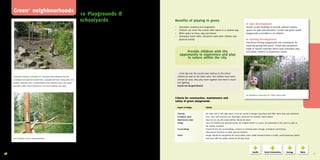
                                                                                                         Children should be able to walk or bicycle safely through the                                     ...The creation of playgrounds and sports complexes is
                                                                                                         neighbourhood to schools, parks, sports and recreational facilities.                              not enough to stimulate children to be more active.Children
                                                                                                         Slowing cars (with speed bumps or smaller street profiles at                                      who are able to walk or bicycle to school, playgrounds or
                                                                                                         specific points) or creating car-free areas in neighbourhoods                                     sports facilities perform significantly more physical activity
                                                                                                         and near schools contribute to safer streets. Create street                                       per day...
                                                                                                         profiles where pedestrians and bicycles are separated from                                        Beweegvriendelijke wijken voor kinderen                              In new development:
                                                                                                         motorized vehicles and have priority over cars at crossings.                                                                                                           Set up a green structure plan connecting all neighborhoods
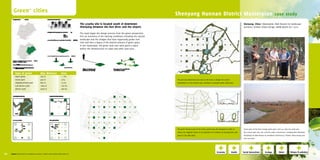
     Madrid RIO Park, Spain | A safe attractive pedestrian network with parks and                                                                                                                          ...TNO has developed a calculating model for interactive plan-       to the urban forests / parks from the beginning of a project
     plazas created along the water, separated from heavy traffic. Designed by                           Create one large green park network                                                               ning to see the effects that complex planning solutions have on      together with infrastructure so everyone has safe access to
     West 8 urban design and landscape architecture B.V. and Mrio arquitectos,                           Connect public green spaces and parks to create one large                                         various situations in the surroundings, One of the features is       green.
     Madrid | Photo: Jeroen Musch (copyright city of Madrid)                                             urban recreation and / or ecological network within the city as                                   the influence green spaces / land uses have on the physical
                                                                                                         well as with connections to green and nature outside the city.                                    movement patterns of residents...                                    In existing development:
                                                                                                         Ecological corridors which connect green spaces throughout the                                    Urban Strategy, TNO Innovation for Life                              Make neighbourhoods safer for bicycles and pedestrians by
                                                                                                         city raise the value of the urban ecological system. Use existing                                                                                                      replacing street crossings with roundabouts or traffic lights
                                                                                                         nature / water / topographical characteristics of the area as                                                                                                          along routes to schools, sports and play areas.
                                                                                                         starting points to guide the planning and location of the network.
                                                                                                         Every household should be within 500m of an arm of the green
                                                                                                         network. This distance allows one to walk to, in and from the
                                                                                                         green structure in an average of 45 minutes (Bervaes et al, 1996
                                                                                                         in Groene Meters I).

                                                                                                         Ensure accessibility within the green network
                                                                                                         Where unavoidable infrastructural barriers block access within
                                                                                                         a network, alternatives should be designed such as bridges,
                                                                                                         tunnels and ecobridges so connections are safe. By creating a
                                                                                                         green network at the planning stage of a project, many of these
                                                                                                         conflicts and dangerous intersections can be solved. Semi-public
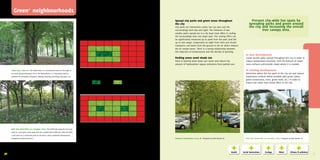
     Promenade Plantee, Paris France | A 4.7km long green belt and promenade through                     and public buildings can also be used as part of the continuous
     Paris along an old railway line. The path is accessible in some areas at street                     green network. Green through the building (atriums, galleries)                                                                                                         Bicycles and pedestrians separated from vehicular traffic | Photo:
     level and at other points with footbridges and a viaduct | Photo: Robert ten Elsen                  and over the buildings (green roofs) can be made accessible,                                    Children walk safely to school | Photo: PPH; collage: Niek Roozen bv   Stichting Open Boek
                                                                                                         both physically and visually.

     Experts: Martine van Loon (Kenniscentrum Recreatie), Irini Salverda (Alterra – Wageningen UR), Pauline de Koning and Peter Schildwacht (BELW Advies bv), Fred Tonneijck (Triple E & Knooppunt
     Innovatief Groen), Sanda Lenzholzer (Wageningen University), Eva Stache (Stache architects), Arda van Helsdingen (Copijn Tuin- en Landschapsarchitecten), TNO Innovation for Life
     Sources: Groene meters II; Vitamine G; Beweegvriendelijke wijken voor kinderen; Kinderen in prioriteitswijken: lichaamlijke (in)activiteit en overgewicht; Recht op Groen; Rotterdam gezond groen
18   gewoon doen; www.west8.nl; www.impala-eu.org; www.tno.nl/downloads/IB_URBAN_STRATEGY_EN.pdf                                                                                                                                                                                                                                                     19
Green + cities
                                                                                                        5 Within walking distance
                                                                                                        The amount of recreational green is important                                                    Provide recreational possibilities and green                                   Develop ample parks and usable
                                                                                                        75m2 of recreational green should be provided for every                                          for residents who stay closer to home                                        green spaces within walking distance
                                                                                                        household in an urban area. 60m2 of this green should be within                                  The elderly and people with a lower socio-economic status have                         of all residents.
                                                                                                        a 500m radius of home and 15m2 can be incorporated into                                          less opportunities to seek green elsewhere. Therefore green in
                                                                                                        regional green within a 3 km radius. 75m2 green / household                                      the vicinity of home is essential.
                                                                                                        divided by 2,5 people per household = 30m2 green/person.
                                                                                                        Muliply the number of people in an urban area times 30m2                                         Create parks in inner city neighbourhoods
                                                                                                        and this equals the total amount of green needed in the urban                                    Include parks in the rehabilitation of declining neighbourhoods.
                                                                                                        area. Divide the size of the urban area by the amount of green                                   Remove a housing block and replace it with a pocket park,
        Millinxbuurt, Rotterdam, NL | A city block in a declining neighbourhood in                      needed in the urban area and you have the percent of green                                       involving the residents in the process. This, in combination with
        Rotterdam was transformed into a park during a large scale neighbourhood                        needed in the urban area. (For an example see the Green City                                     the planned improvements to the remaining buildings, creates a
        renovation. People used to complain of shoot-outs, now they complain if                         case study, page 20-21.)                                                                         more liveable neighbourhood for the residents.
        someone cycles on the pavement | Photo: PPH
                                                                                                        The quality of recreational green is important                                                                                                                                In new development:
                                                                                                        Recreational green should be accessible, useable, varied,                                        Benefits of neighbourhood green space                                        25% of the total urban area should be set aside for green
                                                                                                        inviting and well maintained in order to attract users from                                                                                                                   recreational uses. The green areas should be distributed
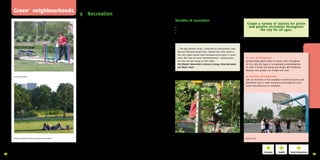
        ...In The Netherlands, the direct costs of people being overweight                              the neighbourhood and beyond.                                                                    •   Healthier, happier residents (5-15% more)                                throughout the city vary in size and vary in use so
        are thought to be 3%-5% of the healthcare budget...                                                                                                                                              •   More outdoor play (10% more)                                             everyone has access to green.
        Groen Loont!                                                                                    Provide nearby recreational facilities for children                                              •   More social contact and social cohesion*
                                                                                                        Children between the ages of 6 and 11 are most dependant on                                      •   Less overweight or obese residents (15% less)                            In existing development:
        ...The number of obese adults in England has tripled over the                                   their direct living environment in order to fulfill their daily                                  •   Less doctor visits, less depression, for some diseases up to 33%*        Where a lack of space is available, the quality, use and
        last 20 years and is still rising. The number of obese 6 year-                                  outdoor physical activity. Provide formal and/or informal play                                   •   More likely to be physically active (24% more) if                        accessibility of recreational green should be improved to
        olds has doubled in the last 10 years. Inactivity is identified                                 areas for these age groups at the block level to encourage more                                      green space is easily accessible                                         provide maximum enjoyment for as many residents as
        as being the primary cause of obesity. The cost to the UK                                       outdoor play. Safe routes to the play areas are important as well                                * especially noticeable with children, the elderly and people with a lower   possible.
        economy of overweight and obesity was £15.8 billion in 2007,                                    as safe edges between street and play areas. Prevent children                                    social/economic status
        including £4.2 billion additional costs to the NHS...                                           from running into the street and keep play areas visible.
        Tackling Obesities: Future Choices - Project Report
                                                                                                                                                                                                             ...Social cohesion and the willingness to participate in
                                                                                                                                                                                                             the upkeep of an urban park is higher in smaller
     Size and location of green spaces in urban environments:                                                                                                                                                neighbourhood parks than in larger city parks...
                                                                                                                                                                                                             Buurtgroen en Sociale Cohesie
       type of park                                                        distance from house                                                size of park
                                                                                                                                                                                                             ...Park and green space facilities provide easily accessible
       pocket park                                                         200m        (4 min. walk)                                          0,01 ha - 1 ha                                                 recreational opportunities which are usually free. A brisk
       neighbourhood park                                                  400m        (6 min. walk)                                          1 ha - 6 ha                                                    walk daily reduces the risk of heart attack by 50%, strokes
       community park                                                      800m        (12 min. walk)                                         6 ha - 18 ha                                                   by 50%, diabetes by 50%, fracture of the femur by 30%,
       large urban park                                                    1600m       (20 min. walk)                                         18 ha - 200 ha                                                 colon cancer by 30%, breast cancer by 30% and Alzheimers
       city-wide park                                                      3200m       (up to 30 min. walk)                                   >200 ha                                                        by 25%...                                                                Westerpark, Amsterdam, NL | Photo: Gemeente Amsterdam
                                                                                                                                                                                                             Green Space and our Health


     Experts: Pauline de Koning and Peter Schildwacht (BELW Advies bv), Irini Salverda (Alterra – Wageningen UR), Fred Tonneijck (Triple E & Knooppunt Innovatief Groen) Jolanda Maas (EMGO Institute,
     VU Medical Center) | Sources: Leefkwaliteit Stationsgebied Utrecht 2003; Groen Loont!; Vitamine G; Rood en Groen in Balans; Groene Meters II; Recht op Groen; Niet bij rood alleen: buurtgroen
     en sociale cohesie; Beweegvriendelijke wijken voor kinderen; Rotterdam gezond groen, gewoon doen; Kinderen in Prioriteitswijken: Lichaamlijke (in)activiteit en overgewicht; Foresight: Tackling
     Obesities: Future Choices – Project Report; An estimate of the economic and health value effectiveness of the expanded Walking Health Initiative scheme 2009; Green Space and our Health
20                                                                                                                                                                                                                                                                                                                                                21
Green + cities                                                                                 6 The art of nature
                                                                                                      Use green to beautify the city                                                                                                                           Use plants to beautify streets
                                                                                                      Residents, workers and visitors are attracted to green and flowers                                                                                    and neighbourhoods and add to the
                                                                                                      in the urban environment. Green for aesthetic reasons is still a                                                                                           overall image of the city.
                                                                                                      legitimate investment. (The fact that green has so many other
                                                                                                      benefits only adds to its value.)

                                                                                                      Planting design is a creative process
                                                                                                      Planting design is the art of combining plants based on their
                                                                                                      colour, texture, bloom time, bloom colour and growing conditions
                                                                                                      (sun, soil, wind, water). In public open spaces it is also important
                                                                                                      to consider the use of the space, possiblities of vandalism and
                                                                                                      level of maintenance. The softscape (green) is just as important                                                                                     In new development:
                                                                                                      in terms of design as the hardscape (layout, paving, benches,                                                                                        Create green spaces which combine the character of the
                                                                                                      lighting, etc.). Use the right plants for public spaces and avoid                                                                                    place and the needs of the users with a hardscape and
                                                                                                      dangerous situations such as high plants which block views at                                                                                        planting design that is aesthetically pleasing.
                                                                                                      intersections or poisonous plants near playgrounds.
       Floriade 2002, Haarlemmermeer NL | Niek Roozen bv and Jacqueline van der                                                                                                                                                                            In existing development:
       Kloet, planting specialist, used the Floriade 2002 as a testing ground for the                 Use existing conditions as the basis for design                                                                                                      Replace planting which does not add to the aesthetics and
       aesthetic use of successful perennial and bulb mixtures for public spaces |                    Start the design process with an inventory of what exists on the                                                                                     function of an area with planting combinations which do.
       Designed by Niek Roozen bv                                                                     site (or what once existed). Use elements such as existing trees,
                                                                                                      water, topography and native plants to inspire the design and
                                                                                                      give it a local character which fits into the surrounding neigh-
                                                                                                      bourhood or environment. The use of historical and cultural
                                                                                                      elements also adds to the character.
                                                                                                                                                                                 Garden in Kyoto, Japan | Photo: Philomene van der Vliet and David Kloet
                                                                                                      Quality and maintenance are important
                                                                                                      Nature is beautiful, but in the urban environment it needs
                                                                                                      help staying beautiful. Every square metre of green needs to
                                                                                                      be high quality and well maintained for city residents to keep
                                                                                                      this positive image of green.

                                                                                                                                                                             Benefits of the art of nature
                                                                                                                                                                             •   Creates a positive image for the city
                                                                                                                                                                             •   Gives residents a positive perception of green
                                                                                                                                                                             •   Inspires residents to take pride in their neighbourhood
       Eindhoven, NL | A green wall and roof integrated into a bus stop | A Soontiëns                                                                                        •   Attracts tourists / visitors
       Stadsnatuur project | Design: WVTTK Architects | Photo: WVTTK Architects                                                                                              •   Offers rest and inspiration
                                                                                                                                                                                                                                                           Floriade 2002, Haarlemmermeer, NL | Designed by Niek Roozen bv


22   Experts: Niek Roozen (Niek Roozen bv landscape architects), Robbert Snep (Alterra – Wageningen UR), Soontiëns Stadsnatuur                                                                                                                                                                                              23
Green + cities                                                                                                                                         Shenyang Hunnan District Masterplan case study
                                                                                         The 5750ha site is located south of downtown                                                                                                             Shenyang, China | Masterplan: Niek Roozen bv landscape
                                                                                         Shenyang between the Hun River and the airport.                                                                                                          architect, Urhahn Urban Design, BELW Advies bv | 2010

                                                                                         The team began the design process from the green perspective:
                                                                                         first an inventory of the existing conditions including the natural
                                                                                         landscape and the villages that have organically grown over
                                                                                         time and then a layout of the desired amount of green space.
                                                                                         In the masterplan, the green land uses were given a place
                                                                                         before the infrastructure of roads and other land uses.


          Type of green                       Max distance                 Area
          block green                         200 m                        < 1 ha
          street park                         400 m                        3 ha                                                                                The grid was faded back and used as the basis to design the overall
                                                                                                                                                                NIEK ROOZEN bv
          neighbourhood park                  800 m                        15 ha                                                                                 l a n d s c a p e   a r c h i t e c t s
                                                                                                                                                               masterplan in a new creative way, resulting in a dynamic green urban plan.
          sub-district park                   1600 m                       100 ha
          district park                       3200 m                       500 ha


                                                                                                                                                               The green infrastructure of the street system was also designed in order to        Some parts of the final concept green plan, such as a few city parks and
                                                                                                                                                               reduce the negative impact of air pollutants for residents by locating trees and   the central main axis, are currently under construction, including Mozi Mountain.
                                                                                                                                                               green in the right place.                                                          Parkdesign by Niek Roozen bv, Roodbeen Architectuur, Urhahn Urban Design and
                                                                                                                                                                                                                                                  Loos van Vliet.


24   Experts: Niek Roozen bv landscape architects, Urhahn Urban Design, BELW Advies bv                                                                                                                                                                                                                                                25
Green + cities


                                                                                                                                                                                                                                        2
          Literature:                                                        • Vitamine G                                            • Bastiaan de Roo, Director Leiden


          • Greenspots Reloaded
                                                                               [Vitamin G]
                                                                             • Kinderen in prioriteitswijken:
                                                                                                                                       Chamber of Commerce The Hague
                                                                                                                                     • Sjerp de Vries, Senior Scientific Researcher   Green+ neighbourhoods
          • Groen Loont!                                                       Lichaamlijke (in)activiteit en overgewicht              Alterra – Wageningen UR
             [Green Pays!]                                                     [Children in problem neighbourhoods:                  • Pauline de Koning, Landscape Architect
          • Alle extra groen helpt de luchtkwaliteit verbeteren                Physical (in)activity and overweightness]               Peter Schildwacht, Air Specialist, Biologist
             [All extra green helps improve the air quality]                 • Leefkwaliteit Stationsgebied Utrecht                    BELW Advies bv
          • Recht op Groen                                                     [Liveability Station area Utrecht]                    • Ceciel van Iperen,
             [The Right to Green]                                            • Rood en Groen in Balans                                 Project Manager Living Environment
          • Vegetation in relation to air quality in Shanghai                  [Red and Green in Balance]                              CROW
          • Leidraad Luchtzuiverend Groen                                    • Niet bij rood alleen: buurtgroen en sociale cohesie   • Jelle Hiemstra, Senior Researcher                   7 Microclimate parks
             [Manual Air Purifying Green]                                      [Not with red alone: neighbourhood green and            Applied Plant Research, Wageningen UR
          • Integrale beplantingsmethode levert geslaagd                       social cohesion]                                      • Martine van Loon, Project Officer                   8 Resident participation
             Prins Bernhardbos op                                                                                                      Kenniscentrum Recreatie
             [Integrated planting method is a success in the                 Websites:                                               • Sanda Lenzholzer,                                   9 Recreation
             Prins Bernhardbos]                                                                                                        Assistant Professor Landscape Architecture
          • How much value does the city of Philadelphia                     • www.landscapeinstitute.org/PDF/Contribute/              Wageningen University                              10 Playgrounds and schoolyards
             recieve from its park and recreation system?                      PressRelease-LandscapeInstituteEcobuildFringeSe       • Filip Fraga, Project Manager
          • Who said money doesn’t grow on trees?                              minarstacklethecaseforinvestmentinlandscapean.pdf     • Joram Nauta, Project Manager
                                                                                                                                                                                          11 Views of green
          • Beweegvriendelijke wijken voor kinderen                          • www.impala-eu.org                                       TNO Innovation for Life
             [Exercise-friendly neighbourhoods for children]                 • www.tno.nl/downloads/IB_URBAN_STRATEGY_EN.pdf         • Jolanda Maas, Senior Researcher
                                                                                                                                                                                          12 Private green
          • Rotterdam gezond groen, gewoon doen                              • www.west8.nl                                            EMGO Institute, VU Medical Center
             [Rotterdam healthy green, just do it]                           • www.bomenstichting.nl                                 • Irini Salverda, DLO Researcher
                                                                                                                                                                                          13 Semi-private green
          • Foresight: Tackling Obesities:                                                                                             Alterra – Wageningen UR
                                                                                                                                                                                          14 Green business parks
             Future Choices – Project Report                                 Experts:                                                • Robbert Snep,
          • Green Space and Our Health                                                                                                 Researcher Urban Ecology and                       15 Urban farming
          • An estimate of the economic and health value                     • Eva Stache, Architect                                   Green Businessparks
             effectiveness of the expanded Walking Health                      Stache Architects bna                                   Alterra – Wageningen UR                            16 Water runoff
             Initiative scheme                                               • Fred Tonneijck, Senior Advisor/Researcher             • Niek Roozen, Landscape Architect
          • The Green City Post 2011                                           Triple E and Knooppunt Innovatief Groen                 Niek Roozen bv landscape architects                17 Biodiversity
          • Meetproef Groen                                                  • Arda van Helsdingen, Director                         • ES Consulting
             [Experiment Green]                                                Copijn Tuin- en Landschapsarchitecten                 • Soontiëns Stadsnatuur                                 Case study: The High Line, New York City
          • Stadsbomen voor een goede luchtkwaliteit                         • Mark Hinshaw, Director of Urban Design
             [City trees for good air quality]                                 LMN Architects
          • Bomen: een verademing voor de stad                               • Vincent Kuypers, DLO Researcher
             [Trees: Relief for the city]                                      Alterra – Wageningen UR
          • Groene meters II                                                 • Barry de Vries, DLO HBO Researcher
             [Green meters II]                                                 Alterra – Wageningen UR


26   For a complete list of literature and expert participants, see pages 94-97.                                                                                                                                                            27
Green ++ neighbourhoods 7 Microclimate parks
      Green neighbourhoods
                                                                                                       Plant more trees to increase the overall                             Benefits of parks on microclimate
                                                                                                       canopy cover
                                                                                                       Studies in Chicago show that increasing tree cover in the city by    • Shade from trees regulates temperature extremes
                                                                                                       10% may reduce the total energy used for heating and cooling         • Green humidifies the air and makes the environment cooler
                                                                                                       by 5-10%. Trees and vertical green prevent sunlight from               and more pleasant
                                                                                                       reaching the surface and converting into heat. They also create      • City streets, plazas and parks are comfortable to use
                                                                                                       more humidity, which in turn reduces the strength of the sun’s         in hot weather
                                                                                                       rays and thus reduces the temperature.                               • Less ozone is produced if temperatures are reduced
                                                                                                                                                                              in hot periods
                                                                                                       Reduce the amount of impervious surfaces                             • Less temperature extremes in the summer result in less
                                                                                                       in the city and replace them with green                                premature deaths due to excessive heat (especially for
                                                                                                       Surface temperature can be reduced just by reducing the                elderly people)
                                                                                                       amount of paved surfaces, which in return reduces the amount
                                                                                                       of latent heat in the city. For every 10% of green surface area
                                                                                                       that is increased, the temperature drops by 1o0 C.
                                                                                                                                                                               ...The use of green to create microclimates and protect
                                                                                                       Use trees to decrease wind velocities                                   against wind, etc. is simply farmer’s wisdom. The techniques
         Latent heat in the city of Nijmegen, NL | The paved surfaces are clearly the                  Trees and plants are physical obstacles and have an effect              can be applied to the urban environment as a fresh new way
         “hotspots”, while the parks and green spaces are blue/dark green in the                       on wind speed and turbulence. These in turn influence how               to approach the use of green. The scientific and academic
         colour spectrum | Photo: Alterra – Wageningen UR                                              effective trees are in removing air pollutants. Wide tree plant-        proof is building to support what farmers have known for       Bilbao tram line, Spain | Light rail in a city is not only a green mode of
                                                                                                       ings such as forests drive wind upwards and act as a solid              centuries...                                                   transportation but can also actually be green. Grass or a mix of sedum and/or
                                                                                                       barrier. Wind speeds beyond the forest return to normal after           Leidraad Luchtzuiverend Groen                                  mosses planted between the rails instead of pavement is not only attractive
                                                                                                       a short distance. The wind speed behind a row of trees returns                                                                         but also helps improve the microclimate in summer and absorb water runoff
                                                                                                       to normal at a distance of 10 times the height of the trees.                                                                           over great lengths within the urban environment. (Sedum and mosses require
     The following plays a role in the                                                                                                                                                                                                        less maintenance and even help remove particulate matter (PM10) from
     Urban Heat Island Effect:                                                                         Prevent trees from reducing wind speeds too close                                                                                      the air.) | Photo: Robert ten Elsen
     •    The amount of impervious surfaces in the city                                                to the source of pollution
     •    Local weather patterns (temperature, wind)                                                   Where possible, plant rows of trees perpendicular to the direction
     •    The location (on the water / inland)                                                         of polluted air and allow a sideways flow of air along the trees
     •    Design (height of buildings, density)                                                        for ventilation near a source of pollution.
     •    Wind patterns + ventilation + cooling                                                                                                                                                                                                                                           Continued on the next page -->
     •    Green / water vs. buildings / paving in the city                                             Create large areas of green outside the city
     •    Air pollution                                                                                as a buffer
                                                                                                       A forest planted outside the city can help reduce the urban
                                                                                                       heat island effect.


                                                                                                                                                                            The urban heat island effect | Source: Alterra – Wageningen UR


     Experts: Sanda Lenzholzer (Wageningen University), Vincent Kuypers and Barry de Vries (Alterra – Wageningen UR), Triple E, ES Consulting
28   Sources: Groen Loont!; Alle extra groen helpt de luchtkwaliteit verbeteren; Groen voor Klimaat; Bomen: een verademing voor de stad; Leidraad Luchtzuiverend Groen                                                                                                                                                        29
Green ++ neighbourhoods
      Green neighbourhoods
                                                                                                                                                                                                   Spread city parks and green areas throughout                            Prevent city-wide hot spots by
                                                                                                                                                                                                   the city                                                              spreading parks and green around
                                                                                                                                                                                                   City parks are themselves cooler, but can also cool the               the city and increasing the overall
                                                                                                                                                                                                   surroundings both day and night. The influence of two                          tree canopy area.
                                                                                                         Cooling effects of parks                                                                  smaller parks spread out in a city have more effect in cooling
                                                                                                         Source: adapted from Groen voor Klimaat: Barry de Vries, Alterra – Wageningen UR)         the surroundings than one larger park. The cooling effect can
                                                                                                                                                                                                   be significantly measured up to 300m from the park (and felt
                                                                                                                                                                                                   up to 2km away). Evaporation at night from trees and shrubs
                                                                                                                                                                                                   transports cool water from the ground to the air which reduces
                                                                                                                                                                                                   the air tempe-rature. There is a strong relationship between
                                                                                                                                                                                                   the reduction of temperatures and the density of planting.
                                                                                                                                                                                                                                                                      In new development:
                                                                                                                                                                                                   Parking areas need shade too                                       Create pocket parks spread throughout the city in order to
                                                                                                                                                                                                   Trees in parking areas keep cars cooler and reduce the             reduce temperature extremes, limit the amount of imper-
                                                                                                                                                                                                   amount of hydrocarbon vapour emissions from parked cars.           vious surfaces and provide shade where it is needed.

     Leidse Hout, Leiden NL | The Leidse Hout is a recreational forest on the edge of                    1 large park                                                                                                                                                 In existing development:
     the most densly populated city in The Netherlands. It is frequently used by                                                                                                                                                                                      Determine where the hot spots in the city are and replace
     residents for recreation, relaxation, walking, bicycling, picnicking, education, etc.                                                                                                                                                                            impervious surfaces where possible with green (parks,
                                                                                                                                                                                                                                                                      green connections, trees, green roofs, etc.) in order to
                                                                                                                                           park                           affected area                                                                               reduce the urban heat island effect in the city.


                                                                                                         2 small parks
     EXPO Park, World EXPO 2010, Shanghai, China | The EXPO Park along the river was
     used as a cool green oasis away from the crowded warm EXPO site. After the EXPO,
     it will serve as a community park for the future urban residential development |
     Designed by Niek Roozen bv                                                                                                                                                                    Parking lot Kasteeltuinen Arcen, NL | Designed by Niek Roozen bv   EXPO Park, World EXPO 2010 Shanghai, China | Designed by Niek Roozen bv


     Experts: Sanda Lenzholzer (Wageningen University), Vincent Kuypers and Barry de Vries (Alterra – Wageningen UR), Triple E, ES Consulting | Sources: Groen Loont!; Alle extra groen helpt de
30   lucht-kwaliteit verbeteren; Groen voor Klimaat; Bomen: een verademing voor de stad; Leidraad Luchtzuiverend Groen                                                                                                                                                                                                                          31
Green+ neighbourhoods                                                                            8 Resident participation
                                                                                                         Listen to what the residents want                                                                 Benefits of participation                                                           Include residents in the design and
                                                                                                         Resident participation leads to the creation of quality green                                                                                                                         maintenance of green spaces in their
                                                                                                         because it responds to the needs and wishes of the people                                         •   Liveability of the neighbourhood increases                                           direct living environment.
                                                                                                         who will actually use it.                                                                         •   Criminal and anti-social behavior decreases, safety improves
                                                                                                                                                                                                           •   More social control and social cohesion
                                                                                                         Adopt green right outside the door                                                                •   People identify more with their neighbourhood and green space
                                                                                                         Allow planting beds or trees to be “adopted” in parks or along
                                                                                                         streets. The residents can choose their own planting as long as
                                                                                                         they care for the plants themselves. An agreement can be
                                                                                                         signed between the city and the residents if either of the                                            ...Over recent years we have seen a real difference in the
                                                                                                         parties do not fulfill their agreed level of participation.                                           attitude to trees in UK cities. They’re becoming much more
                                                                                                                                                                                                               valued as an asset to the community, and provide a wealth
                                                                                                         Create respect for public green space                                                                 of cultural benefits.                                                           In new development:
                                                                                                         By allowing residents to take part in design, construction and                                        Studies compiled by our partners at Nottingham Trent                            Invite residents to be a part of the planning and design
                                                                                                         maintenance they respect the green spaces and care for them                                           University provide a clear indication that a healthy, safe city                 process of public green spaces.
                                                                                                         as their own instead of waiting for the city to fix them up.                                          is one in which residents are inclined to get out onto the
                                                                                                         People are more likely to pick up litter on “their own street”                                        streets and into green spaces. By getting involved in decisions                 In existing development:
        The Garden, Eden Project, UK | Sensory Trust and Eden Project worked together                    than on a “public street”, as well as ask others to do the same.                                      about their streets and green spaces, and making them nicer                     Allow residents to adopt nearby green spaces and participate
        to run community consultation sessions with a mix of people so the garden                                                                                                                              places to live, residents feel ownership of these places – they                 in the construction and maintenance of these spaces.
        could be inspired by and designed to their wishes. The participants were                         Plan green activities for residents                                                                   use them and help maintain them, which ensures the quality
        kept involved throughout the process in order to offer feedback and continued                    Bring residents together at key moments to create enthusiasm                                          and long term sustainability of these spaces...
        support | Photo: Sensory Trust                                                                   and involve them in the process of creating green spaces in the                                       Sharon Johnson, Chief Executive, Trees for Cities
                                                                                                         neighbourhood. Use publicity to spread the enthusiasm to other
                                                                                                         neighbourhoods. Organize activities such as tree planting events
                                                                                                         or the UK’s “Love Parks Week”.

                                                                                                         Transform unused space in the city with green
                                                                                                         Give people on the waiting lists for permanent community/
                                                                                                         allotment gardens and others the chance to garden plots of
                                                                                                         temporarily vacant land in their own neighbourhoods. The
                                                                                                         neighbourhood becomes greener, the gardeners are happy
                                                                                                         and surrounding residents and passersby are inspired.


        De Tussentuin, Gaffelstraat, Rotterdam, NL | The Tussentuin, a local resident
        initiative, not only provides gardening plots but also activities such as music                                                                                                                                                                                                        Manchester, UK | Children involved in a community planting project |
        workshops, concerts and neighbourhood feasts | Photos: Wolbert van Dijk                                                                                                                            Nieuw Leyden, Leiden, NL | Residents not only designed their own houses, but also   Photo: Trees for Cities
                                                                                                                                                                                                           had the opportunity to design their own street collectively with the neighbours.


     Experts: Irini Salverda (Alterra – Wageningen UR), Wolbert van Dijk and Joke van der Zwaard (De Tussentuin), Jane Stoneham (Sensory Trust), Sharon Johnson (Trees for Cities), Fred Tonneijck
     (Triple E & Knooppunt Innovatief Groen), Arda van Helsdingen (Copijn Tuin- en Landschapsarchitecten) | Sources: Niet bij rood alleen: buurtgroen en sociale cohesie; In herstructureringsplannen is
32   groen een sociale verbinder                                                                                                                                                                                                                                                                                                                                      33
Green+ neighbourhoods                                                                           9 Recreation
                                                                                                        Provide a variety of spaces for physical activity                                          Benefits of recreation
                                                                                                        Outdoor active recreation not only occurs on formal sports fields                                                                                               Create a variety of choices for active
                                                                                                        but also other spaces such as playgrounds, skateboard parks,                               • Encourages people to live healthier lifestyles                      and passive recreation throughout
                                                                                                        bicycle and jogging/walking paths and open lawn. Spontaneous                               • Stimulates children to grow into healthy fit adults                        the city for all ages.
                                                                                                        ball games in informal green spaces are flexible and do not                                • Provides a public space for social contact
                                                                                                        require specific dimensions or amount of players.

                                                                                                        Relaxation is an important form of recreation
                                                                                                        Places to meet or be alone, benches or grass for resting and
                                                                                                        watching, paths for walking, forests and water for contact with                              ...‘The Big Greenery Study’, conducted by Amsterdam’s own
                                                                                                        nature and environmental education, etc. are examples of                                     Physical Planning Department, showed that visits made to
                                                                                                        passive recreation. A variety of spaces and uses are important                               the city’s green spaces have increased enormously in recent
                                                                                                        to accommodate all the users of neighbourhood parks. Green                                   years. Not only are more ‘Amsterdammers’ visiting parks,         In new development:
                                                                                                        near offices also allows workers to take a walk during breaks                                but they are also doing so more often...                         Spread ample green parks of various sizes throughout
                                                                                                        for fresh air and relaxation.                                                                Piet Eilander (Amsterdam’s Greenery, Ecology, Urban Recreation   he city. Vary the types of recreational accommodations
                                                                                                                                                                                                     and Water team)                                                  to reach a broad user group and design with flexibility
                                                                                                        Accommodate the user groups                                                                                                                                   because user groups can change over time.
                                                                                                        Children, people with a lower socio-economic status and the
        Outdoor exercise.                                                                               elderly are more dependent on their direct living environment                                                                                                 In existing development:
                                                                                                        to fulfil their exposure to green recreational opportunities.                                                                                                 Take an inventory of the available recreational spaces and
                                                                                                        The smaller scale parks spread throughout the neighbourhoods                                                                                                  determine how to make existing accommodations more
                                                                                                        should cater to these groups. Larger parks that are more spread                                                                                               useful and attractive for residents.
                                                                                                        out should include these uses plus uses for other user groups.
                                                                                                        Provide separate areas for dogs and provide bins for dog waste
                                                                                                        so the play areas remain clean.

                                                                                                        Quality and usability are essential
                                                                                                        There are four factors which determine the success of recreational
                                                                                                        spaces in the city:
                                                                                                        • availability (area and distribution of spaces)
                                                                                                        • usability (maintenance, policy, provisions, social safety)
                                                                                                        • accessibility (service area, walking / biking distance)
                                                                                                        • utilization (users and possible activities)

                                                                                                        Recreation also encourages recreation related
                                                                                                        business
                                                                                                        Businesses such as restaurants and cafés, kiosks, tourism,
                                                                                                        water sports, etc. can also benefit economically from recreation
        Outdoor relaxation | Photo: Gemeente Amsterdam                                                  in the city.                                                                               Outdoor play.                                                      Outdoor sports.


     Experts: Filip de Fraga and Joram Nauta (TNO Innovation for Life), Martine van Loon (Kenniscentrum Recreatie) | Sources: Groen Loont!; Recht op Groen; Groene meters II; Beweegvriendelijke
34   Stadswijken voor Kinderen; Rotterdam gezond groen, gewoon doen; The Green City Post 2011; www.impala-eu.org                                                                                                                                                                                                                   35
Green+ neighbourhoods                                                                         10 Playgrounds &
                                                                                                      schoolyards                                                     Benefits of playing in green
                                                                                                                                                                                                                                                     In new development:
                                                                                                      Create variations in the landscape                              •    Stimulates creativity and imagination                                     Situate school buildings to provide optimal outdoor
                                                                                                      Differences in high-low, dark-light, open-closed, dry-wet       •    Children can come into contact with nature in a creative way              spaces for play and education. Create new green public
                                                                                                      make a play area more interesting, less predictable and         •    Offers space to move, play and dream                                      playgrounds accessible to all children.
                                                                                                      more natural. Unexpected (natural) differences in the terrain   •    Stimulates motor skills, interaction with other children and
                                                                                                      such as hills, horizontal tree trunks and rocks for climbing,        physical activity                                                         In existing development:
                                                                                                      etc. are encouraged.                                                                                                                           Transform existing playgrounds and schoolyards by
                                                                                                                                                                                                                                                     replacing paving with green. Install play equipment
                                                                                                      Use various natural materials                                                                                                                  made of natural materials which both stimulates play
                                                                                                      Ground: clay, sand, mud                                                   Provide children with the                                            and allows children to experience nature.
                                                                                                      Water: pumps, fountains, streams, wetlands, ponds                     opportunity to experience and play
                                                                                                      Planting: groundcover and flowers, shrubs, trees                          in nature within the city.
                                                                                                      Materials: wood and steel

                                                                                                      Cater to the needs of children
                                                                                                      Encourage active movement such as climbing and running,
                                                                                                      provide peaceful sitting areas while allowing others to play        ...From day one the success was obvious to the school
        Vrijeschool Valentijn, Harderwijk, NL | The pavers were removed from the                      together and make noise. They should feel at home and be            children as well as the other users. The children have more
        schoolyard and replaced by plant beds, a separate ball field, sitting areas, herb             comfortable in the seasons, with the trees and among the            choices for play, they play more together and there is much
        gardens, paintings, hills, an amphitheater, play equipment and a dry stream                   butterflies.                                                        less fighting...
        bed with a water pump connected to the school building’s rain pipes.                                                                                              Hoera! Een Burgerinitiatief
                                                                                                      Allow children to explore the possibilities of nature
                                                                                                      Create opportunities to playfully change the surroundings
                                                                                                      with sand, mud and water, use loose natural elements as                                                                                        The Speeldernis, Rotterdam, NL | Photo: Sigrun Lobst
                                                                                                      play equipment, allow them to exercise their own fantasy        Criteria for construction, maintenance and
                                                                                                      and creativity and make it inviting to explore nature.          safety of green playgrounds
                                                                                                      Encourage children to make something useful and beautiful
                                                                                                      from natural materials. Make it possible for hands-on nature        Aspect of design            Criteria
                                                                                                      and environmental education in the city.
                                                                                                                                                                          Planting                    the right tree in the right place, must be central in design, functional and offer more than just aesthetics
                                                                                                      Involve children in the design process, realisation,                Ecological value            fruit, color and structure are important, attractive for animals, native plants
                                                                                                      maintenance and use                                                 Maintenance plan            must be set up and responsibility should be taken
                                                                                                      Educate and demonstrate how nature can be created in the            Design                      must be flexible and multifunctional, be realized within 3-5 years, be presented to the users as well as
                                                                                                      city and encourage continuing interaction with the seasonal                                     the nearby residents
                                                                                                      changes of nature.                                                  Surroundings                should fit into the surroundings, connect to existing water storage, ecological connections,
                                                                                                                                                                                                      educational functions or other special interests
                                                                                                                                                                          Safety                      design should be transparent for social safety, have visible entrances/exits to traffic, avoid poisonous plants
        Ieper, Belgium | Use of natural materials.                                                                                                                                                    and must fulfil the safety criteria for all play areas


36   Sources: Prijsvraag Groene Speelplekken 2011; Een Groene Gezonde Wijk; Hoera! Een Burgerinitiatief; Kom je buiten spelen?; www.groeneschoolpleinen.nl                                                                                                                                                              37
Green+ neighbourhoods                                                                           11 Views of green
                                                                                                                                                                              Benefits of green views                                                             Borrow views of private / semi-
                                                                                                        Not all green needs to be accessible                                                                                                                     private green because of its impact
                                                                                                        Views of green are also important for the overall green image         •    Physical health: less doctor visits, shorter stays in hospitals              on the urban green experience, both
                                                                                                        of a city. Green roofs, green walls, private gardens, street trees,        (10% less)                                                                         mentally and physically.
                                                                                                        sports fields, cemeteries, agricultural land and surrounding          •    Mental health: reduction of depression and stress
                                                                                                        landscapes all contribute to the green of a city.                     •    Views of green increase employee productivity
                                                                                                                                                                              •    Employees take up less sick days
                                                                                                        Physical health improves with views of green                          •    Properties with views of green are 4-12% higher
                                                                                                        Patients recover up to 10% quicker in hospital rooms with
                                                                                                        views of green. Green park-like settings around hospitals,
                                                                                                        parking lots full of trees, courtyards, green walls and green
                                                                                                        roofs are all ways to increase green views from every room.
                                                                                                                                                                                                                                                               In new development:
                                                                                                        Mental health improves with views of green                                                                                                             Consider the layout of buildings and their relationship with
                                                                                                        Residents as well as workers with views of green report less                                                                                           green elements.
                                                                                                        cases of depression and stress than those with no views of
                                                                                                        green from their homes and offices. Planting strips between                                                                                            In existing development:
                                                                                                        houses and the street, front gardens, offices surrounded by                                                                                            Multi-layered buildings with views over rooftops should
        Amnesty International, Amsterdam, NL | The courtyard behind the head-                           green and trees and parking areas with green buffers are                                                                                               replace grey roofs with green roofs. Parking areas adjacent
        quarters of Amnesty International in the center of Amsterdam | Designed by                      ways to increase views of green from houses and offices.                                                                                               to buildings should include trees and green elements so
        Niek Roozen bv                                                                                                                                                                                                                                         views are more attractive from indoors.
                                                                                                        Property with views of green are more valuable
                                                                                                        Houses and apartments with views of green (adjacent parks,                De Hogeweyk, Weesp, NL | Green stimulates positive memories in people
                                                                                                        surrounding landscapes, etc.) are worth 4-12% more than                   with dementia | Architect: Molenaar en Koeman | Designed by Niek Roozen bv
                                                                                                        houses of the same type without views of green.


                                                                                                            ...Patients who have a view of trees use less pain killers than
                                                                                                            patients who have a view of a wall...                                 The Medina residential complex in Eindhoven, NL | A Soontiëns Stadsnatuur
        Views of green from houses | Photo: PPH                                                             Groen Loont!                                                          project | Photo: Soontiëns Stadsnatuur                                       Gaixa Forum, Madrid, Spain | Photo: Robert ten Elsen


     Experts: Eva Stache (Stache architects), Robbert Snep (Alterra - Wageningen UR), Fred Tonneijck (Triple E & Knooppunt Innovatief Groen), Soontiëns Stadsnatuur
38   Sources: Groen Loont!                                                                                                                                                                                                                                                                                                    39
Green+ neighbourhoods                                                                          12 Private green
                                                                                                       Diversity of choices means a diversity of green                                                                                                                    Use the potential that private
                                                                                                       People are free to choose their own plants and layout which                           ...Garden furniture and materials lose their value over time              gardens have to add to the amount
                                                                                                       increases the diversity of green in the neighbourhood for                             and have to be replaced after a few years. A living garden                       of green spaces and
                                                                                                       everyone. Plants can be used for their ornamental value or                            of plants, on the other hand, becomes more valuable as                      impervious surfaces in the city.
                                                                                                       functionality. Edible gardens provide fresh produce and herbs                         time goes on...
                                                                                                       for individuals. A varied planting design allows residents to                         De Levende Tuin
                                                                                                       experience the four seasons right outside their windows.

                                                                                                       Rediscover the art of plants
                                                                                                       Many urban residents fill their private gardens with paving
                                                                                                       for ease of maintenance, lack of knowledge of plants and
                                                                                                       their care or practicality. By bringing the interest back to                                                                                                  In new development:
                                                                                                       plants in the garden, the impervious surfaces in the city can                                                                                                 Provide room for small private gardens in front of, behind
                                                                                                       be reduced. Plant nurseries, retailers and community groups                                                                                                   or on top of houses.
                                                                                                       can show people how easy and attractive (low maintenance)
                                                                                                       gardening can be.                                                                                                                                             In existing development:
        The Medina, Eindhoven, NL | The Medina residential complex, high quality                                                                                                                                                                                     Create campaigns to encourage more plants and less
        urban green with plenty of opportunities for an urban wildlife experience                      Every square metre counts                                                                                                                                     impervious surfaces in private gardens. Involve the
        located in downtown Eindhoven. A Soontiëns Stadsnatuur project | Photo:                        Increase the surface area of green no matter how small by                                                                                                     media and plant nurseries in offering advice and techniques
        Soontiëns Stadsnatuur                                                                          planting green walls, balconies, private gardens and roofs.                                                                                                   for making gardens beautiful and easy to care for.


                                                                                                                                                                                          Bercy, Paris, France | Private roof gardens
                                                                                                       Benefits of private green spaces
                                                                                                       •   Increases biodiversity in the city
                                                                                                       •   Helps keep streets and houses cooler
                                                                                                       •   Helps intercept water runoff
                                                                                                       •   Makes neighbourhoods attractive


                                                                                                           ...What we tend to forget is that our lawns, flower beds and
                                                                                                           vegetable patches add up to a significant share of the
                                                                                                           capital’s land: approximately 24% of London’s total land
        EVA-Lanxmeer, Culemborg, NL | The ecological front gardens include specially                       area. Their habitat potential is enormous...                                                                                                             Arnhem, NL | Private garden with vegetables and flowers | Photo: Brechtje Horsten
        chosen species for biodiversity and environmentally friendly maintenance.                          Anna Simpson, Gardens: the hidden capital revealed                             Weesp, NL | Private garden next to De Theetuin | Designed by Jacqueline
                                                                                                                                                                                          van der Kloet


     Experts: Robbert Snep (Alterra – Wageningen UR), Soontiëns Stadsnatuur | Sources: De Levende Tuin; Leidraad Luchtzuiverend Groen; www.forumforthefuture.org/greenfutures/articles/
40   gardens-hidden-capital-revealed; www.eva-lanxmeer.nl                                                                                                                                                                                                                                                                                               41
Green+ neighbourhoods
                                                                                         13 Semi-private green
                                                                                         Combine efforts to improve the direct living                       Benefits of semi-private green spaces                                             Provide city residents / workers /
                                                                                         environment                                                                                                                                        patients in dense urban environments
                                                                                         Semi-private green provides an opportunity for those urban         • People with no private garden can enjoy their own                               with usable green space they can
                                                                                         residents who either have no private green space, have no            piece of nearby green                                                               collectively call their own.
                                                                                         time or desire to garden themselves or are not able to maintain    • Takes the elderly out of their social isolation
                                                                                         an entire garden on their own. Collective funds can be set aside   • Many residents take pleasure in performing
                                                                                         for routine maintenance if there is no one who takes the             (physical) activities outdoors
                                                                                         initiative to organize this between residents. They can also
                                                                                         decide how the space is used and when and set quality
                                                                                         standards for maintenance.

                                                                                         Design with flexibility for potential users
                                                                                         Users change over time and everyone has a different idea of                                                                                        In new development:
                                                                                         how common private green spaces are or should be used. (Peace,                                                                                     Provide space in dense urban development not just for
                                                                                         quiet, relaxation and healing versus gardening, socializing,                                                                                       parking and planting between buildings, but for usable
                                                                                         playing). Unless the intent is clear in the design and fellow                                                                                      green space. Consider the multifunctionality of spaces
                                                                                         residents set up the ground rules, the success of the space is                                                                                     such as green roofs above parking.
        De Hogeweyk, Weesp, NL | The wings of the building with 9 accompanying           limited.
        courtyards were designed with various themes to stimulate early memories                                                                                                                                                            In existing development:
        of the people with dementia who live there. Architect: Molenaar en Koeman |      Horticultural therapy benefits special needs groups                                                                                                Consolidate existing parking and unusable green
        Designed by Niek Roozen bv                                                       People who otherwise cannot maintain their own gardens are                                                                                         and transform it into usable green spaces for
                                                                                         sometimes those who profit the most from gardening activities                                                                                      adjacent residents.
                                                                                         and exposure to green. People in hospitals, elderly homes,
                                                                                         mental illness facilities, children’s hospitals, Alzheimers
                                                                                         facilities, etc. can all benefit. Provide accessible therapeutic
                                                                                         gardens including raised beds, barrier-free paths, sensory-
                                                                                         stimulating environments which awaken the five senses and
                                                                                         places to relax. People with dementia that are able to work in
                                                                                         the garden have less negative reactions and anger episodes         Amsterdam, NL | Common courtyard with kitchen garden for the cooking students
                                                                                         than patients with no access to gardening.                         of Nowhere, a community centre.


                                                                                         Courtyards and roof gardens are ideal
                                                                                         semi-private spaces
                                                                                         Spaces which can be occasionally or partially closed off and
                                                                                         are within view of the user groups add to the success of
                                                                                         semi-private green. The chances of low quality maintenance,
        Amsterdam, NL | All the residents of Sciencepark are able to use the courtyard   misuse of the space and vandalism are reduced. Rooftops are
        located between the buildings on top of the shared parking garage | Designed     also beneficial because of their multifunctionality in dense                                                                                       Culemborg, NL | A shared green space in the neighbourhood EVA Lanxmeer |
        by Niek Roozen bv                                                                urban settings.                                                                                                                                    Photo: Copijn Tuin- en Landschapsarchitecten


42   Sources: Een Groene Gezonde Wijk; www.ahta.org                                                                                                                                                                                                                                                                    43
Green+ neighbourhoods
                                                                                                     14 Green business park
                                                                                                     Green business parks attract companies                          Benefits of green business parks                                         Make the “parks” in business parks
                                                                                                     and employees                                                                                                                              and the “estates” in industrial
                                                                                                     Companies are attracted to business parks with a green          • Provides attractive multifunctional spaces for business,                  estates true to their names.
                                                                                                     character in order to improve their own corporate image.          recreation and ecology
                                                                                                     Employees are attracted to companies who provide a pleasant     • Helps create a positive green image many companies /
                                                                                                     working environment. By providing green views from office         industries aim for
                                                                                                     windows, worker productivity increases. Outdoor spaces for      • Provides a healthy environment for employees
                                                                                                     employees include lunch areas with a pleasant microclimate,     • Increases the real estate value of parcels within the
                                                                                                     walking and bicycle paths, benches and sports facilities.         business park

                                                                                                     Use business parks as a (green) link between the
                                                                                                     edge of the city and its surroundings
                                                                                                     Traditional business parks often form a barrier between the       “The quality of the workplace directly affects the work itself.”     In new development:
                                                                                                     city and the outskirts. Design business parks with green          William McDonough, www.park2020.com                                  Design new business parks with functional green spaces /
                                                                                                     corridors and recreational opportunities so urban residents                                                                            corridors that are linked to the surrounding landscape or
        Park 20 / 20, Hoofddorp NL | Park 20 / 20 is a joint development from the                    can reach urban forests outside the city.                                                                                              urban park network.
        Delta Development Group, VolkerWessels and Reggeborgh Groep.
        The innovative concept integrates sustainabile building techniques, a high                   Extend the use of business parks beyond                                                                                                In existing development:
        quality inspiring public space and a new way of working based on the Cradle                  working hours                                                   Three scenarios for adding green to business parks                     Convert flat roofs into green roofs and improve the
        to Cradle philosophy of William McDonough. Landscape design by Copijn                        Business parks are large scale land uses that are intensively   Source: Biodiversity conservation at business sites                    existing green spaces within the business park in order
        Tuin- en Landschapsarchitecten | Photo: Copijn Tuin- en Landschapsarchitecten                used during the weekdays. By including green spaces that can                                                                           to provide usable outdoor spaces for employees and
                                                                                                     be used for recreation by both employees and residents, the                                                                            increase biodiversity.
                                                                                                     useful hours are extended into early mornings and evenings
                                                                                                     as well as weekends. Many species of nocturnal animals also
                                                                                                     benefit from quiet business parks at night.

                                                                                                     Increase the chances for nature to flourish
                                                                                                     Combine the efforts of entrepreneurs, businesses, urban
                                                                                                     planners, landscape architects and ecologists in order to
                                                                                                     reach a high quality combination of commerce and nature.
                                                                                                     Biodiversity can be increased by using plants and providing
                                                                                                     habitats that are beneficial to local wildlife. Make room for
                                                                                                     storm water management solutions that also function as
                                                                                                     landscape features. Green roofs can fulfil both of these          convert flat roofs        improve the           create habitat
                                                                                                     goals on top of the businesses themselves.                        into green roofs          ecological            corridors through-
                                                                                                                                                                                                 quality of the        out the site
                                                                                                                                                                                                 existing green


        Leiden Bioscience Park, NL                                                                                                                                                                                                          Leiden Bioscience Park, NL


     Experts: Robbert Snep (Alterra – Wageningen UR), Bastiaan de Roo (Chamber of Commerce The Hague), Arda van Helsdingen (Copijn Tuin- en Landschapsarchitecten)
44   Sources: Biodiversity conservation at business sites; www.park2020.com                                                                                                                                                                                                                             45
Green+ neighbourhoods                                                                           15 Urban farming
                                                                                                        Reserve room in neighbourhoods for                                                      Havana, Cuba                                                             Provide opportunities for urban
                                                                                                        community / allotment gardens                                                           The citizens of Havana were able to make it through the                 residents to grow their own food
                                                                                                        Inventory the demand and provide space throughout the city,                             ‘Special Period’ in 1989 by cultivating their own food and                within the city limits or even
                                                                                                        no matter the size, for people to grow their own food.                                  medicine on ‘huertos’ – unused land where crops are grown.              within their own neighbourhood.
                                                                                                        By scattering gardens across the city, people are able to garden                        Eventually the government established large organic market
                                                                                                        closer to home, exchange ideas and seeds with neighbours,                               gardens (organoponicos) where local residents are employed
                                                                                                        stimulate others to participate, and reduce the waiting lists for                       to work the land and food is sold locally. By 2002, Havana was
                                                                                                        the larger community garden complexes on the edge of the city.                          growing 90% of the city’s fresh produce within the city limits.
                                                                                                                                                                                                                                                                   In new development:
                                                                                                        Claim land in the city for urban farming                                                                                                                   Provide space in the city for community gardens and make
                                                                                                        Cities can encourage and educate residents about the temporary                                                                                             them an integral part of urban development.
        Detroit, Michigan, USA | Detroit, a city which suffers severely from post-                      development of vacant lots into green oases of food and                                 Benefits of urban farming
        industrial decline, is home to nearly 900 urban gardens operating on a not-                     flowers, they can sponsor events and plants or they can allow                                                                                              In existing development:
        for-profit model. These urban farms offer employment, fresh affordable food,                    ‘guerilla’ gardening to emerge from resident initiatives. This not                      • A place to grow safe fresh food with less “food kilometres”      Create temporary community gardens or allow crops to
        the possibility of urban renewal and environmental improvement as well as a                     only provides healthy food for residents, gets them active and                          • Children and adults learn where food comes from                  grow on unused parcels of land in the city. This will either
        source of optimism within the community | Photo: http://www.urbanfarming.org                    engaged in healthy outdoor activities, but also helps buffer                            • Opportunities for social projects for marginalised or socially   stimulate development of the unused lots or act as a
                                                                                                        water runoff in neighbourhoods and beautifies otherwise empty                             excluded groups                                                  catalyst to green more areas of the city.
                                                                                                        holes in the urban landscape. When development does eventually                          • A social element that brings residents from different
                                                                                                        reclaim the land, the city can help the residents find a new                              backgrounds and cultures together
                                                                                                        parcel to garden. Larger parcels of land on the edge of the city
                                                                                                        where traditional industry is declining can provide more space
                                                                                                        for market gardens and allotment gardens.

                                                                                                        Provide areas for edible green in public parks                                            “In Detroit, urban farming has immense potential to catalyze
                                                                                                        Involve nearby residents in the design and maintenance of                                 change within the city, create thousands of greatly needed
                                                                                                        public green spaces and allow them to share in the harvesting                             jobs and provide vast quantities of fresh, locally grown
                                                                                                        of fruits, vegetables and herbs. Only provide edible plant beds                           produce for the remaining citizens. However, urban farming
                                                                                                        if neighbouring residents are enthusiastic, and keep the design                           is only a piece of what creates a successful green and
                                                                                                        flexible so changes can be made to the gardens as residents                               self-sufficient city, and must be integrated with various
        De Tussentuin, Gaffelstraat, Rotterdam, NL | On a temporarily empty parcel of                   and needs change over time.                                                               forms of sustainable development in order to provide a
        land in the middle of Rotterdam, a group of residents came together and                                                                                                                   desired result.”
        created a community garden where neighbours exchange seeds and ideas                            Reach residents who do not participate directly                                           Griffin Felski, Landscape Architect
        and proudly show off their harvest. There are 7 residents and a few school                      Demonstrations for children, programs for the homeless and
        classes who garden, a designer, a beekeeper, a work group who organizes the                     food production for shelters are all ways to spread the benefits
        music workshops and concerts, two gardeners who create a neighbourhood                          of urban gardening. Farmers markets also bring local producers                            “Cuba was forced to develop ‘resilience’ and fast. It had to
        feast twice a year and a website. When development proceeds on the parcel                       and consumers in contact with eachother, something that city                              feed its people when the previous routes for doing so were
        of land, they hope to move to another prominent paved parcel in the                             people really appreciate.                                                                 closed off overnight. Urban agriculture is something that the
        neighbourhood. Plan B is to spread the plants throughout the neighbourhood                                                                                                                rest of the world could develop – before it is forced to.”
        | Photo: Wolbert van Dijk                                                                                                                                                                 Mark Long, Director, UK Green Forum                              UK | Urban farming opportunities | Photo: The Sensory Trust


     Experts: Wolbert van Dijk and Joke van der Zwaard (De Tussentuin), Griffin Felski (Drost Landscape), Mark Long (UK Green Forum), Fred Tonneijck (Triple E & Knooppunt Innovatief Groen),
46   Sanda Lenzholzer (Wageningen University) | Sources: Groen Loont!; www.stroom.nl; http://www.urbanfarming.org                                                                                                                                                                                                                 47
Green+ neighbourhoods
                                                                                                      16 Water runoff
                                                                                                      Integrate water into planning and design
                                                                                                      Surface storm water management solutions should be
                                                                                                      integrated into the overall design and planning of an area
                                                                                                      and involve a multidisciplinary team of professionals.
                                                                                                      This way technical as well as aesthetic issues are addressed
                                                                                                      at all phases of design. Be sure to consider maintenance
                                                            Plaza dry                                 requirements in the design in order to guarantee performance
                                                                                                      and quality.

                                                                                                      Use water as a green solution
                                                                                                      Combine water with the need for recreation and nature in the
                                                                                                      city or other green city solutions such as green roofs and green
                                                                                                      streets. Be sure that the solution appropriately ties in with the
                                                                                                      land use. Make stormwater visible in the design of public and
                                                                                                      private open spaces. Features add to the amenities in urban
                                                         Plaza after a heavy rainfall                 public green spaces. Create ways to not only buffer water but
                                                                                                      also to use it in times of drought.
                                                                                                                                                                           High Tech Campus, Eindhoven, NL | Workers on the campus are able to
        Bellamyplein, Rotterdam, NL | Bellamyplein, a multifunctional water plaza                     Compensate paving with water                                         walk around the lake and over the wetlands during breaks | Photo: Robert   Parc Grand Moulins, Paris, France | The park collects rain water from nearby
        designed by ds + V, afdeling Stedenbouw, has the capacity to hold 750 m3                      All newly paved surfaces should be compensated by extra open         ten Elsen.                                                                 rooftops, allows it to flow through a series of ponds and wetlands and is then
        water during extreme rain in order to ease the storm sewer system in the                      water which equals at least 10% of the paved surface area.                                                                                      stored in an undergound tank to be used as irrigation | Photo: Robert ten Elsen
        neighbourhood of Spangen. The plaza is 90% of the time dry | Photo:
        Gemeente Rotterdam, afdeling Stadsontwikkeling                                                Use trees to catch water runoff                                     Trees with a high capacity to intercept
                                                                                                      Trees are very effective at slowing runoff. They intercept peak     water runoff in The Netherlands
                                                                                                      rainfall, improve the infiltration capacity of the soil and can
                                                                                                      improve the quality of the water that is buffered. They also         Conifer trees:
                                                                                                      bring groundwater from the roots up to the surface where some        Abies, Picea, Pinus, Pseudotsuga menziessii
                                                                                                      evaporates and the soil is kept moister. Conifers are 3x more
                                                                                                      effective than deciduous trees.                                      Deciduous trees:
                                                                                                                                                                           Acer, Aesculus, Fagus, Quercus, Tilia, Ulmus
                                                                                                      Use plants to help purify water
                                                                                                      Biofiltering wetlands can be designed as functional and             Plants used in biofiltering wetlands in
                                                                                                      aesthetic solutions to surface water pollution. As water            The Netherlands
                                                                                                      gradually filters through the plants into a series of basins,
                                                                                                      the pollution sediments are able to sink to the bottom.              Lysimachia nummularia, Sagittaria sagittifolia,
                                                                                                                                                                           Phragmites australis, Carex, Menyanthes trifoliata,
        European Patent Office, Rijswijk, NL | The 25,000m2 roof garden includes a                                                                                         Pontederia cordata, Sparganium emersum
        series of gardens including a wetland and lake with ecological value | Photo:                                                                                                                                                                 Trees have a high capacity to intercept water runoff | Photo: Stichting
        Copijn Tuin- en Landschapsarchitecten                                                                                                                                                                                                         Open Boek


48   Experts: Fred Tonneijck (Triple E & Knooppunt Innovatief Groen) | Sources: Water Sensitive Urban Design; Over Bomen en Buien; www.bomenstichting.nl                                                                                                                                                                                49
Green+ neighbourhoods
     Techniques and technical solutions for Surface Stormwater Management                                                                                  Benefits of water runoff in green                                     Solve runoff problems closer to the
                                                                                                                                                                                                                                 source in urban areas with surface
        technique                          description                                             function                   application                  •   Decreases impervious surfaces in the city                          storm water management instead
                                                                                                                                                           •   Increases public awareness of water                                of draining all the water into the
        harvesting                         above or underground cisterns                           rainwater use              fountains, pools, etc.       •   Microclimate is cooler and more humid                                        sewer system.
                                                                                                                                                           •   Decreases the risk of flooding and storm sewer overflow
        bioretention                       shallow landscaped depressions which                    water treatment            landscaped                   •   Less stormwater needs to be transported and processed
                                           drain by filtering through the vegetation and soil                                 element                          in the sewerage system

        biotopes                           ecologically stable landscape of                        water treatment            wetlands,
                                           plants and animals                                                                 biofiltering wetlands

        gravel / sand filters              above or below ground chambers to treat runoff          water treatment            edging along green spaces,       ...The Hohlgrabenächer housing development includes 265
                                                                                                                              channels, buildings              private homes and 9 apartment buildings on a 16.7ha site in
                                                                                                                                                               Stuttgart, Germany. The design aimed to save costs of storm     In new development:
        rooftop retention                  extensive or intensive green roofs or brown roofs       detention + infiltration   green roofs                      water management through the application of green roofs,        Consider surface storm water management needs
                                                                                                                                                               cisterns and pervious pavement instead of enlarging the         and solutions from the beginning of the planning and
        permeable paving                   paving that allows water to pass to a gravel subgrade   detention + infiltration   parking areas,
                                                                                                                                                               sewer system for rain water drainage.                           design process in order to provide the best integrated
                                           where it can evaporate, infiltrate or be drained                                   paved areas
                                                                                                                                                               Investment costs: The investment costs for conventional         solutions for future runoff.
        infiltration zones and             planted areas with layers for retention, filtration     detention + infiltration   open spaces trenches             storm water management = G 938,000. The investment costs
                                                                                                   and infiltration           and parks                        for a decentralised storm water management = G 532,900.         In existing development:
                                                                                                                                                               Running costs: The savings per year for not using the conven-   Reduce the amount of impervious surfaces by replacing
        swales                             linear planted drainage feature which allows            detention + infiltration   open spaces                      tional storm water management system = G 25,680. The total      them where possible with the surface stormwater
                                           water to travel downstream or infiltrate                                           and parks                        savings over 30 years = G 1,177,900...                          techniques (see next page) based on size, capacity,
                                                                                                                                                               Water Sensitive Urban Design                                    budget and surrounding development.
        geocellular systems                prefab underground structures to store and slowly       detention + infiltration   use in high density
                                           infiltrate water                                                                   urban settings
                                                                                                                                                               “If the design of a new development is actually based on
        detention pond (dry)               surface storage basin holds stormwater and slowly       detention + infiltration   landscape and                    the surface stormwater management solutions, with its
                                           drains and settles particulates (otherwise dry)                                    recreational uses                accompanying green spaces, the amount of green spaces
                                                                                                                                                               will also increase.”
        detention pond (wet)               surface storage basin stores / holds rainwater and      detention + infiltration   ponds, lakes,                    Water Sensitive Urban Design
                                           circulates through other treatment techniques                                      recreation

        channels                           open stormwater channels instead of sewerage            conveyance                 channels,                        ...In a natural setting, 40% of the water goes to evapo-
                                                                                                   pipes underground          streams, canals                  transpiration, 25% to shallow infiltration, 25% to deep
                                                                                                                                                               infiltration and 10% to runoff. In an urban setting, 30% of
        passive                            all green spaces with vegetation                        evapotranspiration         urban green                      the water goes to evapotranspiration, 10% to shallow
                                           evapotranspiration                                                                 spaces, gardens                  infiltration, 5% to deep infiltration and 55% to runoff...
                                                                                                                                                               Over Bomen en Buien
        active                             use water to directly influence temperature or          evapotranspiration         rainwater walls,
                                           evapotranspiration                                      air quality                pools, fountains
                                                                                                                                                                                                                               GWL, Amsterdam | Photo: Robert ten Elsen


     Experts: Fred Tonneijck (Triple E & Knooppunt Innovatief Groen)
50   Sources: Water Sensitive Urban Design; Over Bomen en Buien; www.bomenstichting.nl                                                                                                                                                                                                  51
Green+ neighbourhoods                                                                          17 Biodiversity
                                                                                                       Plant a wide variety of plants                                                plants enhance the urban setting while giving a sense of the               Add to the opportunities
                                                                                                       Pollen and nectar-rich trees, shrubs and perennials attract                   native character. Select those non-native species, such as           to experience flora and fauna in the
                                                                                                       bees, butterflies and other insects which are essential for the               Buddleia, that have added value for wildlife.                        places where people live and work.
                                                                                                       pollination of plants. The pollinators themselves are food for
                                                                                                       many birds and small animals Plant a variety of berry and nut                 All forms and scales of urban green count
                                                                                                       producing trees and shrubs to allow birds and other small                     Private gardens, water plants, water edges, city parks, green
                                                                                                       animals to sustain themselves in urban areas. Create sheltered                roofs, green walls, trees, hedges, meadows, borders, planters,
                                                                                                       areas with dense shrubs as nesting, hiding and foraging places                street trees and shrubs all contribute to the biodiversity of
                                                                                                       for birds and other small animals.                                            urban areas.

                                                                                                       Develop new / existing biotopes                                               Biodiversity of the planting at street level
                                                                                                       Create stepping stones of wildlife habitats in between the                    Trees, shrubs and groundcover plants along the street do not
                                                                                                       paved urban environment to attract various sorts of plants                    always have to consist of one single species. By varying the
                                                                                                       and animals. In areas with water such as shallow ponds,                       species, a broader range of wildlife species can be supported.     In new development:
                                                                                                       natural processes provide habitat for water plants, amphibians,               Also, by pointing street light down, green lanes can function as   Integrate wildlife habitats in architecture and public and
                                                                                                       dragonflies and other aquatic insects, etc. The use of the right              migration zones for easily disturbed flying nocturnal animals      private green by using plant species and vegetation
                                                                                                       set of plant species will support the provision of sufficient food            such as bats.                                                      structures with added value for biodiversity. Interconnect
                                                                                                       for native animals.                                                                                                                              the green of the development project with the overall
        Plant mix for biodiversity | Plants selected for their added biodiversity value                                                                                                                                                                 green network in and surrounding the city, to support
        (e.g. nectar source for butterflies and bees) can be attractive for people too.                Plant choices are not limited to native species                                 “Attention for urban biodiversity makes that citizens have       the migration of animals.
        A Soontiëns Stadsnatuur project | Photo: Soontiëns Stadsnatuur                                 Many non-native plant species are well adapted to urban                         unique opportunities to experience the diversity
                                                                                                       conditions as well as being colorful and attractive for use in                  of plant and animal life in their living and working             In existing development:
                                                                                                       parks, gardens etc. Combinations of native and non-native                       environment.”                                                    Replace pavement where possible to create habitats for
                                                                                                                                                                                       Dr. Robbert Snep, researcher urban ecology,                      urban birds, bees and butterflies using a diverse mix of
                                                                                                                                                                                       Alterra – Wageningen, UR                                         selected plants and flowers.
     Example of plants used in The Netherlands that benefit the biodiversity in the city

        trees, shrubs, vines & perennials                       bees & bumblebees                 butterfies                        birds                             shelter
                                                                                                                                                                                     Benefits of biodiversity
        Crataegus laevigata x media                             x                                 x                                 x                                 x
        Salix sp.                                               x                                 x                                 x                                 x              • Opportunity for citizens to experience wildlife in the place
        Buddleija davidii                                       x                                 x                                                                   (x)              where they live and work
        Rubus fructicosus                                       x                                 x                                 x                                 x              • Create habitats and food sources for (endangered) insects,
        Hedera                                                  x                                 x                                 x                                 x                birds and small animals
        Agastache                                               x                                 x                                                                                  • Biodiversity creates more biodiversity (through cross
        Monarda                                                 x                                 x                                                                                    pollination, more plants means more bees which means
        Sedum spectabile / telephium                            x                                 x                                                                                    more plants)
        Aronia sp                                               x                                                                   x                                 x              • Adds colour and interest to the urban landscape
        Taxus                                                                                                                       x                                 x
                                                                                                                                                                                                                                                        Photo: Soontiëns Stadsnatuur


     Experts: Robbert Snep (Alterra – Wageningen UR), Marco Hoffman (Applied Plant Research, Wageningen UR), Soontiëns Stadsnatuur | Sources: Biodiversiteit in tuin en plantsoen;
52   Groen Werkt Beter; Bedrijventerreinen kan bijdragen aan behoud biodiversiteit                                                                                                                                                                                                                                   53
Green+ neighbourhoods
                                                                                                                                                                                The High Line, New York City case study
                                                                                                       Friends of The High Line                                                 Benefits                                                              New York City, USA | The Highline Design is a collaboration
                                                                                                       The original freight rail line was scheduled for demolition              Preserving and developing the High Line has brought enormous          between: James Corner Field Operations, project lead,
                                                                                                       in the nineties and was only saved from this fate by the                 benefit to Manhattan’s West Side. It brings much needed green         landscape architecture, Diller Scofidio + Renfro architecture,
                                                                                                       passionate advocacy and fund raising of a dedicated group                space into the heart of the city, which in turn results in a whole    Piet Oudolf planting design | Client: Friends of the Highline |
                                                                                                       of campaigners.                                                          raft of benefits, from recreational opportunities for people of all   maintainence & operations | Owner: City of New York | 2009
                                                                                                                                                                                incomes and social/ethnic backgrounds, environmental benefits         – present
                                                                                                       Robert Hammond, Co-founder of the Friends of the High Line               such as improved air quality and reduction of the heat island,
                                                                                                       comments: “The High Line is many things – an historic artefact;          right the way through to enhanced property values along the line.
                                                                                                       a unique urban landscape; a social centre for a changing
                                                                                                       neighbourhood. But it is also an inspiring example of what can           Visitors
                                                                                                       be accomplished when communities and their elected leaders               Since the first section opened in June of 2009, the High Line’s
                                                                                                       work together for the common good. The High Line would not               popularity has exceeded expectations. The public park has wel-
                                                                                                       be here today were it not for the support our elected officials,         comed more than four million people, comprising nearly equal
                                                                                                       neighbours, volunteers, and partners at civic organizations who          proportions of New Yorkers and out-of-town visitors, making it
                                                                                                       rallied around us at the very beginning, when the idea was               one of the most highly visited public parks per acre in the city.
                                                                                                       unpopular, and supporting it was truly visionary.”
                                                                                                                                                                                Revitalization
                                                                                                       Support                                                                  Recognized as a significant contributor in the revitalization of
                                                                                                       The High Line is a public park built on an historic freight rail line    Manhattan’s West Side, the High Line has become a defining
                                                                                                       elevated above the streets on Manhattan’s West Side. It is owned         feature in its neighborhood and a powerful catalyst for private
                                                                                                       by the City of New York, and maintained and operated by Friends          investment. In 2005, the City rezoned the area around the
                                                                                                       of the High Line, the non-profit conservancy that raises the essential   High Line to encourage development while protecting the
                                                                                                       private funds to support more than 90 percent of the High Line’s         neighborhood character, existing art galleries, and the High Line.
                                                                                                       annual operating budget pursuant to a licensing agreement with           The combination of the rezoning and the park has helped to
                                                                                                       the New York City Department of Parks & Recreation.                      create one of the fastest growing and most vibrant neighborhoods
                                                                                                                                                                                in New York City. From 2000 to 2010, the population within the
                                                                                                       Phasing                                                                  rezoned area has grown more than 60 percent. Since 2006, after
                                                                                                       The first section of the park, which runs between Gansevoort             the rezoning was approved and construction of the High Line
                                                                                                       to West 20th Streets, opened in June, 2009. The second section,          began, new building permits in the immediate vicinity of the
                                                                                                       which runs between West 20th and West 30th Streets, opened               High Line doubled and at least 29 major development projects
                                                                                                       in June, 2011. Friends of the High Line continues to advocate for        have been initiated (19 completed, 10 underway). Those 29
                                                                                                       the preservation and transformation of the High Line at the Rail         projects account for more than $2 billion in private investment,
                                                                                                       Yards, the third and final section of the historic structure, which      12,000 jobs, 2,558 new residential units, 1,000 hotel rooms, more
                                                                                                       runs between West 30th and West 34th Streets.                            than 423,000 square feet of new office space and 85,000 square
                                                                                                                                                                                feet of new art gallery space. In May, construction began on a
                                                                                                                                                                                new downtown home for the Whitney Museum of American Art,
                                                                                                                                                                                which will serve as a major cultural anchor at the southern end
          New York City, USA| Photo: Iwan Baan                                                                                                                                  of the High Line when it opens in 2015.                               New York City, USA | Photo: Iwan Baan


54   Experts: Robert Hammond (Co-Founder, Friends of the Highline) | Source: Friends of the Highline                                                                                                                                                                                                                    55
Green+ neighbourhoods


                                                                                                                                                                                                                                 3
          Literature:

          •	Groen	Loont!	                                                    •	Over	Bomen	en	Buien	                                •	Sharon	Johnson,	Chief	Executive	                 Green+ streets
          	 [Green	Pays!]                                                    	 [About	Trees	and	Rain]                              	 Trees	for	Cities
          •	Alle	extra	groen	helpt	de	luchtkwaliteit	verbeteren	             •	Groen	Werkt	Beter	                                  •	Arda	van	Helsdingen,	Director	
          	 [All	extra	green	helps	improve	the	air	quality]                  	 [Green	Works	Better]                                	 Copijn	Tuin-	en	Landschapsarchitecten
          •	Groen	voor	Klimaat                                               •	Bedrijventerreinen	kan	bijdragen	aan	behoud	        •	Wolbert	van	Dijk,	
          	 [Green	for	Climate]                                              	 biodiversiteit	                                     	 Garden	&	Landscape	Architect	&	Urban	Designer	
          •	Bomen:	een	verademing	voor	de	stad	                              	 [Business	parks	can	help	preserve	biodiversity]     	 De	Tussentuin
          	 [Trees:	Relief	for	the	city]                                     •	Biodiversiteit	in	tuin	en	plantsoen	                •	Joke	van	der	Zwaard,	Urban	Sociologist	
          •	Leidraad	Luchtzuiverend	Groen	                                   	 [Biodiversity	in	gardens	and	parks]                 	 De	Tussentuin                                        	18	 Green	plazas
          	 [Manual	Air	Purifying	Green]                                                                                           •	Filip	Fraga,	Project	Manager
          •	In	herstructureringsplannen	is	groen	een	                        Websites:                                             	 Joram	Nauta,	Project	Manager	                        	19	 Air	circulation	&	ventilation
          	 sociale	verbinder	                                                                                                     	 TNO	Innovation	for	Life
          	 [In	revitalisation	plans,	green	is	a	social	connector]           •	www.eva-lanxmeer.nl                                 •	Eva	Stache,	Architect	                               	20	 Street	layout
          •	Buurtgroen	en	Sociale	Cohesie	                                   •	www.groeneschoolpleinen.nl                          	 Stache	Architects	bna
          	 [Neighbourhood	Green	and	Social	Cohesion]                        •	www.ahta.org                                        •	Jolanda	Maas,	Senior	Researcher                      	21	 Right	tree,	right	place
          •	Recht	op	Groen	                                                  •	www.forumforthefuture.org/greenfutures/articles/	   	 EMGO	Institute,	VU	Medical	Center
          	 [The	Right	to	Green]                                             	 gardens-hidden-capital-revealed                     •	Robbert	Snep,	                                       	22	 Use	existing	trees
          •	Groene	meters	II	                                                •	www.impala-eu.org	                                  	 Researcher	Urban	Ecology	and	
          	 [Green	meters	II]                                                •	www.park2020.com                                    	 Green	Businessparks	                                 	23	 Big	healthy	trees
          •	Beweegvriendelijke	wijken	voor	Kinderen	                         •	www.stroom.nl                                       	 Alterra	-	Wageningen	UR
          	 [Exercise-friendly	neighbourhoods	for	children]                  •	www.bomenstichting.nl                               •	Bastiaan	de	Roo,	Director	Leiden	                    	24	 Growing	conditions
          •	Rotterdam	gezond	groen,	gewoon	doen	                                                                                   	 Chamber	of	Commerce	The	Hague
          	 [Rotterdam	healthy	green,	just	do	it]                            Experts:                                              •	Mark	Long,	Director	                                 	25	 Quality	maintenance
          •	The	Green	City	Post	2011	                                                                                              	 UK	Green	Forum
          •	Prijsvraag	Groene	Speelplekken	2011	                             •	Fred	Tonneijck,	Senior	Advisor/Researcher           •	Griffin	Felski,	Landscape	Architect                  	 	 Case	study:	London	2012	Olympics
          	 [Design	Competition	Green	Playgrounds	2011]                      	 Triple	E	and	Knooppunt	Innovatief	Groen             	 Drost	Landscape
          •	Een	Groene	Gezonde	Wijk	                                         •	Sanda	Lenzholzer,	                                  •	Marco	Hoffman,	DLO	Researcher	
          	 [A	Green	Healthy	Neighbourhood]                                  	 Assistant	Professor	Landscape	Architecture          	 Applied	Plant	Research	–	Wageningen	UR
          •	Kom	je	buiten	spelen?	                                           	 Wageningen	University                               •	Robert	Hammond,	Co-Founder	
          	 [Come	out	and	play?]                                             •	Vincent	Kuypers,	DLO	Researcher                     	 Friends	of	the	Highline
          •	Hoera!	Een	Burgerinitiatief	                                     	 Alterra	–	Wageningen	UR                             •	ES	Consulting
          	 [Hooray!	A	Resident	Initiative]                                  •	Barry	de	Vries,	DLO	HBO	Researcher                  •	Soontiëns	Stadsnatuur
          •	De	Levende	Tuin	                                                 	 Alterra	–	Wageningen	UR
          	 [The	Living	Garden]                                              •	Irini	Salverda,	DLO	Researcher
          •	Biodiversity	conservation	at	business	sites                      	 Alterra	-	Wageningen	UR
          •	Water	Sensitive	Urban	Design


56   For	a	complete	list	of	literature	and	expert	participants,	see	pages	94-97.                                                                                                                                                     57
Green ++ neighbourhoods 18 Green plazas
      Green streets
                                                                                                       Use trees and green as an urban shelterbelt                                     Benefits of green plazas                                                   Prevent local hot spots
                                                                                                       Wind	across	an	open	urban	plaza	makes	the	space	unattractive	                                                                                        in urban plazas by planting trees
                                                                                                       for	people.	Place	planting	and	trees	strategically	to	create	                   •	 Shade	under	trees	makes	outdoor	areas	usable	on	hot	days         to increase shade and reduce wind
                                                                                                       comfortable	spots	for	people	to	sit,	walk	and	play.	                            •	 Sunny	areas	with	no	wind	are	usable	on	cold		winter	days              and make outdoor spaces
                                                                                                                                                                                       •	 Green	plazas	are	oases	in	the	hard	urban	environment                      more comfortable.
                                                                                                       Trees create comfortable outdoor spaces
                                                                                                       Shade	under	a	tree	can	make	the	apparent	temperature	at	
                                                                                                       ground	level	5-20˚C	cooler.	The	perceived	temperature	under	a	
                                                                                                       tree	is	lower	due	to	the	reduction	of	direct	sunlight	that	reaches	               “People want green and trees in plazas. Trees can
                                                                                                       the	ground	and	evapotranspiration	of	water	via	the	leaves.		                      function as protection from the wind and sun. But they need
                                                                                                       Deciduous	trees	allow	sun	to	reach	the	ground	and	heat	the	                       to be planted in the right spot, otherwise they can actually
                                                                                                       surface	in	winter	and	prevent	the	sun	from	reaching	the	ground	                   create a wind tunnel effect.”
                                                                                                       and	heating	the	surface	in	summer.	Not	only	trees	but	also	                       Sanda Lenzholzer, Wageningen University                        In new development:
                                                                                                       vine-covered	pergolas	and	other	planting	can	add	to	the	shade	                                                                                   Base	the	design	and	layout	of	new	urban	spaces	on	the	
                                                                                                       solutions.	Lower	plants	also	help	reduce	surface	heat.                                                                                           microclimate	and	existing	conditions	of	the	space	and		
                                                                                                                                                                                                                                                        the	way	the	plaza	will	be	used.	Use	green	to	make	spaces	
                                                                                                       Create a comfortable oasis of clean air                                                                                                          more	comfortable.
                                                                                                       in the city
                                                                                                       Protect	outdoor	spaces	from	air	pollution	through	the	use	of	                                                                                    In existing development:
                                                                                                       green	elements	and	trees.	Green	can	act	as	a	buffer	to	prevent	                                                                                  Plant	trees	with	wide	canopies	in	order	to	increase	the	
                                                                                                       local	sources	of	pollution	such	as	from	traffic	from	entering	the	                                                                               amount	of	shade	on	the	surface	in	plazas,	public	outdoor	
                                                                                                       plaza.	Trees	and	shrubs	can	force	the	polluted	air	upwards	so	it	                                                                                spaces	and	along	streets	where	shade	is	desired.	Use	
                                                                                                       blows	over	the	plaza	and	not	through	it.	A	continuous	canopy	                                                                                    shrubs,	pergolas	and	green	walls	where	wind	protection		
                                                                                                       of	trees	over	a	plaza	can	prevent	background	air	pollution	from	                                                                                 is	needed.
                                                                                                       settling	in	the	plaza.

                                                                                                       Vary the microclimate within the park
                                                                                                       The	temperature,	season	and	time	of	day	determine	where	
                                                                                                       people	prefer	to	sit	in	a	plaza.	Personal	preferences	also	vary:	
                                                                                                       some	people	enjoy	sitting	in	the	full	sun,	others	prefer	to	sit	
                                                                                                       in	the	shade.	Provide	a	variety	of	places	to	sit,	walk	or	play	so	
                                                                                                       everyone	has	a	choice.                                                          Shade in Madrid RIO Park, Spain
                                                                                                                                                                                       Photographer:	Jeroen	Musch	(copyright	city	of	Madrid)


        Expo Park, World EXPO 2010, Shanghai, China	|	The	park	contained	enough	
        trees	to	provide	60%	shade	for	visitors	to	cool	off	during	the	warm	summer	
        months	of	the	World	EXPO.	The	breeze	along	the	riverfront,	together	with	the	
        shade	under	the	trees,	provided	an	oasis	away	from	the	busy	EXPO	buildings	
        on	the	other	side	of	the	street	|	Designed	by	Niek	Roozen	bv                                                                                                                                                                                    Photo:	PPH


     Experts:	Sanda	Lenzholzer	(Wageningen	University),	Pauline	de	Koning	and	Peter	Schildwacht	(BELW	Advies	bv),	Triple	E,	ES	Consulting	continuous	line	
58   Sources:	Groen	Loont!;	Alle	extra	groen	helpt	de	luchtkwaliteit	verbeteren;	Groen	voor	Klimaat;	Bomen:	een	verademing	voor	de	stad;	Leidraad	Luchtzuiverend	Groen;	www.west8.nl                                                                                                                                59
Green ++ neighbourhoods 19 Air circulation &
      Green streets
                                                                                                         ventilation                                                                                   Benefits of air circulation                                              Dilute the source concentrations
                                                                                                                                                                                                                                                                                of air pollution with higher layers
                                                                                                         Use green to drive the polluted air upwards                                                   •	 Buffers	people	from	local	sources	of	pollution                                   of cleaner air.
                                                                                                         The	air	pollution	from	a	local	source	can	be	reduced	by	thinning	                             •	 Reduces	health	risks	due	to	exposure	to	air	pollutants
                                                                      air	circulation	basis
                                                                                                         the	polluted	air	with	cleaner	air.	Encourage	the	mixture	of	local	
                                                                                                         high	concentrations	of	air	pollution	with	cleaner	air	to	prevent	local	
                                                                                                         hot	spots.	Air	filtration	alone	cannot	provide	enough	reduction.	                             Drive air upwards
                                                                                                         By	creating	a	barrier	effect,	the	air	is	driven	upwards	where	it	can	                         A	vegetation	barrier	works	best	if	the	wind	hits	it	at	a	90˚angle	
                                                                                                         mix	with	cleaner	air	in	higher	air	layers.	A	continuous,	closed	and	                          (taking	into	account	the	prevalling	wind	direction).	On	the	top	
                                                                                                         linear	barrier	is	most	effective.	The	ability	of	the	air	to	return	to	                        of	the	barrier,	the	turbulence	in	the	air	mixes	the	polluted	air	
                                                                      air	circulation	with               background	concentrations	of	air	pollution	when	it	reaches	ground	                            with	the	passing	cleaner	air.	The	polluted	air	is	forced	upwards,	
                                                                      hedge                              level	depends	on	conditions	such	as	weather,	barrier	type,	barrier	                           where	the	concentrations	will	lower	because	of	mixing	with	
                                                                                                         height	and	the	local	air	pollution	concentration.	It	is	important	to	                         cleaner	air.	The	air	stream	will	flow	back	down	to	ground	level	     In new development:
                                                                                                         provide	enough	ventilation	behind	the	barrier.                                                after	approximately	10-15x	the	height	of	the	barrier.                Lay	new	streets	and	neighbourhoods	out	based	on	the	wind	
                                                                                                                                                                                                                                                                            direction	and	possible	sources	of	air	pollution.
                                                                                                         Prevent the green tunnel effect
                                                                                                         It	is	important	that	the	green	solution	does	not	increase	the	                                                                                                     In existing development:
                                                                                                         concentration	of	pollution	locally.	Tree	canopies	which	form	a	                                 ...The negative effect on air quality from traffic will decrease   Adjust	existing	green	structures	to	avoid	the	green	tunnel	
                                                                       air	circulation	basis             tunnel	(along	narrow	streets)	have	a	negative	effect	on	the	                                    by 5-30% with a special green structure compared to the            effect	and	encourage	the	flow	of	polluted	air	away	from	
                                                                                                         flow	of	fresh	air	into	the	street	and	the	flow	of	polluted	air		                                situation without a green structure...                             people	and	buildings.
                                                                                                         away	from	the	street.	The	tunnel	effect	can	be	prevented	by	                                    Based on air models/research by IPL, VITO
                                                                                                         eliminating	the	obstruction,	for	instance	by	choosing	a	row	
                                                                                                         of	trees	on	only	one	side	of	the	street	or	creating	green	façades	
                                                                                                         on	adjacent	buildings.
                                                                      air	circulation	with
                                                                      trees                              The size and spacing of the green structure are
                                                                                                         important in forming an effective barrier
                                                                                                         A	dense	leaf	structure,	smooth	regular	habit	and	compact	form	
                                                                                                         create	a	solid	barrier	and	keep	turbulence	down.	The	porosity	
                                                                                                         should	be	as	low	as	possible,	preferably	less	than	30%,	when	
                                                                                                         used	as	a	wind	barrier.	Create	a	closed	(leaf)	surface	for	optimal	
                                                                                                         effect:	horizontally	(choose	a	planting	distance	which	is	smaller	
                                                                      air	circulation	with               than	the	tree	crown	or	plant	width	so	there	are	not	gaps	between	
                                                                      hedges                             the	plants)	and	vertically	(use	a	combination	of	trees	and	
                                                                                                         shrubs	for	effect	at	various	heights	in	the	vegetation	structure).	
        Air	circulation	principles	along	streets	|	The	sketches	from	the	inter-regional	                 Evergreen	plants	have	a	better	effect	than	deciduous	plants.	                                                                                                      Green	barriers	along	highways	are	less	effective	for	the	reduction	of	noise	than	
        project	‘Toepassen	Functioneel	Groen’	[Application	of	Functional	Green]		                        Low	hedges	or	green	screens	between	the	street	and	pedestrian	                                     Flow	of	air	behind	a	barrier.	                                  artificial	barriers.	However,	when	used	in	combination,	they	can	help	reduce	
        illustrate	the	way	air	circulation	is	affected	with	and	without	different	types	                 zone	act	as	a	barrier	to	reduce	the	amount	of	gaseous	pollutants	                                                                                                  air	pollution	and	noise	and	prevent	graffiti.	|	Sketch:	Luchtgroen	Genk:	BELW	
        of	green	|	Source:	BELW	Advies	bv                                                                and	particulate	matter	emitted	by	cars	near	ground	level	that	                                Source:	BELW	Advies	bv                                               Advies	bv
                                                                                                         reach	the	pavement.


     Experts: Pauline	de	Koning	and	Peter	Schildwacht	(BELW	Advies	bv),	Fred	Tonneijck	(Triple	E	&	Knooppunt	Innovatief	Groen),	Arda	van	Helsdingen	(Copijn	Tuin-	en	Landschapsarchitecten),	
     Ceciel	van	Iperen	(CROW),	Triple	E,	ES	Consulting	|	Sources: Effecten	van	groen	op	de	luchtkwaliteit;	IPL	rapport	1b:	Toepassingsadvies	Schermen;	IPL	rapport	2b:	Toepassingsadvies	Vegetatie;	
60   Bomen,	een	verademing	voor	de	stad;	Alle	extra	groen	helpt	de	luchtkwaliteit	verbeteren;	Stadsbomen	voor	een	goede	luchtkwaliteit;	Leidraad	Luchtzuiverend	Groen;	www.functioneelgroen.nl                                                                                                                                                                  61
Green ++ neighbourhoods 20 Street layout
      Green streets
                                                                                                         Use trees to control wind                                                  Benefits of street layout                                                                         Plant green along the street so it is
                                                                                                         Street	trees	work	best	if	wind	is	not	too	strong	yet	enough	                                                                                                                 functional, aesthetic and does not
                                                                                                         ventilation	is	provided.	Wind	turbulence	remains	above	the	                •	    Improves	air	quality	at	street	level	by	up	to	30%	                                               hinder the flow of traffic.
                                                                                                         tree	canopy	in	narrow	streets	while	ventilating	wind	flows	                •	    Creates	a	comfortable	microclimate	along	
                                                                                                         through	the	tree	canopies	and	filters	the	particulate	matter	              	     streets	for	pedestrians	and	bicycles
                                                                                                         (PMIO)	and	gaseous	pollutants	from	the	cars.	Porosity	of	the	              •	    Provides	structure	and	orientation	in	urban	
                                                                                                         canopy	should	be	more	than	40%	in	order	to	allow	trees	to	                 	     environments
                                                                                                         function	optimally	as	air	filters.
                                                                                                                                                                                         The sources and distribution of PM10 in
                                                                                                         The planting layout is more important than the                                  a street with buildings on both sides
                                                                                                         plant species
                                                                                                         Street	design	which	uses	green	elements	to	improve	air	quality	                                                                                                            In new development:
                                                                                                         needs	to	be	designed	on	a	site-specific	basis.	A	row	of	streets	                                                                                                           Include	enough	room	for	green	in	the	planning	of	infra-
                                                                                                         trees	along	a	30m	wide	street	with	low	adjacent	buildings	may	                                                                                                             structure	in	order	to	optimize	the	effects	on	the	air	quality,	
                                                                                                         help	clean	the	air,	but	those	same	trees	along	a	20m	wide	street	                                                                                                          wind	and	water	runoff.	20%	of	the	infrastructure	surface	
                                                                                                         with	high	buildings	will	worsen	the	air	quality.	The	size	of	the	                                                                                                          should	be	reserved	for	green.
                                                                                                         trees,	the	distance	to	and	height	of	adjacent	buildings	and	the	
                                                                                                         porosity	of	the	trees	all	affect	the	capacity	of	the	design	to	                                                                                                            In existing development:
                                                                                                         improve	the	experience	at	street	level.                                                      background	input	pollution    turbulence	of	PM10
                                                                                                                                                                                                                                                                                    Determine	whether	existing	trees	help	or	hinder	the	air	
                                                                                                                                                                                                      local	concentration           height	5	to	7	meters                            quality	of	the	street	and	adjust	the	design	to	provide		
                                                                                                         Choose other green alternatives if space is limited                                          local	input                   turbulence	of	PM10
                                                                                                                                                                                                                                                                                    optimal	functioning	of	the	trees	and	other	green	layers.	
                                                                                                         If	there	is	not	enough	room	in	the	street	profile	for	trees,		                                                                                                             Check	the	availablity	of	space	for	green,	as	well	as	the		
                                                                                                         use	other	methods	such	as	hedges,	green	roofs,	green	walls	                                                                                                                traffic	safety	regulations.
                                                                                                         (min.	5-7m	high)	and	pergola	structures	with	green	to	perform		                 Total concept for the use of green in a street in
                                                                                                         air	filtering	and/or	ventilation	functions.	Groundcover	plants	                 order to improve the local air quality
        Ningbo, China	|	Study	of	how	to	improve	road	conditions	with	green	by	NITA	                      also	capture	particulate	matter	at	pedestrian	level.	Natural,		
        Ningbo	and	Niek	Roozen	bv.                                                                       uneven,	extensively	maintained	plant	mixes	are	more	effective	
                                                                                                         than	mowed	lawn.

                                                                                                         Provide bioretention of water in the streetscape
                                                                                                         Integrate	green	solutions	for	storm	water	management	within	
                                                                                                         the	street	right-of-way	by	reducing	unnecessary	impervious	
                                                                                                         surfaces	and	replacing	them	with	green	swales,	pavement	
                                                                                                         planters	and	green	curb	extensions.	This	not	only	helps		
                                                                                                         reduce	the	stress	on	storm	sewer	systems,	but	also	adds		
                                                                                                         to	the	aesthetics	of	the	street.                                                1.	roof	planting                          (0.6-1.0	meter,	allows	air	to	flow	through)
                                                                                                                                                                                         2.	green	roof	(higher	edge)               6.	trees	in	triangle	formation	or	in	a	line			
                                                                                                                                                                                         3.	block	hedge	(0.6-1.0	meter,	           	 (prevent	tunnel	effect	along	the	street)
                                                                                                                                                                                         	 allows	air	to	flow	through)             7.	block	hedge	(0.6-1.0	meter,	allows	air			     Nijmegen, NL	|	Effective	use	of	a	green	screen	to	capture	PM10	along	a	street
        Water	retention	solution	next	to	the	road	|	Photo:	PPH                                                                                                                           4.	groundcovers,	grass                    	 to	flow	through)                               Photo:	Fred	Tonneijck
                                                                                                                                                                                         5.	block	hedge	as	middle	berm		           8.	façade	planting


     Experts: Fred	Tonneijck	(Triple	E	&	Knooppunt	Innovatief	Groen),	Ceciel	van	Iperen	(CROW),	Pauline	de	Koning	and	Peter	Schildwacht	(BELW	Advies	bv),	Triple	E,	ES	Consulting
62   Sources:	Alle	extra	groen	helpt	de	luchtkwaliteit	verbeteren;	Stadsbomen	voor	een	goede	luchtkwaliteit;	Leidraad	Luchtzuiverend	Groen                                                                                                                                                                                                                          63
Green+ streets                                                                                 21 Right tree, right place
                                                                                                       Choose tree species which adapt well to                                Benefits of the right tree                                                 Choose the tree variety based
                                                                                                       urban conditions                                                                                                                                 on the desired function as well
                                                                                                       Urban	conditions	(soil	compaction,	tolerance	of	salt,	drought,	low	    •	    The	right	tree	in	the	right	place	requires	less	maintenance             as the site conditions.
                                                                                                       maintenance),	local	climate	conditions	(rain,	wind,	temperature,	      •	    A	tree	that	can	adapt	to	the	urban	conditions	can	
                                                                                                       humidity,	winter	hardiness)	and	the	soil	type	all	need	to	be	          	     reach	maturity
                                                                                                       considered	when	choosing	which	tree	to	plant.	                         •	    Properly	placed	trees	have	the	most	effect	on	air	quality	
                                                                                                                                                                              	     and	provide	shade	where	it	is	most	needed
                                                                                                       Plant trees whose full grown size fits in with the                     •	    The	appropriate	choice	of	tree	species	avoids	damage	
                                                                                                       scale of surrounding uses                                              	     to	property
                                                                                                       Avoid	the	‘green	tunnel	effect’	along	streets	where	polluted	air	                                                                          In new development:
                                                                                                       is	trapped	by	too	dense	or	too	large	trees	and	no	ventilation.	                                                                            Trees	should	be	included	in	the	design	at	an	early	stage		
                                                                                                       Either	plant	smaller	trees	or	be	sure	that	the	porosity	is	more	            “Trees can only fully mature and function when they are        so	they	can	be	used	for	aesthetics	and	perform	other	
                                                                                                       than	40%	by	choosing	trees	with	open	canopies	or	through	                   carefully selected, taking into consideration their growth     beneficial	functions	such	as	air	filtering,	shade	and	wind.	
                                                                                                       sufficient	maintenance.	Also	consider	the	amount	of	space		                 characteristics, site conditions (including available space)   Let	trees	determine	the	character	of	development	instead		
                                                                                                       available	underground	where	the	roots	need	to	develop	and	                  and the functions to be performed by the trees. These          of	the	other	way	around:	The	right	place	for	the	right	tree.
                                                                                                       above	ground	for	crown	development.                                         three aspects are equally important and always need to
                                                                                                                                                                                   be considered simultaneously.”                                 In existing development:
                                                                                                       Trees should enhance and not hinder their                                   Jelle Hiemstra (Applied Plant Research – Wageningen UR)        Existing	conditions	should	be	studied	to	determine	which	
        Trees	fit	with	the	scale	of	the	buildings	|	Photo:	Stichting	Open	Boek                         desired function                                                                                                                           tree	variety,	size	and	characteristics	fit	best	aesthetically	
                                                                                                       Trees	for	shade	should	have	big	canopies	in	the	warm	months,	                                                                              and	functionally	in	the	space.
                                                                                                       trees	for	streets	should	have	a	high	branch	structure	to	prevent	
                                                                                                       obstacles	in	the	streetscape,	use	columnar	trees	in	narrow	
                                                                                                       streets,	trees	in	small	gardens	should	not	overtake	the	entire	
                                                                                                       space,	park	trees	should	fit	with	their	location	and	function,	etc.	
                                                                                                       A	tree	that	overgrows	its	boundaries	will	create	negative	
                                                                                                       opinions	of	trees	in	urban	settings.

                                                                                                       Prevent hazardous situations
                                                                                                       Do	not	plant	trees	with	falling	fruit,	seeds,	uplifting	roots	or	
                                                                                                       branches	that	fall	in	the	wind	in	areas	where	they	can	cause	
                                                                                                       damage,	such	as	along	streets,	in	parking	areas	and	next	to	
                                                                                                       houses.

                                                                                                       Choose tree species which require low maintenance
                                                                                                       for public spaces and streets
                                                                                                       Trees	should	be	able	to	survive	in	changing	weather	/	climate	
                                                                                                       conditions	or	periods	when	the	public	maintenance	budget	is	
        Trees	in	a	park	|	Photo:	PPH                  Trees	on	a	shopping	street	|	Photo:	             not	secure.                                                                 Trees	along	a	wide	street       Trees	along	a	narrow	street
                                                      GWO	Laanbomen                                                                                                                Photo:	GWO	Laanbomen            Photo:	Niek	Roozen	bv          Tree	with	room	to	mature	|	Photo:	Stichting	Open	Boek


     Experts:	Jelle	Hiemstra	(Applied	Plant	Research	–	Wageningen	UR)
64   Sources:	Alle	extra	groen	helpt	de	luchtkwaliteit	verbeteren;	De	bomenplanner;	The	Green	City	Post	2011;	www.straatbomen.nl                                                                                                                                                                                   65
Green+ streets
                                                                                                        22 Use existing trees
                                                                                                        Perform a tree survey                                                                Benefits of existing trees                                                    Consider existing trees as assets
                                                                                                        Be	sure	that	a	tree	is	worth	being	saved	before	taking		                                                                                                             to a development from the
                                                                                                        measures	to	design	and	build	around	it.	First	take	an	                               •	 New	development	automatically	gets	a	mature	green	character                  beginning phases of design
                                                                                                        inventory	of	the	size,	location	and	species	of	all	existing	                         •	 Mature	green	is	more	valuable	both	aesthetically	and	                           through construction.
                                                                                                        trees	on	the	site.	Ask	a	tree	specialist	to	check	the	trees		                        	 economically
                                                                                                        that	are	considered	to	be	worth	saving.	The	life	expectancy,	                        •	 Existing	tree	structures	provide	a	spatial	quality	only	achieved		
                                                                                                        condition,	stability	and	quality	of	the	tree	should	be		                             	 after	many	years	with	new	plants
                                                                                                        determined.                                                                          •	 Old	trees	have	history	and	meaning	for	people	and	the	site
                                                                                                                                                                                             •	 Mature	trees	are	most	effective	in	providing	the	desired	
                                                                                                        Plan ample space around existing trees                                               	 functions
                                                                                                        Do	not	place	buildings	too	close	to	an	existing	tree.	Keep		                                                                                                  In new development:
                                                                                                        at	least	5m	between	a	building	and	the	trunk	of	the	tree		                                                                                                    Let	existing	valuable	/	characteristic	trees	inspire	or		
                                                                                                        (or	more	if	the	canopy	is	already	larger	than	10m	in	diameter).	                                                                                              become	the	basis	for	new	development.	Be	sure	the		
                                                                                                        This	allows	the	canopy	and	roots	to	develop	to	maturity.		                                                                                                    design	incorporates	the	needed	space	for	trees	and		
                                                                                                        Do	not	cut	large	structural	roots	near	the	trunk	to	avoid	                             “A mature beech tree with a trunk diameter of 100cm                    green	to	thrive	in	the	new	surroundings.	Protect	and		
                                                                                                        instability	of	the	tree.                                                               removes 11x more PM10 than a corresponding tree with                   monitor	the	trees	during	the	entire	construction	process.
                                                                                                                                                                                               a trunk diameter of 20 centimetres.”
                                                                                                        Avoid underground conflicts                                                            Fred Tonneijck (Triple E & Knooppunt Innovotief Groen)                 In existing development:
                                                                                                        When	renovating	underground	situations	such	as	cables	and	                                                                                                    Trees	and	green	should	be	incorporated	into	the	redesign		
                                                                                                        pipes,	do	not	use	heavy	digging	equipment	around	existing	                                                                                                    of	areas	and	be	given	more	room	if	needed	so	the	trees		
                                                                                                        trees.	Dig	by	hand	near	the	roots	to	avoid	damage.                                                                                                            can	reach	their	optimal	form.	Be	sure	to	protect	trees	both	
                                                                                                                                                                                                                                                                      above	and	underground	during	the	construction	process.
                                                                                                        Protect trees during construction
                                                                                                        Building	specifications	should	clearly	state	what	the	protocol	is	
                                                                                                        around	existing	trees	and	green.	Place	a	fence	around	a	tree	at	
                                                                                                        least	as	big	as	the	canopy	in	order	to	keep	growing	conditions	
        Noordwijkerduin, NL	|	The	client,	‘s	Heeren	Loo,	was	convinced	of	the	added	                    optimal	and	protect	the	roots	and	canopy	from	machinery.	Be	
        value	a	mature	tree	would	bring	as	a	centerpiece	in	a	nearby	plaza.	When	a	                     sure	that	the	area	around	the	tree	does	not	become	storage	
        forested	area	of	the	Willem	van	den	Bergh	Institute	was	thinned	for	develop-                    for	building	supplies	and	equipment	or	a	dumping	ground	for	
        ment,	one	of	the	trees	was	transported	from	one	end	of	the	campus	to	the	                       building	waste	and	oil.	Inspect	the	ground	water	tables	in	case	
        other	and	successfully	replanted	|	Designed	by	Niek	Roozen	bv                                   of	(temporary)	level	changes	or	pollution	that	could	damage	
                                                                                                        the	trees.	Include	a	penalty	clause	in	the	contract	if	trees	are	
                                                                                                        damaged.	
     Transplant trees if possible
     Ask	a	tree	specialist	if	it	is	possible	to	transplant	trees.	This	                                 Guarantee growing conditions after construction
     varies	per	species,	root	system	and	availability	to	adapt	to	the	                                  After	all	construction	is	completed	(including	the	new	surrounding	
     new	situation.	Trees	should	be	transplanted	with	a	root	ball	                                      landscaping),	trees	and	plants	should	be	checked	for	damage	
     as	big	as	possible,	including	fine	roots.	Growth	conditions	and	                                   and	soil	conditions	should	be	monitored	for	quality.	Maintenance	
     maintenance	are	important	in	the	new	location.                                                     should	begin	immediately	thereafter.                                                 Amsterdam, NL	|	Photo:	PPH                                              Existing	tree	protection	during	construction.


     Experts:	Fred	Tonneijck	(Triple	E	&	Knooppunt	Innovotief	Groen),	Jelle	Hiemstra	(Applied	Plant	Research	–	Wageningen	UR),	Arda	van	Helsdingen	(Copijn	Tuin-	en	Landschapsarchitecten)
66   Sources:	Groen	Loont!;	De	bomenplanner                                                                                                                                                                                                                                                                                          67
Green ++ neighbourhoods 23 Big healthy trees
      Green streets
                                                                                                     Green character is established quicker with large                        Large healthy trees have a better survival rate                         Plant big quality trees and shrubs
                                                                                                     healthy trees and mature green                                           Trees	with	a	trunk	diameter	of	30-35cm	(measured	1m	from	the	           in urban areas in order to achieve
                                                                                                     Healthy	trees	planted	in	a	healthy	environment	have	more	                ground)	have	a	better	rate	of	survival	because	they	are	more	            the desired green result directly
                                                                                                     influence	in	the	short	term	as	well	as	the	long	term	on	the	             established	and	less	susceptible	to	diseases,	molds,	bacteria,	                  after realisation.
                                                                                                     green	character,	value	and	usability	of	green	spaces,	real	              wind,	etc.	Vandalism	occurs	less	to	trees	with	a	minimum	trunk	
                                                                                                     estate	and	the	health	of	surrounding	residents.	The	usability,	          diameter	of	20-25cm.	The	root	ball	should	also	be	large,	compact	
                                                                                                     attractiveness	and	effectiveness	is	not	only	visible	right	after	        and	contain	some	fine	roots.	The	costs	of	replacing	dead	trees	
                                                                                                     construction,	but	improves	as	time	goes	on.	These	benefits	              are	high	when	compared	to	the	price	of	larger	specimens.
                                                                                                     should	be	weighed	into	the	budget	of	green	projects.                                                                                         “Scientific and market-conform calculations show that the
                                                                                                                                                                              Trees should be able to adapt to the urban                          Integrated Planting Method actually saves money in the long
                                                                                                     Canopy area should be compensated, not the                               conditions                                                          term. The construction costs are two times more expensive
                                                                                                     number of trees                                                          The	suppliers	of	plant	material	should	take	into	account	the	       than the traditional forest thinning method, but the
                                                                                                     Cities	should	base	their	tree	regulations	on	the	quality	of		            eventual	conditions	that	the	plants	will	need	to	survive	in.		      maintenance costs are actually 60 - 75% lower.”
                                                                                                     the	trees	more	than	on	the	amount	of	trees	planted.	When		               The	production	process	should	include	a	period	of	adaptation	       Dr. Frits Ruyten, landscape architect, Integralis PP
                                                                                                     mitigating	the	loss	of	existing	trees	(which	has	a	negative		            (transplanting,	etc.)	so	the	plants	are	not	shocked	in	their		
                                                                                                     effect	on	air	quality),	the	canopy	area	of	the	removed	trees	            new	urban	environment.
        Floriade 2002, Haarlemmermeer, NL	|	Large	trees	with	healthy	rootballs	were	                 should	be	compensated,	not	the	number	of	trees.
        planted	at	the	Floriade	2002	site	so	the	desired	landscape	character	could	be	
        achieved	quickly	|	Designed	by	Niek	Roozen	bv                                                                                                                                                                                             In new & existing development:
                                                                                                                                                                              Benefits of big trees in green spaces                               Convince	developers	of	the	short	term	as	well	as	the	long	
                                                                                                                                                                                                                                                  term	benefits	of	using	big	plant	material	in	projects	and	
     Tree planting in urban green spaces                                                                                                                                      •	   Big	healthy	trees	give	a	project	an	instant	green	character    secure	the	budget	for	quality	planting	and	design.
                                                                                                                                                                              •	   Large	healthy	trees	require	less	maintenance	and	
        ‘The Integrated Planting Method’                                                                 The Traditional Forest Thinning Method                               	    have	a	less	chance	of	dying
                                                                                                                                                                              •	   Larger	trees	are	less	susceptible	to	vandalism
        Designed	by	Frits	Ruyten	and	tested	in	the	Prins	Bernhardbos	in	                                 Originally	used	in	forests	planted	for	wood	production
        The	Netherlands,	1999	and	later	in	other	locations

        •	   Trees	planted:	6-7m	height,	2.5-3m	crown	width                                              •	 Small	tree	seedlings	planted	in	rows	
        •	   Trees	spaced:	10m	or	more	between	trees                                                     •	 Tree	seedlings	spaced	from	1-5m	between	trees	planted	on	a	grid
        •	   Shrubs	planted:	1.5-2m	height,	1.25-1.50m	wide
        •	   Shrubs	spaced:	5m	or	more	(planted	at	the	location	desired	
        	    when	the	trees/shrubs	reach	maturity)

        Plant	costs	are	high,	maintenance	costs	are	low                                                  Plant	costs	are	low,	maintenance	costs	are	high	
                                                                                                         (15	years	of	removing	and	pruning	trees)

        Can	be	used	directly	after	realisation                                                           Takes	about	15	years	to	fill	in	and	gain	a	forest	or	mature	
                                                                                                         park	character                                                                                                                           Leiden, NL	|	Newly	planted	trees	along	the	Vijfmeilaan


68   Sources:	Integrale	beplantingsmethode	levert	geslaagd	Prins	Bernhardbos	op;	Groen	Loont!;	De	bomenplanner;	Leidraad	Luchtzuiverend	Groen                                                                                                                                                                   69
Green+ streets                                                                                24 Growing conditions
                                                                                                      Trees need quality soil to grow                                                    Trees have specific water needs                                          Create the proper growing conditions
                                                                                                      Soil	should	have	good	air	circulation,	organic	content,	porosity,	                 Especially	during	the	first	year	of	planting,	maintenance	and	            for urban trees so they are healthy
                                                                                                      water	storage	capacity	and	soil	biology.	Enough	decomposition	                     water	should	be	budgeted	into	the	project	to	guarantee	that	the	              and can perform optimally.
                                                                                                      should	occur	in	the	ground	in	order	to	convert	some	of	the	                        trees	grow.	Avoid	digging	planting	beds	deeper	than	20cm	above	
                                                                                                      compounds	from	the	dust	particles	collected	by	the	trees	into	                     the	groundwater	table.	Do	not	use	the	planting	beds	around	
                                                                                                      harmless	compounds.	Remove	sterile	building	sand	and	replace	                      trees	as	drainage	for	surrounding	pavement	because	of	the	
                                                                                                      with	the	appropriate	soil	mixture	depending	on	the	situation.	                     damage	resulting	from	the	excess	water	or	salt.

                                                                                                      Roots need room to grow                                                            Do not allow soil compaction to occur
                                                                                                      Prevent	the	‘flower	pot	effect’	by	providing	enough	underground	                   If	too	much	compaction	occurs	under	pavement	(traffic	areas)	
                                                                                                      growing	room	with	the	right	conditions.	The	size	of	the	tree	                      then	root	growth	is	limited	due	to	less	porosity,	air	circulation	
                                                                                                      planting	area	depends	on	the	surrounding	uses	above	ground	                        and	water	drainage	/	availability.	Compacted	soil	does	not		         In new development:
                                                                                                      (park	or	yard	vs.	street	or	building),	the	size	of	the	tree,	and	how	              allow	water	to	infiltrate	and	reach	the	root	zone	and	ground-        Remove	building	sand	in	all	tree	and	plant	beds	and	replace	
                                                                                                      high	the	water	table	is.	The	rule	of	thumb	is	1m3	space	under-                     water	table.	                                                        with	planting	soil.	Design	not	only	above	ground	but	also	
                                                                                                      ground	per	growing	year	for	healthy	root	growth.	At	the	design	                                                                                         underground	so	there	is	ample	room	for	trees	to	grow.
                                                                                                      stage,	the	mature	size	of	the	tree	should	be	considered.	Excessive	                Tree roots need adequate oxygen
        Photo:	Stichting	Open	Boek                                                                    pruning	due	to	adjacent	buildings,	powerlines,	etc.	denies	the	                    This	can	be	achieved	by	the	proper	soil	type	with	porosity		         In existing development:
                                                                                                      tree	its	necessary	energy	(leaves	are	the	lungs	of	the	tree).                      or	with	a	perforated	pipe	network	with	40%	perforation	under	        Street	renovation	should	not	only	be	based	on	traffic	
                                                                                                                                                                                         the	pavement.	Pavement	which	is	damaged	by	roots	is	usually	         circulation	but	also	the	optimal	growing	space	for	the		
     Characteristics of soil used for trees in urban settings                                                                                                                            caused	by	roots	searching	for	oxygen	closer	to	the	surface.          new	or	existing	street	trees.	Street	profiles,	space		
                                                                                                                                                                                                                                                              underground	and	soil	type	should	be	adjusted	to	prevent	
        	                                        tree soil                                            tree sand                                        tree granulate                                                                                         problems	such	as	paving	damage	due	to	roots.
                                                                                                                                                                                         Benefits of good conditions
        organic	matter	                          high	content	(5-7%)	                                 4-5%	                                            	
                                                                                                                                                                                         •	   Trees	are	able	to	reach	maturity
        structure	                               open	and	loose	                                      mix	of	course	sand	                              60%	rocky	material	mixed          •	   Trees	are	healthier	and	more	vigorous
        	                                        	                                                    and	organic	matter	                              with	40%	compost,	peat	or	clay
                                                                                                                                                                                         •	   Trees	perform	optimally	(provide	shade,	clean	the	air,	etc.)
        porosity	                                65%	                                                 50%                                                                                •	   Trees	require	less	maintenance	and	control	which	saves		
                                                                                                                                                                                         	    money	in	the	long	term                                          Space needed for various tree sizes
        amount	of	traffic	                       no	traffic	within	                                   light	traffic	                                   medium	to	heavy	traffic           •	   Less	problems	such	as	damaged	paving,	diseases	and	pests
        	                                        canopy	radius                                                                                                                           •	   Healthy	roots	have	a	positive	effect	on	the	capacity	of	the		   	                            large	                medium	                small
        location	                                open	ground:	parks,	                                 under	sidewalks,	                                under	streets
                                                                                                                                                                                         	    ground	to	buffer	water
        	                                        green	areas,	green	                                  bicycle	paths,	                                  (with	good	circulation)                                                                                max.	height	                 >12m	                 6-12m	                 <6m
        	                                        strips	between	paving		                              parking                                                                                                                                                 max.	canopy	dia.	            10-15m	               7-10m	                 5-7m
        	                                        and	grass/planting	                                  	                                                                                                                                                       length	of	bed	               6-12m	                4-8m	                  2-3m
                                                                                                                                                                                              “Green in the city ... provide the right conditions ... and     min.	width	of	bed	           3-4.5m	               2.5-3.5m	              1.5-2m
        min.	points	                             not	suitable	under	                                  must	be	professionally	                          must	be	professionally	mixed
        	                                        pavement	and	traffic	                                mixed	to	avoid	                                  because	it	does	not	mix	evenly,
                                                                                                                                                                                              nature will do the rest.”
        	                                        	                                                    compaction,	lack	of		                            also	difficult	to	dig	holes            De bomenplanner                                                 Source:	Kwaliteitseisen	Boombeheer	Beheerrichtlijnen	versie	2007	NOCB,	
        	                                        	                                                    oxygen	and	drying	out	                           for	utility	work                                                                                       from	Bomensubstraten	en	hun	toepassing


     Source:	Bomensubstraten	en	hun	toepassing


     Experts:	Arda	van	Helsdingen	(Copijn	Tuin-	en	Landschapsarchitecten)
70   Sources:	Groen	Loont!;	Alle	extra	groen	helpt	de	luchtkwaliteit	verbeteren;	Praktijkbrochure	Bomensubstraten	en	hun	toepassing;	De	bomenplanner                                                                                                                                                                                             71
Green+ streets                                                                                 25 Quality maintenance
                                                                                                       Maintenance is a long term commitment                                                  Involve all parties who are affected by the results                           Allow trees to reach their full
                                                                                                       A	plan	should	be	set	up	for	all	green	projects	in	order	to		                           Are	everyone’s	expectations	being	met	with	the	level	of		                     potential by providing proper
                                                                                                       guarantee	the	quality	and	functionality	of	the	trees	and	                              maintenance	provided,	including	the	local	government,	the	                     maintenance from day one.
                                                                                                       other	plants.	A	systematic	multi-year	maintenance	plan	                                contractor,	the	residents,	the	users	and	the	businesses.	If	not,	
                                                                                                       includes	water	schedules	and	amounts,	pruning	schedules,	                              bring	everyone	to	the	table	to	understand	what	their	impression	
                                                                                                       fertilizing	and	control	of	soil.                                                       of	quality	maintenance	is	compared	to	the	available	resources	
                                                                                                                                                                                              (money,	manpower)	and	find	solutions	to	achieve	this.	Find	
                                                                                                       Maintenance is an investment                                                           funds	from	various	sectors	who	also	profit	from	an	attractive	
                                                                                                       Well	maintained	quality	green	is	more	attractive,	thereby	raising	                     urban	environment.	Ask	residents	to	communicate	with	the	
                                                                                                       the	value	and	usage	of	green	spaces	as	well	as	the	value	of	the	                       maintenance	experts	when	the	agreed-upon	standard	is	not	
                                                                                                       surroundings.	Unmaintained	and	overgrown	green	creates	negative	                       being	met.                                                           In new development:
                                                                                                       attitudes	toward	green	in	urban	areas.	Falling	branches	are	                                                                                                Guarantee	proper	maintenance,	especially	in	the	first	years	
                                                                                                       dangerous	to	people	and	property	and	are	more	costly	to	repair	                                                                                             after	planting,	by	stating	clearly	in	the	project	specifications	
                                                                                                       than	routine	pruning.	Funds	should	be	reserved	for	maintenance	                                                                                             the	requirements	for	care,	water	and	fertilizer.	Budget	the	
                                                                                                       based	on	a	cost-benefit-analysis.	                                                                                                                          time	and	money	for	maintenance	from	the	beginning	so	it	
                                                                                                                                                                                                                                                                   is	not	seen	as	an	extra	cost	later.
                                                                                                       Design and maintenance go hand in hand
                                                                                                       From	the	beginning	of	the	planning	process	through	the	choice	                         Benefits of maintenance                                              In existing development:
                                                                                                       of	landscape	and	plant	materials,	designers	should	take	into	                                                                                               Take	an	inventory	of	maintenance	needs	in	the	city	based	
        Abu Dhabi, UAE	|	An	attractive	streetscape	that	is	maintained	to	a	high	                       account	the	effects	these	have	on	maintenance	after	it	is	built.	                      •	   Attractive	well	maintained	green	is	treated	                    on	a	desired	level	of	quality,	set	up	a	yearly	plan,	train	the	
        standard	in	the	city	of	Abu	Dhabi.                                                             There	should	be	a	balance	between	design	and	maintenance	                              	    with	respect	by	users	and	surrounding	residents                 people	who	will	carry	the	plans	out	and	reserve	a	budget	to	
                                                                                                       capabilities,	including	budget,	initiative	and	ability.                                •	   Attractive	well	maintained	green	raises	the	value	of		 	        raise	the	quality	of	the	existing	green.
                                                                                                                                                                                              	    surrounding	properties
                                                                                                                                                                                              •	   Preventable	accidents	such	as	falling	branches	and	
                                                                                                                                                                                              	    uplifted	pavement	can	be	avoided	by	timely	control
     Maintenance technique used to assure quality:                                                                                                                                            	    and	maintenance
                                                                                                                                                                                              •	   Well	maintained	green	spaces	are	perceived	as	being	safer	
                                                                                                                                                                                              	    green	spaces	that	are	well	maintained
                                                                                                                                                        Cyber	Adviseurs	has	developed	a	
                                                                                                                                                        technique	for	cities	to	assure	the	
                                                                                                                                                        quality	of	maintenance	meets	the	
                                                                                                                                                        standards	of	the	user	groups.	By	          “Ultimately, a green area’s suitability for use is determined
                                                                                                                                                        using	images	of	the	various	levels	        by the maintenance it receives.”
                                                                                                                                                        of	maintenance,	agreements	can	            Piet Eilander, Amsterdam’s Greenery, Ecology, Urban
                                                                                                                                                        be	made	between	the	balance	of	            Recreation and Water team, in The Green City Post 2011
                                                                                                                                                        budget	and	expectations	and	the	
                                                                                                                                                        workers	can	clearly	see	when	they	
                                                                                                                                                        need	to	perform	certain	mainte-
                                                                                                                                                        nance	tasks.                                                                                               Street	trees	require	care.


     Experts:	Frans	Bouwman	(Cyber	Adviseurs),	Fred	Tonneijck	(Triple	E	&	Knooppunt	Innovatief	Groen)	
72   Sources:	Groen	Loont!;	Community	Green:	using	local	spaces	to	tackle	inequality	and	improve	health;	Leidraad	Luchtzuiverend	Groen;	The	Green	City	Post	2011                                                                                                                                                                       73
Green+ streets                                                                                                                                 London 2012 Olympics case study

                                                                                      Green Infrastructure                                             “London is the first summer host city to embed sustainability   London, UK	|	designers:	LDA	Design	&	Hargreaves	Associates	|	
                                                                                      The	London	2012	Olympics	is	an	iconic	event	with	green	space	    in its planning from the start... we have used the Games as a   Client:	Olympic	Delivery	Authority	|	2012
                                                                                      at	its	heart.	The	site	of	the	London	Olympic	Games	was	made		    catalyst for the regeneration and improvement of quality of
                                                                                      up	of	contaminated	and	derelict	land,	leftover	following	the	    life in East London. A multi-functional landscape addressing
                                                                                      slow	decline	of	a	range	of	polluting	industries	including		      biodiversity, flood risk management, carbon sequestration,      The ‘Greenest’ Games
                                                                                      tanning,	rendering	and	vehicle	dismantling.	Not	only	did	it		    energy, water use, walking and cycling will set the context     The	green	space	element	is	key	to	London	2012	–	an	event	
                                                                                      offer	the	space	for	the	development	of	an	outstanding		          for continuing legacy development for new and existing          that	sets	out	to	be	the	‘Greenest	Games’.	It	is	a	core		
                                                                                      sporting	facility,	it	also	had	the	potential	to	contribute	to	   communities.”                                                   element	of	its	sustainability	thrust,	itself	a	cornerstone		
                                                                                      the	economic	recovery	and	environmental	improvement	of		         John Hopkins, Project Director, Olympic Delivery Authority      of	the	event.
                                                                                      the	site	itself	and	surrounding	area.		

                                                                                      Working	with	leading	landscape	architects	and	designers,	
                                                                                      landscape	contractors	and	the	nursery	stock	industry,	the	
                                                                                      ODA	has	set	a	standard	for	putting	green	infrastructure	at	
                                                                                      the	heart	of	developments	like	this	and	ensuring	that	green	
                                                                                      space	is	a	central	part	of	the	sustainability	of	the	project.	
          Photo:	London	2012


          Quality Green Space
          From	the	start,	the	Games	have	set	out	to	deliver	superb	
          sporting	facilities,	supported	by	the	kind	of	public	realm	
          that	will	allow	athletes	to	rest	and	relax	between	events	and	
          as	a	result,	perform	to	their	best	ability.		This	environment	
          includes	quality	green	infrastructure,	a	‘green	canopy’	that	
          provides	habitat	and	shade,	and	10	hectares	of	new	wetlands	
          and	parkland.	It	includes	more	than	2000	new	trees	and	
          100	000	plants	and	space	for	cycling,	picnics	and	play.

          As	well	as	providing	a	wonderful	environment	for	athletes		
          and	spectators,	when	the	games	are	over,	the	Olympic	park	
          will	become	a	resource	for	the	residents	of	the	3000	homes	
          that	will	be	created	from	the	athletes’	accommodation,	and	
          for	residents	of	the	surrounding	boroughs.                                  Photo:	London	2012                                                Photo:	London	2012


     Experts: John	Hopkins	(Olympic	Delivery	Authority),	Mark	Long	(UK	Green	Forum)
74   Sources:	London	2012                                                                                                                                                                                                                                                              75
Green+ streets


                                                                                                                                                                                                            4
          Literature:                                                        Websites:                   Experts:

          •	Groen	Loont!	                                                    •	www.west8.nl              •	Fred	Tonneijck,	Senior	Advisor/Researcher		    Green+ buildings
          	 [Green	Pays!]                                                    •	www.functioneelgroen.nl   	 Triple	E	and	Knooppunt	Innovatief	Groen
          •	Alle	extra	groen	helpt	de	luchtkwaliteit	verbeteren              •	www.straatbomen.nl        •	Pauline	de	Koning,	Landscape	Architect
          	 [All	extra	green	helps	improve	the	air	quality]                                              	 Peter	Schildwacht,	Air	Specialist,	Biologist
          •	Groen	voor	Klimaat	                                                                          	 BELW	Advies	bv
          	 [Green	for	Climate]                                                                          •	Sanda	Lenzholzer,	
          •	Bomen:	een	verademing	voor	de	stad	                                                          	 Assistant	Professor	Landscape	Architecture	
          	 [Trees:	Relief	for	the	city]                                                                 	 Wageningen	University
          •	Leidraad	Luchtzuiverend	Groen	                                                               •	Arda	van	Helsdingen,	Director                      	26	 Green	oriented	to	buildings
          	 [Manual	Air	Purifying	Green]                                                                 	 Copijn	Tuin-	en	Landschapsarchitecten
          •	Effecten	van	groen	op	de	luchtkwaliteit                                                      •	Ceciel	van	Iperen,	                                	27	 Buildings	blend	into	landscape
          	 [Effects	of	green	on	air	quality]                                                            	 Project	Manager	Living	Environment
          •	IPL	rapport	1b:	Toepassingsadvies	Schermen                                                   	 CROW                                               	28	 Green	roofs
          	 [IPL	report	1b:	Advice	for	applying	screens]                                                 •	Eva	Stache,	Architect		 	
          •	IPL	rapport	2b:	Toepassingsadvies	Vegetatie                                                  	 Stache	Architects	bna                              	29	 Green	walls
          	 [IPL	report	2b:	Advice	for	applying	vegetation]                                              •	Jelle	Hiemstra,	Senior	Researcher		 	
          •	Stadsbomen	voor	een	goede	luchtkwaliteit                                                     	 Applied	Plant	Research	–	Wageningen	UR             	30	 Green	indoors
          	 [City	trees	for	good	air	quality]                                                            •	Frans	Bouwman,	Director		             	
          •	De	bomenplanner	                                                                             	 Cyber	Adviseurs                                    	 	 Case	study:	Vancouver	Convention	Centre
          	 [The	Tree	Planner]                                                                           •	John	Hopkins,	Project	Director	       	
          •	The	Green	City	Post	2011                                                                     	 Olympic	Delivery	Authority
          •	Integrale	beplantingsmethode	levert	geslaagd	                                                •	Mark	Long,	Director
          	 Prins	Bernhardbos	op                                                                         	 UK	Green	Forum
          	 [Integrated	planting	method	is	a	success	in	                                                 •	ES	Consulting
          	 the	Prins	Bernhardbos]                                                                       •	London	2012
          •	Praktijkbrochure	Bomensubstraten	en	
          	 hun	toepassing	
          	 [Practical	brochure	Tree	soils	and	their	application]
          •	Community	Green:	using	local	spaces	to	tackle		 	
          	 inequality	and	improve	health


76   For	a	complete	list	of	literature	and	expert	participants,	see	pages	94-97.                                                                                                                                77
Green+ buildings                                                                26 Green oriented
                                                                                        to buildings                                                             Benefits of adjacent green                                                       Improve the microclimate around
                                                                                                                                                                                                                                                and in buildings by placing trees and
                                                                                        Prevent cold winter winds near the building                              •	   Reduces	the	energy	demands	of	buildings	by	up	to	10%	                         green structures strategically
                                                                                        Coniferous	windbreaks	planted	between	cold	winter	winds	and	             •	   Reduces	the	use	of	air	conditioning	in	the	summer                                  outside buildings.
                                                                                        a	building	reduce	heat	loss	inside	buildings.	Wind	speed	can	be	         •	   Reduces	the	use	of	heating	in	the	winter
                                                                                        up	to	70%	less	directly	behind	a	planting	structure.	Avoid	dense	        •	   Maintenance	on	building	façades	is	less	if	shielded	from		
                                                                                        trees	in	the	direction	of	cooling	summer	breezes.	The	reduction	         	    excessive	wind	and	sun
                                                                                        of	relatively	low	wind	speeds	(max.	4m/second	=	1.5-10mph)	              •	   Indoor	ventilation	and	climate	is	improved
                                                                                        can	mean	an	annual	savings	of	10%	on	energy	consumption		
                                                                                        for	heating.	For	greenhouses	the	savings	are	15-40%.
                                                                                                                                                                                                                                                In new development:
                                                                                        Prevent excess sun from reaching the building                                                                                                           Include	green	around	buildings	as	a	sustainable	building	
                                                                                        Trees	planted	on	the	east	and	west	sides	of	buildings	block	                                                                                            technique	used	to	calculate	the	energy	coefficient.	Calculate	
                                                                                        summer	sun	before	it	enters	the	building,	therefore	reducing	                                                                                           green	into	the	budget	for	new	buildings	because	of	the	
                                                                                        the	need	for	air	conditioning.	Large	deciduous	trees	on	the	                                                                                            integral	role	it	plays	in	meeting	these	standards.
                                                                                        south	side	not	only	block	summer	sun	but	also	allow	winter	
        Hotel in Abu Dhabi, UAE	|	The	hotel	is	surrounded	by	a	lush	green	landscape	    sun	to	filter	through	the	empty	branches	and	warm	the		                                                                                                 In existing development:
        which	not	only	provides	a	comfortable	climate	just	outside	the	lobby	for	       building.	Temperatures	are	also	reduced	by	transpiration		                                                                                              Plant	trees	in	the	right	place	to	change	the	microclimate	
        guests	and	passersby,	but	also	helps	shade	the	lower	levels	of	the	building	    in	the	warm	growing	season.	                                                                                                                            directly	outside	a	building	so	fluctuations	in	sun	and	wind	
        against	the	sun.                                                                                                                                                                                                                        are	less	dramatic,	resulting	in	a	more	consistent	indoor	
                                                                                        Prevent air pollution from entering the building                                                                                                        climate.
                                                                                        Trees	planted	outside	act	as	a	pre-filter	for	the	air	that	eventually	
                                                                                        enters	the	building.	The	air	has	already	gone	through	a	filtering	
                                                                                        process	by	flowing	through	the	tree	canopy	first.	Place	planting	
                                                                                        structures	close	to	buildings	so	polluted	air	rises	above	the	
                                                                                        building	or	is	led	along	the	building.

                                                                                        Place planting near ventilation ducts
                                                                                        Place	evergreen	plants	near	the	in-going	ventilation	ducts	of	
                                                                                        a	building.	This	improves	the	quality	of	the	air	that	enters	the	
                                                                                        building.	Deciduous	plants	also	help	shade	and	cool	the	areas	
                                                                                        around	the	ventilation	ducts	in	summer	and	allow	the	sunlight	
                                                                                        to	warm	the	ingoing	air	in	the	winter.

                                                                                        Use trees to filter background pollution
                                                                                        Do	not	only	place	trees	to	filter	pollutants	next	to	the	source	
                                                                                        of	pollutants	(industry,	streets,	etc.)	but	also	around	sensitive	
        Deciduous	trees	along	the	south-facing	office	windows	provide	shade	in	the	     objects	such	as	schools,	hospitals,	elderly	homes,	etc.	These		          Musee de Quai Branley, Paris, France | Design	by	ECO	Architect	Patrick	Blanc   Arnhem, NL	|	Large	vertical	green	planters	placed	in	front	of	an	existing	façade
        summer	and	allow	sun	to	pass	through	in	the	winter.                             are	the	groups	most	susceptible	to	the	health	hazards	of	air	            Photo:	Robert	ten	Elsen                                                        Photo:	NEXIT	Architecten
                                                                                        pollution.	


     Experts:	Pauline	de	Koning	and	Peter	Schildwacht	(BELW	Advies	bv),	ES	Consulting
78   Sources:	Groen	Loont!;	Groen	voor	Klimaat                                                                                                                                                                                                                                                                                     79
Green+ buildings                                                                         27 Buildings blend
                                                                                                 into landscape                                                         Benefits of blending                                                                    Capture the sense of place and use
                                                                                                                                                                                                                                                                the natural characteristics of a site
                                                                                                 Anchor the form of the building in its surroundings                    •	   Saves	on	energy	costs	inside	the	building	(cooler	indoors	in		                      to inspire the design of buildings.
                                                                                                 Use	the	natural	characteristics	of	the	site	itself	and	its	surround-   	    summer	and	warmer	in	winter)
                                                                                                 ings	(not	just	the	program	and	functions)	to	determine	the	size	       •	   Enhances	the	sense	of	place
                                                                                                 and	form	of	a	building.	Situate	the	building	based	on	the	             •	   Encourages	sustainability	practices	in	the	design
                                                                                                 climate,	microclimate,	topography,	existing	trees	and	water.	
                                                                                                 Connect	the	building	to	these	characteristics	by	providing		
                                                                                                 views	to	and	from	the	landscape	and	creating	physical	links		                                                                                                “The problem with sustainable building is that the
                                                                                                 for	people.	The	urban	cityscape	is	also	a	type	of	landscape		                                                                                                environmentally friendly construction practices often
                                                                                                 that	can	guide	the	principles	of	a	building’s	design.                                                                                                        remain hidden to the eye.”
                                                                                                                                                                                                                                                              Wytse Algra, Dura Vermeer in The Green City Post 2011
                                                                                                 Encourage the multi-functionality of buildings
                                                                                                 By	combining	functions	and	uses	within	buildings,	such	as	
                                                                                                 parking	below	offices	or	retail	under	housing,	more	room	is	                ...Ypenburg which is located next to the Delftse Hout nature
                                                                                                 left	in	the	urban	landscape	for	green	spaces.	Green	can	also		              reserve. “Here, ecologists, city architects, landscapers and                     In new development:
                                                                                                 be	incorporated	into	the	building	itself	through	the	use	of		               real estate developers teamed up. The final result gave the                      Situate	buildings	based	on	the	existing	conditions	of	a	site	
        Sportplaza Mercator, Amsterdam, NL | The	use	of	green	walls	blends	the	                  green	roofs,	green	walls	and	atriums.                                       Ypenburg residents the impression they were living in a                          and	use	them	to	the	design’s	advantage.
        buiding	with	its	surrounding	sports	facilities.	The	building	is	located	in	                                                                                          natural beauty spot as opposed to actually living next to it...”
        downtown	Amsterdam	|	Photo:	Copijn	Tuin-	en	Landschapsarchitecten                        Use the landscape to help create energy-efficient                           Willem Weeda, Mostert de Winter in The Green City Post 2011                      In existing development:
                                                                                                 buildings                                                                                                                                                    Connect	the	building	to	its	surroundings	by	providing	views	
                                                                                                 Energy	usage	inside	buildings	can	be	reduced	by	using	the	                                                                                                   to	and	from	the	landscape.	Combine	functions	by	creating	
                                                                                                 landscape	as	insulation	in	the	form	of	green	roofs,	green	walls	                                                                                             parking	garages	in	the	city	to	make	room	for	more	urban	
                                                                                                 or	semi-underground	spaces.	The	orientation	of	buildings	and	                                                                                                green	spaces.
                                                                                                 the	location	of	windows	should	be	designed	based	on	the	
                                                                                                 position	of	the	sun	and	prevailing	winds.	Water	management	of		
                                                                                                 a	building	site	can	be	combined	with	the	architectural	design.	
                                                                                                 The	location	of	the	building	should	not	interfere	with	the	natural	
                                                                                                 drainage	patterns	of	the	site.	Green	roofs	decrease	the	amount	
                                                                                                 of	water	runoff	and	storage	areas	for	water	allow	buildings	to	
                                                                                                 re-use	grey	water	for	toilets	or	irrigation.	The	use	of	local	
                                                                                                 materials	also	adds	to	the	sense	of	place	of	a	building	while	
                                                                                                 also	reducing	the	carbon	footprint.

                                                                                                 Blend the landscape into the buildings
                                                                                                 The	surrounding	landscape	can	also	be	extended	into,	over		
        De Hoek, Hoofddorp, NL	|	The	business	park	near	Schiphol	Airport,	developed	             or	around	the	buildings.	Landscape	design	can	be	used	to	
        by	Segro	and	designed	by	Urhahn	Urban	Design,	is	an	ecologically	sustainable	            enhance	the	character	of	the	site	and	create	a	balance	between	
        concept	with	green	roofs,	inspired	by	the	surrounding	polder	landscape	|	                the	architecture	and	the	natural	characteristics	of	the	site	and	      Katwijk, NL	|	Plants	and	materials	used	on	the	site	to	root	the	buildings	into	the	   High Tech Campus in Eindhoven, NL	|	Photo:	Robert	ten	Elsen
        Image:	Urhahn	Urban	Design                                                               its	surroundings.                                                      surrouding	dune	landscape.


     Experts: Arda	van	Helsdingen	(Copijn	Tuin-	en	Landschapsarchitecten),	Urhahn	Urban	Design
80   Sources: De	Bouw	Kleurt	Groen;	The	Green	City	Post	2011;	Bouwen	met	Groen	en	Glas                                                                                                                                                                                                                                        81
Green+ buildings                                                                             28 Green roofs
                                                                                                     Only choose hardy plants which are able to survive in                Benefits of green roofs                                                       Create green roofs on new and
                                                                                                     rooftop conditions                                                                                                                              existing buildings and fulfil the need
                                                                                                     Extensive	roof	garden	plants	should	be	able	to	survive	and	grow	     •	   Life	of	the	roof	is	up	to	20	years	longer                              for green where space is limited in
                                                                                                     in	high	temperatures,	full	sun,	high	wind	speeds	and	periods	of	     •	   Insulates	the	building	against	cold	and	warm                                 the urban environment.
                                                                                                     drought.	The	should	be	able	to	survive	in	a	thin	substrate	layer,	   •	   Gives	a	“green”	image
                                                                                                     a	small	waterbuffer	and	fluctuating	temperatures.	                   •	   Absorbs	noise	and	vibrations
                                                                                                                                                                          •	   Makes	solar	panels	more	efficient
                                                                                                     The best plants for extensive roofs are:                             •	   Eases	the	peak	flow	in	stormwater	sewers;	lessens	the	urban		        ...The price of a garden is the same on the ground as on a
                                                                                                     •	 Perennial,	low,	seed-forming,	drought	tolerant	plants             	    heat	island	effect;	produces	oxygen;	absorbs	carbon	dioxide          roof: the land is already paid for! The extra costs of the roof
                                                                                                     •	 Succulent	plants	with	grey	hairs	or	a	thick	blue	layer	on	the		   •	   Captures	particulate	matter,	absorbs	gaseous	pollutants              construction / preparation, special soil mixture preparation
                                                                                                     	 leaves	(sedum	and	sempervivum	are	available	as	plants	or	as		      •	   Improves	the	living	and	working	environment                          and transportion of the materials to the roof make up the
        Rotterdam Climate Initiative: green roofs	|	“Rotterdam gives subsidies of                    	 ready-made	living	mats)	                                                                                                                     difference... Niek Roozen, landscape architect
        G 30. per square metre to homeowners to build a green roof. The price of                     •	 Plants	with	strong	woody	twigs	or	thin	leatherlike	leaves	
        a vegetated roof starts at G 45. per square metre, so the subsidy is sub-                    •	 Annuals	that	bloom	once	and	go	to	seed	so	they	always	return      Criteria for building a green roof
        stantial.”	Alexandra van Huffelen, municipal councillor Rotterdam in
        ‘De Bouw Kleurt Groen’                                                                       A larger variety of plants can grow on an intensive                    Depth	of	soil:	   •	7-10	cm	        for	sedum,	moss                     In new & existing development:
                                                                                                     roof garden                                                          	                   •	25	cm	          for	for	shrubs                      Check	local	building	codes	and	permits	and	have	a	structural	
                                                                                                     The	plants	have	more	soil,	water	and	fertilizer	availability.	       	                   •	80	cm		         for	trees	(0,75m3	per	m2	canopy)    engineer	check	the	plans	to	be	sure	the	roof	is	strong	
                                                                                                     Location	factors	for	plants	include	the	height	of	the	roof,	wind	    Weight:	            •	30-130	kg	      for	2-15	cm	soil                    enough	to	hold	the	weight.	It	is	also	wise	to	compart-
                                                                                                     speeds,	irrigation	availability,	sun	position,	relation	to	other	    	                   •	130-300	kg	 for	15-20	cm	soil                       mentalize	the	roof	so	it	is	easier	to	find	the	sources	of		
                                                                                                     buildings,	climate	zone                                              	                   •	250-1000	kg	 for	15-80	cm	soil                      possible	leaks	and	prevent	damage	to	neighboring	roofs.
                                                                                                                                                                            Maintenance:	     •	A	conventional	roof	requires	inspection			
                                                                                                     The best plants for intensive roofs are:                               	                 		1x	per	5	years                                      In existing development:
                                                                                                     •	 Plants	that	don’t	get	too	big	(maximum	weight	capacity),		        	                   •	An	extensive	green	roof	requires	                   The	existing	roof	must	be	in	good	condition,	strong	enough,	
                                                                                                     	 grow	in	full	to	half	sun,	can	tolerate	wind	(do	not	use	plants		   	                   		inspection	1x	per	year	and	weeding	                 insulated	and	waterproof.	Check	if	the	insulating	layer	is	
                                                                                                     	 with	lots	of	seeds	that	blow	away,	high	plants	with	breakable		    	                   		(no	irrigation	required)                            under	the	waterproofing	layer	or	over	it	and	design	
                                                                                                     	 or	falling	stems	or	plants	with	strong	spreading	roots)            	                   •	An	intensive	green	roof	requires	                   accordingly.	A	layer	of	root	barrier	is	also	needed.	
                                                                                                     •	 Perennials	should	be	suitable	for	full	sun	and	fully	cover	       	                   		inspection	8x	per	year	(weeding,	pruning			
                                                                                                     	 the	ground                                                         	                   		and	fertilizing)	and	always	requires	irrigation		
                                                                                                     •	 Eco-roofs	should	consist	of	native	plants                         	                   		in	dry	periods.
                                                                                                     •	 Shrubs	should	be	winter	hardy,	not	be	sensitive	to	wind,	
                                                                                                     	 grow	in	full	sun	and	grow	in	normal	to	dry	soil,	solitary		
                                                                                                     	 shrubs	can	be	pruned	like	trees.	Low,	drought	tolerant	shrubs		         List of trees successfully used on roof gardens
                                                                                                     	 are	good	choices                                                        in The Netherlands:
                                                                                                     •	 Trees	should	only	grow	up	to	6m	high,	not	be	
                                                                                                     	 sensitive	to	wind,	have	a	crown	that	is	not	too	big	and	open	           Nothofagus antarctica	           Pyrus salicifolia	‘Pendula’
        ING Bank, Amsterdam, NL	|	The	concept	for	the	rooftop	landscape	was	to	bring	                •	 Trees	with	shallow	roots	must	be	anchored                              Amelanchier lamarckii	           Pinus nigra	‘Nigra’
        nature	back	into	the	city.	This	garden,	built	in	1985-87	and	designed	by	Copijn,	                                                                                      Taxus baccata	                   Betula utilis	‘Doorenbos’           This	roof	garden	uses	the	Zorgeloos	Groen	technique	by	Heijmans	Sport	en	
        still	functions	after	25	years	|	Photo:	Copijn	Tuin-	en	Landschapsarchitecten                                                                                          Cornus mas                                                           Groen	|	Photo:	Heijmans	Sport	en	Groen


     Experts: Peter	Fraanje	(Bouwend	Nederland),	Niek	Roozen	(Niek	Roozen	bv	landscape	architects)
82   Sources:	Dak	en	Gevel	Groen;	Groen	Loont!;	Bomen	voor	Daken	2011	poster;	Groen	voor	Klimaat;	Daktuinen	verbeteren	leefomgeving;	De	Bouw	Kleurt	Groen                                                                                                                                                                       83
Green+ buildings                                                                                 29 Green walls
                                                                                                         Green walls can be created with vines                                Benefits of green walls                                                         Create green walls on new and
                                                                                                         Use	twining	or	clinging	self-climbers	and	provide	support	if	                                                                                         existing buildings in order to
                                                                                                         needed.	Be	sure	to	replace	building	sand	with	proper	soil	so	the	    •	   Improves	the	indoor	climate	and	reduces	energy	needs	indoors               fulfil the need for green where
                                                                                                         vines	can	grow.	The	advantages	of	vines	are	that	they	grow	from	     •	   Absorbs	noise                                                                       space is limited.
                                                                                                         the	ground	up,	they	do	not	need	irrigation	and	they	can	reach	a	     •	   Offers	unique	possibilities	for	design	and	advertising
                                                                                                         height	of	up	to	20-25m.	The	disadvantage	of	vines	is	that	they	      •	   Insulates	the	façade	against	cold	and	warm
                                                                                                         take	a	long	time	to	establish.	Self-climbing	vines	include	Hedera    •	   Protects	the	wall	from	water	and	sun
                                                                                                         helix	and	Parthenocissus tricuspidata	(not	on	north-facing	          •	   Helps	lower	summer	temperatures	in	the	city
                                                                                                         walls).	Twining	or	climbing	vines	on	climbing	racks	include	         •	   Helps	improve	air	quality	in	the	city
                                                                                                         Ampelopsis,	Aristolochia,	Celastrus orbiculatas,	Humulus             •	   Brings	nature	to	the	city                                           In new devlopment:
                                                                                                         lupulus,	Wisteria	and	Vitis.                                         •	   Creates	more	views	of	green	in	the	city                             Façade	panels	can	be	integrated	into	the	building	design	
                                                                                                                                                                              •	   Is	an	efficient	use	of	space	for	green	in	the	city                  if	planned	at	the	beginning	of	the	building	design	process	
                                                                                                         Green walls can be created using planters                                                                                                     and	engineered	to	hold	the	weight	(80-100	kg/m2).
                                                                                                         Use	climbing	and	hanging	plants	and	shrubs	in	the	planters.	         Conditions for determining wall type:
                                                                                                         Hang	planters	on	the	wall	or	install	ready-made	planters	with	                                                                                In existing devlopment:
        Spoorhoek, Arnhem, NL	|	Vertical	planters	are	built	in	front	of	an	existing	                     climbing	racks.	The	advantages	of	planters	are	that	irrigation	is	    Façade	                                                                 Use	vines	planted	in	the	ground	or	light	planter	systems	
        façade	and	filled	with	sedum,	grasses,	groundcover	plants	and	vines.		                           needed	but	the	plants	can	survive	if	it	is	temporarily	not	used,	    orientation	to	the	sun,	weight-bearing	capacity,	sensitivity	to	         where	the	plants	can	grow	on	climbing	racks	against	the	
        The	project	‘Standing	Garden’	was	designed	by	NEXIT	Architecten	together	                        fertilizer	can	be	provided	directly	into	the	soil	or	given	in	the	   damp,	wind	turbulence                                                    façade	or	use	hanging	plants	in	planters	as	a	curtain	in	
        with	Buro	Poelmans	Reesink	Landschapsarchitecten	and	built	by	Koninklijke	                       water	and	the	results	can	be	seen	after	1-2	years.		                                                                                          front	of	the	Façade.	A	planter	built	in	front	of	the	wall	(but	
        Ginkel	Groep	|	Photo:	NEXIT	Architecten                                                          The	disadvantages	of	planters	are	that	they	can	be	expensive	         Planting	                                                               not	attached)	is	also	possible.
                                                                                                         and	maintenance	is	needed	a	few	times	per	year.	Climbing	            preferred	density,	perennial	or	seasonal,	evergreen	or		
                                                                                                         plants	for	planters	include	Hedera,	Actinidia,	Akebia	and	           deciduous,	adapted	to	dry/wet	panels
                                                                                                         Periploca.	Hanging	plants	include	Hedera	and	Jasminum
                                                                                                         nudiflorum.                                                            Irrigation
                                                                                                                                                                              tap	water	or	rainwater,	fertilizer,	recirculation,	distribution	after	
                                                                                                         Green walls can be created with façade panels                        watering,	timed	irrigation	or	damp	sensor,	empty	hoses	after	
                                                                                                         Use	annuals,	perennials	and	small	shrubs	which	grow	in	special	      watering	or	not
                                                                                                         growing	panels.	“Living	wall”	techniques	include	a	geotextile	
                                                                                                         cloth	with	holes	and	sacks	where	plants	are	rooted,	vertical	         Façade panels
                                                                                                         hanging	plastic	plates,	façade	modules	with	soil	or	mineral	wool	    accessibility	to	wall,	ornamental	value	throughout	the	year,		
                                                                                                         substrate,	vertical	sedum	mats	(no	irrigation	needed)	and	           necessary	maintenance,	procedure	of	replacing	panels/plants
                                                                                                         free-standing	wall	systems.	The	advantage	of	façade	panels	is	
                                                                                                         that	the	results	can	be	seen	after	only	a	few	months.		
                                                                                                         However	irrigation	is	always	necessary,	the	panels	are	relatively	        ...Greenpark Rotterdam, Westblaak is a parking garage in
                                                                                                         expensive	and	they	need	weekly	maintenance.	Plants	for	façade	            Rotterdam with a 5,000m2 green façade which is due to be
                                                                                                         panels	include	hanging	plants,	annuals,	perennials	and	                   completed in 2011. The green façade was designed by Kühne
                                                                                                         groundcover	plants.	Choose	perennials	and	shrubs	for	leaf	form	           & Co Architektburo for West Star. This is a project associated
                                                                                                         and	colour	more	than	their	temporary	flower	colour.	All	annuals	          with the Rotterdam Climate Initiative.
        Darthuizen, NL	|	Plant	mix	used	by	Mobilane	on	a	living	wall                                     are	good	if	they	are	not	too	big	and	some	even	absorb	NO2	such	           www.vroegevogels.vara.nl                                            Szczecin, Poland	|	Vine-covered	façade	|	Photo:	Robert	ten	Elsen
                                                                                                         as	Nicotiana,	Petunia	and	Cosmos.


     Experts: Robbert	Snep	(Alterra	–	Wageningen	UR),	Soontiëns	Stadsnatuur,	Triple	E
84   Sources: Dak	en	Gevel	Groen;	Gevelgroen	maakt	inhaalslag;	Planting	green	roofs	and	living	walls;	http://vroegevogels.vara.nl                                                                                                                                                                                         85
Green+ buildings                                                                                 30 Green indoors
                                                                                                         Use plants to improve indoor climate                                                           Indoor green improves health                                           Create a more comfortable climate
                                                                                                         Ventilation	is	improved	when	trees	are	placed	in	open	areas,	                                  (both physical and psychological)                                    indoors with the use of indoor plants,
                                                                                                         hallways	and	in	individual	rooms.	Transpiration	of	the	leaves	                                 Studies	show	that	sick	days	from	work	are	reduced	by	3.5	days	         which has a positive effect on the
                                                                                                         creates	humidity	in	the	air	which	is	more	comfortable	and		                                    per	employee	in	offices	with	plants.	The	presence	of	green	          psychological and physical well-being
                                                                                                         regulates	the	temperature	indoors.	If	plants	occupy	5%	of	a	                                   can	improve	the	healing	of	patients	in	hospitals.	The	effects	            of the users of the building.
                                                                                                         room	volume,	the	relative	humidity	in	winter	goes	up	by	20%	                                   are	especially	psychological.	There	is	a	therapeutic	impact	just	
                                                                                                         and	the	room	temperature	rises	by	1-3˚C	and	the	room		                                         by	looking	at	plants.	Green	fosters	neutral	relaxed	and	happy	
                                                                                                         temperature	decreases	by	1-3˚C	in	the	summer.                                                  feelings	without	negative	feelings.	Oriental	style	flower	arrange-
                                                                                                                                                                                                        ments	stimulate	the	right	brain	functions	while	western	style	
                                                                                                         Use plants to improve air quality                                                              flower	arrangements	stimulate	the	left	brain	functions.	Plants	      In new development:
                                                                                                         Air	pollution	(such	as	benzol,	nicotine	and	other	volatile	organic	                            and	flowers	also	affect	the	5	senses	to	varying	degrees	which	       Design	builidings	with	permanent	places	for	green	and	
                                                                                                         compounds	and	gasses)	are	absorbed	by	indoor	plants.	These	                                    stimulates	different	parts	of	the	brain.                             plenty	of	natural	light	to	guarantee	that	green	is	valued		
                                                                                                         pollutants,	along	with	dust,	can	be	reduced	by	20%.	The	leaves	                                                                                                     and	maintained	by	the	users.
                                                                                                         transport	the	pollutants	down	into	the	root	zone	where	micro-                                  Maintenance is essential for quality plants
                                                                                                         organisms	convert	them	into	nutrients	in	the	soil.	Allow	air	to	                               Good	healthy	soil,	potting	techniques,	water	and	pruning	are	        In existing development:
                                                                                                         flow	along	as	much	green	as	possible	indoors	as	it	moves	from	                                 necessary	to	guarantee	the	continued	vitality	of	indoor	plants.      Add	indoor	plants	inside	buildings	in	open	areas,	hallways	
                                                                                                         room	to	room.	Atriums,	wintergardens,	halls	and	plants	in		                                                                                                         and	individual	rooms	to	maximize	the	benefits	for	all	users.
                                                                                                         individual	office	spaces	are	all	effective.

        LUMEN building, Alterra, Wageningen, NL	|	The	greenhouse	construction	
        creates	a	link	between	inside	and	outside	and	provides	the	needed	light	for	
        the	plants.	Designed	by	Luc	van	Dam	(LIMES	architecten),	Copijn	and	Benisch	                                                                                                                    Benefits of green indoors
        Architekten	|	Photo:	Copijn	Tuin-	en	Landschapsarchitecten
                                                                                                                                                                                                        •	   Improves	indoor	air	quality
                                                                                                                                                                                                        •	   Reduces	indoor	dust	particles	and	microorganisms
     The effects of plants on the well-being of office workers                                                                          List of best indoor plants                                      •	   Adjusts	seasonal	temperature	and	humidity
                                                                                                                                                                                                        •	   Reduces	fatigue	and	stress
                                                                                                                                                                                                        •	   Employees	who	work	in	offices	with	green	take	up	
        Health	complaints	without	green	                                              with	green	present                                   Hedera helix L.
                                                                                                                                           Aloe barbadensis                                             	    less	sick	days
        Exhaustion	                                                                   20%	less                                             Ficus elastic                                                •	   Enhances	work	efficiency
        Headaches	                                                                    30%	less                                             Ficus benjamina L.                                           •	   Reaction	time	and	productivity	of	employees	increases	by	12%
        Sore	/	dry	throat	                                                            30%	less                                             Syngonium podophyllum                                        •	   Concentration	of	employees	increases
        Coughing	                                                                     40%	less                                             Chrysalidocarpus                                             •	   Has	a	high	impact	compared	to	the	costs
        Dry	skin	                                                                     25%	less                                             Chamaedorea elegans
        Peeling	scalp	/	ears	                                                         less                                                 Dieffenbachia amoena                                         •	   Is	easy	to	install	and	remove
        Facial	irritation	                                                            less                                                 Spathiphyllum                                                •	   Has	a	horticultural	therapeutic	impact	on	mind	and	body
        Eye	irritation	                                                               less                                                 Dracaena deremensis cv. Warneckii	Compacta
        Dizziness	                                                                    less                                                                                                                                                                                   Not	only	does	the	plant	filter	the	air,	but	the	pot	is	part	of	a	ventilation	system	
        Fuzzy	head	                                                                   less                                                                                                                                                                                   which	cleans	and	humidifies	the	air	in	the	office.	This	system	was	created	by	
     (Source:	Groen	Loont!	and	Triple	E	(from	Prof.	Tove	Fjeld,	Oslo	Agricultural	University))                                          (Sources:	Ki-Cheol	Son,	Konkuk,	and	Bouwen	met	Groen	en	Glas)                                                                        Tromp	Medical	|	Photo:	Axel	Möltgen


     Experts:	Ki-Cheol	Son	(Healthy	Life	Conference	Taipei	2010),	Axel	Möltgen	(FARO	Architecten),	Arda	van	Helsdingen	(Copijn	Tuin-	en	Landschapsarchitecten),	Triple	E
86   Sources:	Groen	Loont!;	Bouwen	met	Groen	en	Glas                                                                                                                                                                                                                                                                                                                87
Green+ buildings                                                                                                                                            Vancouver Convention Centre case study
                                                                                              reduce	the	heat	island	effect	in	downtown.	The	roof	contains	                                                                             Vancouver, British Columbia, Canada |	LMN	Architecture,	
                                                                                              over	400,000	plants,	all	native	or	adaptive	to	Vancouver’s		                                                                              Urban	Design,	Interiors,	Seattle,	USA,	in	association	with	
                                                                                              climate.	When	the	plants	are	established,	they	will	only	                                                                                 MCM	and	DA	Partnership	|	2009
                                                                                              require	limited	irrigation	in	late	summer.

                                                                                              “The	living	roof	itself	has	no	public	access	points,	allowing	it	                                                                         The	interior	spaces,	full	of	windows	and	views	of	the	
                                                                                              to	develop	as	a	fully	functional	habitat	for	non-human	species,	                                                                          waterfront	and	downtown,	keep	the	visitors	in	constant	
                                                                                              while	the	landforms	fold	in	specific	ways	to	open	views	onto	its	                                                                         contact	with	the	surrounding	context	and	daylight,	“setting	
                                                                                              lush	vegetation	from	inside	and	outside	the	building.”                                                                                    up	an	extroverted,	community-friendly	relationship	with	the	
                                                                                                                                                                                                                                        exterior.”	
                                                                                              “The	design	of	the	new	Vancouver	Convention	Centre	West	
                                                                                              presented	an	opportunity	to	fully	engage	the	urban	ecosystem	           Photo:	LMN	Architects                                             The	Vancouver	Convention	Centre	West	received	a	2010	
                                                                                              at	the	interface	between	a	vibrant	downtown	core	and	one	of	                                                                              “What	Makes	It	Green?”	Gold	Award	from	the	Seattle	Chapter	
                                                                                              the	most	spectacular	natural	ecosystems	in	North	America.”	                                                                               of	the	American	Institute	of	Architects.
                                                                                                                                                                    Connectivity & Sense of Place
                                                                                              City	Zoning	required	strict	regulations	regarding	view	corridors	     matter	of	the	roof	forms	the	terminus	of	a	chain	of	waterfront	
             Living	roof	coverage:	58%	250,360	sf		[24,281	m2]	|	Decrease	in	impervious	      from	the	downtown	streets	to	the	water.	The	form	of	the	building	     parks	that	rings	the	harbor	and	created	continuous	green	space	
             surface:	29.7%	|	Marine	habitat:	1,500	linear	feet	[457	linear	metres]	of	       and	its	sloping	green	roof	responded	to	these	issues	and	was	         between	the	Convention	Centre	and	Stanley	Park.”	
             marine	habitat	created	|	Photo:	coutesy	DA	Architects	+	Planners,	from	          inspired	by	the	topography	of	the	region,	connecting	it	to	Stanley	
             brochure	LMN	Architects                                                          Park	and	the	mountains	on	the	other	side	of	Burrard	Inlet.            The	convention	district	itself	contains	continuous	public	access	
                                                                                                                                                                    to	the	water’s	edge	with	400,000	sf	(37,161	m2)	of	walkways,	
                                                                                                                                                                    cycling	paths,	public	open	space	and	plazas.

          Connectivity & Nature
          The	Vancouver	Convention	Centre	West	is	a	building	with	real	
          environmental	quality,	most	visible	in	the	project’s	ecology-
          based	approach	to	land	use	and	its	living	roof.	The	site	was	
          a	contaminated	brown	field	with	traces	of	its	historical	past	
          as	an	industrial	site	and	train	yard.	The	building’s	design	
          features	a	24,281	m2	living	roof	and	a	foundation	system	
          around	the	building’s	waterfront	perimeter	designed	as	an	
          artificial	reef.	A	team	of	marine	biologists	consulted	the		
          architects	and	designers	so	it	would	function	as	a	restoration	
          of	the	natural	shoreline.

          The	living	roof	is	not	only	an	attractive	addition	to	Vancouver’s	
          skyline,	but	also	functions	as	a	large	permeable	surface	in	                          Photo:	LMN	Architects                                                 Photo:	LMN	Architects                                               Photo:	LMN	Architects
          the	city	to	control	rainwater,	slow	storm	water	runoff	and		


88   Source: brochure	LMN	Architects:	What	Makes	It	Green?	Vancouver	Convention	Centre	West                                                                                                                                                                                                            89
Green+ buildings

          Literature:                                                        Websites:                       Experts:

          •	Groen	Loont!	                                                    •	http://vroegevogels.vara.nl   •	Pauline	de	Koning,	Landscape	Architect           Green + Conclusion
          	 [Green	Pays!]                                                                                    	 Peter	Schildwacht,	Air	Specialist,	Biologist
          •	Groen	voor	Klimaat	                                                                              	 BELW	Advies	bv
          	 [Green	for	Climate]                                                                              •	Arda	van	Helsdingen,	Director	        	
          •	De	Bouw	Kleurt	Groen	                                                                            	 Copijn	Tuin-	en	Landschapsarchitecten
          	 [Building	Is	Turning	Green]                                                                      •	Robert	ten	Elsen,	Urban	Designer
          •	The	Green	City	Post	2011                                                                         	 Urhahn	Urban	Design                            Many	of	the	principles	contained	within	these	guidelines	are	          Green	spaces	and	trees	in	the	city	have	proven	positive	
          •	Bouwen	met	Groen	en	Glas	                                                                        •	Peter	Fraanje,	Manager	Sustainability          similar	to	those	of	Ebenezer	Howard’s	1902	Garden	Cities	of	           influences	on	the	image	of	cities	in	terms	of	liveablity,		
          	 [Building	with	Green	and	Glass]                                                                  	 Bouwend	Nederland                              Tomorrow,	where	parks,	houses	and	gardens,	boulevards	and	             attractiveness	and	sustainability.	The	cities	thatwho	strive	
          •	Dak	en	Gevel	Groen	                                                                              •	Fred	Tonneijck,	Senior	Advisor/Researcher		    grand	avenues	were	at	the	heart	of	the	city.	This	utopian	vision,	     for	sustainable	solutions	are	the	cities	thatwho	will	be	able	
          	 [Roof	and	Façade	Green]                                                                          	 Triple	E	&	Knooppunt	Innovatief	Groen          part	of	the	Garden	City	Movement,	was	a	reaction	against	the	          to	provide	healthy	growth	and	development	in	the	future.		
          •	Bomen	voor	Daken	2011	poster                                                                     •	Robbert	Snep,	                                 conditions	in	cities	during	the	Industrial	Revolution.	People	in	      As	mentioned	in	our	summary	chapter,	iIt	is	expected	that		
          	 [Trees	for	Roofs	poster]                                                                         	 Researcher	Urban	Ecology	and	                  the	19th	century	came	to	the	cities	to	work	and	subsequently	          in	the	year	2047,	70%	of	the	world’s	population	will	live	in	
          •	Daktuinen	verbeteren	leefomgeving	stad                                                           	 Green	Businessparks                            lived	under	unhealthy,	crowded	and	polluted	conditions.		              urban	areas.	The	professionals,	politicians,	community	
          	 [Roof	gardens	improve	the	urban	living	                                                          	 Alterra	-	Wageningen	UR                        There	were	only	a	few	of	these	“utopian”	plans	built	before	the	       leaders	and	others	who	help	to	shape	our	cities	have	a	
          	 environment]                                                                                     •	Axel	Möltgen,	Architect		             	        Great	Depression.	After	that,	the	mass	use	of	the	car	became		         responsibility	to	ensure	that	the	developers	and	designers	
          •	Gevelgroen	maakt	inhaalslag                                                                      	 FARO	Architecten                               a	significant	driver	for	urban	planners	and	those	‘garden	city’	       work	hand	in	hand	with	the	green	sector	in	order	to	provide	
          	 [Green	façades	are	gaining	tempo]                                                                •	Mark	Hinshaw,	Director	Urban	Design            principles	were	put	to	one	side.                                       enough	space	for	green,	whether	it	be	in	the	form	of	a	
          •	Planting	Green	Roofs	and	Living	Walls                                                            	 LMN	Architects                                                                                                        parks,	a	gardens,	a	trees	or	green	roofsa	rooftop.	The	key	is	
          •	Horticultural	Therapy:	New	Dimension	of	Plant,		 	                                               •	ES	Consulting                                  The	Green	City	approach	described	in	this	book	focuses	on	             to	remember	that	investment	in	green	outweighs	the	costs.	
          	 People	and	Environment	Relationship                                                              •	Soontiëns	Stadsnatuur                          improving	the	conditions	of	the	urban	(inner)	city	environment	        No	one	green	solution	will	solve	the	complex	problems	
                                                                                                                                                              in	order	to	create	healthy	liveable	cities	where	people	want	to	       which	cities	face,	and	many	of	the	benefits	are	difficult		
                                                                                                                                                              live	and	work.	By	providing	green	spaces	where	people	can	relax	       to	translate	into	monetary	terms.	However	the	integral	
                                                                                                                                                              and	exercise,	green	streets	which	help	refresh	the	air	and	green	      benefits	of	green	are	far-reaching	and	cannot	be	ignored.	
                                                                                                                                                              buildings	that	remind	us	of	nature	beyond	the	city	limits,	The	
                                                                                                                                                              Green	City	has	a	chance	to	bring	people	back	in	touch	with	            The	guidelines	in	this	book	are	suggestions	as	to	how	a	city	
                                                                                                                                                              nature	in	their	everyday	lives.	Liveable	urban	neighbourhoods	         can	become	“greener”	with	plants,	trees	and	parks.	They	are	
                                                                                                                                                              within	the	city	limits	will	make	living	in	the	city	in	which	people	   grounded	in	the	knowledge	and	ideas	that	have	been	brought	
                                                                                                                                                              work	a	desirable	option.	And	those	with	no	choice	have	a	right	        to	the	mainstream	by	many	researchers	and	designers	
                                                                                                                                                              to	live	in	a	healthy	urban	environment.	By	drawing	people	back	        today.	This	book	represents	the	beginning	of	an	evolving,	
                                                                                                                                                              into	the	city,	the	reduction	in	car	usage	can	help	reduce	             dynamic	process	of	updating,	enhancing	and	expanding	the	
                                                                                                                                                              background	air	pollution,	carbon	emissions,	congestion	and	the	        Green	City	guidelines	in	order	to	reach	a	truly	international	
                                                                                                                                                              social	problems	associated	with	high	levels	of	road	traffic	that	      handbook	that	can	be	applied	in	cities	around	the	world.
                                                                                                                                                              cities	are	struggling	with	today.
                                                                                                                                                                                                                                     www.thegreencity.com


90   For	a	complete	list	of	literature	and	expert	participants,	see	pages	94-97.                                                                                                                                                                                                                      91
Green +                                                                                                            Literature
                                                                                                                         Bade,	T.,	Smid,	G.	and	Tonneijck,	A.E.G.	                                         Entente	Florale	Nederland.		
     benefits of guidelines:           economy   health   social interactions   ecology   water   climate & pollution    •	Groen	Loont!	                                                                   •	Brochure	Prijsvraag	Groene	Speelplekken.	2011.
                                                                                                                         De	Groene	Stad,	2011.
     the	planning	process	                +	       +	             +	               +	       +	            +                                                                                                Government	Office	for	Science.		
     invest	together	                     +                                                                              Berg,	A.E.	van	den.	                                                              •	Foresight:	Tackling	Obesities:	Future	Choices	–	Project	Report,	
     filtering	for	fresh	air	             	        +	             	                	        	             +              •	Kom	je	buiten	spelen?	Een	advies	over	onderzoek	naar	de	invloed	op	natuur	      2nd	edition,	2007.
     green	network	                       +	       +	             +	               +	       +	            +              	 op	de	gezondheid	van	kinderen.	
     within	walking	distance	             +	       +	             +	               +	       +	            +              Wageningen:	Alterra,	2007.                                                        Het	Innovatie	programma	Luchtkwaliteit.	
     the	art	of	nature	                   +	       +	             +	               +	       +	            +                                                                                                •	IPL	rapport	1b:	Toepassingsadvies	Schermen.	
                                                                                                                         Berg,	A.E.	van	den,	Beer,	A.,	Hamel,	R.,	Manneke,	A.,	Schildwacht,	P.		           December	2009.
     microclimate	parks	                   	       +	             +	               +	       +	            +              •	Leefkwaliteit	Stationsgebied	Utrecht.	
     resident	participation	               	       +	             +                                                      Utrecht:	Gemeente	Utrecht,	2003.	                                                 Het	Innovatie	programma	Luchtkwaliteit.		
     recreation	                          +	       +	             +                                                                                                                                        •	IPL	rapport	2b:	Toepassingsadvies	Vegetatie.	
     playgrounds	and	schoolyards	          	       +	             +	               +	       +                            Bezemer,	V.	and	Visschedijk,	P.A.M.		                                             December	2009.
     views	of	green	                      +	       +	             +	               +	       +	            +              •	Groene	meters	deel	II:	Analyse	van	het	stedelijke	groen	in	de	G30	steden.	
     private	green	                       +	       +	             +	               +	       +	            +              Alterra-rapport	833.	Wageningen:	Alterra,	2003.	                                  Hiemstra,	J.A.,	Schoenmaker-van	der	Bijl,	E.	and	Tonneijck,	A.E.G.	
     semi-private	green	                  +	       +	             +	               +	       +	            +                                                                                                •	Bomen:	een	verademing	voor	de	stad.	
     green	business	parks	                +	       +	             +	               +	       +	            +              Bird,	W.		                                                                        Plant	Publicity	Holland	and	Vereniging	van	Hoveniers	en	Groenvoorzieners,	2008.	
     urban	farming	                       +	       +	             +	               +	       +	            +              •	Green	Space	and	our	Health.	
     water	runoff	                        +	       	              	                +	       +	            +              Paper	to	London	Green	Space	Conference,	2002.                                     Hoffman,	M.	
     biodiversity	                        	        	              	                +	       +	            +                                                                                                •	Biodiversiteit	in	tuin	en	plantsoen.	
                                                                                                                         Bom,	J.	(ed.).		                                                                  Brochure	Plant	Publicity	Holland,	2010.	
     green	plazas	                         	       +	             +	               	        +	            +              •	“De	Bouw	Kleurt	Groen”	
     air	circulation	&	ventilation	       	        +	             	                	        	             +              P+Bouw	Trends	                                                                    Hop,	M.E.C.M.		
     street	layout	                       +	       +	              	               	        +	            +              mei	&	juni	2011:	jaargang	3	nr	6.                                                 •	Dak	en	Gevel	Groen.	
     right	tree,	right	place	             +	       +	              	               	         	            +                                                                                                Brochure	Plant	Publicity	Holland,	2010.	
     use	existing	trees	                  +	       +	             +	               +	       +	            +              Bouwmeester,	H.		
     big	healthy	trees	                   +	       +	              	                	       +	            +              •	Groen	Werkt	Beter.	                                                             Hoyer,	J.,	Dickhaut,	W.,	Kronawitter,	L.	and	Weber,	B.		
     growing	conditions	                  +	        	              	               	         	            +              Den	Haag:	Sdu	Uitgevers	bv,	2010.	                                                •	Water	Sensitive	Urban	Design.	
     quality	maintenance	                 +	        	              	               	         	            +                                                                                                Jovis	Verlag	GmbH	and	Hofen	City	Universitat	Hamburg,	2011.
                                                                                                                         CABE	Space.		
     green	oriented	to	buildings	         +	       +	             +	               +	       +	            +              •	Community	Green:	using	local	spaces	to	tackle	inequality	and	improve	health.	   InnovatieNetwerk	and	SIGN	(Stichting	Innovatie	Glastuinbouw	Nederland).		
     buildings	blend	into	landscape	      +	       +	              	               +	       +	            +              London:	Commission	for	Architecture	and	the	Built	Environment	(CABE),	2010.       •	Bouwen	met	Groen	en	Glas.	
     green	roofs	                         +	       +	              	               +	       +	            +                                                                                                Boxtel:	Aeneas	Uitgeverij,	2011.	
     green	walls	                         +	       +	              	               +	       +	            +              Dunnett,	N.	and	Kingsbury,	N.		
     green	indoors	                       +	       +	             +	                	        	            +              •	Planting	Green	Roofs	and	Living	Walls.	                                         Koot,	E.	
                                                                                                                         Portland:	Timber	Press	Inc.,	2004.                                                •	De	bomenplanner.	
                                                                                                                                                                                                           Utrecht:	Bomenstichting,	2009.	


92                                                                                                                                                                                                                                                                                            93
Green +                                                             Literature
     Koot,	E.,	Naber,	F.,	Steggerda,	R.		                                Plant	Publicity	Holland.	                                                    Rogers,	K.	                                                                  Trust	for	Public	Land	–	Center	for	City	Park	Excellence.		
     •	Hoera!	Een	Burgerinitiatief.	                                     •	Bomen	voor	Daken	2011	poster.	                                             •	“Who	said	money	doesn’t	grow	on	trees?”	                                   •	How	Much	Value	Does	the	City	of	Philadelphia	Receive	from	its	Park	
     Bomenstichting,	2010.                                               2011.                                                                        Tree	News	journal,	                                                          	 and	Recreation	System?	
                                                                                                                                                      Fall	2010.                                                                   Philadelphia:	Trust	for	Public	Land	Center	for	City	Park	Excellence,	2008.
     Kuypers,	V.H.M.,	Vries,	E.A.	de	and	Peeters,	R.J.G.M.		             Plant	Publicity	Holland.		
     •	Groen	voor	Klimaat.	                                              •	“Daktuinen	verbeteren	leefomgeving	in	de	stad.”	                           Snep,	R.P.H.		                                                               Vereniging	Stadswerk	Nederland.		
     Brochure	Wageningen:	Alterra,	2008.	                                De	Groene	Stad	Nieuwsbrief	                                                  •	Biodiversity	conservation	at	business	sites.	                              •	Praktijkbrochure	Bomensubstraten	en	hun	toepassing.	
                                                                         Sept	2009,	nummer	2.                                                         Alterra	Scientific	Contributions	28.	Wageningen:	Alterra	2009.               2009.
     LMN	Architects.		
     •	What	Makes	It	Green?	                                             Plant	Publicity	Holland.		                                                   Son,	Ki-Cheol.		                                                             Vervoert,	S.,	Bogaard,	J.	van	den	and	Walda,	I.		
     Vancouver	Convention	Centre	West	Brochure,	2010.                    •	“Gevelgroen	maakt	inhaalslag.”	                                            •	Horticultural	Therapy:	New	Dimension	of	Plant,	                            •	Rotterdam	gezond	groen,	gewoon	doen!	
                                                                         De	Groene	Stad	Nieuwsbrief	                                                  	 People	and	Environment	Relationship.	                                      GGD	Rotterdam-Rijnmond	and	DCMR	Milieudienst	Rijnmond,	2009.
     Maas,	J.		                                                          Sept	2009,	nummer	2.                                                         Abstract	and	presentation	to	Healthy	Life:	Green	Leisure	and	Horticulture	
     •	Vitamine	G:	Green	environments	–	healthy	environments.	                                                                                        Therapy	International	Conference,	Taipei	2010.                               Vries,	S.	de.	
     Utrecht:	NIVEL,	2008.                                               Plant	Publicity	Holland.	                                                                                                                                 •	“Beweegvriendelijke	wijken	voor	kinderen.”	
                                                                         •	“In	herstructureringsplannen	is	groen	een	sociale	verbinder.”	             •	“The	Green	City	Post	2011.”	                                               Sportgericht	
     Middelkoop,	M.	van,	Bruls,	E.J.	and	Golen,	A.J.	van.		              De	Groene	Stad	Nieuwsbrief	                                                  Flora	Culture	International	                                                 2010:	nr.6.	
     •	Rood	en	Groen	in	Balans:	Een	verkenning	van	groennormen	en	       April	2010,	nummer	1.                                                        July/August	2011.
     	 alternatieve	benaderingen.	                                                                                                                                                                                                 Vries,	S.I.	de,	Bakker,	I.,	Overbeek,	K.	van,	Boer,	N.D.		
     Stichting	Recreatie,	Kennis-	en	Innovatiecentrum,	2001.             Plant	Publicity	Holland.                                                     Tonneijck,	A.E.G.	and	Leest,	K.	van	der.		                                   and	Hopman-Rock,	M.		
                                                                         •	“Integrale	beplantingsmethode	levert	geslaagd	Prins	Bernhardbos	op.”	      •	De	Levende	Tuin.	                                                          •	Kinderen	in	prioriteitswijken:	Lichaamlijke	(in)activiteit	en	overgewicht.	
     Natural	England.	Technical	information	note	TIN	055	                Brochure	Prins	Bernhardbos,	                                                 Branchevereniging	VHG,	2009.                                                 TNO	Kwaliteit	van	Leven,	2005.
     •	“An	estimate	of	the	economic	and	health	value	effectiveness	of	   2011.
     	 the	expanded	Walking	Health	Initiative	scheme.”	2009.                                                                                          Tonneijck,	A.E.G.,	Vries,	B.	de,	Kuypers,	V.H.M.	and	DRO	Amsterdam.		        Vreke,	J.,	Salverda,	I.E.	and	Langers,	F.	
                                                                         Raad	Landelijk	Gebied.		                                                     •	Leidraad	Luchtzuiverend	Groen.	                                            •	Niet	bij	rood	alleen:	buurtgroen	en	sociale	cohesie.	
     Nijland,	R.		                                                       •	Recht	op	Groen,	Advies	over	de	groene	kwaliteit	van	de	openbare	ruimte,	   Gemeente	Amsterdam,	2008.	                                                   Alterra-rapport	2070.	Wageningen:	Alterra,	2011.
     •	“Bedrijventerreinen	kan	bijdragen	aan	behoud	biodiversiteit”	     	 Deel	II	Analyse.	
     De	Levende	Natuur:		                                                2005.                                                                        Tonneijck,	A.E.G.		                                                          Wetten,	J.	van	et.	al.		
     2008,	nummer	2.                                                                                                                                  •	“Over	Bomen	en	Buien.”	                                                    •	Een	Groene	Gezonde	Wijk:	Inspiratie	voor	de	praktijk.	
                                                                         Reuler,	H.	van	and	Hoffman,	M.		                                             Bomennieuws:	                                                                EMG+O	Instituut,	GGD	Werkgroep	Groen	en	Gezondheid,		
     Orange	Olive,	Triple	E,	Yannick	Joye	and	BYTR	Bouwt	Beter.	         •	Vegetation	in	relation	to	air	quality	in	Shanghai.	                        lente	2008.                                                                  Kenniscentrum	Recreatie,	Ministerie	van	Landbouw,		
     •	Greenspots	Reloaded.	                                             2010.                                                                                                                                                     Natuur	en	Voedselkwaliteit	and	Plant	Publicity	Holland,	2010.	
     Gemeente	Eindhoven,	2010.                                                                                                                        Tonneijck,	A.E.G.	and	Kuypers,	V.H.M.		
                                                                         RIVM.	                                                                       •	“Stadsbomen	voor	een	goede	luchtkwaliteit.”	                               Zweers,	E.,	Kuypers,	V.H.M.	and	Vries,	E.A.	de.	
     Plant	Publicity	Holland.		                                          •	Effecten	van	groen	op	de	luchtkwaliteit.	                                  Bomennieuws:	                                                                •	Meetproef	Groen:	flora-vegetatie	voor	een	betere	luchtkwaliteit?	
     •	“Alle	extra	groen	helpt	de	luchtkwaliteit	verbeteren.”	           Status	2008.                                                                 lente	2006.	                                                                 Eureka,	2010.
     De	Groene	Stad	Nieuwsbrief		
     April	2009,	nummer	1.


94                                                                                                                                                                                                                                                                                                                 95
Green +                                                             Expert team participants                                                                                                                      Photo credits
     Websites:                                                              •	Applied	Plant	Research	–	Wageningen	UR	|	www.ppo.wur.nl                  •	Niek	Roozen	bv	landscape	architects	|	www.niekroozen.com          Niek	Roozen	                                  p.	2,	10,	11,	12,	14,	15,	16,	17,	19,	22,	23,	24,	25,		
                                                                            	 Marco	Hoffman,	DLO	Researcher                                            	 Niek	Roozen,	Landscape	Architect                                  	                                              30,	31,	33,	34,	35,	36,	37,	38,	40,	41,	42,	43,	44,	45,		
     •	www.ahta.org                                                         	 Henk	van	Reuler,	DLO	Researcher                                          	 Michelle	de	Roo,	Landscape	and	Urban	Designer                     	                                              58,	62,	65,	66,	67,	68,	69,	72,	73,	78,	81,	82,	84
     •	www.bomenstichting.nl                                                	 Jelle	Hiemstra,	Senior	Researcher                                        •	Olympic	Delivery	Authority	|	www.london2012.com                   Wolbert	van	Dijk	                              p.	4,	32,	46
     •	www.eva-lanxmeer.nl                                                  •	Alterra	–	Wageningen	University	&	Research	Centre	|	www.alterra.wur.nl   	 John	Hopkins,	Project	Director                                    Trees	for	Cities	                              p.	4,	33
     •	www.forumforthefuture.org/greenfutures/articles/                     	 Vincent	Kuypers,	DLO	Researcher                                          •	Plant	Publicity	Holland	|	www.pph.nl                              Groene	Meters	II	                              p.	5
     	 gardens-hidden-capital-revealed                                      	 Barry	de	Vries,	DLO	HBO	Researcher                                       	 Jan	Habets,	Director                                              Jeroen	Musch	&	city	of	Madrid	                 p.	10,	18,	58
     •	www.functioneelgroen.nl                                              	 Sjerp	de	Vries,	Senior	Scientific	Researcher                             	 Roel	van	Dijk,	Project	Leader	Public	Green	and	The	Green	City     Center	for	City	Park	Excellence,	The	Trust	for	Public	Land	         p.	13
     •	www.groeneschoolpleinen.nl                                           	 Irini	Salverda,	DLO	Researcher                                           •	Sensory	Trust	|	www.sensorytrust.org.uk                           Robert	ten	Elsen	                              p.	18,	31,	39,	49,	51,	51,	78,	81,	85
     •	www.impala-eu.org                                                    	 Robbert	Snep,	Researcher	Urban	Ecology	and	Green	Businessparks           	 Jane	Stoneham,	Director                                           Plant	Publicity	Holland	                       p.	2,	18,	20,	38,	59,	62,	66,	70
     •	www.landscapeinstitute.org/PDF/Contribute/PressRelease-              •	BELW	Advies	bv	|	www.belw.nl                                             •	Soontiëns	Stadsnatuur	|	www.soontiënsstadsnatuur.nl               Stichting	Open	Boek	                           p.	19,	51,	64,	65
     	 LandscapeInstituteEcobuildFringeSeminarstacklethecaseforinvestment   	 Pauline	de	Koning,	Landscape	Architect                                   •	Stache	Architects	bna	|	www.stache-architect.nl                   Gemeente	Amsterdam	                            p.	21,	34
     	 inlandscapean.pdf                                                    	 Peter	Schildwacht,	Air	Specialist,	Biologist                             	 Eva	Stache,	Architect                                             WVTTK	Architects	                              p.	22	
     •	www.park2020.com                                                     	 Elma	Schoenmaker-van	der	Bijl,	Director,	Biologist                       •	TNO	Innovation	for	Life	|	www.tno.nl                              Philomene	van	der	Vliet	and	David	Kloet	       p.	22
     •	www.straatbomen.nl                                                   •	Bouwend	Nederland	|	www.bouwendnederland.nl                              	 Filip	Fraga,	Project	Manager                                      Alterra	–	Wageningen	UR	                       p.	28
     •	www.stroom.nl                                                        	 Peter	Fraanje,	Manager	Sustainability                                    	 Joram	Nauta,	Project	Manager                                      Groen	voor	Klimaat	                            p.	30
     •	www.tno.nl/downloads/IB_URBAN_STRATEGY_EN.pdf                        •	Chamber	of	Commerce	The	Hague	|	www.kvk.nl                               •	Trees	for	Cities	|	www.treesforcities.org                         Sensory	Trust	                                 p.	32,47
     •	http://vroegevogels.vara.nl                                          	 Bastiaan	de	Roo,	Director	Leiden                                         	 Sharon	Johnson,	Chief	Executive                                   Mark	Long	                                     p.	37
     •	www.west8.nl                                                         •	Copijn	Tuin-	en	Landschapsarchitecten	|	www.copijn.nl                    •	Triple	E	|	www.tripleee.nl	                                       Soontiëns	Stadsnatuur	                         p.	39,	40,	52,	53
                                                                            	 Arda	van	Helsdingen,	Director                                            	 Knooppunt	Innovatief	Groen	|	www.knooppuntinnovatiefgroen.nl      Brechtje	Horsten	                              p.	41
                                                                            •	CROW	|	www.crow.nl                                                       	 Fred	Tonneijck,	Senior	Advisor/Researcher		                       Copijn	Tuin-	en	Landschapsarchitecten	         p.	43,	44,	48,	80,	82,	86
                                                                            	 Ceciel	van	Iperen,	Project	Manager	Living	Environment                    •	De	Tussentuin	|	www.detussentuin.nl                               Biodiversity	conservation	at	business	sites	 p.	44
                                                                            •	Cyber	Adviseurs	|	www.cyber-adviseurs.nl                                 	 (www.wolbertvandijk.eu)	(www.jokevanderzwaard.eu)                 Griffin	Felski	                                p.	46
                                                                            	 Frans	Bouwman,	Director                                                  	 Wolbert	van	Dijk,	Garden	&	Landscape	Architect,	Urban	Designer    Gemeente	Rotterdam,	afdeling	Stadsontwikkeling	            p.	48
                                                                            •	EMGO	Institute,	VU	Medical	Center	|	www.emgo.nl                          	 Joke	van	der	Zwaard,	Urban	Sociologist                            Iwan	Baan	                                     p.	54,	55
                                                                            	 Jolanda	Maas,	Senior	Researcher                                          •	UK	Green	Forum	|	www.thegreencity.co.uk                           BELW	Advies	bv	                                p.	60,	61
                                                                            •	ES	Consulting	|	www.es-consulting.nl                                     	 Mark	Long,	Director                                               Leidraad	Luchtzuiverend	Groen	                 p.	62
                                                                            •	FARO	Architecten	|	www.faro.nl                                           •	Urhahn	Urban	Design	|	www.urhahn.com                              Fred	Tonneijck	                                p.	63
                                                                            	 Axel	Möltgen,	Architect                                                  	 Robert	ten	Elsen,	Urban	Designer                                  Cyber	Adviseurs	                               p.	72
                                                                            •	Friends	of	the	Highline	|	www.thehighline.org                            •	Wageningen	University	&	Research	Centre	|	www.lar.wur.nl          London	2012	                                   p.	74,	75
                                                                            	 Robert	Hammond,	Co-Founder                                               	 Sanda	Lenzholzer,	Assistant	Professor	Landscape	Architecture      NEXIT	Architecten	                             p.	79,	84
                                                                            •	Drost	Landscape	|	www.drostlandscape.com                                                                                                     Urhahn	Urban	Design	                           p.	80
                                                                            	 Griffin	Felski,	Landscape	Architect                                                                                                          Heijmans	Sport	en	Groen	                       p.	83
                                                                            •	Kenniscentrum	Recreatie	|	www.kenniscentrumrecreatie.nl                                                                                      Axel	Möltgen	                                  p.	87
                                                                            	 Martine	van	Loon,	Project	Officer                                                                                                            DA	Architects	+	Planners	(courtesy	of	LMN	Architects)	 p.	88
                                                                            •	LMN	Architects	|	www.lmnarchitects.com                                                                                                       LMN	Architects	                                p.	89
                                                                            	 Mark	Hinshaw,	Director	of	Urban	Design                                                                                                       KopArt	reclamebureau	                          p.	1,	3,	5,	7,	9,	25,	27,	55,	57,	75,	77,	89,	91,	
                                                                                                                                                                                                                           	                                              93,	95,	97,	98	&	cover


96                                                                                                                                                                                                                                                                                                                                    97
Green +
                                                                                                                         Colophon
                                                                                                                          Author		                     Michelle	de	Roo		                                 Niek	Roozen	bv	landscape	architects
                                                                                                                          	                            landscape	&	urban	designer


                                                                                                                          Associate editor 	           Mark	Long	                                        UK	Green	Forum


                                                                                                                          Special thanks               A	special	thanks	to	Jan	Habets,	Roel	van	Dijk	and	Jaap	Spros	of	Plant	Publicity	Holland	for	all	their	commitment	during	the	process	
                                             www.thegreencity.com                                                         	                            of	this	book.	And	thank	you	to	all	the	experts	who	contributed	time,	information,	advice	and	images.


                                                                                                                          Additional support 	         Niek	Roozen	                                      Niek	Roozen	bv	landscape	architects
                                                                                                                          	                            Vincent	Kuypers	                                  Alterra	-	Wageningen	UR
                                                                                                                          	                            Doeke	Faber	&	Sjaak	Langeslag	                    AIPH
                                                                                                                          	                            Marcel	Vernooij	&	Arno	Rohde	                     Dutch	Ministry	of	Economic	Affairs,	Agriculture	&	Innovation


                                                                                                                          Graphic design		             KopArt	reclamebureau,	Amstelveen


                              www.aiph.org                      www.rijksoverheid.nl/ministeries/eleni                    Printer                      Zwaan	Printmedia,	Wormerveer


                                                                                                                          Year 	                       September	2011


                                                                                                                          ISBN number                  978-94-91127-00-7
                                                                                                                          	                            NUR	100


        www.degroenestad.nl                   www.pph.nl                                            www.niekroozen.com    ©	The	Green	City
                                                                                                                          No	part	of	this	publication	may	be	reproduced	and	/	or	published	by	print,	photocopy,	or	any	other	means	without	prior	written	permission	of	the	publisher.


                                                                                                                          Photo’s	Front	Cover	                                                                     Photo’s	Back	Cover


                                                                                                                          WVTTK	Architects                                                                         Gemeente	Amsterdam
                                                                                                                          De	Tussentuin                                                                            Niek	Roozen	bv
                                                                                                                          PPH                                                                                      Stichting	Open	Boek
                                                                                                                          NEXIT	Architecten                                                                        Copijn	Tuin-	en	Landschapsarchitecten
                                                                                                                                                                                                                   Sketch:	BELW	Advies	bv


98                                                                                                                                                                                                                                                                                            99

The Green City Guidelines.

  • 1.
    Green + There hasnever been a greater need for the people planning and running our cities, as well as the residents who pay for it, to understand the critical significance of green space in our urban environment. Working with green is a way to respond to the true needs of The Green City Guidelines people when designing buildings, the public realm, transport and communications infrastructure. This is a goal to which Techniques for a healthy liveable city every professional can apply themselves. These guidelines are a starting point so interested parties can come together Michelle de Roo | landscape and urban designer internationally and discuss techniques for urban development. www.thegreencity.com
  • 2.
    Green + Foreword Welcome to this volume of The Green City Guidelines – the first of its kind! There has never been a greater need for the people planning A group of leading researchers and practitioners have and running our cities, as well as the residents themselves, contributed to this volume and it is to be used as a to understand the critical significance of green space in our stimulus for the global adoption of the Green City Philosophy. urban environment. This book is the beginning of a process that could see green infrastructure responses fully incorporated into policy and Working with green is a way to respond to the true needs of practice – in effect become a ‘universal green city standard’. people when designing buildings, the public realm, transport The authors and contributors hope that you will be part of and communications infrastructure. This is a goal to which every that process. professional can apply themselves. These guidelines are a start- ing point so interested parties can come together internationally The ‘guidelines’ project has been made possible with and discuss techniques for urban development. funding from the Dutch Ministry of Economic Affairs, Agriculture and Innovation (EL&I) and with the active What this set of guidelines shows is that the knowledge is support and co-operation of the Dutch nursery stock industry, already there. The theory, substantiated by empirical scientific Plant Publicity Holland (PPH), the International Association of research, proves that green infrastructure is a key element Horticultural Producers (AIPH) and Niek Roozen bv landscape in constructing living spaces that work. architects. This is powerful information at a time when budgets are being cut and every cost scrutinised. This set of guidelines and signed by techniques will demonstrate to practitioners that investment and maintenance in green infrastructure is not a cost but brings value from a social, economic and environmental point of view – in summary the ‘Green City Philosophy’. Marcel Vernooij (EL&I) Doeke Faber (AIPH) The Hague, NL | Fotobureau Hendriksen/Valk Jaap Spros (PPH) Niek Roozen
  • 3.
    Green + Table of contents Introduction 4 3 Green streets 57 18 Green plazas 58 Guidelines 8 19 Air circulation & ventilation 60 20 Street layout 62 1 Green cities 9 21 Right tree, right place 64 1 The planning process 10 22 Use existing trees 66 2 Invest together 12 23 Big healthy trees 68 3 Filtering for fresh air 14 24 Growing conditions 70 4 Green network 18 25 Quality maintenance 72 5 Within walking distance 20 Case study: London 2012 Olympics 74 6 The art of nature 22 Case study: Shenyang Hunnan District 24 4 Green buildings 77 Housing development with newly planted trees | Photo PPH 26 Green oriented to buildings 78 2 Green neighbourhoods 27 27 Buildings blend into landscape 80 7 Microclimate parks 28 28 Green roofs 82 8 Resident participation 32 29 Green walls 84 9 Recreation 34 30 Green indoors 86 10 Playgrounds and schoolyards 36 Case study: Vancouver Convention Centre 88 11 Views of green 38 12 Private green 40 Conclusion 91 13 Semi-private green 42 14 Green business parks 44 Literature List 93 15 Urban farming 46 Expert Team Participants 96 16 Water runoff 48 Photo Credits 97 17 Biodiversity 52 Case study: The High Line, New York City 54 Colophon 99 Housing development with mature trees | Photo collage: Niek Roozen bv 2 3
  • 4.
    Green + Introduction The ‘Green City Guidelines’ project is an internationally Objectives of this book targeted initiative that aims to provide practitioners and This book is written to provide a wide range of professionals with decision-makers with the essential information they need the stimulus to ask ‘how green is my city?’ It provides tools in to understand and communicate the benefits of urban the form of practical pointers that show how the contribution of green space or more accurately green infrastructure. green infrastructure can be enhanced for the benefit of all. This The purpose of this project is to bring this information applies both now and for future generations. It is written in the more into the mainstream in a form that is immediately knowledge that the term ‘green city’ has a range of meanings accessible, yet at the same time supported by the but deliberately focuses on the physical, living green, plants evidence-based substance that practitioners globally need as well as green spaces. The plant features are the elements to implement successful green infrastructure responses. that underpin the rest of the settlement and can deliver those essential ‘ecosystem services’ that are our life-support systems. The Green City movement has in its heart the belief that the green element is critical to the long-term functioning “Ecosystem Services” is a term to describe any beneficial of healthy, successful, liveable urban spaces. Statisticians function provided by green space that would otherwise require from the United Nations estimated that 50% of the world’s a technical response (flood defence, air quality, countering the population would live in urban areas by 2008, with 70% urban heat island) or that offers a cultural or other benefit (e.g. by approximately 2047. For this reason, it is essential that biodiversity or aesthetic/heritage benefits). Valuation of ecosystem the true value of urban green space is globally understood services is emerging as an important concept for securing De Tussentuin, Rotterdam, NL | Photo: Wolbert van Dijk and that decision-makers have the tools to guarantee investment in green space. its position. In itself, this book does not seek to provide all the answers. However it offers case studies, references and guidance relating to those subject areas where green infrastructure plays a part in the successful functioning of the human urban environment. Amount of green per resident in selected cities The reader can follow up on these as required depending on site-specific needs. “...the relationship between the amount of green space in the Rationale living environment and health should not be underestimated. Green infrastructure offers solutions to a wide range of the Most of the diseases that were found to be related to the m2 green space challenges faced by contemporary society. By applying green amount of green space in the living environment are highly space solutions with reference to scientifically and economically prevalent in society and are subject of large-scale prevention proven models, outcomes can be predicted. This is an essential programmes in many countries. Furthermore, diseases of the stage in the acceptance of green infrastructure as a mature and circulatory system, mental disorders and diseases of the Seattle New York City Århus Ancona Hannover Munich G30 Luxembourg Bologna Jacksonville London Brussels Kansas City Rome Amsterdam Milan Memphis Washington D.C. credible tool that can be utilised as a problem-solver in diverse digestive system, for which we found a relationship with the situations all over the world. The case studies in this book serve amount of green space, are among the most expensive to demonstrate the potential of a range of responses and diseases in terms of health care costs in many countries World cities and G30 (30 selected cities in The Netherlands) approaches. By bringing them together in one place, they are (Heijink et. al., 2006). Thirdly, the results indicate that people [red line indicates the recommended 35 m2 of green space per resident] convenient and accessible. They can be used by practitioners who live in a greener living environment generally feel safer...” London, UK | Photo: Trees for Cities to stimulate thought and to win arguments. They will have Jolanda Maas in Vitamine G Source: Groene Meters: Peter Visschedijk en Veroniek Bezemer (Alterra – Wageningen UR) greater impact because they have been collated. 4 Introduction written by Mark Long (Director, UK Green Forum) | Sources: Groene Meters II; Vitamine G 5
  • 5.
    Green + Structure Basis of the guidelines Health Water The structure of the book is broken down into four scale levels: Residents and workers are happier and healthier when they live Water management and climate change resilience are very The Green City Guidelines are founded on the principles of the and work in green surroundings. This is because of the psycho- closely linked and relate directly to the management of the Green City philosophy. This is an international approach that logical benefits – we are hard-wired to be more at ease in green urban green estate. A range of ‘Sustainable Urban Drainage 1 Green cities places green space at the centre of development and regeneration, spaces rather than concrete ones – but also because of shade, System’ (SUDS) responses are increasingly being put in place by deals with key elements of the planning process and its on a par with red, blue and grey on the masterplan. It uses air quality and the increased likelihood that we will take healthy water companies and communities who are seeking to respond relationship to green space. evidence-based arguments to highlight the importance of green outdoor exercise when we have access to green space nearby. to the challenges of increased incidence of extreme rainfall elements and positions them as fundamental solutions and Improved health results in lower costs for the health-care sector, events. SUDS solutions offer considerable cost advantages over responses to many of the challenges of contemporary life – benefits the economy and leads to enhanced human well-being. engineering solutions, as well as providing amenity areas for 2 Green neighbourhoods from stress, burn-out or obesity to climate-change preparedness. The productivity of workers increases and reported sick days wildlife, recreation and even food production. examines those green spaces that form part of the wider It argues that investment in green infrastructure is repaid many decrease in offices with indoor green, which can save a company Green roofs can save K 10 – K 19 per m2 per year on water runoff neighbourhood and contribute to the social and times over in terms of the benefits it brings. K 837 per employee per year. Patients recover up to 10% quicker and treatment. Green parks can save K 19 per m2. catchment-scale functioning of the community. in hospital rooms with views of green, resulting in the possiblility There are a number of key areas in which green infrastructure for more patient turnaround and therefore more revenue. Climate and pollution offers quantifiable benefits. These topics return at the bottom of Green infrastructure responses such as street trees, green roofs 3 Green Streets every guideline in order to illustrate how each guideline benefits Social interaction and walls, parks and gardens all contribute to moderating introduces the role of street trees and plants and their so many of these topics simultaneously, therefore strengthening Greener environments encourage people to spend more time in the impacts of the urban heat island effect – recognised as a contribution to the effective functioning of streets in the integral value of green. outdoor spaces which in turn increases the rates of social significant cause of premature death in cities. In addition all relation to air quality and urban microclimate. interaction and mixing. Valuable in all situations, this is especially plants and trees remove dust (particulate matter) and gaseous Economy important in multi-cultural communities where barriers of pollution including ozone, nitrogen dioxide and volatile organic Quality green infrastructure increases house and office values ignorance and distrust can lead to real conflict. Green space and compounds from the air, with certain groups being particularly 4 Green Buildings (either rental or freehold). It provides a more attractive what can be done in it (from growing food to fishing to flying effective. The shade and air-cleaning benefits of urban greenery explores how the performance of buildings can be enhanced environment for inward investment and draws additional kites) is also an enabler of inter-generational social relationships. has an enormous cash-value for a city in improved health of through the application of green infrastructure elements. visitors to a city. Building stronger communities in this way improves social residents. This could include positioning within the landscape, green Green roofs and green walls help reduce energy costs in buildings cohesion and helps to bring down the social costs of crime. The capacity of an average tree in a “hotspot” in the city roofs and walls, as well as interior landscaping. by K 0.71 to K 19 per m2. The longer life of a green roof can save has a benefit of K 40 per year per tree. K 18 – K 43 per m2. Houses with a view of green are 1–15% more Ecology valuable. This added value benefits both the home owner and the Bringing green into the city can also bring in diverse plant and city. The lease prices for offices with green nearby can be 10% animal communities. Green roofs and walls, allotment gardens, more than offices with no green. parks, private gardens, street trees can all provide habitat for thriving ecological communities and help to boost biodiversity The information contained within this book is based on the in the city. Linked to this is urban agriculture which has a part best available knowledge now. It is intended that the reader to play in feeding the cities of tomorrow and making them more can follow-up on these case studies as required, with reference resilient to external forces such as transport costs, crop failure to their own local climate and other conditions. in distant regions and political instability. This is a dynamic document that is linked with a central, international Green City website: www.thegreencity.com New information will be uploaded as it becomes available in order to enhance what has been gathered here and build upon it. 6 Introduction written by Mark Long (Director, UK Green Forum) economic benefits: Greenspots Reloaded 7
  • 6.
    1 Explanation of the symbols Green + cities Urban green (in the form of parks, gardens, trees, rooftops and walls) plays an important role in the liveability, attractiveness and sustainability of a city, neighbourhood, street or building. The benefits of each guideline are sometimes limited to two or three topics, but often span the entire spectrum of topics including economy, health, social interactions, ecology, water, climate and pollution. Green cities, neighbourhoods, streets and buildings: 1 The planning process increase the value of real estate, reduce energy costs, reduce water runoff costs 2 Invest together 3 Filtering for fresh air provide opportunities for relaxation and recreation, improve mental and physical health and the well-being of people 4 Green network 5 Within walking distance increase social cohesion resulting in stronger communities with less criminality and anti-social behaviour 6 The art of nature Case study: Shenyang Hunnan District increase habitats for ecological communities, biodiversity and opportunities for urban residents to experience nature decrease the amount of impervious surfaces and provide water retention possibilities on site, thus reducing peak runoff problems filter pollutants and dust from the air and regulate temperature extremes These topics return at the bottom of every guideline in order to illustrate how each guideline benefits so many of these topics simultaneously, therefore strengthening the integral value of green. Each one of these functions contains an ecosystem service element. 8 9
  • 7.
    Green + cities 1 The planning process “Grey” plans based on green Benefits of planning & green Infrastructure projects should incorporate green early on in the ...Why Invest in Landscape? is a new campaign from the design of new roads, transit facilities and other projects by • Image Landscape Institute, which shows how towns and cities assuring ample space (both above ground and underground) creates a green and healthy image for the city around the UK are seeing a good return on their investment and budget for trees and other green. Higher density develop- • Value of real estate in public space. From the small scale of a single town square ment which brings people closer to mass transit and takes increases in the vicinity of green up to plans for whole new settlements, the returns on people out of their cars also increases the “greenness” of an • Air quality investment are clear. When landscape is placed at the area. The pedestrian experience is therefore very important filters pollutants and dust from the air heart of the development process, communities and local and can be improved by aesthetic and functional green. • Health businesses reap the economic benefits... provides opportunities for relaxation, social contact www.landscapeinstitute.org/invest/index.php “Red” plans based on green and recreation, and increases health and well-being New development of residential and business areas should • Aesthetics incorporate urban forests into the design and use green as beautifies streets and neighbourhoods a building block. An urban forest is a collection of trees in • Climate the urban environment and can vary anywhere from a forest, reduces the greenhouse effect by absorbing CO2 In new & existing development: ecological corridor, park or recreational green space to a green • Microclimate Inform decision makers of the benefits of green in urban roof garden, street, plaza or front garden. A liveable neighbour- regulates temperature extremes through shade and areas so it becomes just as standard an element in projects Suzhou, China | The green structure along the street is planted and established long hood in a compact city contains 15-20% green in the direct wind and humidifies the air, creating a cooler and as roads, parkingdensity. Multidisciplinary teams for all before the surrounding development it is built for. living environment. more comfortable environment infrastructure and development projects require landscape • Water runoff architects. “Blue” plans based on green provides water retention possibilities and reduces The water structure should be designed within a team of engineers peak runoff plus urban designers, landscape architects and ecologists so • Biodiversity green is incorporated into the design. provides habitats for flora and fauna in the city • Buffers Consider the multifunctionality of green reduces the negative effects of traffic and industry Use green not only for aesthetics but also for its ability to raise • Energy savings the value of houses, improve the health of residents and workers, reduces the need for heat in winter and encourage social interactions, regulate temperatures, retain airconditioning in summer water, increase biodiversity, reduce energy needs in buildings and remove air pollutants. Convince decision makers to demand green A long term cost-benefit analysis should be undertaken to help Place just as much weight on green convince decision-makers that green elements are essential in in the planning process as grey, all urban projects. The development of green spaces should red and blue. Madrid RIO Park, Spain | The park, designed by West 8 urban design and landscape also play a central role in policies related to health, nature architecture B.V. and Mrio arquitectos, Madrid is a 150 ha inner city park built on conservation and spatial planning. Landscape architects and urban designers working together at the planning top of the M30 highway. | Photographer: Jeroen Musch (copyright city of Madrid) stage of the project. Experts: Eva Stache (Stache architects), Fred Tonneijck (Triple E & Knooppunt Innovatief Groen), Mark Hinshaw (LMN Architects), Vincent Kuypers and Barry de Vries (Alterra – Wageningen UR); Arda van Helsdingen (Copijn Tuin- en Landschapsarchitecten) | Sources: Groen Loont!; Alle extra groen helpt de luchtkwaliteit verbeteren; Recht op Groen; Vegetation in relation to air quality in 10 Shanghai; Leidraad Luchtzuiverend Groen; Vitamine G; www.landscapeinstitute.org; www.west8.nl 11
  • 8.
    Green + cities 2 Invest together Communicate the benefits to various parties Partners who have an interest / experience / Combine the needs of various Parties such as the health sector, businesses, engineers, designers, or can benefit from quality green: parties in order to optimize the the building sector, developers, cities / local governments and funding sources for a project of course the residents themselves can all gain from green in Policy makers with (more) green the city. Emphasize the long term benefits. • Local governments The cost of green is an investment • Regional governments Costs for green should be seen as an investment just like • Water authorities any other building investment. Approach a green project as a • Waste management “Investing in green cities is investing in a healthy business case and ask the question: what is the joint ambition • Social affairs population and a healthy economy, with high financial and how can it be achieved together? Only then will green have • Infrastructure and social returns.” added value. And the costs will be seen as an investment that • Transportation Henk Bleker, Minister of Foreign Trade and Agriculture earns itself back. • Urban planners • Engineers and designers Businesses benefit from quality public projects Businesses tend to look at the public sector that is responsible for Investors the surroundings we live in. By co-investing in public projects they can help improve their business location as well as make • Local and regional governments Bioscience Park, Leiden, NL | Companies pay yearly dues to a collective fund the city more liveable for their employees and new talent. • Businesses In new & existing development: which pays for joint improvements of the business park, including the artwork. • Private sector Create a high quality catalyst green project with a The green business park behind the central train station attracts bioscience- Real estate near green is more valuable • Building sector multidisciplinary team and market it to the various parties related businesses from all over the world. Developers should be aware that houses with quality green in the • Healthcare sector in order to create enthusiasm and encourage future team neighbourhood are worth 4-12% more than houses of the same • Wellness sector investments. type in non-green neighbourhoods and therefore calculate green • Tourism sector Benefits of investing together into the total budget. The range depends on whether the property • Education sector is adjacent to green, has a view of green or is near green. • NGO’s • More sources of funding for projects is available • A broad spread of ownership increases the Regulation incentives encourage good development Users willingness to invest Invite businesses who are looking to invest in green (People- • Various parties become responsible for the liveability Planet-Profit) to locate their business in the city and invest • Local governments of their own city locally. Give incentives such as a shorter permit process to • Regional governments • Improve the image of a company and/or city projects that incorporate green (a technique used sucessfully • Water authorities in Chicago). Most new buildings in the US now seek certification • Waste management “By using sophisticated modelling systems, cash values can be under the LEED program. Developers and agencies even use it • Social affairs applied to ecosystem services such as moderating temperature in their real estate marketing efforts. • Infrastructure Philadelphia, USA | According to a study carried out by the Trust for Public fluctuations, improving air quality and buffering intense rainfall • Transportation Land, green space saves the city annually a total of $1,155,722.00. The total events. By using this approach trough computer models such as • Urban planners increase in wealth for the city arising from green infrastructure is $729,112.00. STRATUM (US Forest Service) New York City is able to show that • Engineers and designers The residents also benefit as a result of higher property values and an every $1 invested in planting generates more than $ in direct enhanced sense of well being. benefits. Who said money doesn’t grow on trees? Experts: Sjerp de Vries (Alterra – Wageningen UR), Eva Stache (Stache architects), Bastiaan de Roo (Chamber of Commerce The Hague); | Sources: Integrale beplantingsmethode levert geslaagd Prins Bernhardbos op; Groen Loont!; Beweegvriendelijke wijken voor kinderen; Rotterdam gezond groen, gewoon doen; The Green City Post 2011; How much value does the city of Philadelphia 12 receive from its park and recreation system?; Who said money doesn’t grow on trees?; www.impala-eu.org 13
  • 9.
    Green + cities 3 Filtering for fresh air Improve regional air quality with large scale green Some trees are better at cleaning the air the large surface area of needles and the fact that the trees spaces Gaseous air pollution such as nitrous oxide (NOX) and particulate keep their needles all year round. The filtering effect of large scale green is the best way to improve matter (PM10) can be removed from the air by leaves. air quality at the regional level. Forests are especially suitable Ozone (O3) concentrations are reduced in the presence of trees for reducing background concentrations before the pollution even Nitrous oxides (NOX), sulfur dioxide (SO2) and ozone (O3) are because they not only absorb ozone themselves to varying reaches the city. By providing as much leaf volume as possible in absorbed by the stomata of leaves. Deciduous trees with a large degrees, but they also absorb NO2 , keeping humidity higher and an area as big as possible, the general air quality can increase. leaf volume are most effective. Organic compounds such as temperatures lower so ozone does not have a chance to form. This way the air that reaches the urban area has more capacity polychlorinated biphenyl (PCB’s), dioxins and furans are taken to filter pollution from traffic and other local sources at neigh- up by the cuticles of leaves (even at night). Do not use any tree species that are sensitive to air bourhood and street level. The capturing of particulate matter pollution (NOX) and limit the use of trees which emit only actually occurs at the edges and tops of a forest, but because Particulate matter (PM10) is captured on the surface of leaves, biogenic volatile organic compounds (VOC). they usually cover a large surface area, they are very effective. called impaction, and travels to the ground through wind, rainwater or fallen leaves. After the particulates hit the ground, Plant a variety of trees and plants Plant big trees with more leaf area they are either washed away with runoff or fixed in the soil by Include a mix of evergreen and deciduous tree species Bigger trees and more leaf area are more effective at cleaning organic decomposition. Conifers are most effective because of in the design with different characteristics so the air is the air. An average tree in the city (with a trunk diameter of filtered of more than one type of air pollution. Include +/- 30 cm) is able to capture about 100g particulate matter green at different heights / levels to catch more pollutants (PM10) while a mature tree captures as much as 1.4kg in The that would otherwise blow under the canopy of the trees. Netherlands [Tonneijck, 2008]. 100g PM10 equals the particulate Chicago, USA | Study by DJ Nowak (1994): Trees were able to remove 1% matter emission from a private car that travels 1,500 km. 1.4kg Green roofs and green walls also filter the air of the pollutants from the air within the city: PM10 equals 20,000 km. The porosity of the canopy should be Green on roof gardens and green walls are also very 0.3 kg / ha / year of CO2 1.4 kg / ha / year of SO2 above 50% so the leaves inside the canopy can also help. effective at removing pollutants from the air. Green walls 1.5 kg / ha / year of NOX 3.5 kg / ha / year of PM10 Combine trees with broad canopies and undergrowth of planted with vines have a very dense leaf area per square 3.1 kg / ha / year of O3 herbaceous plants and shrubs to have effective leaves at metre and thus are good in removing PM10. A wall with all levels. Green roofs and green walls also contribute to Parthenocissus tricuspidata can catch 4g of PM10 per m2 air filtering. of wall and Hedera helix can catch 6g. Table of air pollution types and leaf effectiveness: Continued on the next page --> SO2 NOX O3 PM10 VOC Method absorption impaction adsorption Best tree type broad leafed evergreen trees conifer trees (evergreen) conifer trees Leaf characteristics flat, wide, glossy leaves cone-shaped needles needles with a fatty toplayer (cuticle) Other good tree type deciduous trees deciduous trees Hedera helix vines can catch 6g of PM10 per square meter wall area. Because Leaf characteristics flat, wide, glossy leaves course, hairy, sticky leaves they are evergreen, they are effective all year long. Experts: Ceciel van Iperen (CROW), Fred Tonneijck (Triple E & Knooppunt Innovatief Groen), Pauline de Koning and Peter Schildwacht (BELW Advies bv), Arda van Helsdingen (Copijn Tuin- en Landschapsarchitecten), Jelle Hiemstra (Applied Plant Research WUR); ES Consulting | Sources: Groen Loont!; Alle extra groen helpt de luchtkwaliteit verbeteren; Meetproef Groen; Vegetation in 14 relation to air quality in Shanghai; Stadsbomen voor een goede luchtkwaliteit; Bomen, een verademing voor de stad; Leidraad Luchtzuiverend Groen 15
  • 10.
    Green + cities Benefits of green infrastructure for air filtering Use trees and plants to reduce Trees, shrubs and vines* that are effective background concentrations of air in capturing PM10 • Less health complaints and premature pollution. All plants contribute to the Picea abies Hedera deaths due to short-term exposure to air improvement of air quality. Pinus mugo Prunus padus pollutants such as PM10 and ozone Some species are more effective Pinus nigra Betula pubescens • Gaseous pollutants (O3, NOX, SO2 ) are than others. Pinus sylvestris Ilex x. meservae absorbed out of the air Taxus sp. Corylus colurna • Particulate matter, ash, pollen and smoke Metasequoia glyptostroboides Acer pseudoplatanus are captured out of the air • Shade and water are provided which result Trees, shrubs and vines* that are effective in lower temperatures and less ozone (O3 ) forming “The contribution of the city to the regional air pollution in absorbing NOX • Photosynthesis results in more O2 in the air can be compensated through the planting of filtering green. Robinia pseudoacacia Prunus Yoshino For every car in the city one tree.” Sophora japonica Zelkova serrata Peter Schildwacht, BELW Advies bv Magnolia Populus nigra Salix babylonica ‘Tortuosa’ West-Midlands, UK | A coverage of 25% green can reduce the concentration of particulate matter in the air by 10% (Steward, 2002 in Trees, shrubs and vines* that are effective In new development: Leidraad Luchtzuiverend Groen). in absorbing O3 ...Although the amount of PM10 and NO2 that is removed Place green strategically in new plans in order to maximize Chamaecyparis lawsoniana Betula pendula from the air by green is not enough when compared to the the filtering capacity of each tree and prevent conflicts Crataegus monogyna Acer campestre amount of pollution produced by human activity, there is between land uses. Provide enough room (both above Larix decidua Pinus nigra a positive effect at the regional and national level on air and underground) to allow trees to grow to maturity and Prunus laurocerasus Alnus glutinosa quality. Green cannot alone, however, solve pollution hot therefore maximize their filtering capacity. Acer platanoides spots at the local level... Beplanting en Luchtkwaliteit In existing development: Trees and shrubs* that emit biogenic volatile When replacing or adding trees, add a variety of organic compounds (limit widespread planting) species which are especially good in filtering the air. Liquidambar styraciflua Cercidiphyllum japonicum Koelreuteria paniculata Platanus Quercus Salix Robinia pseudoacacia *plants used in The Netherlands Approximately 10% of the available amount of NO2 can be filtered from the air by optimal green. (Wesseling, 2004 in Leidraad Luchtzuiverend Groen). Needles are effective at catching PM10. Leaves are effective in absorbing NOX. Experts: Ceciel van Iperen (CROW), Fred Tonneijck (Triple E & Knooppunt Innovatief Groen), Pauline de Koning and Peter Schildwacht (BELW Advies bv), Arda van Helsdingen (Copijn Tuin- en Landschapsarchitecten), Jelle Hiemstra (Applied Plant Research – WUR; ES Consulting | Sources: Groen Loont!; Alle extra groen helpt de luchtkwaliteit verbeteren; Meetproef Groen; Vegetation in 16 relation to air quality in Shanghai; Stadsbomen voor een goede luchtkwaliteit; Bomen: een verademing voor de stad; Leidraad Luchtzuiverend Groen 17
  • 11.
    Green + cities 4 Green network Incorporate movement into daily life Benefits of a green network Provide bicycle and pedestrian paths Encourage daily routine short trips by foot or bicycle instead all over the city to bring people from of with the car. Routes to work, school, public transportation, • Safe routes for pedestrians and bicycles to and from parks, home to the city’s parks, recreational urban forests and parks should be safe, comfortable, attractive play and sports facilities, schools, etc. spaces, schools and work. and green alternatives. It is also important to provide bicycle • Larger network of habitats for small animals parking facilities at popular destinations. • Less car use for daily short trips Children do more outside in neighbourhoods with safer infrastructure Children should be able to walk or bicycle safely through the ...The creation of playgrounds and sports complexes is neighbourhood to schools, parks, sports and recreational facilities. not enough to stimulate children to be more active.Children Slowing cars (with speed bumps or smaller street profiles at who are able to walk or bicycle to school, playgrounds or specific points) or creating car-free areas in neighbourhoods sports facilities perform significantly more physical activity and near schools contribute to safer streets. Create street per day... profiles where pedestrians and bicycles are separated from Beweegvriendelijke wijken voor kinderen In new development: motorized vehicles and have priority over cars at crossings. Set up a green structure plan connecting all neighborhoods Madrid RIO Park, Spain | A safe attractive pedestrian network with parks and ...TNO has developed a calculating model for interactive plan- to the urban forests / parks from the beginning of a project plazas created along the water, separated from heavy traffic. Designed by Create one large green park network ning to see the effects that complex planning solutions have on together with infrastructure so everyone has safe access to West 8 urban design and landscape architecture B.V. and Mrio arquitectos, Connect public green spaces and parks to create one large various situations in the surroundings, One of the features is green. Madrid | Photo: Jeroen Musch (copyright city of Madrid) urban recreation and / or ecological network within the city as the influence green spaces / land uses have on the physical well as with connections to green and nature outside the city. movement patterns of residents... In existing development: Ecological corridors which connect green spaces throughout the Urban Strategy, TNO Innovation for Life Make neighbourhoods safer for bicycles and pedestrians by city raise the value of the urban ecological system. Use existing replacing street crossings with roundabouts or traffic lights nature / water / topographical characteristics of the area as along routes to schools, sports and play areas. starting points to guide the planning and location of the network. Every household should be within 500m of an arm of the green network. This distance allows one to walk to, in and from the green structure in an average of 45 minutes (Bervaes et al, 1996 in Groene Meters I). Ensure accessibility within the green network Where unavoidable infrastructural barriers block access within a network, alternatives should be designed such as bridges, tunnels and ecobridges so connections are safe. By creating a green network at the planning stage of a project, many of these conflicts and dangerous intersections can be solved. Semi-public Promenade Plantee, Paris France | A 4.7km long green belt and promenade through and public buildings can also be used as part of the continuous Paris along an old railway line. The path is accessible in some areas at street green network. Green through the building (atriums, galleries) Bicycles and pedestrians separated from vehicular traffic | Photo: level and at other points with footbridges and a viaduct | Photo: Robert ten Elsen and over the buildings (green roofs) can be made accessible, Children walk safely to school | Photo: PPH; collage: Niek Roozen bv Stichting Open Boek both physically and visually. Experts: Martine van Loon (Kenniscentrum Recreatie), Irini Salverda (Alterra – Wageningen UR), Pauline de Koning and Peter Schildwacht (BELW Advies bv), Fred Tonneijck (Triple E & Knooppunt Innovatief Groen), Sanda Lenzholzer (Wageningen University), Eva Stache (Stache architects), Arda van Helsdingen (Copijn Tuin- en Landschapsarchitecten), TNO Innovation for Life Sources: Groene meters II; Vitamine G; Beweegvriendelijke wijken voor kinderen; Kinderen in prioriteitswijken: lichaamlijke (in)activiteit en overgewicht; Recht op Groen; Rotterdam gezond groen 18 gewoon doen; www.west8.nl; www.impala-eu.org; www.tno.nl/downloads/IB_URBAN_STRATEGY_EN.pdf 19
  • 12.
    Green + cities 5 Within walking distance The amount of recreational green is important Provide recreational possibilities and green Develop ample parks and usable 75m2 of recreational green should be provided for every for residents who stay closer to home green spaces within walking distance household in an urban area. 60m2 of this green should be within The elderly and people with a lower socio-economic status have of all residents. a 500m radius of home and 15m2 can be incorporated into less opportunities to seek green elsewhere. Therefore green in regional green within a 3 km radius. 75m2 green / household the vicinity of home is essential. divided by 2,5 people per household = 30m2 green/person. Muliply the number of people in an urban area times 30m2 Create parks in inner city neighbourhoods and this equals the total amount of green needed in the urban Include parks in the rehabilitation of declining neighbourhoods. area. Divide the size of the urban area by the amount of green Remove a housing block and replace it with a pocket park, Millinxbuurt, Rotterdam, NL | A city block in a declining neighbourhood in needed in the urban area and you have the percent of green involving the residents in the process. This, in combination with Rotterdam was transformed into a park during a large scale neighbourhood needed in the urban area. (For an example see the Green City the planned improvements to the remaining buildings, creates a renovation. People used to complain of shoot-outs, now they complain if case study, page 20-21.) more liveable neighbourhood for the residents. someone cycles on the pavement | Photo: PPH The quality of recreational green is important In new development: Recreational green should be accessible, useable, varied, Benefits of neighbourhood green space 25% of the total urban area should be set aside for green inviting and well maintained in order to attract users from recreational uses. The green areas should be distributed ...In The Netherlands, the direct costs of people being overweight the neighbourhood and beyond. • Healthier, happier residents (5-15% more) throughout the city vary in size and vary in use so are thought to be 3%-5% of the healthcare budget... • More outdoor play (10% more) everyone has access to green. Groen Loont! Provide nearby recreational facilities for children • More social contact and social cohesion* Children between the ages of 6 and 11 are most dependant on • Less overweight or obese residents (15% less) In existing development: ...The number of obese adults in England has tripled over the their direct living environment in order to fulfill their daily • Less doctor visits, less depression, for some diseases up to 33%* Where a lack of space is available, the quality, use and last 20 years and is still rising. The number of obese 6 year- outdoor physical activity. Provide formal and/or informal play • More likely to be physically active (24% more) if accessibility of recreational green should be improved to olds has doubled in the last 10 years. Inactivity is identified areas for these age groups at the block level to encourage more green space is easily accessible provide maximum enjoyment for as many residents as as being the primary cause of obesity. The cost to the UK outdoor play. Safe routes to the play areas are important as well * especially noticeable with children, the elderly and people with a lower possible. economy of overweight and obesity was £15.8 billion in 2007, as safe edges between street and play areas. Prevent children social/economic status including £4.2 billion additional costs to the NHS... from running into the street and keep play areas visible. Tackling Obesities: Future Choices - Project Report ...Social cohesion and the willingness to participate in the upkeep of an urban park is higher in smaller Size and location of green spaces in urban environments: neighbourhood parks than in larger city parks... Buurtgroen en Sociale Cohesie type of park distance from house size of park ...Park and green space facilities provide easily accessible pocket park 200m (4 min. walk) 0,01 ha - 1 ha recreational opportunities which are usually free. A brisk neighbourhood park 400m (6 min. walk) 1 ha - 6 ha walk daily reduces the risk of heart attack by 50%, strokes community park 800m (12 min. walk) 6 ha - 18 ha by 50%, diabetes by 50%, fracture of the femur by 30%, large urban park 1600m (20 min. walk) 18 ha - 200 ha colon cancer by 30%, breast cancer by 30% and Alzheimers city-wide park 3200m (up to 30 min. walk) >200 ha by 25%... Westerpark, Amsterdam, NL | Photo: Gemeente Amsterdam Green Space and our Health Experts: Pauline de Koning and Peter Schildwacht (BELW Advies bv), Irini Salverda (Alterra – Wageningen UR), Fred Tonneijck (Triple E & Knooppunt Innovatief Groen) Jolanda Maas (EMGO Institute, VU Medical Center) | Sources: Leefkwaliteit Stationsgebied Utrecht 2003; Groen Loont!; Vitamine G; Rood en Groen in Balans; Groene Meters II; Recht op Groen; Niet bij rood alleen: buurtgroen en sociale cohesie; Beweegvriendelijke wijken voor kinderen; Rotterdam gezond groen, gewoon doen; Kinderen in Prioriteitswijken: Lichaamlijke (in)activiteit en overgewicht; Foresight: Tackling Obesities: Future Choices – Project Report; An estimate of the economic and health value effectiveness of the expanded Walking Health Initiative scheme 2009; Green Space and our Health 20 21
  • 13.
    Green + cities 6 The art of nature Use green to beautify the city Use plants to beautify streets Residents, workers and visitors are attracted to green and flowers and neighbourhoods and add to the in the urban environment. Green for aesthetic reasons is still a overall image of the city. legitimate investment. (The fact that green has so many other benefits only adds to its value.) Planting design is a creative process Planting design is the art of combining plants based on their colour, texture, bloom time, bloom colour and growing conditions (sun, soil, wind, water). In public open spaces it is also important to consider the use of the space, possiblities of vandalism and level of maintenance. The softscape (green) is just as important In new development: in terms of design as the hardscape (layout, paving, benches, Create green spaces which combine the character of the lighting, etc.). Use the right plants for public spaces and avoid place and the needs of the users with a hardscape and dangerous situations such as high plants which block views at planting design that is aesthetically pleasing. intersections or poisonous plants near playgrounds. Floriade 2002, Haarlemmermeer NL | Niek Roozen bv and Jacqueline van der In existing development: Kloet, planting specialist, used the Floriade 2002 as a testing ground for the Use existing conditions as the basis for design Replace planting which does not add to the aesthetics and aesthetic use of successful perennial and bulb mixtures for public spaces | Start the design process with an inventory of what exists on the function of an area with planting combinations which do. Designed by Niek Roozen bv site (or what once existed). Use elements such as existing trees, water, topography and native plants to inspire the design and give it a local character which fits into the surrounding neigh- bourhood or environment. The use of historical and cultural elements also adds to the character. Garden in Kyoto, Japan | Photo: Philomene van der Vliet and David Kloet Quality and maintenance are important Nature is beautiful, but in the urban environment it needs help staying beautiful. Every square metre of green needs to be high quality and well maintained for city residents to keep this positive image of green. Benefits of the art of nature • Creates a positive image for the city • Gives residents a positive perception of green • Inspires residents to take pride in their neighbourhood Eindhoven, NL | A green wall and roof integrated into a bus stop | A Soontiëns • Attracts tourists / visitors Stadsnatuur project | Design: WVTTK Architects | Photo: WVTTK Architects • Offers rest and inspiration Floriade 2002, Haarlemmermeer, NL | Designed by Niek Roozen bv 22 Experts: Niek Roozen (Niek Roozen bv landscape architects), Robbert Snep (Alterra – Wageningen UR), Soontiëns Stadsnatuur 23
  • 14.
    Green + cities Shenyang Hunnan District Masterplan case study The 5750ha site is located south of downtown Shenyang, China | Masterplan: Niek Roozen bv landscape Shenyang between the Hun River and the airport. architect, Urhahn Urban Design, BELW Advies bv | 2010 The team began the design process from the green perspective: first an inventory of the existing conditions including the natural landscape and the villages that have organically grown over time and then a layout of the desired amount of green space. In the masterplan, the green land uses were given a place before the infrastructure of roads and other land uses. Type of green Max distance Area block green 200 m < 1 ha street park 400 m 3 ha The grid was faded back and used as the basis to design the overall NIEK ROOZEN bv neighbourhood park 800 m 15 ha l a n d s c a p e a r c h i t e c t s masterplan in a new creative way, resulting in a dynamic green urban plan. sub-district park 1600 m 100 ha district park 3200 m 500 ha The green infrastructure of the street system was also designed in order to Some parts of the final concept green plan, such as a few city parks and reduce the negative impact of air pollutants for residents by locating trees and the central main axis, are currently under construction, including Mozi Mountain. green in the right place. Parkdesign by Niek Roozen bv, Roodbeen Architectuur, Urhahn Urban Design and Loos van Vliet. 24 Experts: Niek Roozen bv landscape architects, Urhahn Urban Design, BELW Advies bv 25
  • 15.
    Green + cities 2 Literature: • Vitamine G • Bastiaan de Roo, Director Leiden • Greenspots Reloaded [Vitamin G] • Kinderen in prioriteitswijken: Chamber of Commerce The Hague • Sjerp de Vries, Senior Scientific Researcher Green+ neighbourhoods • Groen Loont! Lichaamlijke (in)activiteit en overgewicht Alterra – Wageningen UR [Green Pays!] [Children in problem neighbourhoods: • Pauline de Koning, Landscape Architect • Alle extra groen helpt de luchtkwaliteit verbeteren Physical (in)activity and overweightness] Peter Schildwacht, Air Specialist, Biologist [All extra green helps improve the air quality] • Leefkwaliteit Stationsgebied Utrecht BELW Advies bv • Recht op Groen [Liveability Station area Utrecht] • Ceciel van Iperen, [The Right to Green] • Rood en Groen in Balans Project Manager Living Environment • Vegetation in relation to air quality in Shanghai [Red and Green in Balance] CROW • Leidraad Luchtzuiverend Groen • Niet bij rood alleen: buurtgroen en sociale cohesie • Jelle Hiemstra, Senior Researcher 7 Microclimate parks [Manual Air Purifying Green] [Not with red alone: neighbourhood green and Applied Plant Research, Wageningen UR • Integrale beplantingsmethode levert geslaagd social cohesion] • Martine van Loon, Project Officer 8 Resident participation Prins Bernhardbos op Kenniscentrum Recreatie [Integrated planting method is a success in the Websites: • Sanda Lenzholzer, 9 Recreation Prins Bernhardbos] Assistant Professor Landscape Architecture • How much value does the city of Philadelphia • www.landscapeinstitute.org/PDF/Contribute/ Wageningen University 10 Playgrounds and schoolyards recieve from its park and recreation system? PressRelease-LandscapeInstituteEcobuildFringeSe • Filip Fraga, Project Manager • Who said money doesn’t grow on trees? minarstacklethecaseforinvestmentinlandscapean.pdf • Joram Nauta, Project Manager 11 Views of green • Beweegvriendelijke wijken voor kinderen • www.impala-eu.org TNO Innovation for Life [Exercise-friendly neighbourhoods for children] • www.tno.nl/downloads/IB_URBAN_STRATEGY_EN.pdf • Jolanda Maas, Senior Researcher 12 Private green • Rotterdam gezond groen, gewoon doen • www.west8.nl EMGO Institute, VU Medical Center [Rotterdam healthy green, just do it] • www.bomenstichting.nl • Irini Salverda, DLO Researcher 13 Semi-private green • Foresight: Tackling Obesities: Alterra – Wageningen UR 14 Green business parks Future Choices – Project Report Experts: • Robbert Snep, • Green Space and Our Health Researcher Urban Ecology and 15 Urban farming • An estimate of the economic and health value • Eva Stache, Architect Green Businessparks effectiveness of the expanded Walking Health Stache Architects bna Alterra – Wageningen UR 16 Water runoff Initiative scheme • Fred Tonneijck, Senior Advisor/Researcher • Niek Roozen, Landscape Architect • The Green City Post 2011 Triple E and Knooppunt Innovatief Groen Niek Roozen bv landscape architects 17 Biodiversity • Meetproef Groen • Arda van Helsdingen, Director • ES Consulting [Experiment Green] Copijn Tuin- en Landschapsarchitecten • Soontiëns Stadsnatuur Case study: The High Line, New York City • Stadsbomen voor een goede luchtkwaliteit • Mark Hinshaw, Director of Urban Design [City trees for good air quality] LMN Architects • Bomen: een verademing voor de stad • Vincent Kuypers, DLO Researcher [Trees: Relief for the city] Alterra – Wageningen UR • Groene meters II • Barry de Vries, DLO HBO Researcher [Green meters II] Alterra – Wageningen UR 26 For a complete list of literature and expert participants, see pages 94-97. 27
  • 16.
    Green ++ neighbourhoods7 Microclimate parks Green neighbourhoods Plant more trees to increase the overall Benefits of parks on microclimate canopy cover Studies in Chicago show that increasing tree cover in the city by • Shade from trees regulates temperature extremes 10% may reduce the total energy used for heating and cooling • Green humidifies the air and makes the environment cooler by 5-10%. Trees and vertical green prevent sunlight from and more pleasant reaching the surface and converting into heat. They also create • City streets, plazas and parks are comfortable to use more humidity, which in turn reduces the strength of the sun’s in hot weather rays and thus reduces the temperature. • Less ozone is produced if temperatures are reduced in hot periods Reduce the amount of impervious surfaces • Less temperature extremes in the summer result in less in the city and replace them with green premature deaths due to excessive heat (especially for Surface temperature can be reduced just by reducing the elderly people) amount of paved surfaces, which in return reduces the amount of latent heat in the city. For every 10% of green surface area that is increased, the temperature drops by 1o0 C. ...The use of green to create microclimates and protect Use trees to decrease wind velocities against wind, etc. is simply farmer’s wisdom. The techniques Latent heat in the city of Nijmegen, NL | The paved surfaces are clearly the Trees and plants are physical obstacles and have an effect can be applied to the urban environment as a fresh new way “hotspots”, while the parks and green spaces are blue/dark green in the on wind speed and turbulence. These in turn influence how to approach the use of green. The scientific and academic colour spectrum | Photo: Alterra – Wageningen UR effective trees are in removing air pollutants. Wide tree plant- proof is building to support what farmers have known for Bilbao tram line, Spain | Light rail in a city is not only a green mode of ings such as forests drive wind upwards and act as a solid centuries... transportation but can also actually be green. Grass or a mix of sedum and/or barrier. Wind speeds beyond the forest return to normal after Leidraad Luchtzuiverend Groen mosses planted between the rails instead of pavement is not only attractive a short distance. The wind speed behind a row of trees returns but also helps improve the microclimate in summer and absorb water runoff to normal at a distance of 10 times the height of the trees. over great lengths within the urban environment. (Sedum and mosses require The following plays a role in the less maintenance and even help remove particulate matter (PM10) from Urban Heat Island Effect: Prevent trees from reducing wind speeds too close the air.) | Photo: Robert ten Elsen • The amount of impervious surfaces in the city to the source of pollution • Local weather patterns (temperature, wind) Where possible, plant rows of trees perpendicular to the direction • The location (on the water / inland) of polluted air and allow a sideways flow of air along the trees • Design (height of buildings, density) for ventilation near a source of pollution. • Wind patterns + ventilation + cooling Continued on the next page --> • Green / water vs. buildings / paving in the city Create large areas of green outside the city • Air pollution as a buffer A forest planted outside the city can help reduce the urban heat island effect. The urban heat island effect | Source: Alterra – Wageningen UR Experts: Sanda Lenzholzer (Wageningen University), Vincent Kuypers and Barry de Vries (Alterra – Wageningen UR), Triple E, ES Consulting 28 Sources: Groen Loont!; Alle extra groen helpt de luchtkwaliteit verbeteren; Groen voor Klimaat; Bomen: een verademing voor de stad; Leidraad Luchtzuiverend Groen 29
  • 17.
    Green ++ neighbourhoods Green neighbourhoods Spread city parks and green areas throughout Prevent city-wide hot spots by the city spreading parks and green around City parks are themselves cooler, but can also cool the the city and increasing the overall surroundings both day and night. The influence of two tree canopy area. Cooling effects of parks smaller parks spread out in a city have more effect in cooling Source: adapted from Groen voor Klimaat: Barry de Vries, Alterra – Wageningen UR) the surroundings than one larger park. The cooling effect can be significantly measured up to 300m from the park (and felt up to 2km away). Evaporation at night from trees and shrubs transports cool water from the ground to the air which reduces the air tempe-rature. There is a strong relationship between the reduction of temperatures and the density of planting. In new development: Parking areas need shade too Create pocket parks spread throughout the city in order to Trees in parking areas keep cars cooler and reduce the reduce temperature extremes, limit the amount of imper- amount of hydrocarbon vapour emissions from parked cars. vious surfaces and provide shade where it is needed. Leidse Hout, Leiden NL | The Leidse Hout is a recreational forest on the edge of 1 large park In existing development: the most densly populated city in The Netherlands. It is frequently used by Determine where the hot spots in the city are and replace residents for recreation, relaxation, walking, bicycling, picnicking, education, etc. impervious surfaces where possible with green (parks, green connections, trees, green roofs, etc.) in order to park affected area reduce the urban heat island effect in the city. 2 small parks EXPO Park, World EXPO 2010, Shanghai, China | The EXPO Park along the river was used as a cool green oasis away from the crowded warm EXPO site. After the EXPO, it will serve as a community park for the future urban residential development | Designed by Niek Roozen bv Parking lot Kasteeltuinen Arcen, NL | Designed by Niek Roozen bv EXPO Park, World EXPO 2010 Shanghai, China | Designed by Niek Roozen bv Experts: Sanda Lenzholzer (Wageningen University), Vincent Kuypers and Barry de Vries (Alterra – Wageningen UR), Triple E, ES Consulting | Sources: Groen Loont!; Alle extra groen helpt de 30 lucht-kwaliteit verbeteren; Groen voor Klimaat; Bomen: een verademing voor de stad; Leidraad Luchtzuiverend Groen 31
  • 18.
    Green+ neighbourhoods 8 Resident participation Listen to what the residents want Benefits of participation Include residents in the design and Resident participation leads to the creation of quality green maintenance of green spaces in their because it responds to the needs and wishes of the people • Liveability of the neighbourhood increases direct living environment. who will actually use it. • Criminal and anti-social behavior decreases, safety improves • More social control and social cohesion Adopt green right outside the door • People identify more with their neighbourhood and green space Allow planting beds or trees to be “adopted” in parks or along streets. The residents can choose their own planting as long as they care for the plants themselves. An agreement can be signed between the city and the residents if either of the ...Over recent years we have seen a real difference in the parties do not fulfill their agreed level of participation. attitude to trees in UK cities. They’re becoming much more valued as an asset to the community, and provide a wealth Create respect for public green space of cultural benefits. In new development: By allowing residents to take part in design, construction and Studies compiled by our partners at Nottingham Trent Invite residents to be a part of the planning and design maintenance they respect the green spaces and care for them University provide a clear indication that a healthy, safe city process of public green spaces. as their own instead of waiting for the city to fix them up. is one in which residents are inclined to get out onto the People are more likely to pick up litter on “their own street” streets and into green spaces. By getting involved in decisions In existing development: The Garden, Eden Project, UK | Sensory Trust and Eden Project worked together than on a “public street”, as well as ask others to do the same. about their streets and green spaces, and making them nicer Allow residents to adopt nearby green spaces and participate to run community consultation sessions with a mix of people so the garden places to live, residents feel ownership of these places – they in the construction and maintenance of these spaces. could be inspired by and designed to their wishes. The participants were Plan green activities for residents use them and help maintain them, which ensures the quality kept involved throughout the process in order to offer feedback and continued Bring residents together at key moments to create enthusiasm and long term sustainability of these spaces... support | Photo: Sensory Trust and involve them in the process of creating green spaces in the Sharon Johnson, Chief Executive, Trees for Cities neighbourhood. Use publicity to spread the enthusiasm to other neighbourhoods. Organize activities such as tree planting events or the UK’s “Love Parks Week”. Transform unused space in the city with green Give people on the waiting lists for permanent community/ allotment gardens and others the chance to garden plots of temporarily vacant land in their own neighbourhoods. The neighbourhood becomes greener, the gardeners are happy and surrounding residents and passersby are inspired. De Tussentuin, Gaffelstraat, Rotterdam, NL | The Tussentuin, a local resident initiative, not only provides gardening plots but also activities such as music Manchester, UK | Children involved in a community planting project | workshops, concerts and neighbourhood feasts | Photos: Wolbert van Dijk Nieuw Leyden, Leiden, NL | Residents not only designed their own houses, but also Photo: Trees for Cities had the opportunity to design their own street collectively with the neighbours. Experts: Irini Salverda (Alterra – Wageningen UR), Wolbert van Dijk and Joke van der Zwaard (De Tussentuin), Jane Stoneham (Sensory Trust), Sharon Johnson (Trees for Cities), Fred Tonneijck (Triple E & Knooppunt Innovatief Groen), Arda van Helsdingen (Copijn Tuin- en Landschapsarchitecten) | Sources: Niet bij rood alleen: buurtgroen en sociale cohesie; In herstructureringsplannen is 32 groen een sociale verbinder 33
  • 19.
    Green+ neighbourhoods 9 Recreation Provide a variety of spaces for physical activity Benefits of recreation Outdoor active recreation not only occurs on formal sports fields Create a variety of choices for active but also other spaces such as playgrounds, skateboard parks, • Encourages people to live healthier lifestyles and passive recreation throughout bicycle and jogging/walking paths and open lawn. Spontaneous • Stimulates children to grow into healthy fit adults the city for all ages. ball games in informal green spaces are flexible and do not • Provides a public space for social contact require specific dimensions or amount of players. Relaxation is an important form of recreation Places to meet or be alone, benches or grass for resting and watching, paths for walking, forests and water for contact with ...‘The Big Greenery Study’, conducted by Amsterdam’s own nature and environmental education, etc. are examples of Physical Planning Department, showed that visits made to passive recreation. A variety of spaces and uses are important the city’s green spaces have increased enormously in recent to accommodate all the users of neighbourhood parks. Green years. Not only are more ‘Amsterdammers’ visiting parks, In new development: near offices also allows workers to take a walk during breaks but they are also doing so more often... Spread ample green parks of various sizes throughout for fresh air and relaxation. Piet Eilander (Amsterdam’s Greenery, Ecology, Urban Recreation he city. Vary the types of recreational accommodations and Water team) to reach a broad user group and design with flexibility Accommodate the user groups because user groups can change over time. Children, people with a lower socio-economic status and the Outdoor exercise. elderly are more dependent on their direct living environment In existing development: to fulfil their exposure to green recreational opportunities. Take an inventory of the available recreational spaces and The smaller scale parks spread throughout the neighbourhoods determine how to make existing accommodations more should cater to these groups. Larger parks that are more spread useful and attractive for residents. out should include these uses plus uses for other user groups. Provide separate areas for dogs and provide bins for dog waste so the play areas remain clean. Quality and usability are essential There are four factors which determine the success of recreational spaces in the city: • availability (area and distribution of spaces) • usability (maintenance, policy, provisions, social safety) • accessibility (service area, walking / biking distance) • utilization (users and possible activities) Recreation also encourages recreation related business Businesses such as restaurants and cafés, kiosks, tourism, water sports, etc. can also benefit economically from recreation Outdoor relaxation | Photo: Gemeente Amsterdam in the city. Outdoor play. Outdoor sports. Experts: Filip de Fraga and Joram Nauta (TNO Innovation for Life), Martine van Loon (Kenniscentrum Recreatie) | Sources: Groen Loont!; Recht op Groen; Groene meters II; Beweegvriendelijke 34 Stadswijken voor Kinderen; Rotterdam gezond groen, gewoon doen; The Green City Post 2011; www.impala-eu.org 35
  • 20.
    Green+ neighbourhoods 10 Playgrounds & schoolyards Benefits of playing in green In new development: Create variations in the landscape • Stimulates creativity and imagination Situate school buildings to provide optimal outdoor Differences in high-low, dark-light, open-closed, dry-wet • Children can come into contact with nature in a creative way spaces for play and education. Create new green public make a play area more interesting, less predictable and • Offers space to move, play and dream playgrounds accessible to all children. more natural. Unexpected (natural) differences in the terrain • Stimulates motor skills, interaction with other children and such as hills, horizontal tree trunks and rocks for climbing, physical activity In existing development: etc. are encouraged. Transform existing playgrounds and schoolyards by replacing paving with green. Install play equipment Use various natural materials made of natural materials which both stimulates play Ground: clay, sand, mud Provide children with the and allows children to experience nature. Water: pumps, fountains, streams, wetlands, ponds opportunity to experience and play Planting: groundcover and flowers, shrubs, trees in nature within the city. Materials: wood and steel Cater to the needs of children Encourage active movement such as climbing and running, provide peaceful sitting areas while allowing others to play ...From day one the success was obvious to the school Vrijeschool Valentijn, Harderwijk, NL | The pavers were removed from the together and make noise. They should feel at home and be children as well as the other users. The children have more schoolyard and replaced by plant beds, a separate ball field, sitting areas, herb comfortable in the seasons, with the trees and among the choices for play, they play more together and there is much gardens, paintings, hills, an amphitheater, play equipment and a dry stream butterflies. less fighting... bed with a water pump connected to the school building’s rain pipes. Hoera! Een Burgerinitiatief Allow children to explore the possibilities of nature Create opportunities to playfully change the surroundings with sand, mud and water, use loose natural elements as The Speeldernis, Rotterdam, NL | Photo: Sigrun Lobst play equipment, allow them to exercise their own fantasy Criteria for construction, maintenance and and creativity and make it inviting to explore nature. safety of green playgrounds Encourage children to make something useful and beautiful from natural materials. Make it possible for hands-on nature Aspect of design Criteria and environmental education in the city. Planting the right tree in the right place, must be central in design, functional and offer more than just aesthetics Involve children in the design process, realisation, Ecological value fruit, color and structure are important, attractive for animals, native plants maintenance and use Maintenance plan must be set up and responsibility should be taken Educate and demonstrate how nature can be created in the Design must be flexible and multifunctional, be realized within 3-5 years, be presented to the users as well as city and encourage continuing interaction with the seasonal the nearby residents changes of nature. Surroundings should fit into the surroundings, connect to existing water storage, ecological connections, educational functions or other special interests Safety design should be transparent for social safety, have visible entrances/exits to traffic, avoid poisonous plants Ieper, Belgium | Use of natural materials. and must fulfil the safety criteria for all play areas 36 Sources: Prijsvraag Groene Speelplekken 2011; Een Groene Gezonde Wijk; Hoera! Een Burgerinitiatief; Kom je buiten spelen?; www.groeneschoolpleinen.nl 37
  • 21.
    Green+ neighbourhoods 11 Views of green Benefits of green views Borrow views of private / semi- Not all green needs to be accessible private green because of its impact Views of green are also important for the overall green image • Physical health: less doctor visits, shorter stays in hospitals on the urban green experience, both of a city. Green roofs, green walls, private gardens, street trees, (10% less) mentally and physically. sports fields, cemeteries, agricultural land and surrounding • Mental health: reduction of depression and stress landscapes all contribute to the green of a city. • Views of green increase employee productivity • Employees take up less sick days Physical health improves with views of green • Properties with views of green are 4-12% higher Patients recover up to 10% quicker in hospital rooms with views of green. Green park-like settings around hospitals, parking lots full of trees, courtyards, green walls and green roofs are all ways to increase green views from every room. In new development: Mental health improves with views of green Consider the layout of buildings and their relationship with Residents as well as workers with views of green report less green elements. cases of depression and stress than those with no views of green from their homes and offices. Planting strips between In existing development: houses and the street, front gardens, offices surrounded by Multi-layered buildings with views over rooftops should Amnesty International, Amsterdam, NL | The courtyard behind the head- green and trees and parking areas with green buffers are replace grey roofs with green roofs. Parking areas adjacent quarters of Amnesty International in the center of Amsterdam | Designed by ways to increase views of green from houses and offices. to buildings should include trees and green elements so Niek Roozen bv views are more attractive from indoors. Property with views of green are more valuable Houses and apartments with views of green (adjacent parks, De Hogeweyk, Weesp, NL | Green stimulates positive memories in people surrounding landscapes, etc.) are worth 4-12% more than with dementia | Architect: Molenaar en Koeman | Designed by Niek Roozen bv houses of the same type without views of green. ...Patients who have a view of trees use less pain killers than patients who have a view of a wall... The Medina residential complex in Eindhoven, NL | A Soontiëns Stadsnatuur Views of green from houses | Photo: PPH Groen Loont! project | Photo: Soontiëns Stadsnatuur Gaixa Forum, Madrid, Spain | Photo: Robert ten Elsen Experts: Eva Stache (Stache architects), Robbert Snep (Alterra - Wageningen UR), Fred Tonneijck (Triple E & Knooppunt Innovatief Groen), Soontiëns Stadsnatuur 38 Sources: Groen Loont! 39
  • 22.
    Green+ neighbourhoods 12 Private green Diversity of choices means a diversity of green Use the potential that private People are free to choose their own plants and layout which ...Garden furniture and materials lose their value over time gardens have to add to the amount increases the diversity of green in the neighbourhood for and have to be replaced after a few years. A living garden of green spaces and everyone. Plants can be used for their ornamental value or of plants, on the other hand, becomes more valuable as impervious surfaces in the city. functionality. Edible gardens provide fresh produce and herbs time goes on... for individuals. A varied planting design allows residents to De Levende Tuin experience the four seasons right outside their windows. Rediscover the art of plants Many urban residents fill their private gardens with paving for ease of maintenance, lack of knowledge of plants and their care or practicality. By bringing the interest back to In new development: plants in the garden, the impervious surfaces in the city can Provide room for small private gardens in front of, behind be reduced. Plant nurseries, retailers and community groups or on top of houses. can show people how easy and attractive (low maintenance) gardening can be. In existing development: The Medina, Eindhoven, NL | The Medina residential complex, high quality Create campaigns to encourage more plants and less urban green with plenty of opportunities for an urban wildlife experience Every square metre counts impervious surfaces in private gardens. Involve the located in downtown Eindhoven. A Soontiëns Stadsnatuur project | Photo: Increase the surface area of green no matter how small by media and plant nurseries in offering advice and techniques Soontiëns Stadsnatuur planting green walls, balconies, private gardens and roofs. for making gardens beautiful and easy to care for. Bercy, Paris, France | Private roof gardens Benefits of private green spaces • Increases biodiversity in the city • Helps keep streets and houses cooler • Helps intercept water runoff • Makes neighbourhoods attractive ...What we tend to forget is that our lawns, flower beds and vegetable patches add up to a significant share of the capital’s land: approximately 24% of London’s total land EVA-Lanxmeer, Culemborg, NL | The ecological front gardens include specially area. Their habitat potential is enormous... Arnhem, NL | Private garden with vegetables and flowers | Photo: Brechtje Horsten chosen species for biodiversity and environmentally friendly maintenance. Anna Simpson, Gardens: the hidden capital revealed Weesp, NL | Private garden next to De Theetuin | Designed by Jacqueline van der Kloet Experts: Robbert Snep (Alterra – Wageningen UR), Soontiëns Stadsnatuur | Sources: De Levende Tuin; Leidraad Luchtzuiverend Groen; www.forumforthefuture.org/greenfutures/articles/ 40 gardens-hidden-capital-revealed; www.eva-lanxmeer.nl 41
  • 23.
    Green+ neighbourhoods 13 Semi-private green Combine efforts to improve the direct living Benefits of semi-private green spaces Provide city residents / workers / environment patients in dense urban environments Semi-private green provides an opportunity for those urban • People with no private garden can enjoy their own with usable green space they can residents who either have no private green space, have no piece of nearby green collectively call their own. time or desire to garden themselves or are not able to maintain • Takes the elderly out of their social isolation an entire garden on their own. Collective funds can be set aside • Many residents take pleasure in performing for routine maintenance if there is no one who takes the (physical) activities outdoors initiative to organize this between residents. They can also decide how the space is used and when and set quality standards for maintenance. Design with flexibility for potential users Users change over time and everyone has a different idea of In new development: how common private green spaces are or should be used. (Peace, Provide space in dense urban development not just for quiet, relaxation and healing versus gardening, socializing, parking and planting between buildings, but for usable playing). Unless the intent is clear in the design and fellow green space. Consider the multifunctionality of spaces residents set up the ground rules, the success of the space is such as green roofs above parking. De Hogeweyk, Weesp, NL | The wings of the building with 9 accompanying limited. courtyards were designed with various themes to stimulate early memories In existing development: of the people with dementia who live there. Architect: Molenaar en Koeman | Horticultural therapy benefits special needs groups Consolidate existing parking and unusable green Designed by Niek Roozen bv People who otherwise cannot maintain their own gardens are and transform it into usable green spaces for sometimes those who profit the most from gardening activities adjacent residents. and exposure to green. People in hospitals, elderly homes, mental illness facilities, children’s hospitals, Alzheimers facilities, etc. can all benefit. Provide accessible therapeutic gardens including raised beds, barrier-free paths, sensory- stimulating environments which awaken the five senses and places to relax. People with dementia that are able to work in the garden have less negative reactions and anger episodes Amsterdam, NL | Common courtyard with kitchen garden for the cooking students than patients with no access to gardening. of Nowhere, a community centre. Courtyards and roof gardens are ideal semi-private spaces Spaces which can be occasionally or partially closed off and are within view of the user groups add to the success of semi-private green. The chances of low quality maintenance, Amsterdam, NL | All the residents of Sciencepark are able to use the courtyard misuse of the space and vandalism are reduced. Rooftops are located between the buildings on top of the shared parking garage | Designed also beneficial because of their multifunctionality in dense Culemborg, NL | A shared green space in the neighbourhood EVA Lanxmeer | by Niek Roozen bv urban settings. Photo: Copijn Tuin- en Landschapsarchitecten 42 Sources: Een Groene Gezonde Wijk; www.ahta.org 43
  • 24.
    Green+ neighbourhoods 14 Green business park Green business parks attract companies Benefits of green business parks Make the “parks” in business parks and employees and the “estates” in industrial Companies are attracted to business parks with a green • Provides attractive multifunctional spaces for business, estates true to their names. character in order to improve their own corporate image. recreation and ecology Employees are attracted to companies who provide a pleasant • Helps create a positive green image many companies / working environment. By providing green views from office industries aim for windows, worker productivity increases. Outdoor spaces for • Provides a healthy environment for employees employees include lunch areas with a pleasant microclimate, • Increases the real estate value of parcels within the walking and bicycle paths, benches and sports facilities. business park Use business parks as a (green) link between the edge of the city and its surroundings Traditional business parks often form a barrier between the “The quality of the workplace directly affects the work itself.” In new development: city and the outskirts. Design business parks with green William McDonough, www.park2020.com Design new business parks with functional green spaces / corridors and recreational opportunities so urban residents corridors that are linked to the surrounding landscape or Park 20 / 20, Hoofddorp NL | Park 20 / 20 is a joint development from the can reach urban forests outside the city. urban park network. Delta Development Group, VolkerWessels and Reggeborgh Groep. The innovative concept integrates sustainabile building techniques, a high Extend the use of business parks beyond In existing development: quality inspiring public space and a new way of working based on the Cradle working hours Three scenarios for adding green to business parks Convert flat roofs into green roofs and improve the to Cradle philosophy of William McDonough. Landscape design by Copijn Business parks are large scale land uses that are intensively Source: Biodiversity conservation at business sites existing green spaces within the business park in order Tuin- en Landschapsarchitecten | Photo: Copijn Tuin- en Landschapsarchitecten used during the weekdays. By including green spaces that can to provide usable outdoor spaces for employees and be used for recreation by both employees and residents, the increase biodiversity. useful hours are extended into early mornings and evenings as well as weekends. Many species of nocturnal animals also benefit from quiet business parks at night. Increase the chances for nature to flourish Combine the efforts of entrepreneurs, businesses, urban planners, landscape architects and ecologists in order to reach a high quality combination of commerce and nature. Biodiversity can be increased by using plants and providing habitats that are beneficial to local wildlife. Make room for storm water management solutions that also function as landscape features. Green roofs can fulfil both of these convert flat roofs improve the create habitat goals on top of the businesses themselves. into green roofs ecological corridors through- quality of the out the site existing green Leiden Bioscience Park, NL Leiden Bioscience Park, NL Experts: Robbert Snep (Alterra – Wageningen UR), Bastiaan de Roo (Chamber of Commerce The Hague), Arda van Helsdingen (Copijn Tuin- en Landschapsarchitecten) 44 Sources: Biodiversity conservation at business sites; www.park2020.com 45
  • 25.
    Green+ neighbourhoods 15 Urban farming Reserve room in neighbourhoods for Havana, Cuba Provide opportunities for urban community / allotment gardens The citizens of Havana were able to make it through the residents to grow their own food Inventory the demand and provide space throughout the city, ‘Special Period’ in 1989 by cultivating their own food and within the city limits or even no matter the size, for people to grow their own food. medicine on ‘huertos’ – unused land where crops are grown. within their own neighbourhood. By scattering gardens across the city, people are able to garden Eventually the government established large organic market closer to home, exchange ideas and seeds with neighbours, gardens (organoponicos) where local residents are employed stimulate others to participate, and reduce the waiting lists for to work the land and food is sold locally. By 2002, Havana was the larger community garden complexes on the edge of the city. growing 90% of the city’s fresh produce within the city limits. In new development: Claim land in the city for urban farming Provide space in the city for community gardens and make Cities can encourage and educate residents about the temporary them an integral part of urban development. Detroit, Michigan, USA | Detroit, a city which suffers severely from post- development of vacant lots into green oases of food and Benefits of urban farming industrial decline, is home to nearly 900 urban gardens operating on a not- flowers, they can sponsor events and plants or they can allow In existing development: for-profit model. These urban farms offer employment, fresh affordable food, ‘guerilla’ gardening to emerge from resident initiatives. This not • A place to grow safe fresh food with less “food kilometres” Create temporary community gardens or allow crops to the possibility of urban renewal and environmental improvement as well as a only provides healthy food for residents, gets them active and • Children and adults learn where food comes from grow on unused parcels of land in the city. This will either source of optimism within the community | Photo: http://www.urbanfarming.org engaged in healthy outdoor activities, but also helps buffer • Opportunities for social projects for marginalised or socially stimulate development of the unused lots or act as a water runoff in neighbourhoods and beautifies otherwise empty excluded groups catalyst to green more areas of the city. holes in the urban landscape. When development does eventually • A social element that brings residents from different reclaim the land, the city can help the residents find a new backgrounds and cultures together parcel to garden. Larger parcels of land on the edge of the city where traditional industry is declining can provide more space for market gardens and allotment gardens. Provide areas for edible green in public parks “In Detroit, urban farming has immense potential to catalyze Involve nearby residents in the design and maintenance of change within the city, create thousands of greatly needed public green spaces and allow them to share in the harvesting jobs and provide vast quantities of fresh, locally grown of fruits, vegetables and herbs. Only provide edible plant beds produce for the remaining citizens. However, urban farming if neighbouring residents are enthusiastic, and keep the design is only a piece of what creates a successful green and flexible so changes can be made to the gardens as residents self-sufficient city, and must be integrated with various De Tussentuin, Gaffelstraat, Rotterdam, NL | On a temporarily empty parcel of and needs change over time. forms of sustainable development in order to provide a land in the middle of Rotterdam, a group of residents came together and desired result.” created a community garden where neighbours exchange seeds and ideas Reach residents who do not participate directly Griffin Felski, Landscape Architect and proudly show off their harvest. There are 7 residents and a few school Demonstrations for children, programs for the homeless and classes who garden, a designer, a beekeeper, a work group who organizes the food production for shelters are all ways to spread the benefits music workshops and concerts, two gardeners who create a neighbourhood of urban gardening. Farmers markets also bring local producers “Cuba was forced to develop ‘resilience’ and fast. It had to feast twice a year and a website. When development proceeds on the parcel and consumers in contact with eachother, something that city feed its people when the previous routes for doing so were of land, they hope to move to another prominent paved parcel in the people really appreciate. closed off overnight. Urban agriculture is something that the neighbourhood. Plan B is to spread the plants throughout the neighbourhood rest of the world could develop – before it is forced to.” | Photo: Wolbert van Dijk Mark Long, Director, UK Green Forum UK | Urban farming opportunities | Photo: The Sensory Trust Experts: Wolbert van Dijk and Joke van der Zwaard (De Tussentuin), Griffin Felski (Drost Landscape), Mark Long (UK Green Forum), Fred Tonneijck (Triple E & Knooppunt Innovatief Groen), 46 Sanda Lenzholzer (Wageningen University) | Sources: Groen Loont!; www.stroom.nl; http://www.urbanfarming.org 47
  • 26.
    Green+ neighbourhoods 16 Water runoff Integrate water into planning and design Surface storm water management solutions should be integrated into the overall design and planning of an area and involve a multidisciplinary team of professionals. This way technical as well as aesthetic issues are addressed at all phases of design. Be sure to consider maintenance Plaza dry requirements in the design in order to guarantee performance and quality. Use water as a green solution Combine water with the need for recreation and nature in the city or other green city solutions such as green roofs and green streets. Be sure that the solution appropriately ties in with the land use. Make stormwater visible in the design of public and private open spaces. Features add to the amenities in urban Plaza after a heavy rainfall public green spaces. Create ways to not only buffer water but also to use it in times of drought. High Tech Campus, Eindhoven, NL | Workers on the campus are able to Bellamyplein, Rotterdam, NL | Bellamyplein, a multifunctional water plaza Compensate paving with water walk around the lake and over the wetlands during breaks | Photo: Robert Parc Grand Moulins, Paris, France | The park collects rain water from nearby designed by ds + V, afdeling Stedenbouw, has the capacity to hold 750 m3 All newly paved surfaces should be compensated by extra open ten Elsen. rooftops, allows it to flow through a series of ponds and wetlands and is then water during extreme rain in order to ease the storm sewer system in the water which equals at least 10% of the paved surface area. stored in an undergound tank to be used as irrigation | Photo: Robert ten Elsen neighbourhood of Spangen. The plaza is 90% of the time dry | Photo: Gemeente Rotterdam, afdeling Stadsontwikkeling Use trees to catch water runoff Trees with a high capacity to intercept Trees are very effective at slowing runoff. They intercept peak water runoff in The Netherlands rainfall, improve the infiltration capacity of the soil and can improve the quality of the water that is buffered. They also Conifer trees: bring groundwater from the roots up to the surface where some Abies, Picea, Pinus, Pseudotsuga menziessii evaporates and the soil is kept moister. Conifers are 3x more effective than deciduous trees. Deciduous trees: Acer, Aesculus, Fagus, Quercus, Tilia, Ulmus Use plants to help purify water Biofiltering wetlands can be designed as functional and Plants used in biofiltering wetlands in aesthetic solutions to surface water pollution. As water The Netherlands gradually filters through the plants into a series of basins, the pollution sediments are able to sink to the bottom. Lysimachia nummularia, Sagittaria sagittifolia, Phragmites australis, Carex, Menyanthes trifoliata, European Patent Office, Rijswijk, NL | The 25,000m2 roof garden includes a Pontederia cordata, Sparganium emersum series of gardens including a wetland and lake with ecological value | Photo: Trees have a high capacity to intercept water runoff | Photo: Stichting Copijn Tuin- en Landschapsarchitecten Open Boek 48 Experts: Fred Tonneijck (Triple E & Knooppunt Innovatief Groen) | Sources: Water Sensitive Urban Design; Over Bomen en Buien; www.bomenstichting.nl 49
  • 27.
    Green+ neighbourhoods Techniques and technical solutions for Surface Stormwater Management Benefits of water runoff in green Solve runoff problems closer to the source in urban areas with surface technique description function application • Decreases impervious surfaces in the city storm water management instead • Increases public awareness of water of draining all the water into the harvesting above or underground cisterns rainwater use fountains, pools, etc. • Microclimate is cooler and more humid sewer system. • Decreases the risk of flooding and storm sewer overflow bioretention shallow landscaped depressions which water treatment landscaped • Less stormwater needs to be transported and processed drain by filtering through the vegetation and soil element in the sewerage system biotopes ecologically stable landscape of water treatment wetlands, plants and animals biofiltering wetlands gravel / sand filters above or below ground chambers to treat runoff water treatment edging along green spaces, ...The Hohlgrabenächer housing development includes 265 channels, buildings private homes and 9 apartment buildings on a 16.7ha site in Stuttgart, Germany. The design aimed to save costs of storm In new development: rooftop retention extensive or intensive green roofs or brown roofs detention + infiltration green roofs water management through the application of green roofs, Consider surface storm water management needs cisterns and pervious pavement instead of enlarging the and solutions from the beginning of the planning and permeable paving paving that allows water to pass to a gravel subgrade detention + infiltration parking areas, sewer system for rain water drainage. design process in order to provide the best integrated where it can evaporate, infiltrate or be drained paved areas Investment costs: The investment costs for conventional solutions for future runoff. infiltration zones and planted areas with layers for retention, filtration detention + infiltration open spaces trenches storm water management = G 938,000. The investment costs and infiltration and parks for a decentralised storm water management = G 532,900. In existing development: Running costs: The savings per year for not using the conven- Reduce the amount of impervious surfaces by replacing swales linear planted drainage feature which allows detention + infiltration open spaces tional storm water management system = G 25,680. The total them where possible with the surface stormwater water to travel downstream or infiltrate and parks savings over 30 years = G 1,177,900... techniques (see next page) based on size, capacity, Water Sensitive Urban Design budget and surrounding development. geocellular systems prefab underground structures to store and slowly detention + infiltration use in high density infiltrate water urban settings “If the design of a new development is actually based on detention pond (dry) surface storage basin holds stormwater and slowly detention + infiltration landscape and the surface stormwater management solutions, with its drains and settles particulates (otherwise dry) recreational uses accompanying green spaces, the amount of green spaces will also increase.” detention pond (wet) surface storage basin stores / holds rainwater and detention + infiltration ponds, lakes, Water Sensitive Urban Design circulates through other treatment techniques recreation channels open stormwater channels instead of sewerage conveyance channels, ...In a natural setting, 40% of the water goes to evapo- pipes underground streams, canals transpiration, 25% to shallow infiltration, 25% to deep infiltration and 10% to runoff. In an urban setting, 30% of passive all green spaces with vegetation evapotranspiration urban green the water goes to evapotranspiration, 10% to shallow evapotranspiration spaces, gardens infiltration, 5% to deep infiltration and 55% to runoff... Over Bomen en Buien active use water to directly influence temperature or evapotranspiration rainwater walls, evapotranspiration air quality pools, fountains GWL, Amsterdam | Photo: Robert ten Elsen Experts: Fred Tonneijck (Triple E & Knooppunt Innovatief Groen) 50 Sources: Water Sensitive Urban Design; Over Bomen en Buien; www.bomenstichting.nl 51
  • 28.
    Green+ neighbourhoods 17 Biodiversity Plant a wide variety of plants plants enhance the urban setting while giving a sense of the Add to the opportunities Pollen and nectar-rich trees, shrubs and perennials attract native character. Select those non-native species, such as to experience flora and fauna in the bees, butterflies and other insects which are essential for the Buddleia, that have added value for wildlife. places where people live and work. pollination of plants. The pollinators themselves are food for many birds and small animals Plant a variety of berry and nut All forms and scales of urban green count producing trees and shrubs to allow birds and other small Private gardens, water plants, water edges, city parks, green animals to sustain themselves in urban areas. Create sheltered roofs, green walls, trees, hedges, meadows, borders, planters, areas with dense shrubs as nesting, hiding and foraging places street trees and shrubs all contribute to the biodiversity of for birds and other small animals. urban areas. Develop new / existing biotopes Biodiversity of the planting at street level Create stepping stones of wildlife habitats in between the Trees, shrubs and groundcover plants along the street do not paved urban environment to attract various sorts of plants always have to consist of one single species. By varying the and animals. In areas with water such as shallow ponds, species, a broader range of wildlife species can be supported. In new development: natural processes provide habitat for water plants, amphibians, Also, by pointing street light down, green lanes can function as Integrate wildlife habitats in architecture and public and dragonflies and other aquatic insects, etc. The use of the right migration zones for easily disturbed flying nocturnal animals private green by using plant species and vegetation set of plant species will support the provision of sufficient food such as bats. structures with added value for biodiversity. Interconnect for native animals. the green of the development project with the overall Plant mix for biodiversity | Plants selected for their added biodiversity value green network in and surrounding the city, to support (e.g. nectar source for butterflies and bees) can be attractive for people too. Plant choices are not limited to native species “Attention for urban biodiversity makes that citizens have the migration of animals. A Soontiëns Stadsnatuur project | Photo: Soontiëns Stadsnatuur Many non-native plant species are well adapted to urban unique opportunities to experience the diversity conditions as well as being colorful and attractive for use in of plant and animal life in their living and working In existing development: parks, gardens etc. Combinations of native and non-native environment.” Replace pavement where possible to create habitats for Dr. Robbert Snep, researcher urban ecology, urban birds, bees and butterflies using a diverse mix of Alterra – Wageningen, UR selected plants and flowers. Example of plants used in The Netherlands that benefit the biodiversity in the city trees, shrubs, vines & perennials bees & bumblebees butterfies birds shelter Benefits of biodiversity Crataegus laevigata x media x x x x Salix sp. x x x x • Opportunity for citizens to experience wildlife in the place Buddleija davidii x x (x) where they live and work Rubus fructicosus x x x x • Create habitats and food sources for (endangered) insects, Hedera x x x x birds and small animals Agastache x x • Biodiversity creates more biodiversity (through cross Monarda x x pollination, more plants means more bees which means Sedum spectabile / telephium x x more plants) Aronia sp x x x • Adds colour and interest to the urban landscape Taxus x x Photo: Soontiëns Stadsnatuur Experts: Robbert Snep (Alterra – Wageningen UR), Marco Hoffman (Applied Plant Research, Wageningen UR), Soontiëns Stadsnatuur | Sources: Biodiversiteit in tuin en plantsoen; 52 Groen Werkt Beter; Bedrijventerreinen kan bijdragen aan behoud biodiversiteit 53
  • 29.
    Green+ neighbourhoods The High Line, New York City case study Friends of The High Line Benefits New York City, USA | The Highline Design is a collaboration The original freight rail line was scheduled for demolition Preserving and developing the High Line has brought enormous between: James Corner Field Operations, project lead, in the nineties and was only saved from this fate by the benefit to Manhattan’s West Side. It brings much needed green landscape architecture, Diller Scofidio + Renfro architecture, passionate advocacy and fund raising of a dedicated group space into the heart of the city, which in turn results in a whole Piet Oudolf planting design | Client: Friends of the Highline | of campaigners. raft of benefits, from recreational opportunities for people of all maintainence & operations | Owner: City of New York | 2009 incomes and social/ethnic backgrounds, environmental benefits – present Robert Hammond, Co-founder of the Friends of the High Line such as improved air quality and reduction of the heat island, comments: “The High Line is many things – an historic artefact; right the way through to enhanced property values along the line. a unique urban landscape; a social centre for a changing neighbourhood. But it is also an inspiring example of what can Visitors be accomplished when communities and their elected leaders Since the first section opened in June of 2009, the High Line’s work together for the common good. The High Line would not popularity has exceeded expectations. The public park has wel- be here today were it not for the support our elected officials, comed more than four million people, comprising nearly equal neighbours, volunteers, and partners at civic organizations who proportions of New Yorkers and out-of-town visitors, making it rallied around us at the very beginning, when the idea was one of the most highly visited public parks per acre in the city. unpopular, and supporting it was truly visionary.” Revitalization Support Recognized as a significant contributor in the revitalization of The High Line is a public park built on an historic freight rail line Manhattan’s West Side, the High Line has become a defining elevated above the streets on Manhattan’s West Side. It is owned feature in its neighborhood and a powerful catalyst for private by the City of New York, and maintained and operated by Friends investment. In 2005, the City rezoned the area around the of the High Line, the non-profit conservancy that raises the essential High Line to encourage development while protecting the private funds to support more than 90 percent of the High Line’s neighborhood character, existing art galleries, and the High Line. annual operating budget pursuant to a licensing agreement with The combination of the rezoning and the park has helped to the New York City Department of Parks & Recreation. create one of the fastest growing and most vibrant neighborhoods in New York City. From 2000 to 2010, the population within the Phasing rezoned area has grown more than 60 percent. Since 2006, after The first section of the park, which runs between Gansevoort the rezoning was approved and construction of the High Line to West 20th Streets, opened in June, 2009. The second section, began, new building permits in the immediate vicinity of the which runs between West 20th and West 30th Streets, opened High Line doubled and at least 29 major development projects in June, 2011. Friends of the High Line continues to advocate for have been initiated (19 completed, 10 underway). Those 29 the preservation and transformation of the High Line at the Rail projects account for more than $2 billion in private investment, Yards, the third and final section of the historic structure, which 12,000 jobs, 2,558 new residential units, 1,000 hotel rooms, more runs between West 30th and West 34th Streets. than 423,000 square feet of new office space and 85,000 square feet of new art gallery space. In May, construction began on a new downtown home for the Whitney Museum of American Art, which will serve as a major cultural anchor at the southern end New York City, USA| Photo: Iwan Baan of the High Line when it opens in 2015. New York City, USA | Photo: Iwan Baan 54 Experts: Robert Hammond (Co-Founder, Friends of the Highline) | Source: Friends of the Highline 55
  • 30.
    Green+ neighbourhoods 3 Literature: • Groen Loont! • Over Bomen en Buien • Sharon Johnson, Chief Executive Green+ streets [Green Pays!] [About Trees and Rain] Trees for Cities • Alle extra groen helpt de luchtkwaliteit verbeteren • Groen Werkt Beter • Arda van Helsdingen, Director [All extra green helps improve the air quality] [Green Works Better] Copijn Tuin- en Landschapsarchitecten • Groen voor Klimaat • Bedrijventerreinen kan bijdragen aan behoud • Wolbert van Dijk, [Green for Climate] biodiversiteit Garden & Landscape Architect & Urban Designer • Bomen: een verademing voor de stad [Business parks can help preserve biodiversity] De Tussentuin [Trees: Relief for the city] • Biodiversiteit in tuin en plantsoen • Joke van der Zwaard, Urban Sociologist • Leidraad Luchtzuiverend Groen [Biodiversity in gardens and parks] De Tussentuin 18 Green plazas [Manual Air Purifying Green] • Filip Fraga, Project Manager • In herstructureringsplannen is groen een Websites: Joram Nauta, Project Manager 19 Air circulation & ventilation sociale verbinder TNO Innovation for Life [In revitalisation plans, green is a social connector] • www.eva-lanxmeer.nl • Eva Stache, Architect 20 Street layout • Buurtgroen en Sociale Cohesie • www.groeneschoolpleinen.nl Stache Architects bna [Neighbourhood Green and Social Cohesion] • www.ahta.org • Jolanda Maas, Senior Researcher 21 Right tree, right place • Recht op Groen • www.forumforthefuture.org/greenfutures/articles/ EMGO Institute, VU Medical Center [The Right to Green] gardens-hidden-capital-revealed • Robbert Snep, 22 Use existing trees • Groene meters II • www.impala-eu.org Researcher Urban Ecology and [Green meters II] • www.park2020.com Green Businessparks 23 Big healthy trees • Beweegvriendelijke wijken voor Kinderen • www.stroom.nl Alterra - Wageningen UR [Exercise-friendly neighbourhoods for children] • www.bomenstichting.nl • Bastiaan de Roo, Director Leiden 24 Growing conditions • Rotterdam gezond groen, gewoon doen Chamber of Commerce The Hague [Rotterdam healthy green, just do it] Experts: • Mark Long, Director 25 Quality maintenance • The Green City Post 2011 UK Green Forum • Prijsvraag Groene Speelplekken 2011 • Fred Tonneijck, Senior Advisor/Researcher • Griffin Felski, Landscape Architect Case study: London 2012 Olympics [Design Competition Green Playgrounds 2011] Triple E and Knooppunt Innovatief Groen Drost Landscape • Een Groene Gezonde Wijk • Sanda Lenzholzer, • Marco Hoffman, DLO Researcher [A Green Healthy Neighbourhood] Assistant Professor Landscape Architecture Applied Plant Research – Wageningen UR • Kom je buiten spelen? Wageningen University • Robert Hammond, Co-Founder [Come out and play?] • Vincent Kuypers, DLO Researcher Friends of the Highline • Hoera! Een Burgerinitiatief Alterra – Wageningen UR • ES Consulting [Hooray! A Resident Initiative] • Barry de Vries, DLO HBO Researcher • Soontiëns Stadsnatuur • De Levende Tuin Alterra – Wageningen UR [The Living Garden] • Irini Salverda, DLO Researcher • Biodiversity conservation at business sites Alterra - Wageningen UR • Water Sensitive Urban Design 56 For a complete list of literature and expert participants, see pages 94-97. 57
  • 31.
    Green ++ neighbourhoods18 Green plazas Green streets Use trees and green as an urban shelterbelt Benefits of green plazas Prevent local hot spots Wind across an open urban plaza makes the space unattractive in urban plazas by planting trees for people. Place planting and trees strategically to create • Shade under trees makes outdoor areas usable on hot days to increase shade and reduce wind comfortable spots for people to sit, walk and play. • Sunny areas with no wind are usable on cold winter days and make outdoor spaces • Green plazas are oases in the hard urban environment more comfortable. Trees create comfortable outdoor spaces Shade under a tree can make the apparent temperature at ground level 5-20˚C cooler. The perceived temperature under a tree is lower due to the reduction of direct sunlight that reaches “People want green and trees in plazas. Trees can the ground and evapotranspiration of water via the leaves. function as protection from the wind and sun. But they need Deciduous trees allow sun to reach the ground and heat the to be planted in the right spot, otherwise they can actually surface in winter and prevent the sun from reaching the ground create a wind tunnel effect.” and heating the surface in summer. Not only trees but also Sanda Lenzholzer, Wageningen University In new development: vine-covered pergolas and other planting can add to the shade Base the design and layout of new urban spaces on the solutions. Lower plants also help reduce surface heat. microclimate and existing conditions of the space and the way the plaza will be used. Use green to make spaces Create a comfortable oasis of clean air more comfortable. in the city Protect outdoor spaces from air pollution through the use of In existing development: green elements and trees. Green can act as a buffer to prevent Plant trees with wide canopies in order to increase the local sources of pollution such as from traffic from entering the amount of shade on the surface in plazas, public outdoor plaza. Trees and shrubs can force the polluted air upwards so it spaces and along streets where shade is desired. Use blows over the plaza and not through it. A continuous canopy shrubs, pergolas and green walls where wind protection of trees over a plaza can prevent background air pollution from is needed. settling in the plaza. Vary the microclimate within the park The temperature, season and time of day determine where people prefer to sit in a plaza. Personal preferences also vary: some people enjoy sitting in the full sun, others prefer to sit in the shade. Provide a variety of places to sit, walk or play so everyone has a choice. Shade in Madrid RIO Park, Spain Photographer: Jeroen Musch (copyright city of Madrid) Expo Park, World EXPO 2010, Shanghai, China | The park contained enough trees to provide 60% shade for visitors to cool off during the warm summer months of the World EXPO. The breeze along the riverfront, together with the shade under the trees, provided an oasis away from the busy EXPO buildings on the other side of the street | Designed by Niek Roozen bv Photo: PPH Experts: Sanda Lenzholzer (Wageningen University), Pauline de Koning and Peter Schildwacht (BELW Advies bv), Triple E, ES Consulting continuous line 58 Sources: Groen Loont!; Alle extra groen helpt de luchtkwaliteit verbeteren; Groen voor Klimaat; Bomen: een verademing voor de stad; Leidraad Luchtzuiverend Groen; www.west8.nl 59
  • 32.
    Green ++ neighbourhoods19 Air circulation & Green streets ventilation Benefits of air circulation Dilute the source concentrations of air pollution with higher layers Use green to drive the polluted air upwards • Buffers people from local sources of pollution of cleaner air. The air pollution from a local source can be reduced by thinning • Reduces health risks due to exposure to air pollutants air circulation basis the polluted air with cleaner air. Encourage the mixture of local high concentrations of air pollution with cleaner air to prevent local hot spots. Air filtration alone cannot provide enough reduction. Drive air upwards By creating a barrier effect, the air is driven upwards where it can A vegetation barrier works best if the wind hits it at a 90˚angle mix with cleaner air in higher air layers. A continuous, closed and (taking into account the prevalling wind direction). On the top linear barrier is most effective. The ability of the air to return to of the barrier, the turbulence in the air mixes the polluted air air circulation with background concentrations of air pollution when it reaches ground with the passing cleaner air. The polluted air is forced upwards, hedge level depends on conditions such as weather, barrier type, barrier where the concentrations will lower because of mixing with height and the local air pollution concentration. It is important to cleaner air. The air stream will flow back down to ground level In new development: provide enough ventilation behind the barrier. after approximately 10-15x the height of the barrier. Lay new streets and neighbourhoods out based on the wind direction and possible sources of air pollution. Prevent the green tunnel effect It is important that the green solution does not increase the In existing development: concentration of pollution locally. Tree canopies which form a ...The negative effect on air quality from traffic will decrease Adjust existing green structures to avoid the green tunnel air circulation basis tunnel (along narrow streets) have a negative effect on the by 5-30% with a special green structure compared to the effect and encourage the flow of polluted air away from flow of fresh air into the street and the flow of polluted air situation without a green structure... people and buildings. away from the street. The tunnel effect can be prevented by Based on air models/research by IPL, VITO eliminating the obstruction, for instance by choosing a row of trees on only one side of the street or creating green façades on adjacent buildings. air circulation with trees The size and spacing of the green structure are important in forming an effective barrier A dense leaf structure, smooth regular habit and compact form create a solid barrier and keep turbulence down. The porosity should be as low as possible, preferably less than 30%, when used as a wind barrier. Create a closed (leaf) surface for optimal effect: horizontally (choose a planting distance which is smaller air circulation with than the tree crown or plant width so there are not gaps between hedges the plants) and vertically (use a combination of trees and shrubs for effect at various heights in the vegetation structure). Air circulation principles along streets | The sketches from the inter-regional Evergreen plants have a better effect than deciduous plants. Green barriers along highways are less effective for the reduction of noise than project ‘Toepassen Functioneel Groen’ [Application of Functional Green] Low hedges or green screens between the street and pedestrian Flow of air behind a barrier. artificial barriers. However, when used in combination, they can help reduce illustrate the way air circulation is affected with and without different types zone act as a barrier to reduce the amount of gaseous pollutants air pollution and noise and prevent graffiti. | Sketch: Luchtgroen Genk: BELW of green | Source: BELW Advies bv and particulate matter emitted by cars near ground level that Source: BELW Advies bv Advies bv reach the pavement. Experts: Pauline de Koning and Peter Schildwacht (BELW Advies bv), Fred Tonneijck (Triple E & Knooppunt Innovatief Groen), Arda van Helsdingen (Copijn Tuin- en Landschapsarchitecten), Ceciel van Iperen (CROW), Triple E, ES Consulting | Sources: Effecten van groen op de luchtkwaliteit; IPL rapport 1b: Toepassingsadvies Schermen; IPL rapport 2b: Toepassingsadvies Vegetatie; 60 Bomen, een verademing voor de stad; Alle extra groen helpt de luchtkwaliteit verbeteren; Stadsbomen voor een goede luchtkwaliteit; Leidraad Luchtzuiverend Groen; www.functioneelgroen.nl 61
  • 33.
    Green ++ neighbourhoods20 Street layout Green streets Use trees to control wind Benefits of street layout Plant green along the street so it is Street trees work best if wind is not too strong yet enough functional, aesthetic and does not ventilation is provided. Wind turbulence remains above the • Improves air quality at street level by up to 30% hinder the flow of traffic. tree canopy in narrow streets while ventilating wind flows • Creates a comfortable microclimate along through the tree canopies and filters the particulate matter streets for pedestrians and bicycles (PMIO) and gaseous pollutants from the cars. Porosity of the • Provides structure and orientation in urban canopy should be more than 40% in order to allow trees to environments function optimally as air filters. The sources and distribution of PM10 in The planting layout is more important than the a street with buildings on both sides plant species Street design which uses green elements to improve air quality In new development: needs to be designed on a site-specific basis. A row of streets Include enough room for green in the planning of infra- trees along a 30m wide street with low adjacent buildings may structure in order to optimize the effects on the air quality, help clean the air, but those same trees along a 20m wide street wind and water runoff. 20% of the infrastructure surface with high buildings will worsen the air quality. The size of the should be reserved for green. trees, the distance to and height of adjacent buildings and the porosity of the trees all affect the capacity of the design to In existing development: improve the experience at street level. background input pollution turbulence of PM10 Determine whether existing trees help or hinder the air local concentration height 5 to 7 meters quality of the street and adjust the design to provide Choose other green alternatives if space is limited local input turbulence of PM10 optimal functioning of the trees and other green layers. If there is not enough room in the street profile for trees, Check the availablity of space for green, as well as the use other methods such as hedges, green roofs, green walls traffic safety regulations. (min. 5-7m high) and pergola structures with green to perform Total concept for the use of green in a street in air filtering and/or ventilation functions. Groundcover plants order to improve the local air quality Ningbo, China | Study of how to improve road conditions with green by NITA also capture particulate matter at pedestrian level. Natural, Ningbo and Niek Roozen bv. uneven, extensively maintained plant mixes are more effective than mowed lawn. Provide bioretention of water in the streetscape Integrate green solutions for storm water management within the street right-of-way by reducing unnecessary impervious surfaces and replacing them with green swales, pavement planters and green curb extensions. This not only helps reduce the stress on storm sewer systems, but also adds to the aesthetics of the street. 1. roof planting (0.6-1.0 meter, allows air to flow through) 2. green roof (higher edge) 6. trees in triangle formation or in a line 3. block hedge (0.6-1.0 meter, (prevent tunnel effect along the street) allows air to flow through) 7. block hedge (0.6-1.0 meter, allows air Nijmegen, NL | Effective use of a green screen to capture PM10 along a street Water retention solution next to the road | Photo: PPH 4. groundcovers, grass to flow through) Photo: Fred Tonneijck 5. block hedge as middle berm 8. façade planting Experts: Fred Tonneijck (Triple E & Knooppunt Innovatief Groen), Ceciel van Iperen (CROW), Pauline de Koning and Peter Schildwacht (BELW Advies bv), Triple E, ES Consulting 62 Sources: Alle extra groen helpt de luchtkwaliteit verbeteren; Stadsbomen voor een goede luchtkwaliteit; Leidraad Luchtzuiverend Groen 63
  • 34.
    Green+ streets 21 Right tree, right place Choose tree species which adapt well to Benefits of the right tree Choose the tree variety based urban conditions on the desired function as well Urban conditions (soil compaction, tolerance of salt, drought, low • The right tree in the right place requires less maintenance as the site conditions. maintenance), local climate conditions (rain, wind, temperature, • A tree that can adapt to the urban conditions can humidity, winter hardiness) and the soil type all need to be reach maturity considered when choosing which tree to plant. • Properly placed trees have the most effect on air quality and provide shade where it is most needed Plant trees whose full grown size fits in with the • The appropriate choice of tree species avoids damage scale of surrounding uses to property Avoid the ‘green tunnel effect’ along streets where polluted air In new development: is trapped by too dense or too large trees and no ventilation. Trees should be included in the design at an early stage Either plant smaller trees or be sure that the porosity is more “Trees can only fully mature and function when they are so they can be used for aesthetics and perform other than 40% by choosing trees with open canopies or through carefully selected, taking into consideration their growth beneficial functions such as air filtering, shade and wind. sufficient maintenance. Also consider the amount of space characteristics, site conditions (including available space) Let trees determine the character of development instead available underground where the roots need to develop and and the functions to be performed by the trees. These of the other way around: The right place for the right tree. above ground for crown development. three aspects are equally important and always need to be considered simultaneously.” In existing development: Trees should enhance and not hinder their Jelle Hiemstra (Applied Plant Research – Wageningen UR) Existing conditions should be studied to determine which Trees fit with the scale of the buildings | Photo: Stichting Open Boek desired function tree variety, size and characteristics fit best aesthetically Trees for shade should have big canopies in the warm months, and functionally in the space. trees for streets should have a high branch structure to prevent obstacles in the streetscape, use columnar trees in narrow streets, trees in small gardens should not overtake the entire space, park trees should fit with their location and function, etc. A tree that overgrows its boundaries will create negative opinions of trees in urban settings. Prevent hazardous situations Do not plant trees with falling fruit, seeds, uplifting roots or branches that fall in the wind in areas where they can cause damage, such as along streets, in parking areas and next to houses. Choose tree species which require low maintenance for public spaces and streets Trees should be able to survive in changing weather / climate conditions or periods when the public maintenance budget is Trees in a park | Photo: PPH Trees on a shopping street | Photo: not secure. Trees along a wide street Trees along a narrow street GWO Laanbomen Photo: GWO Laanbomen Photo: Niek Roozen bv Tree with room to mature | Photo: Stichting Open Boek Experts: Jelle Hiemstra (Applied Plant Research – Wageningen UR) 64 Sources: Alle extra groen helpt de luchtkwaliteit verbeteren; De bomenplanner; The Green City Post 2011; www.straatbomen.nl 65
  • 35.
    Green+ streets 22 Use existing trees Perform a tree survey Benefits of existing trees Consider existing trees as assets Be sure that a tree is worth being saved before taking to a development from the measures to design and build around it. First take an • New development automatically gets a mature green character beginning phases of design inventory of the size, location and species of all existing • Mature green is more valuable both aesthetically and through construction. trees on the site. Ask a tree specialist to check the trees economically that are considered to be worth saving. The life expectancy, • Existing tree structures provide a spatial quality only achieved condition, stability and quality of the tree should be after many years with new plants determined. • Old trees have history and meaning for people and the site • Mature trees are most effective in providing the desired Plan ample space around existing trees functions Do not place buildings too close to an existing tree. Keep In new development: at least 5m between a building and the trunk of the tree Let existing valuable / characteristic trees inspire or (or more if the canopy is already larger than 10m in diameter). become the basis for new development. Be sure the This allows the canopy and roots to develop to maturity. design incorporates the needed space for trees and Do not cut large structural roots near the trunk to avoid “A mature beech tree with a trunk diameter of 100cm green to thrive in the new surroundings. Protect and instability of the tree. removes 11x more PM10 than a corresponding tree with monitor the trees during the entire construction process. a trunk diameter of 20 centimetres.” Avoid underground conflicts Fred Tonneijck (Triple E & Knooppunt Innovotief Groen) In existing development: When renovating underground situations such as cables and Trees and green should be incorporated into the redesign pipes, do not use heavy digging equipment around existing of areas and be given more room if needed so the trees trees. Dig by hand near the roots to avoid damage. can reach their optimal form. Be sure to protect trees both above and underground during the construction process. Protect trees during construction Building specifications should clearly state what the protocol is around existing trees and green. Place a fence around a tree at least as big as the canopy in order to keep growing conditions Noordwijkerduin, NL | The client, ‘s Heeren Loo, was convinced of the added optimal and protect the roots and canopy from machinery. Be value a mature tree would bring as a centerpiece in a nearby plaza. When a sure that the area around the tree does not become storage forested area of the Willem van den Bergh Institute was thinned for develop- for building supplies and equipment or a dumping ground for ment, one of the trees was transported from one end of the campus to the building waste and oil. Inspect the ground water tables in case other and successfully replanted | Designed by Niek Roozen bv of (temporary) level changes or pollution that could damage the trees. Include a penalty clause in the contract if trees are damaged. Transplant trees if possible Ask a tree specialist if it is possible to transplant trees. This Guarantee growing conditions after construction varies per species, root system and availability to adapt to the After all construction is completed (including the new surrounding new situation. Trees should be transplanted with a root ball landscaping), trees and plants should be checked for damage as big as possible, including fine roots. Growth conditions and and soil conditions should be monitored for quality. Maintenance maintenance are important in the new location. should begin immediately thereafter. Amsterdam, NL | Photo: PPH Existing tree protection during construction. Experts: Fred Tonneijck (Triple E & Knooppunt Innovotief Groen), Jelle Hiemstra (Applied Plant Research – Wageningen UR), Arda van Helsdingen (Copijn Tuin- en Landschapsarchitecten) 66 Sources: Groen Loont!; De bomenplanner 67
  • 36.
    Green ++ neighbourhoods23 Big healthy trees Green streets Green character is established quicker with large Large healthy trees have a better survival rate Plant big quality trees and shrubs healthy trees and mature green Trees with a trunk diameter of 30-35cm (measured 1m from the in urban areas in order to achieve Healthy trees planted in a healthy environment have more ground) have a better rate of survival because they are more the desired green result directly influence in the short term as well as the long term on the established and less susceptible to diseases, molds, bacteria, after realisation. green character, value and usability of green spaces, real wind, etc. Vandalism occurs less to trees with a minimum trunk estate and the health of surrounding residents. The usability, diameter of 20-25cm. The root ball should also be large, compact attractiveness and effectiveness is not only visible right after and contain some fine roots. The costs of replacing dead trees construction, but improves as time goes on. These benefits are high when compared to the price of larger specimens. should be weighed into the budget of green projects. “Scientific and market-conform calculations show that the Trees should be able to adapt to the urban Integrated Planting Method actually saves money in the long Canopy area should be compensated, not the conditions term. The construction costs are two times more expensive number of trees The suppliers of plant material should take into account the than the traditional forest thinning method, but the Cities should base their tree regulations on the quality of eventual conditions that the plants will need to survive in. maintenance costs are actually 60 - 75% lower.” the trees more than on the amount of trees planted. When The production process should include a period of adaptation Dr. Frits Ruyten, landscape architect, Integralis PP mitigating the loss of existing trees (which has a negative (transplanting, etc.) so the plants are not shocked in their effect on air quality), the canopy area of the removed trees new urban environment. Floriade 2002, Haarlemmermeer, NL | Large trees with healthy rootballs were should be compensated, not the number of trees. planted at the Floriade 2002 site so the desired landscape character could be achieved quickly | Designed by Niek Roozen bv In new & existing development: Benefits of big trees in green spaces Convince developers of the short term as well as the long term benefits of using big plant material in projects and Tree planting in urban green spaces • Big healthy trees give a project an instant green character secure the budget for quality planting and design. • Large healthy trees require less maintenance and ‘The Integrated Planting Method’ The Traditional Forest Thinning Method have a less chance of dying • Larger trees are less susceptible to vandalism Designed by Frits Ruyten and tested in the Prins Bernhardbos in Originally used in forests planted for wood production The Netherlands, 1999 and later in other locations • Trees planted: 6-7m height, 2.5-3m crown width • Small tree seedlings planted in rows • Trees spaced: 10m or more between trees • Tree seedlings spaced from 1-5m between trees planted on a grid • Shrubs planted: 1.5-2m height, 1.25-1.50m wide • Shrubs spaced: 5m or more (planted at the location desired when the trees/shrubs reach maturity) Plant costs are high, maintenance costs are low Plant costs are low, maintenance costs are high (15 years of removing and pruning trees) Can be used directly after realisation Takes about 15 years to fill in and gain a forest or mature park character Leiden, NL | Newly planted trees along the Vijfmeilaan 68 Sources: Integrale beplantingsmethode levert geslaagd Prins Bernhardbos op; Groen Loont!; De bomenplanner; Leidraad Luchtzuiverend Groen 69
  • 37.
    Green+ streets 24 Growing conditions Trees need quality soil to grow Trees have specific water needs Create the proper growing conditions Soil should have good air circulation, organic content, porosity, Especially during the first year of planting, maintenance and for urban trees so they are healthy water storage capacity and soil biology. Enough decomposition water should be budgeted into the project to guarantee that the and can perform optimally. should occur in the ground in order to convert some of the trees grow. Avoid digging planting beds deeper than 20cm above compounds from the dust particles collected by the trees into the groundwater table. Do not use the planting beds around harmless compounds. Remove sterile building sand and replace trees as drainage for surrounding pavement because of the with the appropriate soil mixture depending on the situation. damage resulting from the excess water or salt. Roots need room to grow Do not allow soil compaction to occur Prevent the ‘flower pot effect’ by providing enough underground If too much compaction occurs under pavement (traffic areas) growing room with the right conditions. The size of the tree then root growth is limited due to less porosity, air circulation planting area depends on the surrounding uses above ground and water drainage / availability. Compacted soil does not In new development: (park or yard vs. street or building), the size of the tree, and how allow water to infiltrate and reach the root zone and ground- Remove building sand in all tree and plant beds and replace high the water table is. The rule of thumb is 1m3 space under- water table. with planting soil. Design not only above ground but also ground per growing year for healthy root growth. At the design underground so there is ample room for trees to grow. stage, the mature size of the tree should be considered. Excessive Tree roots need adequate oxygen Photo: Stichting Open Boek pruning due to adjacent buildings, powerlines, etc. denies the This can be achieved by the proper soil type with porosity In existing development: tree its necessary energy (leaves are the lungs of the tree). or with a perforated pipe network with 40% perforation under Street renovation should not only be based on traffic the pavement. Pavement which is damaged by roots is usually circulation but also the optimal growing space for the Characteristics of soil used for trees in urban settings caused by roots searching for oxygen closer to the surface. new or existing street trees. Street profiles, space underground and soil type should be adjusted to prevent tree soil tree sand tree granulate problems such as paving damage due to roots. Benefits of good conditions organic matter high content (5-7%) 4-5% • Trees are able to reach maturity structure open and loose mix of course sand 60% rocky material mixed • Trees are healthier and more vigorous and organic matter with 40% compost, peat or clay • Trees perform optimally (provide shade, clean the air, etc.) porosity 65% 50% • Trees require less maintenance and control which saves money in the long term Space needed for various tree sizes amount of traffic no traffic within light traffic medium to heavy traffic • Less problems such as damaged paving, diseases and pests canopy radius • Healthy roots have a positive effect on the capacity of the large medium small location open ground: parks, under sidewalks, under streets ground to buffer water green areas, green bicycle paths, (with good circulation) max. height >12m 6-12m <6m strips between paving parking max. canopy dia. 10-15m 7-10m 5-7m and grass/planting length of bed 6-12m 4-8m 2-3m “Green in the city ... provide the right conditions ... and min. width of bed 3-4.5m 2.5-3.5m 1.5-2m min. points not suitable under must be professionally must be professionally mixed pavement and traffic mixed to avoid because it does not mix evenly, nature will do the rest.” compaction, lack of also difficult to dig holes De bomenplanner Source: Kwaliteitseisen Boombeheer Beheerrichtlijnen versie 2007 NOCB, oxygen and drying out for utility work from Bomensubstraten en hun toepassing Source: Bomensubstraten en hun toepassing Experts: Arda van Helsdingen (Copijn Tuin- en Landschapsarchitecten) 70 Sources: Groen Loont!; Alle extra groen helpt de luchtkwaliteit verbeteren; Praktijkbrochure Bomensubstraten en hun toepassing; De bomenplanner 71
  • 38.
    Green+ streets 25 Quality maintenance Maintenance is a long term commitment Involve all parties who are affected by the results Allow trees to reach their full A plan should be set up for all green projects in order to Are everyone’s expectations being met with the level of potential by providing proper guarantee the quality and functionality of the trees and maintenance provided, including the local government, the maintenance from day one. other plants. A systematic multi-year maintenance plan contractor, the residents, the users and the businesses. If not, includes water schedules and amounts, pruning schedules, bring everyone to the table to understand what their impression fertilizing and control of soil. of quality maintenance is compared to the available resources (money, manpower) and find solutions to achieve this. Find Maintenance is an investment funds from various sectors who also profit from an attractive Well maintained quality green is more attractive, thereby raising urban environment. Ask residents to communicate with the the value and usage of green spaces as well as the value of the maintenance experts when the agreed-upon standard is not surroundings. Unmaintained and overgrown green creates negative being met. In new development: attitudes toward green in urban areas. Falling branches are Guarantee proper maintenance, especially in the first years dangerous to people and property and are more costly to repair after planting, by stating clearly in the project specifications than routine pruning. Funds should be reserved for maintenance the requirements for care, water and fertilizer. Budget the based on a cost-benefit-analysis. time and money for maintenance from the beginning so it is not seen as an extra cost later. Design and maintenance go hand in hand From the beginning of the planning process through the choice Benefits of maintenance In existing development: of landscape and plant materials, designers should take into Take an inventory of maintenance needs in the city based Abu Dhabi, UAE | An attractive streetscape that is maintained to a high account the effects these have on maintenance after it is built. • Attractive well maintained green is treated on a desired level of quality, set up a yearly plan, train the standard in the city of Abu Dhabi. There should be a balance between design and maintenance with respect by users and surrounding residents people who will carry the plans out and reserve a budget to capabilities, including budget, initiative and ability. • Attractive well maintained green raises the value of raise the quality of the existing green. surrounding properties • Preventable accidents such as falling branches and uplifted pavement can be avoided by timely control Maintenance technique used to assure quality: and maintenance • Well maintained green spaces are perceived as being safer green spaces that are well maintained Cyber Adviseurs has developed a technique for cities to assure the quality of maintenance meets the standards of the user groups. By “Ultimately, a green area’s suitability for use is determined using images of the various levels by the maintenance it receives.” of maintenance, agreements can Piet Eilander, Amsterdam’s Greenery, Ecology, Urban be made between the balance of Recreation and Water team, in The Green City Post 2011 budget and expectations and the workers can clearly see when they need to perform certain mainte- nance tasks. Street trees require care. Experts: Frans Bouwman (Cyber Adviseurs), Fred Tonneijck (Triple E & Knooppunt Innovatief Groen) 72 Sources: Groen Loont!; Community Green: using local spaces to tackle inequality and improve health; Leidraad Luchtzuiverend Groen; The Green City Post 2011 73
  • 39.
    Green+ streets London 2012 Olympics case study Green Infrastructure “London is the first summer host city to embed sustainability London, UK | designers: LDA Design & Hargreaves Associates | The London 2012 Olympics is an iconic event with green space in its planning from the start... we have used the Games as a Client: Olympic Delivery Authority | 2012 at its heart. The site of the London Olympic Games was made catalyst for the regeneration and improvement of quality of up of contaminated and derelict land, leftover following the life in East London. A multi-functional landscape addressing slow decline of a range of polluting industries including biodiversity, flood risk management, carbon sequestration, The ‘Greenest’ Games tanning, rendering and vehicle dismantling. Not only did it energy, water use, walking and cycling will set the context The green space element is key to London 2012 – an event offer the space for the development of an outstanding for continuing legacy development for new and existing that sets out to be the ‘Greenest Games’. It is a core sporting facility, it also had the potential to contribute to communities.” element of its sustainability thrust, itself a cornerstone the economic recovery and environmental improvement of John Hopkins, Project Director, Olympic Delivery Authority of the event. the site itself and surrounding area. Working with leading landscape architects and designers, landscape contractors and the nursery stock industry, the ODA has set a standard for putting green infrastructure at the heart of developments like this and ensuring that green space is a central part of the sustainability of the project. Photo: London 2012 Quality Green Space From the start, the Games have set out to deliver superb sporting facilities, supported by the kind of public realm that will allow athletes to rest and relax between events and as a result, perform to their best ability. This environment includes quality green infrastructure, a ‘green canopy’ that provides habitat and shade, and 10 hectares of new wetlands and parkland. It includes more than 2000 new trees and 100 000 plants and space for cycling, picnics and play. As well as providing a wonderful environment for athletes and spectators, when the games are over, the Olympic park will become a resource for the residents of the 3000 homes that will be created from the athletes’ accommodation, and for residents of the surrounding boroughs. Photo: London 2012 Photo: London 2012 Experts: John Hopkins (Olympic Delivery Authority), Mark Long (UK Green Forum) 74 Sources: London 2012 75
  • 40.
    Green+ streets 4 Literature: Websites: Experts: • Groen Loont! • www.west8.nl • Fred Tonneijck, Senior Advisor/Researcher Green+ buildings [Green Pays!] • www.functioneelgroen.nl Triple E and Knooppunt Innovatief Groen • Alle extra groen helpt de luchtkwaliteit verbeteren • www.straatbomen.nl • Pauline de Koning, Landscape Architect [All extra green helps improve the air quality] Peter Schildwacht, Air Specialist, Biologist • Groen voor Klimaat BELW Advies bv [Green for Climate] • Sanda Lenzholzer, • Bomen: een verademing voor de stad Assistant Professor Landscape Architecture [Trees: Relief for the city] Wageningen University • Leidraad Luchtzuiverend Groen • Arda van Helsdingen, Director 26 Green oriented to buildings [Manual Air Purifying Green] Copijn Tuin- en Landschapsarchitecten • Effecten van groen op de luchtkwaliteit • Ceciel van Iperen, 27 Buildings blend into landscape [Effects of green on air quality] Project Manager Living Environment • IPL rapport 1b: Toepassingsadvies Schermen CROW 28 Green roofs [IPL report 1b: Advice for applying screens] • Eva Stache, Architect • IPL rapport 2b: Toepassingsadvies Vegetatie Stache Architects bna 29 Green walls [IPL report 2b: Advice for applying vegetation] • Jelle Hiemstra, Senior Researcher • Stadsbomen voor een goede luchtkwaliteit Applied Plant Research – Wageningen UR 30 Green indoors [City trees for good air quality] • Frans Bouwman, Director • De bomenplanner Cyber Adviseurs Case study: Vancouver Convention Centre [The Tree Planner] • John Hopkins, Project Director • The Green City Post 2011 Olympic Delivery Authority • Integrale beplantingsmethode levert geslaagd • Mark Long, Director Prins Bernhardbos op UK Green Forum [Integrated planting method is a success in • ES Consulting the Prins Bernhardbos] • London 2012 • Praktijkbrochure Bomensubstraten en hun toepassing [Practical brochure Tree soils and their application] • Community Green: using local spaces to tackle inequality and improve health 76 For a complete list of literature and expert participants, see pages 94-97. 77
  • 41.
    Green+ buildings 26 Green oriented to buildings Benefits of adjacent green Improve the microclimate around and in buildings by placing trees and Prevent cold winter winds near the building • Reduces the energy demands of buildings by up to 10% green structures strategically Coniferous windbreaks planted between cold winter winds and • Reduces the use of air conditioning in the summer outside buildings. a building reduce heat loss inside buildings. Wind speed can be • Reduces the use of heating in the winter up to 70% less directly behind a planting structure. Avoid dense • Maintenance on building façades is less if shielded from trees in the direction of cooling summer breezes. The reduction excessive wind and sun of relatively low wind speeds (max. 4m/second = 1.5-10mph) • Indoor ventilation and climate is improved can mean an annual savings of 10% on energy consumption for heating. For greenhouses the savings are 15-40%. In new development: Prevent excess sun from reaching the building Include green around buildings as a sustainable building Trees planted on the east and west sides of buildings block technique used to calculate the energy coefficient. Calculate summer sun before it enters the building, therefore reducing green into the budget for new buildings because of the the need for air conditioning. Large deciduous trees on the integral role it plays in meeting these standards. south side not only block summer sun but also allow winter Hotel in Abu Dhabi, UAE | The hotel is surrounded by a lush green landscape sun to filter through the empty branches and warm the In existing development: which not only provides a comfortable climate just outside the lobby for building. Temperatures are also reduced by transpiration Plant trees in the right place to change the microclimate guests and passersby, but also helps shade the lower levels of the building in the warm growing season. directly outside a building so fluctuations in sun and wind against the sun. are less dramatic, resulting in a more consistent indoor Prevent air pollution from entering the building climate. Trees planted outside act as a pre-filter for the air that eventually enters the building. The air has already gone through a filtering process by flowing through the tree canopy first. Place planting structures close to buildings so polluted air rises above the building or is led along the building. Place planting near ventilation ducts Place evergreen plants near the in-going ventilation ducts of a building. This improves the quality of the air that enters the building. Deciduous plants also help shade and cool the areas around the ventilation ducts in summer and allow the sunlight to warm the ingoing air in the winter. Use trees to filter background pollution Do not only place trees to filter pollutants next to the source of pollutants (industry, streets, etc.) but also around sensitive Deciduous trees along the south-facing office windows provide shade in the objects such as schools, hospitals, elderly homes, etc. These Musee de Quai Branley, Paris, France | Design by ECO Architect Patrick Blanc Arnhem, NL | Large vertical green planters placed in front of an existing façade summer and allow sun to pass through in the winter. are the groups most susceptible to the health hazards of air Photo: Robert ten Elsen Photo: NEXIT Architecten pollution. Experts: Pauline de Koning and Peter Schildwacht (BELW Advies bv), ES Consulting 78 Sources: Groen Loont!; Groen voor Klimaat 79
  • 42.
    Green+ buildings 27 Buildings blend into landscape Benefits of blending Capture the sense of place and use the natural characteristics of a site Anchor the form of the building in its surroundings • Saves on energy costs inside the building (cooler indoors in to inspire the design of buildings. Use the natural characteristics of the site itself and its surround- summer and warmer in winter) ings (not just the program and functions) to determine the size • Enhances the sense of place and form of a building. Situate the building based on the • Encourages sustainability practices in the design climate, microclimate, topography, existing trees and water. Connect the building to these characteristics by providing views to and from the landscape and creating physical links “The problem with sustainable building is that the for people. The urban cityscape is also a type of landscape environmentally friendly construction practices often that can guide the principles of a building’s design. remain hidden to the eye.” Wytse Algra, Dura Vermeer in The Green City Post 2011 Encourage the multi-functionality of buildings By combining functions and uses within buildings, such as parking below offices or retail under housing, more room is ...Ypenburg which is located next to the Delftse Hout nature left in the urban landscape for green spaces. Green can also reserve. “Here, ecologists, city architects, landscapers and In new development: be incorporated into the building itself through the use of real estate developers teamed up. The final result gave the Situate buildings based on the existing conditions of a site Sportplaza Mercator, Amsterdam, NL | The use of green walls blends the green roofs, green walls and atriums. Ypenburg residents the impression they were living in a and use them to the design’s advantage. buiding with its surrounding sports facilities. The building is located in natural beauty spot as opposed to actually living next to it...” downtown Amsterdam | Photo: Copijn Tuin- en Landschapsarchitecten Use the landscape to help create energy-efficient Willem Weeda, Mostert de Winter in The Green City Post 2011 In existing development: buildings Connect the building to its surroundings by providing views Energy usage inside buildings can be reduced by using the to and from the landscape. Combine functions by creating landscape as insulation in the form of green roofs, green walls parking garages in the city to make room for more urban or semi-underground spaces. The orientation of buildings and green spaces. the location of windows should be designed based on the position of the sun and prevailing winds. Water management of a building site can be combined with the architectural design. The location of the building should not interfere with the natural drainage patterns of the site. Green roofs decrease the amount of water runoff and storage areas for water allow buildings to re-use grey water for toilets or irrigation. The use of local materials also adds to the sense of place of a building while also reducing the carbon footprint. Blend the landscape into the buildings The surrounding landscape can also be extended into, over De Hoek, Hoofddorp, NL | The business park near Schiphol Airport, developed or around the buildings. Landscape design can be used to by Segro and designed by Urhahn Urban Design, is an ecologically sustainable enhance the character of the site and create a balance between concept with green roofs, inspired by the surrounding polder landscape | the architecture and the natural characteristics of the site and Katwijk, NL | Plants and materials used on the site to root the buildings into the High Tech Campus in Eindhoven, NL | Photo: Robert ten Elsen Image: Urhahn Urban Design its surroundings. surrouding dune landscape. Experts: Arda van Helsdingen (Copijn Tuin- en Landschapsarchitecten), Urhahn Urban Design 80 Sources: De Bouw Kleurt Groen; The Green City Post 2011; Bouwen met Groen en Glas 81
  • 43.
    Green+ buildings 28 Green roofs Only choose hardy plants which are able to survive in Benefits of green roofs Create green roofs on new and rooftop conditions existing buildings and fulfil the need Extensive roof garden plants should be able to survive and grow • Life of the roof is up to 20 years longer for green where space is limited in in high temperatures, full sun, high wind speeds and periods of • Insulates the building against cold and warm the urban environment. drought. The should be able to survive in a thin substrate layer, • Gives a “green” image a small waterbuffer and fluctuating temperatures. • Absorbs noise and vibrations • Makes solar panels more efficient The best plants for extensive roofs are: • Eases the peak flow in stormwater sewers; lessens the urban ...The price of a garden is the same on the ground as on a • Perennial, low, seed-forming, drought tolerant plants heat island effect; produces oxygen; absorbs carbon dioxide roof: the land is already paid for! The extra costs of the roof • Succulent plants with grey hairs or a thick blue layer on the • Captures particulate matter, absorbs gaseous pollutants construction / preparation, special soil mixture preparation leaves (sedum and sempervivum are available as plants or as • Improves the living and working environment and transportion of the materials to the roof make up the Rotterdam Climate Initiative: green roofs | “Rotterdam gives subsidies of ready-made living mats) difference... Niek Roozen, landscape architect G 30. per square metre to homeowners to build a green roof. The price of • Plants with strong woody twigs or thin leatherlike leaves a vegetated roof starts at G 45. per square metre, so the subsidy is sub- • Annuals that bloom once and go to seed so they always return Criteria for building a green roof stantial.” Alexandra van Huffelen, municipal councillor Rotterdam in ‘De Bouw Kleurt Groen’ A larger variety of plants can grow on an intensive Depth of soil: • 7-10 cm for sedum, moss In new & existing development: roof garden • 25 cm for for shrubs Check local building codes and permits and have a structural The plants have more soil, water and fertilizer availability. • 80 cm for trees (0,75m3 per m2 canopy) engineer check the plans to be sure the roof is strong Location factors for plants include the height of the roof, wind Weight: • 30-130 kg for 2-15 cm soil enough to hold the weight. It is also wise to compart- speeds, irrigation availability, sun position, relation to other • 130-300 kg for 15-20 cm soil mentalize the roof so it is easier to find the sources of buildings, climate zone • 250-1000 kg for 15-80 cm soil possible leaks and prevent damage to neighboring roofs. Maintenance: • A conventional roof requires inspection The best plants for intensive roofs are: 1x per 5 years In existing development: • Plants that don’t get too big (maximum weight capacity), • An extensive green roof requires The existing roof must be in good condition, strong enough, grow in full to half sun, can tolerate wind (do not use plants inspection 1x per year and weeding insulated and waterproof. Check if the insulating layer is with lots of seeds that blow away, high plants with breakable (no irrigation required) under the waterproofing layer or over it and design or falling stems or plants with strong spreading roots) • An intensive green roof requires accordingly. A layer of root barrier is also needed. • Perennials should be suitable for full sun and fully cover inspection 8x per year (weeding, pruning the ground and fertilizing) and always requires irrigation • Eco-roofs should consist of native plants in dry periods. • Shrubs should be winter hardy, not be sensitive to wind, grow in full sun and grow in normal to dry soil, solitary shrubs can be pruned like trees. Low, drought tolerant shrubs List of trees successfully used on roof gardens are good choices in The Netherlands: • Trees should only grow up to 6m high, not be sensitive to wind, have a crown that is not too big and open Nothofagus antarctica Pyrus salicifolia ‘Pendula’ ING Bank, Amsterdam, NL | The concept for the rooftop landscape was to bring • Trees with shallow roots must be anchored Amelanchier lamarckii Pinus nigra ‘Nigra’ nature back into the city. This garden, built in 1985-87 and designed by Copijn, Taxus baccata Betula utilis ‘Doorenbos’ This roof garden uses the Zorgeloos Groen technique by Heijmans Sport en still functions after 25 years | Photo: Copijn Tuin- en Landschapsarchitecten Cornus mas Groen | Photo: Heijmans Sport en Groen Experts: Peter Fraanje (Bouwend Nederland), Niek Roozen (Niek Roozen bv landscape architects) 82 Sources: Dak en Gevel Groen; Groen Loont!; Bomen voor Daken 2011 poster; Groen voor Klimaat; Daktuinen verbeteren leefomgeving; De Bouw Kleurt Groen 83
  • 44.
    Green+ buildings 29 Green walls Green walls can be created with vines Benefits of green walls Create green walls on new and Use twining or clinging self-climbers and provide support if existing buildings in order to needed. Be sure to replace building sand with proper soil so the • Improves the indoor climate and reduces energy needs indoors fulfil the need for green where vines can grow. The advantages of vines are that they grow from • Absorbs noise space is limited. the ground up, they do not need irrigation and they can reach a • Offers unique possibilities for design and advertising height of up to 20-25m. The disadvantage of vines is that they • Insulates the façade against cold and warm take a long time to establish. Self-climbing vines include Hedera • Protects the wall from water and sun helix and Parthenocissus tricuspidata (not on north-facing • Helps lower summer temperatures in the city walls). Twining or climbing vines on climbing racks include • Helps improve air quality in the city Ampelopsis, Aristolochia, Celastrus orbiculatas, Humulus • Brings nature to the city In new devlopment: lupulus, Wisteria and Vitis. • Creates more views of green in the city Façade panels can be integrated into the building design • Is an efficient use of space for green in the city if planned at the beginning of the building design process Green walls can be created using planters and engineered to hold the weight (80-100 kg/m2). Use climbing and hanging plants and shrubs in the planters. Conditions for determining wall type: Hang planters on the wall or install ready-made planters with In existing devlopment: Spoorhoek, Arnhem, NL | Vertical planters are built in front of an existing climbing racks. The advantages of planters are that irrigation is Façade Use vines planted in the ground or light planter systems façade and filled with sedum, grasses, groundcover plants and vines. needed but the plants can survive if it is temporarily not used, orientation to the sun, weight-bearing capacity, sensitivity to where the plants can grow on climbing racks against the The project ‘Standing Garden’ was designed by NEXIT Architecten together fertilizer can be provided directly into the soil or given in the damp, wind turbulence façade or use hanging plants in planters as a curtain in with Buro Poelmans Reesink Landschapsarchitecten and built by Koninklijke water and the results can be seen after 1-2 years. front of the Façade. A planter built in front of the wall (but Ginkel Groep | Photo: NEXIT Architecten The disadvantages of planters are that they can be expensive Planting not attached) is also possible. and maintenance is needed a few times per year. Climbing preferred density, perennial or seasonal, evergreen or plants for planters include Hedera, Actinidia, Akebia and deciduous, adapted to dry/wet panels Periploca. Hanging plants include Hedera and Jasminum nudiflorum. Irrigation tap water or rainwater, fertilizer, recirculation, distribution after Green walls can be created with façade panels watering, timed irrigation or damp sensor, empty hoses after Use annuals, perennials and small shrubs which grow in special watering or not growing panels. “Living wall” techniques include a geotextile cloth with holes and sacks where plants are rooted, vertical Façade panels hanging plastic plates, façade modules with soil or mineral wool accessibility to wall, ornamental value throughout the year, substrate, vertical sedum mats (no irrigation needed) and necessary maintenance, procedure of replacing panels/plants free-standing wall systems. The advantage of façade panels is that the results can be seen after only a few months. However irrigation is always necessary, the panels are relatively ...Greenpark Rotterdam, Westblaak is a parking garage in expensive and they need weekly maintenance. Plants for façade Rotterdam with a 5,000m2 green façade which is due to be panels include hanging plants, annuals, perennials and completed in 2011. The green façade was designed by Kühne groundcover plants. Choose perennials and shrubs for leaf form & Co Architektburo for West Star. This is a project associated and colour more than their temporary flower colour. All annuals with the Rotterdam Climate Initiative. Darthuizen, NL | Plant mix used by Mobilane on a living wall are good if they are not too big and some even absorb NO2 such www.vroegevogels.vara.nl Szczecin, Poland | Vine-covered façade | Photo: Robert ten Elsen as Nicotiana, Petunia and Cosmos. Experts: Robbert Snep (Alterra – Wageningen UR), Soontiëns Stadsnatuur, Triple E 84 Sources: Dak en Gevel Groen; Gevelgroen maakt inhaalslag; Planting green roofs and living walls; http://vroegevogels.vara.nl 85
  • 45.
    Green+ buildings 30 Green indoors Use plants to improve indoor climate Indoor green improves health Create a more comfortable climate Ventilation is improved when trees are placed in open areas, (both physical and psychological) indoors with the use of indoor plants, hallways and in individual rooms. Transpiration of the leaves Studies show that sick days from work are reduced by 3.5 days which has a positive effect on the creates humidity in the air which is more comfortable and per employee in offices with plants. The presence of green psychological and physical well-being regulates the temperature indoors. If plants occupy 5% of a can improve the healing of patients in hospitals. The effects of the users of the building. room volume, the relative humidity in winter goes up by 20% are especially psychological. There is a therapeutic impact just and the room temperature rises by 1-3˚C and the room by looking at plants. Green fosters neutral relaxed and happy temperature decreases by 1-3˚C in the summer. feelings without negative feelings. Oriental style flower arrange- ments stimulate the right brain functions while western style Use plants to improve air quality flower arrangements stimulate the left brain functions. Plants In new development: Air pollution (such as benzol, nicotine and other volatile organic and flowers also affect the 5 senses to varying degrees which Design builidings with permanent places for green and compounds and gasses) are absorbed by indoor plants. These stimulates different parts of the brain. plenty of natural light to guarantee that green is valued pollutants, along with dust, can be reduced by 20%. The leaves and maintained by the users. transport the pollutants down into the root zone where micro- Maintenance is essential for quality plants organisms convert them into nutrients in the soil. Allow air to Good healthy soil, potting techniques, water and pruning are In existing development: flow along as much green as possible indoors as it moves from necessary to guarantee the continued vitality of indoor plants. Add indoor plants inside buildings in open areas, hallways room to room. Atriums, wintergardens, halls and plants in and individual rooms to maximize the benefits for all users. individual office spaces are all effective. LUMEN building, Alterra, Wageningen, NL | The greenhouse construction creates a link between inside and outside and provides the needed light for the plants. Designed by Luc van Dam (LIMES architecten), Copijn and Benisch Benefits of green indoors Architekten | Photo: Copijn Tuin- en Landschapsarchitecten • Improves indoor air quality • Reduces indoor dust particles and microorganisms The effects of plants on the well-being of office workers List of best indoor plants • Adjusts seasonal temperature and humidity • Reduces fatigue and stress • Employees who work in offices with green take up Health complaints without green with green present Hedera helix L. Aloe barbadensis less sick days Exhaustion 20% less Ficus elastic • Enhances work efficiency Headaches 30% less Ficus benjamina L. • Reaction time and productivity of employees increases by 12% Sore / dry throat 30% less Syngonium podophyllum • Concentration of employees increases Coughing 40% less Chrysalidocarpus • Has a high impact compared to the costs Dry skin 25% less Chamaedorea elegans Peeling scalp / ears less Dieffenbachia amoena • Is easy to install and remove Facial irritation less Spathiphyllum • Has a horticultural therapeutic impact on mind and body Eye irritation less Dracaena deremensis cv. Warneckii Compacta Dizziness less Not only does the plant filter the air, but the pot is part of a ventilation system Fuzzy head less which cleans and humidifies the air in the office. This system was created by (Source: Groen Loont! and Triple E (from Prof. Tove Fjeld, Oslo Agricultural University)) (Sources: Ki-Cheol Son, Konkuk, and Bouwen met Groen en Glas) Tromp Medical | Photo: Axel Möltgen Experts: Ki-Cheol Son (Healthy Life Conference Taipei 2010), Axel Möltgen (FARO Architecten), Arda van Helsdingen (Copijn Tuin- en Landschapsarchitecten), Triple E 86 Sources: Groen Loont!; Bouwen met Groen en Glas 87
  • 46.
    Green+ buildings Vancouver Convention Centre case study reduce the heat island effect in downtown. The roof contains Vancouver, British Columbia, Canada | LMN Architecture, over 400,000 plants, all native or adaptive to Vancouver’s Urban Design, Interiors, Seattle, USA, in association with climate. When the plants are established, they will only MCM and DA Partnership | 2009 require limited irrigation in late summer. “The living roof itself has no public access points, allowing it The interior spaces, full of windows and views of the to develop as a fully functional habitat for non-human species, waterfront and downtown, keep the visitors in constant while the landforms fold in specific ways to open views onto its contact with the surrounding context and daylight, “setting lush vegetation from inside and outside the building.” up an extroverted, community-friendly relationship with the exterior.” “The design of the new Vancouver Convention Centre West presented an opportunity to fully engage the urban ecosystem Photo: LMN Architects The Vancouver Convention Centre West received a 2010 at the interface between a vibrant downtown core and one of “What Makes It Green?” Gold Award from the Seattle Chapter the most spectacular natural ecosystems in North America.” of the American Institute of Architects. Connectivity & Sense of Place City Zoning required strict regulations regarding view corridors matter of the roof forms the terminus of a chain of waterfront Living roof coverage: 58% 250,360 sf [24,281 m2] | Decrease in impervious from the downtown streets to the water. The form of the building parks that rings the harbor and created continuous green space surface: 29.7% | Marine habitat: 1,500 linear feet [457 linear metres] of and its sloping green roof responded to these issues and was between the Convention Centre and Stanley Park.” marine habitat created | Photo: coutesy DA Architects + Planners, from inspired by the topography of the region, connecting it to Stanley brochure LMN Architects Park and the mountains on the other side of Burrard Inlet. The convention district itself contains continuous public access to the water’s edge with 400,000 sf (37,161 m2) of walkways, cycling paths, public open space and plazas. Connectivity & Nature The Vancouver Convention Centre West is a building with real environmental quality, most visible in the project’s ecology- based approach to land use and its living roof. The site was a contaminated brown field with traces of its historical past as an industrial site and train yard. The building’s design features a 24,281 m2 living roof and a foundation system around the building’s waterfront perimeter designed as an artificial reef. A team of marine biologists consulted the architects and designers so it would function as a restoration of the natural shoreline. The living roof is not only an attractive addition to Vancouver’s skyline, but also functions as a large permeable surface in Photo: LMN Architects Photo: LMN Architects Photo: LMN Architects the city to control rainwater, slow storm water runoff and 88 Source: brochure LMN Architects: What Makes It Green? Vancouver Convention Centre West 89
  • 47.
    Green+ buildings Literature: Websites: Experts: • Groen Loont! • http://vroegevogels.vara.nl • Pauline de Koning, Landscape Architect Green + Conclusion [Green Pays!] Peter Schildwacht, Air Specialist, Biologist • Groen voor Klimaat BELW Advies bv [Green for Climate] • Arda van Helsdingen, Director • De Bouw Kleurt Groen Copijn Tuin- en Landschapsarchitecten [Building Is Turning Green] • Robert ten Elsen, Urban Designer • The Green City Post 2011 Urhahn Urban Design Many of the principles contained within these guidelines are Green spaces and trees in the city have proven positive • Bouwen met Groen en Glas • Peter Fraanje, Manager Sustainability similar to those of Ebenezer Howard’s 1902 Garden Cities of influences on the image of cities in terms of liveablity, [Building with Green and Glass] Bouwend Nederland Tomorrow, where parks, houses and gardens, boulevards and attractiveness and sustainability. The cities thatwho strive • Dak en Gevel Groen • Fred Tonneijck, Senior Advisor/Researcher grand avenues were at the heart of the city. This utopian vision, for sustainable solutions are the cities thatwho will be able [Roof and Façade Green] Triple E & Knooppunt Innovatief Groen part of the Garden City Movement, was a reaction against the to provide healthy growth and development in the future. • Bomen voor Daken 2011 poster • Robbert Snep, conditions in cities during the Industrial Revolution. People in As mentioned in our summary chapter, iIt is expected that [Trees for Roofs poster] Researcher Urban Ecology and the 19th century came to the cities to work and subsequently in the year 2047, 70% of the world’s population will live in • Daktuinen verbeteren leefomgeving stad Green Businessparks lived under unhealthy, crowded and polluted conditions. urban areas. The professionals, politicians, community [Roof gardens improve the urban living Alterra - Wageningen UR There were only a few of these “utopian” plans built before the leaders and others who help to shape our cities have a environment] • Axel Möltgen, Architect Great Depression. After that, the mass use of the car became responsibility to ensure that the developers and designers • Gevelgroen maakt inhaalslag FARO Architecten a significant driver for urban planners and those ‘garden city’ work hand in hand with the green sector in order to provide [Green façades are gaining tempo] • Mark Hinshaw, Director Urban Design principles were put to one side. enough space for green, whether it be in the form of a • Planting Green Roofs and Living Walls LMN Architects parks, a gardens, a trees or green roofsa rooftop. The key is • Horticultural Therapy: New Dimension of Plant, • ES Consulting The Green City approach described in this book focuses on to remember that investment in green outweighs the costs. People and Environment Relationship • Soontiëns Stadsnatuur improving the conditions of the urban (inner) city environment No one green solution will solve the complex problems in order to create healthy liveable cities where people want to which cities face, and many of the benefits are difficult live and work. By providing green spaces where people can relax to translate into monetary terms. However the integral and exercise, green streets which help refresh the air and green benefits of green are far-reaching and cannot be ignored. buildings that remind us of nature beyond the city limits, The Green City has a chance to bring people back in touch with The guidelines in this book are suggestions as to how a city nature in their everyday lives. Liveable urban neighbourhoods can become “greener” with plants, trees and parks. They are within the city limits will make living in the city in which people grounded in the knowledge and ideas that have been brought work a desirable option. And those with no choice have a right to the mainstream by many researchers and designers to live in a healthy urban environment. By drawing people back today. This book represents the beginning of an evolving, into the city, the reduction in car usage can help reduce dynamic process of updating, enhancing and expanding the background air pollution, carbon emissions, congestion and the Green City guidelines in order to reach a truly international social problems associated with high levels of road traffic that handbook that can be applied in cities around the world. cities are struggling with today. www.thegreencity.com 90 For a complete list of literature and expert participants, see pages 94-97. 91
  • 48.
    Green + Literature Bade, T., Smid, G. and Tonneijck, A.E.G. Entente Florale Nederland. benefits of guidelines: economy health social interactions ecology water climate & pollution • Groen Loont! • Brochure Prijsvraag Groene Speelplekken. 2011. De Groene Stad, 2011. the planning process + + + + + + Government Office for Science. invest together + Berg, A.E. van den. • Foresight: Tackling Obesities: Future Choices – Project Report, filtering for fresh air + + • Kom je buiten spelen? Een advies over onderzoek naar de invloed op natuur 2nd edition, 2007. green network + + + + + + op de gezondheid van kinderen. within walking distance + + + + + + Wageningen: Alterra, 2007. Het Innovatie programma Luchtkwaliteit. the art of nature + + + + + + • IPL rapport 1b: Toepassingsadvies Schermen. Berg, A.E. van den, Beer, A., Hamel, R., Manneke, A., Schildwacht, P. December 2009. microclimate parks + + + + + • Leefkwaliteit Stationsgebied Utrecht. resident participation + + Utrecht: Gemeente Utrecht, 2003. Het Innovatie programma Luchtkwaliteit. recreation + + + • IPL rapport 2b: Toepassingsadvies Vegetatie. playgrounds and schoolyards + + + + Bezemer, V. and Visschedijk, P.A.M. December 2009. views of green + + + + + + • Groene meters deel II: Analyse van het stedelijke groen in de G30 steden. private green + + + + + + Alterra-rapport 833. Wageningen: Alterra, 2003. Hiemstra, J.A., Schoenmaker-van der Bijl, E. and Tonneijck, A.E.G. semi-private green + + + + + + • Bomen: een verademing voor de stad. green business parks + + + + + + Bird, W. Plant Publicity Holland and Vereniging van Hoveniers en Groenvoorzieners, 2008. urban farming + + + + + + • Green Space and our Health. water runoff + + + + Paper to London Green Space Conference, 2002. Hoffman, M. biodiversity + + + • Biodiversiteit in tuin en plantsoen. Bom, J. (ed.). Brochure Plant Publicity Holland, 2010. green plazas + + + + • “De Bouw Kleurt Groen” air circulation & ventilation + + P+Bouw Trends Hop, M.E.C.M. street layout + + + + mei & juni 2011: jaargang 3 nr 6. • Dak en Gevel Groen. right tree, right place + + + Brochure Plant Publicity Holland, 2010. use existing trees + + + + + + Bouwmeester, H. big healthy trees + + + + • Groen Werkt Beter. Hoyer, J., Dickhaut, W., Kronawitter, L. and Weber, B. growing conditions + + Den Haag: Sdu Uitgevers bv, 2010. • Water Sensitive Urban Design. quality maintenance + + Jovis Verlag GmbH and Hofen City Universitat Hamburg, 2011. CABE Space. green oriented to buildings + + + + + + • Community Green: using local spaces to tackle inequality and improve health. InnovatieNetwerk and SIGN (Stichting Innovatie Glastuinbouw Nederland). buildings blend into landscape + + + + + London: Commission for Architecture and the Built Environment (CABE), 2010. • Bouwen met Groen en Glas. green roofs + + + + + Boxtel: Aeneas Uitgeverij, 2011. green walls + + + + + Dunnett, N. and Kingsbury, N. green indoors + + + + • Planting Green Roofs and Living Walls. Koot, E. Portland: Timber Press Inc., 2004. • De bomenplanner. Utrecht: Bomenstichting, 2009. 92 93
  • 49.
    Green + Literature Koot, E., Naber, F., Steggerda, R. Plant Publicity Holland. Rogers, K. Trust for Public Land – Center for City Park Excellence. • Hoera! Een Burgerinitiatief. • Bomen voor Daken 2011 poster. • “Who said money doesn’t grow on trees?” • How Much Value Does the City of Philadelphia Receive from its Park Bomenstichting, 2010. 2011. Tree News journal, and Recreation System? Fall 2010. Philadelphia: Trust for Public Land Center for City Park Excellence, 2008. Kuypers, V.H.M., Vries, E.A. de and Peeters, R.J.G.M. Plant Publicity Holland. • Groen voor Klimaat. • “Daktuinen verbeteren leefomgeving in de stad.” Snep, R.P.H. Vereniging Stadswerk Nederland. Brochure Wageningen: Alterra, 2008. De Groene Stad Nieuwsbrief • Biodiversity conservation at business sites. • Praktijkbrochure Bomensubstraten en hun toepassing. Sept 2009, nummer 2. Alterra Scientific Contributions 28. Wageningen: Alterra 2009. 2009. LMN Architects. • What Makes It Green? Plant Publicity Holland. Son, Ki-Cheol. Vervoert, S., Bogaard, J. van den and Walda, I. Vancouver Convention Centre West Brochure, 2010. • “Gevelgroen maakt inhaalslag.” • Horticultural Therapy: New Dimension of Plant, • Rotterdam gezond groen, gewoon doen! De Groene Stad Nieuwsbrief People and Environment Relationship. GGD Rotterdam-Rijnmond and DCMR Milieudienst Rijnmond, 2009. Maas, J. Sept 2009, nummer 2. Abstract and presentation to Healthy Life: Green Leisure and Horticulture • Vitamine G: Green environments – healthy environments. Therapy International Conference, Taipei 2010. Vries, S. de. Utrecht: NIVEL, 2008. Plant Publicity Holland. • “Beweegvriendelijke wijken voor kinderen.” • “In herstructureringsplannen is groen een sociale verbinder.” • “The Green City Post 2011.” Sportgericht Middelkoop, M. van, Bruls, E.J. and Golen, A.J. van. De Groene Stad Nieuwsbrief Flora Culture International 2010: nr.6. • Rood en Groen in Balans: Een verkenning van groennormen en April 2010, nummer 1. July/August 2011. alternatieve benaderingen. Vries, S.I. de, Bakker, I., Overbeek, K. van, Boer, N.D. Stichting Recreatie, Kennis- en Innovatiecentrum, 2001. Plant Publicity Holland. Tonneijck, A.E.G. and Leest, K. van der. and Hopman-Rock, M. • “Integrale beplantingsmethode levert geslaagd Prins Bernhardbos op.” • De Levende Tuin. • Kinderen in prioriteitswijken: Lichaamlijke (in)activiteit en overgewicht. Natural England. Technical information note TIN 055 Brochure Prins Bernhardbos, Branchevereniging VHG, 2009. TNO Kwaliteit van Leven, 2005. • “An estimate of the economic and health value effectiveness of 2011. the expanded Walking Health Initiative scheme.” 2009. Tonneijck, A.E.G., Vries, B. de, Kuypers, V.H.M. and DRO Amsterdam. Vreke, J., Salverda, I.E. and Langers, F. Raad Landelijk Gebied. • Leidraad Luchtzuiverend Groen. • Niet bij rood alleen: buurtgroen en sociale cohesie. Nijland, R. • Recht op Groen, Advies over de groene kwaliteit van de openbare ruimte, Gemeente Amsterdam, 2008. Alterra-rapport 2070. Wageningen: Alterra, 2011. • “Bedrijventerreinen kan bijdragen aan behoud biodiversiteit” Deel II Analyse. De Levende Natuur: 2005. Tonneijck, A.E.G. Wetten, J. van et. al. 2008, nummer 2. • “Over Bomen en Buien.” • Een Groene Gezonde Wijk: Inspiratie voor de praktijk. Reuler, H. van and Hoffman, M. Bomennieuws: EMG+O Instituut, GGD Werkgroep Groen en Gezondheid, Orange Olive, Triple E, Yannick Joye and BYTR Bouwt Beter. • Vegetation in relation to air quality in Shanghai. lente 2008. Kenniscentrum Recreatie, Ministerie van Landbouw, • Greenspots Reloaded. 2010. Natuur en Voedselkwaliteit and Plant Publicity Holland, 2010. Gemeente Eindhoven, 2010. Tonneijck, A.E.G. and Kuypers, V.H.M. RIVM. • “Stadsbomen voor een goede luchtkwaliteit.” Zweers, E., Kuypers, V.H.M. and Vries, E.A. de. Plant Publicity Holland. • Effecten van groen op de luchtkwaliteit. Bomennieuws: • Meetproef Groen: flora-vegetatie voor een betere luchtkwaliteit? • “Alle extra groen helpt de luchtkwaliteit verbeteren.” Status 2008. lente 2006. Eureka, 2010. De Groene Stad Nieuwsbrief April 2009, nummer 1. 94 95
  • 50.
    Green + Expert team participants Photo credits Websites: • Applied Plant Research – Wageningen UR | www.ppo.wur.nl • Niek Roozen bv landscape architects | www.niekroozen.com Niek Roozen p. 2, 10, 11, 12, 14, 15, 16, 17, 19, 22, 23, 24, 25, Marco Hoffman, DLO Researcher Niek Roozen, Landscape Architect 30, 31, 33, 34, 35, 36, 37, 38, 40, 41, 42, 43, 44, 45, • www.ahta.org Henk van Reuler, DLO Researcher Michelle de Roo, Landscape and Urban Designer 58, 62, 65, 66, 67, 68, 69, 72, 73, 78, 81, 82, 84 • www.bomenstichting.nl Jelle Hiemstra, Senior Researcher • Olympic Delivery Authority | www.london2012.com Wolbert van Dijk p. 4, 32, 46 • www.eva-lanxmeer.nl • Alterra – Wageningen University & Research Centre | www.alterra.wur.nl John Hopkins, Project Director Trees for Cities p. 4, 33 • www.forumforthefuture.org/greenfutures/articles/ Vincent Kuypers, DLO Researcher • Plant Publicity Holland | www.pph.nl Groene Meters II p. 5 gardens-hidden-capital-revealed Barry de Vries, DLO HBO Researcher Jan Habets, Director Jeroen Musch & city of Madrid p. 10, 18, 58 • www.functioneelgroen.nl Sjerp de Vries, Senior Scientific Researcher Roel van Dijk, Project Leader Public Green and The Green City Center for City Park Excellence, The Trust for Public Land p. 13 • www.groeneschoolpleinen.nl Irini Salverda, DLO Researcher • Sensory Trust | www.sensorytrust.org.uk Robert ten Elsen p. 18, 31, 39, 49, 51, 51, 78, 81, 85 • www.impala-eu.org Robbert Snep, Researcher Urban Ecology and Green Businessparks Jane Stoneham, Director Plant Publicity Holland p. 2, 18, 20, 38, 59, 62, 66, 70 • www.landscapeinstitute.org/PDF/Contribute/PressRelease- • BELW Advies bv | www.belw.nl • Soontiëns Stadsnatuur | www.soontiënsstadsnatuur.nl Stichting Open Boek p. 19, 51, 64, 65 LandscapeInstituteEcobuildFringeSeminarstacklethecaseforinvestment Pauline de Koning, Landscape Architect • Stache Architects bna | www.stache-architect.nl Gemeente Amsterdam p. 21, 34 inlandscapean.pdf Peter Schildwacht, Air Specialist, Biologist Eva Stache, Architect WVTTK Architects p. 22 • www.park2020.com Elma Schoenmaker-van der Bijl, Director, Biologist • TNO Innovation for Life | www.tno.nl Philomene van der Vliet and David Kloet p. 22 • www.straatbomen.nl • Bouwend Nederland | www.bouwendnederland.nl Filip Fraga, Project Manager Alterra – Wageningen UR p. 28 • www.stroom.nl Peter Fraanje, Manager Sustainability Joram Nauta, Project Manager Groen voor Klimaat p. 30 • www.tno.nl/downloads/IB_URBAN_STRATEGY_EN.pdf • Chamber of Commerce The Hague | www.kvk.nl • Trees for Cities | www.treesforcities.org Sensory Trust p. 32,47 • http://vroegevogels.vara.nl Bastiaan de Roo, Director Leiden Sharon Johnson, Chief Executive Mark Long p. 37 • www.west8.nl • Copijn Tuin- en Landschapsarchitecten | www.copijn.nl • Triple E | www.tripleee.nl Soontiëns Stadsnatuur p. 39, 40, 52, 53 Arda van Helsdingen, Director Knooppunt Innovatief Groen | www.knooppuntinnovatiefgroen.nl Brechtje Horsten p. 41 • CROW | www.crow.nl Fred Tonneijck, Senior Advisor/Researcher Copijn Tuin- en Landschapsarchitecten p. 43, 44, 48, 80, 82, 86 Ceciel van Iperen, Project Manager Living Environment • De Tussentuin | www.detussentuin.nl Biodiversity conservation at business sites p. 44 • Cyber Adviseurs | www.cyber-adviseurs.nl (www.wolbertvandijk.eu) (www.jokevanderzwaard.eu) Griffin Felski p. 46 Frans Bouwman, Director Wolbert van Dijk, Garden & Landscape Architect, Urban Designer Gemeente Rotterdam, afdeling Stadsontwikkeling p. 48 • EMGO Institute, VU Medical Center | www.emgo.nl Joke van der Zwaard, Urban Sociologist Iwan Baan p. 54, 55 Jolanda Maas, Senior Researcher • UK Green Forum | www.thegreencity.co.uk BELW Advies bv p. 60, 61 • ES Consulting | www.es-consulting.nl Mark Long, Director Leidraad Luchtzuiverend Groen p. 62 • FARO Architecten | www.faro.nl • Urhahn Urban Design | www.urhahn.com Fred Tonneijck p. 63 Axel Möltgen, Architect Robert ten Elsen, Urban Designer Cyber Adviseurs p. 72 • Friends of the Highline | www.thehighline.org • Wageningen University & Research Centre | www.lar.wur.nl London 2012 p. 74, 75 Robert Hammond, Co-Founder Sanda Lenzholzer, Assistant Professor Landscape Architecture NEXIT Architecten p. 79, 84 • Drost Landscape | www.drostlandscape.com Urhahn Urban Design p. 80 Griffin Felski, Landscape Architect Heijmans Sport en Groen p. 83 • Kenniscentrum Recreatie | www.kenniscentrumrecreatie.nl Axel Möltgen p. 87 Martine van Loon, Project Officer DA Architects + Planners (courtesy of LMN Architects) p. 88 • LMN Architects | www.lmnarchitects.com LMN Architects p. 89 Mark Hinshaw, Director of Urban Design KopArt reclamebureau p. 1, 3, 5, 7, 9, 25, 27, 55, 57, 75, 77, 89, 91, 93, 95, 97, 98 & cover 96 97
  • 51.
    Green + Colophon Author Michelle de Roo Niek Roozen bv landscape architects landscape & urban designer Associate editor Mark Long UK Green Forum Special thanks A special thanks to Jan Habets, Roel van Dijk and Jaap Spros of Plant Publicity Holland for all their commitment during the process www.thegreencity.com of this book. And thank you to all the experts who contributed time, information, advice and images. Additional support Niek Roozen Niek Roozen bv landscape architects Vincent Kuypers Alterra - Wageningen UR Doeke Faber & Sjaak Langeslag AIPH Marcel Vernooij & Arno Rohde Dutch Ministry of Economic Affairs, Agriculture & Innovation Graphic design KopArt reclamebureau, Amstelveen www.aiph.org www.rijksoverheid.nl/ministeries/eleni Printer Zwaan Printmedia, Wormerveer Year September 2011 ISBN number 978-94-91127-00-7 NUR 100 www.degroenestad.nl www.pph.nl www.niekroozen.com © The Green City No part of this publication may be reproduced and / or published by print, photocopy, or any other means without prior written permission of the publisher. Photo’s Front Cover Photo’s Back Cover WVTTK Architects Gemeente Amsterdam De Tussentuin Niek Roozen bv PPH Stichting Open Boek NEXIT Architecten Copijn Tuin- en Landschapsarchitecten Sketch: BELW Advies bv 98 99