P R O J E C T O N M A N A G E M E N T O F C H A N G E
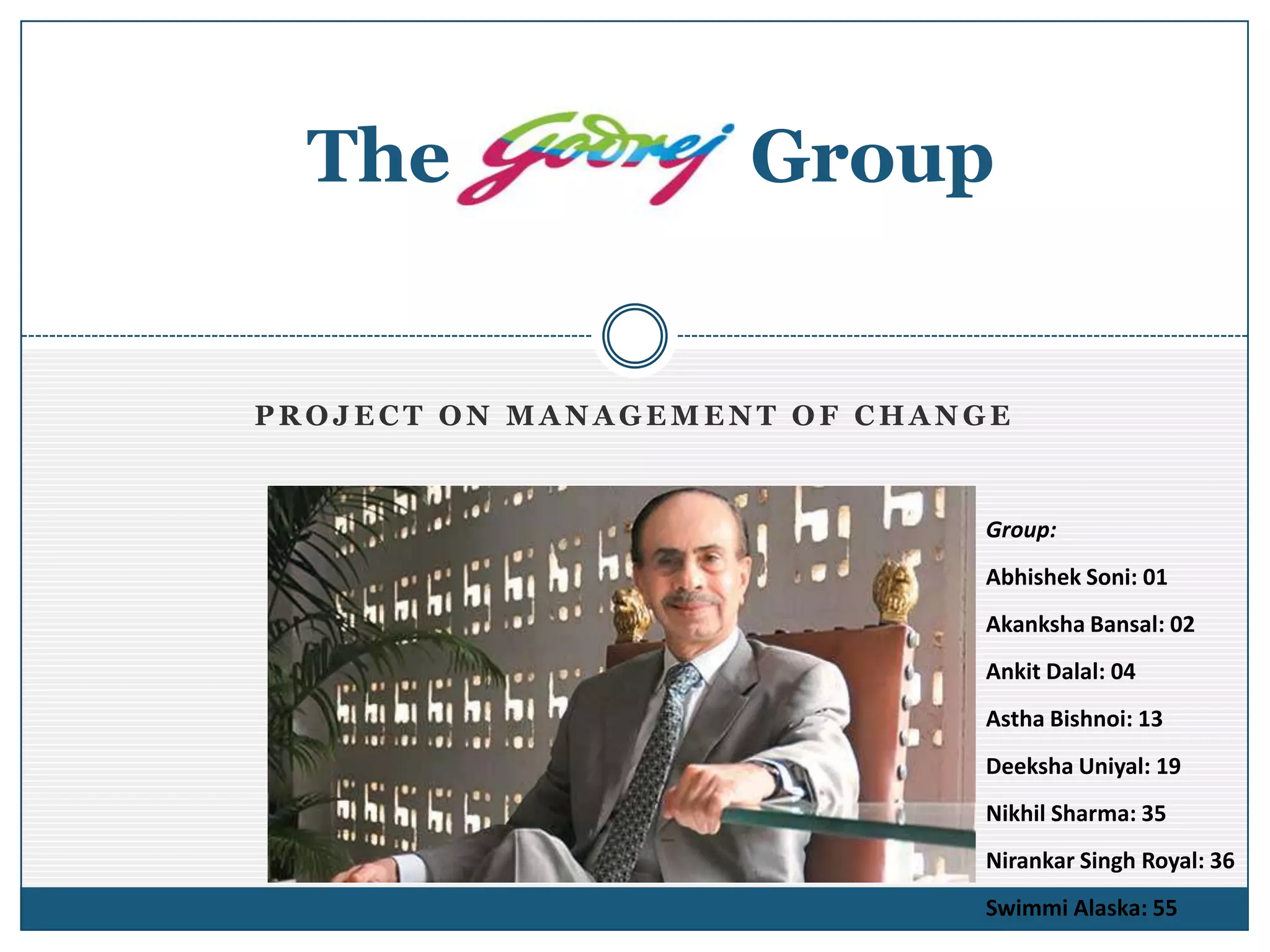
The Godrej Group
Group:
Abhishek Soni: 01
Akanksha Bansal: 02
Ankit Dalal: 04
Astha Bishnoi: 13
Deeksha Uniyal: 19
Nikhil Sharma: 35
Nirankar Singh Royal: 36
Swimmi Alaska: 55
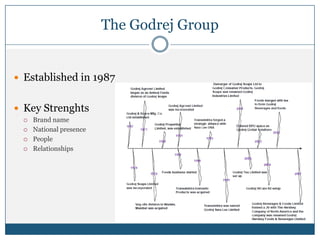
The Godrej Group
 Established in 1987
 Key Strenghts
 Brand name
 National presence
 People
 Relationships
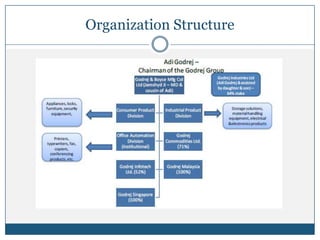
Organization Structure
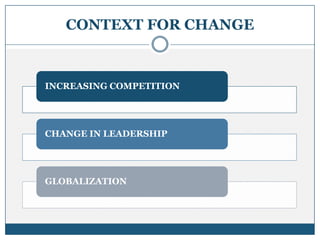
CONTEXT FOR CHANGE
INCREASING COMPETITION
CHANGE IN LEADERSHIP
GLOBALIZATION
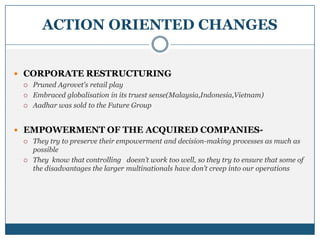
ACTION ORIENTED CHANGES
 CORPORATE RESTRUCTURING
 Pruned Agrovet's retail play
 Embraced globalisation in its truest sense(Malaysia,Indonesia,Vietnam)
 Aadhar was sold to the Future Group
 EMPOWERMENT OF THE ACQUIRED COMPANIES-
 They try to preserve their empowerment and decision-making processes as much as
possible
 They know that controlling doesn’t work too well, so they try to ensure that some of
the disadvantages the larger multinationals have don’t creep into our operations
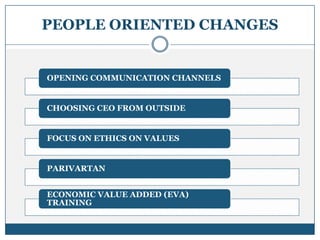
PEOPLE ORIENTED CHANGES
OPENING COMMUNICATION CHANNELS
CHOOSING CEO FROM OUTSIDE
FOCUS ON ETHICS ON VALUES
PARIVARTAN
ECONOMIC VALUE ADDED (EVA)
TRAINING
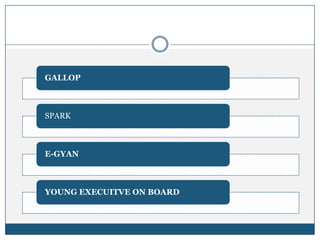
GALLOP
SPARK
E-GYAN
YOUNG EXECUITVE ON BOARD
TECHNOLOGY CHANGES
 They were among the first in India to introduce enterprise resource
planning (ERP) systems
 Connecting everyone using their IT infrastructure
 Established strong connectivity with our distributors (project
Sampark) and suppliers (project Sahyog)
STRATEGY CHANGES
 '3 BY 3' MATRIX STRATEGY
 Three continents (Asia, Africa and South America)
 Three categories: Hair care, home care (including insecticides) and
personal wash.
 Establish connect with the customer
 GLOBALIZATION
 Expansion via acquisitions
 INNOVATION
 Implementation of kaizen
PHILANTHORY
 Green-Business campus in the Vikhroli township of Mumbai
 Established many Trusts and Foundations
 Phirozshah Nagar-township for its own employees
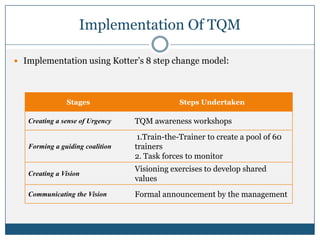
Implementation Of TQM
 Implementation using Kotter’s 8 step change model:
Stages Steps Undertaken
Creating a sense of Urgency TQM awareness workshops
Forming a guiding coalition
1.Train-the-Trainer to create a pool of 60
trainers
2. Task forces to monitor
Creating a Vision
Visioning exercises to develop shared
values
Communicating the Vision Formal announcement by the management
Implementation Of TQM
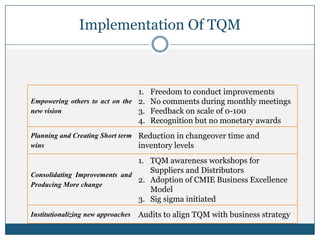
Empowering others to act on the
new vision
1. Freedom to conduct improvements
2. No comments during monthly meetings
3. Feedback on scale of 0-100
4. Recognition but no monetary awards
Planning and Creating Short term
wins
Reduction in changeover time and
inventory levels
Consolidating Improvements and
Producing More change
1. TQM awareness workshops for
Suppliers and Distributors
2. Adoption of CMIE Business Excellence
Model
3. Sig sigma initiated
Institutionalizing new approaches Audits to align TQM with business strategy
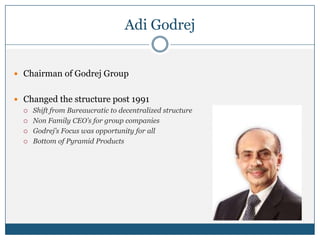
Adi Godrej
 Chairman of Godrej Group
 Changed the structure post 1991
 Shift from Bureaucratic to decentralized structure
 Non Family CEO’s for group companies
 Godrej’s Focus was opportunity for all
 Bottom of Pyramid Products
Leadership
 According to Adi Godrej Leadership should
 About taking tough decisions in difficult times
 Owe an explanation for his decision
 Have a clear vision
 Have Wisdom, even if is not the most intelligent
 Should Think Future backwards
Leadership Style
 Transformational Leadership
 Had became Less Autocratic
 To be a better listener
 A Man of simple Stature
 Connection with People
 Emotional Connect
 Social Responsibility
 Green Emphasis
 Delegating Authority
Leadership Style( Contd..)
 Eliminating Unnecessary Control
 A Statesman
 Detached Decision Maker
 Talent Developer
 Selecting Entrepreneurial Leaders
 Encouraging Out of box thinkers
 Employees should be committed to values
 Focus on Devotion
LEARNINGS
 Transformation requires tough decisions and strong
determination from the leader
 There should be clear plan of action for implementing the change
 When implementing a change in a particular process all related
process must also be changed to sustain the change
 Involvement and empowerment of affected stakeholders is a
must
 Leadership styles should evolve with changing times
 The leader should practice what he/she preaches
 Every change impacts both management and people processes

The godrej group

  • 1.
    P R OJ E C T O N M A N A G E M E N T O F C H A N G E The Godrej Group Group: Abhishek Soni: 01 Akanksha Bansal: 02 Ankit Dalal: 04 Astha Bishnoi: 13 Deeksha Uniyal: 19 Nikhil Sharma: 35 Nirankar Singh Royal: 36 Swimmi Alaska: 55
  • 2.
    The Godrej Group Established in 1987  Key Strenghts  Brand name  National presence  People  Relationships
  • 3.
  • 4.
    CONTEXT FOR CHANGE INCREASINGCOMPETITION CHANGE IN LEADERSHIP GLOBALIZATION
  • 5.
    ACTION ORIENTED CHANGES CORPORATE RESTRUCTURING  Pruned Agrovet's retail play  Embraced globalisation in its truest sense(Malaysia,Indonesia,Vietnam)  Aadhar was sold to the Future Group  EMPOWERMENT OF THE ACQUIRED COMPANIES-  They try to preserve their empowerment and decision-making processes as much as possible  They know that controlling doesn’t work too well, so they try to ensure that some of the disadvantages the larger multinationals have don’t creep into our operations
  • 6.
    PEOPLE ORIENTED CHANGES OPENINGCOMMUNICATION CHANNELS CHOOSING CEO FROM OUTSIDE FOCUS ON ETHICS ON VALUES PARIVARTAN ECONOMIC VALUE ADDED (EVA) TRAINING
  • 7.
  • 8.
    TECHNOLOGY CHANGES  Theywere among the first in India to introduce enterprise resource planning (ERP) systems  Connecting everyone using their IT infrastructure  Established strong connectivity with our distributors (project Sampark) and suppliers (project Sahyog)
  • 9.
    STRATEGY CHANGES  '3BY 3' MATRIX STRATEGY  Three continents (Asia, Africa and South America)  Three categories: Hair care, home care (including insecticides) and personal wash.  Establish connect with the customer  GLOBALIZATION  Expansion via acquisitions  INNOVATION  Implementation of kaizen
  • 10.
    PHILANTHORY  Green-Business campusin the Vikhroli township of Mumbai  Established many Trusts and Foundations  Phirozshah Nagar-township for its own employees
  • 11.
    Implementation Of TQM Implementation using Kotter’s 8 step change model: Stages Steps Undertaken Creating a sense of Urgency TQM awareness workshops Forming a guiding coalition 1.Train-the-Trainer to create a pool of 60 trainers 2. Task forces to monitor Creating a Vision Visioning exercises to develop shared values Communicating the Vision Formal announcement by the management
  • 12.
    Implementation Of TQM Empoweringothers to act on the new vision 1. Freedom to conduct improvements 2. No comments during monthly meetings 3. Feedback on scale of 0-100 4. Recognition but no monetary awards Planning and Creating Short term wins Reduction in changeover time and inventory levels Consolidating Improvements and Producing More change 1. TQM awareness workshops for Suppliers and Distributors 2. Adoption of CMIE Business Excellence Model 3. Sig sigma initiated Institutionalizing new approaches Audits to align TQM with business strategy
  • 13.
    Adi Godrej  Chairmanof Godrej Group  Changed the structure post 1991  Shift from Bureaucratic to decentralized structure  Non Family CEO’s for group companies  Godrej’s Focus was opportunity for all  Bottom of Pyramid Products
  • 14.
    Leadership  According toAdi Godrej Leadership should  About taking tough decisions in difficult times  Owe an explanation for his decision  Have a clear vision  Have Wisdom, even if is not the most intelligent  Should Think Future backwards
  • 15.
    Leadership Style  TransformationalLeadership  Had became Less Autocratic  To be a better listener  A Man of simple Stature  Connection with People  Emotional Connect  Social Responsibility  Green Emphasis  Delegating Authority
  • 16.
    Leadership Style( Contd..) Eliminating Unnecessary Control  A Statesman  Detached Decision Maker  Talent Developer  Selecting Entrepreneurial Leaders  Encouraging Out of box thinkers  Employees should be committed to values  Focus on Devotion
  • 17.
    LEARNINGS  Transformation requirestough decisions and strong determination from the leader  There should be clear plan of action for implementing the change  When implementing a change in a particular process all related process must also be changed to sustain the change  Involvement and empowerment of affected stakeholders is a must  Leadership styles should evolve with changing times  The leader should practice what he/she preaches  Every change impacts both management and people processes