Downloaded 4,387 times
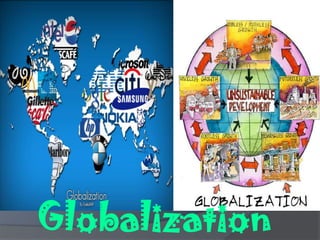
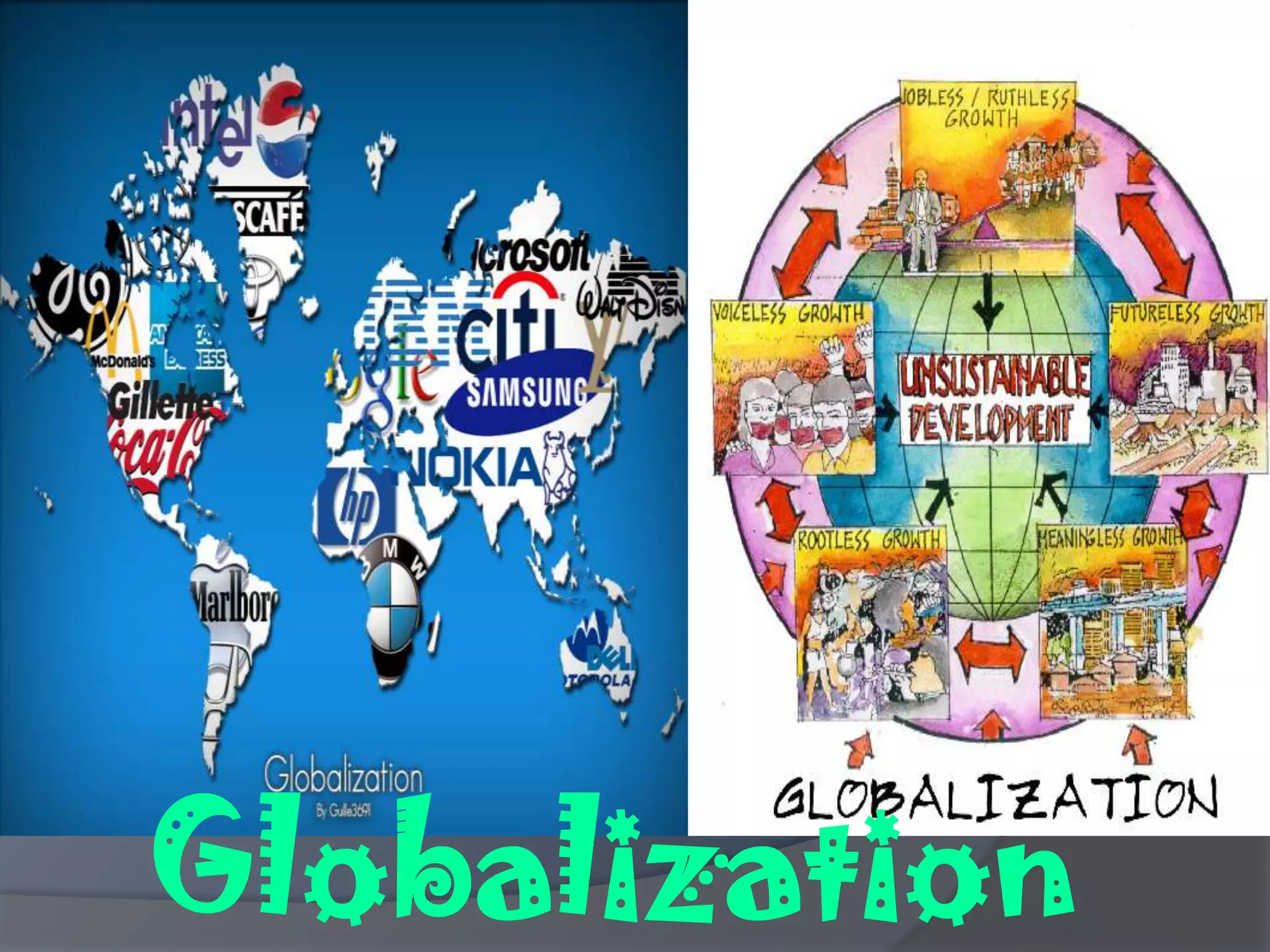






Globalization refers to the increased integration and interdependence of national economies through cross-border movement of goods, capital, services, technologies and people. It has led to greater international trade, cultural exchange and development of global telecommunications infrastructure. While proponents argue it increases economic growth and efficiency, critics argue it can negatively impact national sovereignty, local cultures and lead to greater inequality. The document outlines both the advantages such as increased employment, education and cheaper goods, as well as disadvantages like health issues, environmental degradation and uneven wealth distribution that have resulted from globalization.


