

THE FUTURE OF
LEARNING
Hello!
I am Your Name
I am here because I love to give
presentations.
You can find me at:
your.email@username
What is the Future
of Learning?
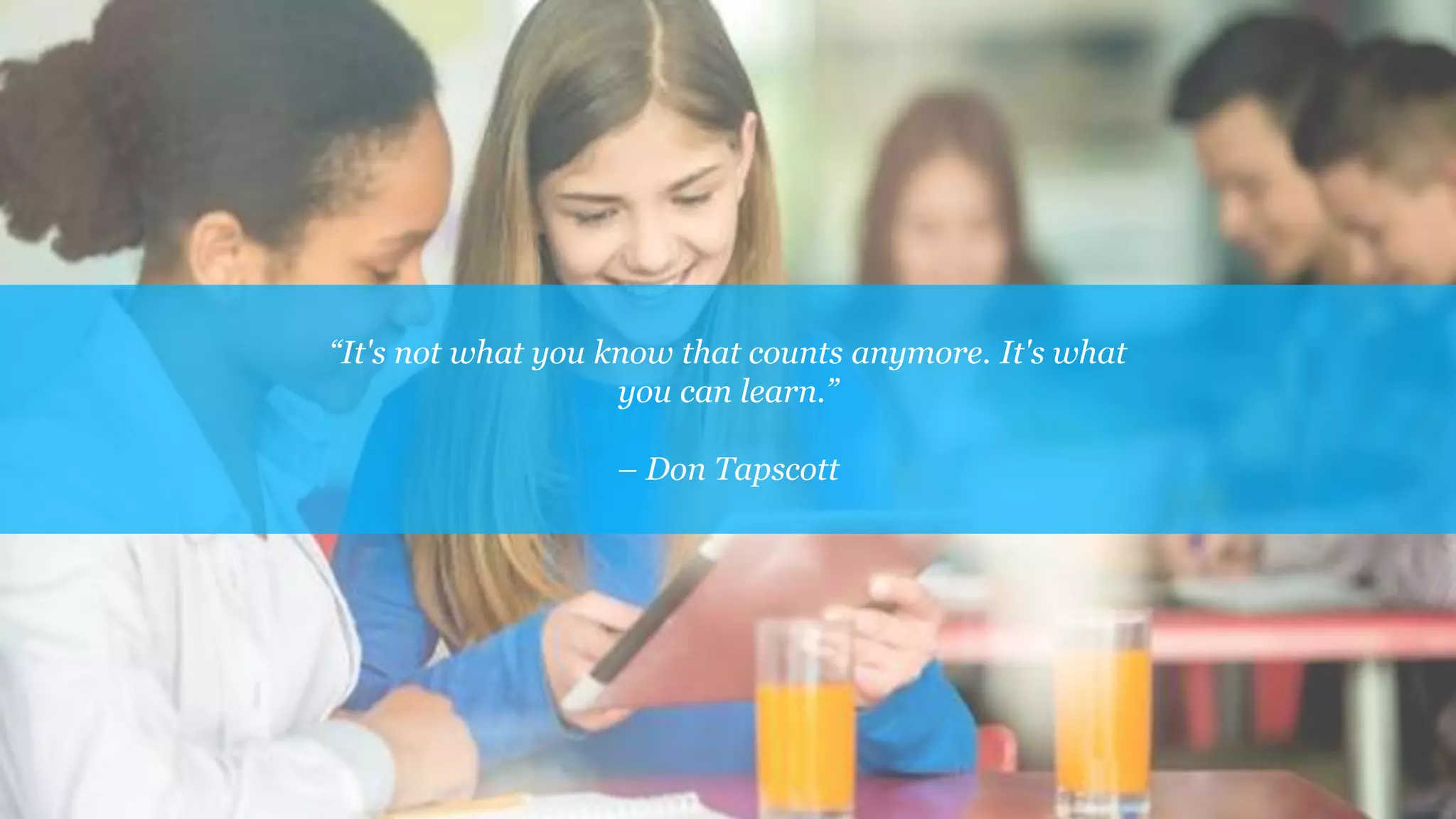
“It's not what you know that counts anymore. It's what
you can learn.”
– Don Tapscott
➜ We can’t state explicitly or emphatically what the
future of learning will look like because things are
moving so fast. But we can extrapolate some
general characteristics from current trends.
WHAT IS THE FUTURE OF LEARNING?
➜ individualized /
personalized
➜ computer-based and
software-mediated and
less dependent on live
humans
➜ open / accessible (in
the sense of OER)
➜ project-based
➜ simulation– or game-
based
For Example, in the future our learning will be
even more …
➜ digital rather than
analog / ink on paper
➜ Informal
➜ online and less
dependent on local
humans
➜ Mobile
➜ networked /
interconnected
➜ Multimedia
➜ self-directed / inquiry-
based
7
TRENDS
To watch out for over the next
5 years
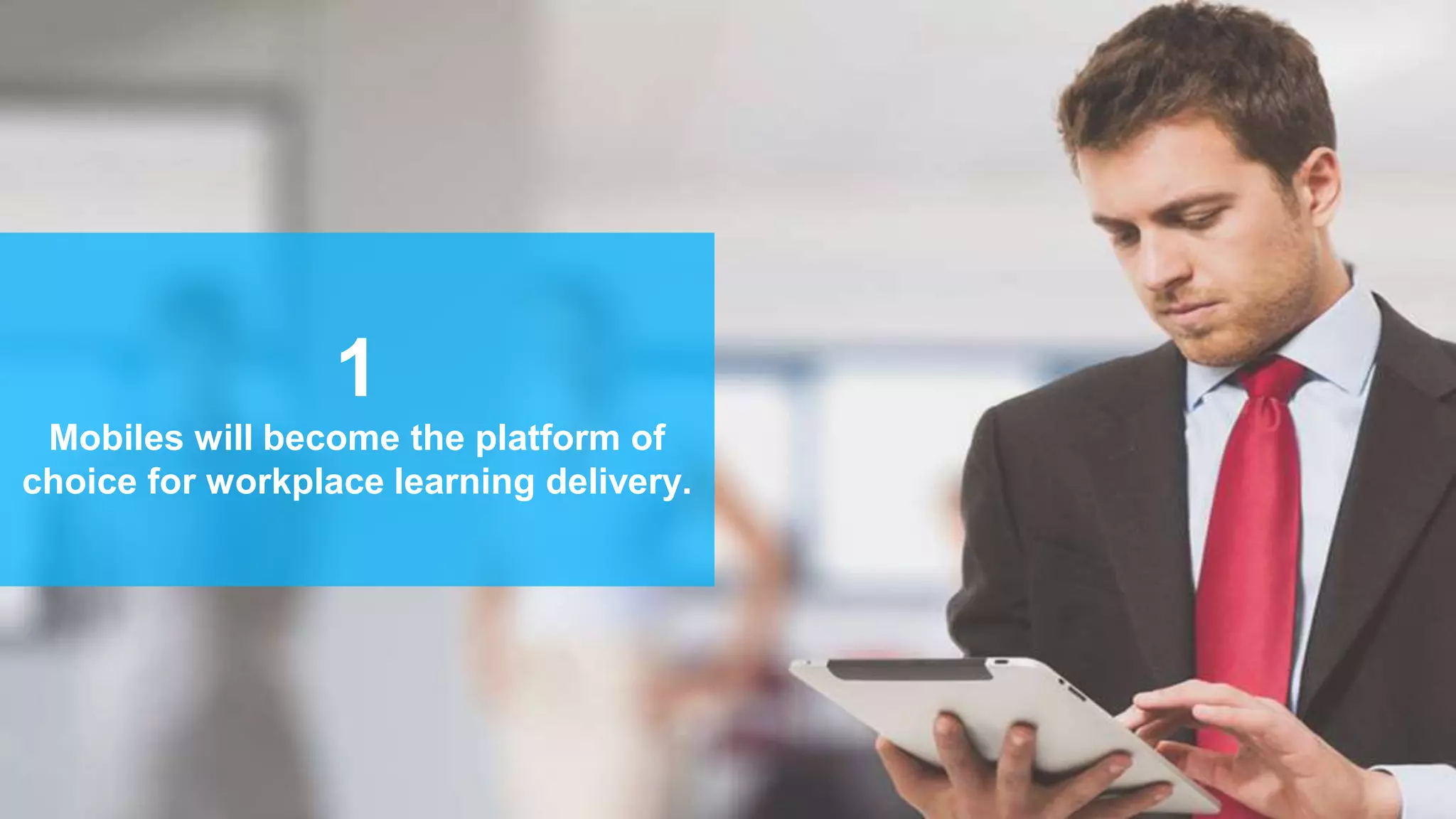
1
Mobiles will become the platform of
choice for workplace learning delivery.
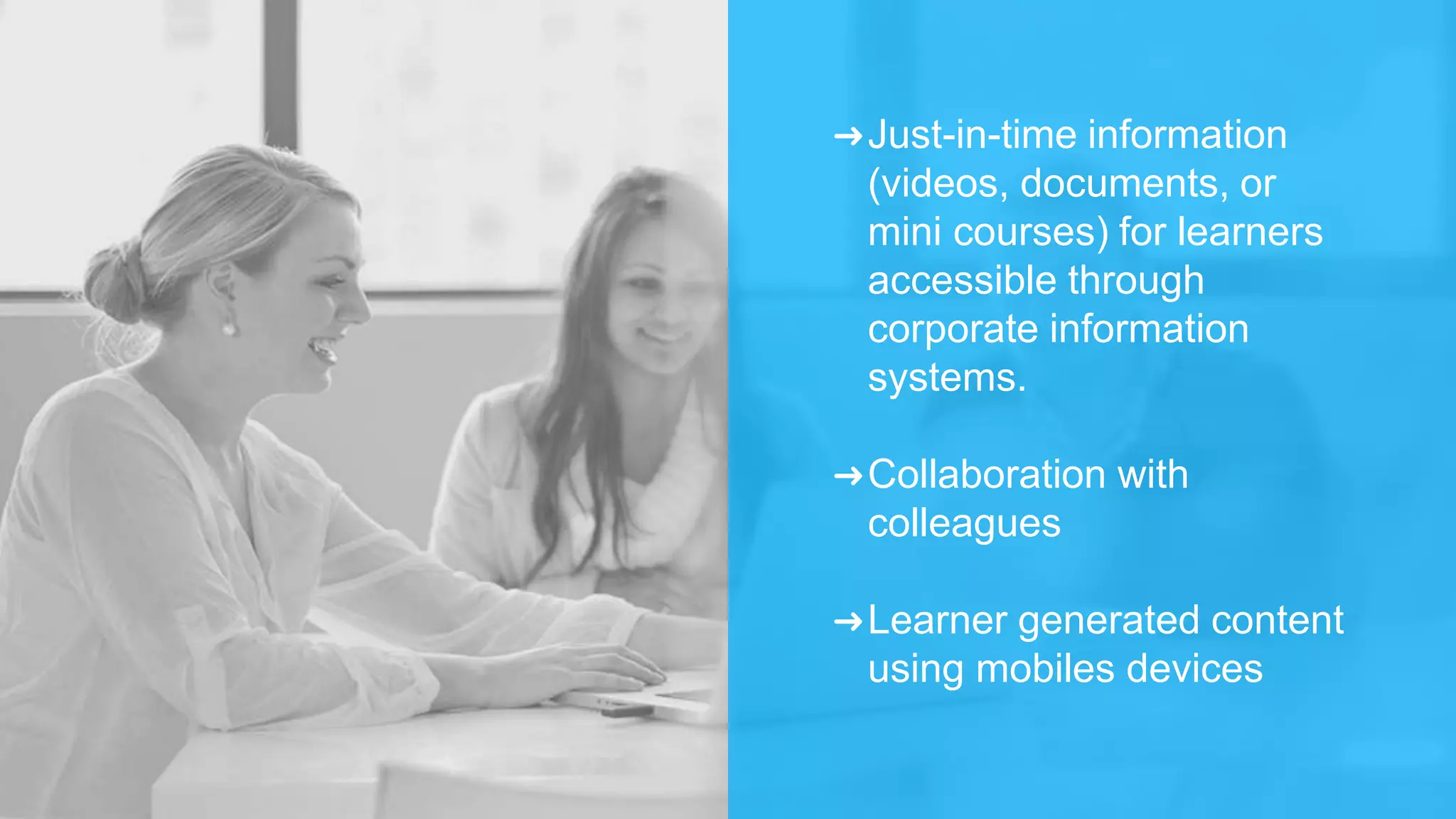
➜Just-in-time information
(videos, documents, or
mini courses) for learners
accessible through
corporate information
systems.
➜Collaboration with
colleagues
➜Learner generated content
using mobiles devices
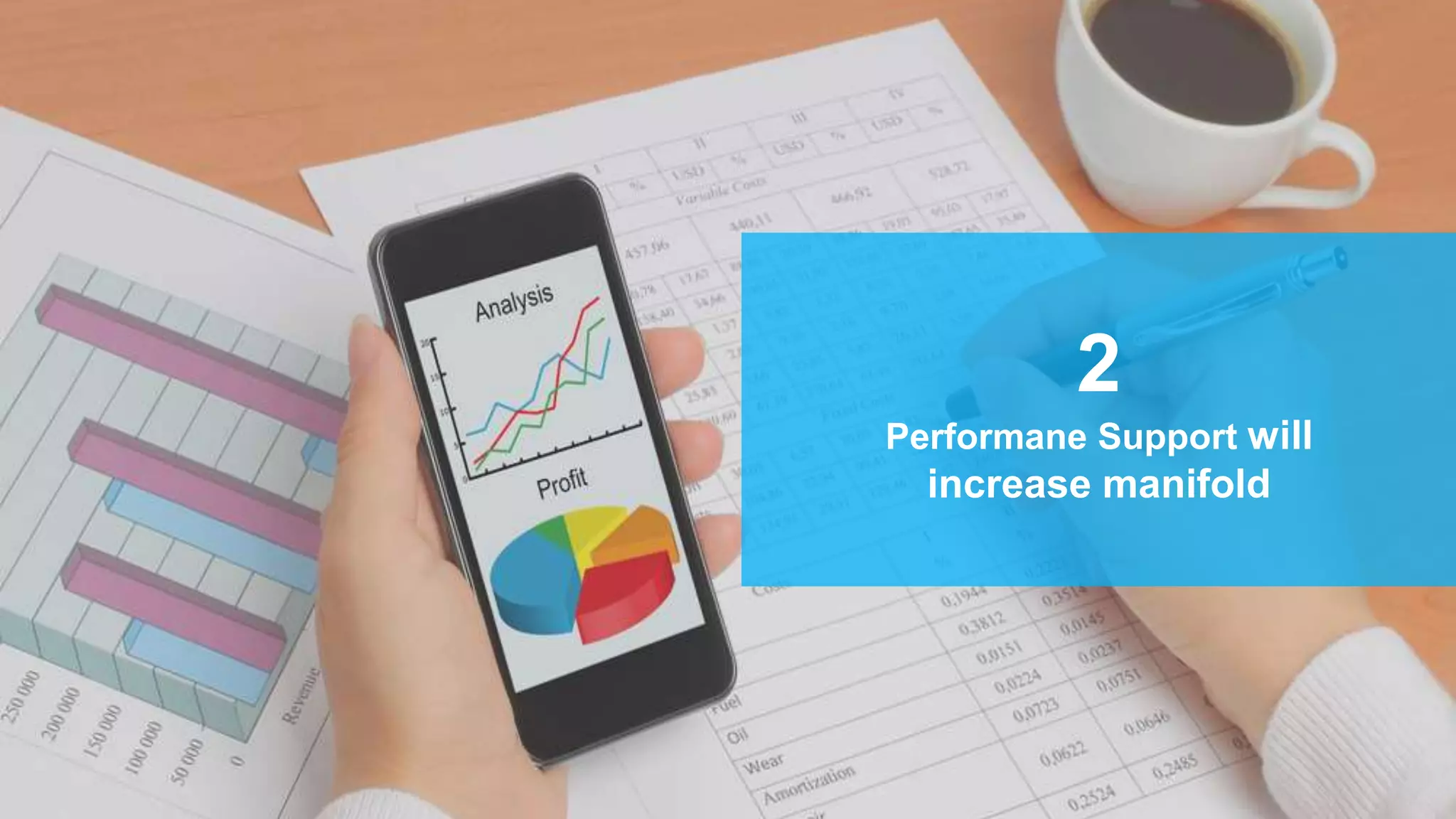
2
Performane Support will
increase manifold
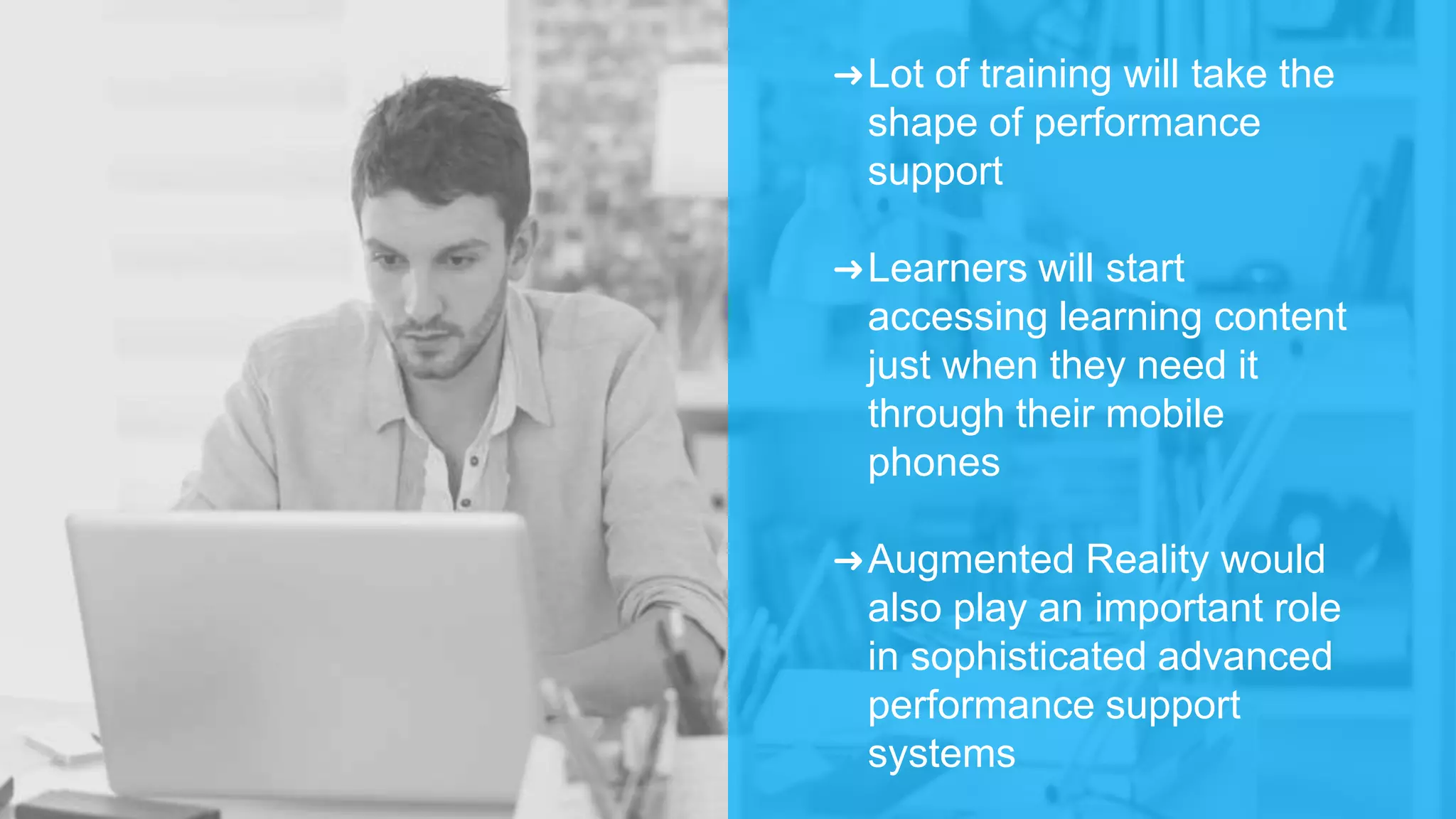
➜Lot of training will take the
shape of performance
support
➜Learners will start
accessing learning content
just when they need it
through their mobile
phones
➜Augmented Reality would
also play an important role
in sophisticated advanced
performance support
systems
3
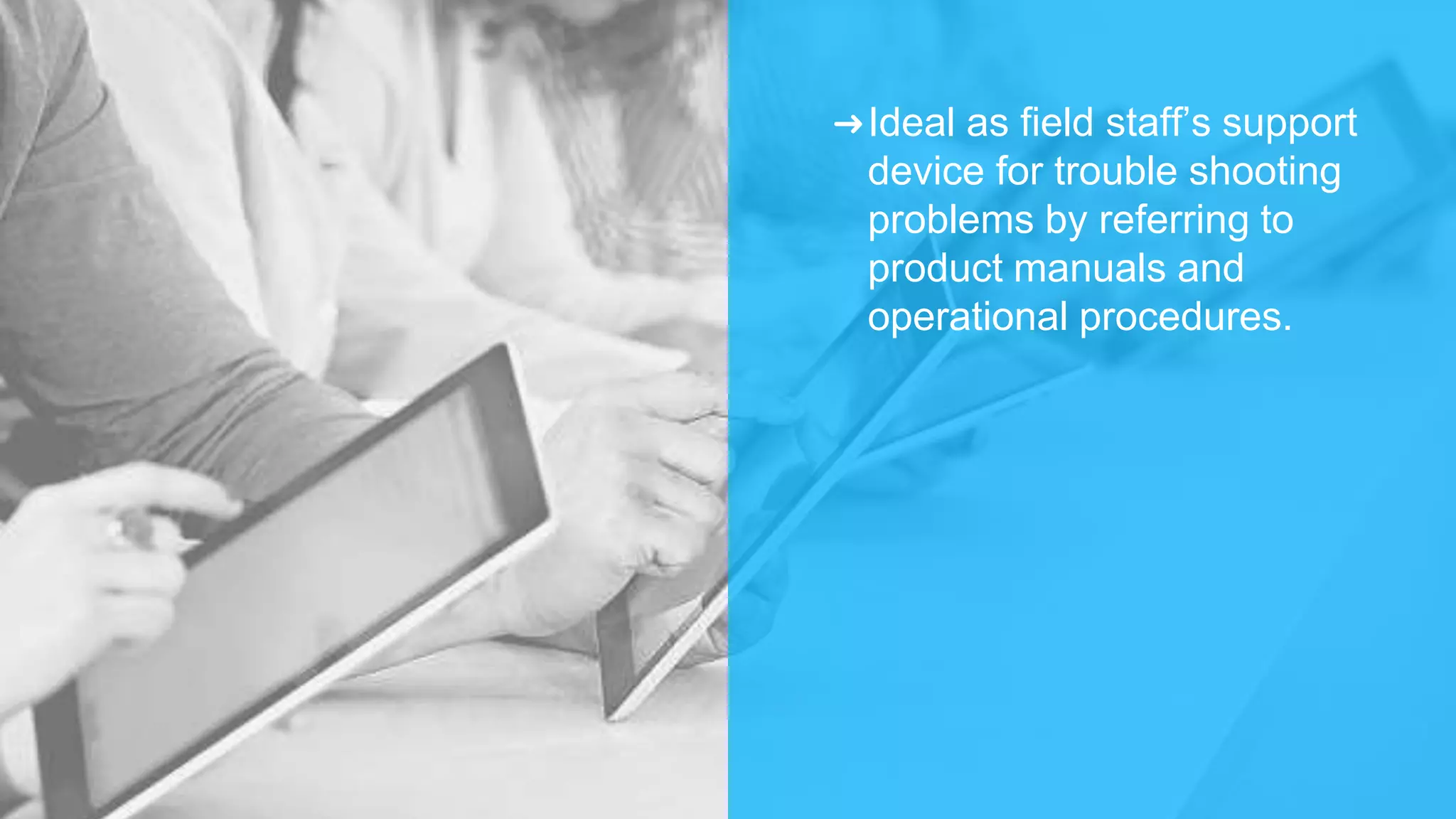
Tablets as Support Devices
➜Ideal as field staff’s support
device for trouble shooting
problems by referring to
product manuals and
operational procedures.
4
LMS will evolve to support (not
manage) Formal + Informal + Social
+ Non-Formal learning components
➜This will bring about a big
shift in the way we see
assessments.
➜The ability to measure
informal learning may be
done through the system
itself.
➜Constant tracking of some
metrics will help learning
designers monitor the
‘learning/performance
health’ of the system and
its users.
5
Games (and simulations) will
become integral part of workplace
learning.
➜As the focus of learning
departments change to
being facilitators rather
than providers of training,
engaging solutions like
games will become crucial
6
Birth of new Authoring Tools
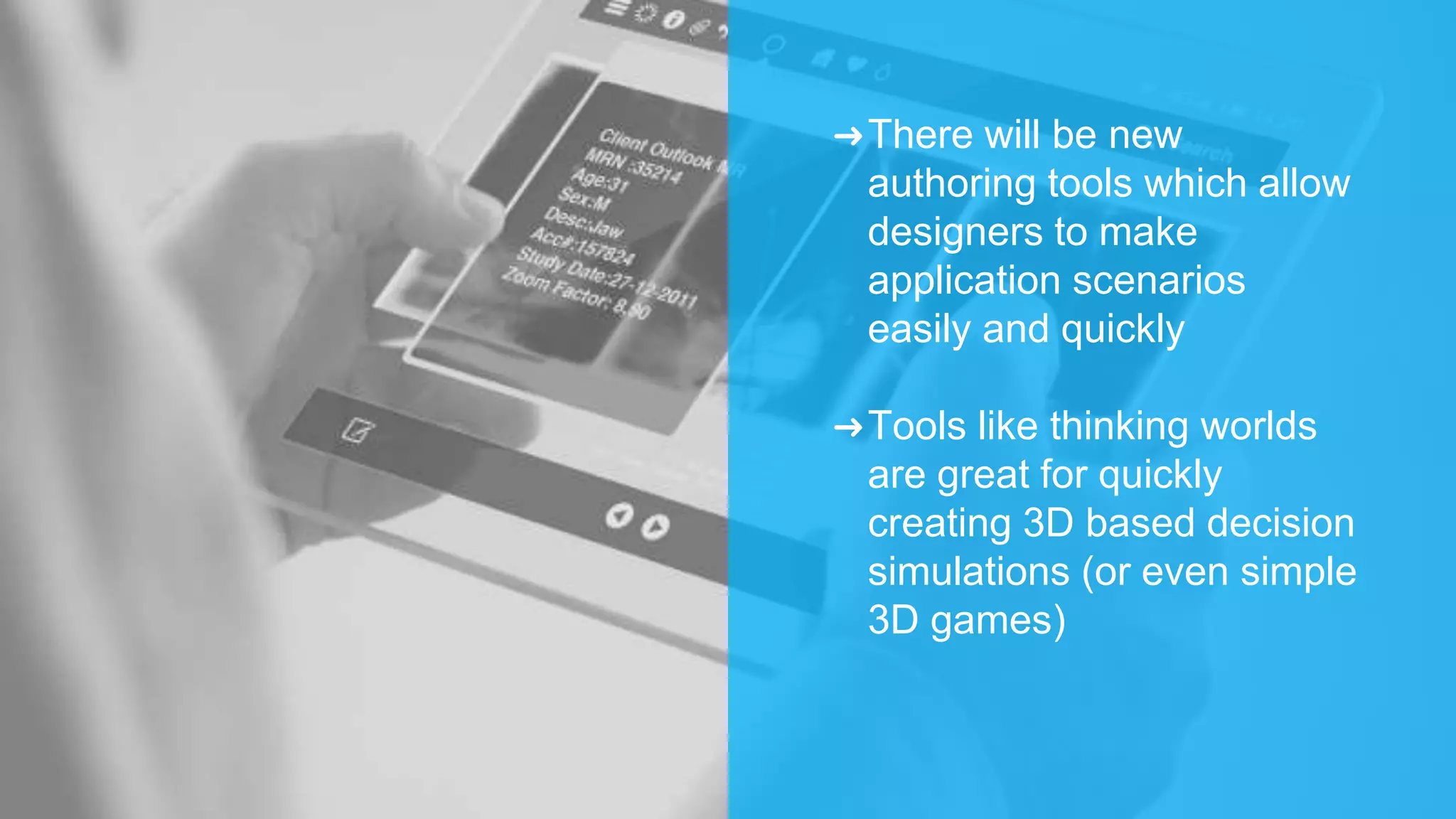
➜There will be new
authoring tools which allow
designers to make
application scenarios
easily and quickly
➜Tools like thinking worlds
are great for quickly
creating 3D based decision
simulations (or even simple
3D games)
7
Emergence of Personal Learning
Agents
➜Intelligent personal
learning software agents
will emerge as learning
content mediators with the
emergence of Semantic
Web.
➜These agents, that run on
a personal computing
device and constantly
monitor content streams on
the internet to provide up-
to-date information, will
make a good performance
support and learning
assistance system.
Personalized
Learning
Personalisation of learning means ensuring that
individual differences are acknowledged
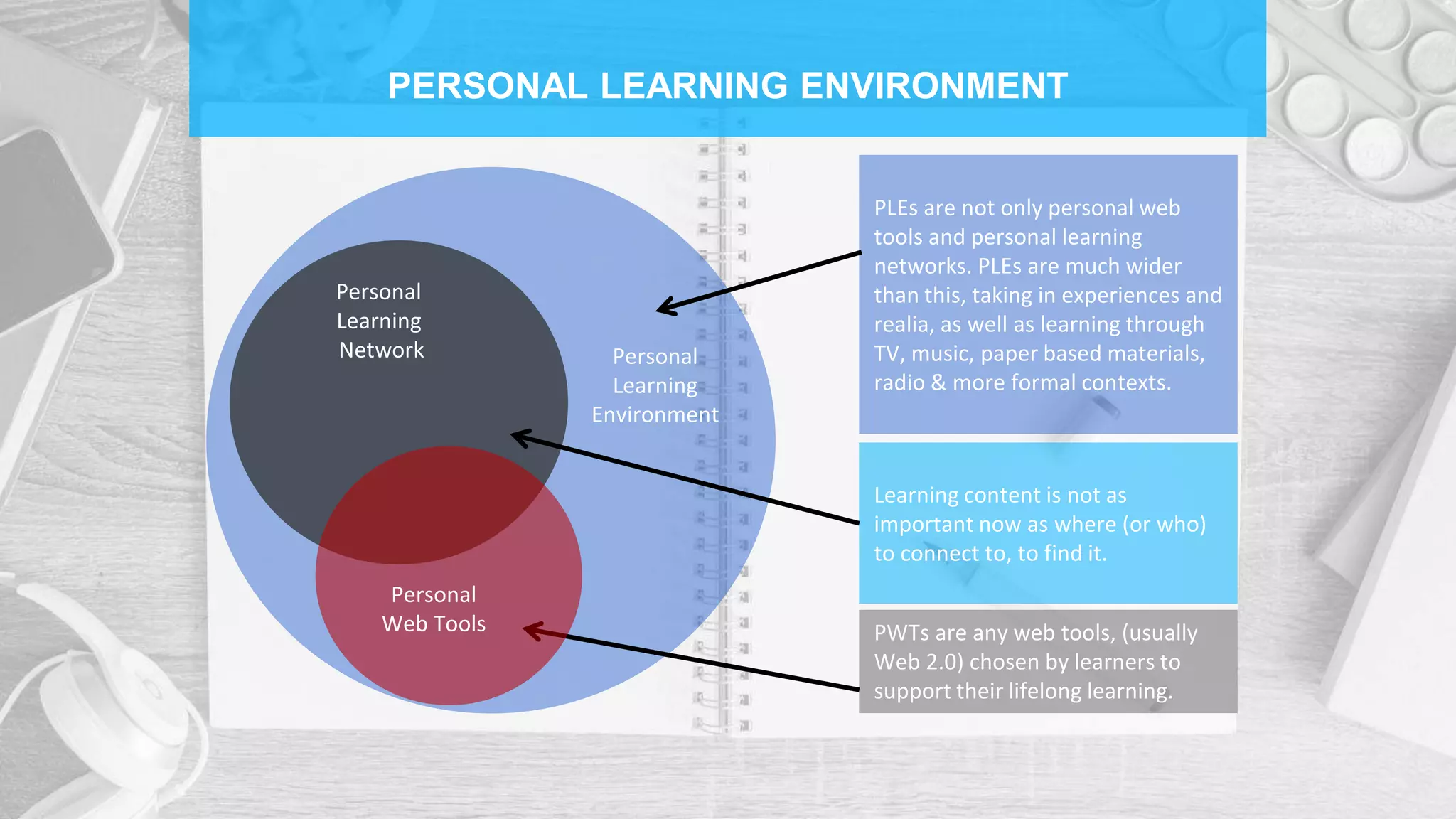
PERSONAL LEARNING ENVIRONMENT
Personal
Learning
Environment
PLEs are not only personal web
tools and personal learning
networks. PLEs are much wider
than this, taking in experiences and
realia, as well as learning through
TV, music, paper based materials,
radio & more formal contexts.
Learning content is not as
important now as where (or who)
to connect to, to find it.
PWTs are any web tools, (usually
Web 2.0) chosen by learners to
support their lifelong learning.
Personal
Learning
Network
Personal
Web Tools
Social Media Use
“Social Media gives everyone a voice in the
community.”
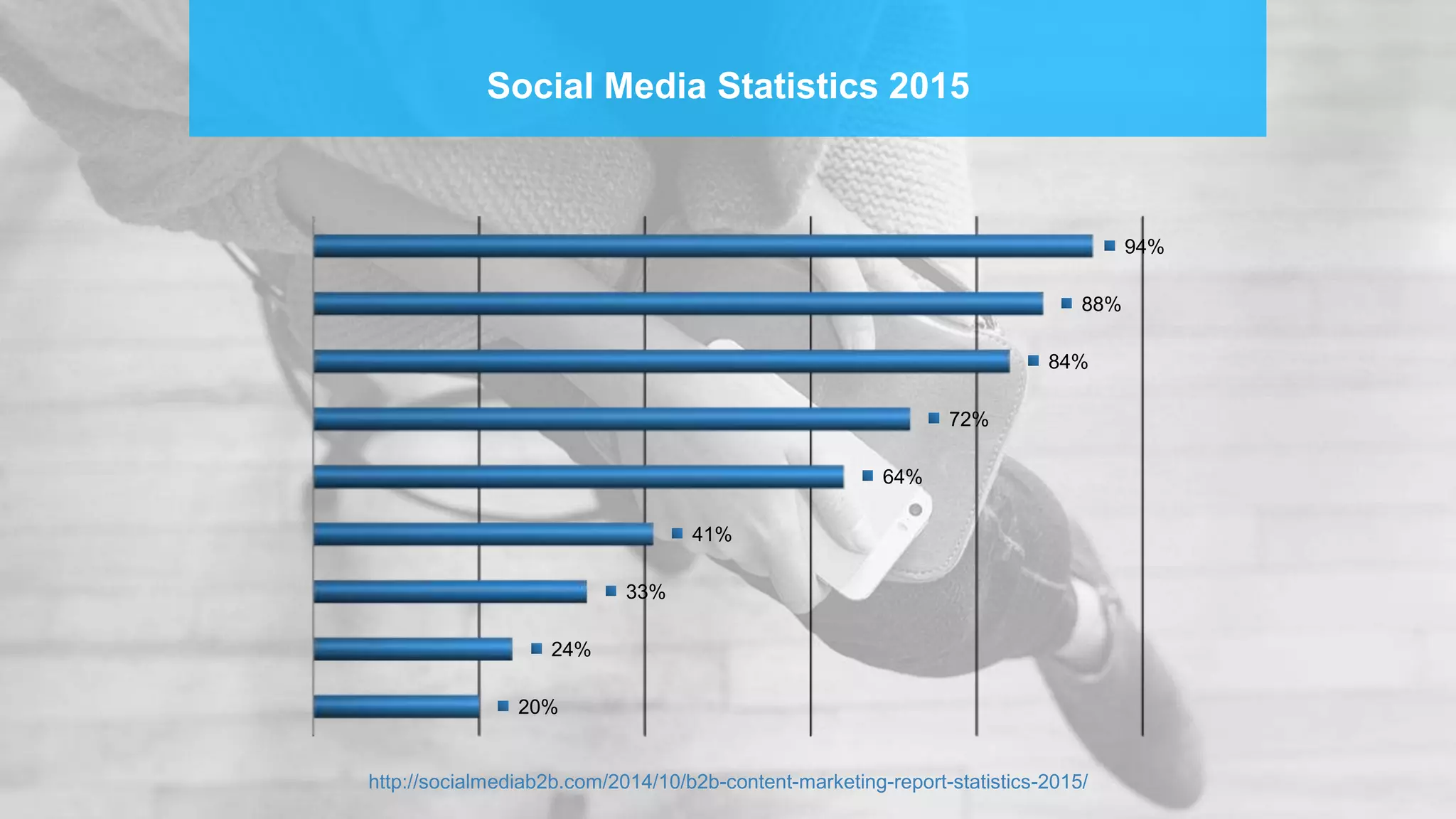
Social Media Statistics 2015
20%
24%
33%
41%
64%
72%
84%
88%
94%
http://socialmediab2b.com/2014/10/b2b-content-marketing-report-statistics-2015/
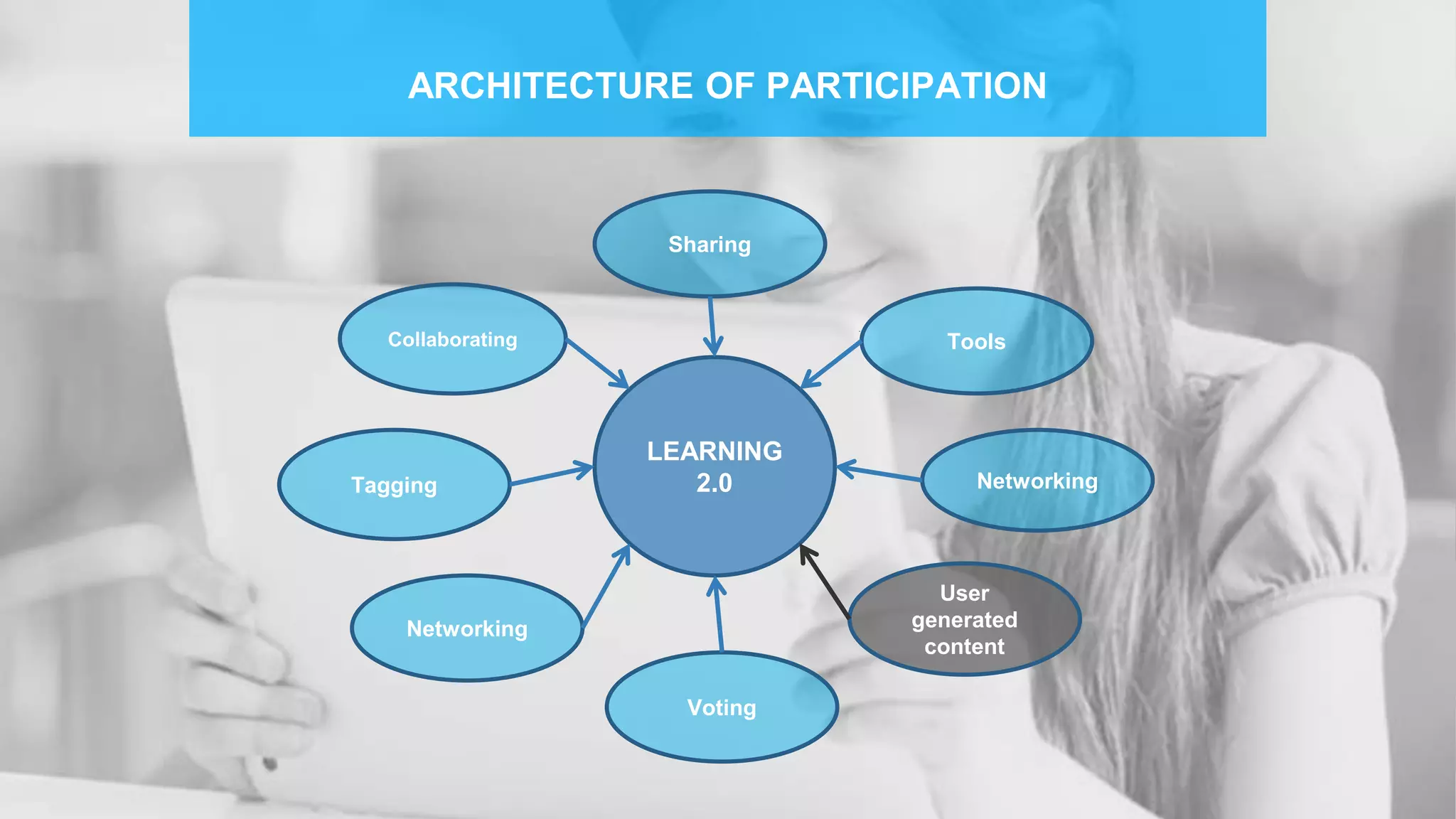
ARCHITECTURE OF PARTICIPATION
LEARNING
2.0
Collaborating
Voting
Networking
User
generated
content
Tagging
Networking
Sharing
Tools
BLOGGING
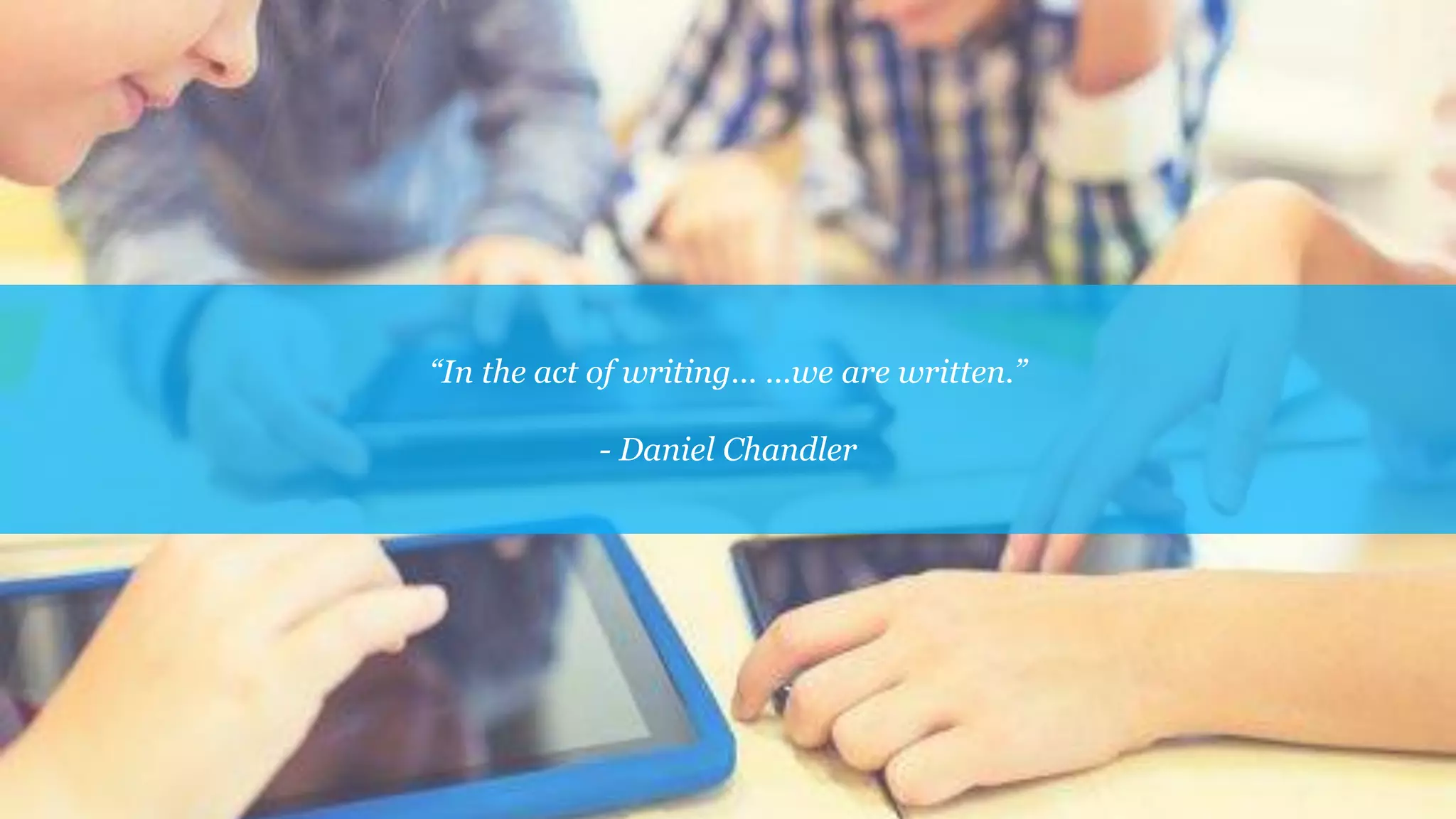
“In the act of writing... ...we are written.”
- Daniel Chandler
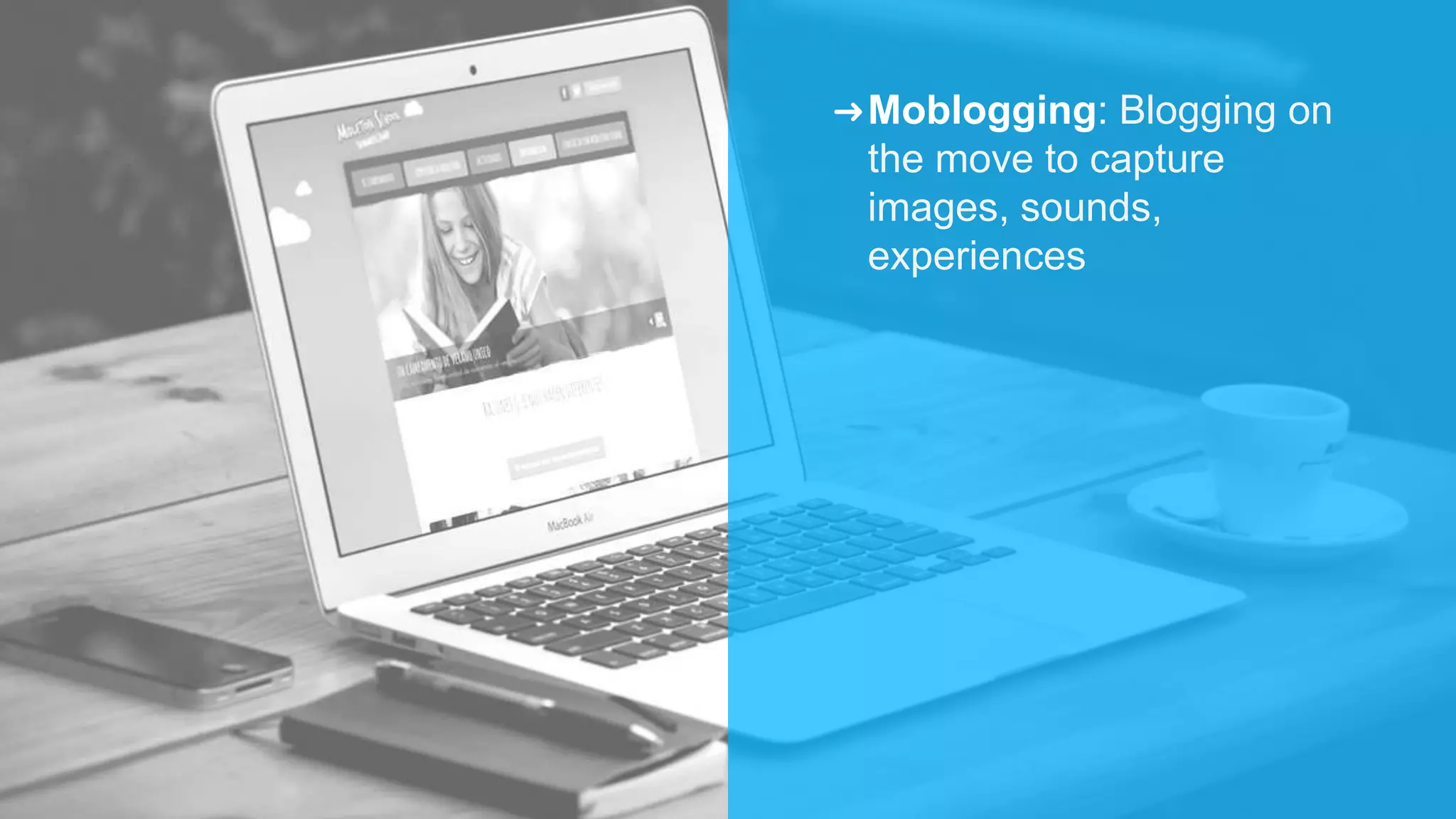
➜Moblogging: Blogging on
the move to capture
images, sounds,
experiences
➜Micro blogging: It has
potential for the future of
learning - if we see it as a
new communication
Channel. - Ebner et al
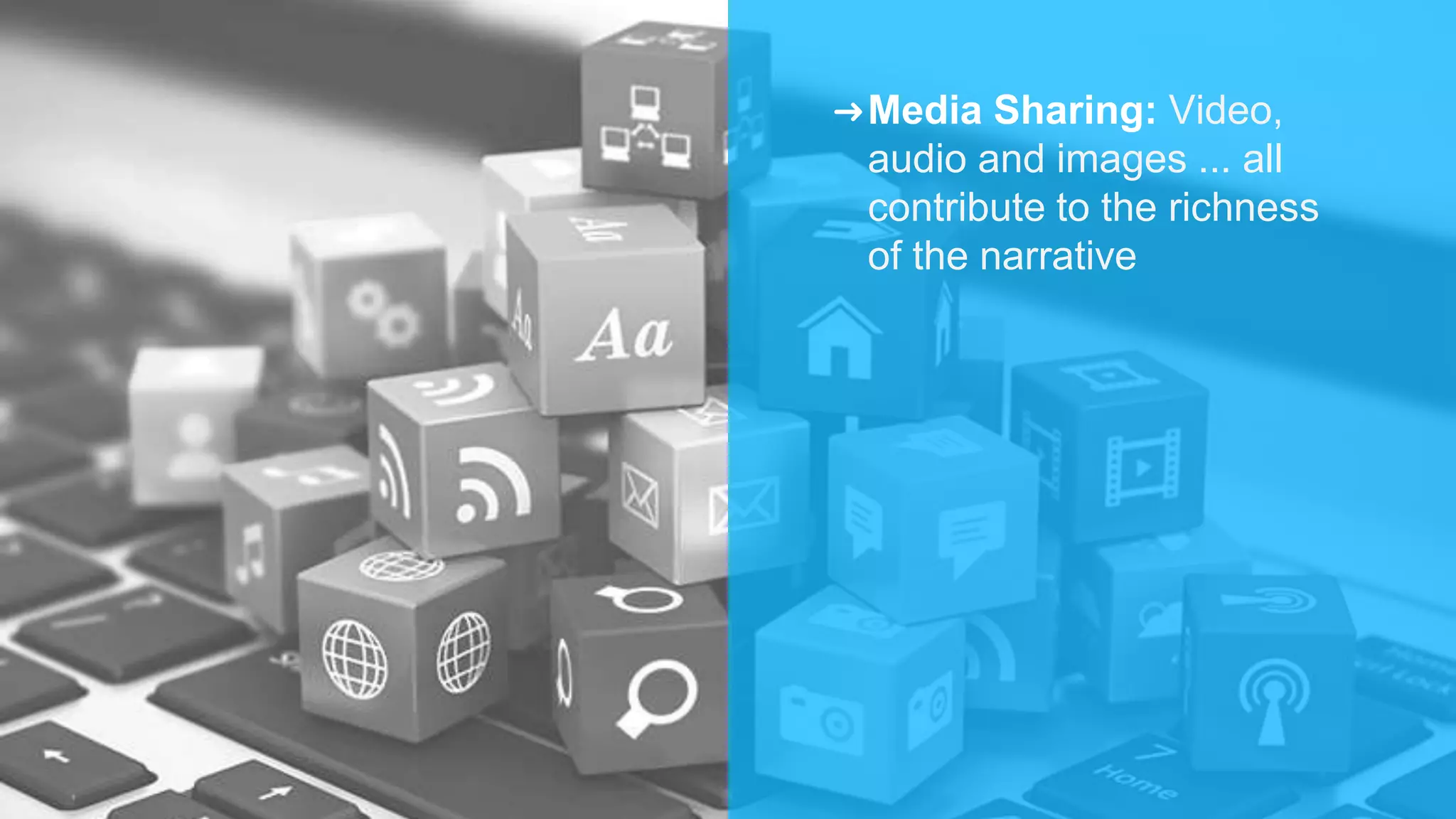
➜Media Sharing: Video,
audio and images ... all
contribute to the richness
of the narrative
Social
Learning
“Human activities are mediated by culturally
established instruments such as tools and language.” -
Vygotsky, L. S. (1978) Mind in Society
COMPUTERS AS MIND TOOLS
➜Social Learning: We can
use computers to extend
the capabilities of our own
minds. They can become
the repositories of our
knowledge.
➜Connectivism: We live in
a techno-social world
Learning occurs inside and
outside of people – we
store our knowledge in
computers and in other
people – George Siemens
“I store my knowledge in my friends’ is an axiom for
collecting knowledge through collecting people.” -
Karen Stephenson
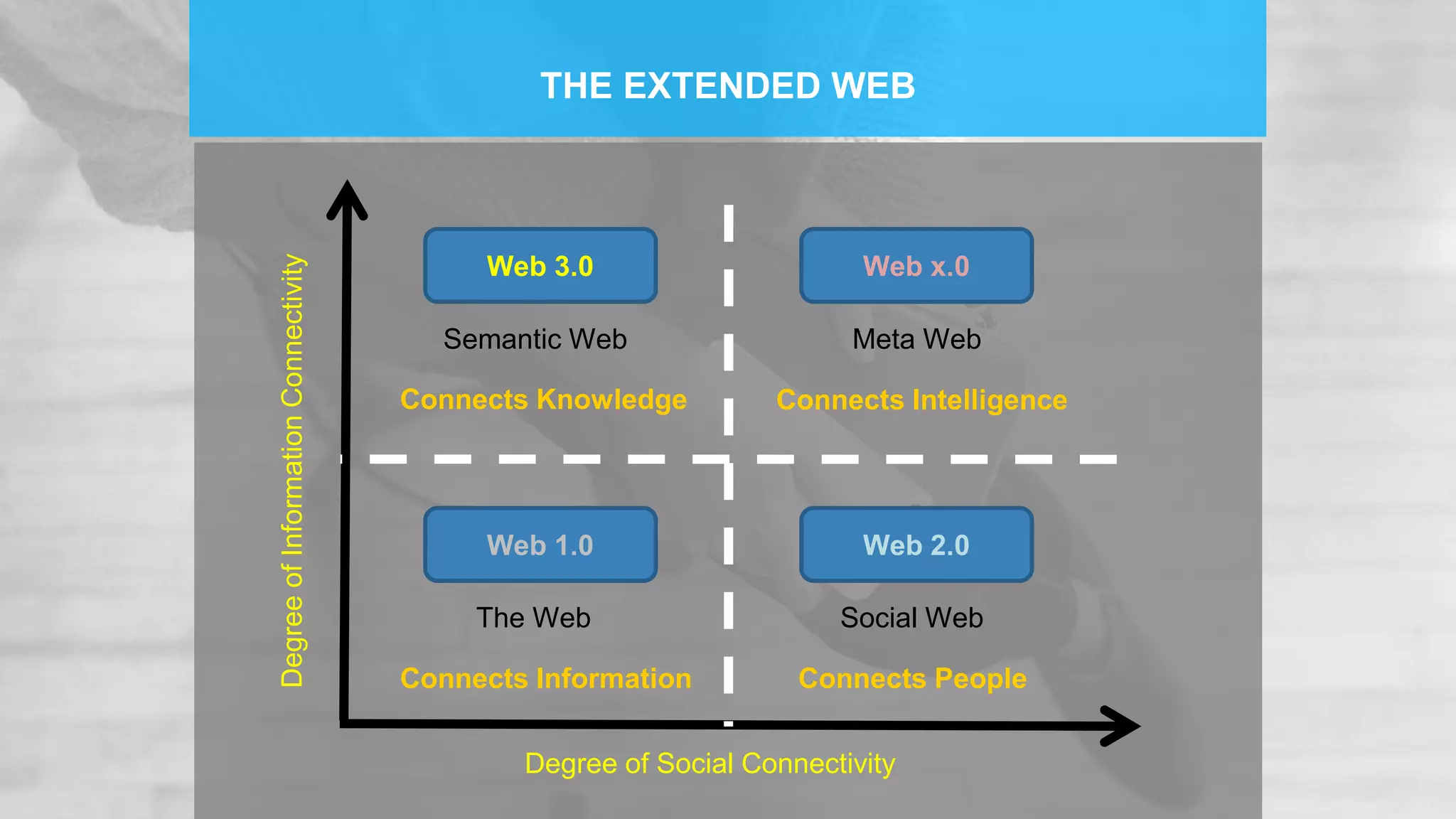
The eXtended Web
➜Web 1.0: Anything can link
to anything
➜Web 2.0: User participation
➜Web 3.0: Existing data re-
connected for other
(smarter) uses
THE EXTENDED WEB
Web 3.0 Web x.0
Web 1.0 Web 2.0
Semantic Web Meta Web
The Web Social Web
Connects Knowledge Connects Intelligence
Connects Information Connects People
DegreeofInformationConnectivity
Degree of Social Connectivity
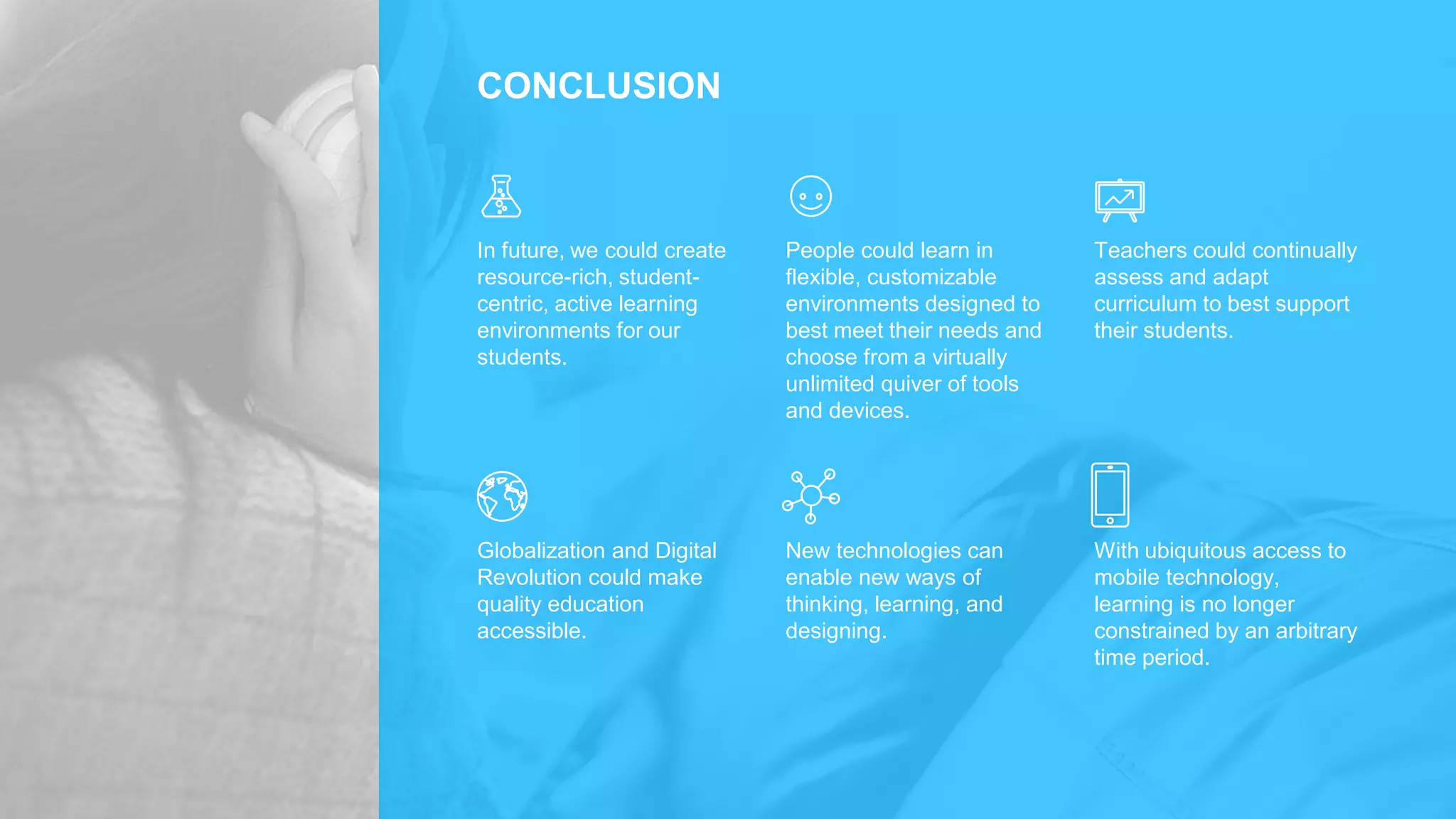
CONCLUSION
In future, we could create
resource-rich, student-
centric, active learning
environments for our
students.
People could learn in
flexible, customizable
environments designed to
best meet their needs and
choose from a virtually
unlimited quiver of tools
and devices.
Teachers could continually
assess and adapt
curriculum to best support
their students.
Globalization and Digital
Revolution could make
quality education
accessible.
New technologies can
enable new ways of
thinking, learning, and
designing.
With ubiquitous access to
mobile technology,
learning is no longer
constrained by an arbitrary
time period.
Thanks!
Any questions?
You can find me at:
@username
user@mail.me

The future of learning

  • 1.
  • 2.
    Hello! I am YourName I am here because I love to give presentations. You can find me at: your.email@username
  • 3.
    What is theFuture of Learning?
  • 4.
    “It's not whatyou know that counts anymore. It's what you can learn.” – Don Tapscott
  • 5.
    ➜ We can’tstate explicitly or emphatically what the future of learning will look like because things are moving so fast. But we can extrapolate some general characteristics from current trends. WHAT IS THE FUTURE OF LEARNING?
  • 6.
    ➜ individualized / personalized ➜computer-based and software-mediated and less dependent on live humans ➜ open / accessible (in the sense of OER) ➜ project-based ➜ simulation– or game- based For Example, in the future our learning will be even more … ➜ digital rather than analog / ink on paper ➜ Informal ➜ online and less dependent on local humans ➜ Mobile ➜ networked / interconnected ➜ Multimedia ➜ self-directed / inquiry- based
  • 7.
    7 TRENDS To watch outfor over the next 5 years
  • 8.
    1 Mobiles will becomethe platform of choice for workplace learning delivery.
  • 9.
    ➜Just-in-time information (videos, documents,or mini courses) for learners accessible through corporate information systems. ➜Collaboration with colleagues ➜Learner generated content using mobiles devices
  • 10.
  • 11.
    ➜Lot of trainingwill take the shape of performance support ➜Learners will start accessing learning content just when they need it through their mobile phones ➜Augmented Reality would also play an important role in sophisticated advanced performance support systems
  • 12.
  • 13.
    ➜Ideal as fieldstaff’s support device for trouble shooting problems by referring to product manuals and operational procedures.
  • 14.
    4 LMS will evolveto support (not manage) Formal + Informal + Social + Non-Formal learning components
  • 15.
    ➜This will bringabout a big shift in the way we see assessments. ➜The ability to measure informal learning may be done through the system itself. ➜Constant tracking of some metrics will help learning designers monitor the ‘learning/performance health’ of the system and its users.
  • 16.
    5 Games (and simulations)will become integral part of workplace learning.
  • 17.
    ➜As the focusof learning departments change to being facilitators rather than providers of training, engaging solutions like games will become crucial
  • 18.
    6 Birth of newAuthoring Tools
  • 19.
    ➜There will benew authoring tools which allow designers to make application scenarios easily and quickly ➜Tools like thinking worlds are great for quickly creating 3D based decision simulations (or even simple 3D games)
  • 20.
    7 Emergence of PersonalLearning Agents
  • 21.
    ➜Intelligent personal learning softwareagents will emerge as learning content mediators with the emergence of Semantic Web. ➜These agents, that run on a personal computing device and constantly monitor content streams on the internet to provide up- to-date information, will make a good performance support and learning assistance system.
  • 22.
  • 23.
    Personalisation of learningmeans ensuring that individual differences are acknowledged
  • 24.
    PERSONAL LEARNING ENVIRONMENT Personal Learning Environment PLEsare not only personal web tools and personal learning networks. PLEs are much wider than this, taking in experiences and realia, as well as learning through TV, music, paper based materials, radio & more formal contexts. Learning content is not as important now as where (or who) to connect to, to find it. PWTs are any web tools, (usually Web 2.0) chosen by learners to support their lifelong learning. Personal Learning Network Personal Web Tools
  • 25.
  • 26.
    “Social Media giveseveryone a voice in the community.”
  • 27.
    Social Media Statistics2015 20% 24% 33% 41% 64% 72% 84% 88% 94% http://socialmediab2b.com/2014/10/b2b-content-marketing-report-statistics-2015/
  • 28.
  • 29.
  • 30.
    “In the actof writing... ...we are written.” - Daniel Chandler
  • 31.
    ➜Moblogging: Blogging on themove to capture images, sounds, experiences
  • 32.
    ➜Micro blogging: Ithas potential for the future of learning - if we see it as a new communication Channel. - Ebner et al
  • 33.
    ➜Media Sharing: Video, audioand images ... all contribute to the richness of the narrative
  • 34.
  • 35.
    “Human activities aremediated by culturally established instruments such as tools and language.” - Vygotsky, L. S. (1978) Mind in Society
  • 36.
  • 37.
    ➜Social Learning: Wecan use computers to extend the capabilities of our own minds. They can become the repositories of our knowledge.
  • 38.
    ➜Connectivism: We livein a techno-social world Learning occurs inside and outside of people – we store our knowledge in computers and in other people – George Siemens
  • 39.
    “I store myknowledge in my friends’ is an axiom for collecting knowledge through collecting people.” - Karen Stephenson
  • 40.
  • 41.
    ➜Web 1.0: Anythingcan link to anything
  • 42.
    ➜Web 2.0: Userparticipation
  • 43.
    ➜Web 3.0: Existingdata re- connected for other (smarter) uses
  • 44.
    THE EXTENDED WEB Web3.0 Web x.0 Web 1.0 Web 2.0 Semantic Web Meta Web The Web Social Web Connects Knowledge Connects Intelligence Connects Information Connects People DegreeofInformationConnectivity Degree of Social Connectivity
  • 45.
    CONCLUSION In future, wecould create resource-rich, student- centric, active learning environments for our students. People could learn in flexible, customizable environments designed to best meet their needs and choose from a virtually unlimited quiver of tools and devices. Teachers could continually assess and adapt curriculum to best support their students. Globalization and Digital Revolution could make quality education accessible. New technologies can enable new ways of thinking, learning, and designing. With ubiquitous access to mobile technology, learning is no longer constrained by an arbitrary time period.
  • 46.
    Thanks! Any questions? You canfind me at: @username user@mail.me