Standards:
B.4.4 Compare and contrast changes in contemporary life with
life in the past by looking at social, economic, political, and
cultural roles played by individual groups
B.4.9 Describe examples of cooperation and interdependence
among individuals, groups, and nations
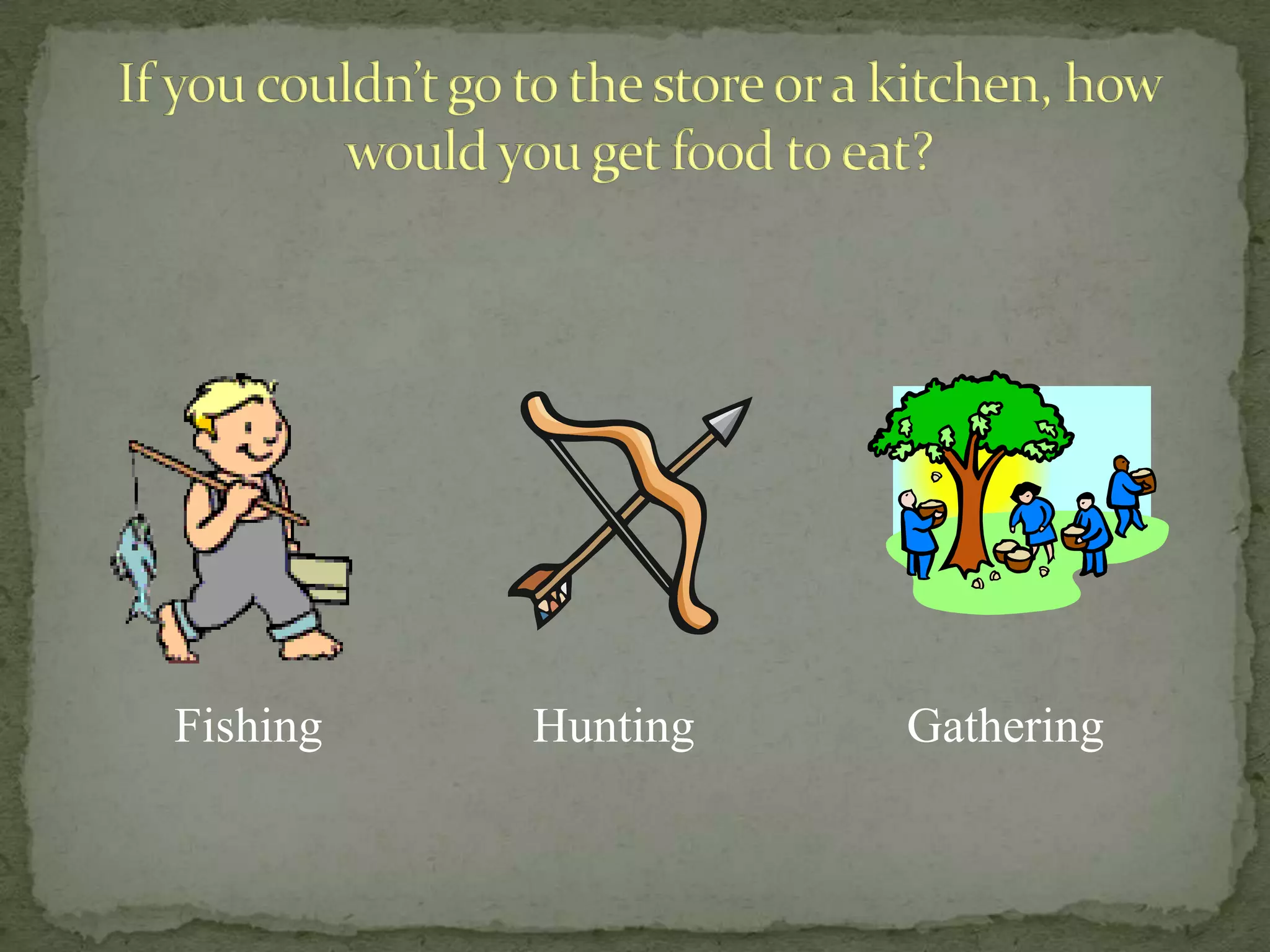
Fishing

Hunting

Gathering
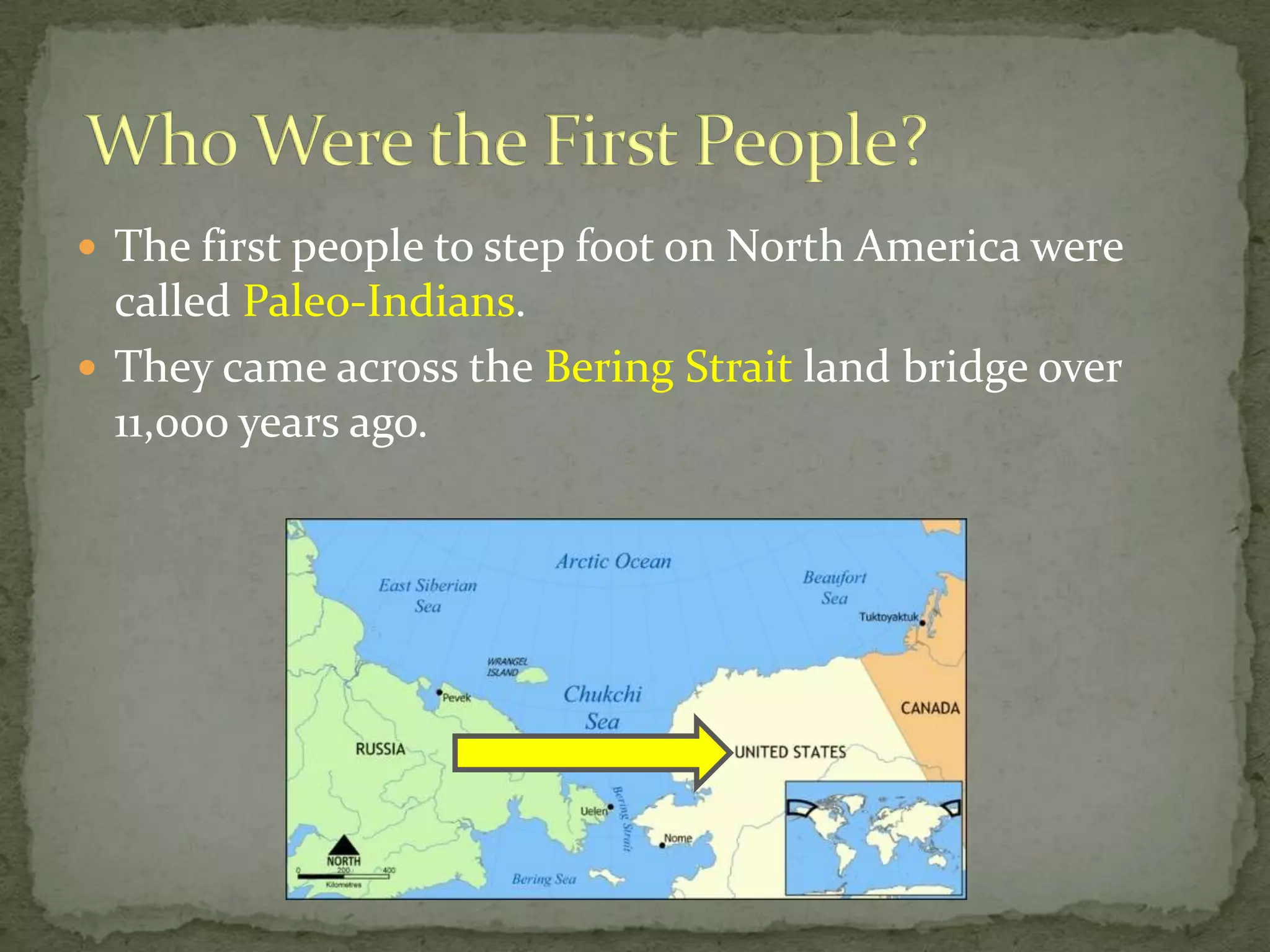
 The first people to step foot on North America were

called Paleo-Indians.
 They came across the Bering Strait land bridge over
11,000 years ago.
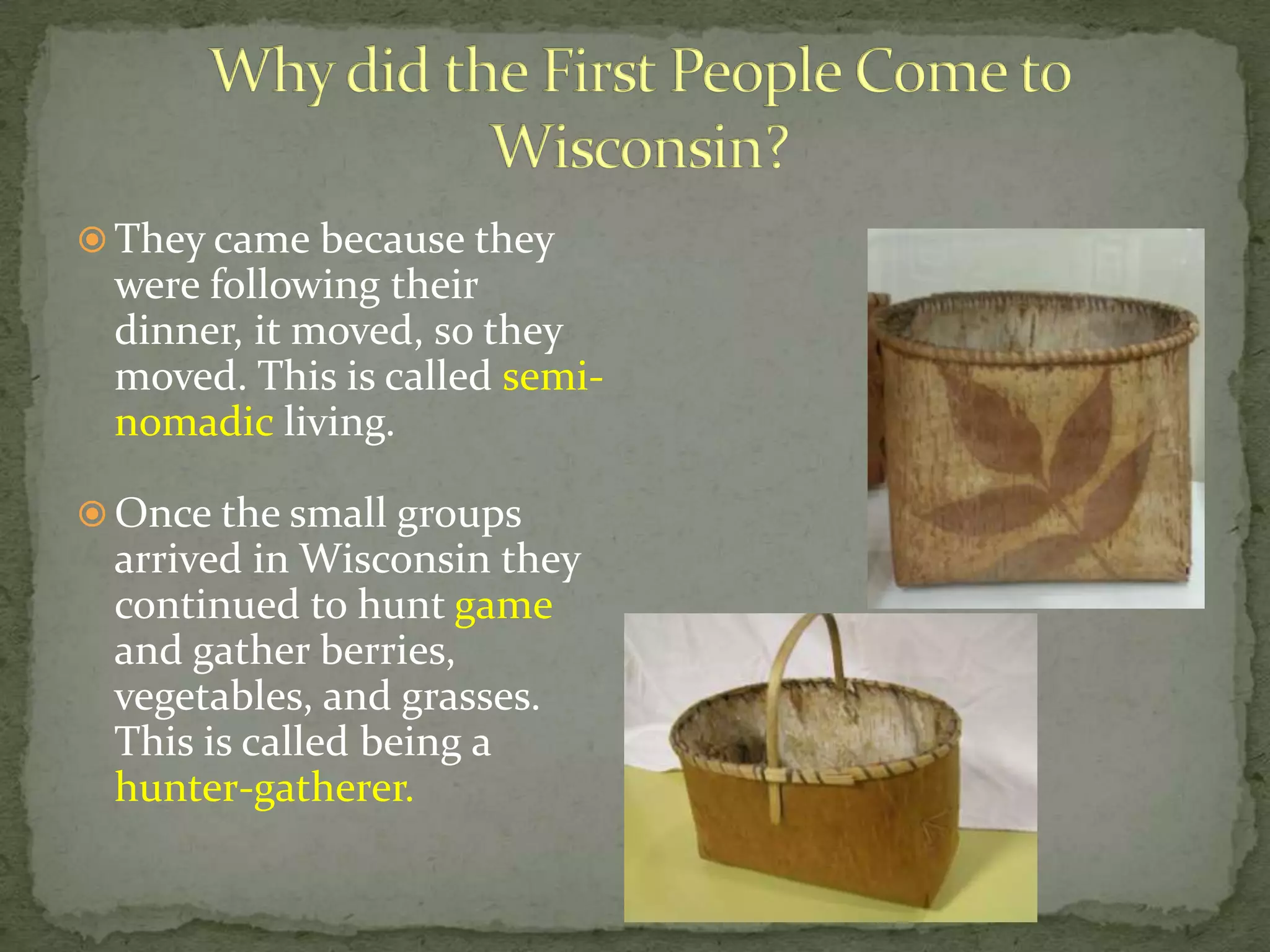
 They came because they

were following their
dinner, it moved, so they
moved. This is called seminomadic living.
 Once the small groups

arrived in Wisconsin they
continued to hunt game
and gather berries,
vegetables, and grasses.
This is called being a
hunter-gatherer.
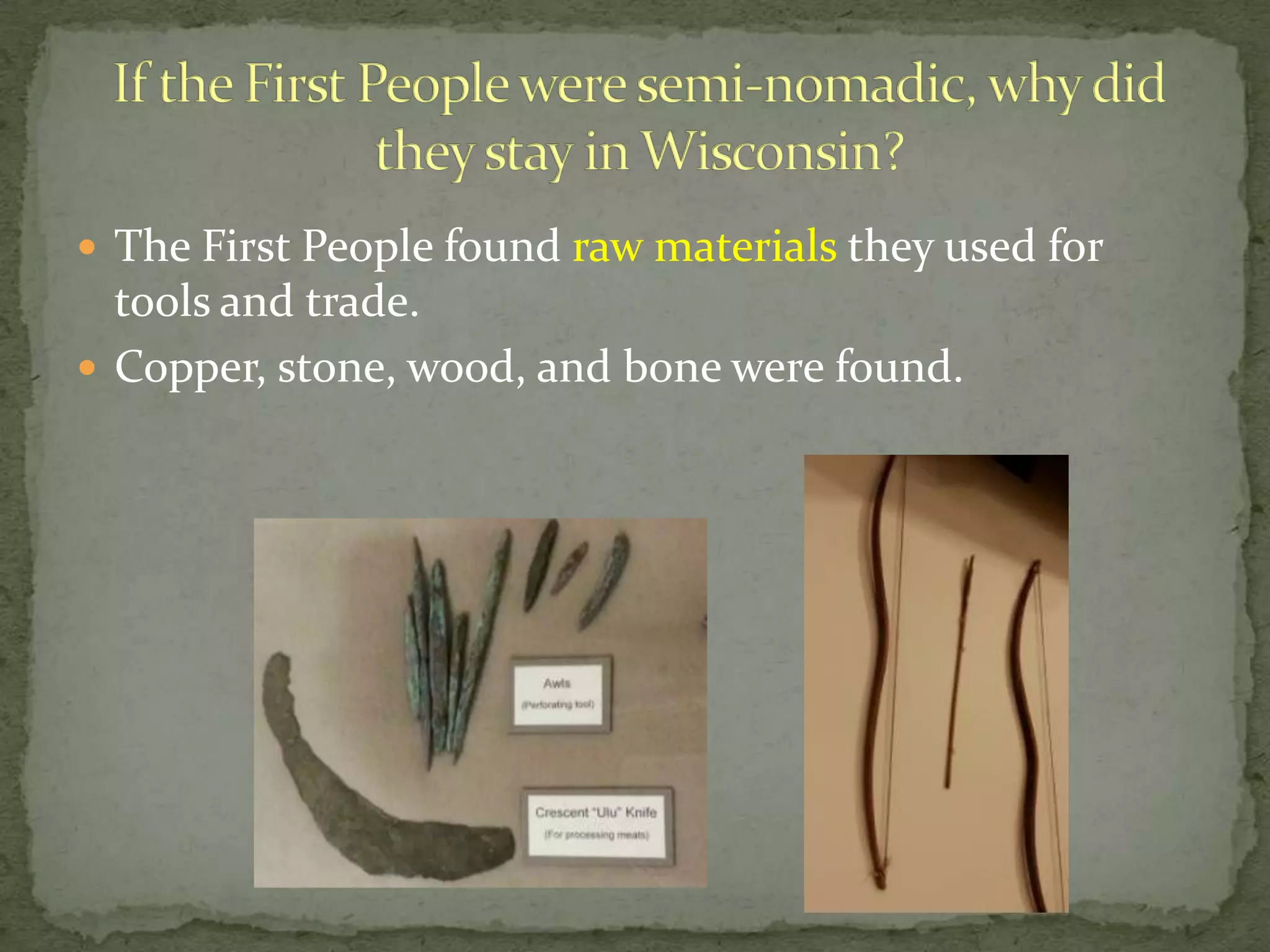
 The First People found raw materials they used for

tools and trade.
 Copper, stone, wood, and bone were found.
 Over time the Paleo-Indians broke into smaller groups

forming the tribes we know today.
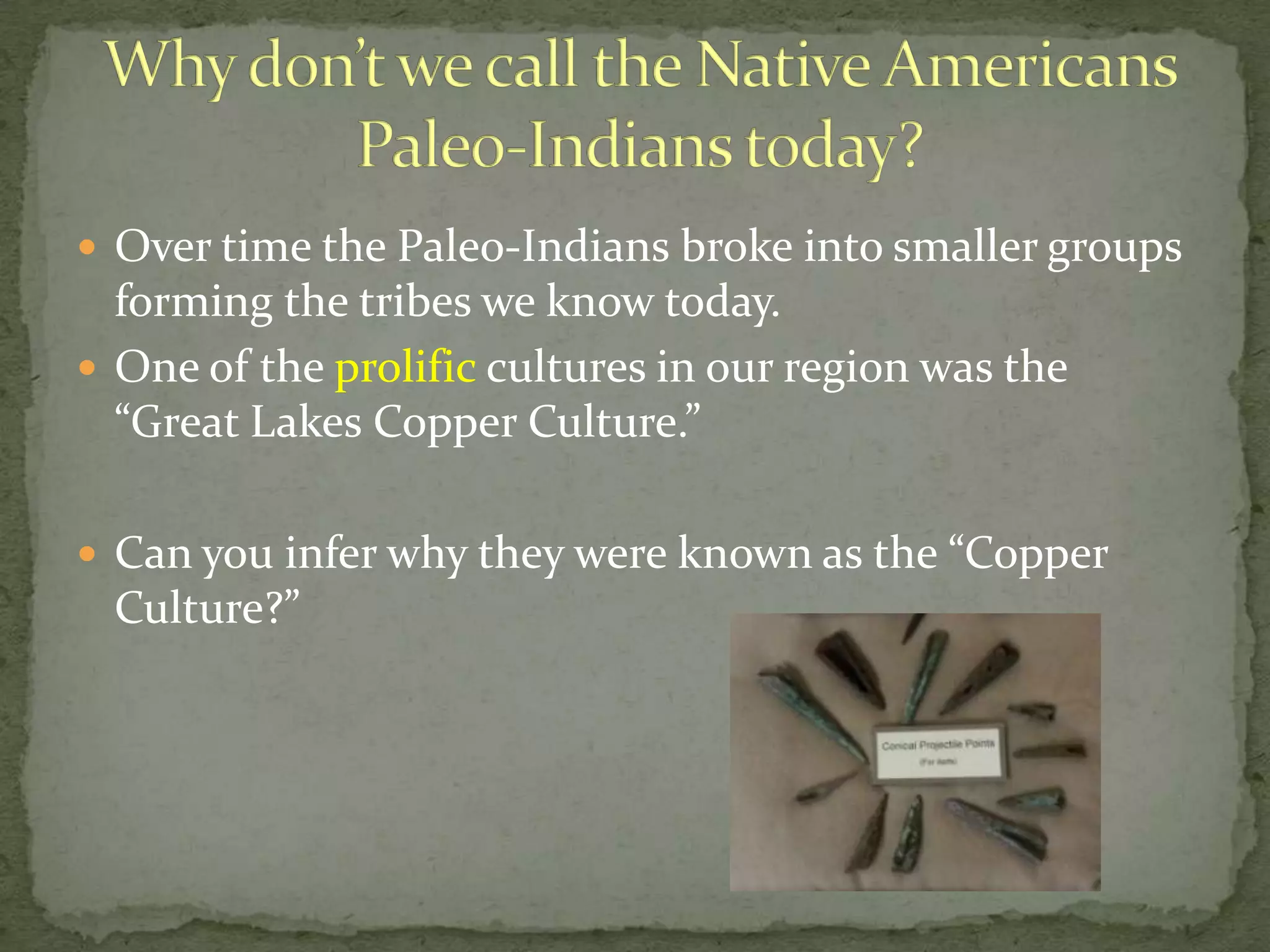
 One of the prolific cultures in our region was the
“Great Lakes Copper Culture.”
 Can you infer why they were known as the “Copper

Culture?”
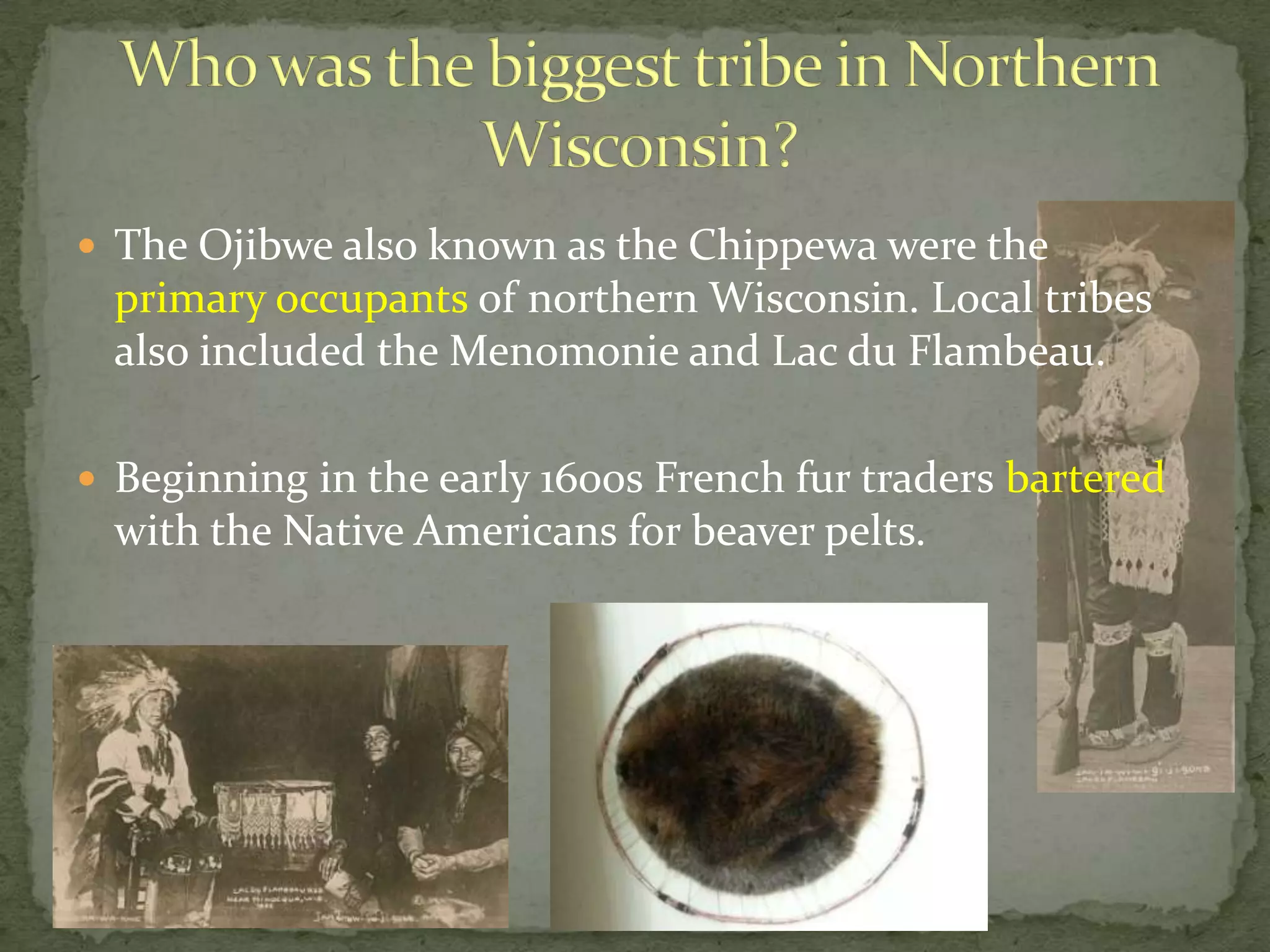
 The Ojibwe also known as the Chippewa were the

primary occupants of northern Wisconsin. Local tribes
also included the Menomonie and Lac du Flambeau.
 Beginning in the early 1600s French fur traders bartered

with the Native Americans for beaver pelts.
 The Native Americans embraced trade with the

French.
 The groups formed an alliances, they slowly became
dependent on each other’s goods.
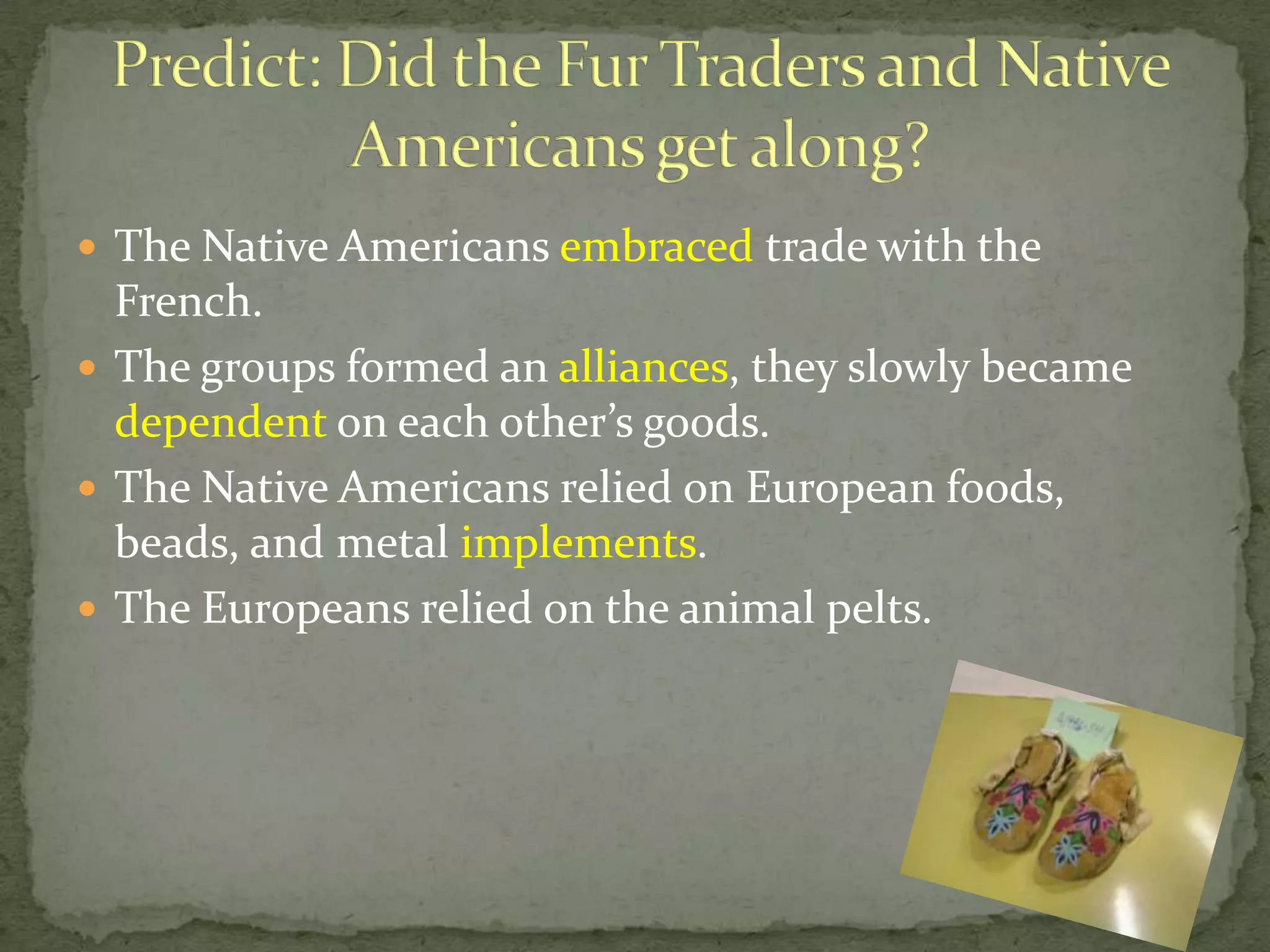
 The Native Americans relied on European foods,
beads, and metal implements.
 The Europeans relied on the animal pelts.
 As European settlers and lumber speculators moved to

Marathon County, the government moved the original
inhabitants from their lands.
 The Native Americans and other tribes were forced to

leave their land and move to reservations.

 Are there any reservations close to Marathon County?
 Walking

 On rivers and lakes
 Used handmade canoes like the one in the video
 Make sure to look up for the canoe when you visit the

exhibit!
Click on this
box for a short
video on
restoring the
canoe in the
exhibit.
 Why did Europeans focus on Wisconsin?
 How did Europeans change the Native lifestyle? Was it

good or bad?
 Did the Native Americans have a choice to interact
with Europeans? Why or why not?
 How can you use what you have learned about the
relationship between the Europeans and the Native
Americans next time you meet a new group of people?
The First People - Elementary

The First People - Elementary

  • 1.
    Standards: B.4.4 Compare andcontrast changes in contemporary life with life in the past by looking at social, economic, political, and cultural roles played by individual groups B.4.9 Describe examples of cooperation and interdependence among individuals, groups, and nations
  • 2.
  • 3.
     The firstpeople to step foot on North America were called Paleo-Indians.  They came across the Bering Strait land bridge over 11,000 years ago.
  • 4.
     They camebecause they were following their dinner, it moved, so they moved. This is called seminomadic living.  Once the small groups arrived in Wisconsin they continued to hunt game and gather berries, vegetables, and grasses. This is called being a hunter-gatherer.
  • 5.
     The FirstPeople found raw materials they used for tools and trade.  Copper, stone, wood, and bone were found.
  • 6.
     Over timethe Paleo-Indians broke into smaller groups forming the tribes we know today.  One of the prolific cultures in our region was the “Great Lakes Copper Culture.”  Can you infer why they were known as the “Copper Culture?”
  • 7.
     The Ojibwealso known as the Chippewa were the primary occupants of northern Wisconsin. Local tribes also included the Menomonie and Lac du Flambeau.  Beginning in the early 1600s French fur traders bartered with the Native Americans for beaver pelts.
  • 8.
     The NativeAmericans embraced trade with the French.  The groups formed an alliances, they slowly became dependent on each other’s goods.  The Native Americans relied on European foods, beads, and metal implements.  The Europeans relied on the animal pelts.
  • 9.
     As Europeansettlers and lumber speculators moved to Marathon County, the government moved the original inhabitants from their lands.  The Native Americans and other tribes were forced to leave their land and move to reservations.  Are there any reservations close to Marathon County?
  • 10.
     Walking  Onrivers and lakes  Used handmade canoes like the one in the video  Make sure to look up for the canoe when you visit the exhibit! Click on this box for a short video on restoring the canoe in the exhibit.
  • 11.
     Why didEuropeans focus on Wisconsin?  How did Europeans change the Native lifestyle? Was it good or bad?  Did the Native Americans have a choice to interact with Europeans? Why or why not?  How can you use what you have learned about the relationship between the Europeans and the Native Americans next time you meet a new group of people?

Editor's Notes

  • #8 Make a list of the tribes in Wisconsin.
  • #11 The picture video is 4:10 minutes, it does not have sound, it is only pictures.