Aborigines and Settlers in Port
Phillip
- What was the relationship between the land, daily life, cultural and
social practices of the Aboriginal communities across Port Phillip?
- What was the impact of European farming practices and attitudes to
land ownership on cultural practices, traditional food sources and
foot-gathering techniques of Aboriginal communities?
- In which ways did Aboriginal communities respond to the changes
brought by the Europeans?
Date
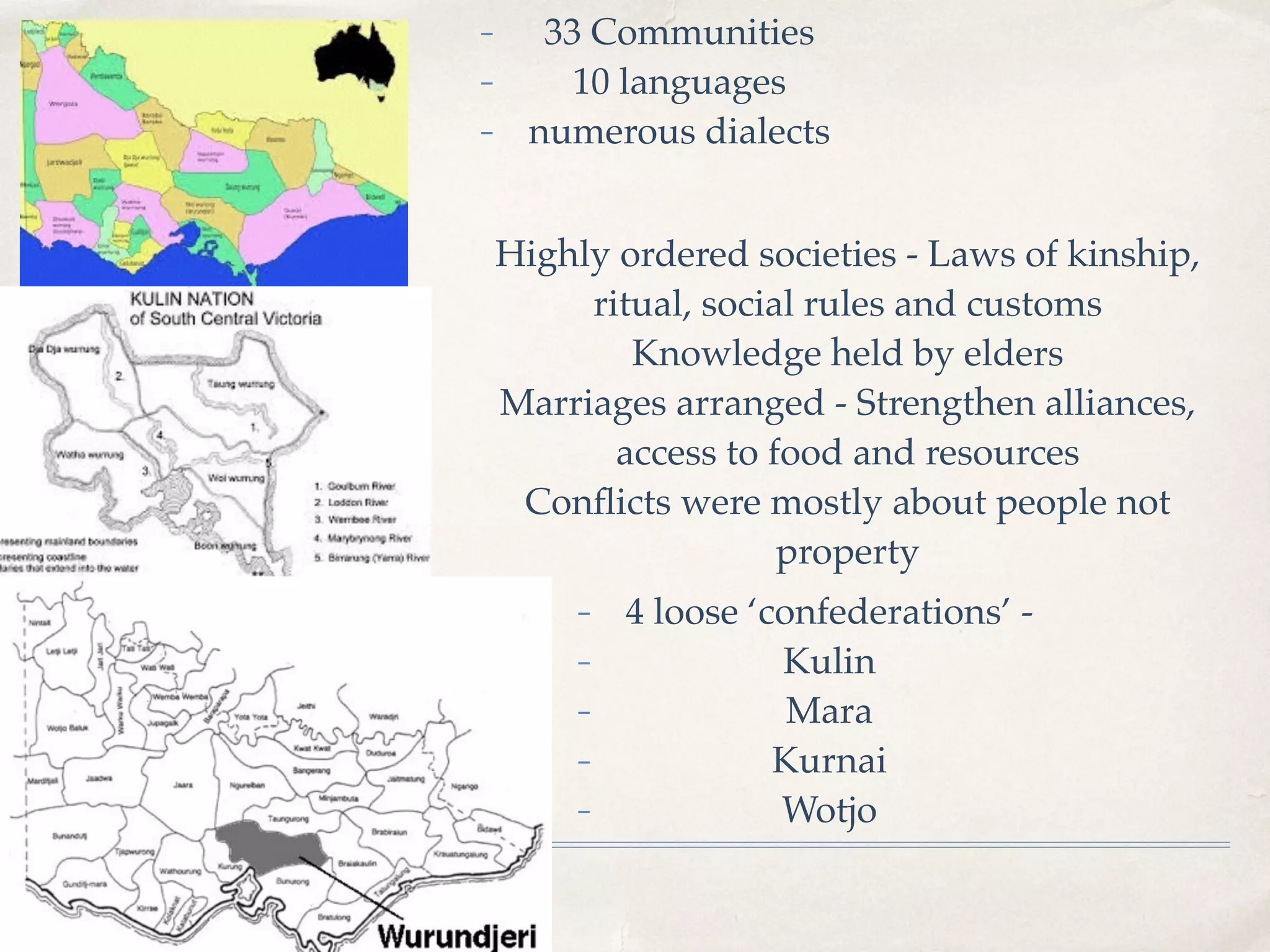
- 33 Communities
- 10 languages
- numerous dialects
Highly ordered societies - Laws of kinship,
ritual, social rules and customs
Knowledge held by elders
Marriages arranged - Strengthen alliances,
access to food and resources
Conflicts were mostly about people not
property
- 4 loose ‘confederations’ -
- Kulin
- Mara
- Kurnai
- Wotjo
Population: 20,000 generally accepted as Indigenous population
of Port Phillip before european settlement.
However, it is widely accepted that the population would have dropped
before settlement.
Influenza, measles, tuberculosis and venereal disease
By 1853 the population had declined by 80%
Population
Frontier Deaths
2000 Aboriginal deaths by frontier violence in the district
59 Europeans
Displacement caused Indigenous conflict with other tribes
Settler impact on the country
Establishing runs, building huts, shelters
polluting water sources
introducing cloved animals such as sheep, cattle and horses.
New grasses
Plant life
Threatened traditional food sources
Murrnong (yam daisy) - staple sources - Sheep eat, dig up roots
Burning off
Number of possums declining: Traditional clothes
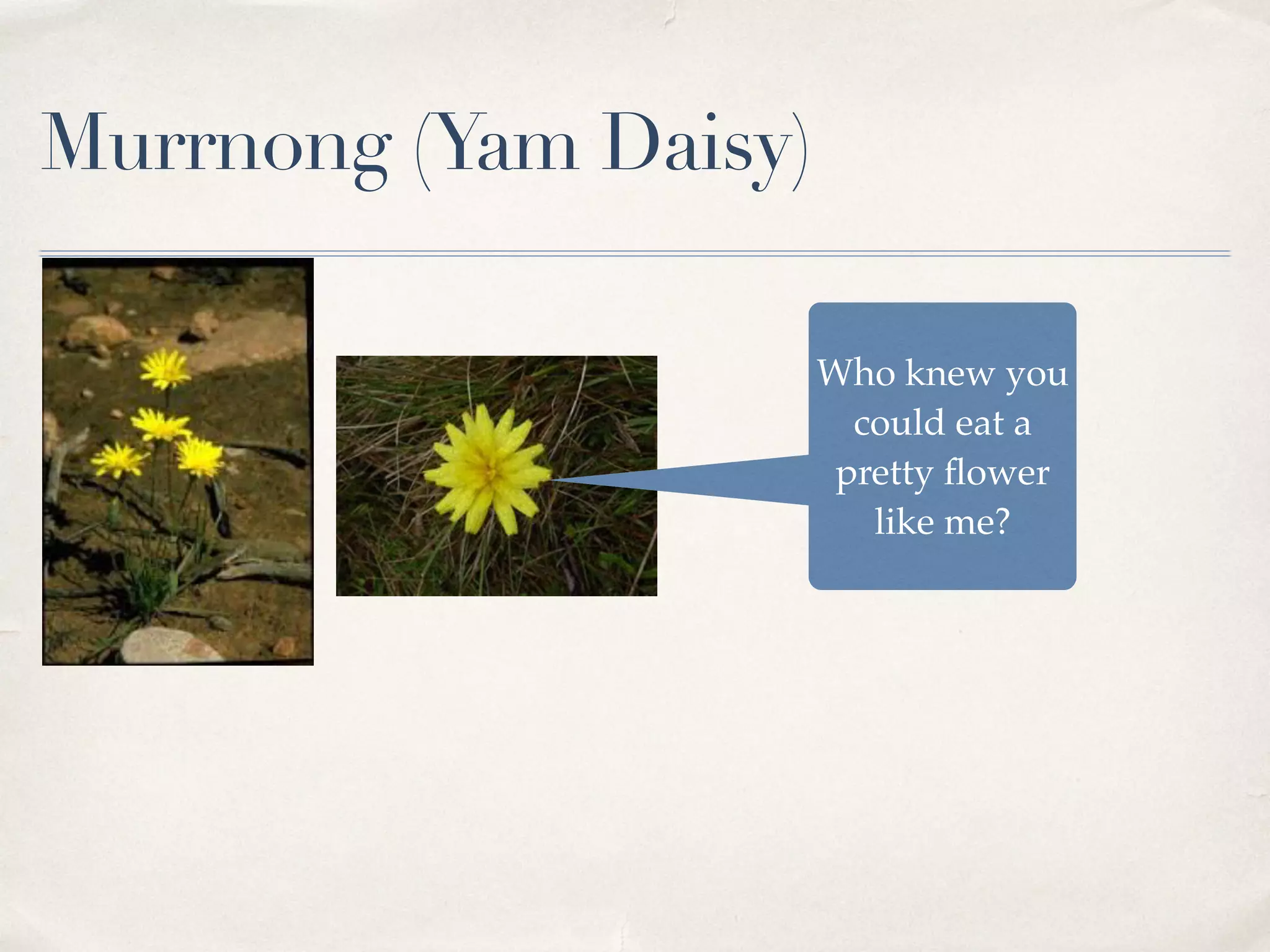
Murrnong (Yam Daisy)
Who knew you
could eat a
pretty flower
like me?
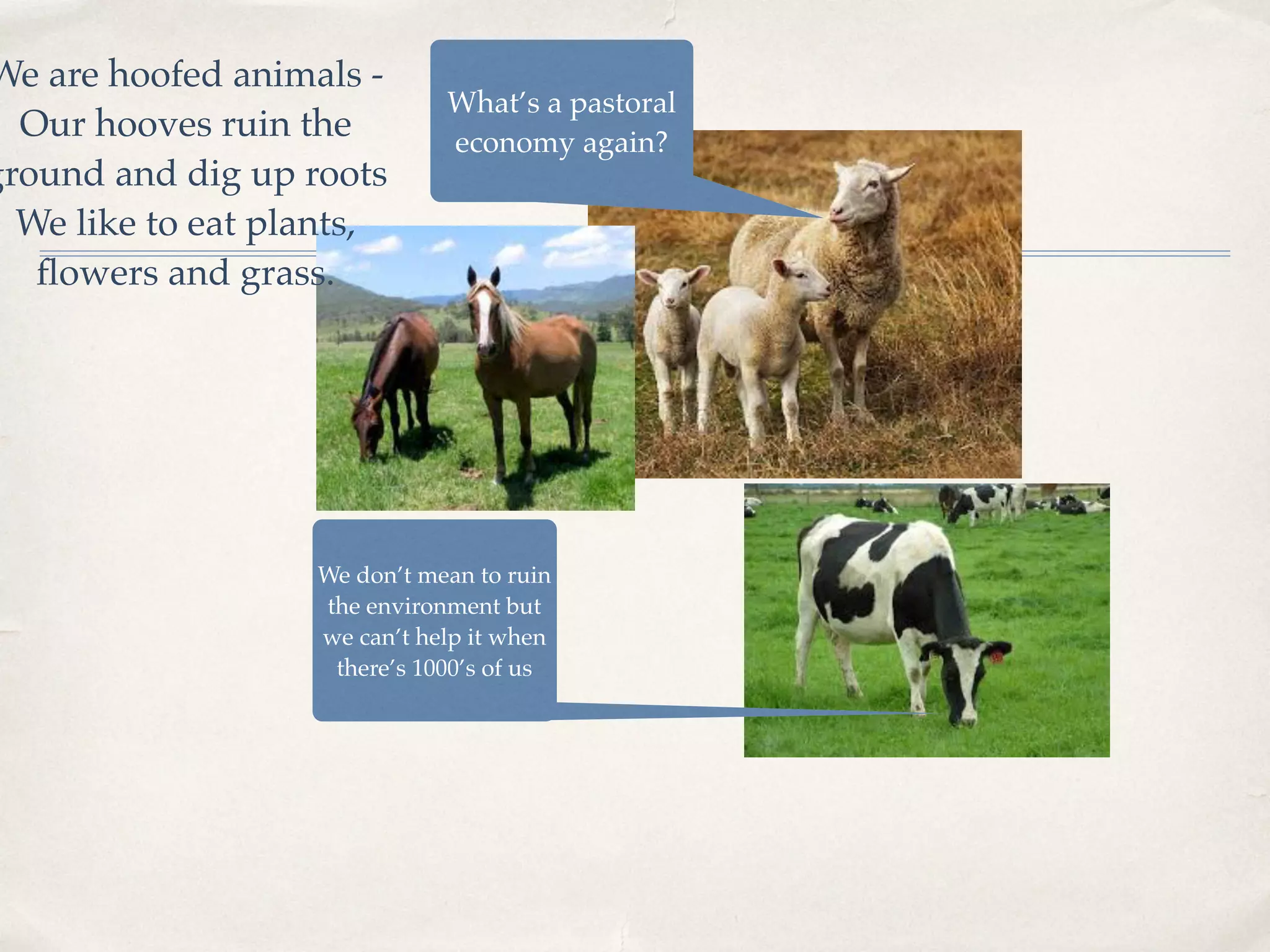
We are hoofed animals -
Our hooves ruin the
ground and dig up roots
We like to eat plants,
flowers and grass.
We don’t mean to ruin
the environment but
we can’t help it when
there’s 1000’s of us
What’s a pastoral
economy again?
The Protectorate
1833 African Slave Trade Banned
1837: The Port Phillip Aboriginal Protectorate was set up
Chief Protector George Augustus Robinson
4 protectors: Job to make contact and persuade groups to abandon their
country and settle on reserves.
Badly funded from the start, protectors were ill-equipped and poorly
resourced.
Failure blamed on the ‘failings of Aborigines’ rather than actions of
Europeans
Resistance and Violence
Cultural Clashes
Broome describes the Aboriginal people not only as victims, but
also as voyages in a new world, who responded in different ways
to the arrival and settlement of the strangers.
Revenge
Sorcery
Attacks on property
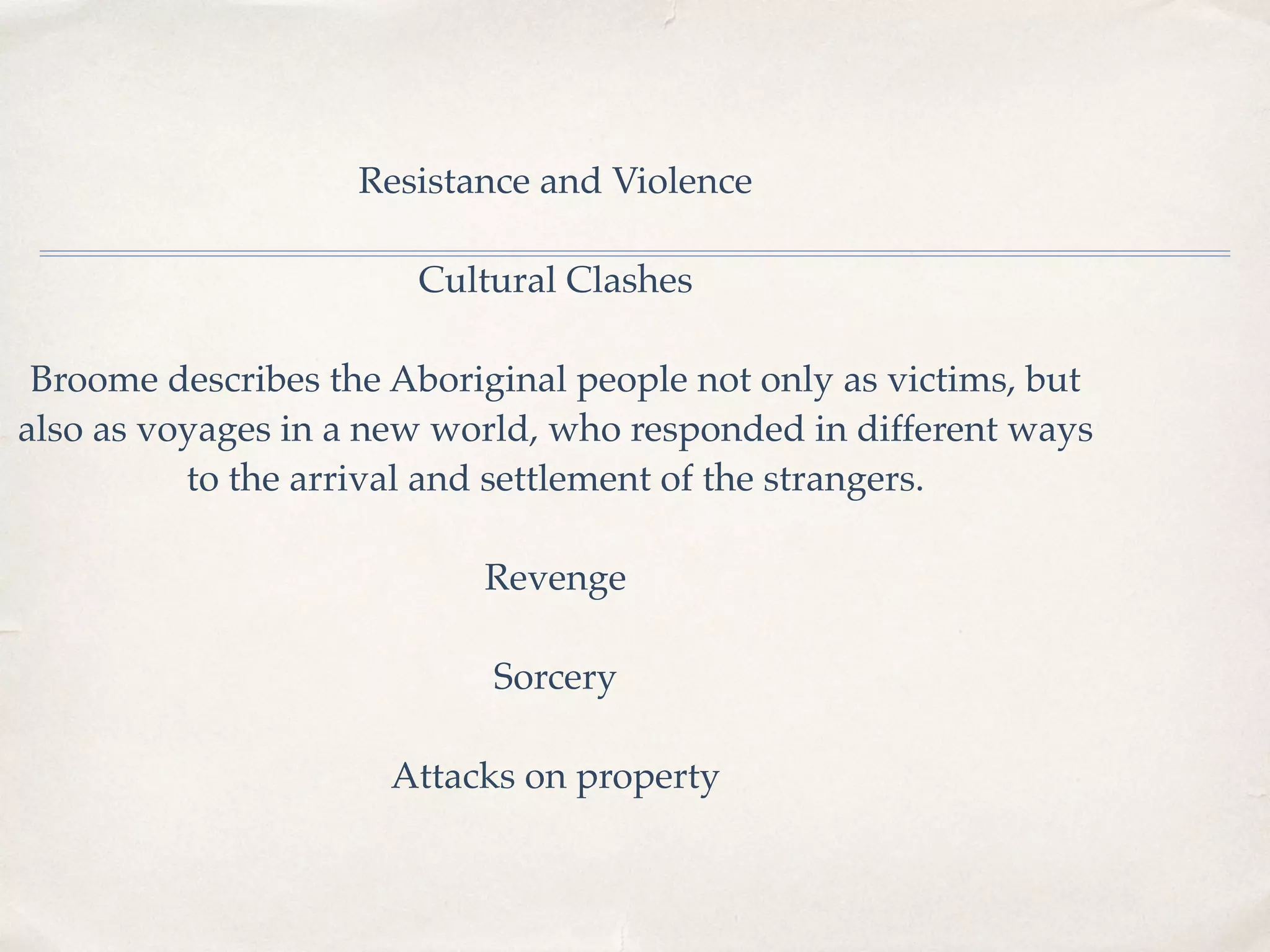
Native Police
Formed in 1842 by Governor La Trobe
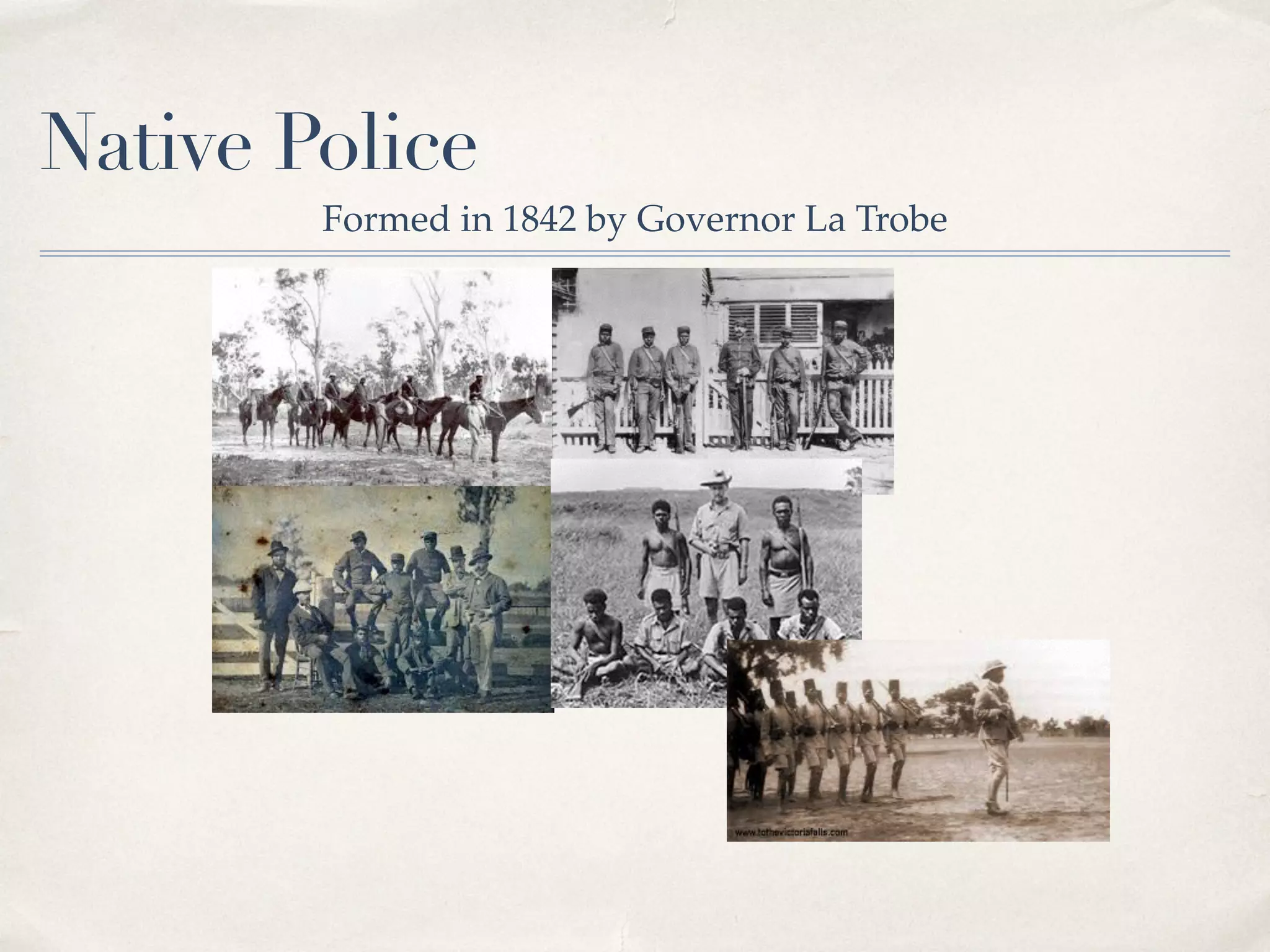
AboriginalWorkers
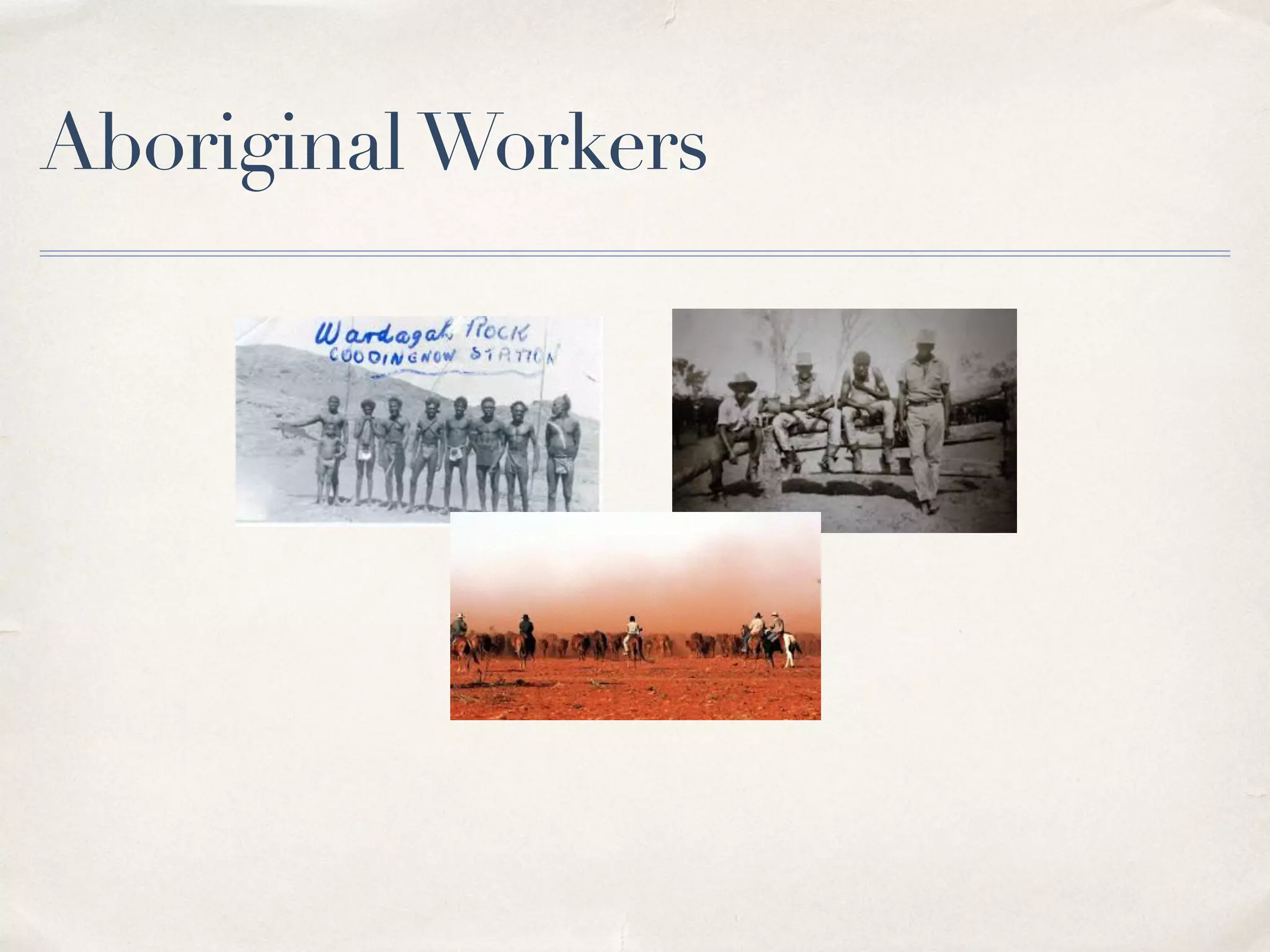
The Gold Rush
New Opportunities
Work
Attracted to the Gold Rush
Select Report into Aborigines
10 years after rate abandonment of the protectorate scheme -
1860 - Board of Aborigines
Aboriginal reserves set up and funded
By 1869 - quarter of Aborigines were living on mission stations
Christianity and Missions

Aborigines and settlers in port phillip

  • 1.
    Aborigines and Settlersin Port Phillip - What was the relationship between the land, daily life, cultural and social practices of the Aboriginal communities across Port Phillip? - What was the impact of European farming practices and attitudes to land ownership on cultural practices, traditional food sources and foot-gathering techniques of Aboriginal communities? - In which ways did Aboriginal communities respond to the changes brought by the Europeans?
  • 2.
    Date - 33 Communities -10 languages - numerous dialects Highly ordered societies - Laws of kinship, ritual, social rules and customs Knowledge held by elders Marriages arranged - Strengthen alliances, access to food and resources Conflicts were mostly about people not property - 4 loose ‘confederations’ - - Kulin - Mara - Kurnai - Wotjo
  • 3.
    Population: 20,000 generallyaccepted as Indigenous population of Port Phillip before european settlement. However, it is widely accepted that the population would have dropped before settlement. Influenza, measles, tuberculosis and venereal disease By 1853 the population had declined by 80% Population
  • 4.
    Frontier Deaths 2000 Aboriginaldeaths by frontier violence in the district 59 Europeans Displacement caused Indigenous conflict with other tribes
  • 5.
    Settler impact onthe country Establishing runs, building huts, shelters polluting water sources introducing cloved animals such as sheep, cattle and horses. New grasses Plant life Threatened traditional food sources Murrnong (yam daisy) - staple sources - Sheep eat, dig up roots Burning off Number of possums declining: Traditional clothes
  • 6.
    Murrnong (Yam Daisy) Whoknew you could eat a pretty flower like me?
  • 7.
    We are hoofedanimals - Our hooves ruin the ground and dig up roots We like to eat plants, flowers and grass. We don’t mean to ruin the environment but we can’t help it when there’s 1000’s of us What’s a pastoral economy again?
  • 8.
    The Protectorate 1833 AfricanSlave Trade Banned 1837: The Port Phillip Aboriginal Protectorate was set up Chief Protector George Augustus Robinson 4 protectors: Job to make contact and persuade groups to abandon their country and settle on reserves. Badly funded from the start, protectors were ill-equipped and poorly resourced. Failure blamed on the ‘failings of Aborigines’ rather than actions of Europeans
  • 9.
    Resistance and Violence CulturalClashes Broome describes the Aboriginal people not only as victims, but also as voyages in a new world, who responded in different ways to the arrival and settlement of the strangers. Revenge Sorcery Attacks on property
  • 10.
    Native Police Formed in1842 by Governor La Trobe
  • 11.
  • 12.
    The Gold Rush NewOpportunities Work Attracted to the Gold Rush
  • 13.
    Select Report intoAborigines 10 years after rate abandonment of the protectorate scheme - 1860 - Board of Aborigines Aboriginal reserves set up and funded By 1869 - quarter of Aborigines were living on mission stations
  • 14.