VIRGINIA STUDIES 
4TH GRADE 
SOCIAL STUDIES 
VS. 2d – 2g 
S. Grey
VS.2d – WHAT WERE THE THREE MAJOR 
AMERICAN INDIAN LANGUAGE GROUPS 
FOUND IN VIRGINIA? 
• Iroquoian Languages 
• Spoken in southwestern Virginia and in 
southern Virginia near what is today North 
Carolina 
• The Cherokee were part of this group
VS.2d – WHAT WERE THE THREE MAJOR 
AMERICAN INDIAN LANGUAGE GROUPS FOUND 
IN VIRGINIA? 
• Siouan Languages 
• Spoken primarily in the Piedmont region 
• The Monacan were part of this group
VS.2d – WHAT WERE THE THREE MAJOR 
AMERICAN INDIAN LANGUAGE GROUPS FOUND 
IN VIRGINIA? 
• Algonquian Language 
• Spoken primarily in the Tidewater region 
• The Powhatan were part of this group
HOW DID THE NATIVE PEOPLES AND 
THE ENGLISH INTERACT? 
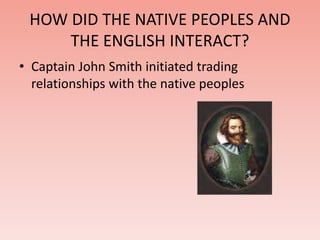
• Captain John Smith initiated trading 
relationships with the native peoples
WHY DID THE RELATIONSHIP BETWEEN THE 
JAMESTOWN SETTLERS AND THE NATIVE 
PEOPLES CHANGE? 
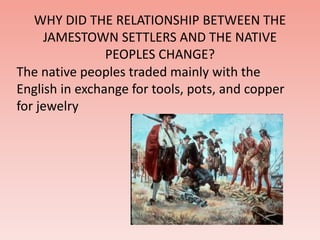
The native peoples traded mainly with the 
English in exchange for tools, pots, and copper 
for jewelry
THE NATIVE PEOPLES CONTRIBUTED TO THE 
SURVIVAL OF THE JAMESTOWN SETTLERS 
BY: 
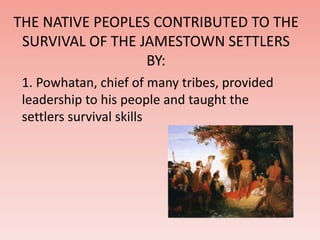
1. Powhatan, chief of many tribes, provided 
leadership to his people and taught the 
settlers survival skills
THE NATIVE PEOPLES CONTRIBUTED TO THE 
SURVIVAL OF THE JAMESTOWN SETTLERS BY: 
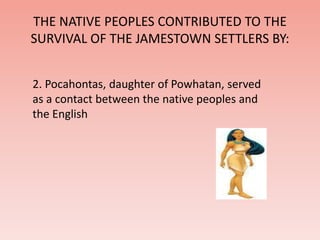
2. Pocahontas, daughter of Powhatan, served 
as a contact between the native peoples and 
the English
THE NATIVE PEOPLES CONTRIBUTED TO THE 
SURVIVAL OF THE JAMESTOWN SETTLERS BY: 
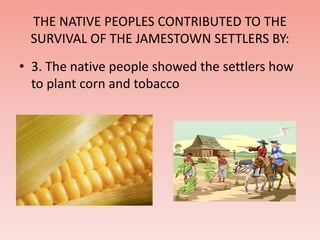
• 3. The native people showed the settlers how 
to plant corn and tobacco
THE NATIVE PEOPLES CONTRIBUTED TO THE 
SURVIVAL OF THE JAMESTOWN SETTLERS BY: 
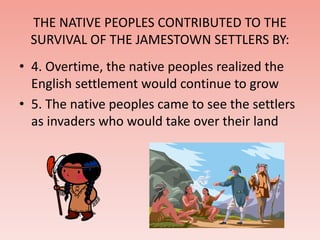
• 4. Overtime, the native peoples realized the 
English settlement would continue to grow 
• 5. The native peoples came to see the settlers 
as invaders who would take over their land
Climate in Virginia 
• Virginia’s American Indians worked with the 
climate and their environment to meet their 
basic needs.
VS 2E -Climate in Virginia 
• The climate in Virginia is relatively mild with 
distinct seasons-spring, summer, fall, and 
winter-resulting in a variety of vegetation.
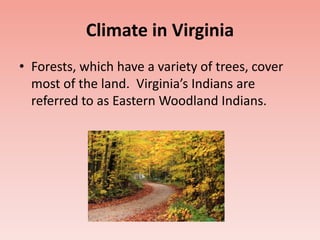
Climate in Virginia 
• Forests, which have a variety of trees, cover 
most of the land. Virginia’s Indians are 
referred to as Eastern Woodland Indians.
Environmental Connections: 
• The kinds of food they ate, the clothing they 
wore, and they shelters they had depended 
upon the seasons.
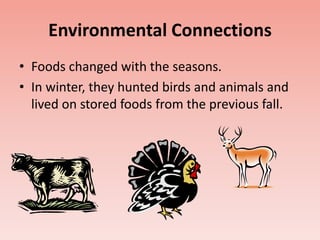
Environmental Connections 
• Foods changed with the seasons. 
• In winter, they hunted birds and animals and 
lived on stored foods from the previous fall.
Environmental Connections 
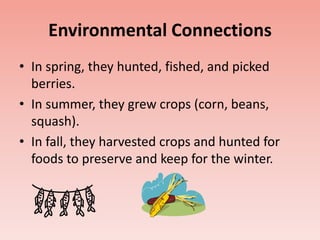
• In spring, they hunted, fished, and picked 
berries. 
• In summer, they grew crops (corn, beans, 
squash). 
• In fall, they harvested crops and hunted for 
foods to preserve and keep for the winter.
Environmental Connections 
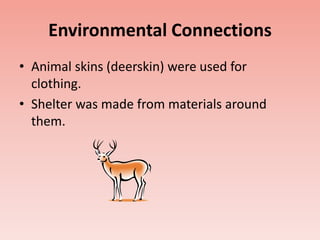
• Animal skins (deerskin) were used for 
clothing. 
• Shelter was made from materials around 
them.
Native Americans 
• Native peoples of the past farmed, hunted, 
and fished. They made homes using natural 
resources. They used animal skins for clothing 
in the winter 
• Today, most native peoples live like other 
Americans. Their cultures have changed over 
time
ARCHAEOLOGY 
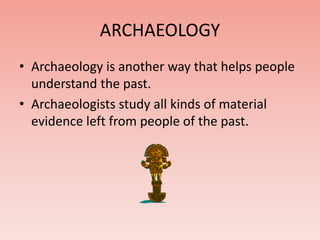
• Archaeology is another way that helps people 
understand the past. 
• Archaeologists study all kinds of material 
evidence left from people of the past.
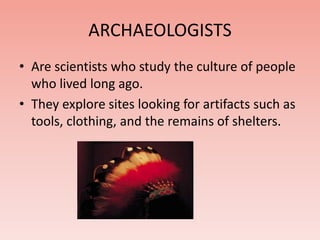
ARCHAEOLOGISTS 
• Are scientists who study the culture of people 
who lived long ago. 
• They explore sites looking for artifacts such as 
tools, clothing, and the remains of shelters.
ARTIFACTS 
• The artifacts found at Jamestown and 
Werowocomoco provide clues about how 
people 
• The artifacts found at Jamestown and 
Werowocomoco provide clues about how 
people interacted in early Virginia. 
• The artifacts give evidence about trade and 
conflict and interactions with the Indians.
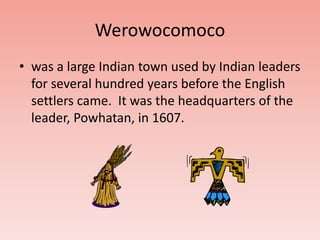
Werowocomoco 
• was a large Indian town used by Indian leaders 
for several hundred years before the English 
settlers came. It was the headquarters of the 
leader, Powhatan, in 1607.
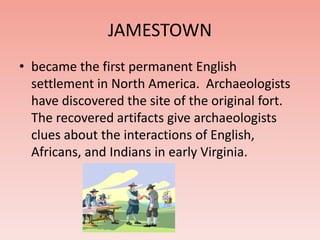
JAMESTOWN 
• became the first permanent English 
settlement in North America. Archaeologists 
have discovered the site of the original fort. 
The recovered artifacts give archaeologists 
clues about the interactions of English, 
Africans, and Indians in early Virginia.
JAMESTOWN 
• The recovered artifacts give archaeologists 
clues about the interactions of English, 
Africans, and Indians in early Virginia.

Virginia studies 2d - 2g

  • 1.
    VIRGINIA STUDIES 4THGRADE SOCIAL STUDIES VS. 2d – 2g S. Grey
  • 2.
    VS.2d – WHATWERE THE THREE MAJOR AMERICAN INDIAN LANGUAGE GROUPS FOUND IN VIRGINIA? • Iroquoian Languages • Spoken in southwestern Virginia and in southern Virginia near what is today North Carolina • The Cherokee were part of this group
  • 3.
    VS.2d – WHATWERE THE THREE MAJOR AMERICAN INDIAN LANGUAGE GROUPS FOUND IN VIRGINIA? • Siouan Languages • Spoken primarily in the Piedmont region • The Monacan were part of this group
  • 4.
    VS.2d – WHATWERE THE THREE MAJOR AMERICAN INDIAN LANGUAGE GROUPS FOUND IN VIRGINIA? • Algonquian Language • Spoken primarily in the Tidewater region • The Powhatan were part of this group
  • 5.
    HOW DID THENATIVE PEOPLES AND THE ENGLISH INTERACT? • Captain John Smith initiated trading relationships with the native peoples
  • 6.
    WHY DID THERELATIONSHIP BETWEEN THE JAMESTOWN SETTLERS AND THE NATIVE PEOPLES CHANGE? The native peoples traded mainly with the English in exchange for tools, pots, and copper for jewelry
  • 7.
    THE NATIVE PEOPLESCONTRIBUTED TO THE SURVIVAL OF THE JAMESTOWN SETTLERS BY: 1. Powhatan, chief of many tribes, provided leadership to his people and taught the settlers survival skills
  • 8.
    THE NATIVE PEOPLESCONTRIBUTED TO THE SURVIVAL OF THE JAMESTOWN SETTLERS BY: 2. Pocahontas, daughter of Powhatan, served as a contact between the native peoples and the English
  • 9.
    THE NATIVE PEOPLESCONTRIBUTED TO THE SURVIVAL OF THE JAMESTOWN SETTLERS BY: • 3. The native people showed the settlers how to plant corn and tobacco
  • 10.
    THE NATIVE PEOPLESCONTRIBUTED TO THE SURVIVAL OF THE JAMESTOWN SETTLERS BY: • 4. Overtime, the native peoples realized the English settlement would continue to grow • 5. The native peoples came to see the settlers as invaders who would take over their land
  • 11.
    Climate in Virginia • Virginia’s American Indians worked with the climate and their environment to meet their basic needs.
  • 12.
    VS 2E -Climatein Virginia • The climate in Virginia is relatively mild with distinct seasons-spring, summer, fall, and winter-resulting in a variety of vegetation.
  • 13.
    Climate in Virginia • Forests, which have a variety of trees, cover most of the land. Virginia’s Indians are referred to as Eastern Woodland Indians.
  • 14.
    Environmental Connections: •The kinds of food they ate, the clothing they wore, and they shelters they had depended upon the seasons.
  • 15.
    Environmental Connections •Foods changed with the seasons. • In winter, they hunted birds and animals and lived on stored foods from the previous fall.
  • 16.
    Environmental Connections •In spring, they hunted, fished, and picked berries. • In summer, they grew crops (corn, beans, squash). • In fall, they harvested crops and hunted for foods to preserve and keep for the winter.
  • 17.
    Environmental Connections •Animal skins (deerskin) were used for clothing. • Shelter was made from materials around them.
  • 18.
    Native Americans •Native peoples of the past farmed, hunted, and fished. They made homes using natural resources. They used animal skins for clothing in the winter • Today, most native peoples live like other Americans. Their cultures have changed over time
  • 19.
    ARCHAEOLOGY • Archaeologyis another way that helps people understand the past. • Archaeologists study all kinds of material evidence left from people of the past.
  • 20.
    ARCHAEOLOGISTS • Arescientists who study the culture of people who lived long ago. • They explore sites looking for artifacts such as tools, clothing, and the remains of shelters.
  • 21.
    ARTIFACTS • Theartifacts found at Jamestown and Werowocomoco provide clues about how people • The artifacts found at Jamestown and Werowocomoco provide clues about how people interacted in early Virginia. • The artifacts give evidence about trade and conflict and interactions with the Indians.
  • 22.
    Werowocomoco • wasa large Indian town used by Indian leaders for several hundred years before the English settlers came. It was the headquarters of the leader, Powhatan, in 1607.
  • 23.
    JAMESTOWN • becamethe first permanent English settlement in North America. Archaeologists have discovered the site of the original fort. The recovered artifacts give archaeologists clues about the interactions of English, Africans, and Indians in early Virginia.
  • 24.
    JAMESTOWN • Therecovered artifacts give archaeologists clues about the interactions of English, Africans, and Indians in early Virginia.