
DVORAK TECHNIQUE 
Katelyn Hearn
HISTORY OF THE DVORAK TECHNIQUE 
 1973 Dvorak Technique was invented 
 1975 for visible imagery 
 2 satellites with 9km resolution 
 Used at night 
 Limited the sampling of max sustained surface winds 
 1984 for infrared imagery (method) 
 8 satellites with 4 km resolution 
 More trustworthy to forecasters 
 More accurate intensity estimates
WHAT IS THE DVORAK TECHNIQUE? 
 A systematic procedure for determining the intensity 
of tropical cyclones using satellite imagery 
 Objective: provide good estimates of the present 
and future intensity of cyclones using satellite 
imagery 
 Using procedures and rules which combine analysis of 
satellite imagery with an ideal forecast for tropical 
cyclone development.
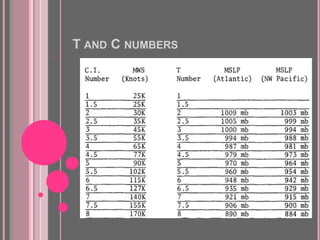
T AND C.I. NUMBERS 
T (Tropical) C.I. ( Current Intensity) 
 T numbers range from 1 to 
8 (T1 to T8). 
 Describes tropical 
disturbances ranging from 
minimal signs of tropical 
cyclone intensity (T1) to 
maximum possible 
intensity(T8). Relating to 
minimum sea-level pressure 
(MSLP). 
 The T numbers are used to 
fit the cyclone to a curve of 
a model or show removal 
from a curve. 
 C.I. numbers range from 1 to 
8. 
 Relates directly to the 
intensity in terms of the max 
wind speed (MSP). 
 Not directly related to cloud 
features. 
 Two factors affecting the C.I. 
number: 
 The surveyed delay in the 
reduction of MSP after cloud 
features show weakening. 
 The climax of the cyclones 
winds between satellite 
observations.
T AND C NUMBERS 
o
TROPICAL CYCLONES 
AND THEIR 
CORRESPONDING T 
NUMBERS
ESTIMATING CYCLONE INTENSITY 
 Two sets of clouds are analyzed to estimate the 
cyclone intensity: 
 First set: Central features, outer banding features, and 
vertical depth of clouds comprising these features. 
 Analyzing the intensity is done in three stages: 
 1: allow modeled estimate of the cyclone’s intensity. 
 2&3: use cloud patterns and feature measurements to prove 
or adjust the modeled explanation. 
 Second set: determines if a forecast along the cyclones 
curve is to be used for the 24 hour forecast.
CENTRAL FEATURES, OUTER BANDING FEATURES, 
AND VERTICAL CLOUD DEPTH PARAMETER 
 Appear within the broad curve 
of the comma band 
 Surround or cover the cloud 
system center 
 The intensity estimate 
depends on the size, shape, 
and definition of CF also the 
amount of dense overcast 
with CF 
 Only the part of the 
comma cloud band that 
is overcast 
 Curves evenly around 
the central features 
Central Features (CF) 
Outer Banding Features 
(BF) 
Vertical cloud depth is the depth of 
the clouds in the CF and BF.
ANALYZING THE INTENSITY OF A CYCLONE 
 First Stage: Approximate judgment on changes 
between yesterday’s and today’s cloud features 
related to cyclone intensity 
 The CF, BF, and vertical depth parameters are 
inspected separately determining the recent intensity 
change 
 Using this, the T-number from yesterday, and the 
modeled curve gives an estimate of intensity for present 
and future of the cyclone 
 This estimate is then modified up or down due to a 
change in the environment of the cyclone that has 
occurred in the past 24 hours.
ANALYZING THE INTENSITY OF A CYCLONE 
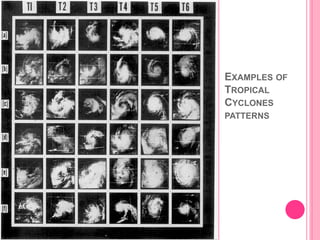
 Second Stage: Considers overall cloud pattern 
 The pattern of the cyclone is compared to the common 
tropical cyclone patterns 
 Once the patterns are compared, the intensity can be 
either lowered or raised. 
 The T-number corresponding to the pattern is fixed when 
cloud features are significant in size or depth. 
 Third Stage: Component features examined to determine 
if they agree with intensity in first stage. 
 Calibrated analysis made for the cloud features studeied 
qualitatively in the first stage. 
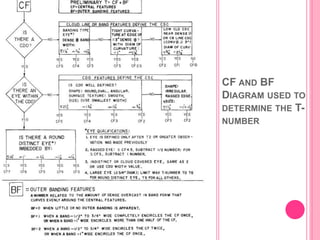
 Using the flow diagram
CF AND BF 
DIAGRAM USED TO 
DETERMINE THE T-NUMBER
FORECAST PROCEDURE 
 Made by using either the cyclone’s model curve or by 
adjusting the curve when an interruption due to landfall 
or unfavorable circulation is indicated. 
 Abnormal change in T-number, or changes in cloud features 
that relate to the intensification of the cyclone. 
 The modeled forecast must be changed when one of 
three events happens: 
 First: reversal in trends by past change of intensity. 
 Second: all signs of intensification appear opposed to the 
expected trend. 
 Third: the cyclone is entering or leaving an environment that 
will effect its trend. To determine the amount of modification of 
the cyclone in this type of event the cloud features and timing 
of the occurrence is considered.
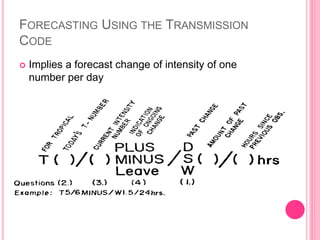
FORECASTING USING THE TRANSMISSION 
CODE 
 Implies a forecast change of intensity of one 
number per day
RULES AND PROCEDURES 
 1. Locate the cloud system center (CSC) 
 2. Recognize initial development 
 3. Determine past change of intensity 
 4. Determine today’s T-number 
 5. Determine the current intensity number(C.I.) 
 6. Determine the cyclone’s modeled curve 
 7. Determine the forecast C.I. number 
 8. Analyze, analyze, analyze
EXAMPLES 
Atlantic Hurricane Hugo 
 September 15, 1989 
 Estimated maximum sustained surface wind of 59 m/s 
(114.687 knots) based on the Dvorak Technique. 
 Situ aircraft reconnaissance data taken at the same time 
revealed Hugo had maximum wind speeds of 72 m/s 
(139.957 knots). 
 Common underestimate because of few low spatial 
resolution satellites.
PREVIOUSLY 
UNRECOGNIZED CAT 4 
OR 5 TROPICAL 
CYCLONES 
November 23, 1978 
May 8, 1979 
November 7, 1982 
November 13, 1984 
November 8, 1989
HURRICANE ANITA 1977 
Two Visible satellite images 
taken for 5 days about 6 hours 
apart.
EXAMPLES OF 
TROPICAL 
CYCLONES 
PATTERNS
HURRICANE ANITA 1977 
Enhanced Infrared Imagery 
of Hurricane Anita in 1977 
over a 4 day period.
REFERENCES 
 B.A. Harper, K. Hoarau, J. A. Knaff, C. W. Landsea, 
Science. 313,452 (AAAS, 2006). 
 V. F. Dvorak, Mon. Weather Rev. 103, 420 (1975). 
 V.F. Dvorak, Satellite Applications Laboratory, 
NOAA. 18 (1984).

The Dvorak Technique

  • 1.
  • 2.
    HISTORY OF THEDVORAK TECHNIQUE  1973 Dvorak Technique was invented  1975 for visible imagery  2 satellites with 9km resolution  Used at night  Limited the sampling of max sustained surface winds  1984 for infrared imagery (method)  8 satellites with 4 km resolution  More trustworthy to forecasters  More accurate intensity estimates
  • 3.
    WHAT IS THEDVORAK TECHNIQUE?  A systematic procedure for determining the intensity of tropical cyclones using satellite imagery  Objective: provide good estimates of the present and future intensity of cyclones using satellite imagery  Using procedures and rules which combine analysis of satellite imagery with an ideal forecast for tropical cyclone development.
  • 4.
    T AND C.I.NUMBERS T (Tropical) C.I. ( Current Intensity)  T numbers range from 1 to 8 (T1 to T8).  Describes tropical disturbances ranging from minimal signs of tropical cyclone intensity (T1) to maximum possible intensity(T8). Relating to minimum sea-level pressure (MSLP).  The T numbers are used to fit the cyclone to a curve of a model or show removal from a curve.  C.I. numbers range from 1 to 8.  Relates directly to the intensity in terms of the max wind speed (MSP).  Not directly related to cloud features.  Two factors affecting the C.I. number:  The surveyed delay in the reduction of MSP after cloud features show weakening.  The climax of the cyclones winds between satellite observations.
  • 5.
    T AND CNUMBERS o
  • 6.
    TROPICAL CYCLONES ANDTHEIR CORRESPONDING T NUMBERS
  • 7.
    ESTIMATING CYCLONE INTENSITY  Two sets of clouds are analyzed to estimate the cyclone intensity:  First set: Central features, outer banding features, and vertical depth of clouds comprising these features.  Analyzing the intensity is done in three stages:  1: allow modeled estimate of the cyclone’s intensity.  2&3: use cloud patterns and feature measurements to prove or adjust the modeled explanation.  Second set: determines if a forecast along the cyclones curve is to be used for the 24 hour forecast.
  • 8.
    CENTRAL FEATURES, OUTERBANDING FEATURES, AND VERTICAL CLOUD DEPTH PARAMETER  Appear within the broad curve of the comma band  Surround or cover the cloud system center  The intensity estimate depends on the size, shape, and definition of CF also the amount of dense overcast with CF  Only the part of the comma cloud band that is overcast  Curves evenly around the central features Central Features (CF) Outer Banding Features (BF) Vertical cloud depth is the depth of the clouds in the CF and BF.
  • 9.
    ANALYZING THE INTENSITYOF A CYCLONE  First Stage: Approximate judgment on changes between yesterday’s and today’s cloud features related to cyclone intensity  The CF, BF, and vertical depth parameters are inspected separately determining the recent intensity change  Using this, the T-number from yesterday, and the modeled curve gives an estimate of intensity for present and future of the cyclone  This estimate is then modified up or down due to a change in the environment of the cyclone that has occurred in the past 24 hours.
  • 10.
    ANALYZING THE INTENSITYOF A CYCLONE  Second Stage: Considers overall cloud pattern  The pattern of the cyclone is compared to the common tropical cyclone patterns  Once the patterns are compared, the intensity can be either lowered or raised.  The T-number corresponding to the pattern is fixed when cloud features are significant in size or depth.  Third Stage: Component features examined to determine if they agree with intensity in first stage.  Calibrated analysis made for the cloud features studeied qualitatively in the first stage.  Using the flow diagram
  • 11.
    CF AND BF DIAGRAM USED TO DETERMINE THE T-NUMBER
  • 12.
    FORECAST PROCEDURE Made by using either the cyclone’s model curve or by adjusting the curve when an interruption due to landfall or unfavorable circulation is indicated.  Abnormal change in T-number, or changes in cloud features that relate to the intensification of the cyclone.  The modeled forecast must be changed when one of three events happens:  First: reversal in trends by past change of intensity.  Second: all signs of intensification appear opposed to the expected trend.  Third: the cyclone is entering or leaving an environment that will effect its trend. To determine the amount of modification of the cyclone in this type of event the cloud features and timing of the occurrence is considered.
  • 13.
    FORECASTING USING THETRANSMISSION CODE  Implies a forecast change of intensity of one number per day
  • 14.
    RULES AND PROCEDURES  1. Locate the cloud system center (CSC)  2. Recognize initial development  3. Determine past change of intensity  4. Determine today’s T-number  5. Determine the current intensity number(C.I.)  6. Determine the cyclone’s modeled curve  7. Determine the forecast C.I. number  8. Analyze, analyze, analyze
  • 15.
    EXAMPLES Atlantic HurricaneHugo  September 15, 1989  Estimated maximum sustained surface wind of 59 m/s (114.687 knots) based on the Dvorak Technique.  Situ aircraft reconnaissance data taken at the same time revealed Hugo had maximum wind speeds of 72 m/s (139.957 knots).  Common underestimate because of few low spatial resolution satellites.
  • 16.
    PREVIOUSLY UNRECOGNIZED CAT4 OR 5 TROPICAL CYCLONES November 23, 1978 May 8, 1979 November 7, 1982 November 13, 1984 November 8, 1989
  • 17.
    HURRICANE ANITA 1977 Two Visible satellite images taken for 5 days about 6 hours apart.
  • 18.
    EXAMPLES OF TROPICAL CYCLONES PATTERNS
  • 19.
    HURRICANE ANITA 1977 Enhanced Infrared Imagery of Hurricane Anita in 1977 over a 4 day period.
  • 20.
    REFERENCES  B.A.Harper, K. Hoarau, J. A. Knaff, C. W. Landsea, Science. 313,452 (AAAS, 2006).  V. F. Dvorak, Mon. Weather Rev. 103, 420 (1975).  V.F. Dvorak, Satellite Applications Laboratory, NOAA. 18 (1984).