The Digestive System
Functions
• Digestthe foodwe eat
• Take the nutrientsoutof yourfoodso your
bodycan use it
Components
• Esophagus
• Stomach
• Small Intestine
• Large Intestine
• Gall bladder
• Liver
• Pancreas
• Esophagus
• the tube that connectsyourmouth and your
stomach
• Stomach
• A stretchybag that holdsyourfoodafteryou
eat
• Helpsto breakfoodintosmallerpiecessoyour
bodycan use it for energyandnutrition
• Small Intestine
• Tube that is20 feetlong.
• Continuestodigestfood
• Foodstays inyour small intestine for4to 8
hours
• Large Intestine
• Tube that is5 feetlong
• Gets waste fromsmall intestine
• Waste stays for10 to 12 hours
• Storage tank forbile (agreenish-yellowliquid)
that helpsyourbodybreakdownand use fats
• Locatedunderyour liver
• Shapedlike apear
• Gall Bladder
• Liver
• Factory forantibodiesandbile
• Storesvitaminsandsugarsuntil yourbody
needsthem
• Pancreas
• Helpsyoudigestfoodbybreakingdownsugars
HealthyHabits
• Eat highfiberfoods
• Drinklotsof water
• Chewfoodwell
• Avoidhigh-fatfoods
Digestion
Types
• Mechanical (physical)
• Chew
• Tear
• Grind
• Mash
• Mix
• Chemical
• Enzymaticreactionstoimprove
digestionof
• Carbohydrates
• Proteins
• Lipids
Digestive SystemOrganization
• Gastrointestinal (Gl)tract
• Tube withinatube
• Directlink/pathbetween organs
• Structures
• Mouth
• Pharynx
• Esophagus
• Stomach
• Small intestine
• Large Intestine
• Rectum
Mouth
• Teethmechanicallybreakdownfoodintosmall
pieces. Tongue mixesfoodwithsaliva(contains
amylase,whichhelpsbreakdownstarch).
• Epiglottisisaflap-likestructure atthe back of
the throat that closesoverthe trachea
preventingfoodfromenteringit.
Esophagus
• Approximately10”long
• Functionsinclude:
1. Secrete mucus
2. Movesfoodfrom the throat to the stomach
usingmuscle movementcalledperistalsis
• If acid fromthe stomachgetsin here that’s
heartburn.
Stomach
• J-shapedmuscularbagthatstoresthe foodyou
eat,breaksit downintotinypieces.
• Mixesfoodwithdigestive juicesthatcontain
enzymestobreakdownproteinsandlipids.
• Acidinthe stomachkillsbacteria.
• Foodfoundinthe stomachiscalledchyme
Small Intestine
• Small intestinesare roughly7meterslong
• Liningof intestine wallshasfinger-like
projectionscalledvilli,toincrease surface area.
• The villi are coveredinmicrovilli whichfurther
increasessurface areaforabsorption.
• Small Intestine
• Nutrientsfromthe foodpassintothe
bloodstreamthroughthe small intestine walls.
• Absorbs:
• 80% ingestedwater
• Vitamins
• Minerals
• Carbohydrates
• Proteins
• Lipids
• Secretesdigestiveenzymes
Large Intestine
• About5 feetlong
• Acceptswhatsmall intestinesdon’tabsorb
• Rectum(shorttermstorage whichholdsfeces
before itisexpelled).
Functions
-Bacterial digestion
 Fermentcarbohydrates
 Proteinbreakdown
- Absorbsmore water
- Concentrates wastes
AccessoryOrgans
- Notpart of the path of food,butplaya critical
role.
- Include:Liver,gall bladder,andpancreas
Liver
- Directlyaffectsdigestionbyproducingbile
o Bile helpsdigestfat
o filtersouttoxinsandwaste including
drugsand alcohol
Gall Bladder
- Storesbile fromthe liver,releasesitintothe
small intestine.
- Fatty dietscancause gallstones
Pancreas
- Producesdigestive enzymestodigestfats,
carbohydratesandproteins
- Regulatesbloodsugarbyproducinginsulin
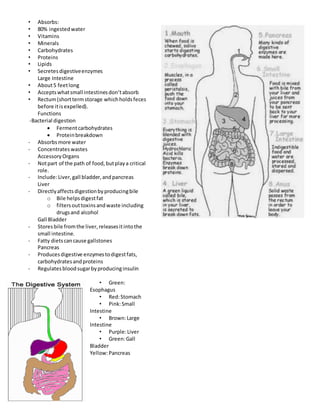
• Green:
Esophagus
• Red:Stomach
• Pink:Small
Intestine
• Brown:Large
Intestine
• Purple:Liver
• Green:Gall
Bladder
Yellow:Pancreas

The digestive-system

  • 1.
    The Digestive System Functions •Digestthe foodwe eat • Take the nutrientsoutof yourfoodso your bodycan use it Components • Esophagus • Stomach • Small Intestine • Large Intestine • Gall bladder • Liver • Pancreas • Esophagus • the tube that connectsyourmouth and your stomach • Stomach • A stretchybag that holdsyourfoodafteryou eat • Helpsto breakfoodintosmallerpiecessoyour bodycan use it for energyandnutrition • Small Intestine • Tube that is20 feetlong. • Continuestodigestfood • Foodstays inyour small intestine for4to 8 hours • Large Intestine • Tube that is5 feetlong • Gets waste fromsmall intestine • Waste stays for10 to 12 hours • Storage tank forbile (agreenish-yellowliquid) that helpsyourbodybreakdownand use fats • Locatedunderyour liver • Shapedlike apear • Gall Bladder • Liver • Factory forantibodiesandbile • Storesvitaminsandsugarsuntil yourbody needsthem • Pancreas • Helpsyoudigestfoodbybreakingdownsugars HealthyHabits • Eat highfiberfoods • Drinklotsof water • Chewfoodwell • Avoidhigh-fatfoods Digestion Types • Mechanical (physical) • Chew • Tear • Grind • Mash • Mix • Chemical • Enzymaticreactionstoimprove digestionof • Carbohydrates • Proteins • Lipids Digestive SystemOrganization • Gastrointestinal (Gl)tract • Tube withinatube • Directlink/pathbetween organs • Structures • Mouth • Pharynx • Esophagus • Stomach • Small intestine • Large Intestine • Rectum Mouth • Teethmechanicallybreakdownfoodintosmall pieces. Tongue mixesfoodwithsaliva(contains amylase,whichhelpsbreakdownstarch). • Epiglottisisaflap-likestructure atthe back of the throat that closesoverthe trachea preventingfoodfromenteringit. Esophagus • Approximately10”long • Functionsinclude: 1. Secrete mucus 2. Movesfoodfrom the throat to the stomach usingmuscle movementcalledperistalsis • If acid fromthe stomachgetsin here that’s heartburn. Stomach • J-shapedmuscularbagthatstoresthe foodyou eat,breaksit downintotinypieces. • Mixesfoodwithdigestive juicesthatcontain enzymestobreakdownproteinsandlipids. • Acidinthe stomachkillsbacteria. • Foodfoundinthe stomachiscalledchyme Small Intestine • Small intestinesare roughly7meterslong • Liningof intestine wallshasfinger-like projectionscalledvilli,toincrease surface area. • The villi are coveredinmicrovilli whichfurther increasessurface areaforabsorption. • Small Intestine • Nutrientsfromthe foodpassintothe bloodstreamthroughthe small intestine walls.
  • 2.
    • Absorbs: • 80%ingestedwater • Vitamins • Minerals • Carbohydrates • Proteins • Lipids • Secretesdigestiveenzymes Large Intestine • About5 feetlong • Acceptswhatsmall intestinesdon’tabsorb • Rectum(shorttermstorage whichholdsfeces before itisexpelled). Functions -Bacterial digestion  Fermentcarbohydrates  Proteinbreakdown - Absorbsmore water - Concentrates wastes AccessoryOrgans - Notpart of the path of food,butplaya critical role. - Include:Liver,gall bladder,andpancreas Liver - Directlyaffectsdigestionbyproducingbile o Bile helpsdigestfat o filtersouttoxinsandwaste including drugsand alcohol Gall Bladder - Storesbile fromthe liver,releasesitintothe small intestine. - Fatty dietscancause gallstones Pancreas - Producesdigestive enzymestodigestfats, carbohydratesandproteins - Regulatesbloodsugarbyproducinginsulin • Green: Esophagus • Red:Stomach • Pink:Small Intestine • Brown:Large Intestine • Purple:Liver • Green:Gall Bladder Yellow:Pancreas