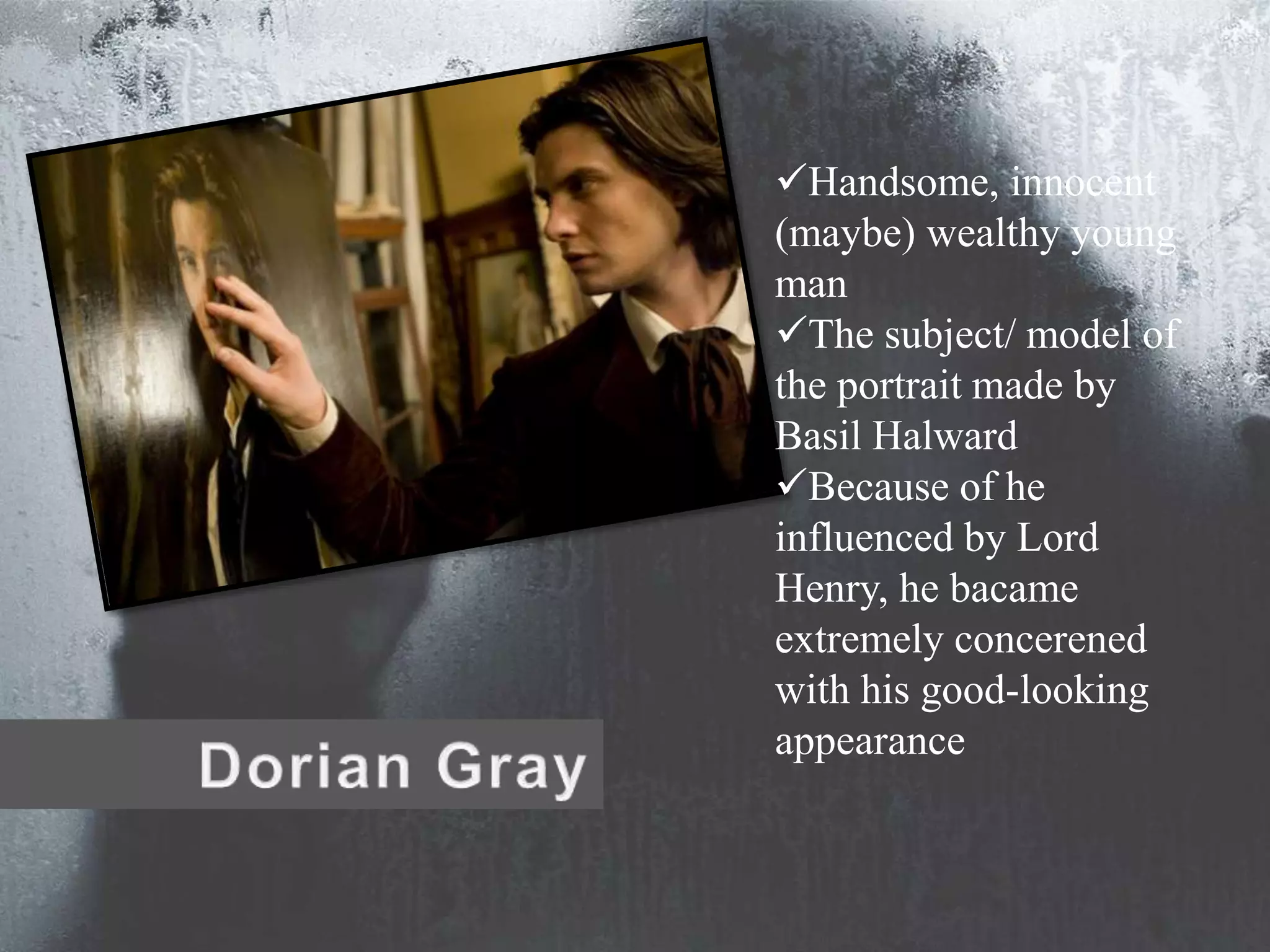
Handsome, innocent
(maybe) wealthy young
man
The subject/ model of
the portrait made by
Basil Halward
Because of he
influenced by Lord
Henry, he bacame
extremely concerened
with his good-looking
appearance
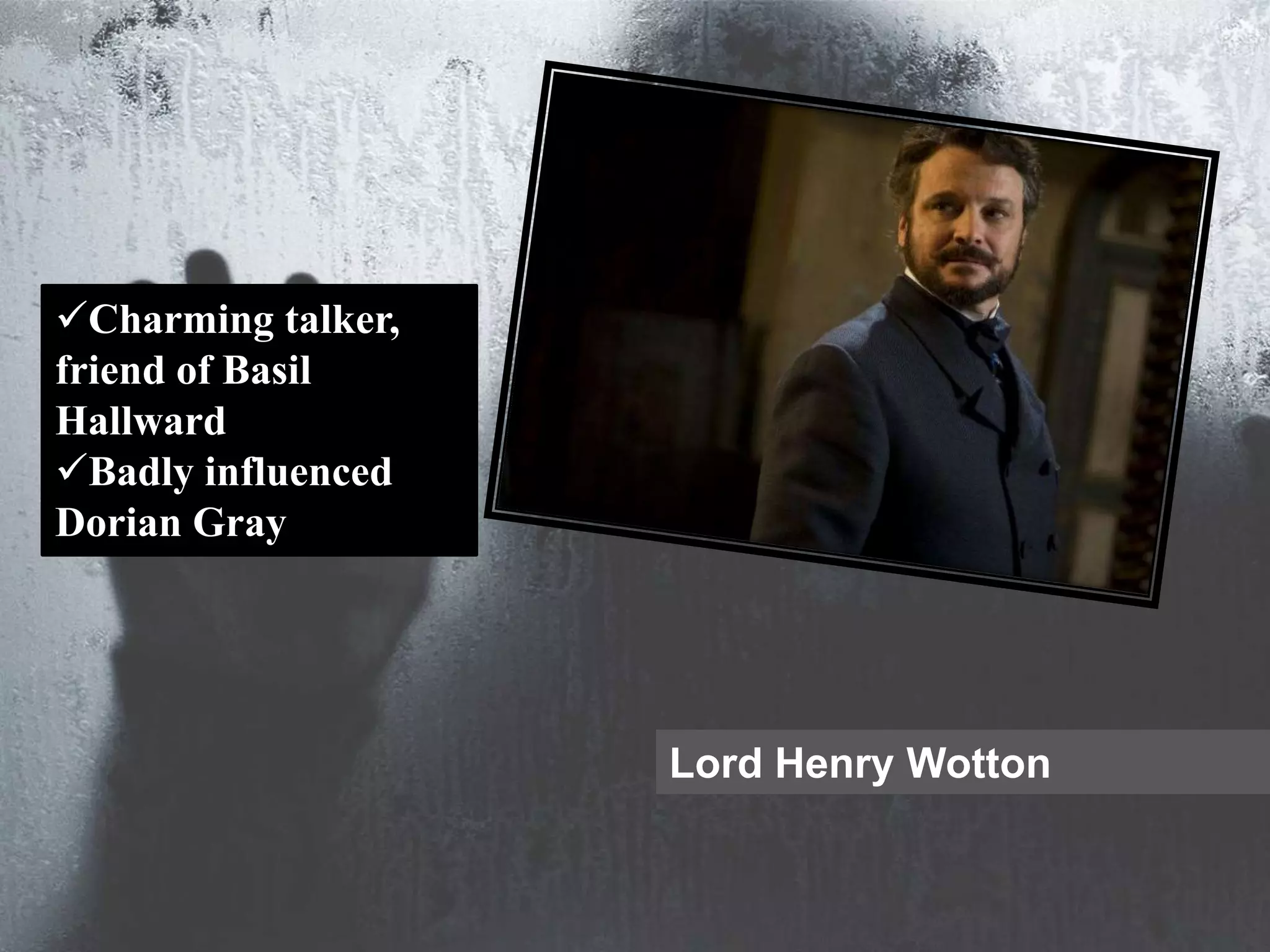
Lord Henry Wotton
Charming talker,
friend of Basil
Hallward
Badly influenced
Dorian Gray
An artist, friend of
Lord Henry
Become obsessed with
Dorian Gray after
meeting him at a party
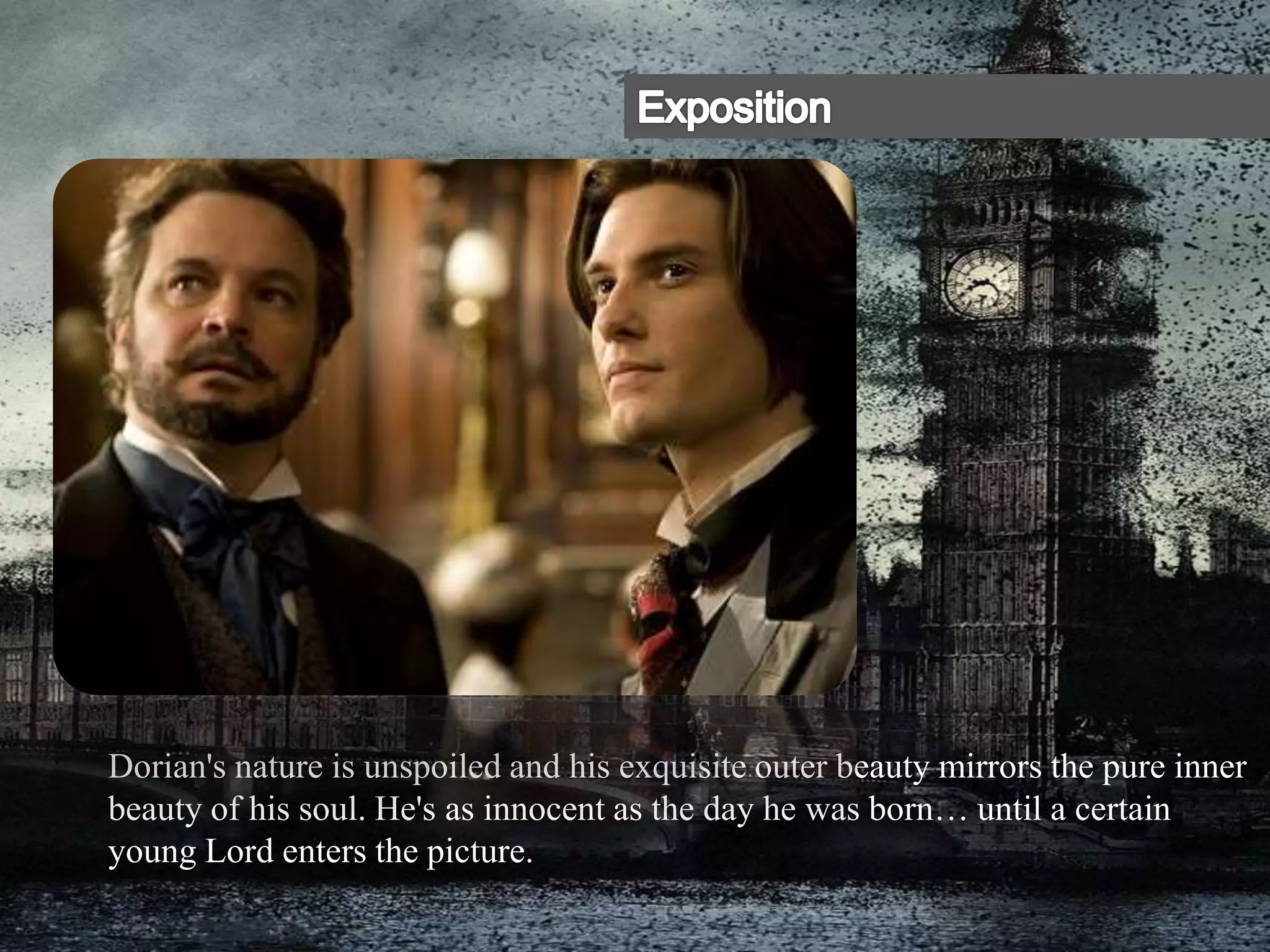
Dorian's nature is unspoiled and his exquisite outer beauty mirrors the pure inner
beauty of his soul. He's as innocent as the day he was born… until a certain
young Lord enters the picture.
To cut a long story short, Dorian
idealistically falls in love with
Sibyl, and, upon realizing the fact
that she doesn't live up to his
expectations, he dumps her. She
kills herself, and instead of
mourning her and learning a lesson,
Dorian reads the yellow book,
listens to Lord Henry, and gets over
the whole thing.
After Sybil’s death her brother James promises
to find and kill Dorian.
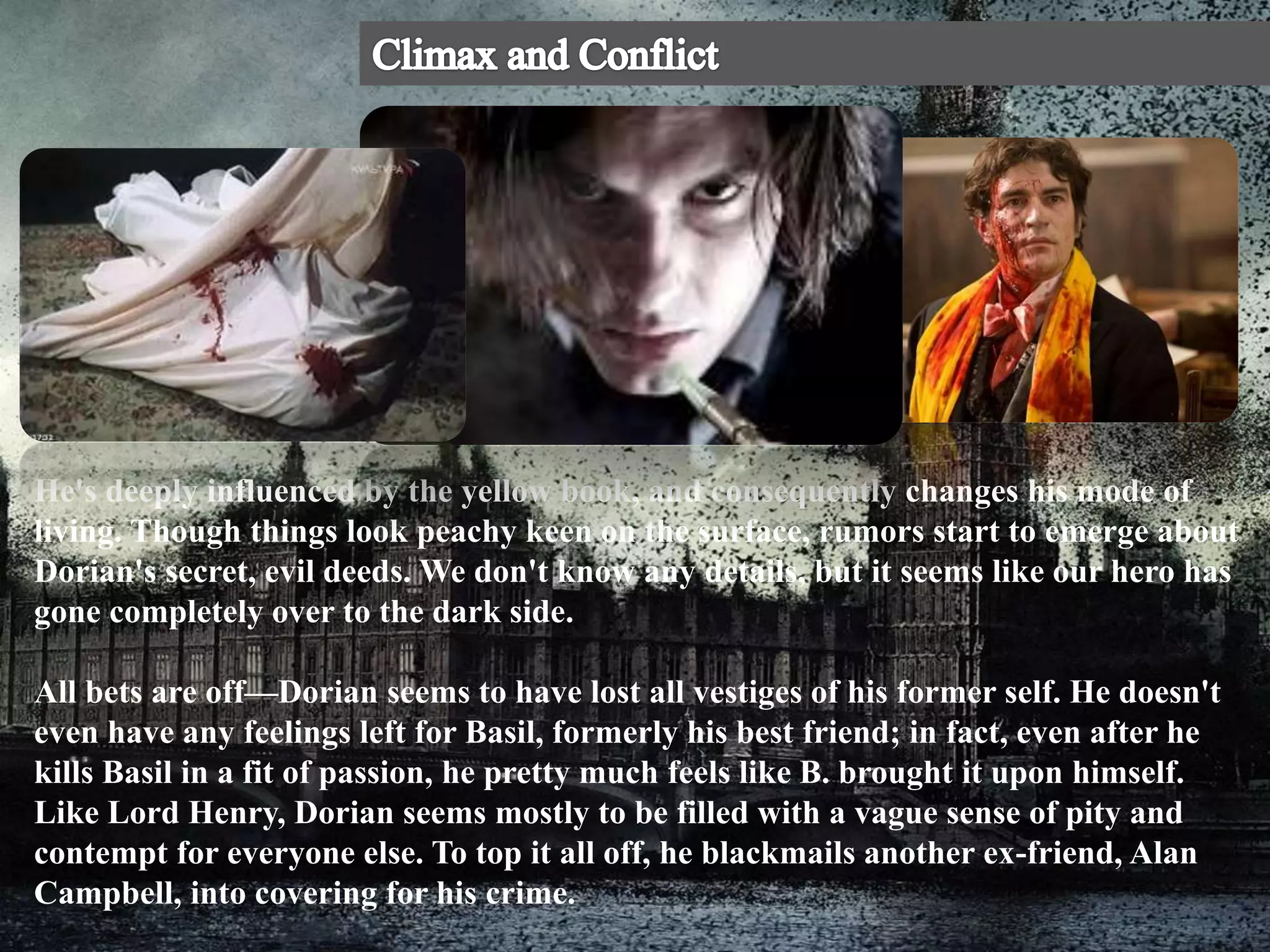
He's deeply influenced by the yellow book, and consequently changes his mode of
living. Though things look peachy keen on the surface, rumors start to emerge about
Dorian's secret, evil deeds. We don't know any details, but it seems like our hero has
gone completely over to the dark side.
All bets are off—Dorian seems to have lost all vestiges of his former self. He doesn't
even have any feelings left for Basil, formerly his best friend; in fact, even after he
kills Basil in a fit of passion, he pretty much feels like B. brought it upon himself.
Like Lord Henry, Dorian seems mostly to be filled with a vague sense of pity and
contempt for everyone else. To top it all off, he blackmails another ex-friend, Alan
Campbell, into covering for his crime.
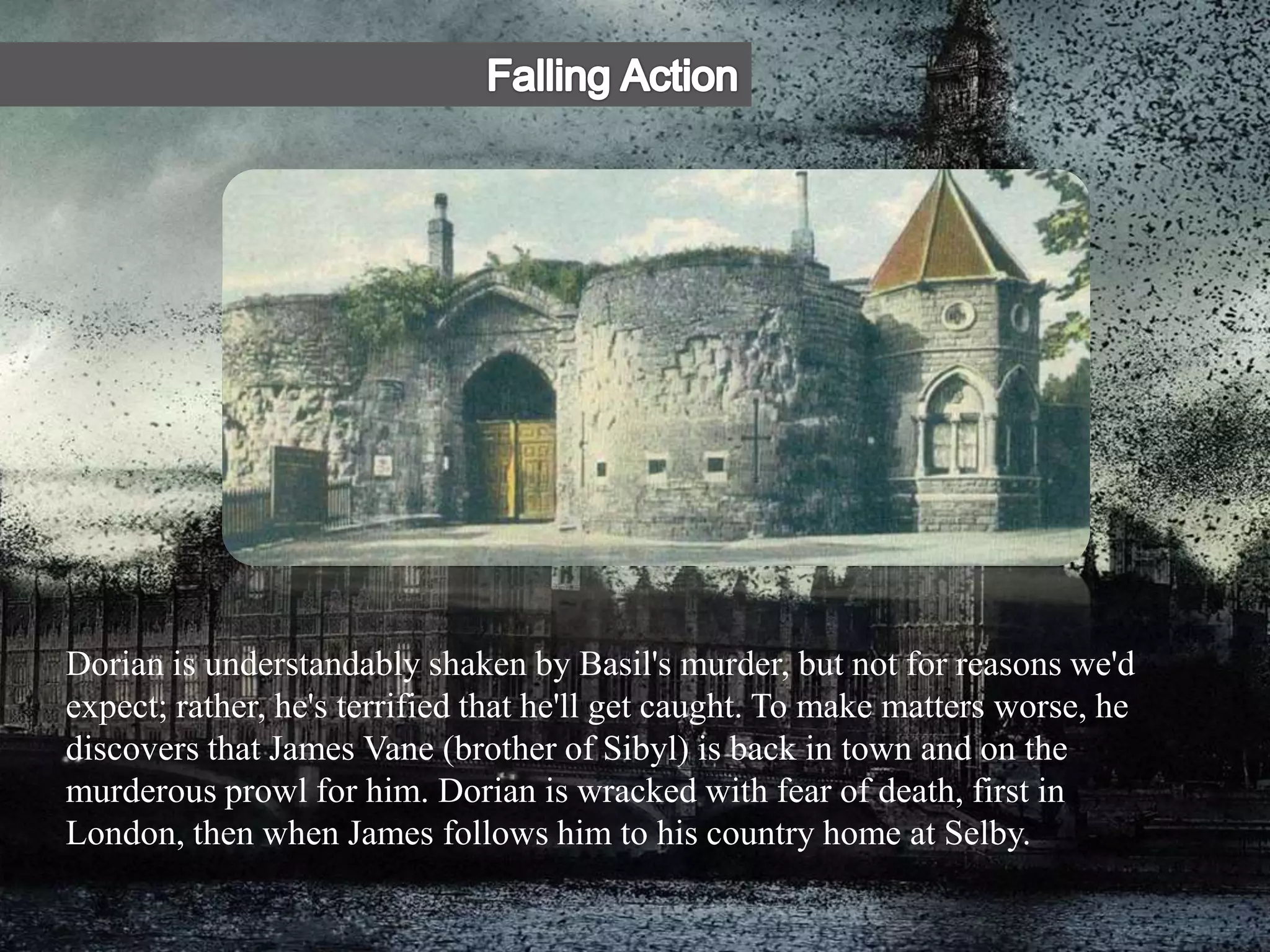
Dorian is understandably shaken by Basil's murder, but not for reasons we'd
expect; rather, he's terrified that he'll get caught. To make matters worse, he
discovers that James Vane (brother of Sibyl) is back in town and on the
murderous prowl for him. Dorian is wracked with fear of death, first in
London, then when James follows him to his country home at Selby.
Life lessons from Oscar Wilde—if you're stalking someone during a hunt, don't
hide out in the line of fire (Chapter 18)
It seems as though everything has worked out for old Dorian Gray—James Vane
is accidentally killed at Selby, which means that there's nobody out looking for
him. He feels a profound sense of relief, and wonders if he should change his ways
after all.
The man makes a last attempt to change his life , but when he finds out that
there are no changes in his portrait, he destroys the picture.
The portrait comes back to its original form.
The body of old, horrible and dreadful man lefts lying on the floor. Only rings on
his fingers tell us who he is.
The author was very successful in
finding the right means to
represent the evil in this book.
The book ends on more on a good
note than a bad; that there is hope
in stopping evil, we just have to
have a want for it.
This story shows us that you can't
have everything forever, one has to
live life as one is. Dorian tried to
stay young forever and it brought
him nothing but pain. We can't
make such mistakes because we
only live once, we have to take
Dorian's example and make our
lives better, and worth living.
The problem of Evil
• The theme of evil is very
much reflected by the book's
setting, plot structure
and characterization. It
shows how individuals can
slowly deteriorate because
of the evil lying within
themselves. The evil of this
book is the evil created
by one's self and trusted
upon one's self.

The picture of doriangray

  • 3.
    Handsome, innocent (maybe) wealthyyoung man The subject/ model of the portrait made by Basil Halward Because of he influenced by Lord Henry, he bacame extremely concerened with his good-looking appearance
  • 4.
    Lord Henry Wotton Charmingtalker, friend of Basil Hallward Badly influenced Dorian Gray
  • 5.
    An artist, friendof Lord Henry Become obsessed with Dorian Gray after meeting him at a party
  • 11.
    Dorian's nature isunspoiled and his exquisite outer beauty mirrors the pure inner beauty of his soul. He's as innocent as the day he was born… until a certain young Lord enters the picture.
  • 12.
    To cut along story short, Dorian idealistically falls in love with Sibyl, and, upon realizing the fact that she doesn't live up to his expectations, he dumps her. She kills herself, and instead of mourning her and learning a lesson, Dorian reads the yellow book, listens to Lord Henry, and gets over the whole thing. After Sybil’s death her brother James promises to find and kill Dorian.
  • 13.
    He's deeply influencedby the yellow book, and consequently changes his mode of living. Though things look peachy keen on the surface, rumors start to emerge about Dorian's secret, evil deeds. We don't know any details, but it seems like our hero has gone completely over to the dark side. All bets are off—Dorian seems to have lost all vestiges of his former self. He doesn't even have any feelings left for Basil, formerly his best friend; in fact, even after he kills Basil in a fit of passion, he pretty much feels like B. brought it upon himself. Like Lord Henry, Dorian seems mostly to be filled with a vague sense of pity and contempt for everyone else. To top it all off, he blackmails another ex-friend, Alan Campbell, into covering for his crime.
  • 14.
    Dorian is understandablyshaken by Basil's murder, but not for reasons we'd expect; rather, he's terrified that he'll get caught. To make matters worse, he discovers that James Vane (brother of Sibyl) is back in town and on the murderous prowl for him. Dorian is wracked with fear of death, first in London, then when James follows him to his country home at Selby.
  • 15.
    Life lessons fromOscar Wilde—if you're stalking someone during a hunt, don't hide out in the line of fire (Chapter 18) It seems as though everything has worked out for old Dorian Gray—James Vane is accidentally killed at Selby, which means that there's nobody out looking for him. He feels a profound sense of relief, and wonders if he should change his ways after all. The man makes a last attempt to change his life , but when he finds out that there are no changes in his portrait, he destroys the picture. The portrait comes back to its original form. The body of old, horrible and dreadful man lefts lying on the floor. Only rings on his fingers tell us who he is.
  • 16.
    The author wasvery successful in finding the right means to represent the evil in this book. The book ends on more on a good note than a bad; that there is hope in stopping evil, we just have to have a want for it. This story shows us that you can't have everything forever, one has to live life as one is. Dorian tried to stay young forever and it brought him nothing but pain. We can't make such mistakes because we only live once, we have to take Dorian's example and make our lives better, and worth living.
  • 17.
    The problem ofEvil • The theme of evil is very much reflected by the book's setting, plot structure and characterization. It shows how individuals can slowly deteriorate because of the evil lying within themselves. The evil of this book is the evil created by one's self and trusted upon one's self.