DOMAINS OF
DEVELOPMENT
JOVENEL B. DADULLA, LPT, MAED
Instructor
CAP Child and Adolescent Learner and Learning Principles
Development in the Head, the
Hand, and the Heart
WHAT DOES
DOMAIN
MEAN?
The domains are the areas of development throughout
human life. In each domain, specific developmental stages
occur characterized by various changes.
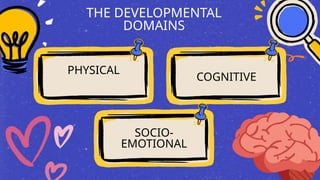
THE DEVELOPMENTAL
DOMAINS
PHYSICAL
SOCIO-
EMOTIONAL
COGNITIVE
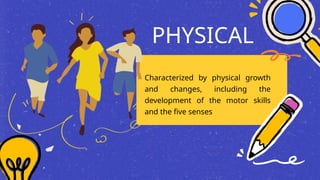
PHYSICAL
Characterized by physical growth
and changes, including the
development of the motor skills
and the five senses
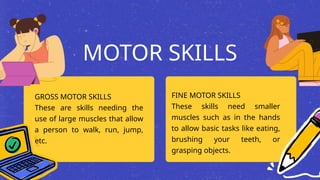
MOTOR SKILLS
GROSS MOTOR SKILLS
These are skills needing the
use of large muscles that allow
a person to walk, run, jump,
etc.
FINE MOTOR SKILLS
These skills need smaller
muscles such as in the hands
to allow basic tasks like eating,
brushing your teeth, or
grasping objects.
COGNITIVE
Deals with development in the
thinking skills of a person.
More elaborately, it describes
intellectual growth including how they
think and learn. Proper cognitive
growth allows a person the
understand the world around them
leading to proper decision making.
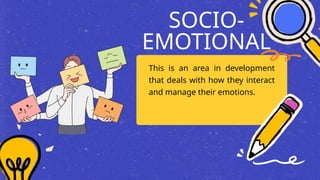
SOCIO-
EMOTIONAL
This is an area in development
that deals with how they interact
and manage their emotions.
EMOTION
REGULATION
It is important to teach a child how to
regulate their emotions as young as they are.
As they grow up, they need to learn what
kinds emotions are appropriate for a
situation but must be reminded that all
emotions are valid.
EMOTION
REGULATION
It is important to teach a child how to
regulate their emotions as young as they are.
As they grow up, they need to learn what
kinds emotions are appropriate for a
situation but must be reminded that all
emotions are valid.

The Different Domains in Human Development

  • 1.
    DOMAINS OF DEVELOPMENT JOVENEL B.DADULLA, LPT, MAED Instructor CAP Child and Adolescent Learner and Learning Principles Development in the Head, the Hand, and the Heart
  • 2.
    WHAT DOES DOMAIN MEAN? The domainsare the areas of development throughout human life. In each domain, specific developmental stages occur characterized by various changes.
  • 3.
  • 4.
    PHYSICAL Characterized by physicalgrowth and changes, including the development of the motor skills and the five senses
  • 5.
    MOTOR SKILLS GROSS MOTORSKILLS These are skills needing the use of large muscles that allow a person to walk, run, jump, etc. FINE MOTOR SKILLS These skills need smaller muscles such as in the hands to allow basic tasks like eating, brushing your teeth, or grasping objects.
  • 6.
    COGNITIVE Deals with developmentin the thinking skills of a person.
  • 7.
    More elaborately, itdescribes intellectual growth including how they think and learn. Proper cognitive growth allows a person the understand the world around them leading to proper decision making.
  • 8.
    SOCIO- EMOTIONAL This is anarea in development that deals with how they interact and manage their emotions.
  • 9.
    EMOTION REGULATION It is importantto teach a child how to regulate their emotions as young as they are. As they grow up, they need to learn what kinds emotions are appropriate for a situation but must be reminded that all emotions are valid.
  • 10.
    EMOTION REGULATION It is importantto teach a child how to regulate their emotions as young as they are. As they grow up, they need to learn what kinds emotions are appropriate for a situation but must be reminded that all emotions are valid.