3
THE DEEP LEARNING TECHNOLOGY ON COCO
FRAMEWORK
Jamia institute of engineering and management studies,akkalkuwa
Kavayitri Bahinabai Chaudhari North Maharashtra University, Jalgaon
content
introduction
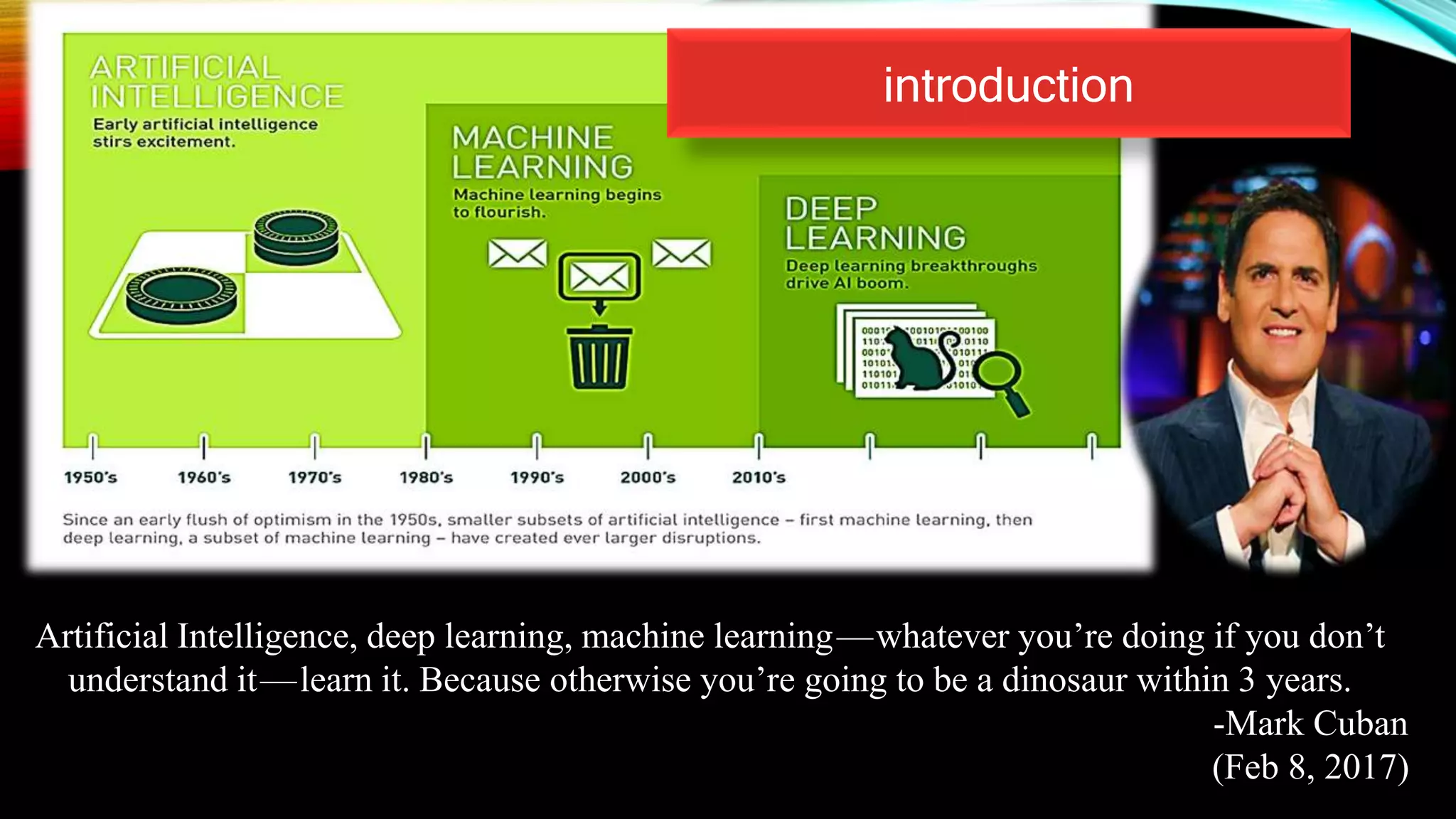
Artificial Intelligence, deep learning, machine learning — whatever you’re doing if you don’t
understand it — learn it. Because otherwise you’re going to be a dinosaur within 3 years.
-Mark Cuban
(Feb 8, 2017)
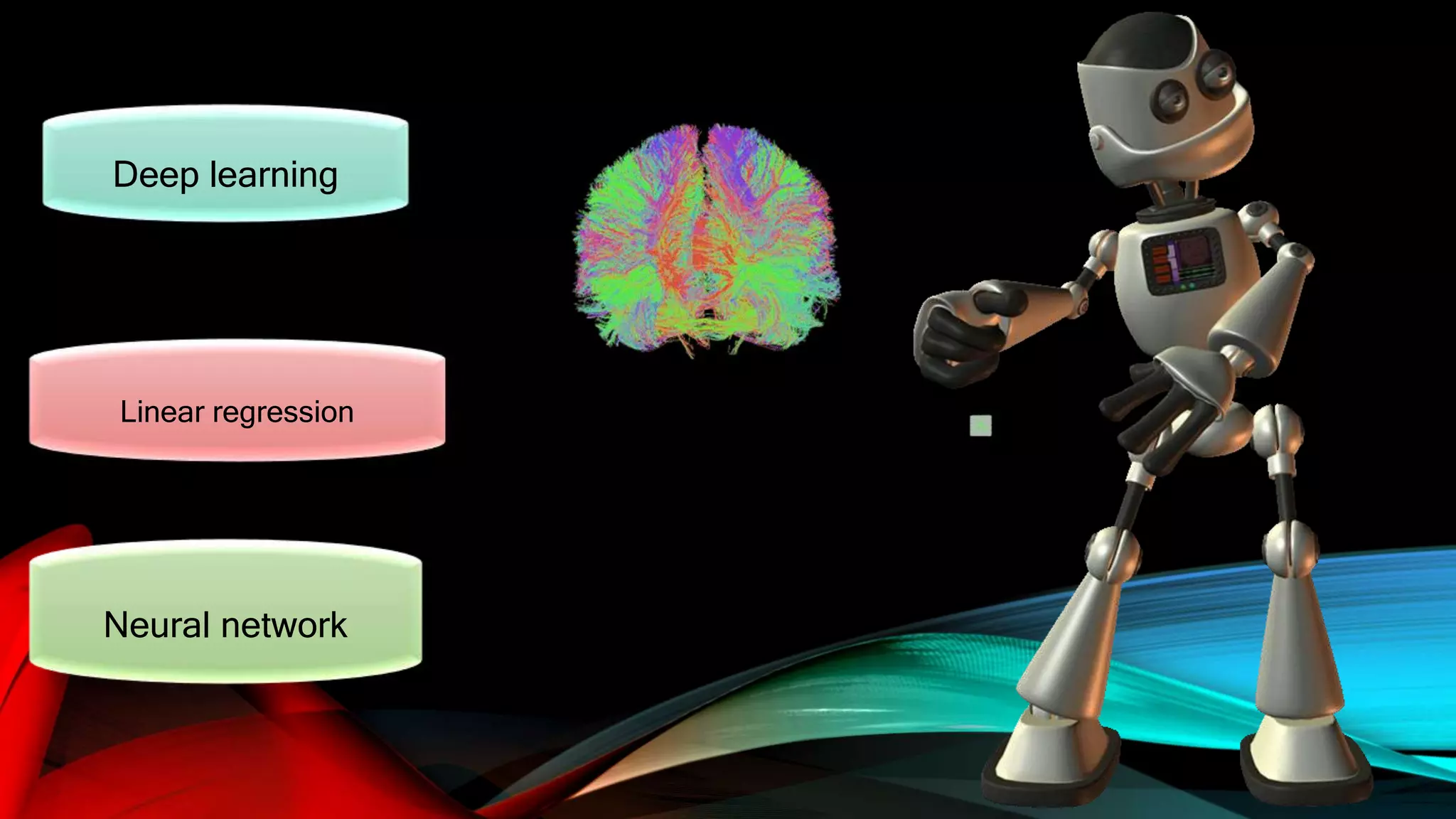
Deep learning
Neural network
Linear regression
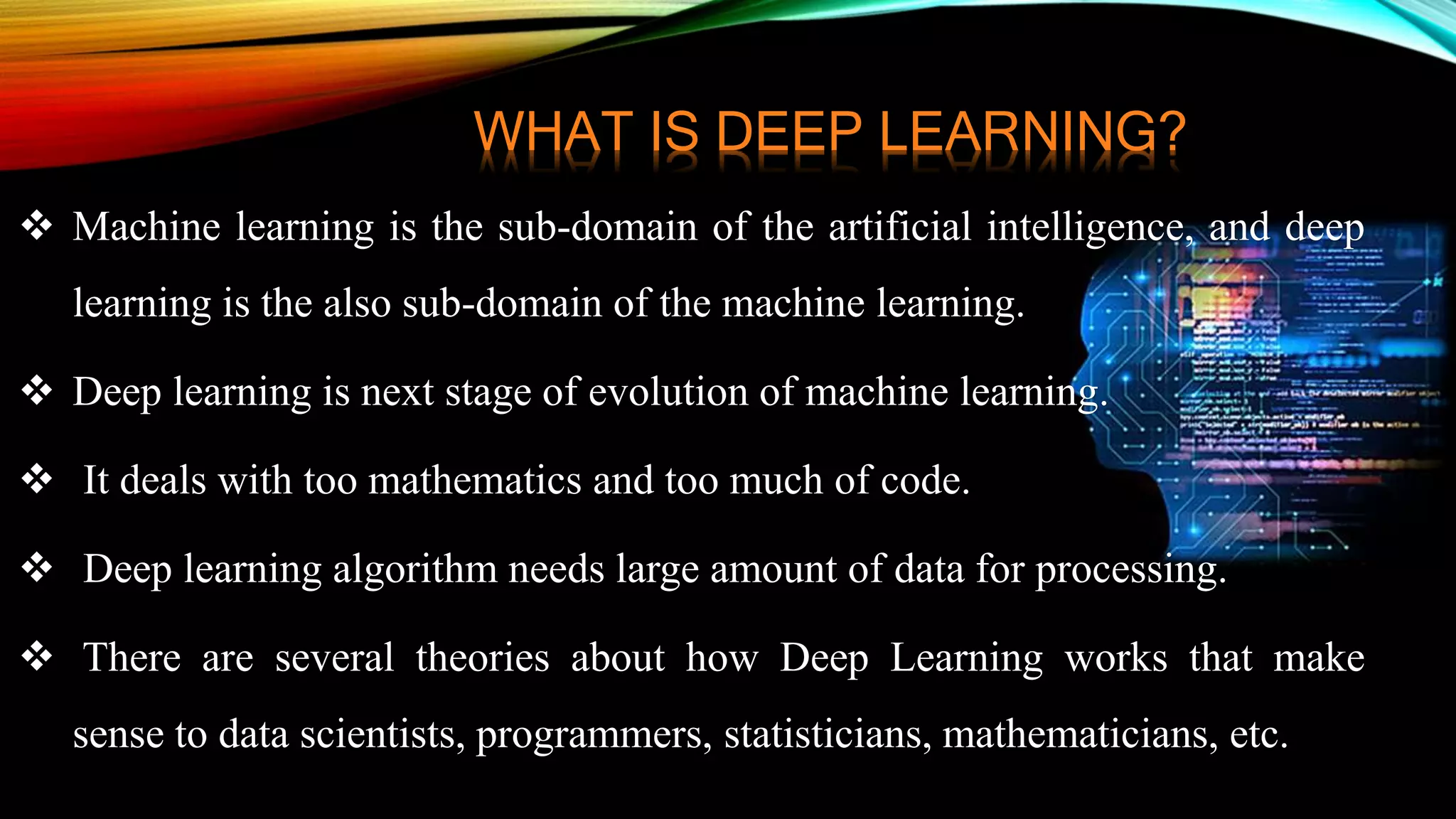
 Machine learning is the sub-domain of the artificial intelligence, and deep
learning is the also sub-domain of the machine learning.
 Deep learning is next stage of evolution of machine learning.
 It deals with too mathematics and too much of code.
 Deep learning algorithm needs large amount of data for processing.
 There are several theories about how Deep Learning works that make
sense to data scientists, programmers, statisticians, mathematicians, etc.
WHAT IS DEEP LEARNING?
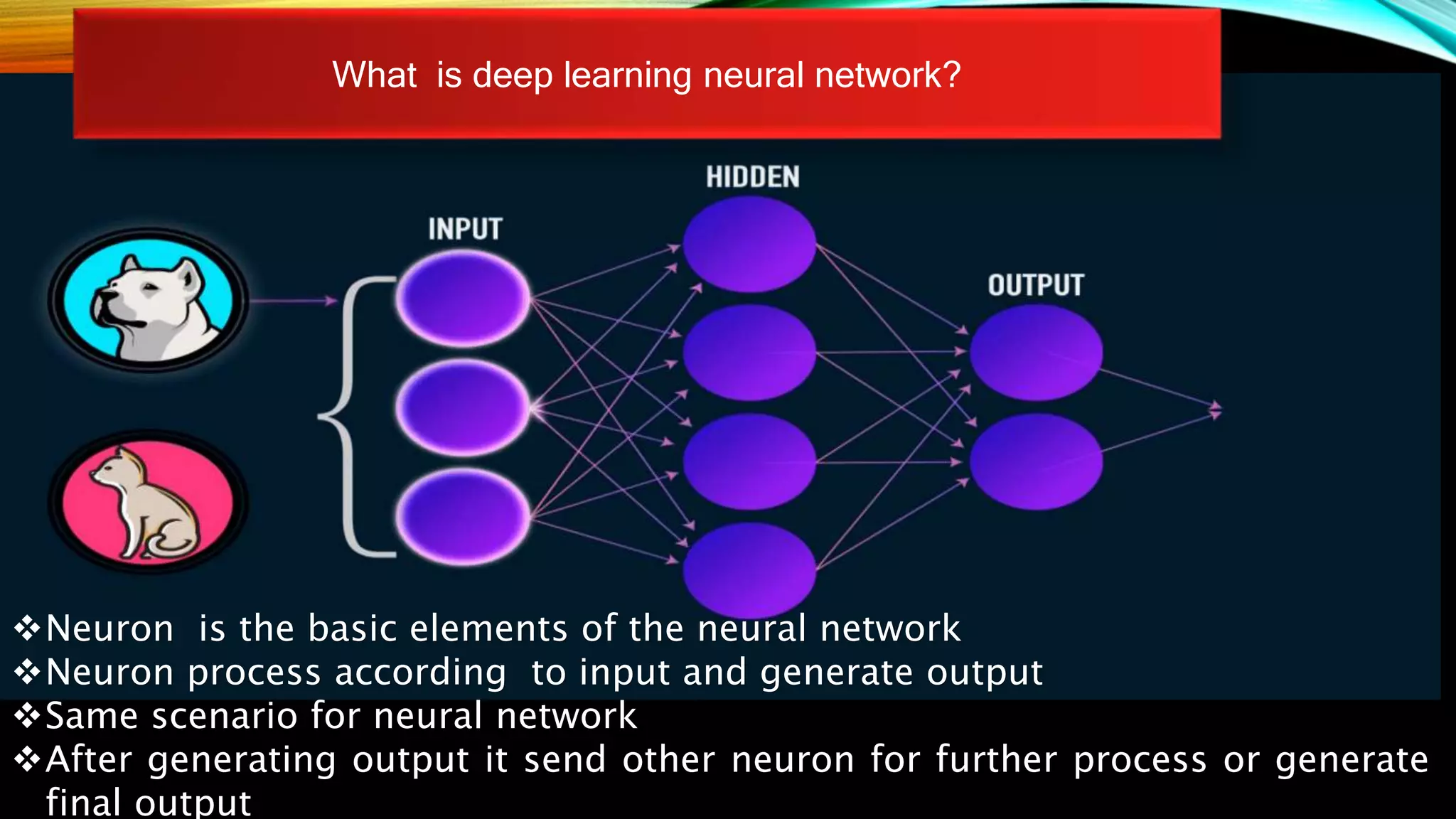
What is deep learning neural network?
Neuron is the basic elements of the neural network
Neuron process according to input and generate output
Same scenario for neural network
After generating output it send other neuron for further process or generate
final output
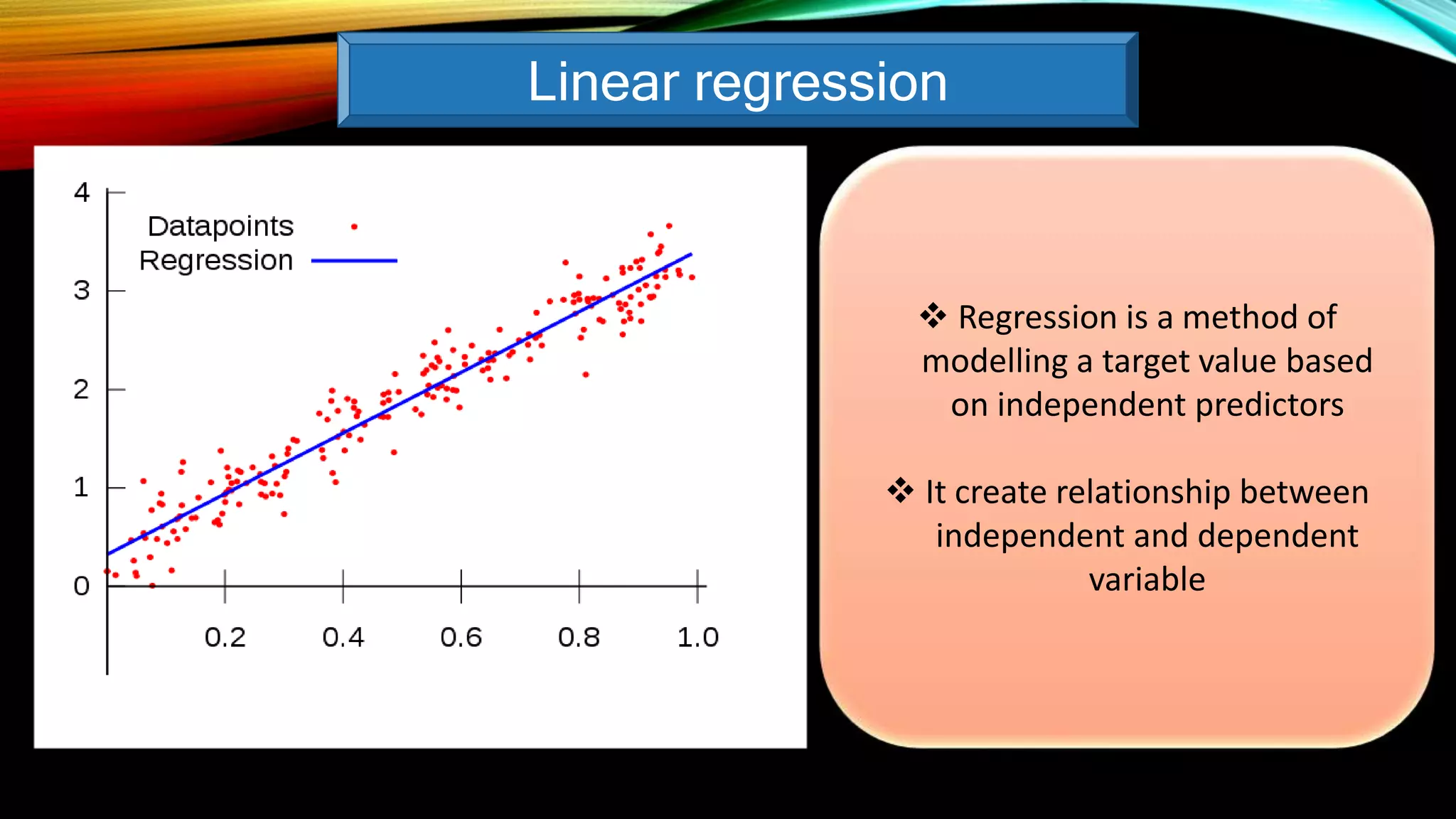
Linear regression
 Regression is a method of
modelling a target value based
on independent predictors
 It create relationship between
independent and dependent
variable
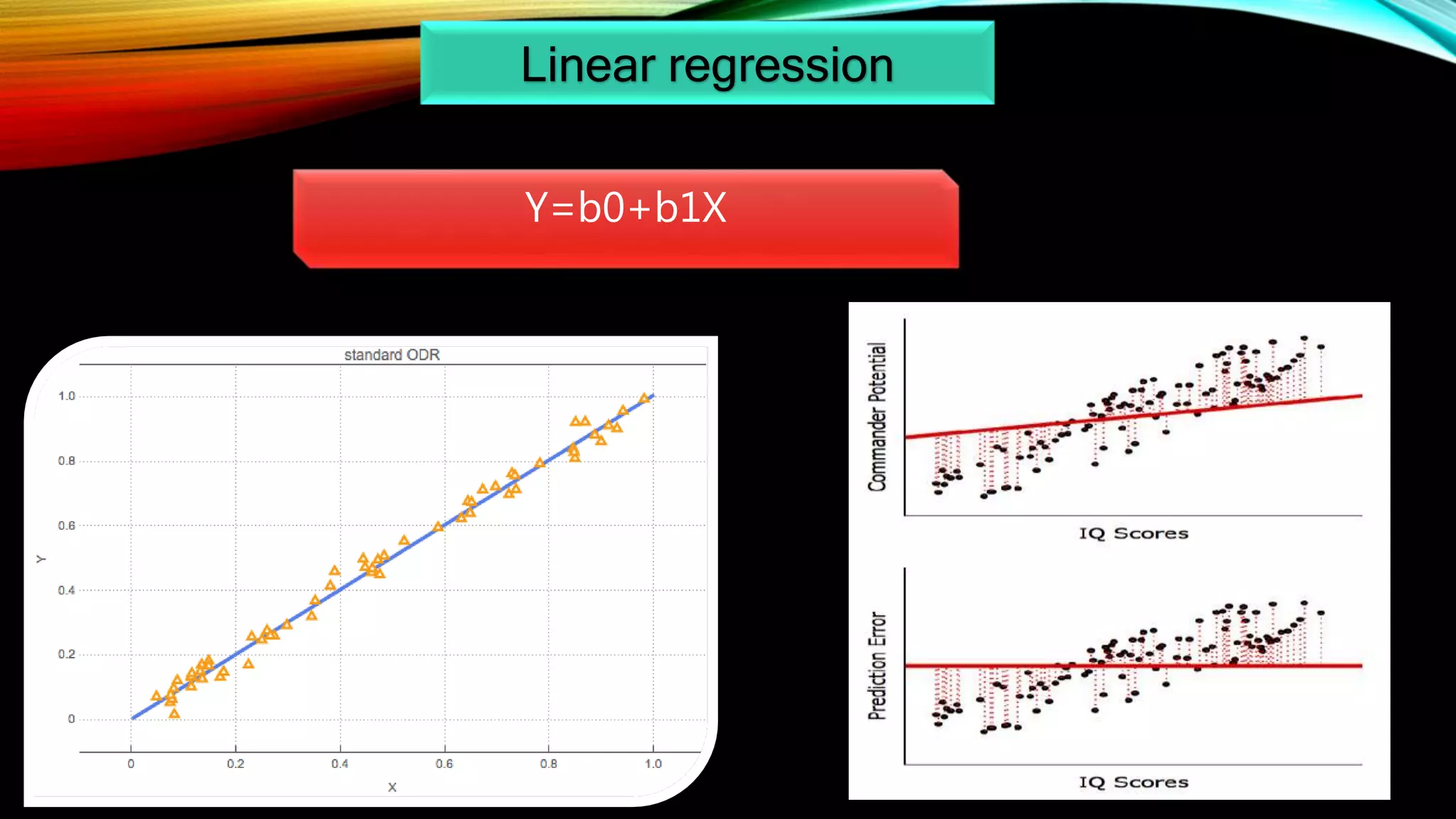
Linear regression
Y=b0+b1X
The coco framework
 The Microsoft Common Objects in Context (MS
COCO)
 Introduce by Microsoft
 Recognized the object on a pictures.
 2D and 3D objects.
 Containing particular object categories using a
hierarchical labeling approach
 Based on blockchain technique
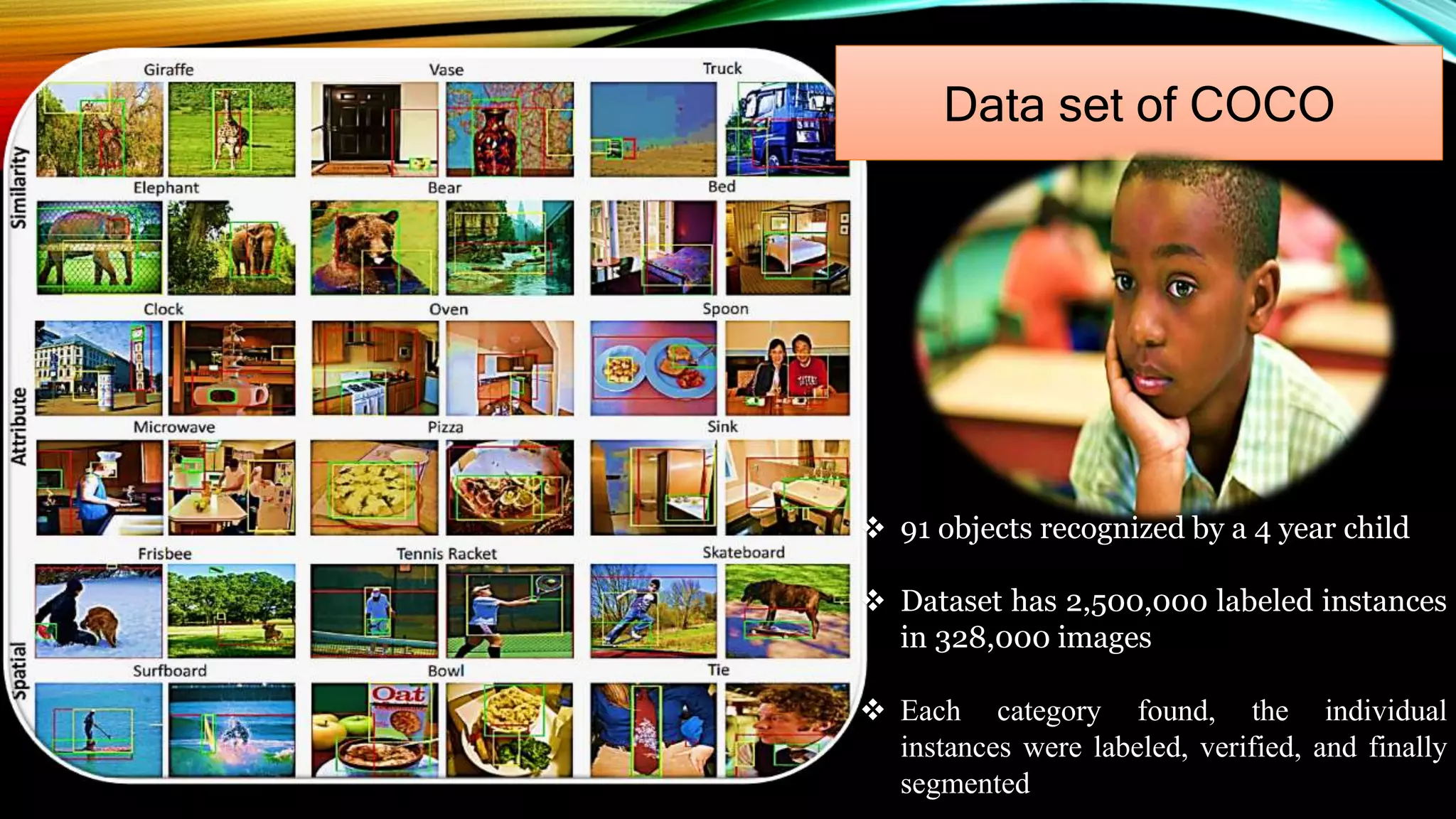
Data set of COCO
 91 objects recognized by a 4 year child
 Dataset has 2,500,000 labeled instances
in 328,000 images
 Each category found, the individual
instances were labeled, verified, and finally
segmented
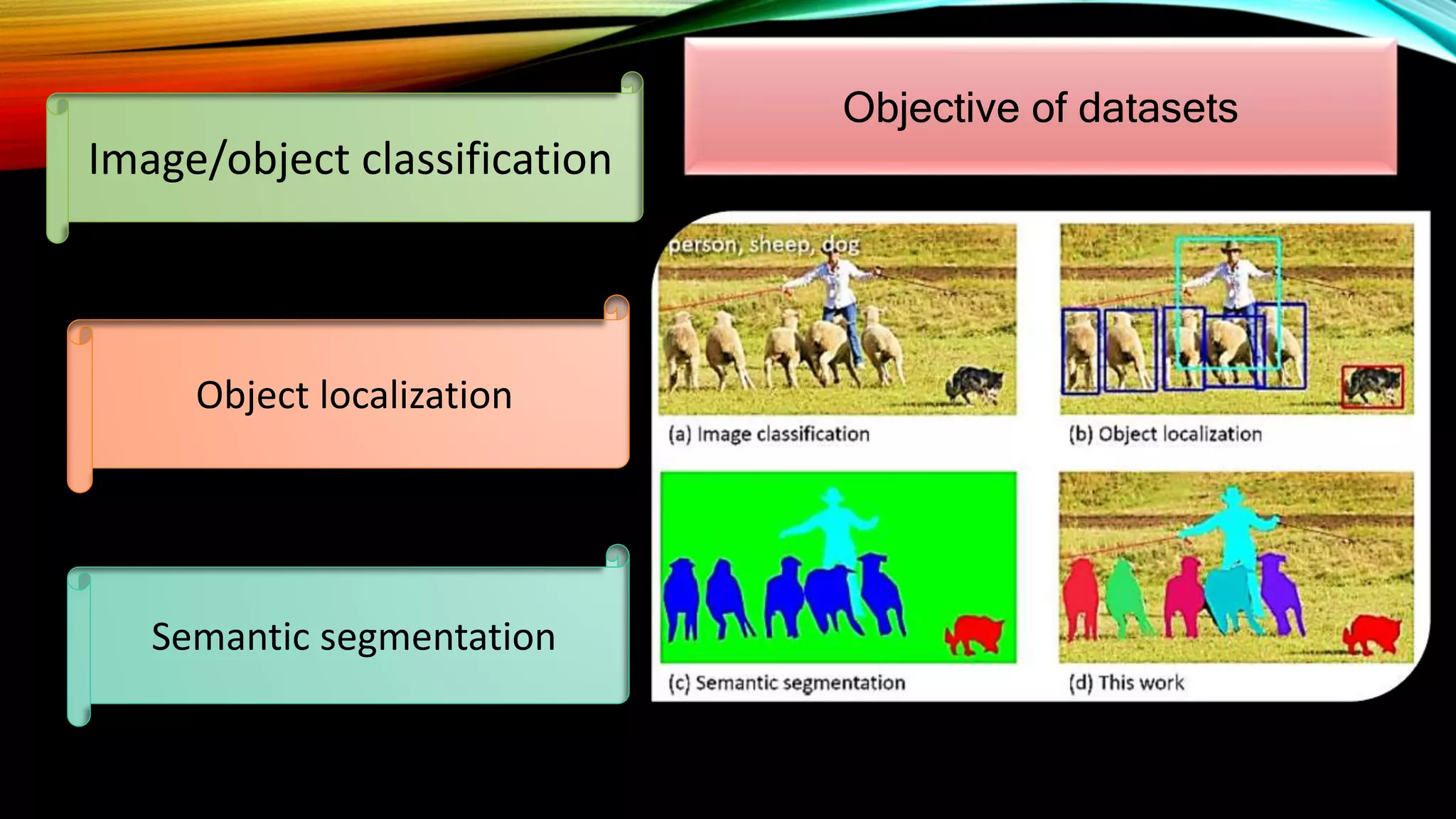
Objective of datasets
Image/object classification
Object localization
Semantic segmentation
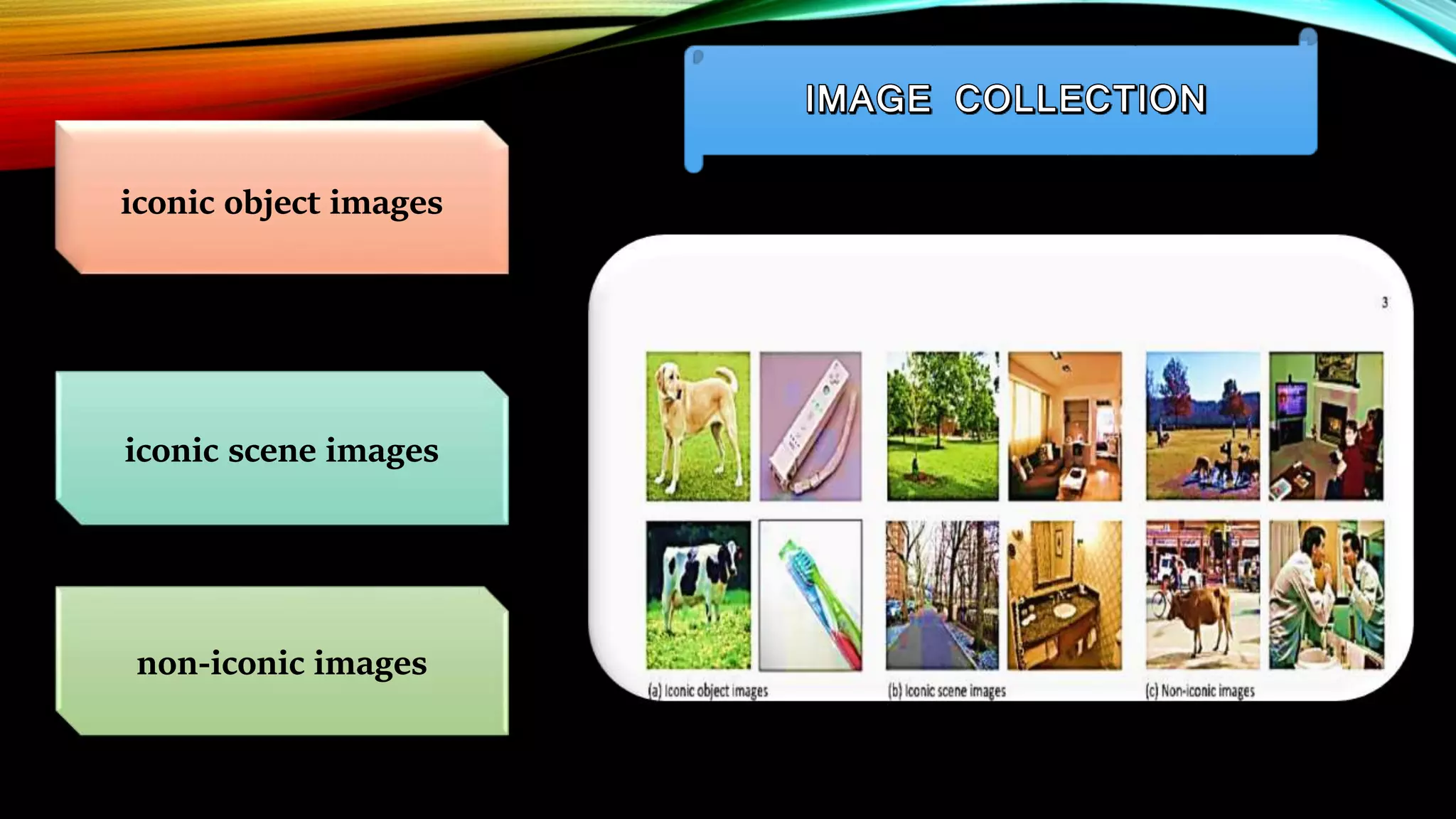
iconic object images
iconic scene images
non-iconic images
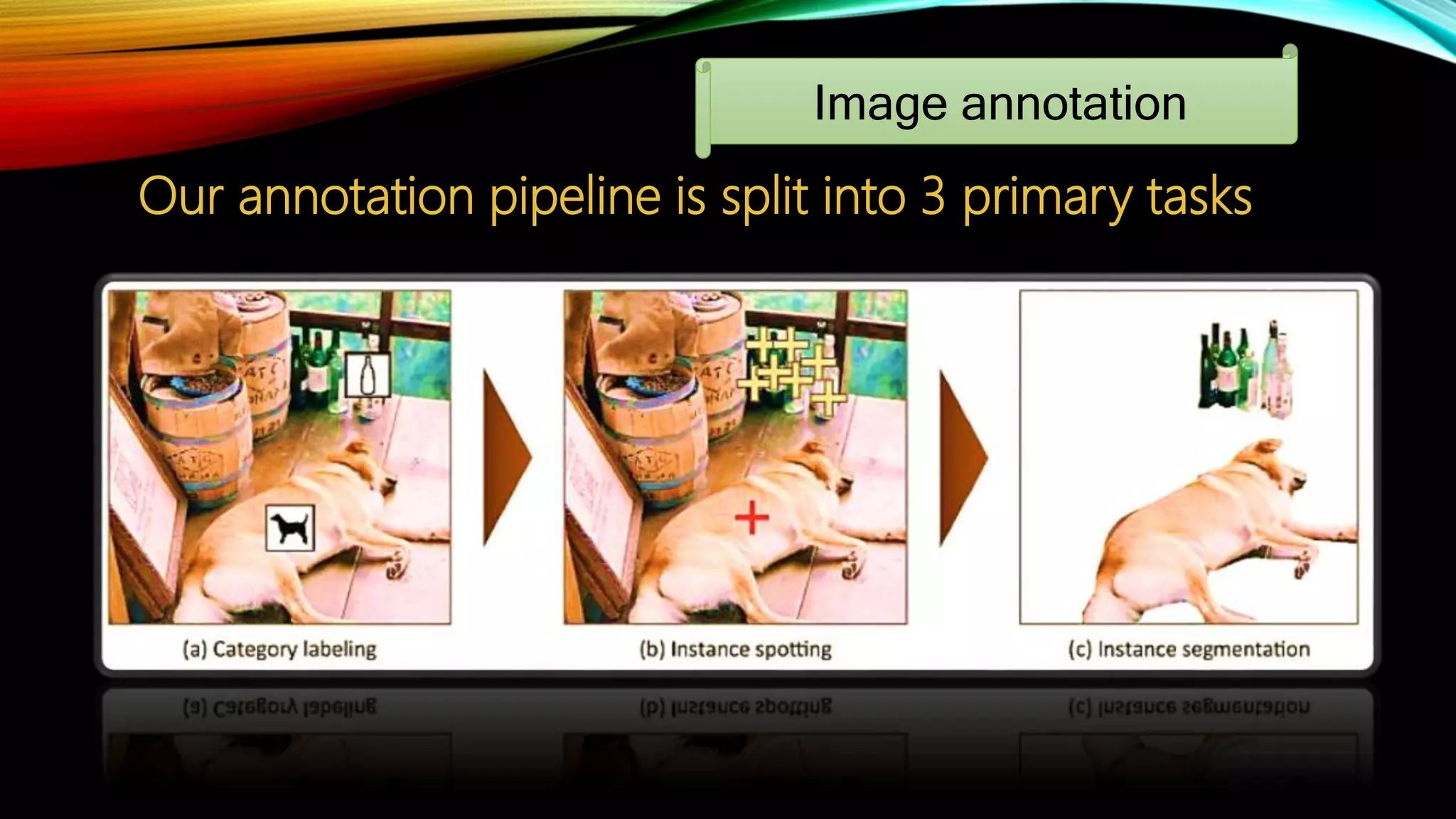
Our annotation pipeline is split into 3 primary tasks
Image annotation
“
”
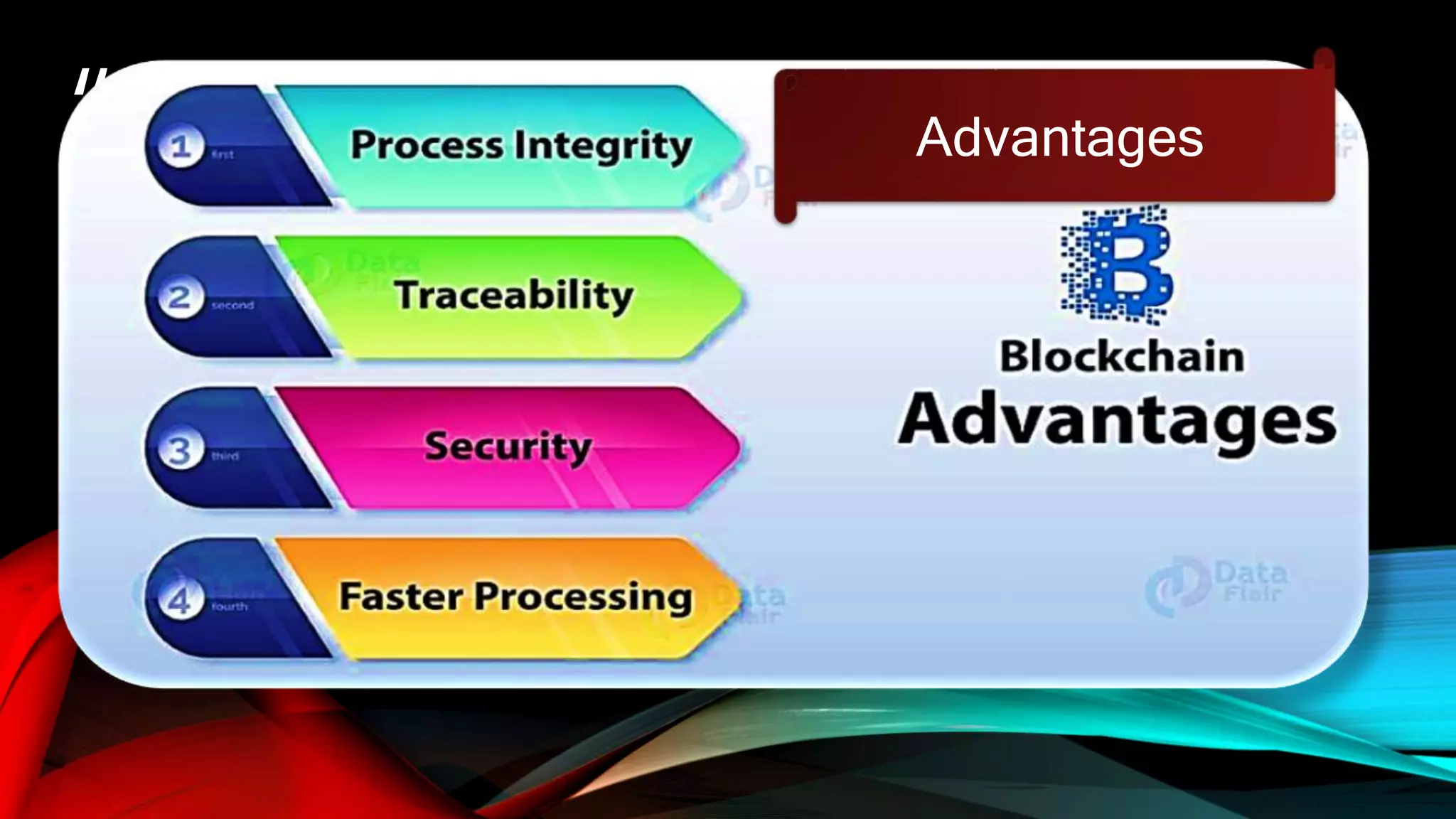
Advantages
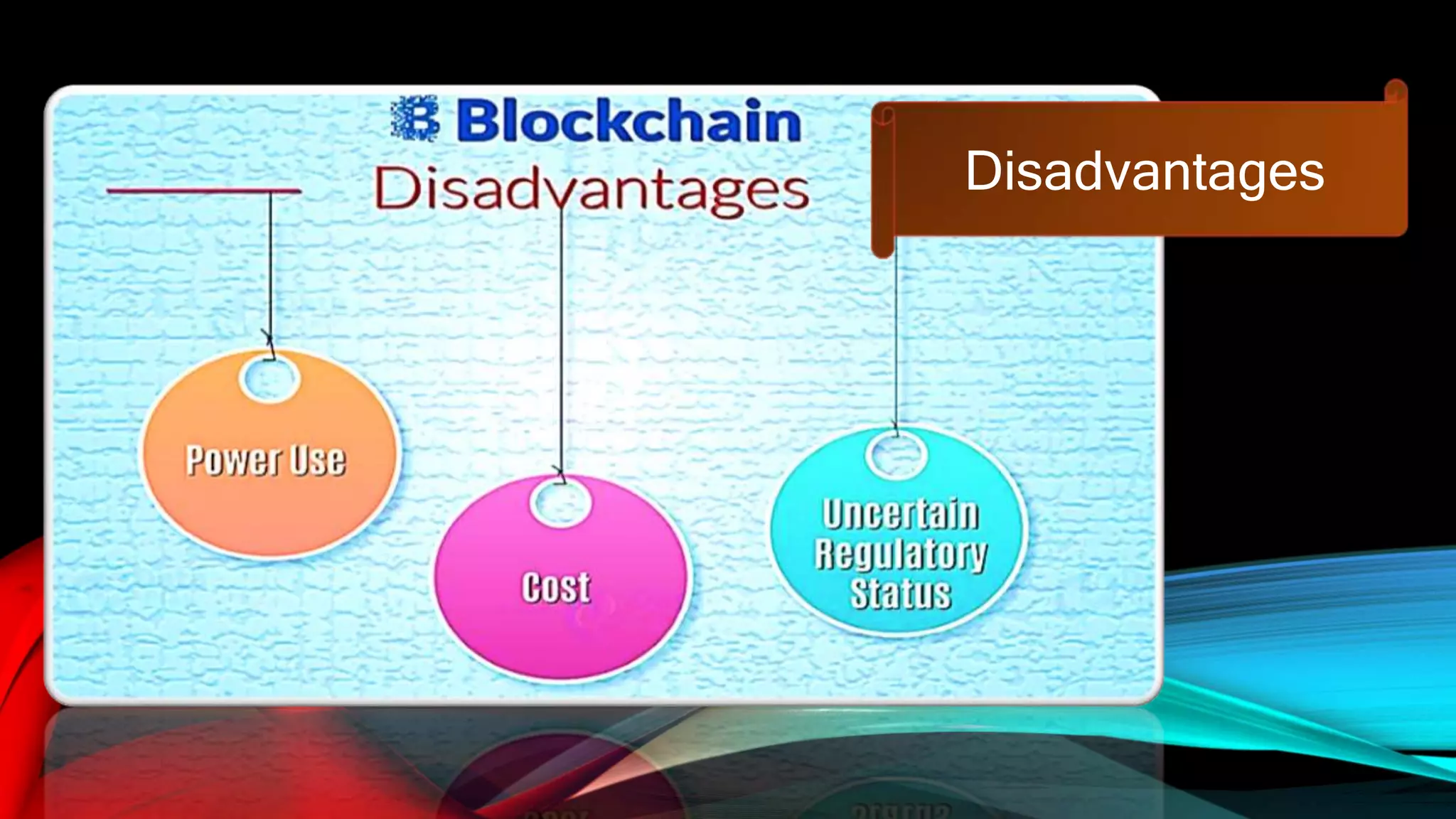
Disadvantages
Future scope
BLOCKCHAIN TECHNOLOGY MARKET
2018 FUTURE SCOPE AND INDUSTRY SIZE
PROJECTED TO RAISE USD $2 BILLION
WITH 51% OF CAGR BY 2022
Internet hosting service GitHub
Banking sector
Finance sector Insurance sector
Future scope
References
[1] J. Deng, W. Dong, R. Socher, L.-J. Li, K. Li, and L. Fei-Fei, “ImageNet: A Large-Scale Hierarchical Image Database,”
in CVPR, 2009.
[2] M. Everingham, L. Van Gool, C. K. I.Williams, J.Winn, and A. Zisserman, “The PASCAL visual object classes (VOC)
challenge,” IJCV, vol. 88, no. 2, pp. 303–338, Jun. 2010.
[3] J. Xiao, J. Hays, K. A. Ehinger, A. Oliva, and A. Torralba, “SUN database: Large-scale scene recognition from abbey to
zoo,” in CVPR, 2010.
[4] P. Doll´ar, C. Wojek, B. Schiele, and P. Perona, “Pedestrian detection: An evaluation of the state of the art,” PAMI, vol.
34, 2012.
[5] A. Krizhevsky, I. Sutskever, and G. Hinton, “ImageNet classification with deep convolutional neural networks,” in
NIPS, 2012.
[6] R. Girshick, J. Donahue, T. Darrell, and J. Malik, “Rich feature hierarchies for accurate object detection and semantic
segmentation,” in CVPR, 2014.
[7] P. Sermanet, D. Eigen, S. Zhang, M. Mathieu, R. Fergus, and Y. LeCun, “OverFeat: Integrated recognition, localization
and detection using convolutional networks,” in ICLR, April 2014.
[8] A. Farhadi, I. Endres, D. Hoiem, and D. Forsyth, “Describing objects by their attributes,” in CVPR, 2009.
Have you any question?
Thank you for listening

The deep learning technology on coco framework

  • 1.
    3 THE DEEP LEARNINGTECHNOLOGY ON COCO FRAMEWORK Jamia institute of engineering and management studies,akkalkuwa Kavayitri Bahinabai Chaudhari North Maharashtra University, Jalgaon
  • 3.
  • 4.
    introduction Artificial Intelligence, deeplearning, machine learning — whatever you’re doing if you don’t understand it — learn it. Because otherwise you’re going to be a dinosaur within 3 years. -Mark Cuban (Feb 8, 2017)
  • 5.
  • 6.
     Machine learningis the sub-domain of the artificial intelligence, and deep learning is the also sub-domain of the machine learning.  Deep learning is next stage of evolution of machine learning.  It deals with too mathematics and too much of code.  Deep learning algorithm needs large amount of data for processing.  There are several theories about how Deep Learning works that make sense to data scientists, programmers, statisticians, mathematicians, etc. WHAT IS DEEP LEARNING?
  • 7.
    What is deeplearning neural network? Neuron is the basic elements of the neural network Neuron process according to input and generate output Same scenario for neural network After generating output it send other neuron for further process or generate final output
  • 8.
    Linear regression  Regressionis a method of modelling a target value based on independent predictors  It create relationship between independent and dependent variable
  • 9.
  • 10.
    The coco framework The Microsoft Common Objects in Context (MS COCO)  Introduce by Microsoft  Recognized the object on a pictures.  2D and 3D objects.  Containing particular object categories using a hierarchical labeling approach  Based on blockchain technique
  • 11.
    Data set ofCOCO  91 objects recognized by a 4 year child  Dataset has 2,500,000 labeled instances in 328,000 images  Each category found, the individual instances were labeled, verified, and finally segmented
  • 12.
    Objective of datasets Image/objectclassification Object localization Semantic segmentation
  • 13.
    iconic object images iconicscene images non-iconic images
  • 14.
    Our annotation pipelineis split into 3 primary tasks Image annotation
  • 15.
  • 16.
  • 17.
    Future scope BLOCKCHAIN TECHNOLOGYMARKET 2018 FUTURE SCOPE AND INDUSTRY SIZE PROJECTED TO RAISE USD $2 BILLION WITH 51% OF CAGR BY 2022 Internet hosting service GitHub Banking sector Finance sector Insurance sector
  • 18.
  • 19.
    References [1] J. Deng,W. Dong, R. Socher, L.-J. Li, K. Li, and L. Fei-Fei, “ImageNet: A Large-Scale Hierarchical Image Database,” in CVPR, 2009. [2] M. Everingham, L. Van Gool, C. K. I.Williams, J.Winn, and A. Zisserman, “The PASCAL visual object classes (VOC) challenge,” IJCV, vol. 88, no. 2, pp. 303–338, Jun. 2010. [3] J. Xiao, J. Hays, K. A. Ehinger, A. Oliva, and A. Torralba, “SUN database: Large-scale scene recognition from abbey to zoo,” in CVPR, 2010. [4] P. Doll´ar, C. Wojek, B. Schiele, and P. Perona, “Pedestrian detection: An evaluation of the state of the art,” PAMI, vol. 34, 2012. [5] A. Krizhevsky, I. Sutskever, and G. Hinton, “ImageNet classification with deep convolutional neural networks,” in NIPS, 2012. [6] R. Girshick, J. Donahue, T. Darrell, and J. Malik, “Rich feature hierarchies for accurate object detection and semantic segmentation,” in CVPR, 2014. [7] P. Sermanet, D. Eigen, S. Zhang, M. Mathieu, R. Fergus, and Y. LeCun, “OverFeat: Integrated recognition, localization and detection using convolutional networks,” in ICLR, April 2014. [8] A. Farhadi, I. Endres, D. Hoiem, and D. Forsyth, “Describing objects by their attributes,” in CVPR, 2009.
  • 20.
    Have you anyquestion? Thank you for listening