The Connection between Past 
Civilizations and Present Lives 
Vincent Nicholas 
6A
England in the past 
• CHANGES IN GEOGRAPHICAL ELEMENT 
• English is located on the continent of Europe 
• Area now called England was first inhabited by 
modern humans during the Paleolithic period, 
but the name England is derived from the Angles, 
which is one of the Germanic tribes who settled 
there in the 5th century and 6th. England became 
a unified state in AD 927, and since the Age of 
Discovery which began in the 15th century, 
English has influenced a significant cultural and 
legal to various parts of the world.
• Preliminary evidence relating to human presence in the 
area now known as England was inhabited by Homo 
antecessor estimated around 780,000 years ago. The 
oldest proto-human skeleton discovered in the UK and 
probably derived from 500,000 years ago. Modern 
humans are known to have inhabited the territory of 
England in Upper Paleolithic period, though permanent 
settlements newly formed in the last 6000 years. After 
the end of the last ice age, only large mammals such as 
mammoths, bison and ancient rhinoceros inhabiting 
this region. Roughly 11,000 years ago, when the ice 
sheets began to recede, humans re-inhabit the UK. 
Genetic studies indicate that they came from the 
northern part of the Iberian Peninsula. When sea level 
was lower than it is today, the island of Great united 
with the island of Ireland and Eurasia. But as sea levels 
rise, Britain separated from Ireland 10,000 years ago, 
and then also separated from Eurasia two millennia 
later.
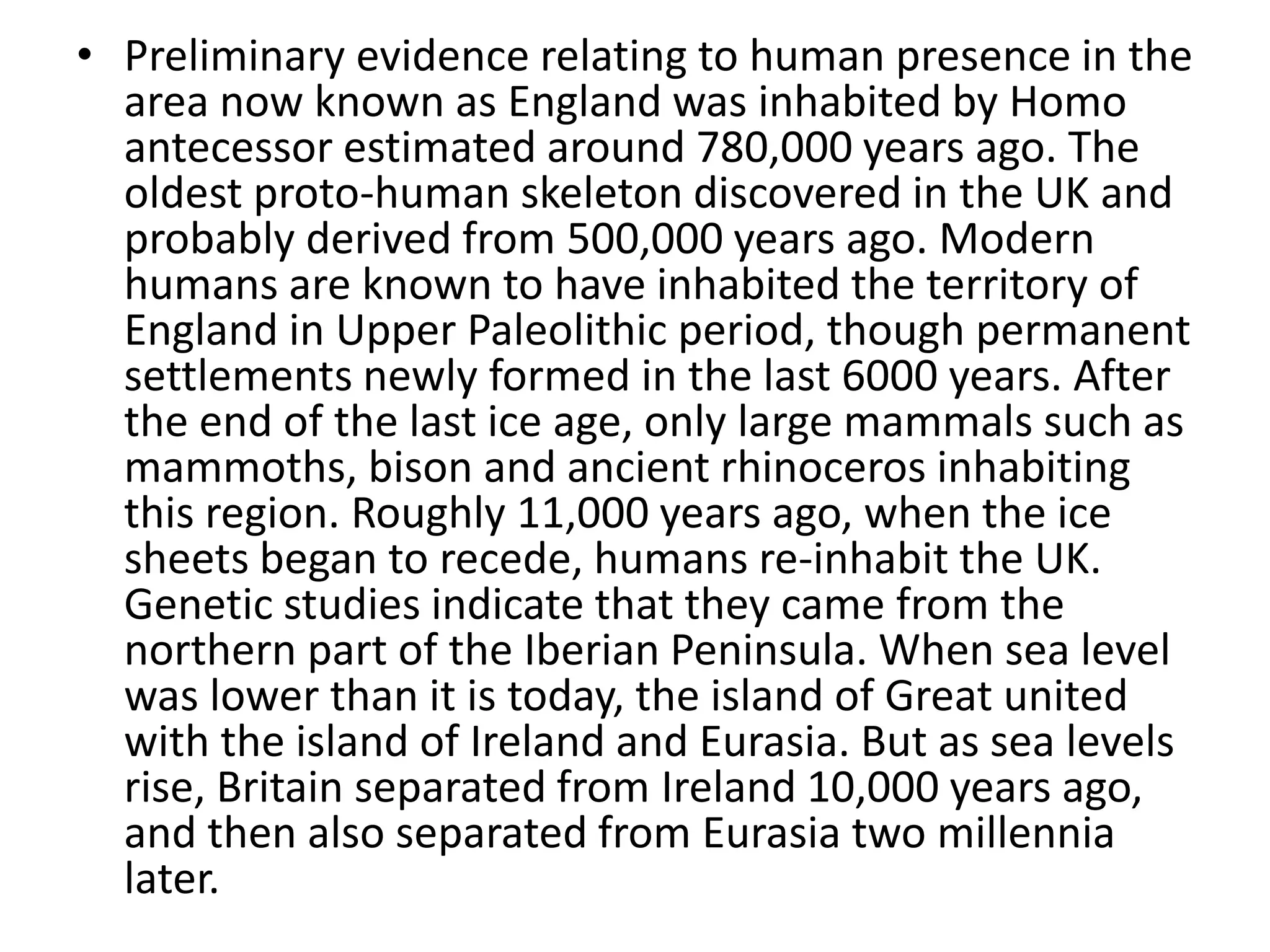
Europe in the 13 century 
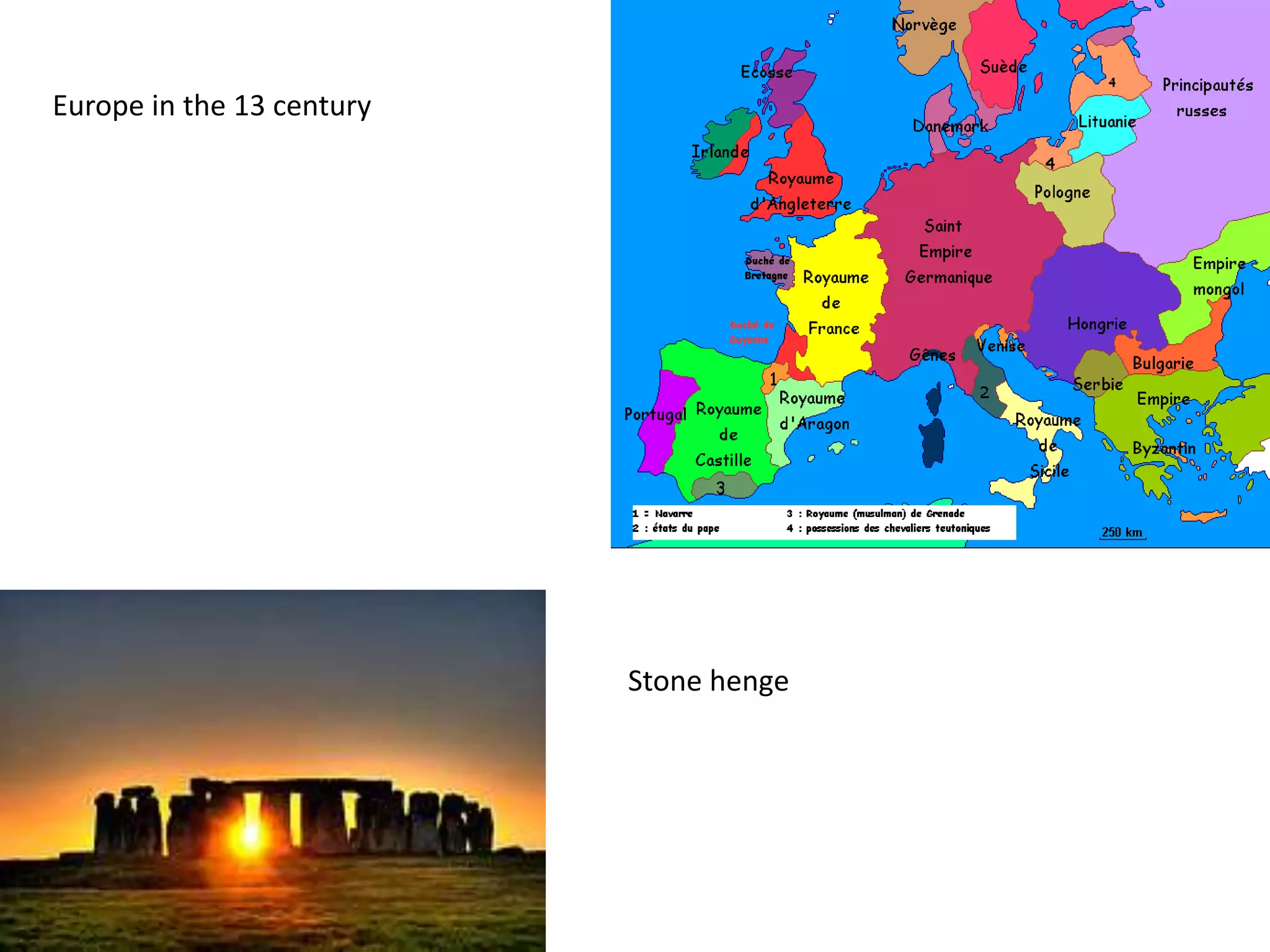
Stone henge
England in present 
• Currently London is the largest metropolitan area 
in the United Kingdom and the largest urban zone 
in the European Union based on the total area. 
UK residents amounts to about 53 million people, 
or about 84% of the total population of the 
United Kingdom, largely concentrated in London, 
South East England, and regions of conurbations 
in the Midlands, Northwest, North East and 
Yorkshire, each region developed as The main 
industrial regions during the 19th century. While 
the prairie region are outside the big cities.
Ferris wheel 
Big Ben
In the past 
• CHANGES IN SOCIAL SYSTEMS ELEMENT 
• British society, like its European neighbours and most societies in world 
history, was traditionally (before the Industrial Revolution) divided into a 
caste system called the estates, with all of the most notable features of a 
caste system: endogamy (marriage only within the same group), and the 
hereditary transmission of occupation, social status and political 
influence.Since the advent of industrialisation, this system has been in a 
constant state of revision, and new factors other than birth (for example, 
education) are now a greater part of creating identity in Britain. 
• Although definitions of social class in the United Kingdom vary and are 
highly controversial, most are influenced by factors of wealth, occupation 
and education. Until recently the Parliament of the United Kingdom was 
organised on a class basis, with the House of Lords representing the 
hereditary upper class and the House of Commons representing everyone 
else, and the British monarch is usually viewed as being at the top of the 
social class structure
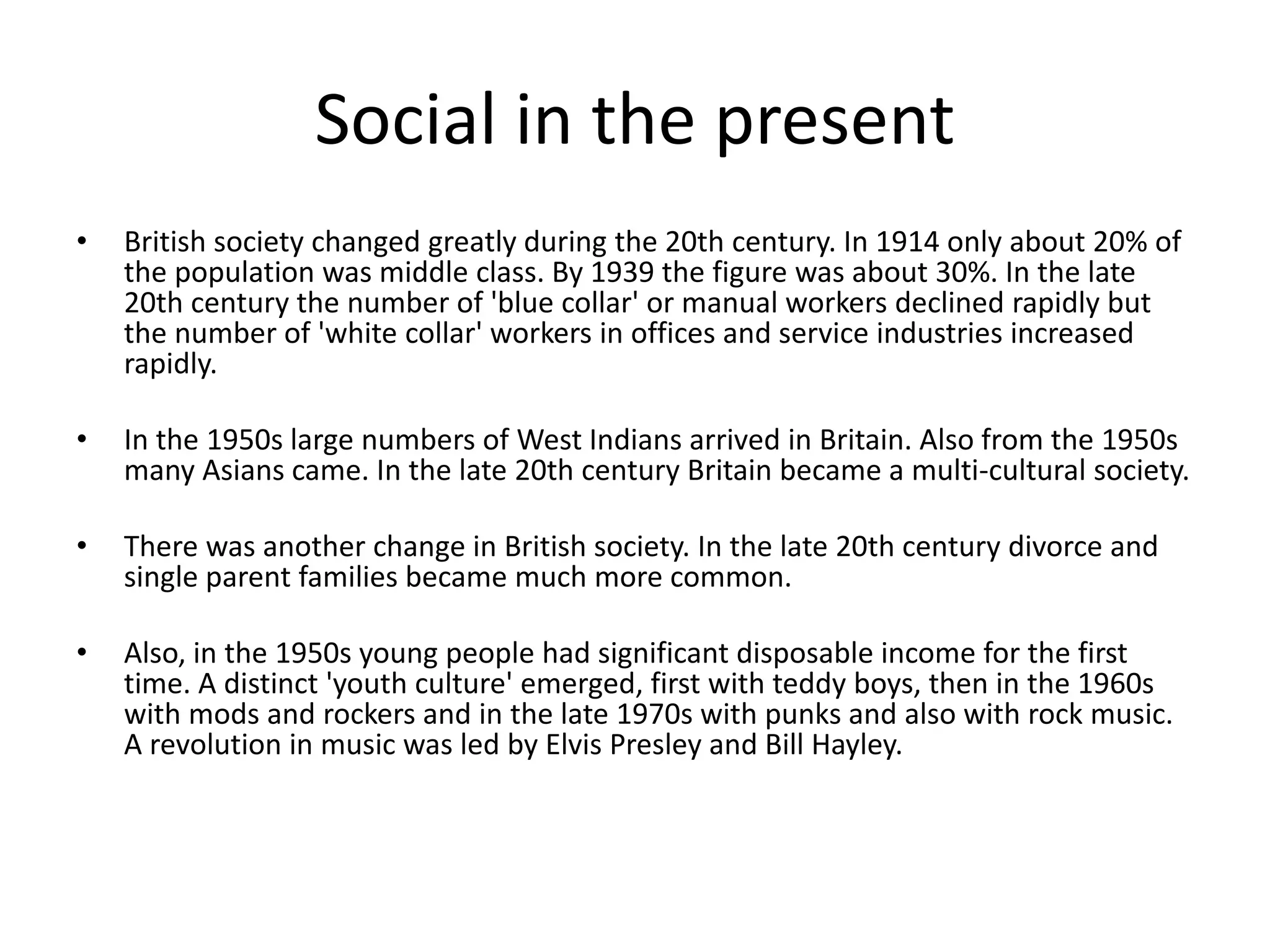
Social class in Victorian
Social in the present 
• British society changed greatly during the 20th century. In 1914 only about 20% of 
the population was middle class. By 1939 the figure was about 30%. In the late 
20th century the number of 'blue collar' or manual workers declined rapidly but 
the number of 'white collar' workers in offices and service industries increased 
rapidly. 
• In the 1950s large numbers of West Indians arrived in Britain. Also from the 1950s 
many Asians came. In the late 20th century Britain became a multi-cultural society. 
• There was another change in British society. In the late 20th century divorce and 
single parent families became much more common. 
• Also, in the 1950s young people had significant disposable income for the first 
time. A distinct 'youth culture' emerged, first with teddy boys, then in the 1960s 
with mods and rockers and in the late 1970s with punks and also with rock music. 
A revolution in music was led by Elvis Presley and Bill Hayley.

The connection between past civilizations and present lives

  • 1.
    The Connection betweenPast Civilizations and Present Lives Vincent Nicholas 6A
  • 2.
    England in thepast • CHANGES IN GEOGRAPHICAL ELEMENT • English is located on the continent of Europe • Area now called England was first inhabited by modern humans during the Paleolithic period, but the name England is derived from the Angles, which is one of the Germanic tribes who settled there in the 5th century and 6th. England became a unified state in AD 927, and since the Age of Discovery which began in the 15th century, English has influenced a significant cultural and legal to various parts of the world.
  • 3.
    • Preliminary evidencerelating to human presence in the area now known as England was inhabited by Homo antecessor estimated around 780,000 years ago. The oldest proto-human skeleton discovered in the UK and probably derived from 500,000 years ago. Modern humans are known to have inhabited the territory of England in Upper Paleolithic period, though permanent settlements newly formed in the last 6000 years. After the end of the last ice age, only large mammals such as mammoths, bison and ancient rhinoceros inhabiting this region. Roughly 11,000 years ago, when the ice sheets began to recede, humans re-inhabit the UK. Genetic studies indicate that they came from the northern part of the Iberian Peninsula. When sea level was lower than it is today, the island of Great united with the island of Ireland and Eurasia. But as sea levels rise, Britain separated from Ireland 10,000 years ago, and then also separated from Eurasia two millennia later.
  • 4.
    Europe in the13 century Stone henge
  • 5.
    England in present • Currently London is the largest metropolitan area in the United Kingdom and the largest urban zone in the European Union based on the total area. UK residents amounts to about 53 million people, or about 84% of the total population of the United Kingdom, largely concentrated in London, South East England, and regions of conurbations in the Midlands, Northwest, North East and Yorkshire, each region developed as The main industrial regions during the 19th century. While the prairie region are outside the big cities.
  • 6.
  • 7.
    In the past • CHANGES IN SOCIAL SYSTEMS ELEMENT • British society, like its European neighbours and most societies in world history, was traditionally (before the Industrial Revolution) divided into a caste system called the estates, with all of the most notable features of a caste system: endogamy (marriage only within the same group), and the hereditary transmission of occupation, social status and political influence.Since the advent of industrialisation, this system has been in a constant state of revision, and new factors other than birth (for example, education) are now a greater part of creating identity in Britain. • Although definitions of social class in the United Kingdom vary and are highly controversial, most are influenced by factors of wealth, occupation and education. Until recently the Parliament of the United Kingdom was organised on a class basis, with the House of Lords representing the hereditary upper class and the House of Commons representing everyone else, and the British monarch is usually viewed as being at the top of the social class structure
  • 8.
    Social class inVictorian
  • 9.
    Social in thepresent • British society changed greatly during the 20th century. In 1914 only about 20% of the population was middle class. By 1939 the figure was about 30%. In the late 20th century the number of 'blue collar' or manual workers declined rapidly but the number of 'white collar' workers in offices and service industries increased rapidly. • In the 1950s large numbers of West Indians arrived in Britain. Also from the 1950s many Asians came. In the late 20th century Britain became a multi-cultural society. • There was another change in British society. In the late 20th century divorce and single parent families became much more common. • Also, in the 1950s young people had significant disposable income for the first time. A distinct 'youth culture' emerged, first with teddy boys, then in the 1960s with mods and rockers and in the late 1970s with punks and also with rock music. A revolution in music was led by Elvis Presley and Bill Hayley.