TITLE: IMMIGRATION TO GREAT BRITAIN
IMMIGRATION TO GREAT BRITAIN


              IMMIGRATION TO GREAT BRITAIN


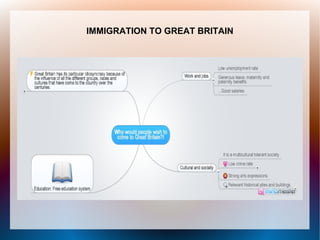
Why would people wish to come to Great Britain?

Immigrants to Great Britain along History.

Useful Web Links.
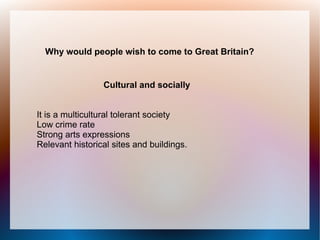
Why would people wish to come to Great Britain?


                 Cultural and socially


It is a multicultural tolerant society
Low crime rate
Strong arts expressions
Relevant historical sites and buildings.
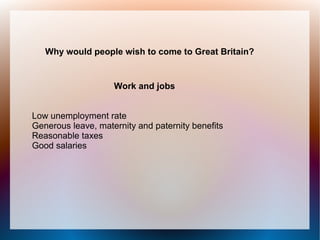
Why would people wish to come to Great Britain?


                    Work and jobs


Low unemployment rate
Generous leave, maternity and paternity benefits
Reasonable taxes
Good salaries
Why would people wish to come to Great Britain?


                        Education

Britain is a world leader in education
World famous universities
Free education system
Why would people wish to come to Great Britain?

              Health and Welfare


Free healthcare
Famous welfare system.
Immigrants to Great Britain along History

Great Britain has its particular idiosyncrasy because of the
influence of all the different groups, races and cultures that
have come to the country over the centuries. They have
influenced the system of government, contributed to
knowledge, wealth, commerce and industry, and shaped its
arts.

Examples and highlights:

Travelling bands of Celts were the first to invade Britain. They
brought with them new methods of forging metal.

From 43 AD until the end of the 4th Century the Romans
settled and integrated with local tribes.

The Germanic tribes of the Angles, Saxons and Jutes
colonised Southern England, establishing new settlements
and cultivated the land.
Immigrants to Great Britain along history

The Vikings were skilled boat builders.

The Normans conquered Britain in 1066, and imposed a legal and
administrative system, existing in some cases still today.

Medieval Britain benefited from the immigration of Jewish businessmen,
scholars and doctors.

Victorian times brought labourers from Ireland who undertook the
transport of goods.

Thousands of citizens from across the British Empire fought for Britain
during the two world wars. At the end of the World War II the shortage
of workers brought many of them to live in Great Britain as there was a
shortage of doctors, nurses, teachers, factory workers etc.

 Still today with a shortage of dentists, doctors, builders, architects,
vets, people from abroad come to fill the gap.
Useful Web Links:
http://www.movinghere.org.uk/galleries/histories/default.htm
Moving here.
http://www.100greatblackbritons.com/links.html
http://www.black-history-month.co.uk
Learning curve gov uk
http://www.refugee-action.org.uk/information/Links.aspx
http://www.bbc.co.uk/schools/citizenx/being/rights/animation.shtml

M3 luz ares

  • 1.
    TITLE: IMMIGRATION TOGREAT BRITAIN
  • 2.
  • 3.
    IMMIGRATION TO GREATBRITAIN IMMIGRATION TO GREAT BRITAIN Why would people wish to come to Great Britain? Immigrants to Great Britain along History. Useful Web Links.
  • 4.
    Why would peoplewish to come to Great Britain? Cultural and socially It is a multicultural tolerant society Low crime rate Strong arts expressions Relevant historical sites and buildings.
  • 5.
    Why would peoplewish to come to Great Britain? Work and jobs Low unemployment rate Generous leave, maternity and paternity benefits Reasonable taxes Good salaries
  • 6.
    Why would peoplewish to come to Great Britain? Education Britain is a world leader in education World famous universities Free education system
  • 7.
    Why would peoplewish to come to Great Britain? Health and Welfare Free healthcare Famous welfare system.
  • 8.
    Immigrants to GreatBritain along History Great Britain has its particular idiosyncrasy because of the influence of all the different groups, races and cultures that have come to the country over the centuries. They have influenced the system of government, contributed to knowledge, wealth, commerce and industry, and shaped its arts. Examples and highlights: Travelling bands of Celts were the first to invade Britain. They brought with them new methods of forging metal. From 43 AD until the end of the 4th Century the Romans settled and integrated with local tribes. The Germanic tribes of the Angles, Saxons and Jutes colonised Southern England, establishing new settlements and cultivated the land.
  • 9.
    Immigrants to GreatBritain along history The Vikings were skilled boat builders. The Normans conquered Britain in 1066, and imposed a legal and administrative system, existing in some cases still today. Medieval Britain benefited from the immigration of Jewish businessmen, scholars and doctors. Victorian times brought labourers from Ireland who undertook the transport of goods. Thousands of citizens from across the British Empire fought for Britain during the two world wars. At the end of the World War II the shortage of workers brought many of them to live in Great Britain as there was a shortage of doctors, nurses, teachers, factory workers etc. Still today with a shortage of dentists, doctors, builders, architects, vets, people from abroad come to fill the gap.
  • 10.
    Useful Web Links: http://www.movinghere.org.uk/galleries/histories/default.htm Movinghere. http://www.100greatblackbritons.com/links.html http://www.black-history-month.co.uk Learning curve gov uk http://www.refugee-action.org.uk/information/Links.aspx http://www.bbc.co.uk/schools/citizenx/being/rights/animation.shtml