The Cognitive
Resource Theory
      (CRT)


  By: Noreen M. Morales
Proponents:
 Fred Edward
    Fiedler    Joe Garcia
CRT – re-conceptualization of the
         Contingency Theory
  - arose out of the dissatisfaction of
  the Trait Theory
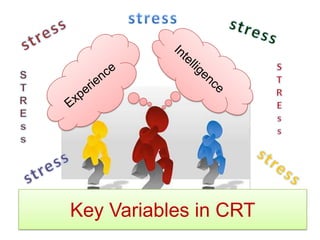
Key Variables in CRT
CRT - DESCRIPTIONS
1. A leader’s
  cognitive ability
  contributes to the
  performance of
  the team only
  when the leader’s
  approach is
  DIRECTIVE.
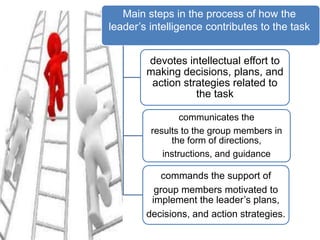
Main steps in the process of how the
leader’s intelligence contributes to the task


        devotes intellectual effort to
        making decisions, plans, and
         action strategies related to
                   the task

                 communicates the
         results to the group members in
              the form of directions,
            instructions, and guidance

           commands the support of
          group members motivated to
         implement the leader’s plans,
        decisions, and action strategies.
CRT - Descriptions

                     2. STRESS
                      affects the
                      relationship
                      between
                      intelligence
                      and decision
                      quality.
CRT - DESCRIPTIONS

3. EXPERIENCE
 is positively
 related to
 decision quality
 under high
 stress.
CRT - DESCRIPTIONS

4. For simple
 tasks, leader
 intelligence and
 experience are
 irrelevant.
STRENGTHS OF CRT

 1. CRT is a constant reminder of the
               hubris of intelligence.

                   2. The theory helps
             predict whether a certain
           type of person will be able
                 to lead in a stressful
                             situation.
STRENGTHS OF CRT
             3. The theory helps the
            placement of persons in
            leadership positions by
           suggesting that people be
           tested for intelligence and
              the ability to manage
               stress in addition to
              assessing leadership
                    qualities.
CRITICISMS

              1. Intelligence is not
                     defined.

             2. Types of stresses have
             not been covered in this
                      theory.
CRITICISMS
             3. It does not talk about
             those leaders who have
               both a good IQ and a
              good work experience.
               4. There has been no
              mention made about the
             type of tasks that need to
                   be dealt with.
CRITICISMS


                5. It is not totally
               correct that simple
             jobs do not require an
                 intelligent or an
               experienced leader.
References:

          http://faculty.css.edu/dswenson/web/LEAD/cogresourcetheory.html
          Accessed June 21, 2012


          http://www.buzzle.com/articles/cognitive-resource-theory.html
          Accessed June 21, 2012


          http://www.themanagersguide.co.uk/quiz-how-stressed-are-you.html
          Accessed June 21, 2012

The cognitive resource theory

  • 1.
    The Cognitive Resource Theory (CRT) By: Noreen M. Morales
  • 2.
    Proponents: Fred Edward Fiedler Joe Garcia
  • 3.
    CRT – re-conceptualizationof the Contingency Theory - arose out of the dissatisfaction of the Trait Theory
  • 4.
  • 5.
    CRT - DESCRIPTIONS 1.A leader’s cognitive ability contributes to the performance of the team only when the leader’s approach is DIRECTIVE.
  • 6.
    Main steps inthe process of how the leader’s intelligence contributes to the task devotes intellectual effort to making decisions, plans, and action strategies related to the task communicates the results to the group members in the form of directions, instructions, and guidance commands the support of group members motivated to implement the leader’s plans, decisions, and action strategies.
  • 7.
    CRT - Descriptions 2. STRESS affects the relationship between intelligence and decision quality.
  • 8.
    CRT - DESCRIPTIONS 3.EXPERIENCE is positively related to decision quality under high stress.
  • 10.
    CRT - DESCRIPTIONS 4.For simple tasks, leader intelligence and experience are irrelevant.
  • 11.
    STRENGTHS OF CRT 1. CRT is a constant reminder of the hubris of intelligence. 2. The theory helps predict whether a certain type of person will be able to lead in a stressful situation.
  • 12.
    STRENGTHS OF CRT 3. The theory helps the placement of persons in leadership positions by suggesting that people be tested for intelligence and the ability to manage stress in addition to assessing leadership qualities.
  • 13.
    CRITICISMS 1. Intelligence is not defined. 2. Types of stresses have not been covered in this theory.
  • 14.
    CRITICISMS 3. It does not talk about those leaders who have both a good IQ and a good work experience. 4. There has been no mention made about the type of tasks that need to be dealt with.
  • 15.
    CRITICISMS 5. It is not totally correct that simple jobs do not require an intelligent or an experienced leader.
  • 17.
    References: http://faculty.css.edu/dswenson/web/LEAD/cogresourcetheory.html Accessed June 21, 2012 http://www.buzzle.com/articles/cognitive-resource-theory.html Accessed June 21, 2012 http://www.themanagersguide.co.uk/quiz-how-stressed-are-you.html Accessed June 21, 2012