Theories of Leader BehaviorsBen Divine, Jon Feil, MarquitaOleson
Brief HistoryEarly Research Ohio State University studiesUniversity of Michigan studies Contemporary Theories Practical ApplicationsLBDQSynopsis
Brief History	Entrance of Leader Behavior Research
Pre -1940’s:  “Great Person” approach Heavy focus on traits (innate characteristics)Intelligence, integrity, sociability, physical traits, etc. No “trait set” predicts effective leadership (Stogdill,1963)1940’s +:  Observable leader behaviorsActions of leaders in various settingsObjective assessment of leader actionsCan be altered/enhanced Brief History
Early ResearchLeader Behavior Theory Foundation
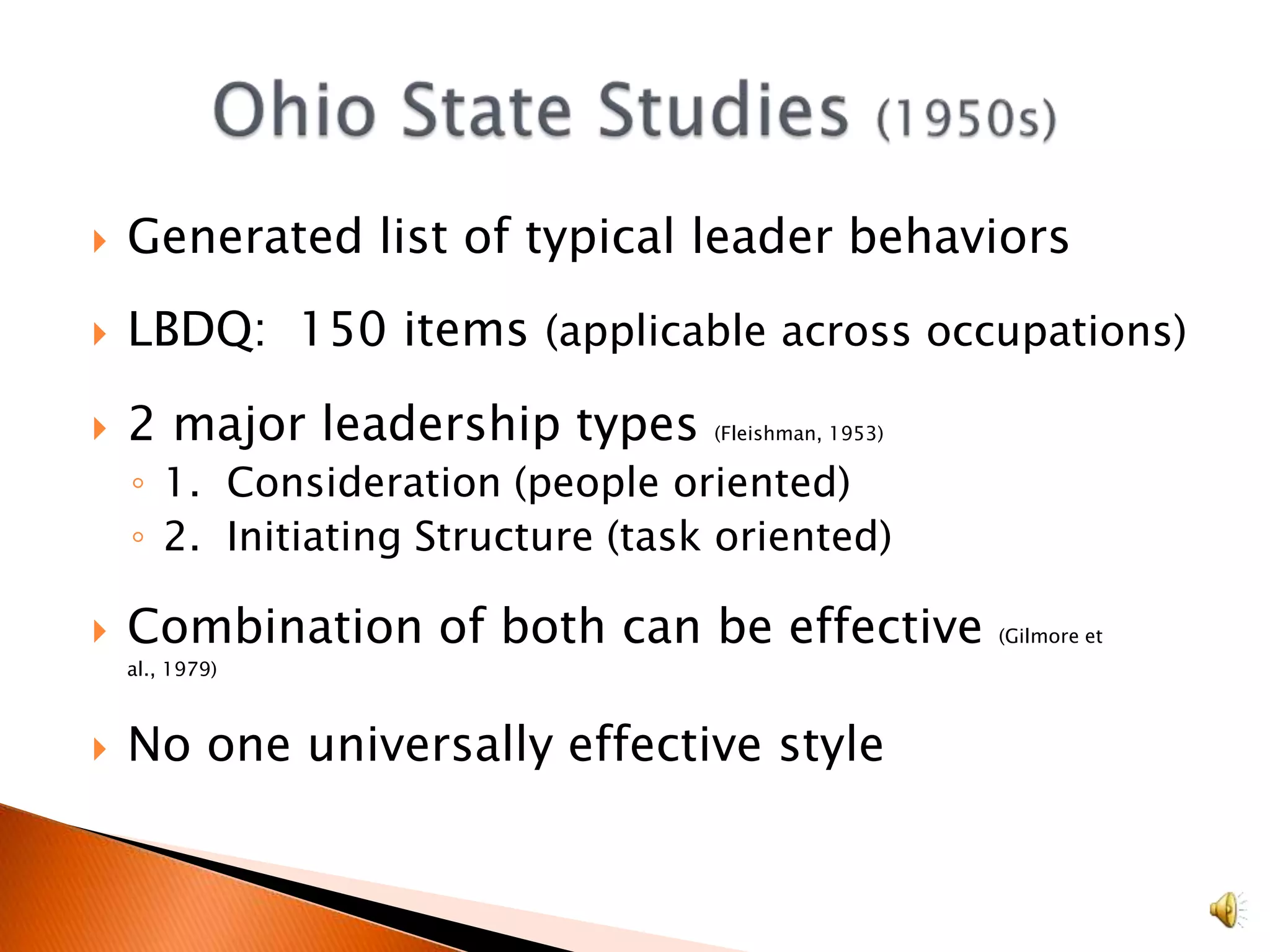
Generated list of typical leader behaviorsLBDQ:  150 items (applicable across occupations)2 major leadership types (Fleishman, 1953)1.  Consideration (people oriented)2.  Initiating Structure (task oriented)Combination of both can be effective (Gilmore et al., 1979)No one universally effective style Ohio State Studies (1950s)
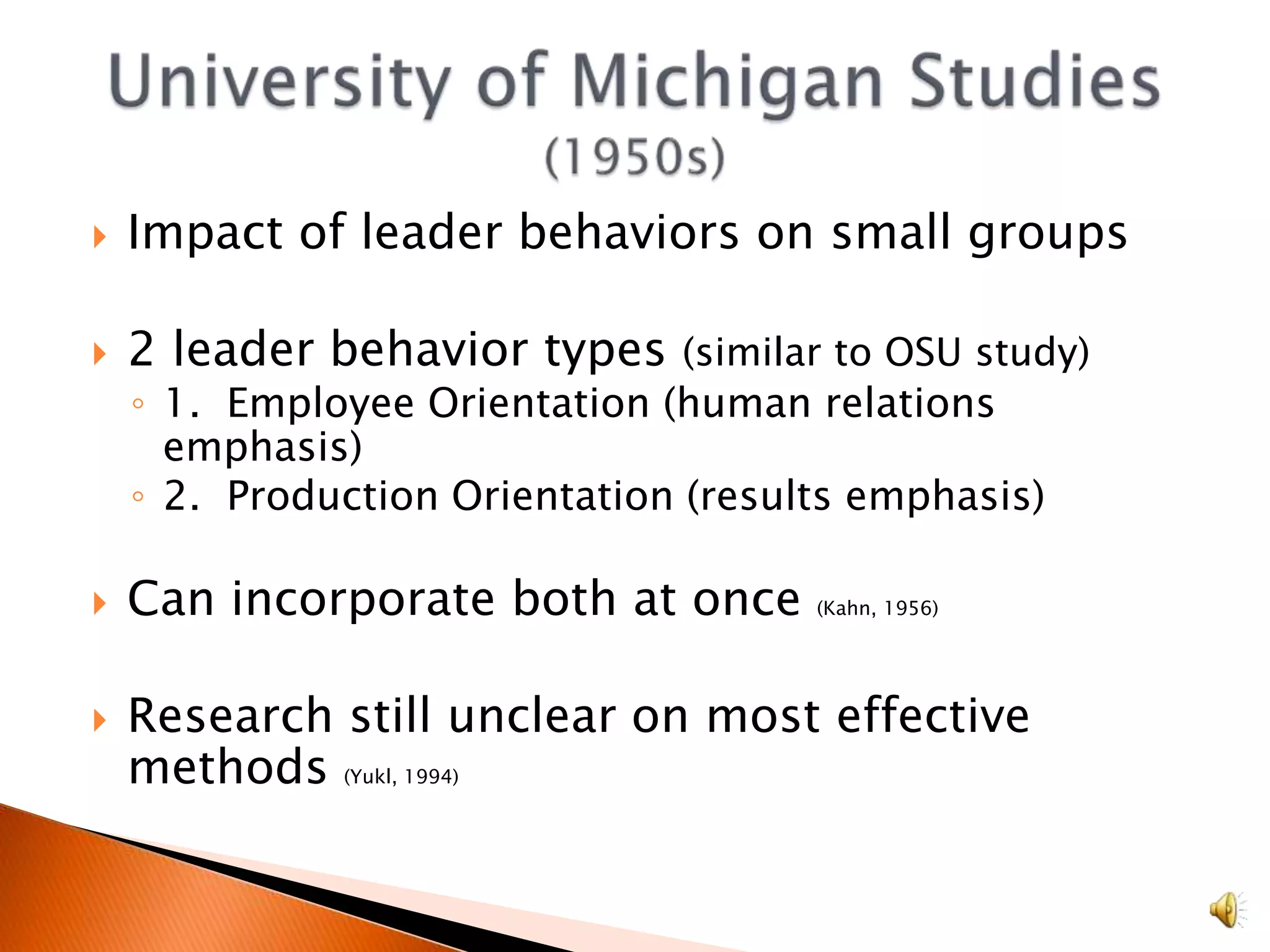
Impact of leader behaviors on small groups2 leader behavior types (similar to OSU study)1.  Employee Orientation (human relations emphasis)2.  Production Orientation (results emphasis)Can incorporate both at once (Kahn, 1956)Research still unclear on most effective methods (Yukl, 1994)University of Michigan Studies (1950s)

Leader Behaviors Ppt

  • 1.
    Theories of LeaderBehaviorsBen Divine, Jon Feil, MarquitaOleson
  • 2.
    Brief HistoryEarly ResearchOhio State University studiesUniversity of Michigan studies Contemporary Theories Practical ApplicationsLBDQSynopsis
  • 3.
    Brief History Entrance ofLeader Behavior Research
  • 4.
    Pre -1940’s: “Great Person” approach Heavy focus on traits (innate characteristics)Intelligence, integrity, sociability, physical traits, etc. No “trait set” predicts effective leadership (Stogdill,1963)1940’s +: Observable leader behaviorsActions of leaders in various settingsObjective assessment of leader actionsCan be altered/enhanced Brief History
  • 5.
  • 6.
    Generated list oftypical leader behaviorsLBDQ: 150 items (applicable across occupations)2 major leadership types (Fleishman, 1953)1. Consideration (people oriented)2. Initiating Structure (task oriented)Combination of both can be effective (Gilmore et al., 1979)No one universally effective style Ohio State Studies (1950s)
  • 7.
    Impact of leaderbehaviors on small groups2 leader behavior types (similar to OSU study)1. Employee Orientation (human relations emphasis)2. Production Orientation (results emphasis)Can incorporate both at once (Kahn, 1956)Research still unclear on most effective methods (Yukl, 1994)University of Michigan Studies (1950s)

Editor's Notes

  • #5 -Traits First logical approach to leadership researchThings like: intelligence, integrity, determination (or willpower), and even physical traits such as heightEither had them or you did not-Behaviors Contrary to the trait approach, which does not allow leader development, the behavioral approach allows leaders to identify and enhance effective behaviors
  • #7 -Subordinates rated leaders on several leadership aspects -Used in militaryConsiderate: Caring, concern for others, mutual trust Initiating Structure: facilitating group interactions toward goal achievement, defining roles/goals/strategies -Gilmore: high on consideration and initiating structure increased quality and quantity of product among salespeople -Effective style: situation/context specific
  • #8 -Employee orientation is very similar to consideration style identified in the Ohio state study while production orientation is similar to the initiating structure leadership style-Employee orientation styleAttention to individual needs -Production styleTask completion and work activity focus