T H E C L A S S R O O M S T O RY
O R I G I N A L I D E A B Y G R E G O RY C H O M I C H U K
B Y B R E N T S C H M I D T
My driving question is: how can we increase student
engagement?
Is the solution to increased student engagement:
More techy gadgets? Less techy gadgets?
Deeper Learning? Coding?
Student choice? Less standardization?
What if we changed the way we deliver instruction
and interact with our students?
What would happen if our classroom instruction was
more like a story and game?
And what if the characters in the story would get to
have an impact? They would have to learn new
things and work together to succeed.
What if our instruction contained events, problems,
dangers, solutions, and relationships?
What if this story/game thingy had students
produce all kinds of work?
Original work.
And what if it was fun?
T H E C L A S S R O O M S T O RY
W H AT I S I T ?
A shared narrative experience that uses a
constructivist model of learning in combination
with game elements to teach students the
curricular outcomes (skills and content).
Buh??
The teacher acts as storyteller and moderator
creating the setting, inciting event, general plot,
and any game elements.
Students engage with the the story by becoming
characters, authors, and actors, responding to shared
events in the story.
Think campfire stories mashed up with a roleplaying
game and a notebook.
Students and teacher(s) record the events of the story
from their character's perspective.
The end result will be a shared experience that you
could never plan totally and will produce work you could
have never expected.
Students are stimulated, challenged, and
encouraged to interact and cooperate.
They get opportunities to create, mess-up, move
around, talk, draw, write, act, code, or whatever!
The Classroom Story is something each teacher and
class of students determines.
I S I T A R O L E P L AY I N G G A M E ?
• Sort of. It can be as much of a game as you make it,
but it absolutely uses game elements.
• Games require game mechanics (rules and methods
that provide gameplay). Luckily, a game mechanic is a
great way to motivate students to practice a task you
want them to achieve (i.e. a fun excuse to practice).
W H AT D O T E A C H E R S N E E D ?
• Public Space to place ideas and images
• whiteboard, digital file, paper notebook, banner of
paper, whatever!
• Pens, pencils, folders, notebooks, markers, papers.
• Gumption, moxie, flexibility, quick-thinking, and
confidence.
• Time and patience.
W H AT D O S T U D E N T S N E E D ?
• Space to write ideas. Pens, pencils, papers, folders,
markers and notebooks.
• A public place to collect images and ideas.
• A private place to collect images and ideas.
• Collaboration, cooperation, and creativity.
D I S C L O S U R E A L E R T !
• It’s not easier. It’s not less work. It’s harder. You will not
know the answer all the time. You will have to make
things up. You will then have to remember that thing
you made up later and stick to it. You will have to
behave like it is all planned and controlled. You will
have to keep doubt to yourself. You’ll need to look
your students in the eye and mean it when you say…
“It’s a surprise.”
W H Y D O T H I S ?
• Engagement.
• The C’s. Encourages students to think critically
(problem solve), be citizens, use tech, collaborate,
communicate, and create.
• It’s enrichment, differentiated instruction, and inclusion
in one.
• Oh, it’s fun.
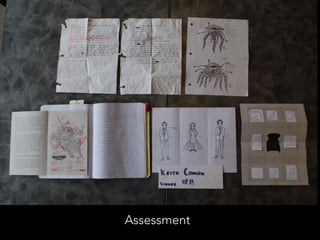
W H AT A B O U T A S S E S S M E N T ?
• Opportunities everywhere. It works fluidly with
outcome based assessments. A student’s notebook,
folder, iPad/device, etc. will contain a huge variety of
work and will require a strong confidence in assessing
that work according to many curricular guidelines at
once.
• You’ll figure it out ;-)
O K AY,
S O W H AT D O E S A
C L A S S R O O M S T O RY
L O O K L I K E ?
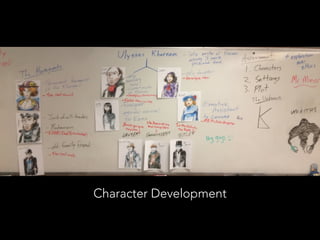
Character Development
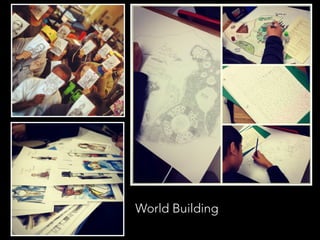
World Building
Free Markets
Ethics
Collaborating and
organizing ideas and
writing.
Debates
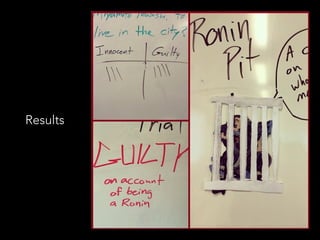
Results
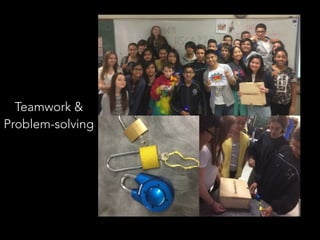
Teamwork &
Problem-solving
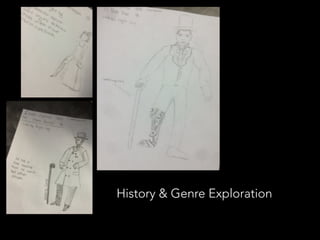
History & Genre Exploration
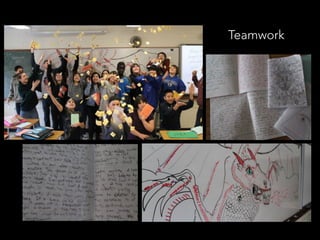
Teamwork
Assessment

The Classroom Story

  • 1.
    T H EC L A S S R O O M S T O RY O R I G I N A L I D E A B Y G R E G O RY C H O M I C H U K B Y B R E N T S C H M I D T
  • 2.
    My driving questionis: how can we increase student engagement?
  • 3.
    Is the solutionto increased student engagement: More techy gadgets? Less techy gadgets? Deeper Learning? Coding? Student choice? Less standardization?
  • 4.
    What if wechanged the way we deliver instruction and interact with our students?
  • 5.
    What would happenif our classroom instruction was more like a story and game?
  • 6.
    And what ifthe characters in the story would get to have an impact? They would have to learn new things and work together to succeed. What if our instruction contained events, problems, dangers, solutions, and relationships?
  • 7.
    What if thisstory/game thingy had students produce all kinds of work? Original work. And what if it was fun?
  • 8.
    T H EC L A S S R O O M S T O RY W H AT I S I T ?
  • 9.
    A shared narrativeexperience that uses a constructivist model of learning in combination with game elements to teach students the curricular outcomes (skills and content).
  • 10.
  • 11.
    The teacher actsas storyteller and moderator creating the setting, inciting event, general plot, and any game elements. Students engage with the the story by becoming characters, authors, and actors, responding to shared events in the story. Think campfire stories mashed up with a roleplaying game and a notebook.
  • 12.
    Students and teacher(s)record the events of the story from their character's perspective. The end result will be a shared experience that you could never plan totally and will produce work you could have never expected.
  • 13.
    Students are stimulated,challenged, and encouraged to interact and cooperate. They get opportunities to create, mess-up, move around, talk, draw, write, act, code, or whatever! The Classroom Story is something each teacher and class of students determines.
  • 14.
    I S IT A R O L E P L AY I N G G A M E ? • Sort of. It can be as much of a game as you make it, but it absolutely uses game elements. • Games require game mechanics (rules and methods that provide gameplay). Luckily, a game mechanic is a great way to motivate students to practice a task you want them to achieve (i.e. a fun excuse to practice).
  • 15.
    W H ATD O T E A C H E R S N E E D ? • Public Space to place ideas and images • whiteboard, digital file, paper notebook, banner of paper, whatever! • Pens, pencils, folders, notebooks, markers, papers. • Gumption, moxie, flexibility, quick-thinking, and confidence. • Time and patience.
  • 16.
    W H ATD O S T U D E N T S N E E D ? • Space to write ideas. Pens, pencils, papers, folders, markers and notebooks. • A public place to collect images and ideas. • A private place to collect images and ideas. • Collaboration, cooperation, and creativity.
  • 17.
    D I SC L O S U R E A L E R T ! • It’s not easier. It’s not less work. It’s harder. You will not know the answer all the time. You will have to make things up. You will then have to remember that thing you made up later and stick to it. You will have to behave like it is all planned and controlled. You will have to keep doubt to yourself. You’ll need to look your students in the eye and mean it when you say… “It’s a surprise.”
  • 18.
    W H YD O T H I S ? • Engagement. • The C’s. Encourages students to think critically (problem solve), be citizens, use tech, collaborate, communicate, and create. • It’s enrichment, differentiated instruction, and inclusion in one. • Oh, it’s fun.
  • 19.
    W H ATA B O U T A S S E S S M E N T ? • Opportunities everywhere. It works fluidly with outcome based assessments. A student’s notebook, folder, iPad/device, etc. will contain a huge variety of work and will require a strong confidence in assessing that work according to many curricular guidelines at once. • You’ll figure it out ;-)
  • 20.
    O K AY, SO W H AT D O E S A C L A S S R O O M S T O RY L O O K L I K E ?
  • 21.
  • 22.
  • 23.
  • 24.
  • 25.
  • 26.
  • 27.
  • 28.
    History & GenreExploration
  • 29.
  • 30.