The Baroque is a period as well as a
style that used exaggerated gestures
     to produce drama, tension,
    exuberance, and grandeur in
   sculpture, painting, literature,
dance, and music. The style started
  around 1600 in Rome, Italy and
      spread to most of Europe.
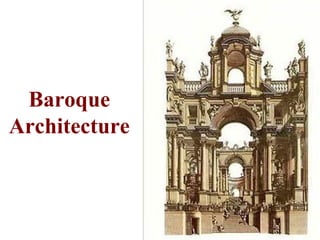
Baroque
Architecture
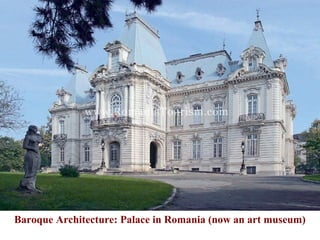
Baroque Architecture: Palace in Romania (now an art museum)
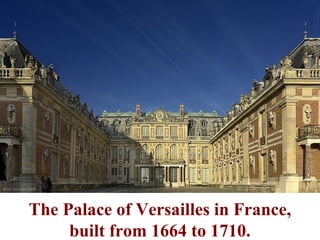
The Palace of Versailles in France,
     built from 1664 to 1710.
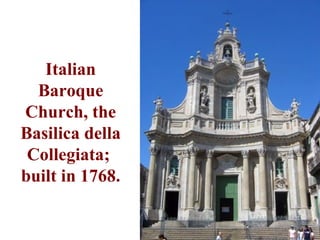
Italian
  Baroque
Church, the
Basilica della
 Collegiata;
built in 1768.
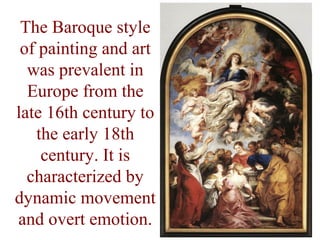
The Baroque style
 of painting and art
  was prevalent in
  Europe from the
late 16th century to
   the early 18th
    century. It is
  characterized by
dynamic movement
and overt emotion.
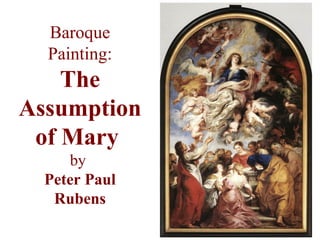
Baroque
  Painting:
    The
Assumption
 of Mary
     by
  Peter Paul
   Rubens
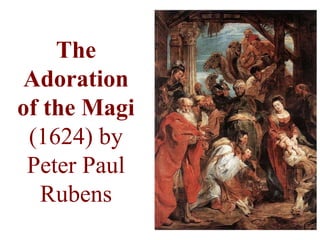
The
 Adoration
of the Magi
 (1624) by
 Peter Paul
  Rubens
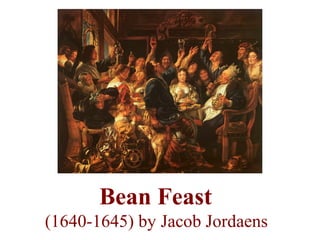
Bean Feast
(1640-1645) by Jacob Jordaens
Characteristics of Baroque Music
1. Mood (“Doctrine of Mood”) – Generally
   speaking, music of the Baroque period has
   one particular mood or “affect.” A work
   or movement that is happy usually
   remains happy throughout the work or
   movement. Music that is sad usually stays
   sad throughout a section or an entire work.
                           Examples:
         Happy: “Rejoice Greatly” from Handel’s Messiah
         http://www.youtube.com/watch?v=bByY2_uXblQ
      Sad: “Dido’s Lament” from the opera Dido and Aeneas
             by Henry Purcell (British Baroque composer)
  http://www.youtube.com/watch?v=jOIAi2XwuWo&feature=related
Characteristics of Baroque Music
2. Melody – Many Baroque melodies
   (though not all) are very long, complex
   and elaborate containing a seemingly
   endless string of notes. They are not easy
   to sing or play, often requiring enormous
   breath control and practice to perform.
                            Examples:
              Aria: “Endlich” from J.S. Bach’s Cantata 56
   http://www.youtube.com/watch?v=2zDx2DGkzYE&feature=related

   This aria also demonstrates the sound of continuo (next slide.)
Characteristics of Baroque Music
3. Basso Continuo – (also just called
   “continuo”) is a particular type of
   musical accompaniment that was used
   extensively in the Baroque period. The
   instruments of the Baroque continuo
   usually consisted of a harpsichord and a
   cello, but might include other instruments
   such as organ instead of harpsichord and
   bassoon instead of or in addition to the
   cello.
Characteristics of Baroque Music
4. Dynamics – Many Baroque composers
   employed an effect called “terraced
   dynamics” in which musical passages
   alternated loud and soft, sometimes even
   repeating the same musical phrase.
Example: Chorus, “And the Glory of the Lord” from Handel’s Messiah
   http://www.youtube.com/watch?v=awQB-xTjWMA
Characteristics of Baroque Music
5. Texture – A lot of music of the Baroque
   period (especially the late Baroque period)
   has a predominantly polyphonic texture,
   meaning that there are many voices or
   melodic lines happening at the same time.

      Example: J.S. Bach: Choral Fugue from Cantata No. 80
  http://www.youtube.com/watch?v=kNo79VGRaXs&feature=related
The Baroque Period

The Baroque Period

  • 2.
    The Baroque isa period as well as a style that used exaggerated gestures to produce drama, tension, exuberance, and grandeur in sculpture, painting, literature, dance, and music. The style started around 1600 in Rome, Italy and spread to most of Europe.
  • 3.
  • 4.
    Baroque Architecture: Palacein Romania (now an art museum)
  • 5.
    The Palace ofVersailles in France, built from 1664 to 1710.
  • 6.
    Italian Baroque Church,the Basilica della Collegiata; built in 1768.
  • 7.
    The Baroque style of painting and art was prevalent in Europe from the late 16th century to the early 18th century. It is characterized by dynamic movement and overt emotion.
  • 8.
    Baroque Painting: The Assumption of Mary by Peter Paul Rubens
  • 9.
    The Adoration of theMagi (1624) by Peter Paul Rubens
  • 10.
  • 11.
    Characteristics of BaroqueMusic 1. Mood (“Doctrine of Mood”) – Generally speaking, music of the Baroque period has one particular mood or “affect.” A work or movement that is happy usually remains happy throughout the work or movement. Music that is sad usually stays sad throughout a section or an entire work. Examples: Happy: “Rejoice Greatly” from Handel’s Messiah http://www.youtube.com/watch?v=bByY2_uXblQ Sad: “Dido’s Lament” from the opera Dido and Aeneas by Henry Purcell (British Baroque composer) http://www.youtube.com/watch?v=jOIAi2XwuWo&feature=related
  • 12.
    Characteristics of BaroqueMusic 2. Melody – Many Baroque melodies (though not all) are very long, complex and elaborate containing a seemingly endless string of notes. They are not easy to sing or play, often requiring enormous breath control and practice to perform. Examples: Aria: “Endlich” from J.S. Bach’s Cantata 56 http://www.youtube.com/watch?v=2zDx2DGkzYE&feature=related This aria also demonstrates the sound of continuo (next slide.)
  • 13.
    Characteristics of BaroqueMusic 3. Basso Continuo – (also just called “continuo”) is a particular type of musical accompaniment that was used extensively in the Baroque period. The instruments of the Baroque continuo usually consisted of a harpsichord and a cello, but might include other instruments such as organ instead of harpsichord and bassoon instead of or in addition to the cello.
  • 14.
    Characteristics of BaroqueMusic 4. Dynamics – Many Baroque composers employed an effect called “terraced dynamics” in which musical passages alternated loud and soft, sometimes even repeating the same musical phrase. Example: Chorus, “And the Glory of the Lord” from Handel’s Messiah http://www.youtube.com/watch?v=awQB-xTjWMA
  • 15.
    Characteristics of BaroqueMusic 5. Texture – A lot of music of the Baroque period (especially the late Baroque period) has a predominantly polyphonic texture, meaning that there are many voices or melodic lines happening at the same time. Example: J.S. Bach: Choral Fugue from Cantata No. 80 http://www.youtube.com/watch?v=kNo79VGRaXs&feature=related