THE ASIAN CONTRIBUTION
CHINESE CALLIGRAPHY
• Similar to Egyptian hieroglyphs and Mayan
• Not alphabetical
• Every symbol composed of a number of
differently shaped lines within in imaginary
• First written 1800b.c by Tsang Cheh
• Invent writing by contemplating the claw
marks of birds and footprints of animals
• Elementary pictographs of things in nature.
• Sound of mouth to the ear
• The earliest known Chinese writing is called
chiaku-wen or “bone and see shell”
• Used from 1800 to 1200 b.c
• Found on tortoise shells and large animals flat
shoulder bones called oracle bones, which
convey communications between the living
and the dead
Bone and shell
bones shell
• Chinese calligraphy called chin-wen or bronze
script
• Inscriptions on cast-bronze objects, including
food water vessels, musical instruments,
weapons mirrors and coins.
• Ceremonial vessels used to hold food offerings
during ancestor worship and vessels inscribed
with dedications.
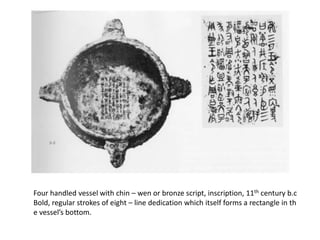
Four handled vessel with chin – wen or bronze script, inscription, 11th century b.c
Bold, regular strokes of eight – line dedication which itself forms a rectangle in th
e vessel’s bottom.
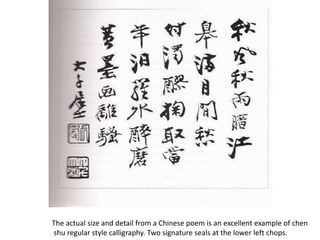
The actual size and detail from a Chinese poem is an excellent example of chen
shu regular style calligraphy. Two signature seals at the lower left chops.
INVENTION OF PAPER
• Ts ‘sai Lun who invented paper during the
emperor Ho in a.d 105.
• Earlier wrote on bamboo strips using bamboo
pen with a dense of durable ink.
• Lampblack was collected, mixed with a gum
solution using mortar and pestle or cube was
returned to the liquid state by rubbing it in
water on an inking stone.
• Chinese calligraphy is known as chen shu also
kai-shu or regular style.
• Made continuously 2000 years
• Regular style every line, dot, and nuance of
the brush can be controlled by sensitivity of
the calligrapher.
• Structure, stroke, composition, shape stroke
thickness and relationships of strokes to each
other and to the white space.
Lampblack Gum Solution Mortar
Black cube
PAPER MAKING
• Ts’Lun’s process papermaking continued and mechanized in
19th century in england.
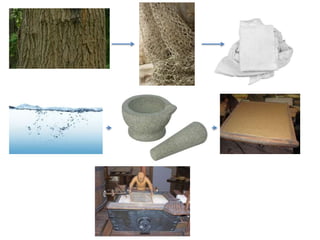
• Natural fibers, including mullberry bark, hemp fishnets, and
rags, were soaked in a vat of water and beaten into pulp
with pounding mortars.
• A vat-man dipped a screen – bottomed, framelike mold into
the pulp solution
• Taking just enough onto the mold for the sheet of paper.
• With skill and split – second judgement, the vat – man
raised the mold from the vat while oscillating and shaking it
to cros and mesh the fibers. As the water drained
• The paper was pressed onto a wo0den cloth, while it dries.
• The crounched are staked and pressed hung to dry.
SEAL CHOP
• During Dynasty Han third century a.d seals called
chops
• Made by carving calligraphic characters into a flat
surface of jade, silver, gold or ivory.
• Uses ink such as red pastelike to form an
impression
• Now known as rubberstamp
• Around 500 a.d chops came into use upon which
the artisan had cut away the negative area
surrounding to be printed in red surrounded by
white paper.
The asian contribution

The asian contribution

  • 1.
  • 2.
    CHINESE CALLIGRAPHY • Similarto Egyptian hieroglyphs and Mayan • Not alphabetical • Every symbol composed of a number of differently shaped lines within in imaginary • First written 1800b.c by Tsang Cheh • Invent writing by contemplating the claw marks of birds and footprints of animals • Elementary pictographs of things in nature.
  • 3.
    • Sound ofmouth to the ear • The earliest known Chinese writing is called chiaku-wen or “bone and see shell” • Used from 1800 to 1200 b.c • Found on tortoise shells and large animals flat shoulder bones called oracle bones, which convey communications between the living and the dead
  • 4.
  • 5.
    • Chinese calligraphycalled chin-wen or bronze script • Inscriptions on cast-bronze objects, including food water vessels, musical instruments, weapons mirrors and coins. • Ceremonial vessels used to hold food offerings during ancestor worship and vessels inscribed with dedications.
  • 6.
    Four handled vesselwith chin – wen or bronze script, inscription, 11th century b.c Bold, regular strokes of eight – line dedication which itself forms a rectangle in th e vessel’s bottom.
  • 7.
    The actual sizeand detail from a Chinese poem is an excellent example of chen shu regular style calligraphy. Two signature seals at the lower left chops.
  • 8.
    INVENTION OF PAPER •Ts ‘sai Lun who invented paper during the emperor Ho in a.d 105. • Earlier wrote on bamboo strips using bamboo pen with a dense of durable ink. • Lampblack was collected, mixed with a gum solution using mortar and pestle or cube was returned to the liquid state by rubbing it in water on an inking stone.
  • 9.
    • Chinese calligraphyis known as chen shu also kai-shu or regular style. • Made continuously 2000 years • Regular style every line, dot, and nuance of the brush can be controlled by sensitivity of the calligrapher. • Structure, stroke, composition, shape stroke thickness and relationships of strokes to each other and to the white space.
  • 10.
    Lampblack Gum SolutionMortar Black cube
  • 11.
    PAPER MAKING • Ts’Lun’sprocess papermaking continued and mechanized in 19th century in england. • Natural fibers, including mullberry bark, hemp fishnets, and rags, were soaked in a vat of water and beaten into pulp with pounding mortars. • A vat-man dipped a screen – bottomed, framelike mold into the pulp solution • Taking just enough onto the mold for the sheet of paper. • With skill and split – second judgement, the vat – man raised the mold from the vat while oscillating and shaking it to cros and mesh the fibers. As the water drained • The paper was pressed onto a wo0den cloth, while it dries. • The crounched are staked and pressed hung to dry.
  • 13.
    SEAL CHOP • DuringDynasty Han third century a.d seals called chops • Made by carving calligraphic characters into a flat surface of jade, silver, gold or ivory. • Uses ink such as red pastelike to form an impression • Now known as rubberstamp • Around 500 a.d chops came into use upon which the artisan had cut away the negative area surrounding to be printed in red surrounded by white paper.