The 3 Waves
of 1:1
Messaging
Software
Learn how 1:1 messaging has evolved and
why marketers need to adapt
The First Wave
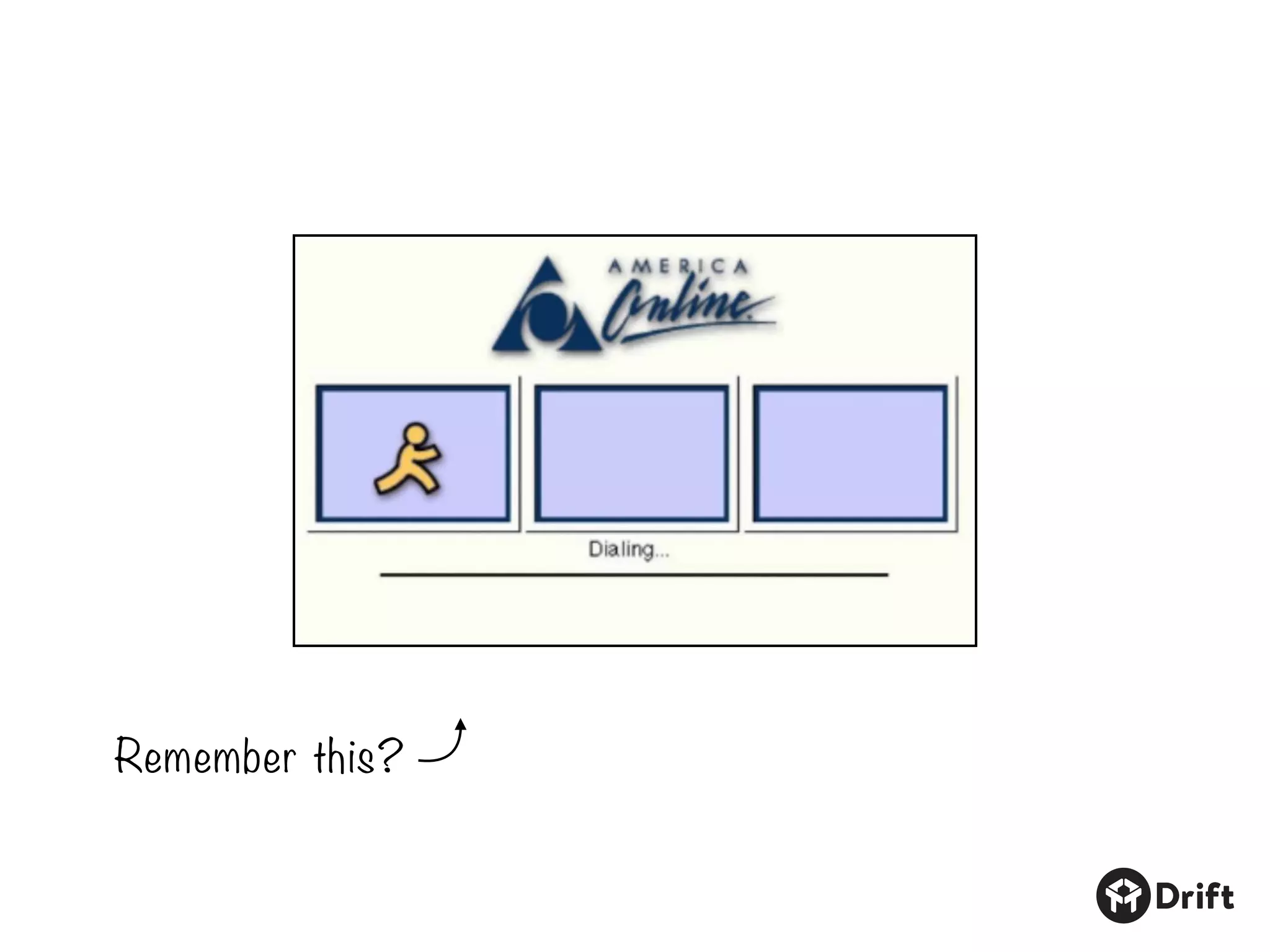
The year was 1997, and approximately half of
U.S. households with internet access were
getting it via dial-up service provider
America Online (AOL).
Remember this?
Meanwhile, 100% of the kids living in those
households were slowly but surely
becoming addicted to AOL's new, proprietary
messaging program, Instant Messenger.
Launched in May of 1997, AIM was part of
the first wave of messaging software that
would revolutionize 1:1 communication in
the late ’90s and early 2000s.
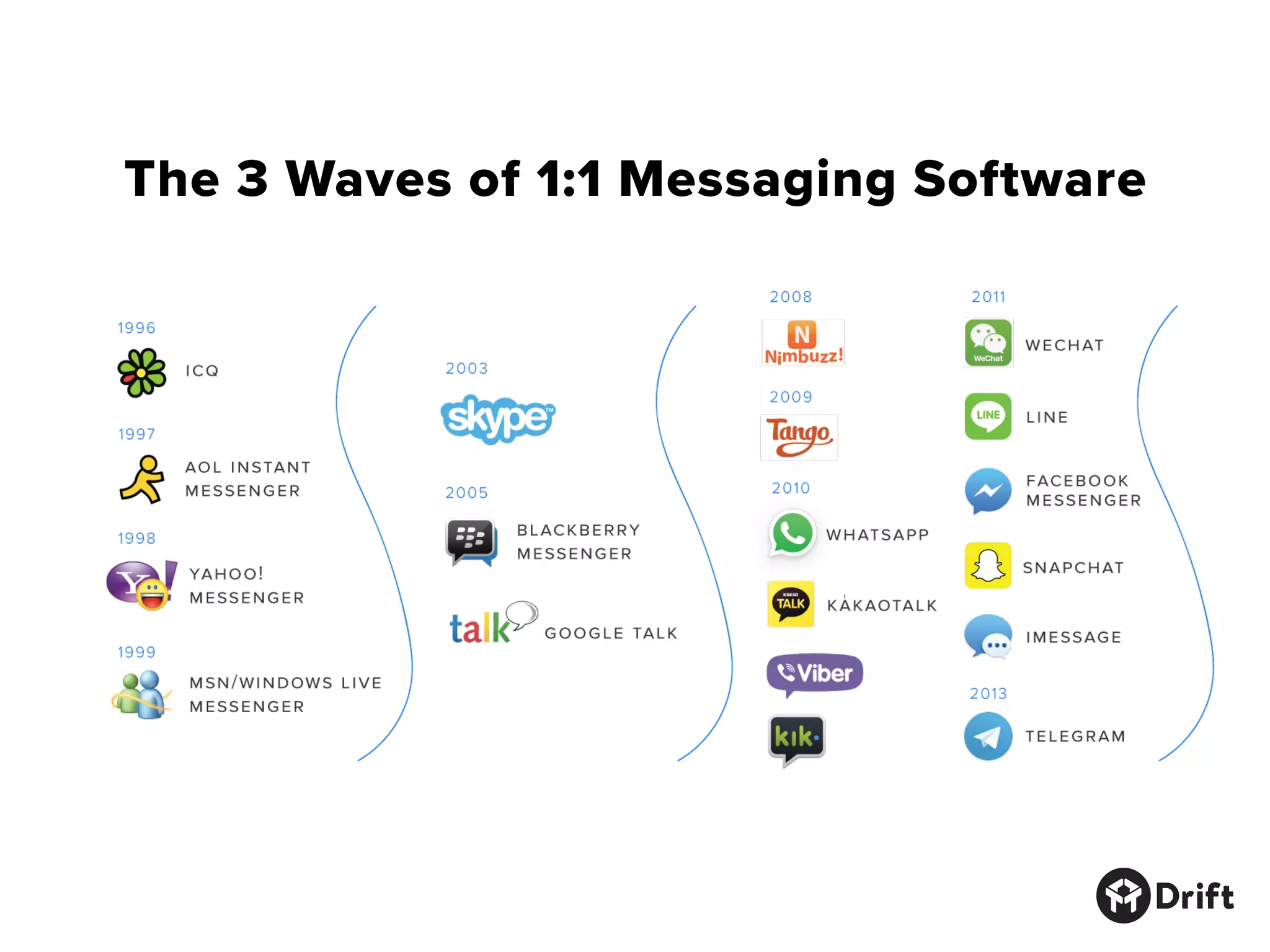
The 3 Waves of 1:1 Messaging Software
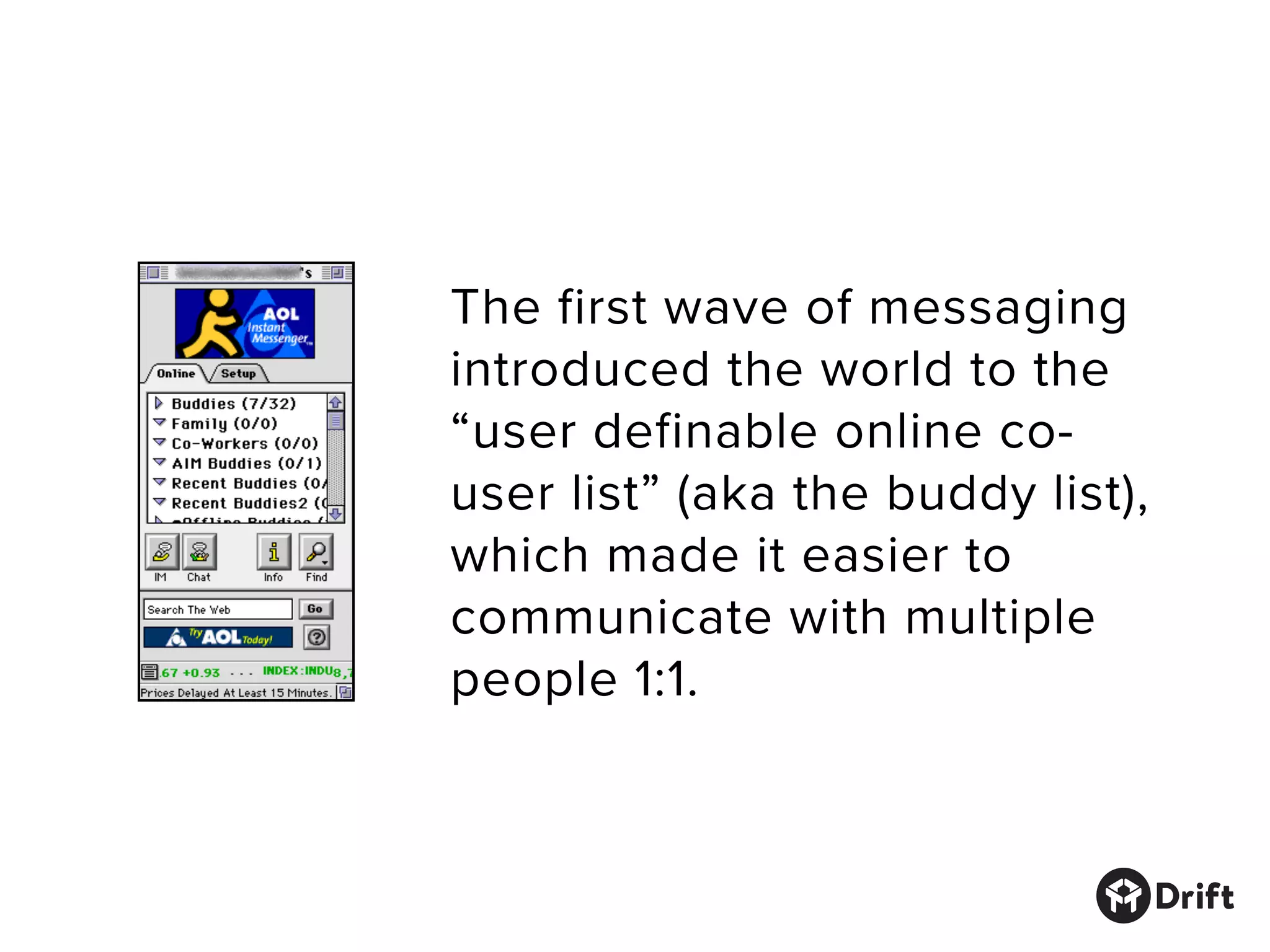
The first wave of messaging
introduced the world to the
“user definable online co-
user list” (aka the buddy list),
which made it easier to
communicate with multiple
people 1:1.
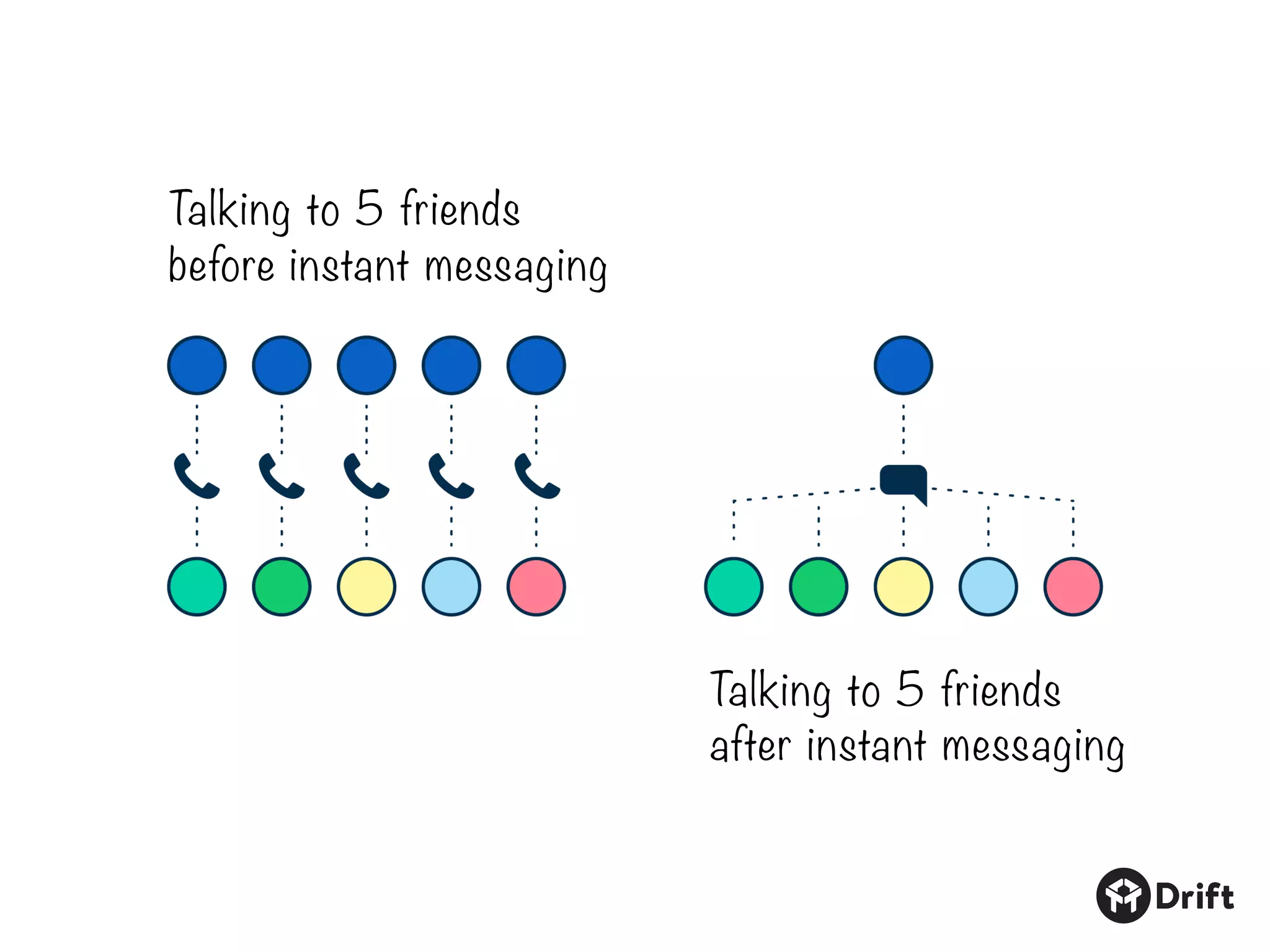
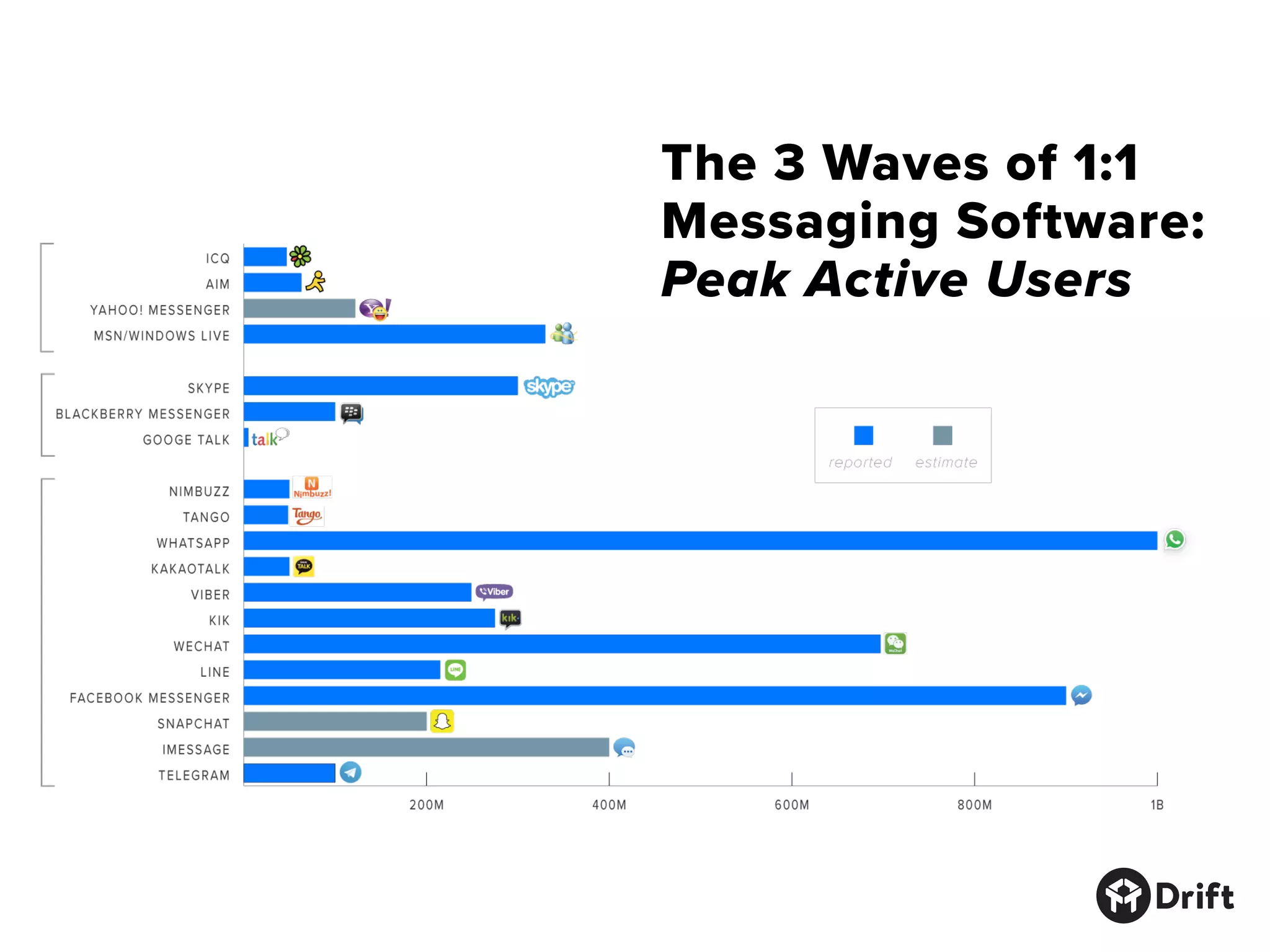
For example, instead of having to make 5
individual phone calls in order to talk to 5
friends, with AIM you could scan your
buddy list once to see who was available,
and then rattle of messages accordingly.
Talking to 5 friends
before instant messaging
Talking to 5 friends
after instant messaging
But AIM and its counterparts weren’t
without their limitations. One of the big
ones was mobility: You could only use
these messaging programs on a computer.
And back in the late ’90s that usually
meant a shared family computer.
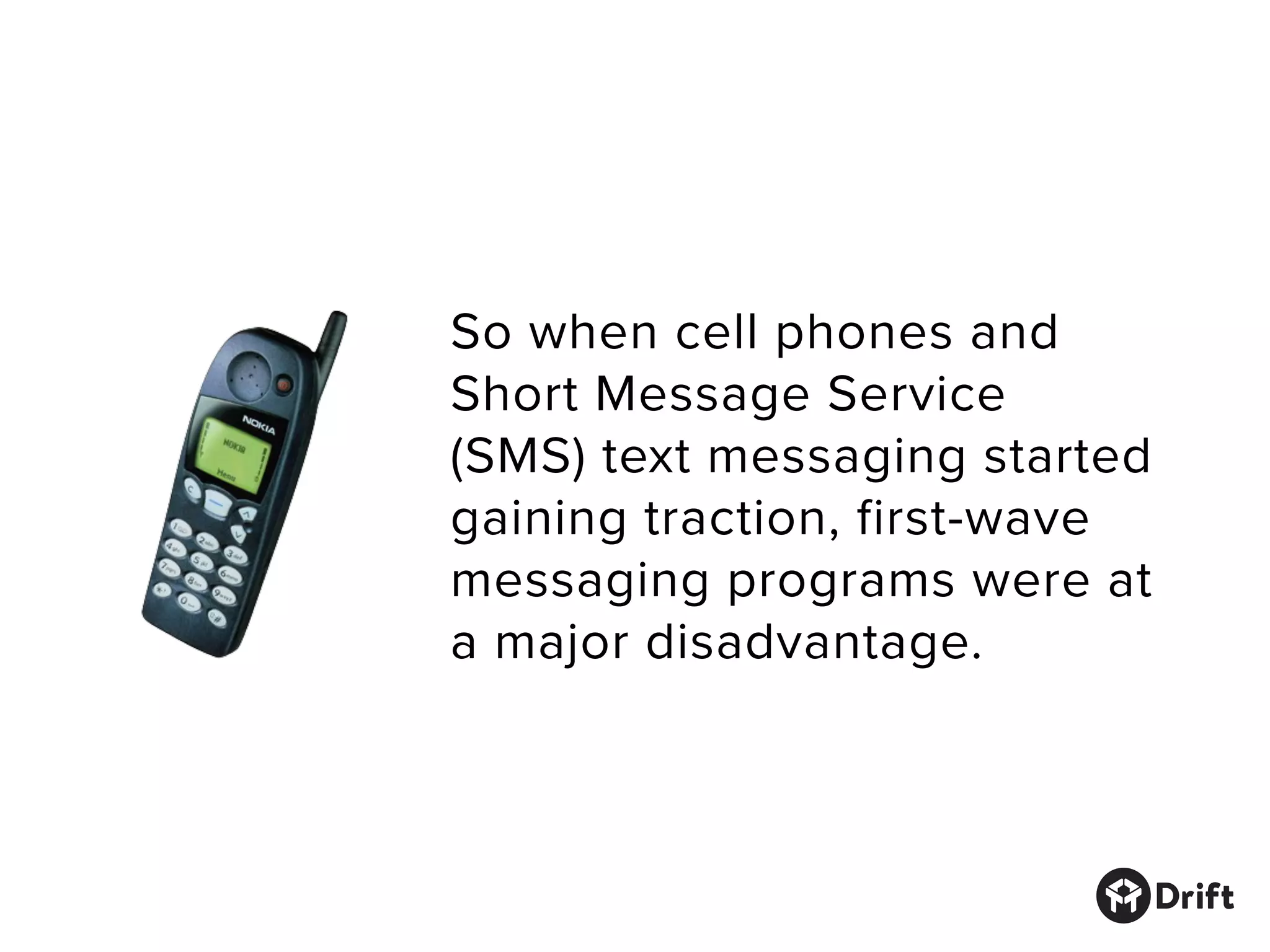
So when cell phones and
Short Message Service
(SMS) text messaging started
gaining traction, first-wave
messaging programs were at
a major disadvantage.
The Second Wave
In 2000, the first year the Pew Research
Center measured cell phone ownership,
53% of U.S. adults were shown to own cell
phones. Five years later, that figure had
grown to 73%.
By 2005, there were 36 million monthly
active SMS texters in the U.S.
The main downside of SMS? Its cost. Cellular
service providers typically charge a fee based
on the amount of SMS messages you send and
receive.
(Fast forward to today, and that cost issue has started catching up with
SMS. Revenues from SMS as well as overall SMS usage are in decline.)
In the early/mid-2000s, a few companies
cropped up to challenge SMS, and these
companies formed a distinct second wave
of messaging software.
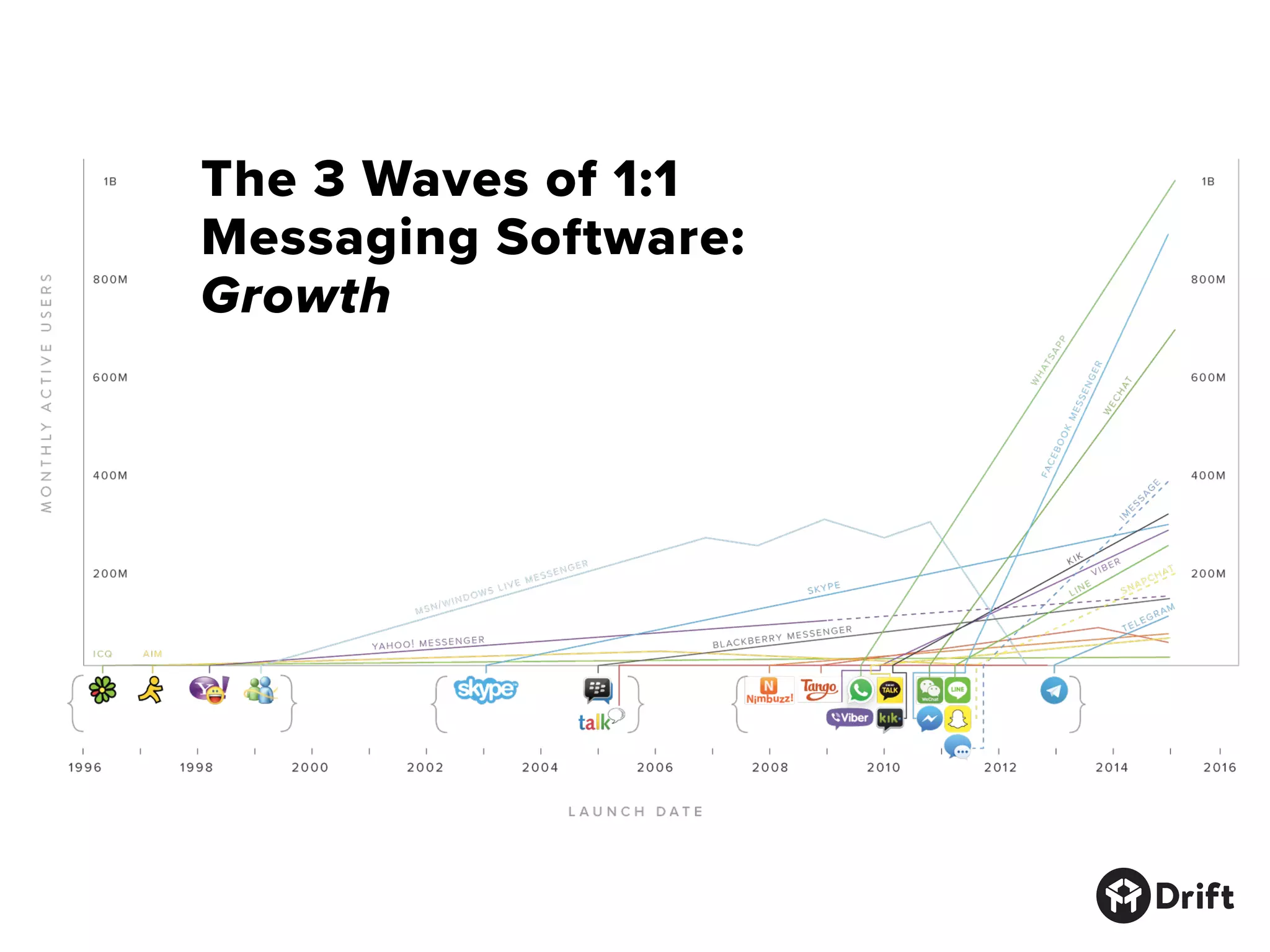
During this wave, Skype, Blackberry, and
Google all seized on the opportunity to
deliver more affordable 1:1 messaging at
scale.
(As you’ll see on the next slide, they had varying degrees of success.)
The 3 Waves of 1:1
Messaging Software:
Growth
While you can think of the second wave of
1:1 messaging software as knocking on
SMS’s door, the third wave of 1:1
messaging software is now actively
breaking that door down.
The Third Wave
And, in a great example of history being
cyclical, one of the driving forces behind
this third wave of messaging software was,
once again, an evolution in cell phone
technology.
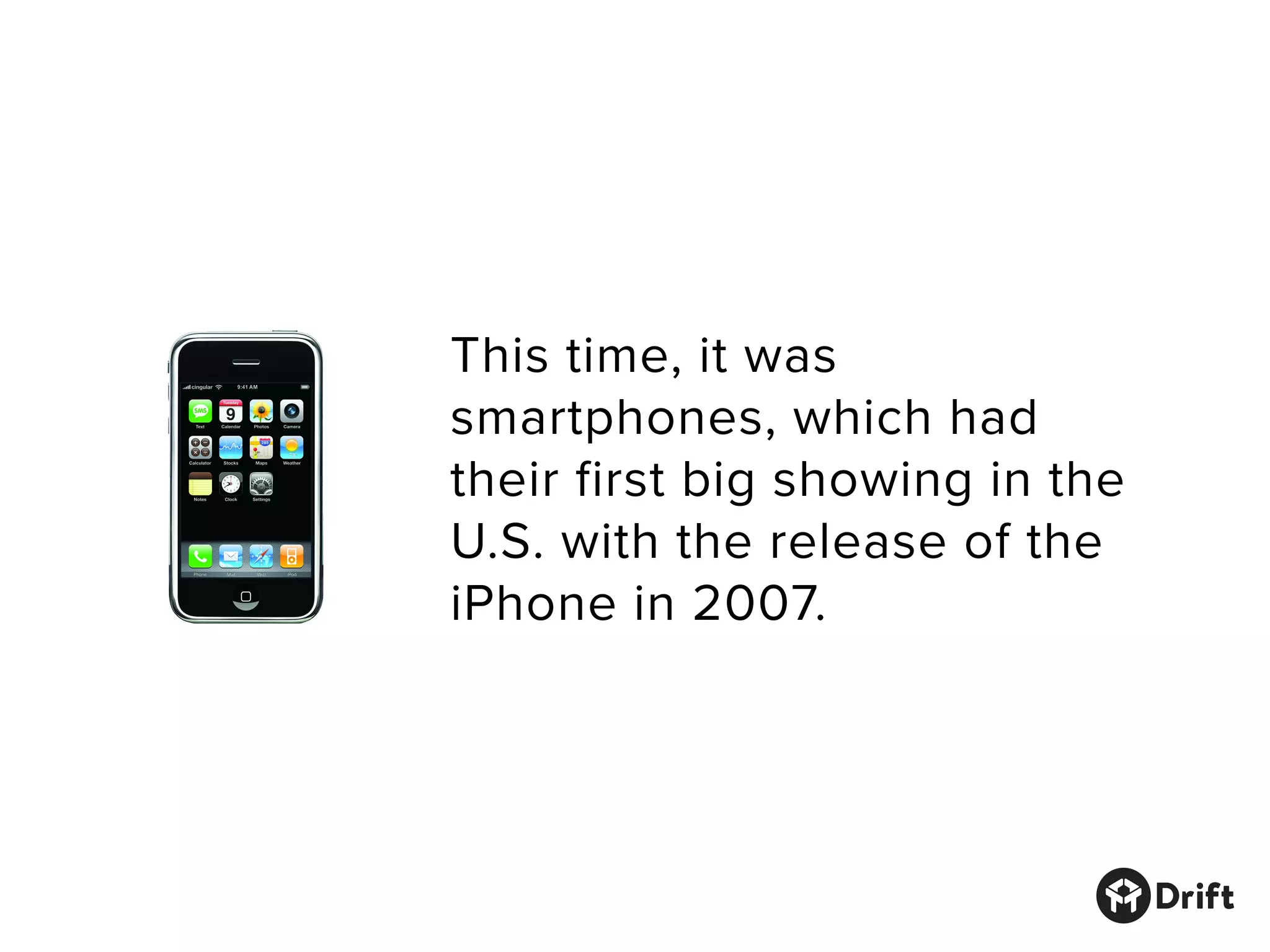
This time, it was
smartphones, which had
their first big showing in the
U.S. with the release of the
iPhone in 2007.
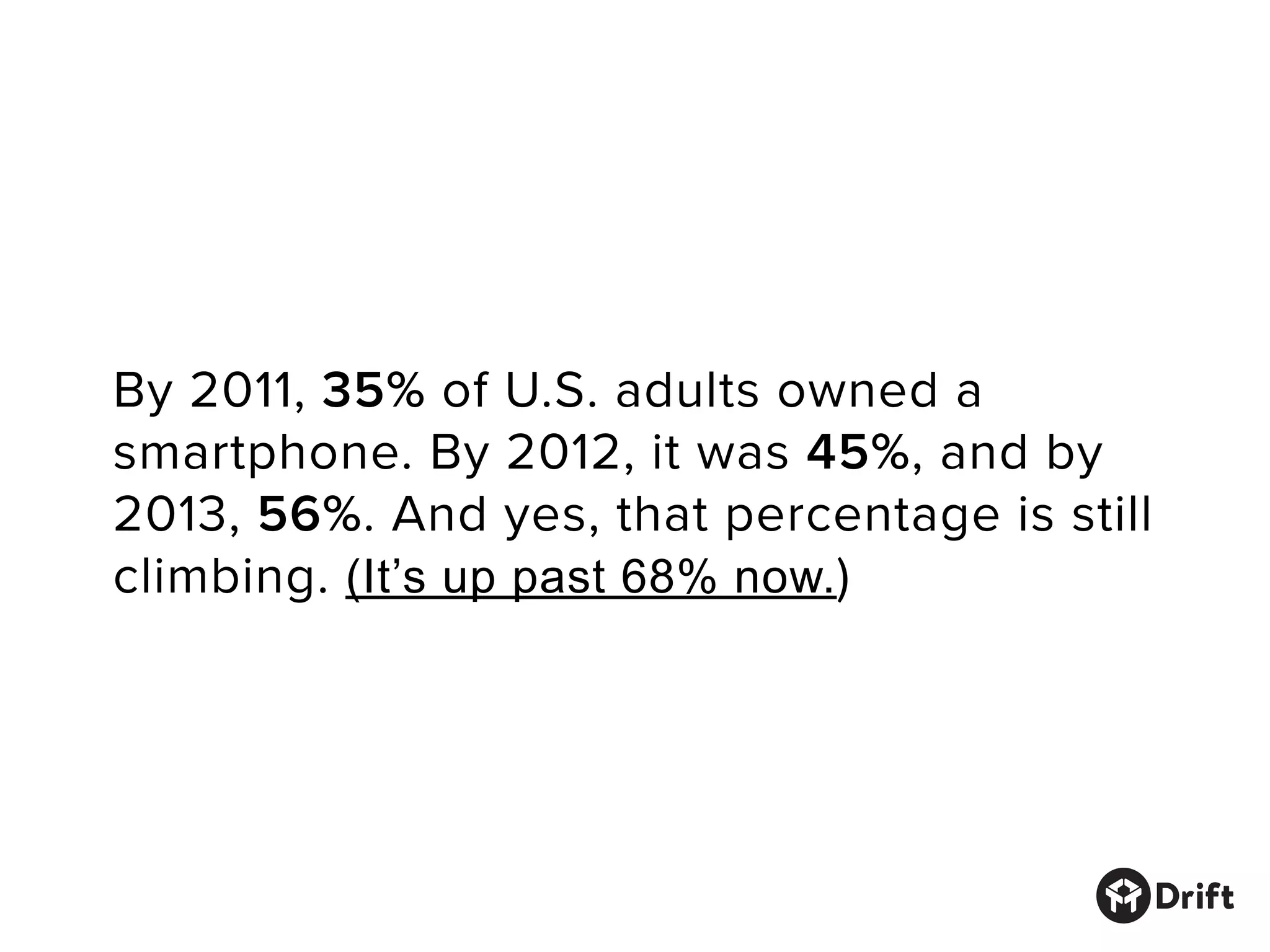
By 2011, 35% of U.S. adults owned a
smartphone. By 2012, it was 45%, and by
2013, 56%. And yes, that percentage is still
climbing. (It’s up past 68% now.)
Smartphones offered a universally simple
way to avoid the cost pitfalls of SMS text
messaging, while simultaneously allowing
for additional features and functionality to
be brought into the world of 1:1 messaging:
apps.
Recognizing the potential of messaging
apps for smartphones, companies began
entering the space in droves in the late
2000s/early 2010s.
Today, 6 of the top 10 most used apps in
the world are messaging apps (WhatsApp,
Facebook Messenger, LINE, Viber,
KakaoTalk, and WeChat).
When we look at the number of monthly
active users these third-wave messaging
apps are attracting, and then look at the
peak numbers those earlier players were
able to yield, there’s really no comparison …
The 3 Waves of 1:1
Messaging Software:
Peak Active Users
Today’s messaging software landscape is
exponentially larger than it once was.
There aren’t just more companies, there
are billions more users.
By the end of this year, eMarketer predicts
that nearly half of smartphone users —
49.3% to be precise — will be using
messaging apps. By 2019, it will be 65%.
As marketers, the sheer number of people
flocking to messaging apps should be
enough to get our attention.
After all, in order to truly understand our
customers, we need to be hanging out
where they're hanging out and using the
tools that they're using.
But what makes messaging apps even
more intriguing are the commerce,
customer support, and advertising
ecosystems developing around them.
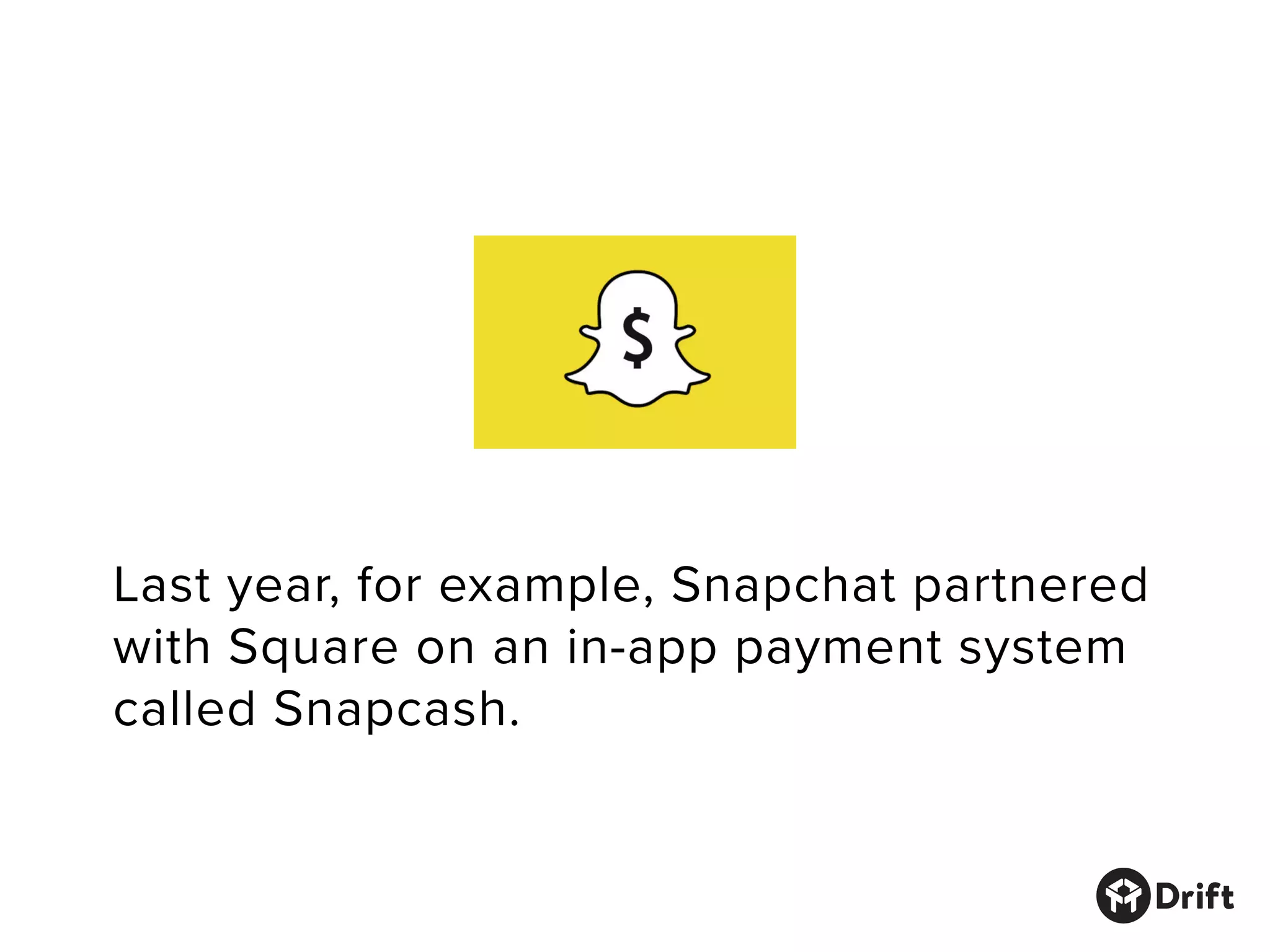
Last year, for example, Snapchat partnered
with Square on an in-app payment system
called Snapcash.
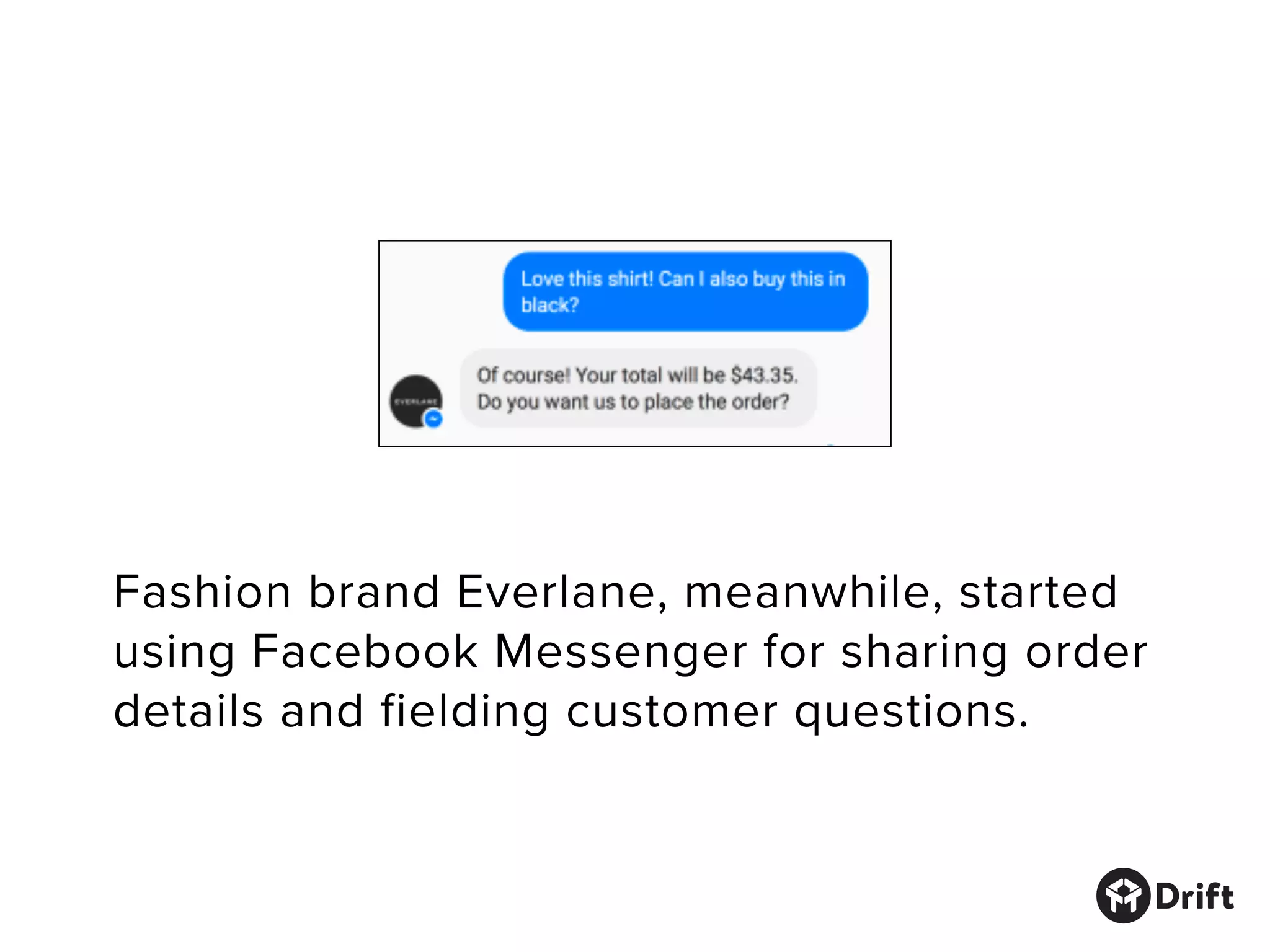
Fashion brand Everlane, meanwhile, started
using Facebook Messenger for sharing order
details and fielding customer questions.
Clearly, today’s messaging apps are about
more than simply sending messages. To
quote HubSpot VP of Marketing Meghan
Anderson:
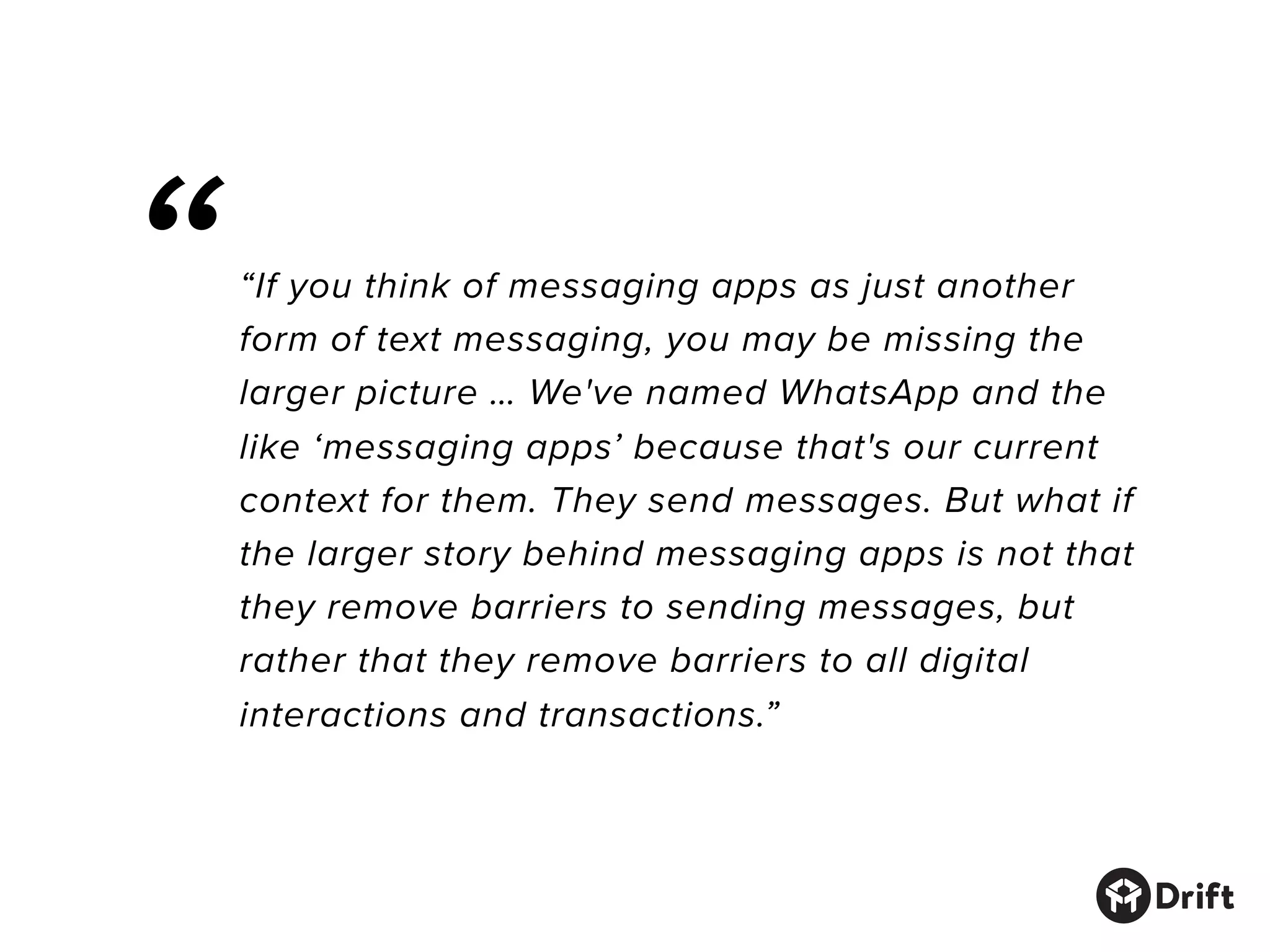
“If you think of messaging apps as just another
form of text messaging, you may be missing the
larger picture … We've named WhatsApp and the
like ‘messaging apps’ because that's our current
context for them. They send messages. But what if
the larger story behind messaging apps is not that
they remove barriers to sending messages, but
rather that they remove barriers to all digital
interactions and transactions.”
“
Messaging is the next big thing that
businesses will need to understand in
order to grow — and this is exactly what
we're focused on at Drift: Helping
businesses have 1:1 conversations with
their prospects and customers at scale.
Click here to learn more

The 3 Waves of 1:1 Messaging Software

  • 1.
    The 3 Waves of1:1 Messaging Software Learn how 1:1 messaging has evolved and why marketers need to adapt
  • 2.
  • 3.
    The year was1997, and approximately half of U.S. households with internet access were getting it via dial-up service provider America Online (AOL).
  • 4.
  • 5.
    Meanwhile, 100% ofthe kids living in those households were slowly but surely becoming addicted to AOL's new, proprietary messaging program, Instant Messenger.
  • 6.
    Launched in Mayof 1997, AIM was part of the first wave of messaging software that would revolutionize 1:1 communication in the late ’90s and early 2000s.
  • 7.
    The 3 Wavesof 1:1 Messaging Software
  • 8.
    The first waveof messaging introduced the world to the “user definable online co- user list” (aka the buddy list), which made it easier to communicate with multiple people 1:1.
  • 9.
    For example, insteadof having to make 5 individual phone calls in order to talk to 5 friends, with AIM you could scan your buddy list once to see who was available, and then rattle of messages accordingly.
  • 10.
    Talking to 5friends before instant messaging Talking to 5 friends after instant messaging
  • 11.
    But AIM andits counterparts weren’t without their limitations. One of the big ones was mobility: You could only use these messaging programs on a computer. And back in the late ’90s that usually meant a shared family computer.
  • 12.
    So when cellphones and Short Message Service (SMS) text messaging started gaining traction, first-wave messaging programs were at a major disadvantage.
  • 13.
  • 14.
    In 2000, thefirst year the Pew Research Center measured cell phone ownership, 53% of U.S. adults were shown to own cell phones. Five years later, that figure had grown to 73%.
  • 15.
    By 2005, therewere 36 million monthly active SMS texters in the U.S.
  • 16.
    The main downsideof SMS? Its cost. Cellular service providers typically charge a fee based on the amount of SMS messages you send and receive. (Fast forward to today, and that cost issue has started catching up with SMS. Revenues from SMS as well as overall SMS usage are in decline.)
  • 17.
    In the early/mid-2000s,a few companies cropped up to challenge SMS, and these companies formed a distinct second wave of messaging software.
  • 18.
    During this wave,Skype, Blackberry, and Google all seized on the opportunity to deliver more affordable 1:1 messaging at scale. (As you’ll see on the next slide, they had varying degrees of success.)
  • 19.
    The 3 Wavesof 1:1 Messaging Software: Growth
  • 20.
    While you canthink of the second wave of 1:1 messaging software as knocking on SMS’s door, the third wave of 1:1 messaging software is now actively breaking that door down.
  • 21.
  • 22.
    And, in agreat example of history being cyclical, one of the driving forces behind this third wave of messaging software was, once again, an evolution in cell phone technology.
  • 23.
    This time, itwas smartphones, which had their first big showing in the U.S. with the release of the iPhone in 2007.
  • 24.
    By 2011, 35%of U.S. adults owned a smartphone. By 2012, it was 45%, and by 2013, 56%. And yes, that percentage is still climbing. (It’s up past 68% now.)
  • 25.
    Smartphones offered auniversally simple way to avoid the cost pitfalls of SMS text messaging, while simultaneously allowing for additional features and functionality to be brought into the world of 1:1 messaging: apps.
  • 26.
    Recognizing the potentialof messaging apps for smartphones, companies began entering the space in droves in the late 2000s/early 2010s.
  • 27.
    Today, 6 ofthe top 10 most used apps in the world are messaging apps (WhatsApp, Facebook Messenger, LINE, Viber, KakaoTalk, and WeChat).
  • 28.
    When we lookat the number of monthly active users these third-wave messaging apps are attracting, and then look at the peak numbers those earlier players were able to yield, there’s really no comparison …
  • 29.
    The 3 Wavesof 1:1 Messaging Software: Peak Active Users
  • 30.
    Today’s messaging softwarelandscape is exponentially larger than it once was. There aren’t just more companies, there are billions more users.
  • 31.
    By the endof this year, eMarketer predicts that nearly half of smartphone users — 49.3% to be precise — will be using messaging apps. By 2019, it will be 65%.
  • 32.
    As marketers, thesheer number of people flocking to messaging apps should be enough to get our attention.
  • 33.
    After all, inorder to truly understand our customers, we need to be hanging out where they're hanging out and using the tools that they're using.
  • 34.
    But what makesmessaging apps even more intriguing are the commerce, customer support, and advertising ecosystems developing around them.
  • 35.
    Last year, forexample, Snapchat partnered with Square on an in-app payment system called Snapcash.
  • 36.
    Fashion brand Everlane,meanwhile, started using Facebook Messenger for sharing order details and fielding customer questions.
  • 37.
    Clearly, today’s messagingapps are about more than simply sending messages. To quote HubSpot VP of Marketing Meghan Anderson:
  • 38.
    “If you thinkof messaging apps as just another form of text messaging, you may be missing the larger picture … We've named WhatsApp and the like ‘messaging apps’ because that's our current context for them. They send messages. But what if the larger story behind messaging apps is not that they remove barriers to sending messages, but rather that they remove barriers to all digital interactions and transactions.” “
  • 39.
    Messaging is thenext big thing that businesses will need to understand in order to grow — and this is exactly what we're focused on at Drift: Helping businesses have 1:1 conversations with their prospects and customers at scale.
  • 40.
    Click here tolearn more