There were three major events that
took place in the 18th
century. Theses
are as follows:
1.The American revolution
2.The French revolution and
3.The Industrial revolution ( age of
Enlightment )
From 1780 Britain was transformed by the industrial
revolution. Before this time many people use to live
in farms and the countryside. After the industrial
revolution people started living in towns and w0rking
in industries and mining.
In 1707 the act of union was passed. Scotland was
united with England and Wales. England became part
of great Britain.
RELIGION
In the early 18th
century not many people went to
church and religion was not a big thing. Most people
went to church on a Sunday however there was a lack
of energy in the church.
This changed in the 1730’s. A man called George
Whitefield (1714-1770) became a great preacher and
the church of England became the main place where
many people went. By the end of the 18th
century
religious enthusiasm began to revive.
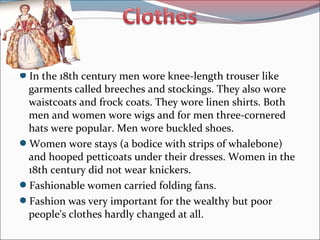
In the 18th century men wore knee-length trouser like
garments called breeches and stockings. They also wore
waistcoats and frock coats. They wore linen shirts. Both
men and women wore wigs and for men three-cornered
hats were popular. Men wore buckled shoes.
Women wore stays (a bodice with strips of whalebone)
and hooped petticoats under their dresses. Women in the
18th century did not wear knickers.
Fashionable women carried folding fans.
Fashion was very important for the wealthy but poor
people's clothes hardly changed at all.
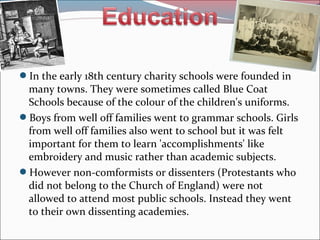
In the early 18th century charity schools were founded in
many towns. They were sometimes called Blue Coat
Schools because of the colour of the children's uniforms.
Boys from well off families went to grammar schools. Girls
from well off families also went to school but it was felt
important for them to learn 'accomplishments' like
embroidery and music rather than academic subjects.
However non-comformists or dissenters (Protestants who
did not belong to the Church of England) were not
allowed to attend most public schools. Instead they went
to their own dissenting academies.
In the 18th
century there was a distruction of political
centuries that had been built from the past centuries.
The political parties lost their power and were taken
over.
 By the middle of the 18th century, both Whigs (A
member of an 18th- and 19th-century British political
party that was opposed to the Tories) and Tories
found themselves changed from what they had been.
Beethoven’s Moonlight Sonata
Rachmaninov’s Piano Concerto
Features
Powerful expression of emotion - not only love,
e.g. hate or death
 themes relating to dreams, nature, and the
mysterious or supernatural
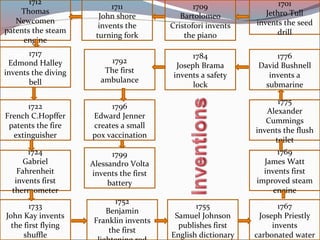
1701
Jethro Tull
invents the seed
drill
1709
Bartolomeo
Cristofori invents
the piano
1711
John shore
invents the
turning fork
1712
Thomas
Newcomen
patents the steam
engine
1717
Edmond Halley
invents the diving
bell
1722
French C.Hopffer
patents the fire
extinguisher
1724
Gabriel
Fahrenheit
invents first
thermometer
1733
John Kay invents
the first flying
shuffle
1752
Benjamin
Franklin invents
the first
1755
Samuel Johnson
publishes first
English dictionary
1767
Joseph Priestly
invents
carbonated water
1769
James Watt
invents first
improved steam
engine
1784
Joseph Brama
invents a safety
lock
1776
David Bushnell
invents a
submarine
1775
Alexander
Cummings
invents the flush
toilet
1792
The first
ambulance
1796
Edward Jenner
creates a small
pox vaccination
1799
Alessandro Volta
invents the first
battery
Romanticism
Definition:
A movement of the eighteenth
and nineteenth centuries that
marked the reaction in
literature, philosophy, art,
religion, and politics
oLove of nature
oAn interest in the past
oMysticism
oInterest in human rights
oInterest in the gothic
leading to the story Frankenstein by Mary Shelley.
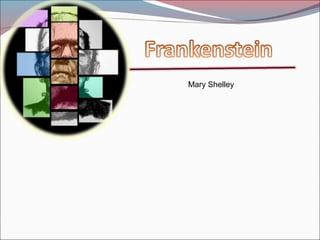
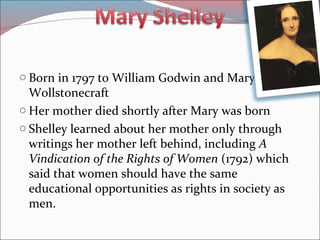
Mary Shelley
o Born in 1797 to William Godwin and Mary
Wollstonecraft
o Her mother died shortly after Mary was born
o Shelley learned about her mother only through
writings her mother left behind, including A
Vindication of the Rights of Women (1792) which
said that women should have the same
educational opportunities as rights in society as
men.
o Avid reader and scholar and knew through her father
some of the most important men of the time (William
Wordsworth and Samuel Taylor Coleridge)
o Married Percy Bysshe Shelley in 1816 and listened
intently to his intellectual conversations with others
oOn a visit in Switzerland to Lord Byron, she
was challenged to write a story. She had
heard Byron and Shelley (her husband)
discussing “the nature of the principle of
life and whether there was any chance of its
ever being discovered.” From this
conversation, she had the “waking dream”
which eventually became the novel
Frankenstein.
Frankenstein is generally categorized as a Gothic
novel, a genre of fiction that uses gloomy settings
and supernatural events to create and atmosphere
of mystery and terror.
Shelley adds to her development of the plot with
the use of psychological realism.
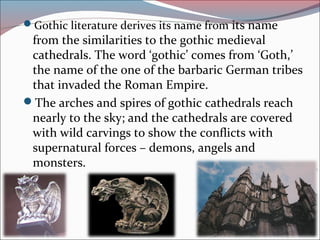
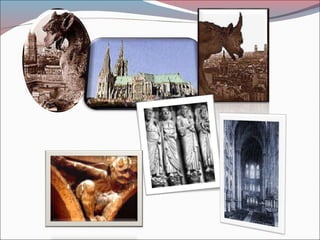
Gothic literature derives its name from its name
from the similarities to the gothic medieval
cathedrals. The word ‘gothic’ comes from ‘Goth,’
the name of the one of the barbaric German tribes
that invaded the Roman Empire.
The arches and spires of gothic cathedrals reach
nearly to the sky; and the cathedrals are covered
with wild carvings to show the conflicts with
supernatural forces – demons, angels and
monsters.
Like Gothic architecture, Gothic literature focuses on
humanity’s fascination with the unknown, and the
frightening, inexplicable aspects of the universe and the
human soul. Gothic literature pictures the human
condition as an ambiguous mixture of good and evil
powers that cannot be understood completely by human
reason.
The Gothic perspective conceives of the human condition
as a paradox—humans are divided in the conflict between
opposing forces in the world and in themselves.
The Gothic themes of the struggle between good and evil
in the human soul, and the existence of unexplainable
elements in humanity and the cosmos, are prominent
themes in Frankenstein.
There were many famous poets in the 18th
century.
This was the time when people started reading poems
of all genres from different poets, not only wealthy
ones.
The main famous poets were:
Lord byron
William Blake
Alexander pope
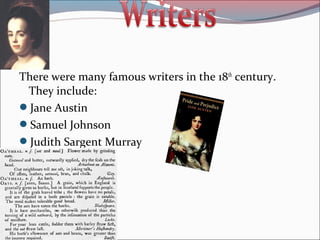
There were many famous writers in the 18th
century.
They include:
Jane Austin
Samuel Johnson
Judith Sargent Murray

The 18th century

  • 2.
    There were threemajor events that took place in the 18th century. Theses are as follows: 1.The American revolution 2.The French revolution and 3.The Industrial revolution ( age of Enlightment )
  • 3.
    From 1780 Britainwas transformed by the industrial revolution. Before this time many people use to live in farms and the countryside. After the industrial revolution people started living in towns and w0rking in industries and mining. In 1707 the act of union was passed. Scotland was united with England and Wales. England became part of great Britain.
  • 4.
    RELIGION In the early18th century not many people went to church and religion was not a big thing. Most people went to church on a Sunday however there was a lack of energy in the church. This changed in the 1730’s. A man called George Whitefield (1714-1770) became a great preacher and the church of England became the main place where many people went. By the end of the 18th century religious enthusiasm began to revive.
  • 5.
    In the 18thcentury men wore knee-length trouser like garments called breeches and stockings. They also wore waistcoats and frock coats. They wore linen shirts. Both men and women wore wigs and for men three-cornered hats were popular. Men wore buckled shoes. Women wore stays (a bodice with strips of whalebone) and hooped petticoats under their dresses. Women in the 18th century did not wear knickers. Fashionable women carried folding fans. Fashion was very important for the wealthy but poor people's clothes hardly changed at all.
  • 6.
    In the early18th century charity schools were founded in many towns. They were sometimes called Blue Coat Schools because of the colour of the children's uniforms. Boys from well off families went to grammar schools. Girls from well off families also went to school but it was felt important for them to learn 'accomplishments' like embroidery and music rather than academic subjects. However non-comformists or dissenters (Protestants who did not belong to the Church of England) were not allowed to attend most public schools. Instead they went to their own dissenting academies.
  • 7.
    In the 18th centurythere was a distruction of political centuries that had been built from the past centuries. The political parties lost their power and were taken over.  By the middle of the 18th century, both Whigs (A member of an 18th- and 19th-century British political party that was opposed to the Tories) and Tories found themselves changed from what they had been.
  • 8.
    Beethoven’s Moonlight Sonata Rachmaninov’sPiano Concerto Features Powerful expression of emotion - not only love, e.g. hate or death  themes relating to dreams, nature, and the mysterious or supernatural
  • 9.
    1701 Jethro Tull invents theseed drill 1709 Bartolomeo Cristofori invents the piano 1711 John shore invents the turning fork 1712 Thomas Newcomen patents the steam engine 1717 Edmond Halley invents the diving bell 1722 French C.Hopffer patents the fire extinguisher 1724 Gabriel Fahrenheit invents first thermometer 1733 John Kay invents the first flying shuffle 1752 Benjamin Franklin invents the first 1755 Samuel Johnson publishes first English dictionary 1767 Joseph Priestly invents carbonated water 1769 James Watt invents first improved steam engine 1784 Joseph Brama invents a safety lock 1776 David Bushnell invents a submarine 1775 Alexander Cummings invents the flush toilet 1792 The first ambulance 1796 Edward Jenner creates a small pox vaccination 1799 Alessandro Volta invents the first battery
  • 10.
    Romanticism Definition: A movement ofthe eighteenth and nineteenth centuries that marked the reaction in literature, philosophy, art, religion, and politics
  • 11.
    oLove of nature oAninterest in the past oMysticism oInterest in human rights oInterest in the gothic leading to the story Frankenstein by Mary Shelley.
  • 12.
  • 13.
    o Born in1797 to William Godwin and Mary Wollstonecraft o Her mother died shortly after Mary was born o Shelley learned about her mother only through writings her mother left behind, including A Vindication of the Rights of Women (1792) which said that women should have the same educational opportunities as rights in society as men.
  • 14.
    o Avid readerand scholar and knew through her father some of the most important men of the time (William Wordsworth and Samuel Taylor Coleridge) o Married Percy Bysshe Shelley in 1816 and listened intently to his intellectual conversations with others
  • 15.
    oOn a visitin Switzerland to Lord Byron, she was challenged to write a story. She had heard Byron and Shelley (her husband) discussing “the nature of the principle of life and whether there was any chance of its ever being discovered.” From this conversation, she had the “waking dream” which eventually became the novel Frankenstein.
  • 16.
    Frankenstein is generallycategorized as a Gothic novel, a genre of fiction that uses gloomy settings and supernatural events to create and atmosphere of mystery and terror. Shelley adds to her development of the plot with the use of psychological realism.
  • 17.
    Gothic literature derivesits name from its name from the similarities to the gothic medieval cathedrals. The word ‘gothic’ comes from ‘Goth,’ the name of the one of the barbaric German tribes that invaded the Roman Empire. The arches and spires of gothic cathedrals reach nearly to the sky; and the cathedrals are covered with wild carvings to show the conflicts with supernatural forces – demons, angels and monsters.
  • 18.
    Like Gothic architecture,Gothic literature focuses on humanity’s fascination with the unknown, and the frightening, inexplicable aspects of the universe and the human soul. Gothic literature pictures the human condition as an ambiguous mixture of good and evil powers that cannot be understood completely by human reason. The Gothic perspective conceives of the human condition as a paradox—humans are divided in the conflict between opposing forces in the world and in themselves. The Gothic themes of the struggle between good and evil in the human soul, and the existence of unexplainable elements in humanity and the cosmos, are prominent themes in Frankenstein.
  • 20.
    There were manyfamous poets in the 18th century. This was the time when people started reading poems of all genres from different poets, not only wealthy ones. The main famous poets were: Lord byron William Blake Alexander pope
  • 21.
    There were manyfamous writers in the 18th century. They include: Jane Austin Samuel Johnson Judith Sargent Murray