Instructor: Mrs. Jelliane Rose D. Villacuatro
FORMAL VS FICTION
Mechanics:
1. The class will count off from 1-3.
2. Each student gets into their
group number.
3. The teacher will read a passage.
4. The groups decide if its formal or
fiction.
5. The highest scorer among the
groups wins.
Passage 1
If you establish the purpose for reading
early on, you will be able to save time and
improve your comprehension.
Passage 2
Plagiarism is the use of ideas or any
relevant information of another without
giving proper credit or acknowledgment.
Passage 3
He saw the pure crystal water from
where the lass is heavenly plunged.
Passage 4
When you synthesize information, you
develop new understanding about a topic by
using information from more than one
source.
Passage 5
Just as the sun rises and peeps from
the east, and as the roosters of the
neighborhood crow, vivid came the
assiduous man.
Academic Text:
Style and Structure
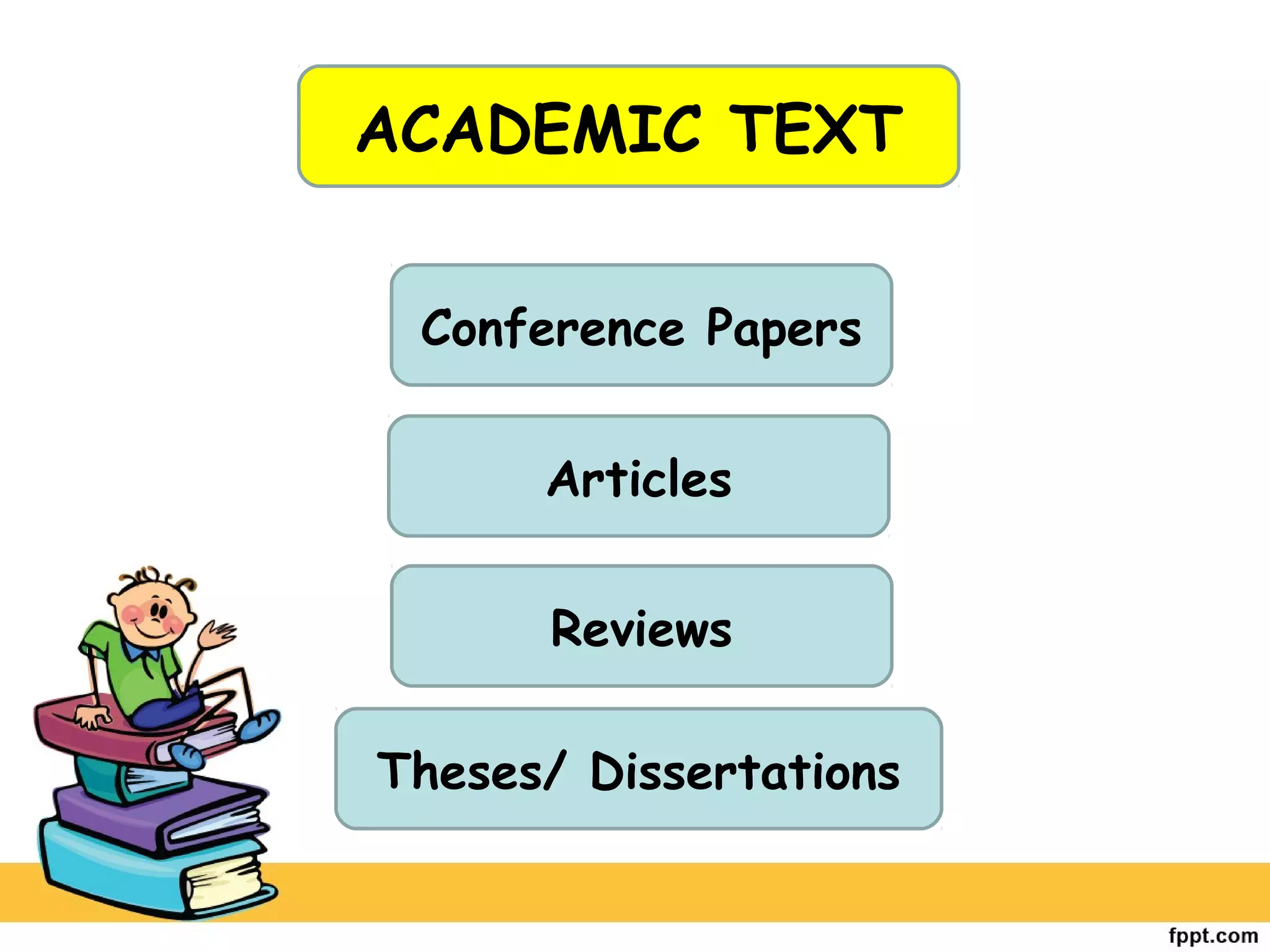
ACADEMIC TEXT
Articles
Conference Papers
Reviews
Theses/ Dissertations
What is an
Academic Text?
An academic text is a reading
material that provides information which
include concepts and theories that are
related to the specific discipline.
How does an academic
text usually look like?
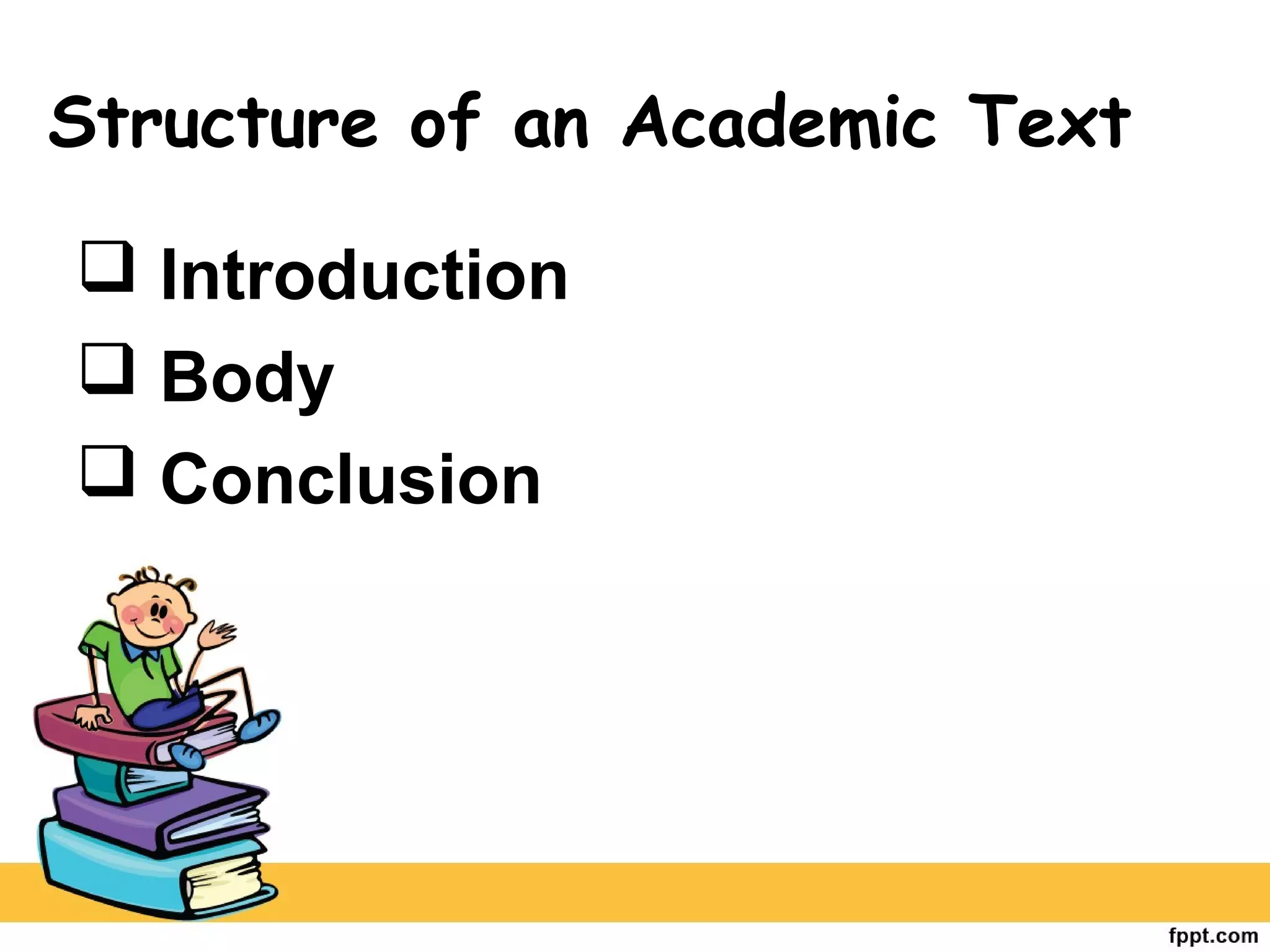
Structure of an Academic Text
 Introduction
 Body
 Conclusion
Why do I read an
Academic Text?
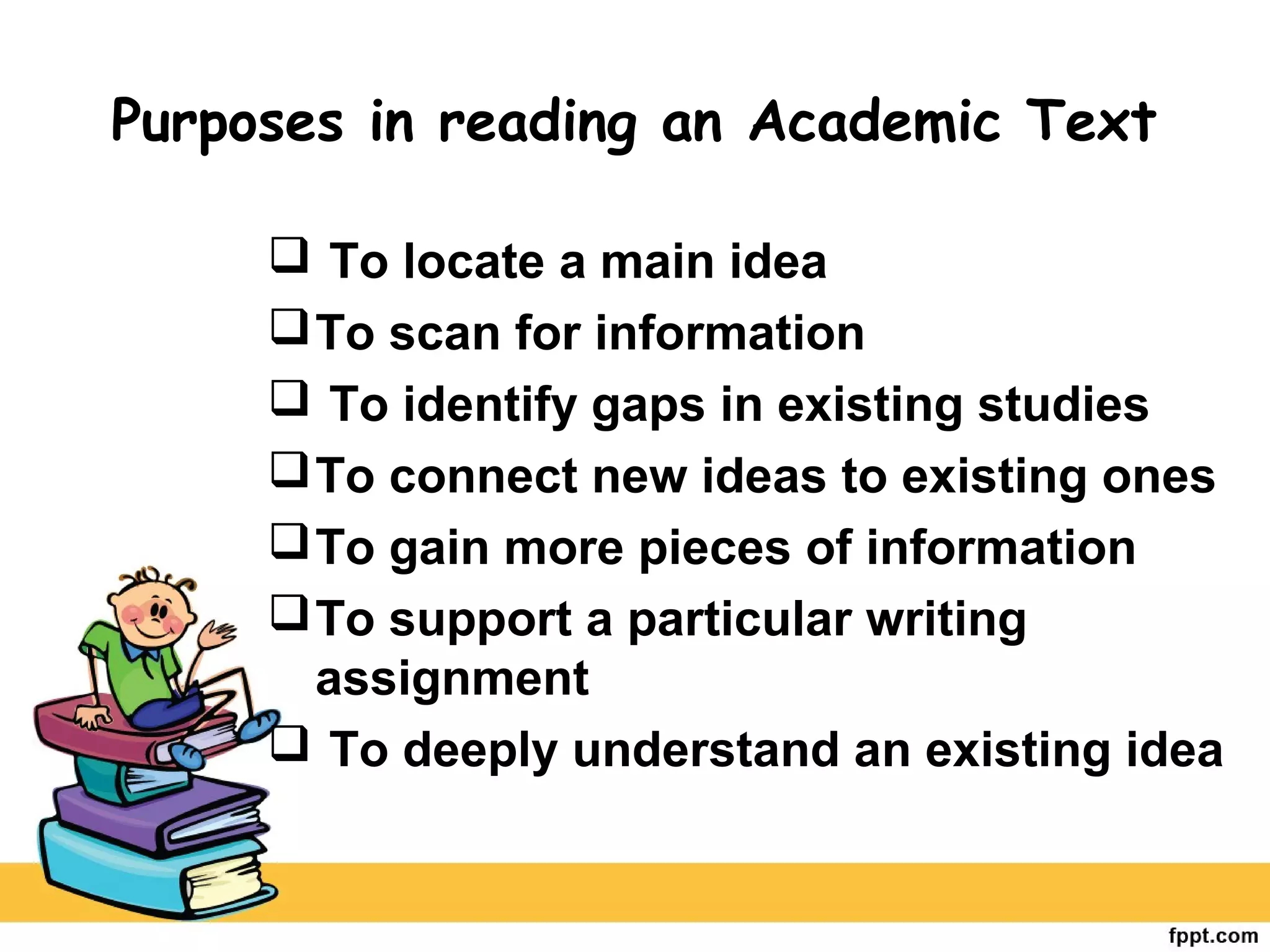
Purposes in reading an Academic Text
 To locate a main idea
To scan for information
 To identify gaps in existing studies
To connect new ideas to existing ones
To gain more pieces of information
To support a particular writing
assignment
 To deeply understand an existing idea
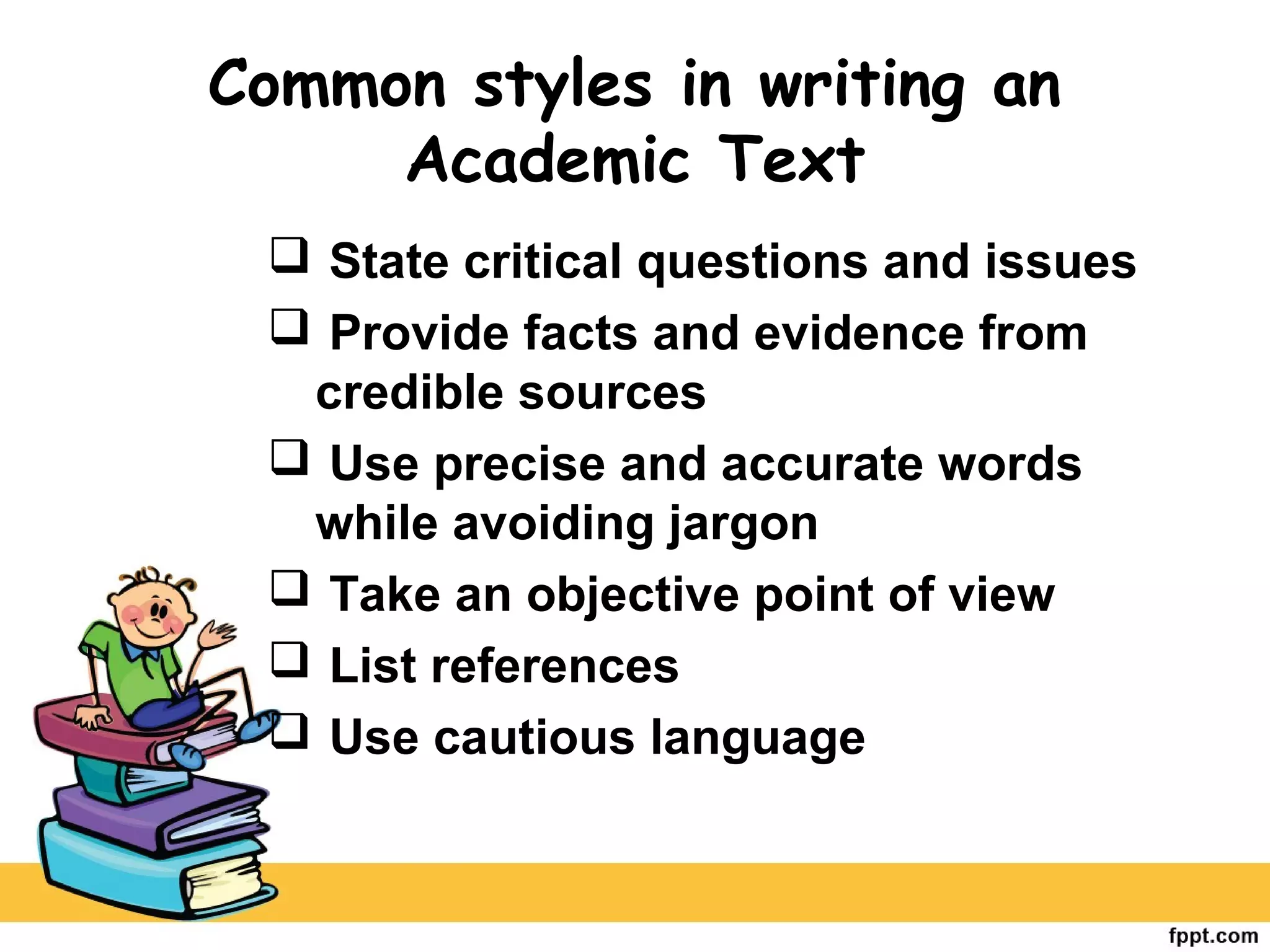
What do authors observe
in writing an
Academic Text?
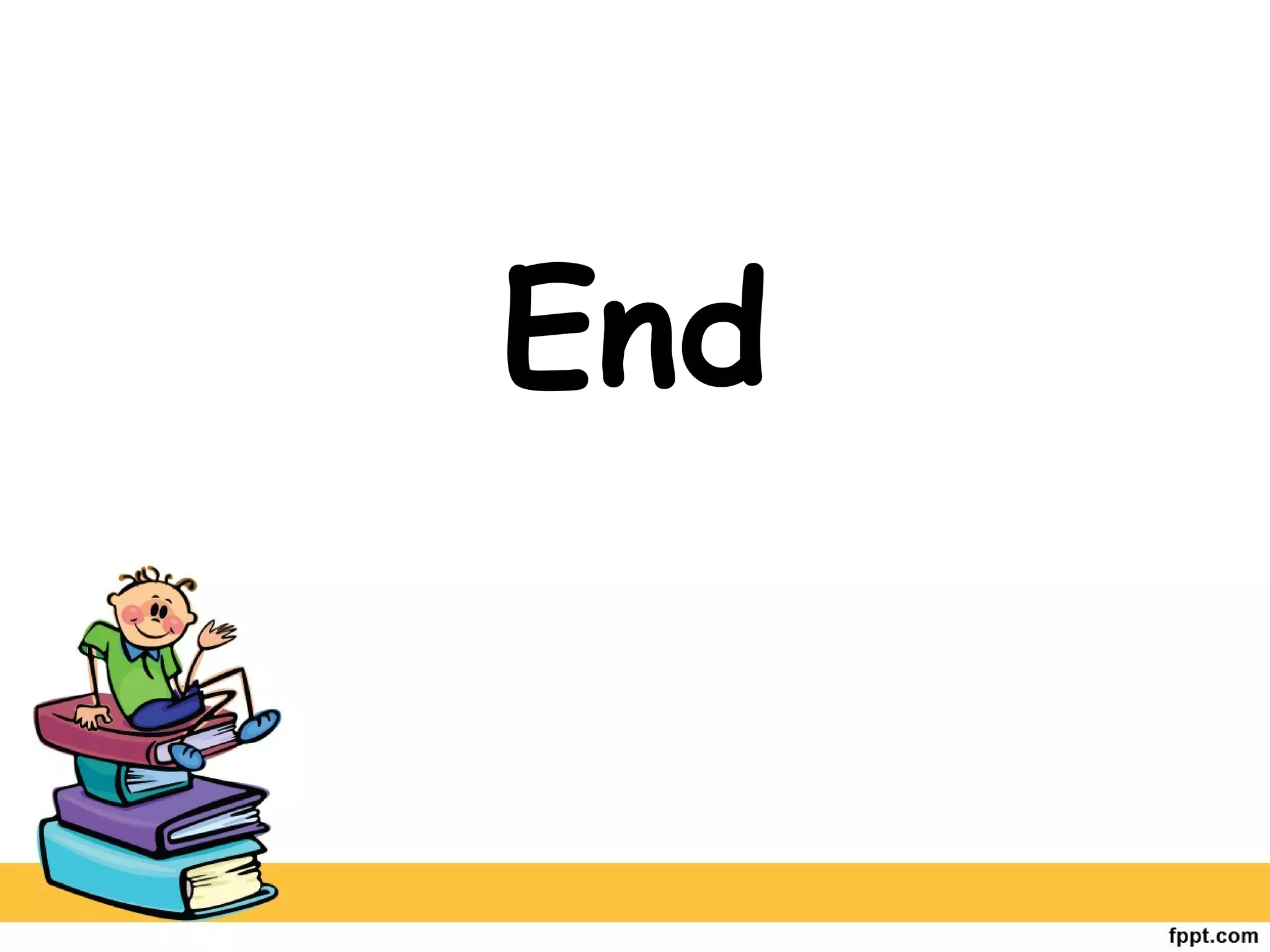
Common styles in writing an
Academic Text
 State critical questions and issues
 Provide facts and evidence from
credible sources
 Use precise and accurate words
while avoiding jargon
 Take an objective point of view
 List references
 Use cautious language
End
Q Time
Quiz 1: Academic Text
Instruction:
Write True if the statement is
CORRECT and False if it is NOT.
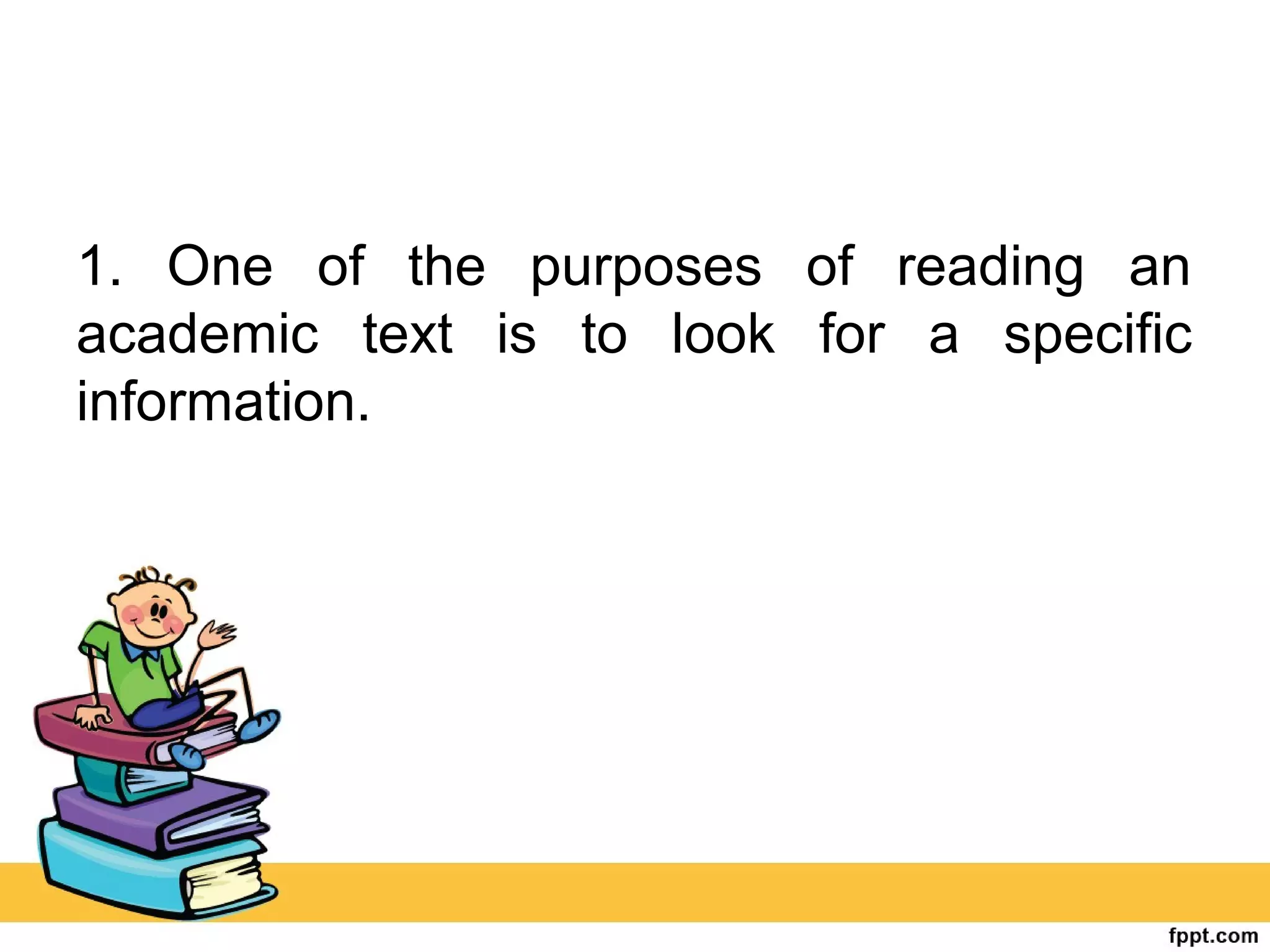
1. One of the purposes of reading an
academic text is to look for a specific
information.
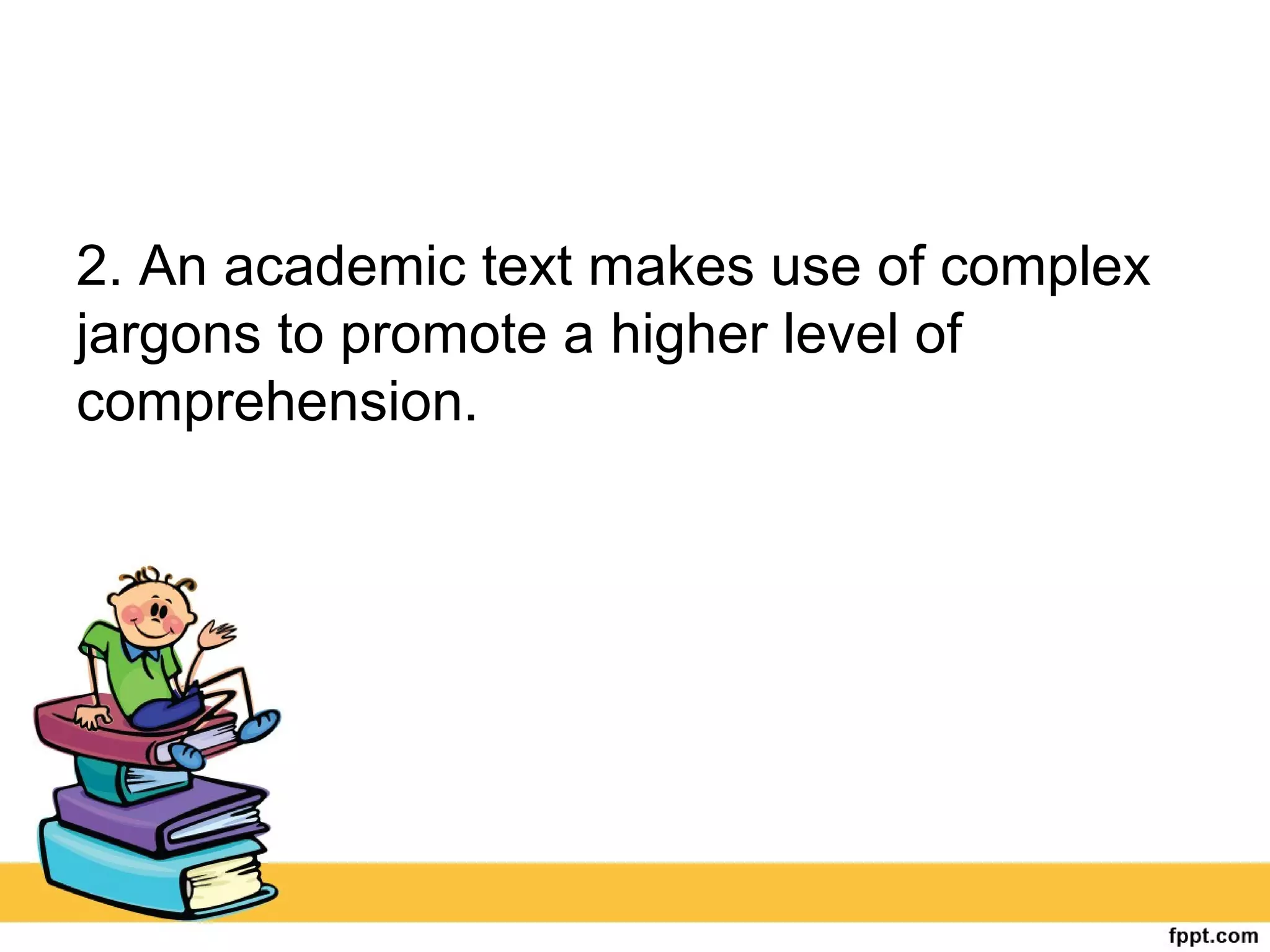
2. An academic text makes use of complex
jargons to promote a higher level of
comprehension.
3. It uses words which tones up claims
expressing certainty.
4. It helps fill existing gaps between
information.
5. An academic text observes a format.
6. In reading an academic text, it helps
acquire new information.
7. An academic text needs less
concentration and focus because the terms
are simple.
8. It is in academic text that issues are
stated to provoke information discussion.
9. A magazine is an academic text.
10. Critique paper is classified as an
academic text.
Academic Text:
Style and Structure
Academic text style and structure

Academic text style and structure

  • 1.
    Instructor: Mrs. JellianeRose D. Villacuatro
  • 2.
  • 3.
    Mechanics: 1. The classwill count off from 1-3. 2. Each student gets into their group number. 3. The teacher will read a passage. 4. The groups decide if its formal or fiction. 5. The highest scorer among the groups wins.
  • 4.
    Passage 1 If youestablish the purpose for reading early on, you will be able to save time and improve your comprehension.
  • 5.
    Passage 2 Plagiarism isthe use of ideas or any relevant information of another without giving proper credit or acknowledgment.
  • 6.
    Passage 3 He sawthe pure crystal water from where the lass is heavenly plunged.
  • 7.
    Passage 4 When yousynthesize information, you develop new understanding about a topic by using information from more than one source.
  • 8.
    Passage 5 Just asthe sun rises and peeps from the east, and as the roosters of the neighborhood crow, vivid came the assiduous man.
  • 9.
  • 10.
  • 11.
  • 12.
    An academic textis a reading material that provides information which include concepts and theories that are related to the specific discipline.
  • 13.
    How does anacademic text usually look like?
  • 14.
    Structure of anAcademic Text  Introduction  Body  Conclusion
  • 15.
    Why do Iread an Academic Text?
  • 16.
    Purposes in readingan Academic Text  To locate a main idea To scan for information  To identify gaps in existing studies To connect new ideas to existing ones To gain more pieces of information To support a particular writing assignment  To deeply understand an existing idea
  • 17.
    What do authorsobserve in writing an Academic Text?
  • 18.
    Common styles inwriting an Academic Text  State critical questions and issues  Provide facts and evidence from credible sources  Use precise and accurate words while avoiding jargon  Take an objective point of view  List references  Use cautious language
  • 19.
  • 20.
  • 21.
  • 22.
    Instruction: Write True ifthe statement is CORRECT and False if it is NOT.
  • 23.
    1. One ofthe purposes of reading an academic text is to look for a specific information.
  • 24.
    2. An academictext makes use of complex jargons to promote a higher level of comprehension.
  • 25.
    3. It useswords which tones up claims expressing certainty.
  • 26.
    4. It helpsfill existing gaps between information.
  • 27.
    5. An academictext observes a format.
  • 28.
    6. In readingan academic text, it helps acquire new information.
  • 29.
    7. An academictext needs less concentration and focus because the terms are simple.
  • 30.
    8. It isin academic text that issues are stated to provoke information discussion.
  • 31.
    9. A magazineis an academic text.
  • 32.
    10. Critique paperis classified as an academic text.
  • 33.