TETANUS
DISCRIPTION
 Tetanus or lock jaw is an acute disease which is
distributed throughout the world.
 Infection usually originates from a contaminated
wound.
 Endospores of C. tetani are commonly found in
hospital environment, soil and dust, and in the faeces
of many farm animals.
 Common symptoms are muscle spasms in the jaw
(hence the common name ‘lockjaw’), followed by
difficulty in swallowing and general muscle stiffness
in other parts of the body.
CAUSATIVE ORGANISM
 The disease is caused by the
exotoxin produced by
Clostridium tetani.
 It is Gram-positive spore
produsing anaerobic
bacterium present in faeses
of man and animal.
 The spores germinate
favourable conditions and
produce a powerful
exotoxin.
MODE OF SPREAD
 It is spread through injury and abrasion from where
the contaminated matter with tetanus spores enter in
to the body.
 The other causes of tetanus include pin prick,
abrasion, wound, burns, human bite, animal bite,
stings, syringes as well as surgical instrument.
INCUBATION PERIOD
 Incubation period varies from 3 to 21 days.
SIGNS AND SYMPTEMS
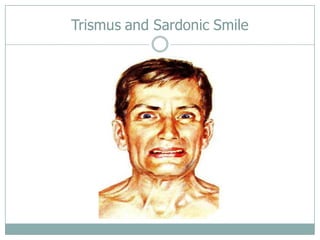
 The first sign of tetanus is a mild jaw muscle spasm
called ‘lockjaw’ (trismus), followed by stiffness of the
neck and back, difficulty in swallowing, and muscle
rigidity in the abdomen.
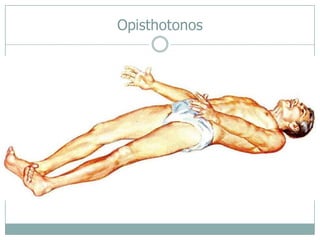
 These muscle contractions are due to a neurotoxin
tetanospasmin produced by C. tetani.
 Typical signs of tetanus include an increase in body
temperature by 2 to 4°C, diaphoresis (excessive
sweating), and elevated blood pressure.
 C.tetani also produces a second toxin called
‘tetanolysin’ is a hemolysin that causes tissue
destruction.
Trismus and Sardonic Smile
Opisthotonos
DIAGNOSIS
 Bacteriological confirmation of the clinical diagnosis
is usually difficult because very few C. tetani are
present in the wound.
 A search should be made for `drumstick` bacilli in
films and an attempt should be made to isolate the
organism by culture and by injection of material
from the wound into mice or guinea-pigs.
 Molecular diagnostic methods such as PCR should
be used.
TREATMENT
 The wound must be cleaned, dead and infected tissue
should be removed surgically.
 Metronidazole will help decrease the amount of
bacteria however;
 it has no effect on the bacterial toxin.
Vaccination
 Human anti-tetanospasmin immunoglobulin (or
tetanus immune globulin) is a crucial part of
treatment.
 All tetanus victims should be vaccinated against
tetanus or offered a booster vaccine if they have been
previously vaccinated.
 In addition to the measures given above, 5000 units
of tetanus immunoglobulin IV or IM.
PREVENTIONAND CONTROL
 Tetanus can be prevented by vaccination. One
tetanus booster presently used is called DPT (a
protection from diphtheria, pertussis and tetanus).
 An initial dose is administered a few months after
birth, a second dose 4-6 months later and finally a
reinforcing dose 6-12 months after the second
injection.
 A final booster is given between the ages of 4-6 years.
 A booster vaccine is recommended every ten years.

Tetanus

  • 1.
  • 2.
    DISCRIPTION  Tetanus orlock jaw is an acute disease which is distributed throughout the world.  Infection usually originates from a contaminated wound.  Endospores of C. tetani are commonly found in hospital environment, soil and dust, and in the faeces of many farm animals.  Common symptoms are muscle spasms in the jaw (hence the common name ‘lockjaw’), followed by difficulty in swallowing and general muscle stiffness in other parts of the body.
  • 3.
    CAUSATIVE ORGANISM  Thedisease is caused by the exotoxin produced by Clostridium tetani.  It is Gram-positive spore produsing anaerobic bacterium present in faeses of man and animal.  The spores germinate favourable conditions and produce a powerful exotoxin.
  • 4.
    MODE OF SPREAD It is spread through injury and abrasion from where the contaminated matter with tetanus spores enter in to the body.  The other causes of tetanus include pin prick, abrasion, wound, burns, human bite, animal bite, stings, syringes as well as surgical instrument.
  • 5.
    INCUBATION PERIOD  Incubationperiod varies from 3 to 21 days.
  • 6.
    SIGNS AND SYMPTEMS The first sign of tetanus is a mild jaw muscle spasm called ‘lockjaw’ (trismus), followed by stiffness of the neck and back, difficulty in swallowing, and muscle rigidity in the abdomen.  These muscle contractions are due to a neurotoxin tetanospasmin produced by C. tetani.  Typical signs of tetanus include an increase in body temperature by 2 to 4°C, diaphoresis (excessive sweating), and elevated blood pressure.  C.tetani also produces a second toxin called ‘tetanolysin’ is a hemolysin that causes tissue destruction.
  • 7.
  • 8.
  • 9.
    DIAGNOSIS  Bacteriological confirmationof the clinical diagnosis is usually difficult because very few C. tetani are present in the wound.  A search should be made for `drumstick` bacilli in films and an attempt should be made to isolate the organism by culture and by injection of material from the wound into mice or guinea-pigs.  Molecular diagnostic methods such as PCR should be used.
  • 10.
    TREATMENT  The woundmust be cleaned, dead and infected tissue should be removed surgically.  Metronidazole will help decrease the amount of bacteria however;  it has no effect on the bacterial toxin.
  • 11.
    Vaccination  Human anti-tetanospasminimmunoglobulin (or tetanus immune globulin) is a crucial part of treatment.  All tetanus victims should be vaccinated against tetanus or offered a booster vaccine if they have been previously vaccinated.  In addition to the measures given above, 5000 units of tetanus immunoglobulin IV or IM.
  • 12.
    PREVENTIONAND CONTROL  Tetanuscan be prevented by vaccination. One tetanus booster presently used is called DPT (a protection from diphtheria, pertussis and tetanus).  An initial dose is administered a few months after birth, a second dose 4-6 months later and finally a reinforcing dose 6-12 months after the second injection.  A final booster is given between the ages of 4-6 years.  A booster vaccine is recommended every ten years.