TESTS FOR SUSCEPTIBILITY OF 
INTERGRANULAR CORROSION 
AND STRESS CORROSION 
CRACKING 
Presented by 
Nikhil Koshy Jacob 
Industrial Metallurgy 
14MY33
CONTENTS 
Intergranular corrosion 
Oxalic Etch Test 
Streicher test 
Huey test 
Strauss test 
Stress Corrosion Cracking 
Constant stress test 
Fracture mechanics test 
Slow strain rate test
Intergranular Corrosion 
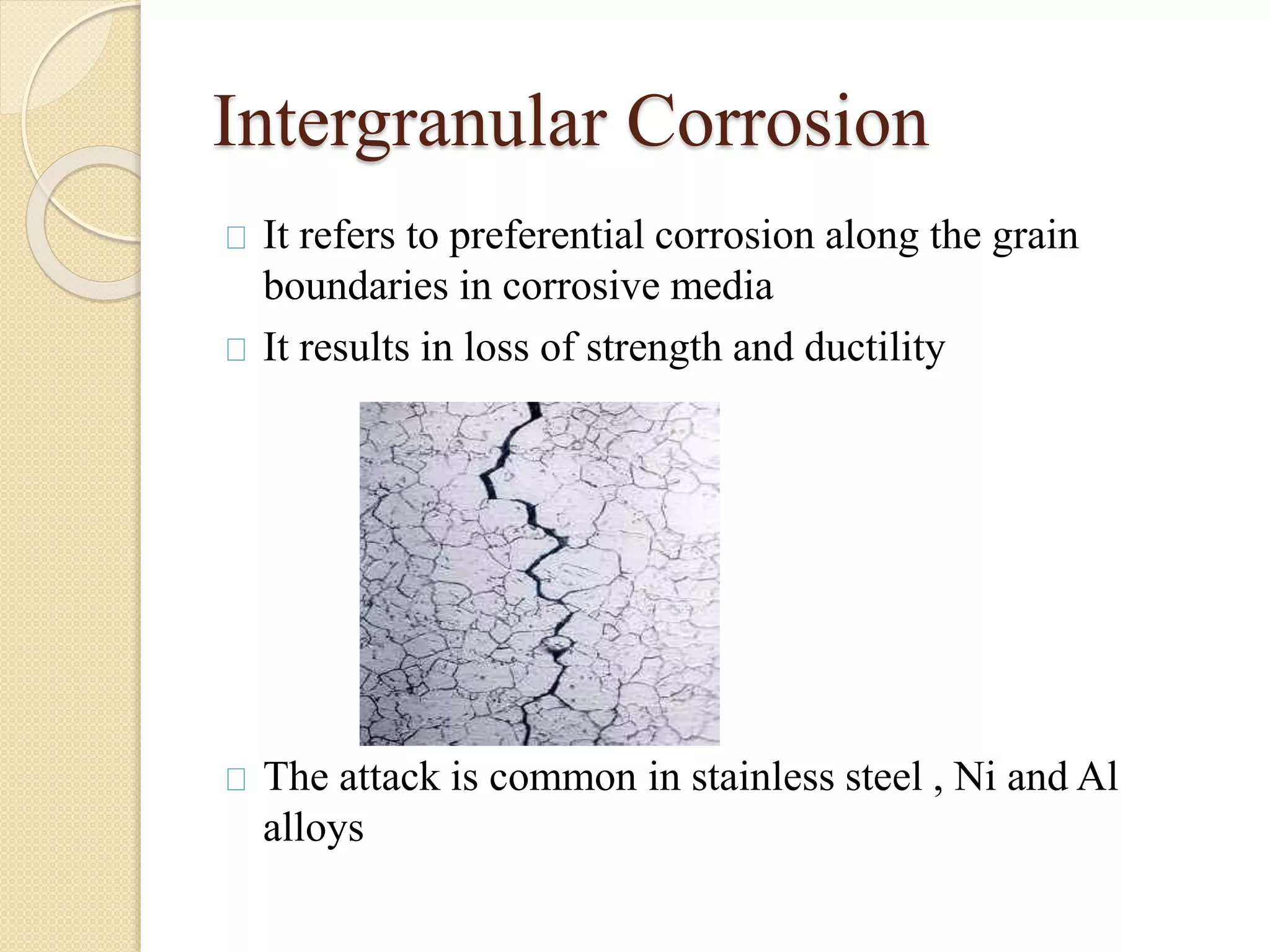
It refers to preferential corrosion along the grain 
boundaries in corrosive media 
It results in loss of strength and ductility 
The attack is common in stainless steel , Ni and Al 
alloys
Tests for Intergranular Stress 
Corrosion 
The different tests that we use are 
Oxalic Etch Test 
Streicher test 
Huey test 
Strauss test
Oxalic Etch Test 
The oxalic acid etch test is a rapid method of screening 
those specimens of certain stainless steel grades. The 
test is used for acceptance but not rejection of material 
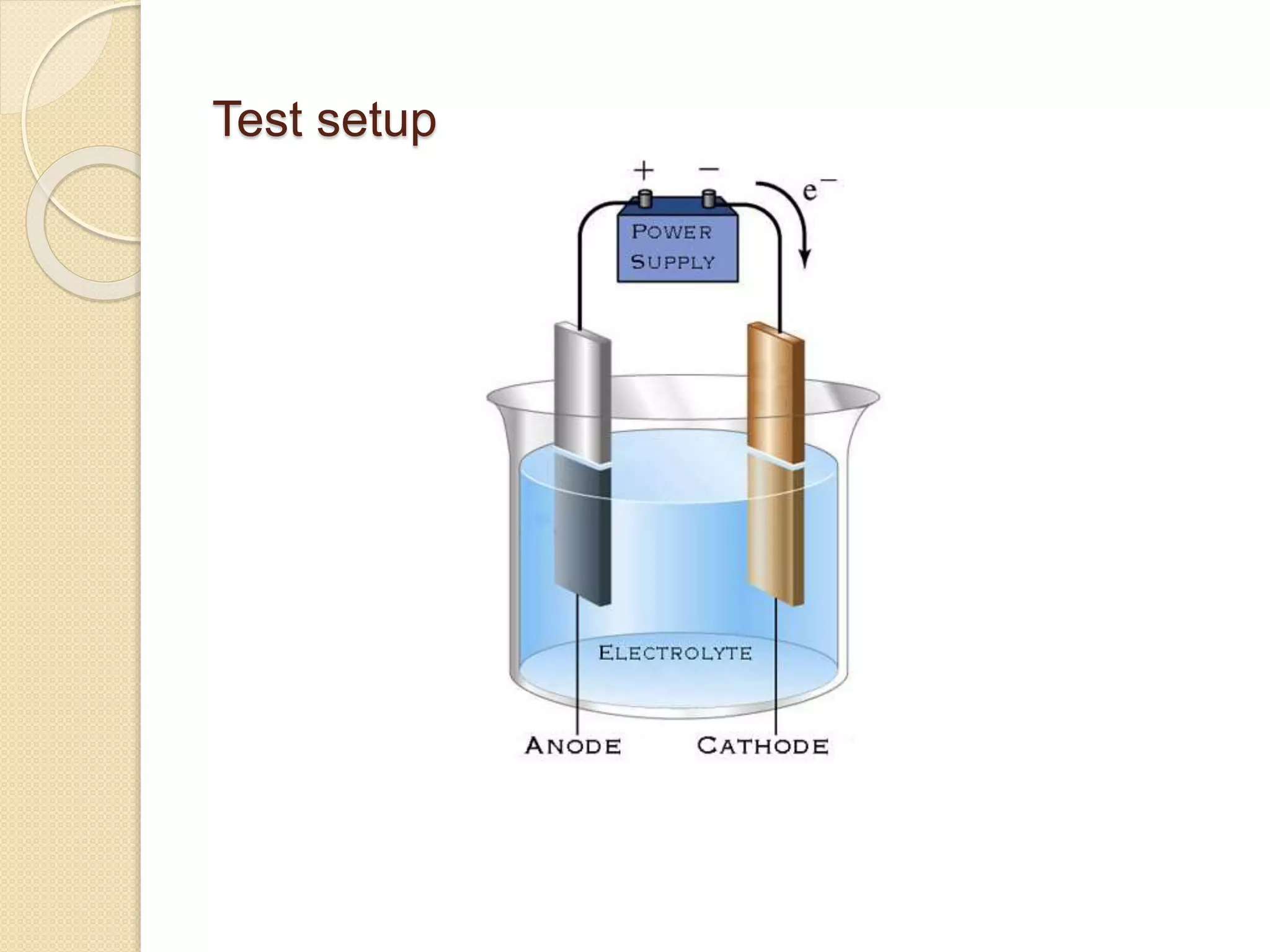
In an environment of 10% H2C2O4 an anodic current of 
1A is applied for 1.5 minutes at room temperature to a 
polished sample. 
By microscopic analysis it is determined if the 
specimen needs to undergo further testing or if it is not 
sensitized. 
If the grain boundaries appear as ditches in , it indicates 
that the sample needs further testing.
Test setup
Streicher test 
This test is based on weight loss determinations and 
provides a quantitative measure of the relative 
performance of the material evaluated. 
The procedure includes subjecting a specimen to a 120 
hour boil in 2.5% ferric sulfate - 50% sulfuric acid. This 
procedure measures the susceptibility of stainless steels 
and nickel alloys to inter granular attack 
Streicher testing is carried out on samples from finished 
tubes in the as-delivered condition or on material that has 
been sensitized.
Huey Test 
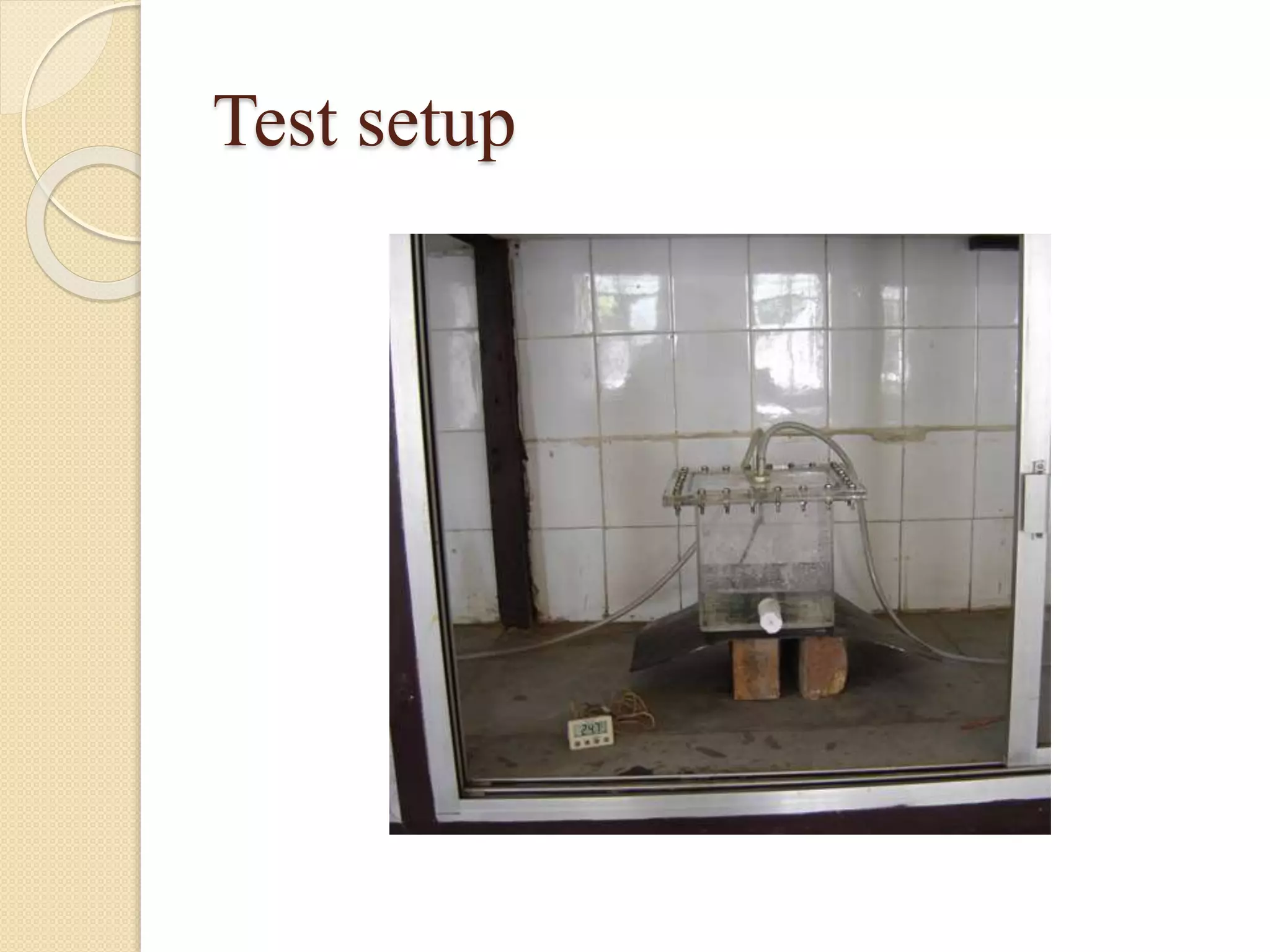
The specimens are boiled for five periods, each of 48 
hours, in a 65 per cent solution of nitric acid. 
The corrosion rate during each boiling period is 
calculated from the decrease in the weight of the 
specimens. 
Properly interpreted, the results can reveal whether or 
not the steel has been heat-treated in the correct manner. 
The Huey test environment is strongly oxidizing, and, is 
only used as a check on whether the material has been 
correctly heat treated.
Test setup
Strauss test 
The Strauss test is a standard practice for detecting the 
susceptibility of austenitic stainless steels to Intergranular attack. 
In Strauss test procedure, the samples are boiled in a solution of 
6% copper sulphate and 16 % sulphuric acid 
The test time is 24 hours and the evaluation consists of a visual 
examination for cracks originating from intergranular corrosion 
attacks. 
The samples are usually bent before examination. If cracks are 
suspected to arise from poor ductility, even in unsensitized 
samples, a similar but unexposed sample should be used for 
reference. 
This test is based on a visual examination of the bent specimen.
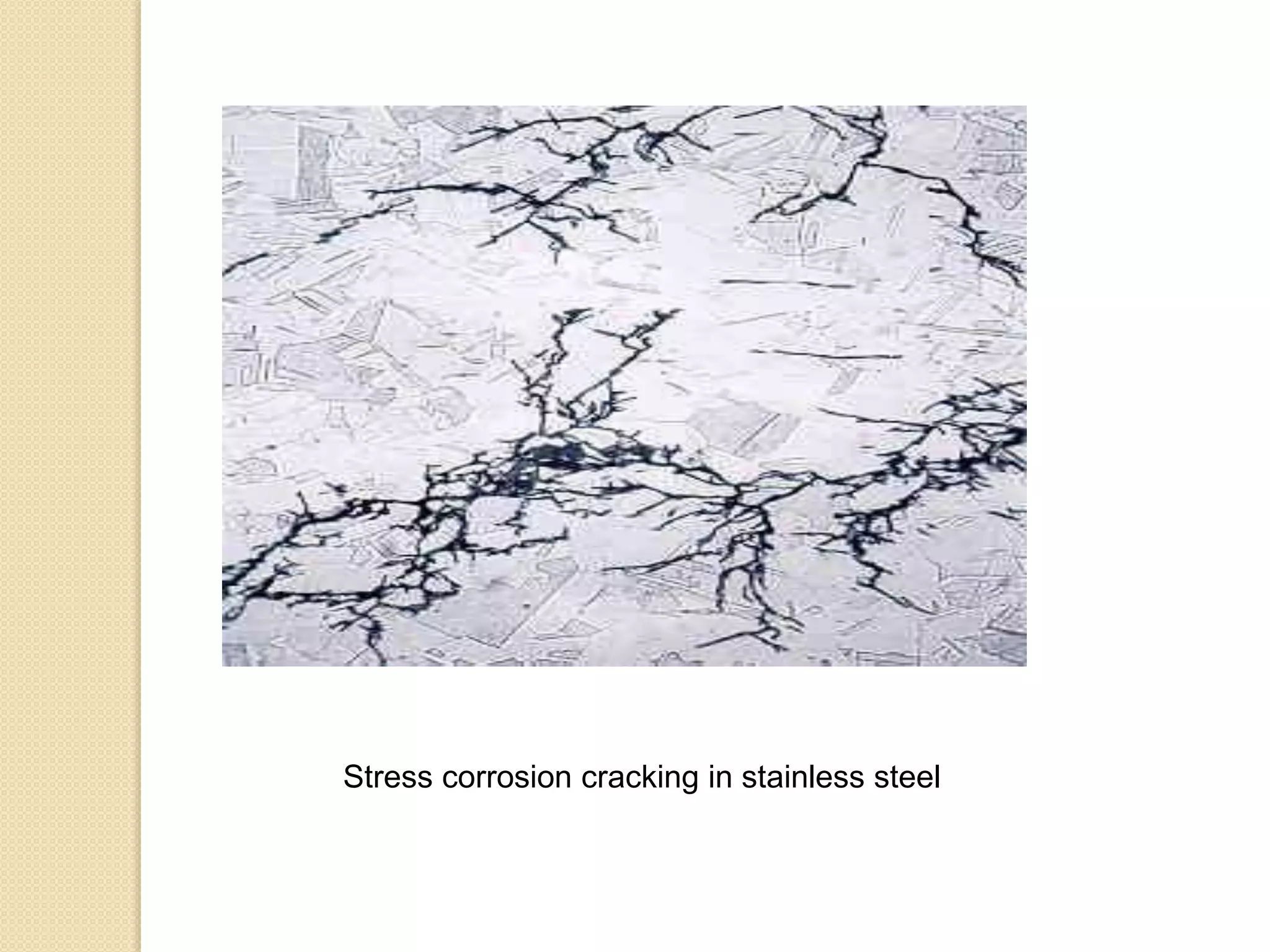
Stress Corrosion Cracking 
Failure of metal resulting from joint action of 
◦ Stress 
◦ Chemical attack 
Initiation and propagation of cracks without 
any outside evidence of corrosion 
Sudden and unpredictable failure: 
Catastrophic
Stress corrosion cracking in stainless steel
Tests for Stress Corrosion Cracking 
Constant stress test 
Fracture mechanics test 
Slow strain rate test
Constant stress test 
Constant stress or constant displacement tests essentially 
describe a specimen and a loading method that stresses 
the specimen while exposed to the solution. 
The susceptibility to SCC is then assessed by the time 
taken for failure of the specimen, or the development of 
cracks in the surface of the specimen. 
A common constant displacement test use a U-shaped 
specimen, produced by bending a flat plate, and then 
stressed by drawing the arms of the U together with a 
loading bolt (known as a U-bend test).
Fracture mechanics test 
Fracture mechanics tests use a specimen with a pre 
existing crack. 
The tests may be evaluated simply by recording the time 
to failure, but it is more common to measure the change 
in length of the crack with time, and thereby derive a 
graph of crack growth rate as a function of stress
Slow strain rate test 
The slow strain rate test, or, more accurately, the 
constant extension rate test, applies a slow rate of 
extension to a specimen. 
This ensures that there is a continuing plastic strain at 
the surface of the specimen, and encourages the 
initiation and growth of stress corrosion cracks. 
The result of the test is evaluated in terms of the time 
taken for failure to occur, or the appearance of the 
fracture surface. 
The slow strain test is normally applied to smooth 
tensile specimens, although pre-cracked samples may 
also be used
Reference 
Zaki Ahmad, Principles of corrosion 
engineering and corrosion control, Sept 
2006, Elsevier science and technology 
books. 
www.tcreng.com

Tests for intergranular corrosion and stress corrosion cracking

  • 1.
    TESTS FOR SUSCEPTIBILITYOF INTERGRANULAR CORROSION AND STRESS CORROSION CRACKING Presented by Nikhil Koshy Jacob Industrial Metallurgy 14MY33
  • 2.
    CONTENTS Intergranular corrosion Oxalic Etch Test Streicher test Huey test Strauss test Stress Corrosion Cracking Constant stress test Fracture mechanics test Slow strain rate test
  • 3.
    Intergranular Corrosion Itrefers to preferential corrosion along the grain boundaries in corrosive media It results in loss of strength and ductility The attack is common in stainless steel , Ni and Al alloys
  • 4.
    Tests for IntergranularStress Corrosion The different tests that we use are Oxalic Etch Test Streicher test Huey test Strauss test
  • 5.
    Oxalic Etch Test The oxalic acid etch test is a rapid method of screening those specimens of certain stainless steel grades. The test is used for acceptance but not rejection of material In an environment of 10% H2C2O4 an anodic current of 1A is applied for 1.5 minutes at room temperature to a polished sample. By microscopic analysis it is determined if the specimen needs to undergo further testing or if it is not sensitized. If the grain boundaries appear as ditches in , it indicates that the sample needs further testing.
  • 6.
  • 7.
    Streicher test Thistest is based on weight loss determinations and provides a quantitative measure of the relative performance of the material evaluated. The procedure includes subjecting a specimen to a 120 hour boil in 2.5% ferric sulfate - 50% sulfuric acid. This procedure measures the susceptibility of stainless steels and nickel alloys to inter granular attack Streicher testing is carried out on samples from finished tubes in the as-delivered condition or on material that has been sensitized.
  • 8.
    Huey Test Thespecimens are boiled for five periods, each of 48 hours, in a 65 per cent solution of nitric acid. The corrosion rate during each boiling period is calculated from the decrease in the weight of the specimens. Properly interpreted, the results can reveal whether or not the steel has been heat-treated in the correct manner. The Huey test environment is strongly oxidizing, and, is only used as a check on whether the material has been correctly heat treated.
  • 9.
  • 10.
    Strauss test TheStrauss test is a standard practice for detecting the susceptibility of austenitic stainless steels to Intergranular attack. In Strauss test procedure, the samples are boiled in a solution of 6% copper sulphate and 16 % sulphuric acid The test time is 24 hours and the evaluation consists of a visual examination for cracks originating from intergranular corrosion attacks. The samples are usually bent before examination. If cracks are suspected to arise from poor ductility, even in unsensitized samples, a similar but unexposed sample should be used for reference. This test is based on a visual examination of the bent specimen.
  • 11.
    Stress Corrosion Cracking Failure of metal resulting from joint action of ◦ Stress ◦ Chemical attack Initiation and propagation of cracks without any outside evidence of corrosion Sudden and unpredictable failure: Catastrophic
  • 12.
    Stress corrosion crackingin stainless steel
  • 13.
    Tests for StressCorrosion Cracking Constant stress test Fracture mechanics test Slow strain rate test
  • 14.
    Constant stress test Constant stress or constant displacement tests essentially describe a specimen and a loading method that stresses the specimen while exposed to the solution. The susceptibility to SCC is then assessed by the time taken for failure of the specimen, or the development of cracks in the surface of the specimen. A common constant displacement test use a U-shaped specimen, produced by bending a flat plate, and then stressed by drawing the arms of the U together with a loading bolt (known as a U-bend test).
  • 15.
    Fracture mechanics test Fracture mechanics tests use a specimen with a pre existing crack. The tests may be evaluated simply by recording the time to failure, but it is more common to measure the change in length of the crack with time, and thereby derive a graph of crack growth rate as a function of stress
  • 16.
    Slow strain ratetest The slow strain rate test, or, more accurately, the constant extension rate test, applies a slow rate of extension to a specimen. This ensures that there is a continuing plastic strain at the surface of the specimen, and encourages the initiation and growth of stress corrosion cracks. The result of the test is evaluated in terms of the time taken for failure to occur, or the appearance of the fracture surface. The slow strain test is normally applied to smooth tensile specimens, although pre-cracked samples may also be used
  • 17.
    Reference Zaki Ahmad,Principles of corrosion engineering and corrosion control, Sept 2006, Elsevier science and technology books. www.tcreng.com