TEMPERATURE
 Normal human body temperature, also known as
normothermia or euthermia, depends upon the place in the
body at which the measurement is made, the time of day, as
well as the activity level of the person.
 The body temperature of a healthy person varies during the
day by about 0.5 °C (0.9 °F) with lower temperatures in the
morning and higher temperatures in the late afternoon and
evening
 Generally: 36.8° ± 0.5 °C.
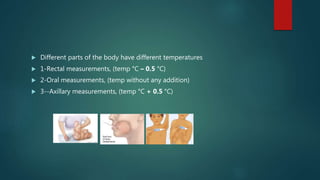
 Different parts of the body have different temperatures
 1-Rectal measurements, (temp °C – 0.5 °C)
 2-Oral measurements, (temp without any addition)
 3--Axillary measurements, (temp °C + 0.5 °C)
classification
Hypothermia <35.0 °C
Normal 36.5–37.5 °C
Fever >37.5–38.3 °C
Hyperthermia >37.5–39.3 °C
Hyperpyrexia >40.0–41.5 °C
Hypothermia
 Is usually due to excessive exposure to cold air or water. Symptoms
usually appear when the body's core temperature drops by 1-2 ° below
normal temperature.
Hyperthermia
 It is usually caused by prolonged exposure to high temperatures. The
heat-regulating mechanisms of the body eventually become
overwhelmed and unable to deal effectively with the heat, causing the
body temperature to climb uncontrollably. Hyperthermia at or above
about 40 °C (104 °F) is a life-threatening medical emergency that requires
immediate treatment. Common symptoms include headache, confusion,
and fatigue. If sweating has resulted in dehydration, then the affected
person may have dry, red skin.
Fever
 An early morning temperature higher than 37.2 °C (> 98.9 °F) or a late
afternoon temperature higher than 37.7 °C (> 99.9 °F) is considered a
fever
Causes
 1-infection (ex: tonsillitis)
 2-a malignant tumor
 3-extreme sunburn
 4-Some immunizations, such as the diphtheria, tetanus and a cellular
pertussis (DTaP) or pneumococcal vaccine
 5-Some medications, such as antibiotics
Clinical features (clinical presentation)
of fever in general
 1-Feeling hot
 2-Headache
 3-Rapid heart rate and/or palpitation
 4- Intermittent sweats
 5- Shivering, shaking and chills
 6- Aching muscles and joints
 7- Loss of appetite
 8- Feeling faint, dizzy
Diagnosis
Investigations are guided by clinical examination and duration of fever.
They may include examination of blood, urine, sputum, stool, cultures, serological tests, x ray, ultrasound etc.

 Blood examination. Ex: Complete blood counts including Hb, ESR-can give vital information including type and
severity of infection.

 Sputum examination in case of pneumonia, bronchitis can isolate organism causing chest infection.

 Urine examination including microscopic and culture for diagnosis of UTI (Urinary tract infection).

 Stool examination for diagnosis of dysentery, cholera etc.

 Cultures if positive give confirmatory evidence of infection by a particular organism and also provide a list of
antibiotics which will be most effective against the causative agent. Cultures of blood, sputum, throat swab, pus,
urine , stool can be done.

 X ray can diagnose chest infection, sinusitis, tuberculosis, bone infection.
 Treatment: usually treat the underlying cause

Temperature

  • 1.
  • 2.
     Normal humanbody temperature, also known as normothermia or euthermia, depends upon the place in the body at which the measurement is made, the time of day, as well as the activity level of the person.  The body temperature of a healthy person varies during the day by about 0.5 °C (0.9 °F) with lower temperatures in the morning and higher temperatures in the late afternoon and evening  Generally: 36.8° ± 0.5 °C.
  • 3.
     Different partsof the body have different temperatures  1-Rectal measurements, (temp °C – 0.5 °C)  2-Oral measurements, (temp without any addition)  3--Axillary measurements, (temp °C + 0.5 °C)
  • 4.
    classification Hypothermia <35.0 °C Normal36.5–37.5 °C Fever >37.5–38.3 °C Hyperthermia >37.5–39.3 °C Hyperpyrexia >40.0–41.5 °C
  • 5.
    Hypothermia  Is usuallydue to excessive exposure to cold air or water. Symptoms usually appear when the body's core temperature drops by 1-2 ° below normal temperature.
  • 6.
    Hyperthermia  It isusually caused by prolonged exposure to high temperatures. The heat-regulating mechanisms of the body eventually become overwhelmed and unable to deal effectively with the heat, causing the body temperature to climb uncontrollably. Hyperthermia at or above about 40 °C (104 °F) is a life-threatening medical emergency that requires immediate treatment. Common symptoms include headache, confusion, and fatigue. If sweating has resulted in dehydration, then the affected person may have dry, red skin.
  • 7.
    Fever  An earlymorning temperature higher than 37.2 °C (> 98.9 °F) or a late afternoon temperature higher than 37.7 °C (> 99.9 °F) is considered a fever
  • 8.
    Causes  1-infection (ex:tonsillitis)  2-a malignant tumor  3-extreme sunburn  4-Some immunizations, such as the diphtheria, tetanus and a cellular pertussis (DTaP) or pneumococcal vaccine  5-Some medications, such as antibiotics
  • 9.
    Clinical features (clinicalpresentation) of fever in general  1-Feeling hot  2-Headache  3-Rapid heart rate and/or palpitation  4- Intermittent sweats  5- Shivering, shaking and chills  6- Aching muscles and joints  7- Loss of appetite  8- Feeling faint, dizzy
  • 10.
    Diagnosis Investigations are guidedby clinical examination and duration of fever. They may include examination of blood, urine, sputum, stool, cultures, serological tests, x ray, ultrasound etc.
  • 11.
      Blood examination.Ex: Complete blood counts including Hb, ESR-can give vital information including type and severity of infection.   Sputum examination in case of pneumonia, bronchitis can isolate organism causing chest infection.   Urine examination including microscopic and culture for diagnosis of UTI (Urinary tract infection).   Stool examination for diagnosis of dysentery, cholera etc.   Cultures if positive give confirmatory evidence of infection by a particular organism and also provide a list of antibiotics which will be most effective against the causative agent. Cultures of blood, sputum, throat swab, pus, urine , stool can be done.   X ray can diagnose chest infection, sinusitis, tuberculosis, bone infection.  Treatment: usually treat the underlying cause