5º PRIMARY
SPAIN
SPAIN
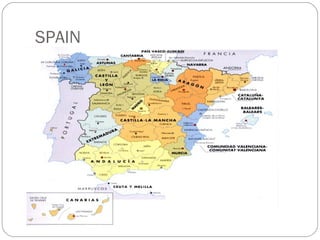
Europe is my continent.
Spain is in Europe
Spain is my country
In my country there are 17 Autonomous
Communities and 2 Autonomous Cities
Spain is in the south – west of Europe
EUROPE
SPAIN
EXTREMADURA
Our Autonomous Community is EXTREMADURA
Extremadura is divided in TWO PROVINCES: Cáceres and
Badajoz
CAPITALS
Santiago de Compostela is the capital of Galicia
Oviedo is the capital of Asturias.
Santander is the capital of Cantabria
Vitoria is the capital of Pais Vasco.
Pamplona is the capital of Navarra
Zaragoza is the capital of Aragón
Barcelona is the capital of Cataluya
Valencia is the capital of Valencia community
Valladolid is the capital of Castilla- Leon
Toledo is the capital of Castilla-La Mancha
Logroño is the capital of La Rioja
CAPITALS
Sevilla is the capital of Andalucia
Murcia is the capital of Murcia
Tenerife and Las Palmas de Gran Canaria are the capital of
Canarias.
Palma de Mallorca is the capital of Las Baleares .
Madrid is the capital of Madrid
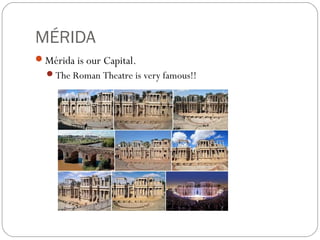
MÉRIDA is the capital of Extremadura
MÉRIDA
Mérida is our Capital.
The Roman Theatre is very famous!!
QUESTIONS
Have you ever been in Mérida?
Which is the capital of Caceres province?
Which is the capital of Badajoz province?
Have you ever been in Madrid? Would you like it?
ACTIVITIES
Draw the Spain flag.
Complete the sentences.
Santander is the capital of __________
Vitoria is the capital of___________
Pamplona is the capital of _________
Zaragoza is the capital of ________
Barcelona is the capital of ______
Valencia is the capital of ______
_______ is the capital of EXTREMADURA
JOURNAL
How do you feel today?
What have you learnt today?
SPANISH CONSTITUTION OF 1978
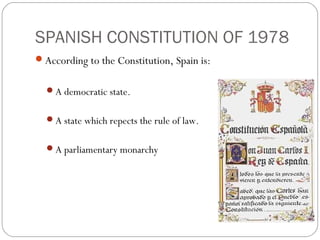
According to the Constitution, Spain is:
A democratic state.
A state which repects the rule of law.
A parliamentary monarchy
THE DIVISION OF POWER IN SPAIN
The Parliament has got LEGISLATIVE POWER. It passes
new laws and makes changes to old laws.
The goverment has got EXECUTIVE POWER. It directs and
organises the way that the state Works.
Judges haves got JUDICIAL POWER: They interpret the
laws and decide if people are breaking them.
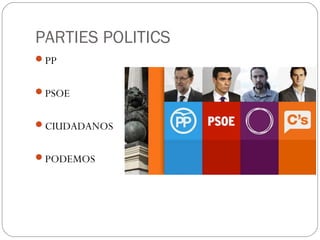
PARTIES POLITICS
PP
PSOE
CIUDADANOS
PODEMOS
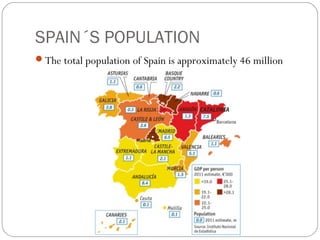
SPAIN´S POPULATION
The total population of Spain is approximately 46 million
POPULATION GROUPS
We can divide the population by age:
Children: 0-12 years old.
Tenegeers: From 13 to 18 years old.
Adults: From 18 to 64 years old.
Ederly people: 65 years old or more.
QUESTIONS (SPEAKING).
Which are the power in Spain?
Which are the communities with more population in Spain?
How many population are there in Spain?
ACTIVITIES
Match the activities with the forms of power:
Making decisions to direct and organise the state Legislative power
Passing new laws by voting on them in Parliament Judicial
power
Interpreting the laws and deciding who breaking them Executive power
ACTIVITIES
Make a list the autonomous communities that have got
One province
Two provinces
Three provinces
More tan three provinces
ACTIVITIES
Answer the questions in your notebook.
Is the population of Spain mostly Young or mostly old?
Do most spanish live in urban áreas or rural áreas?
JOURNAL
Do you like this unit?
Do you like Extremadura? Why?
POPULATION DENSITY
What is it?
Population density is the ratio between the number of
inhabitants in a specific area and the size of the area.
POPULATION DENSITY IN SPAIN
High-density áreas
The Atlantic, Cantabrian and Mediterranean coast.
Madrid, Barcelona, Valencia, Sevilla, Bilbao and other
provincial capitals.
Low- density áreas
Rural and mountainous areas.
Extremadura
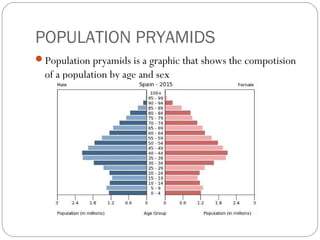
POPULATION PRYAMIDS
Population pryamids is a graphic that shows the compotision
of a population by age and sex
THE EUROPEAN UNION
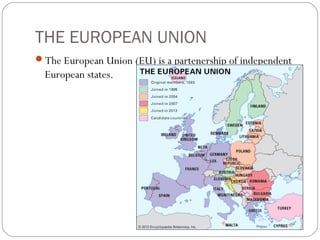
The European Union (EU) is a partenership of independent
European states.
THE EUROPEAN UNION
The countries established the European Econocmic
Community in 1957.
Now, there are 29 member states.
POPULATION IN THE EU
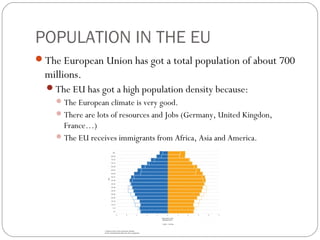
The European Union has got a total population of about 700
millions.
The EU has got a high population density because:
The European climate is very good.
There are lots of resources and Jobs (Germany, United Kingdon,
France…)
The EU receives immigrants from Africa, Asia and America.
ECONOMY
The EU is one of the world´s great economic powers.
Service sector. This is the most important. (tourism, transport,
banking and financial services).
The industrial sector is very important too. This sector is
furnitures, industries…( England, Germany)
The primary sector activities, such as agriculture and fishing
(Spain).
SOCIETY
European society is based on DEMOCRATIC VALUES and
respect for HUMAN RIGHT.
ACTIVITY
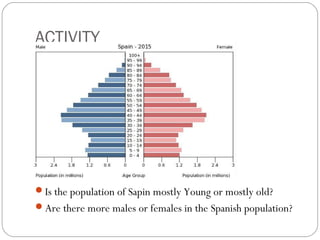
Is the population of Sapin mostly Young or mostly old?
Are there more males or females in the Spanish population?
ACTIVITIES
2 Choose the correct options:
What year was the EU created?
1957 1975 1990
How many countries belong to the EU at the moment?
12 20 29
ACTIVITIES
3.- Draw a maps of UE

Tema 3

  • 1.
  • 2.
    SPAIN Europe is mycontinent. Spain is in Europe Spain is my country In my country there are 17 Autonomous Communities and 2 Autonomous Cities Spain is in the south – west of Europe
  • 3.
  • 4.
  • 5.
    EXTREMADURA Our Autonomous Communityis EXTREMADURA Extremadura is divided in TWO PROVINCES: Cáceres and Badajoz
  • 6.
    CAPITALS Santiago de Compostelais the capital of Galicia Oviedo is the capital of Asturias. Santander is the capital of Cantabria Vitoria is the capital of Pais Vasco. Pamplona is the capital of Navarra Zaragoza is the capital of Aragón Barcelona is the capital of Cataluya Valencia is the capital of Valencia community Valladolid is the capital of Castilla- Leon Toledo is the capital of Castilla-La Mancha Logroño is the capital of La Rioja
  • 7.
    CAPITALS Sevilla is thecapital of Andalucia Murcia is the capital of Murcia Tenerife and Las Palmas de Gran Canaria are the capital of Canarias. Palma de Mallorca is the capital of Las Baleares . Madrid is the capital of Madrid MÉRIDA is the capital of Extremadura
  • 8.
    MÉRIDA Mérida is ourCapital. The Roman Theatre is very famous!!
  • 10.
    QUESTIONS Have you everbeen in Mérida? Which is the capital of Caceres province? Which is the capital of Badajoz province? Have you ever been in Madrid? Would you like it?
  • 11.
    ACTIVITIES Draw the Spainflag. Complete the sentences. Santander is the capital of __________ Vitoria is the capital of___________ Pamplona is the capital of _________ Zaragoza is the capital of ________ Barcelona is the capital of ______ Valencia is the capital of ______ _______ is the capital of EXTREMADURA
  • 12.
    JOURNAL How do youfeel today? What have you learnt today?
  • 13.
    SPANISH CONSTITUTION OF1978 According to the Constitution, Spain is: A democratic state. A state which repects the rule of law. A parliamentary monarchy
  • 14.
    THE DIVISION OFPOWER IN SPAIN The Parliament has got LEGISLATIVE POWER. It passes new laws and makes changes to old laws. The goverment has got EXECUTIVE POWER. It directs and organises the way that the state Works. Judges haves got JUDICIAL POWER: They interpret the laws and decide if people are breaking them.
  • 15.
  • 16.
    SPAIN´S POPULATION The totalpopulation of Spain is approximately 46 million
  • 17.
    POPULATION GROUPS We candivide the population by age: Children: 0-12 years old. Tenegeers: From 13 to 18 years old. Adults: From 18 to 64 years old. Ederly people: 65 years old or more.
  • 18.
    QUESTIONS (SPEAKING). Which arethe power in Spain? Which are the communities with more population in Spain? How many population are there in Spain?
  • 19.
    ACTIVITIES Match the activitieswith the forms of power: Making decisions to direct and organise the state Legislative power Passing new laws by voting on them in Parliament Judicial power Interpreting the laws and deciding who breaking them Executive power
  • 20.
    ACTIVITIES Make a listthe autonomous communities that have got One province Two provinces Three provinces More tan three provinces
  • 21.
    ACTIVITIES Answer the questionsin your notebook. Is the population of Spain mostly Young or mostly old? Do most spanish live in urban áreas or rural áreas?
  • 22.
    JOURNAL Do you likethis unit? Do you like Extremadura? Why?
  • 23.
    POPULATION DENSITY What isit? Population density is the ratio between the number of inhabitants in a specific area and the size of the area.
  • 24.
    POPULATION DENSITY INSPAIN High-density áreas The Atlantic, Cantabrian and Mediterranean coast. Madrid, Barcelona, Valencia, Sevilla, Bilbao and other provincial capitals. Low- density áreas Rural and mountainous areas. Extremadura
  • 25.
    POPULATION PRYAMIDS Population pryamidsis a graphic that shows the compotision of a population by age and sex
  • 26.
    THE EUROPEAN UNION TheEuropean Union (EU) is a partenership of independent European states.
  • 27.
    THE EUROPEAN UNION Thecountries established the European Econocmic Community in 1957. Now, there are 29 member states.
  • 28.
    POPULATION IN THEEU The European Union has got a total population of about 700 millions. The EU has got a high population density because: The European climate is very good. There are lots of resources and Jobs (Germany, United Kingdon, France…) The EU receives immigrants from Africa, Asia and America.
  • 29.
    ECONOMY The EU isone of the world´s great economic powers. Service sector. This is the most important. (tourism, transport, banking and financial services). The industrial sector is very important too. This sector is furnitures, industries…( England, Germany) The primary sector activities, such as agriculture and fishing (Spain).
  • 30.
    SOCIETY European society isbased on DEMOCRATIC VALUES and respect for HUMAN RIGHT.
  • 31.
    ACTIVITY Is the populationof Sapin mostly Young or mostly old? Are there more males or females in the Spanish population?
  • 32.
    ACTIVITIES 2 Choose thecorrect options: What year was the EU created? 1957 1975 1990 How many countries belong to the EU at the moment? 12 20 29
  • 33.