TELECONFERENCING:
VIDEO & AUDIO
CONFERENCING
Presented by,
ATHULYA V S
Social Science
Christ Nagar College Of Education
Thiruvallam
CONFERENCING
Conferencing is the participation in a conference
that involves use of a particular Electronic
Technology. It is a meeting for consultation or
discussion like a conference between a student and
his advisor. Conferencing is meeting with your
colleagues using an electronic communications
system such as your phone , your personal
computer, or specialized video conferencing
equipment
TELECONFERENCING
Teleconferencing means meeting through
telecommunication medium. It is a generic
term for linking people between two or
more locations by electronics. There are at
least 6 types of teleconferencing: audio,
audio graphic, computer, video, business
television (BTV), and distance education.
USES OF
TELECONFERENCING
• Move information – Not people
• Save time
• Lower Costs
• Accessible
• Adaptable
• Flexible
• Security
• Unity
• Interactive
DEFECTS OF
TELECONFERENCING
• Lack of body language
• Lack of eye contact
• No visual presentation
• Multitasking drains attention
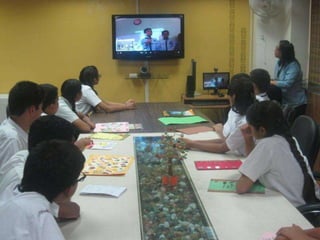
VIDEO CONFERENCING
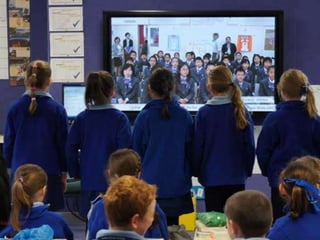
A video conference is a live, visual
connection between two or more
people residing in separate locations
for the purpose of communication. At
its simplest, video conferencing
provides transmission of static images
and test between two locations.
USE OF VIDEO
CONFERENCING
• It enables teacher or limited number of learners need
to connect from different locations at the same time.
• Free download & easy to use software.
• No time constraint
• Specifically useful for a guest speaker who is far away
from face to face class location.
• Easy communication
DISADVANTAGES OF VIDEO
CONFERENCING
• Lack of personal interaction
• Technical problems
• High cost of setup
AUDIO CONFERENCING
Audio conferencing is a telephone meeting
conducted between multiple separate
callers. The type of telephone used can
vary but typically an audio conference
includes attendees that use handheld
wired telephones, conference rooms,
speakerphones, that can be shared by
several people, or individual cellular or
mobile telephones.
BENEFITS OF AUDIO
CONFERENCING
• Record audio for future reference
• Involve more collaboration
• Easy call management
• Cost effective
• More accessible
DISADVANTAGES OF AUDIO
CONFERENCING
• Audio conferencing is meant for listening only. Learners cannot
take down notes which can be used later.
• It can restrict some learners flexibility and independence.
• Poor quality of transmission may make some low and technology
“turn off’’.
• Conversation may be affected by noise.
• Audio conferencing does not allow interactivity with large group
of participants.
Tele conferencing
Tele conferencing
Tele conferencing
Tele conferencing

Tele conferencing

  • 1.
    TELECONFERENCING: VIDEO & AUDIO CONFERENCING Presentedby, ATHULYA V S Social Science Christ Nagar College Of Education Thiruvallam
  • 2.
    CONFERENCING Conferencing is theparticipation in a conference that involves use of a particular Electronic Technology. It is a meeting for consultation or discussion like a conference between a student and his advisor. Conferencing is meeting with your colleagues using an electronic communications system such as your phone , your personal computer, or specialized video conferencing equipment
  • 3.
    TELECONFERENCING Teleconferencing means meetingthrough telecommunication medium. It is a generic term for linking people between two or more locations by electronics. There are at least 6 types of teleconferencing: audio, audio graphic, computer, video, business television (BTV), and distance education.
  • 4.
    USES OF TELECONFERENCING • Moveinformation – Not people • Save time • Lower Costs • Accessible • Adaptable • Flexible • Security • Unity • Interactive
  • 5.
    DEFECTS OF TELECONFERENCING • Lackof body language • Lack of eye contact • No visual presentation • Multitasking drains attention
  • 6.
    VIDEO CONFERENCING A videoconference is a live, visual connection between two or more people residing in separate locations for the purpose of communication. At its simplest, video conferencing provides transmission of static images and test between two locations.
  • 7.
    USE OF VIDEO CONFERENCING •It enables teacher or limited number of learners need to connect from different locations at the same time. • Free download & easy to use software. • No time constraint • Specifically useful for a guest speaker who is far away from face to face class location. • Easy communication
  • 8.
    DISADVANTAGES OF VIDEO CONFERENCING •Lack of personal interaction • Technical problems • High cost of setup
  • 9.
    AUDIO CONFERENCING Audio conferencingis a telephone meeting conducted between multiple separate callers. The type of telephone used can vary but typically an audio conference includes attendees that use handheld wired telephones, conference rooms, speakerphones, that can be shared by several people, or individual cellular or mobile telephones.
  • 10.
    BENEFITS OF AUDIO CONFERENCING •Record audio for future reference • Involve more collaboration • Easy call management • Cost effective • More accessible
  • 11.
    DISADVANTAGES OF AUDIO CONFERENCING •Audio conferencing is meant for listening only. Learners cannot take down notes which can be used later. • It can restrict some learners flexibility and independence. • Poor quality of transmission may make some low and technology “turn off’’. • Conversation may be affected by noise. • Audio conferencing does not allow interactivity with large group of participants.