Using Assistive TechnologyBy Teresa Dize for ITEC 7530
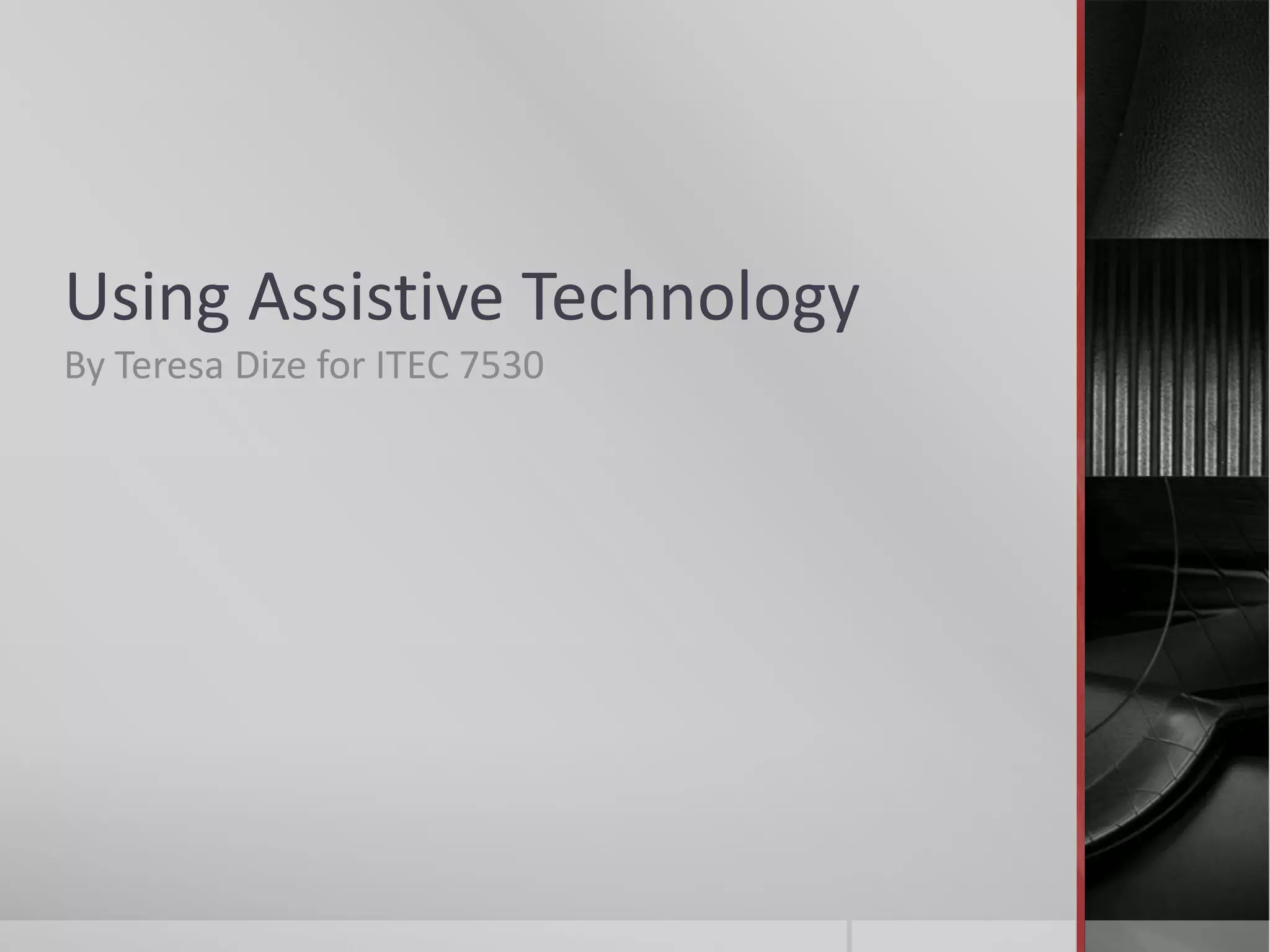
Students with disabilities will require assistive technologyStudents with ADHD will have specific needs to maintain their attention during lessonsOther students may have visual, auditory and other disabilities that require special technologyClassrooms today as well as the instructors who teach within them need to be on the cutting edge of assistive technologyAll students should have the capability of interacting with the instructor & their peers for an optimum learning experience.  This is call inclusion.
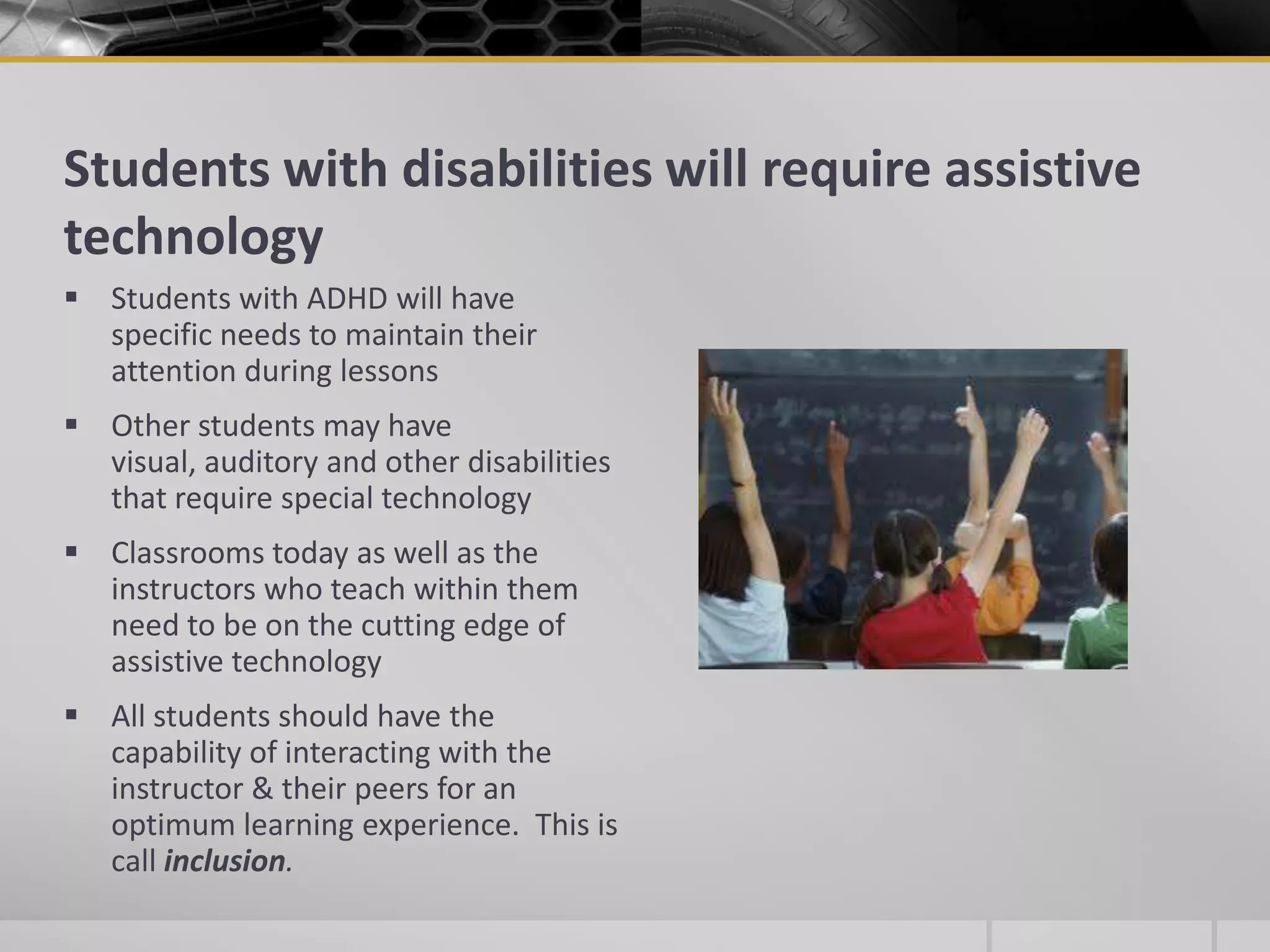
For auditory processing assistance:An excellent technology to have is a computer equipped with speech recognition.  This will allow the instructor to speak and have their speech typed on a computer for the student to read along.Induction loop systems can also be added to classrooms in order to connect with a student’s hearing device and allow the student to manipulate the volume as needed.
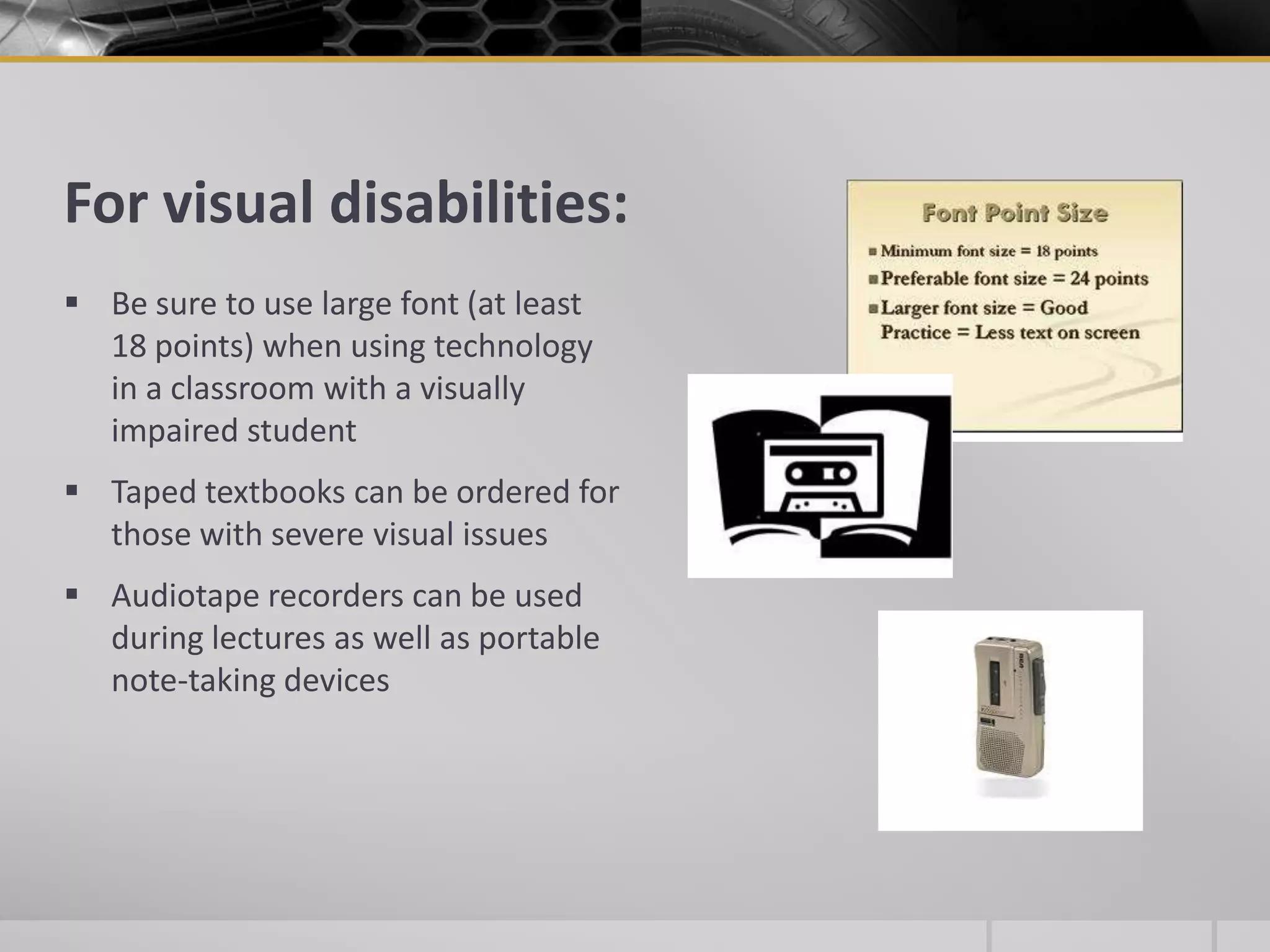
For visual disabilities:Be sure to use large font (at least 18 points) when using technology in a classroom with a visually impaired studentTaped textbooks can be ordered for those with severe visual issuesAudiotape recorders can be used during lectures as well as portable note-taking devices
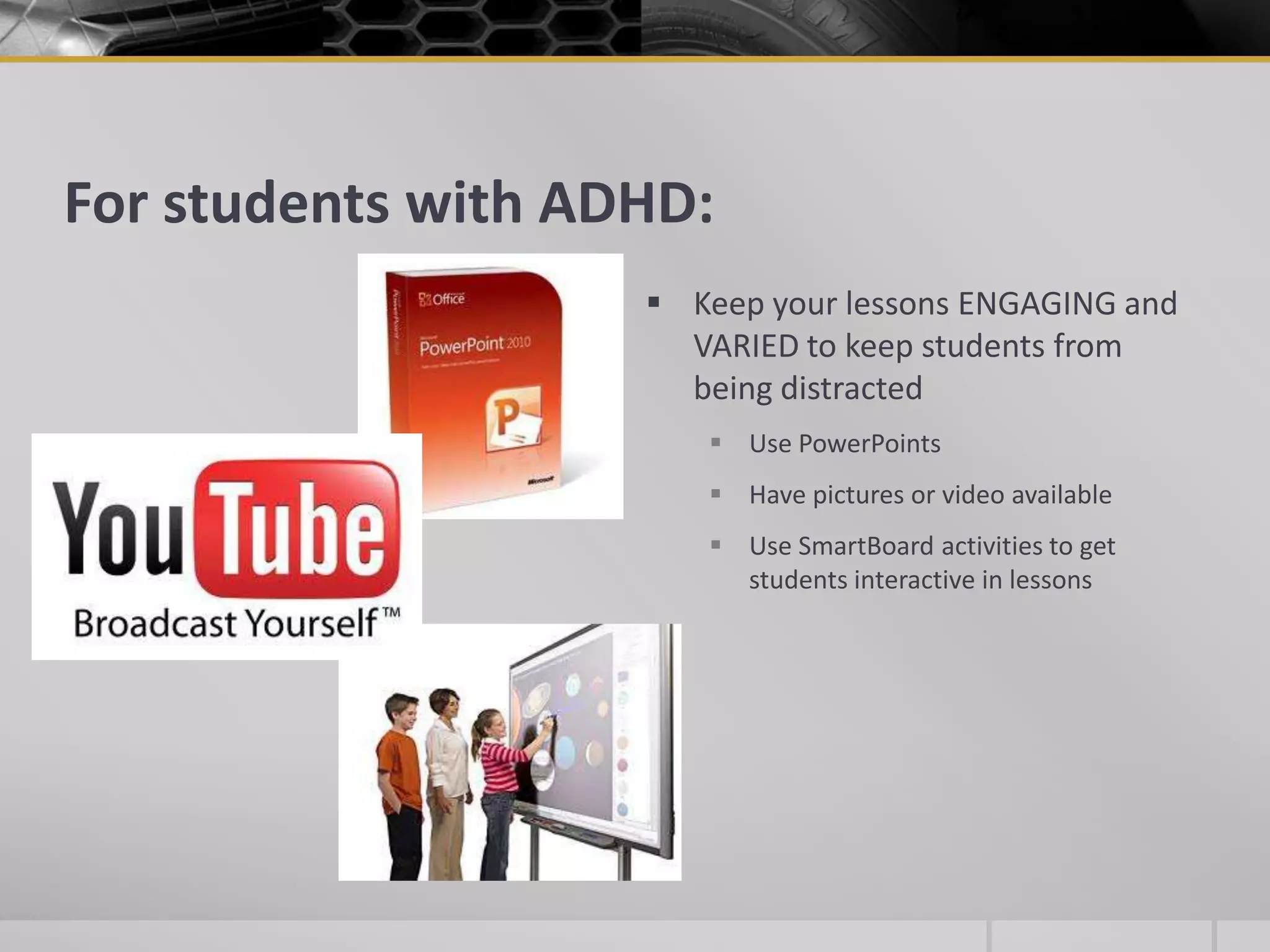
For students with ADHD:Keep your lessons ENGAGING and VARIED to keep students from being distractedUse PowerPointsHave pictures or video availableUse SmartBoard activities to get students interactive in lessons
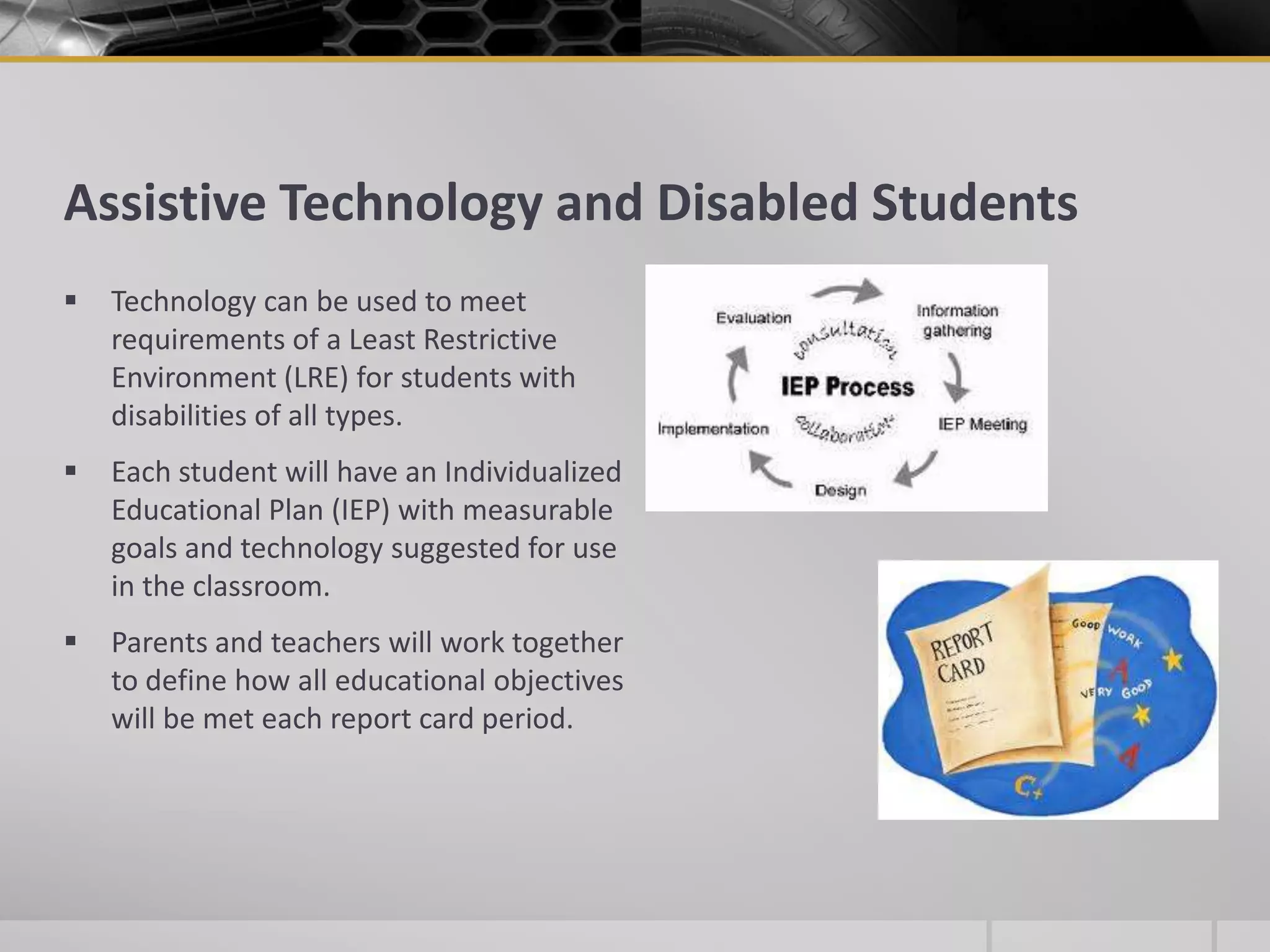
Assistive Technology and Disabled StudentsTechnology can be used to meet requirements of a Least Restrictive Environment (LRE) for students with disabilities of all types.Each student will have an Individualized Educational Plan (IEP) with measurable goals and technology suggested for use in the classroom.Parents and teachers will work together to define how all educational objectives will be met each report card period.
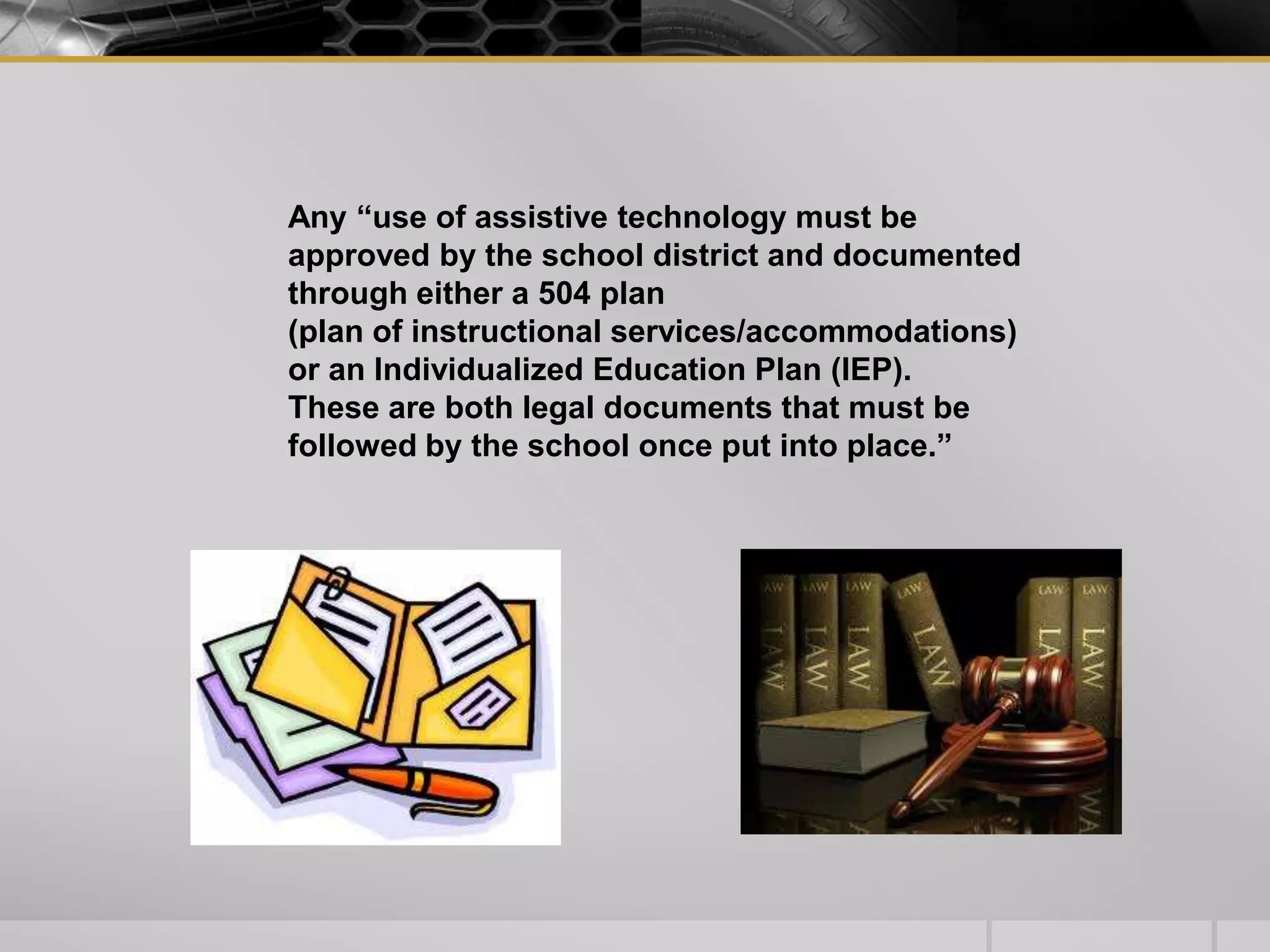
Any “use of assistive technology must be approved by the school district and documented through either a 504 plan (plan of instructional services/accommodations) or an Individualized Education Plan (IEP). These are both legal documents that must be followed by the school once put into place.”
Resources:http://dsp.berkeley.edu/TeachStudentsWithDisab.html#14http://www.gpat.org/index.aspxhttp://www.ehow.com/facts_6320346_technology-adhd.htmlFor a manual from Children and Adults with Attention Deficit/Hyperactivity Disorder(CHADD):  http://www.chadd.org/AM/Template.cfm?Section=StoreFor webinars on instruction methods using assistive technology:http://www.gatfl.org/Webinars.aspx

Using Assistive Technology

  • 1.
    Using Assistive TechnologyByTeresa Dize for ITEC 7530
  • 2.
    Students with disabilitieswill require assistive technologyStudents with ADHD will have specific needs to maintain their attention during lessonsOther students may have visual, auditory and other disabilities that require special technologyClassrooms today as well as the instructors who teach within them need to be on the cutting edge of assistive technologyAll students should have the capability of interacting with the instructor & their peers for an optimum learning experience. This is call inclusion.
  • 3.
    For auditory processingassistance:An excellent technology to have is a computer equipped with speech recognition. This will allow the instructor to speak and have their speech typed on a computer for the student to read along.Induction loop systems can also be added to classrooms in order to connect with a student’s hearing device and allow the student to manipulate the volume as needed.
  • 4.
    For visual disabilities:Besure to use large font (at least 18 points) when using technology in a classroom with a visually impaired studentTaped textbooks can be ordered for those with severe visual issuesAudiotape recorders can be used during lectures as well as portable note-taking devices
  • 5.
    For students withADHD:Keep your lessons ENGAGING and VARIED to keep students from being distractedUse PowerPointsHave pictures or video availableUse SmartBoard activities to get students interactive in lessons
  • 6.
    Assistive Technology andDisabled StudentsTechnology can be used to meet requirements of a Least Restrictive Environment (LRE) for students with disabilities of all types.Each student will have an Individualized Educational Plan (IEP) with measurable goals and technology suggested for use in the classroom.Parents and teachers will work together to define how all educational objectives will be met each report card period.
  • 7.
    Any “use ofassistive technology must be approved by the school district and documented through either a 504 plan (plan of instructional services/accommodations) or an Individualized Education Plan (IEP). These are both legal documents that must be followed by the school once put into place.”
  • 8.
    Resources:http://dsp.berkeley.edu/TeachStudentsWithDisab.html#14http://www.gpat.org/index.aspxhttp://www.ehow.com/facts_6320346_technology-adhd.htmlFor a manualfrom Children and Adults with Attention Deficit/Hyperactivity Disorder(CHADD): http://www.chadd.org/AM/Template.cfm?Section=StoreFor webinars on instruction methods using assistive technology:http://www.gatfl.org/Webinars.aspx