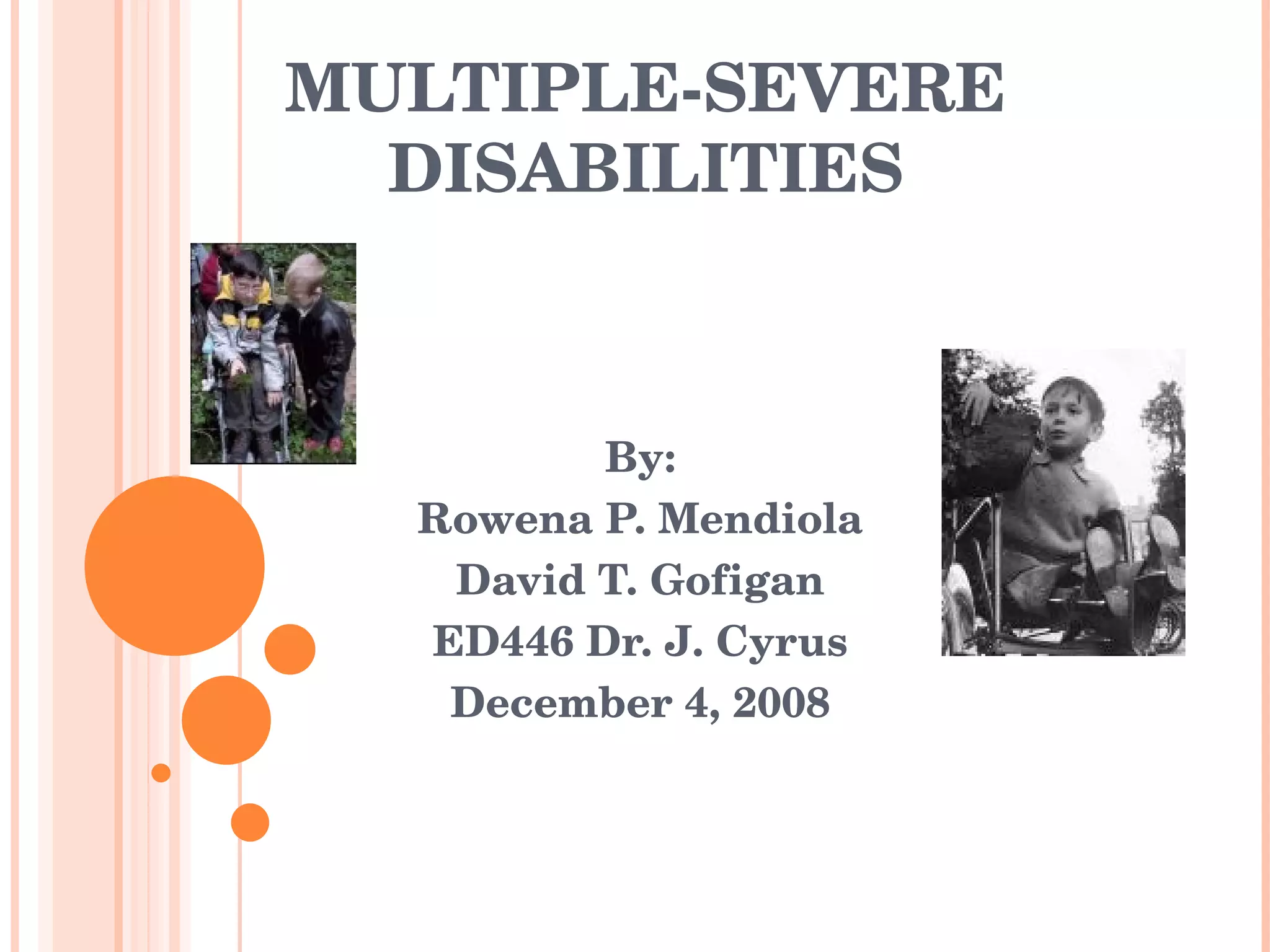
MULTIPLE-SEVERE DISABILITIES By: Rowena P. Mendiola David T. Gofigan ED446 Dr. J. Cyrus December 4, 2008
OBJECTIVES Understand the definition of multiple-severe disabilities Understand the characteristics of students with multiple-severe disabilities Learn different teaching methods
DEFINITION Concomitant impairments (such as mental retardation-blindness, mental retardation-orthopedic impairment, etc), the combination of which causes such severe educational needs, that they cannot be accommodated in special education programs solely for one of the impairments.  The term does not include deaf-blindness.
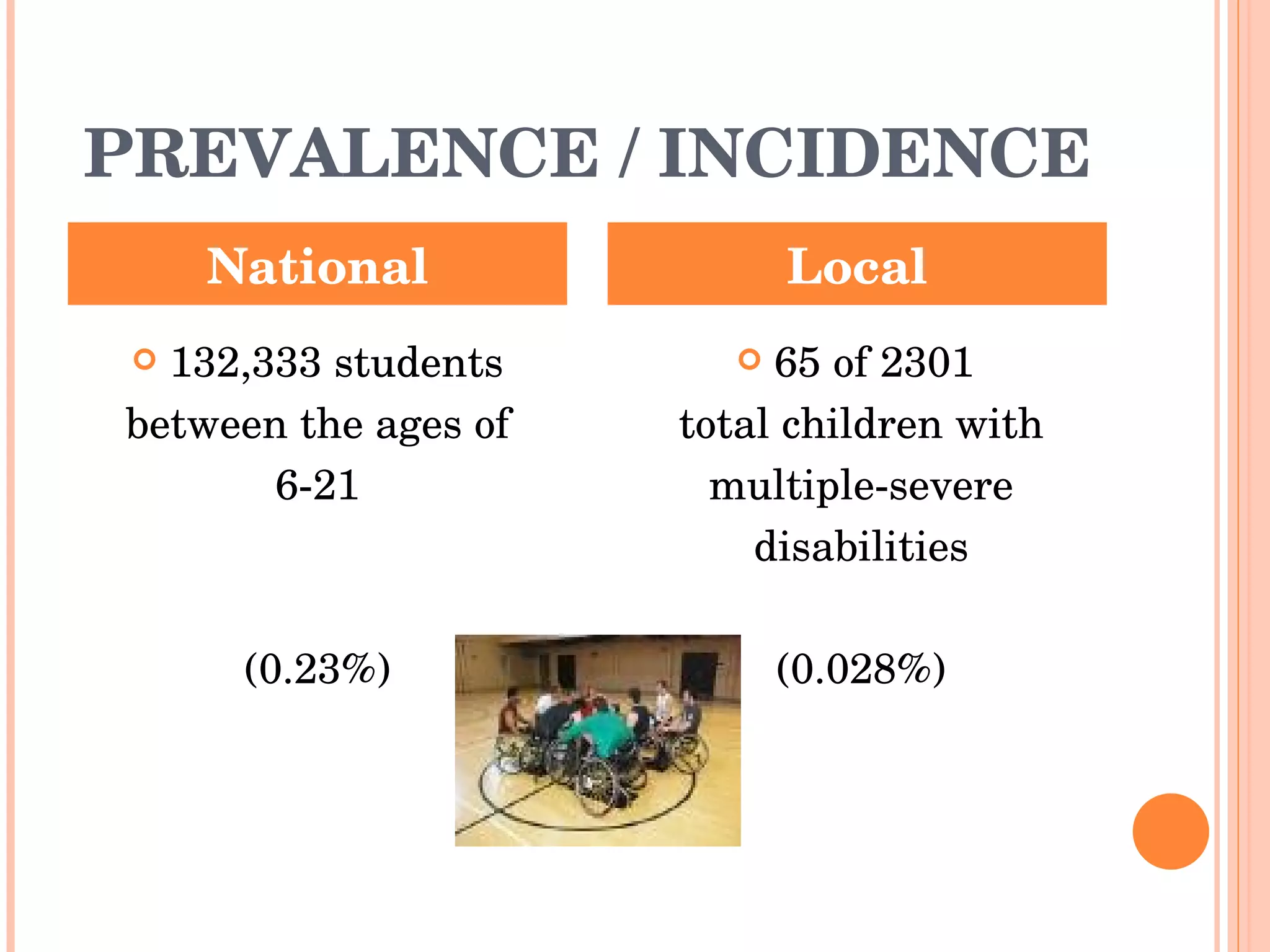
PREVALENCE / INCIDENCE 132,333 students between the ages of 6-21 (0.23%) 65 of 2301  total children with multiple-severe disabilities (0.028%) National Local
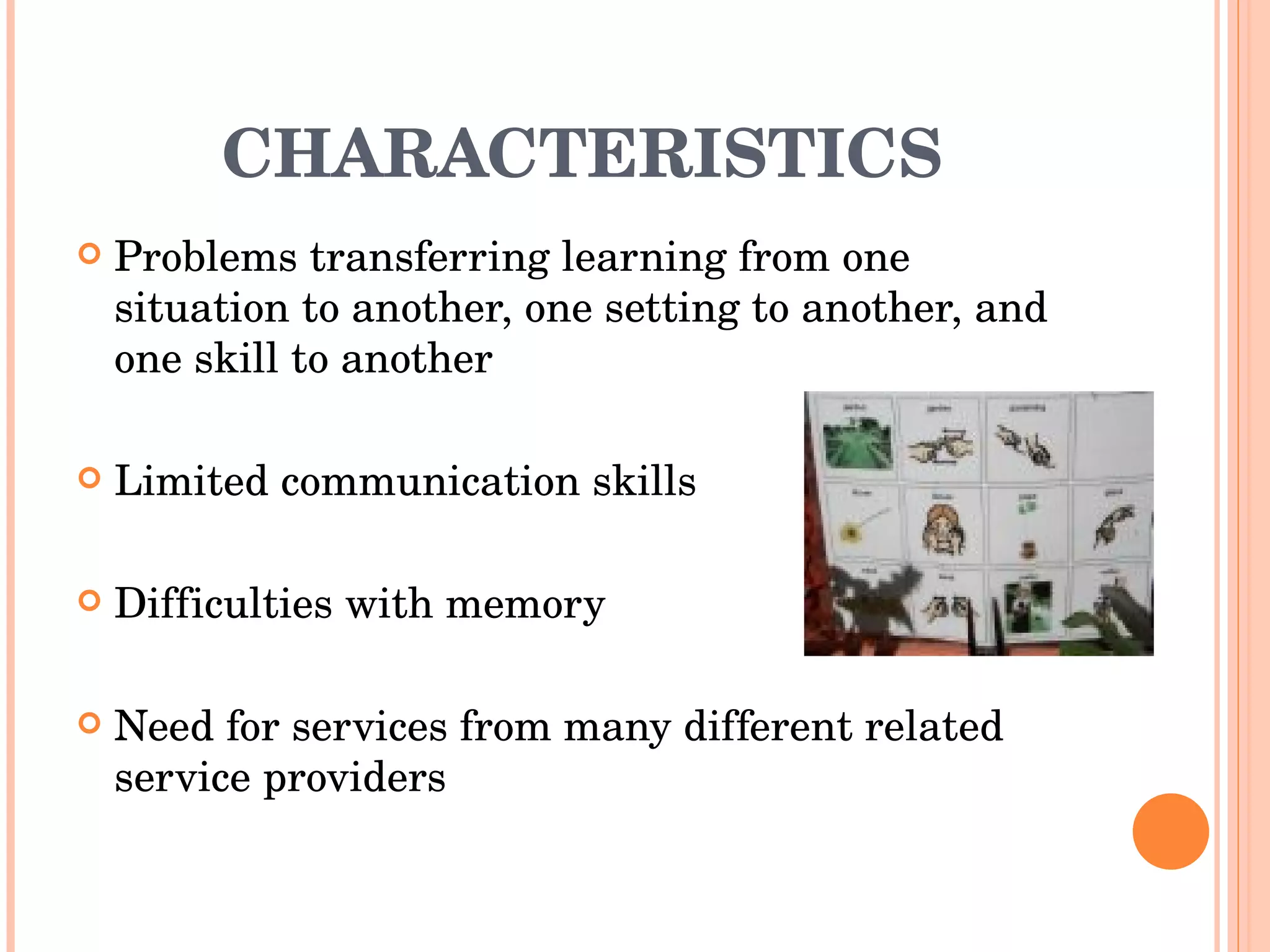
CHARACTERISTICS Problems transferring learning from one situation to another, one setting to another, and one skill to another Limited communication skills Difficulties with memory Need for services from many different related service providers
CAUSES AND PREVENTIONS Heredity Problems during pregnancy Problems at birth Incidents  after birth Pregnancy visits to the doctor Prenatal health care during pregnancy Causes Preventions
ASSESSMENT Early Identification Pre-Referral Identification Evaluation
EARLY INTERVENTION Early intervention programs Preschool Programs Parents/Extended Family Organized Preschool Programs
CHALLENGES Family and Social Life Communication Learning Independent Living Future
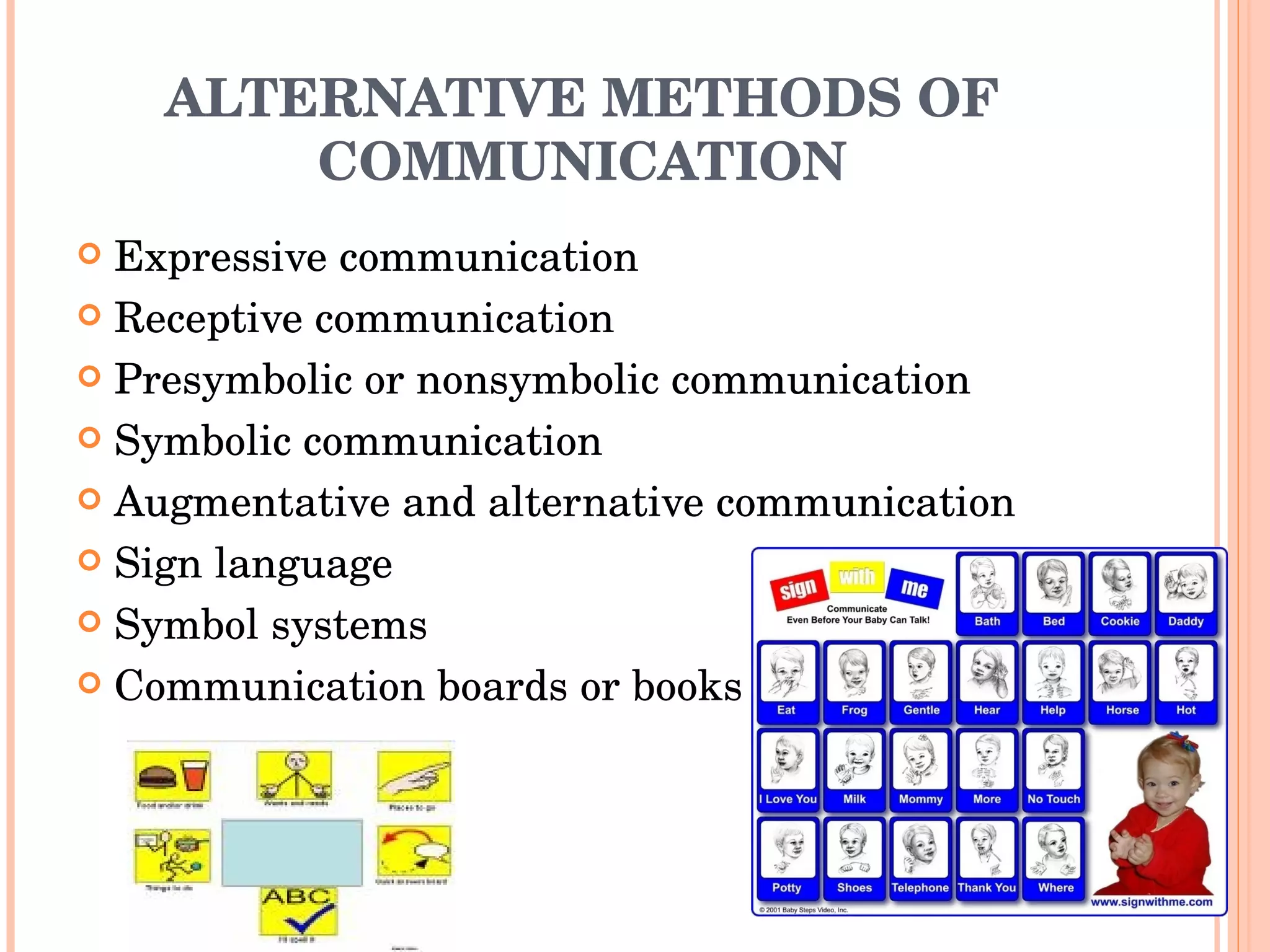
ALTERNATIVE METHODS OF COMMUNICATION Expressive communication Receptive communication Presymbolic or nonsymbolic communication Symbolic communication Augmentative and alternative communication Sign language Symbol systems Communication boards or books
TEACHING TIPS Clearly specify and consistently apply classroom rules and expectations. Build skills in functional living Use instructional tactics  Assistance from paraprofessionals Multi-Sensory Strategies Apply Technology Apply Modifications to Lesson Resources
TIPS FOR PARENTS Patience Understanding Educate Connect Be open Communication Resources Supportive Optimistic Keep things in perspective Support Groups Knowledgeable Actively participate Advocacy
BE AN ANGEL Nonprofit organization founded in 1986 Mission: To improve the quality of life for children with multiple disabilities or profound deafness. Vision: To use all available means to help create a world where every child that is multiple handicapped or profoundly deaf has the opportunity to experience improvements in the quality of life, in order to facilitate that child’s ability to grow physically and emotionally  to the full extent of their individual capacity. Nonprofit organization founded in 1986 Mission: To improve the quality of life for children with multiple disabilities or profound deafness. Vision: To use all available means to help create a world where every child that is multiple handicapped or profoundly deaf has the opportunity to experience improvements in the quality of life, in order to facilitate that child’s ability to grow physically and emotionally  to the full extent of their individual capacity. http://www.beanangel.org/index.html
TRANSITION Community Presence College Participation
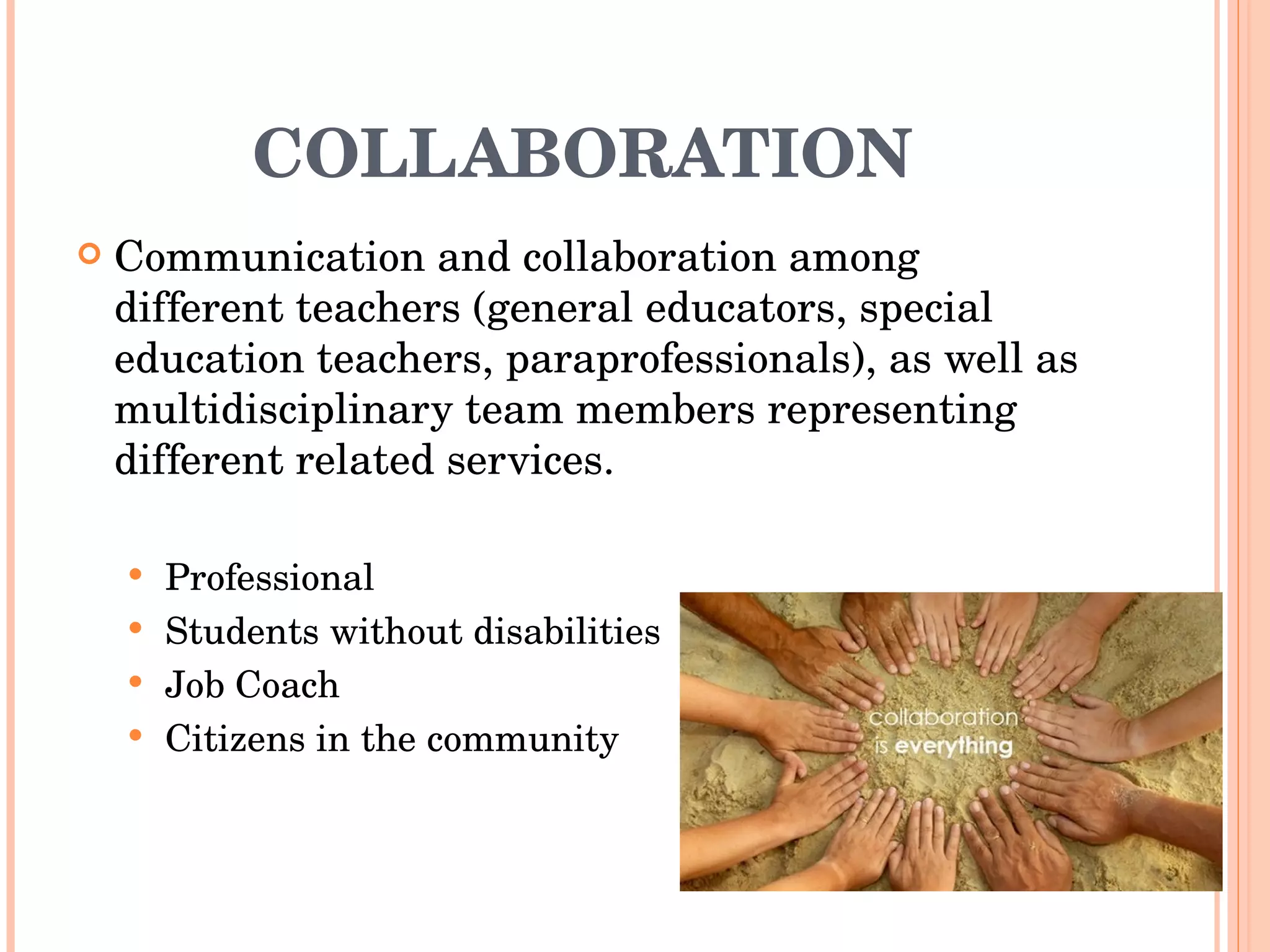
COLLABORATION Communication and collaboration among different teachers (general educators, special education teachers, paraprofessionals), as well as multidisciplinary team members representing different related services. Professional Students without disabilities Job Coach Citizens in the community
PARTNERSHIPS WITH FAMILIES & COMMUNITIES Community Services and programs
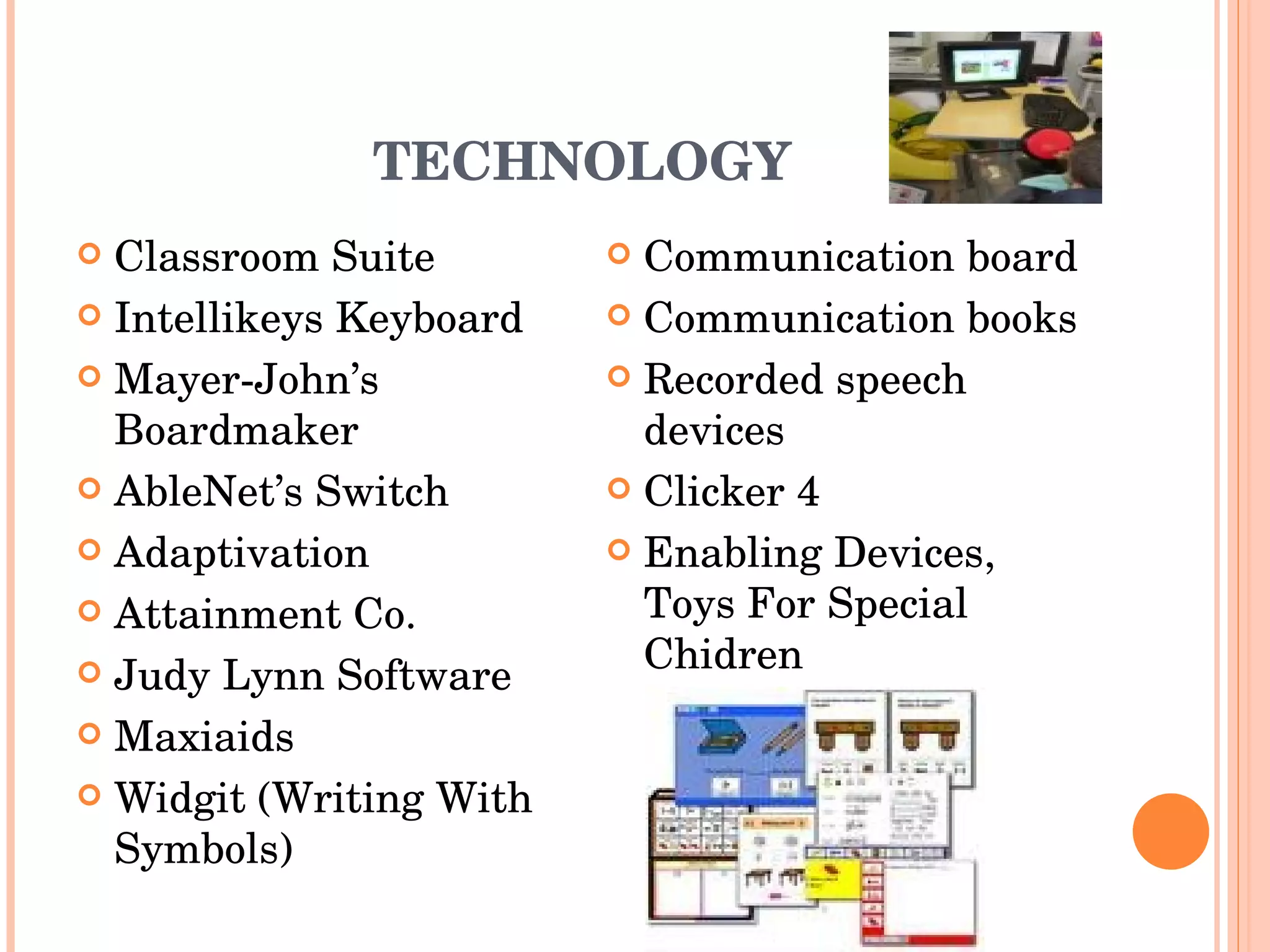
TECHNOLOGY Classroom Suite Intellikeys Keyboard Mayer-John’s Boardmaker AbleNet’s Switch Adaptivation Attainment Co. Judy Lynn Software Maxiaids Widgit (Writing With Symbols) Communication board Communication books Recorded speech devices Clicker 4 Enabling Devices, Toys For Special Chidren
VIDEO CLIPS TEAMability Commercial http://www.youtube.com/watch?v=GwNkyBMrXmo A Multiple-Disabled Child http://www.youtube.com/watch?v=NL3C4D4yK3w
REFERENCES Introduction to Special Education:  Making A Difference.   Deborah Deutsch Smith; 6 th  Edition, 2007. YouTube.com Agape-Biblia. (No date).  Multiple Disabilities retrieved October 3, 2008.  http://www.agape-biblia.org/plugins/pract-ministries/Lect106.htm NICHY. (No date). Multiple Disabilities retrieved October 1, 2008 from  http://www.nichcy.org/Disabilities/Specific/Pages /SevereandorMultipleDisabilities.aspx Alternative Methods of Communication http://www.familyconnect.org/parentsite.asp?SectionID=79&TopicID=368&DocumentID=4056
THOUGHT PROVOKING QUESTIONS Are there any available programs for students with multiple disabilities on Guam? How effective is GPSS in addressing transitions of students with multiple disabilities into the community after high school? How effective is GPSS curriculum for students with multiple disabilities being used in the classroom?

Multiple Disabilities[1] Copy

  • 1.
    MULTIPLE-SEVERE DISABILITIES By:Rowena P. Mendiola David T. Gofigan ED446 Dr. J. Cyrus December 4, 2008
  • 2.
    OBJECTIVES Understand thedefinition of multiple-severe disabilities Understand the characteristics of students with multiple-severe disabilities Learn different teaching methods
  • 3.
    DEFINITION Concomitant impairments(such as mental retardation-blindness, mental retardation-orthopedic impairment, etc), the combination of which causes such severe educational needs, that they cannot be accommodated in special education programs solely for one of the impairments. The term does not include deaf-blindness.
  • 4.
    PREVALENCE / INCIDENCE132,333 students between the ages of 6-21 (0.23%) 65 of 2301 total children with multiple-severe disabilities (0.028%) National Local
  • 5.
    CHARACTERISTICS Problems transferringlearning from one situation to another, one setting to another, and one skill to another Limited communication skills Difficulties with memory Need for services from many different related service providers
  • 6.
    CAUSES AND PREVENTIONSHeredity Problems during pregnancy Problems at birth Incidents after birth Pregnancy visits to the doctor Prenatal health care during pregnancy Causes Preventions
  • 7.
    ASSESSMENT Early IdentificationPre-Referral Identification Evaluation
  • 8.
    EARLY INTERVENTION Earlyintervention programs Preschool Programs Parents/Extended Family Organized Preschool Programs
  • 9.
    CHALLENGES Family andSocial Life Communication Learning Independent Living Future
  • 10.
    ALTERNATIVE METHODS OFCOMMUNICATION Expressive communication Receptive communication Presymbolic or nonsymbolic communication Symbolic communication Augmentative and alternative communication Sign language Symbol systems Communication boards or books
  • 11.
    TEACHING TIPS Clearlyspecify and consistently apply classroom rules and expectations. Build skills in functional living Use instructional tactics Assistance from paraprofessionals Multi-Sensory Strategies Apply Technology Apply Modifications to Lesson Resources
  • 12.
    TIPS FOR PARENTSPatience Understanding Educate Connect Be open Communication Resources Supportive Optimistic Keep things in perspective Support Groups Knowledgeable Actively participate Advocacy
  • 13.
    BE AN ANGELNonprofit organization founded in 1986 Mission: To improve the quality of life for children with multiple disabilities or profound deafness. Vision: To use all available means to help create a world where every child that is multiple handicapped or profoundly deaf has the opportunity to experience improvements in the quality of life, in order to facilitate that child’s ability to grow physically and emotionally to the full extent of their individual capacity. Nonprofit organization founded in 1986 Mission: To improve the quality of life for children with multiple disabilities or profound deafness. Vision: To use all available means to help create a world where every child that is multiple handicapped or profoundly deaf has the opportunity to experience improvements in the quality of life, in order to facilitate that child’s ability to grow physically and emotionally to the full extent of their individual capacity. http://www.beanangel.org/index.html
  • 14.
    TRANSITION Community PresenceCollege Participation
  • 15.
    COLLABORATION Communication andcollaboration among different teachers (general educators, special education teachers, paraprofessionals), as well as multidisciplinary team members representing different related services. Professional Students without disabilities Job Coach Citizens in the community
  • 16.
    PARTNERSHIPS WITH FAMILIES& COMMUNITIES Community Services and programs
  • 17.
    TECHNOLOGY Classroom SuiteIntellikeys Keyboard Mayer-John’s Boardmaker AbleNet’s Switch Adaptivation Attainment Co. Judy Lynn Software Maxiaids Widgit (Writing With Symbols) Communication board Communication books Recorded speech devices Clicker 4 Enabling Devices, Toys For Special Chidren
  • 18.
    VIDEO CLIPS TEAMabilityCommercial http://www.youtube.com/watch?v=GwNkyBMrXmo A Multiple-Disabled Child http://www.youtube.com/watch?v=NL3C4D4yK3w
  • 19.
    REFERENCES Introduction toSpecial Education: Making A Difference. Deborah Deutsch Smith; 6 th Edition, 2007. YouTube.com Agape-Biblia. (No date). Multiple Disabilities retrieved October 3, 2008. http://www.agape-biblia.org/plugins/pract-ministries/Lect106.htm NICHY. (No date). Multiple Disabilities retrieved October 1, 2008 from http://www.nichcy.org/Disabilities/Specific/Pages /SevereandorMultipleDisabilities.aspx Alternative Methods of Communication http://www.familyconnect.org/parentsite.asp?SectionID=79&TopicID=368&DocumentID=4056
  • 20.
    THOUGHT PROVOKING QUESTIONSAre there any available programs for students with multiple disabilities on Guam? How effective is GPSS in addressing transitions of students with multiple disabilities into the community after high school? How effective is GPSS curriculum for students with multiple disabilities being used in the classroom?