TECHNICAL FEASIBILITY
PRESENTED BY
CHANDAN SINGH
CONTENT
• INTRODUCTION
• BENEFITS OF FEASIBILITY STUDY FOR ANY COMPANY
• TYPES OF PROJECT FEASIBILITY
• TECHNICAL FEASIBILITY
• PRIMARY TASK OF TECHNICAL FEASIBILITY
• MAIN COMPONENT OF TECHNICAL FEASIBILITY
 Manufacturing process/technology
 Latest development
 Location and Site
 Machineries and Equipments
 Project chart and layout
INTRODUCTION
FEASIBILITY
• Feasibility is the first stage in the process
of project development.
• A feasibility study is an analysis of the
viability of an idea through a disciplined and
documented process of thinking through the
idea from its logical beginning to its logical
beginning to its logical end.
FEASIBILITY
• A feasibility study evaluates the project's
potential for success.
• feasibility study is an analysis of the viability of
an idea. It ensures that a project is legally and
technically feasible and economically
justifiable.
• A feasibility study always focus on the
practically of an idea according to identifying
possible problems.
BENEFITS OF FEASIBILITY STUDY FOR
ANY COMPANY
 Conducting a feasibility study is always
beneficial to the project and it gives a clear
picture of your idea:
• Its gives focus to the project and alternative
outline.
• Identifies the reason to do the project.
• Helps in decision making of project.
• Provides a detailed documented status to the
business.
OVERVIEW OF PROJECT FEASIBILITY STUDY
There are different areas of project feasibility:
• Technical feasibility
• Operational feasibility
• Economic and commercial feasibility
• Managerial feasibility
• Schedule feasibility
• Social feasibility
TECHNICAL FEASIBILITY
• Technical Feasibility assessment is focused on
the present technical resource available in the
organization.
• It studies if the technical resources including
the technical team are capable of converting
the ideas into working system.
• It also evaluates the hardware and the
software requirement of the proposed system.
TECHNICAL FEASIBILITY
 Technical feasibility analysis is an attempt to study
the project basically from a technician’s angle. The
main aspect to be considered under this study are
technology of the project :
• Size of the plant
• Location of the project
• Pollution caused by the project
• Production capacity of the project
• Strength of the project
• Emergency or stand by facilities required by
the project sophistication such as automation
• Mechanical handling
• Required collaboration agreements
• Production inputs and implementation of the
project
Primary task of Technical Feasibility
Primary task of TF is Blueprinting:
a) Manpower Needs
b) Resources, and Design
c) Provide Design Alternatives
d) A Choice of Available Technologies, & Cost
estimates for each alternative.
MAIN COMPONENT OF TECHNICAL ANALYSIS
There are following main component or section of
technical analysis:
Manufacturing process/technology:- For
manufacturing a product often two or more
alternative technologies are available. For
example,
 Soap can be made by the semi-boiled process or
the fully boiled process.
 Soda can be made by the electrolysis method or
the chemical method.
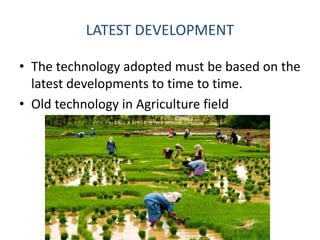
LATEST DEVELOPMENT
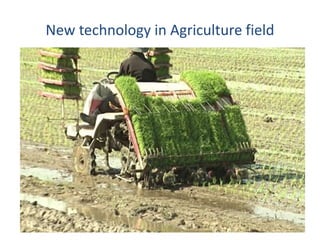
• The technology adopted must be based on the
latest developments to time to time.
• Old technology in Agriculture field
New technology in Agriculture field
Location and Site
• Location and site of any company or project is
very essential part of technical feasibility.
• The choice of location and site follows an
assessment of demand, size, and input
requirement of any project or company.
• Location and sizes are closely inter-related
Machineries and Equipments
• The requirement of Machineries and equipments
is dependent on production technology and plant
capacity. It is also influenced by the which type
of project.
• The equipment required for the project may be
classified into the following types:
 Plant process equipment
 Mechanical equipment
 Electrical equipment
 Internal transportation system
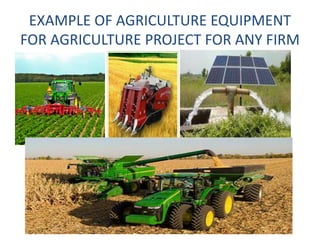
EXAMPLE OF AGRICULTURE EQUIPMENT
FOR AGRICULTURE PROJECT FOR ANY FIRM
PROJECT CHART AND LAYOUT
 Once data is available on the principle dimensions of the
project. They are
• Market size
• Plant capacity
• Production technology
• Machineries and equipments
• Building and civil work
• Supply of inputs to the project
• Transport layout- This shows the distances of transport
outside to production line.
• Communication layout- This shows the various parts of the
project will be connected with telephones, internet etc.
Technical feasibility ppt

Technical feasibility ppt

  • 1.
  • 2.
    CONTENT • INTRODUCTION • BENEFITSOF FEASIBILITY STUDY FOR ANY COMPANY • TYPES OF PROJECT FEASIBILITY • TECHNICAL FEASIBILITY • PRIMARY TASK OF TECHNICAL FEASIBILITY • MAIN COMPONENT OF TECHNICAL FEASIBILITY  Manufacturing process/technology  Latest development  Location and Site  Machineries and Equipments  Project chart and layout
  • 3.
    INTRODUCTION FEASIBILITY • Feasibility isthe first stage in the process of project development. • A feasibility study is an analysis of the viability of an idea through a disciplined and documented process of thinking through the idea from its logical beginning to its logical beginning to its logical end.
  • 4.
    FEASIBILITY • A feasibilitystudy evaluates the project's potential for success. • feasibility study is an analysis of the viability of an idea. It ensures that a project is legally and technically feasible and economically justifiable. • A feasibility study always focus on the practically of an idea according to identifying possible problems.
  • 5.
    BENEFITS OF FEASIBILITYSTUDY FOR ANY COMPANY  Conducting a feasibility study is always beneficial to the project and it gives a clear picture of your idea: • Its gives focus to the project and alternative outline. • Identifies the reason to do the project. • Helps in decision making of project. • Provides a detailed documented status to the business.
  • 6.
    OVERVIEW OF PROJECTFEASIBILITY STUDY There are different areas of project feasibility: • Technical feasibility • Operational feasibility • Economic and commercial feasibility • Managerial feasibility • Schedule feasibility • Social feasibility
  • 7.
    TECHNICAL FEASIBILITY • TechnicalFeasibility assessment is focused on the present technical resource available in the organization. • It studies if the technical resources including the technical team are capable of converting the ideas into working system. • It also evaluates the hardware and the software requirement of the proposed system.
  • 8.
    TECHNICAL FEASIBILITY  Technicalfeasibility analysis is an attempt to study the project basically from a technician’s angle. The main aspect to be considered under this study are technology of the project : • Size of the plant • Location of the project • Pollution caused by the project • Production capacity of the project • Strength of the project
  • 9.
    • Emergency orstand by facilities required by the project sophistication such as automation • Mechanical handling • Required collaboration agreements • Production inputs and implementation of the project
  • 10.
    Primary task ofTechnical Feasibility Primary task of TF is Blueprinting: a) Manpower Needs b) Resources, and Design c) Provide Design Alternatives d) A Choice of Available Technologies, & Cost estimates for each alternative.
  • 11.
    MAIN COMPONENT OFTECHNICAL ANALYSIS There are following main component or section of technical analysis: Manufacturing process/technology:- For manufacturing a product often two or more alternative technologies are available. For example,  Soap can be made by the semi-boiled process or the fully boiled process.  Soda can be made by the electrolysis method or the chemical method.
  • 12.
    LATEST DEVELOPMENT • Thetechnology adopted must be based on the latest developments to time to time. • Old technology in Agriculture field
  • 13.
    New technology inAgriculture field
  • 14.
    Location and Site •Location and site of any company or project is very essential part of technical feasibility. • The choice of location and site follows an assessment of demand, size, and input requirement of any project or company. • Location and sizes are closely inter-related
  • 15.
    Machineries and Equipments •The requirement of Machineries and equipments is dependent on production technology and plant capacity. It is also influenced by the which type of project. • The equipment required for the project may be classified into the following types:  Plant process equipment  Mechanical equipment  Electrical equipment  Internal transportation system
  • 16.
    EXAMPLE OF AGRICULTUREEQUIPMENT FOR AGRICULTURE PROJECT FOR ANY FIRM
  • 17.
    PROJECT CHART ANDLAYOUT  Once data is available on the principle dimensions of the project. They are • Market size • Plant capacity • Production technology • Machineries and equipments • Building and civil work • Supply of inputs to the project • Transport layout- This shows the distances of transport outside to production line. • Communication layout- This shows the various parts of the project will be connected with telephones, internet etc.