Presented By: Dr. Richard Oliver F. Cortez, DBA, FRIBA, AFBE
VMC Department of Business Administration
FEASIBILITY STUDIES
COURSE DESCRIPTION:
The course deals with the need for a feasibility study before
starting a new project, developing a new product or service,
establishing a new business, or upgrading and modifying
existing businesses. The feasibility study is needed to analyze
and evaluate a proposed project to determine if it is technically
feasible, if it is feasible within the estimated cost, and if it will
be profitable. This training course will take you through the
journey of developing a feasibility study which is sometimes
handled as a project in itself.
Learning Outcomes:
Upon successful completion of the course, the student will be
able to:
• Prepare and analyze feasibility studies.
• Identify crucial arguments and effectively explore the various
assumptions.
• Present ideas in a simple, effective, convincing and objective
manner.
• Build the feasibility study financial model using Microsoft Excel.
• Perform scenario and sensitivity analysis to improve plans and
projections.
• Analyze someone else’s feasibility study and find its merits and
shortcomings.
Topics to be Covered:
1. Definition of Feasibility Study
2. Uses of Feasibility
3. Methods of S
4. Challenges of FS
5. Steps in developing your FS
6. Qualities of FS
What Is a Feasibility Study?
A feasibility study is an analysis that takes all of a
project's relevant factors into account—including
economic, technical, legal, and scheduling
considerations—to ascertain the likelihood of
completing the project successfully. Project managers
use feasibility studies to discern the pros and cons of
undertaking a project before they invest a lot of time
and money into it.
WHEN AND WHERE
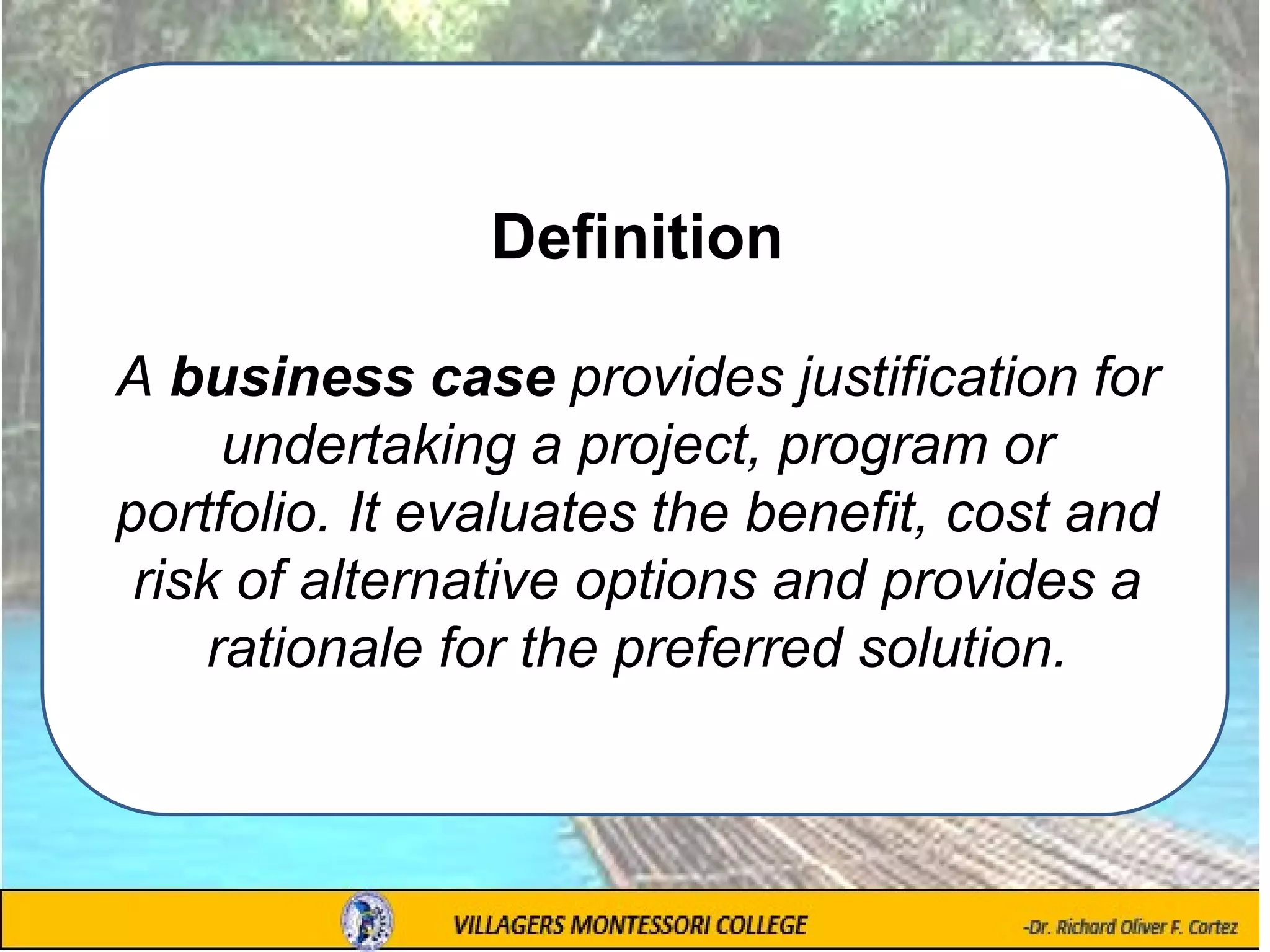
Definition
A business case provides justification for
undertaking a project, program or
portfolio. It evaluates the benefit, cost and
risk of alternative options and provides a
rationale for the preferred solution.
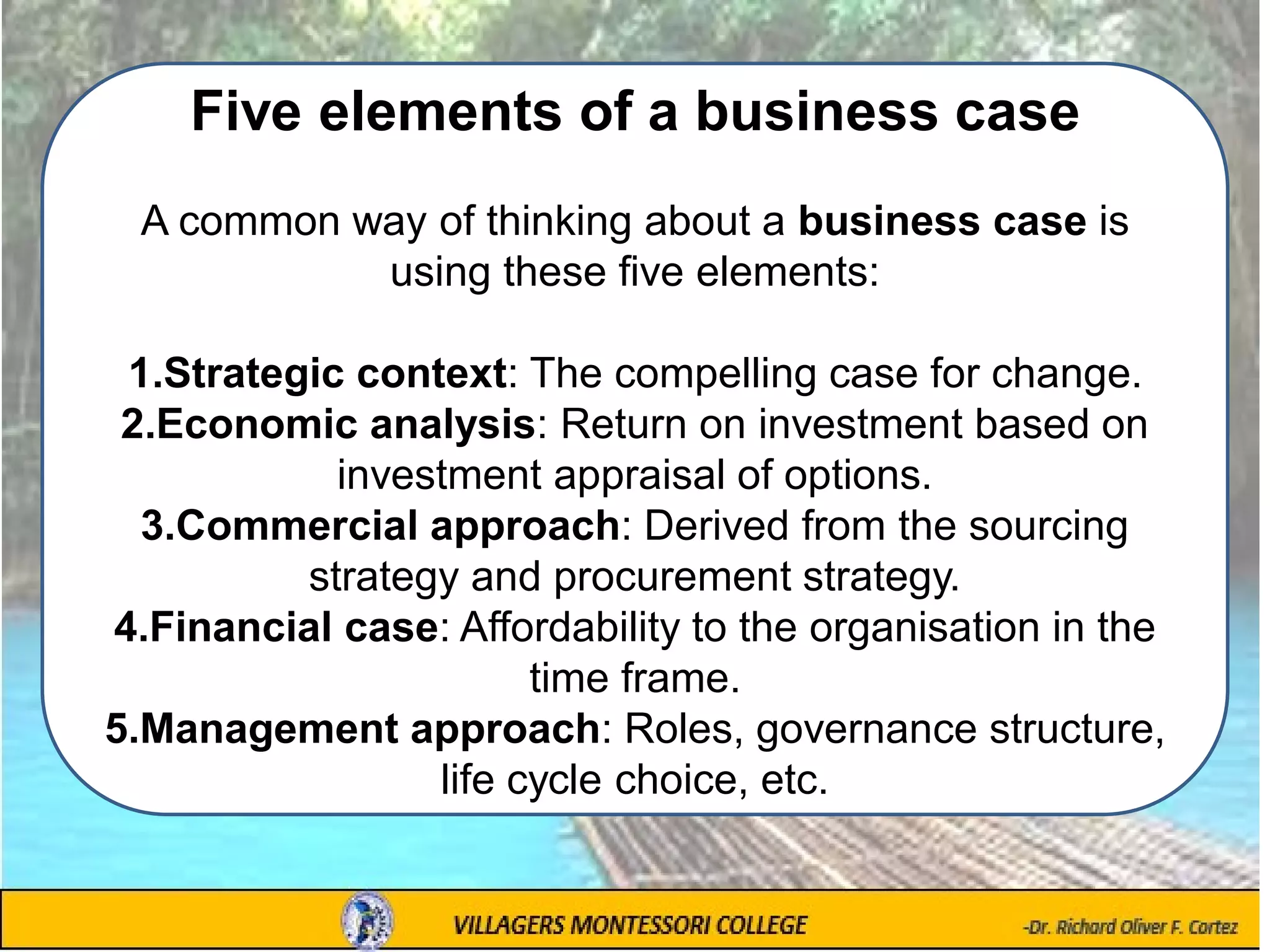
Five elements of a business case
A common way of thinking about a business case is
using these five elements:
1.Strategic context: The compelling case for change.
2.Economic analysis: Return on investment based on
investment appraisal of options.
3.Commercial approach: Derived from the sourcing
strategy and procurement strategy.
4.Financial case: Affordability to the organisation in the
time frame.
5.Management approach: Roles, governance structure,
life cycle choice, etc.
FEASIBILITY STUDY STEPS
CREDIT
1. https://www.investopedia.com/terms/f/feasibility-study.asp
2. www.google.com
3. 3. https://www.apm.org.uk/resources
4. https://www.apm.org.uk/resources/what-is-project-
management/what-is-a-business-c
Thank you very
much for
listening!

FEASIBILITY STUDIES-Lesson 1.pdf

  • 1.
    Presented By: Dr.Richard Oliver F. Cortez, DBA, FRIBA, AFBE VMC Department of Business Administration FEASIBILITY STUDIES
  • 2.
    COURSE DESCRIPTION: The coursedeals with the need for a feasibility study before starting a new project, developing a new product or service, establishing a new business, or upgrading and modifying existing businesses. The feasibility study is needed to analyze and evaluate a proposed project to determine if it is technically feasible, if it is feasible within the estimated cost, and if it will be profitable. This training course will take you through the journey of developing a feasibility study which is sometimes handled as a project in itself.
  • 3.
    Learning Outcomes: Upon successfulcompletion of the course, the student will be able to: • Prepare and analyze feasibility studies. • Identify crucial arguments and effectively explore the various assumptions. • Present ideas in a simple, effective, convincing and objective manner. • Build the feasibility study financial model using Microsoft Excel. • Perform scenario and sensitivity analysis to improve plans and projections. • Analyze someone else’s feasibility study and find its merits and shortcomings.
  • 4.
    Topics to beCovered: 1. Definition of Feasibility Study 2. Uses of Feasibility 3. Methods of S 4. Challenges of FS 5. Steps in developing your FS 6. Qualities of FS
  • 5.
    What Is aFeasibility Study? A feasibility study is an analysis that takes all of a project's relevant factors into account—including economic, technical, legal, and scheduling considerations—to ascertain the likelihood of completing the project successfully. Project managers use feasibility studies to discern the pros and cons of undertaking a project before they invest a lot of time and money into it.
  • 8.
  • 11.
    Definition A business caseprovides justification for undertaking a project, program or portfolio. It evaluates the benefit, cost and risk of alternative options and provides a rationale for the preferred solution.
  • 12.
    Five elements ofa business case A common way of thinking about a business case is using these five elements: 1.Strategic context: The compelling case for change. 2.Economic analysis: Return on investment based on investment appraisal of options. 3.Commercial approach: Derived from the sourcing strategy and procurement strategy. 4.Financial case: Affordability to the organisation in the time frame. 5.Management approach: Roles, governance structure, life cycle choice, etc.
  • 17.
  • 24.
    CREDIT 1. https://www.investopedia.com/terms/f/feasibility-study.asp 2. www.google.com 3.3. https://www.apm.org.uk/resources 4. https://www.apm.org.uk/resources/what-is-project- management/what-is-a-business-c
  • 25.
    Thank you very muchfor listening!