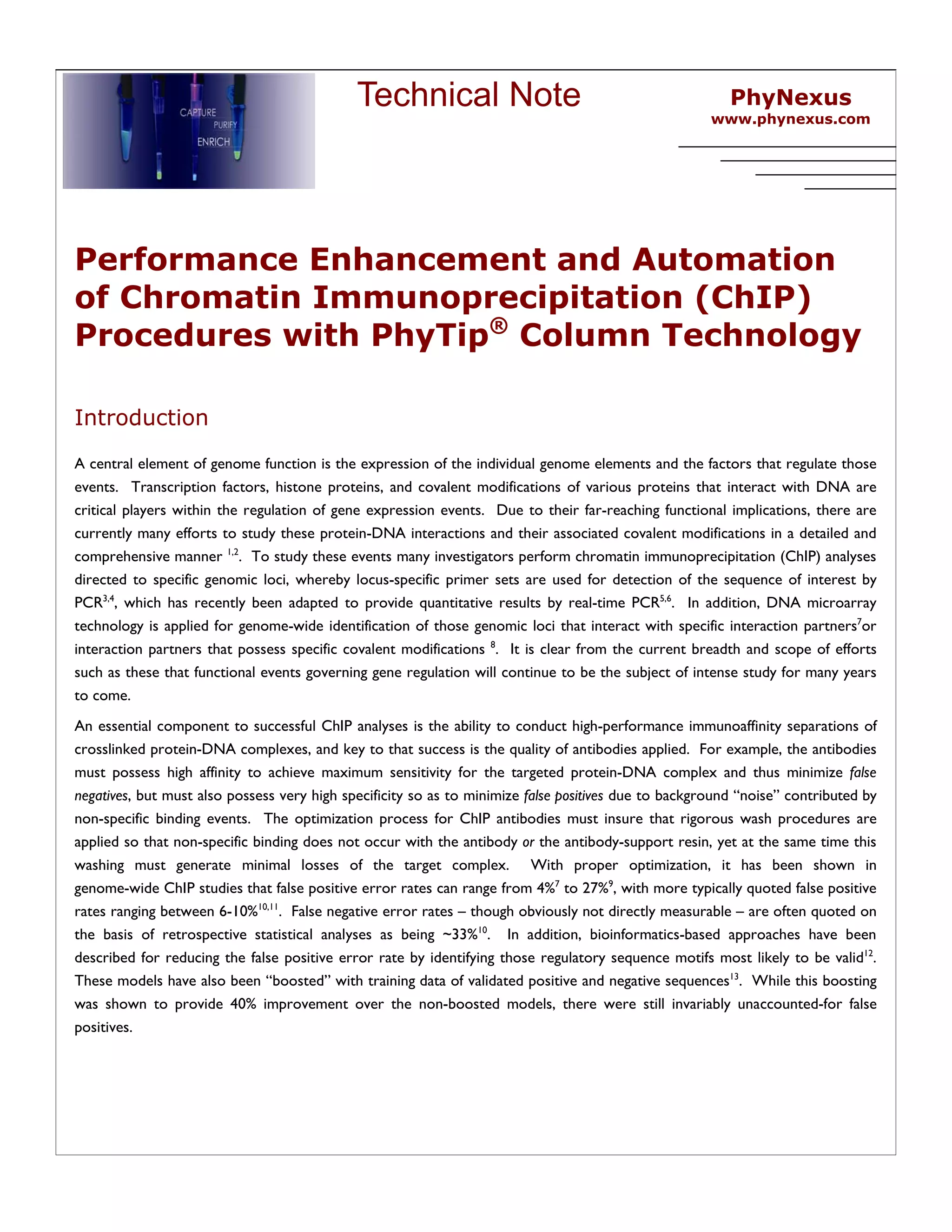
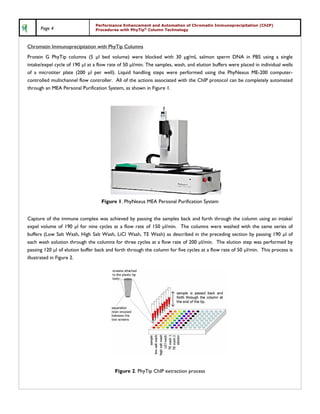
This document discusses chromatin immunoprecipitation (ChIP) procedures and how PhyTip column technology can enhance and automate the ChIP process. Key points:
1) ChIP is used to study protein-DNA interactions but has challenges with false positives and negatives.
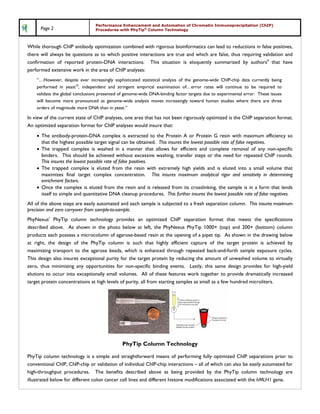
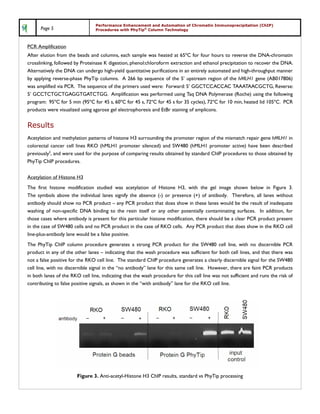
2) PhyTip columns optimize the ChIP separation process to maximize target capture and purity while minimizing sample volume.
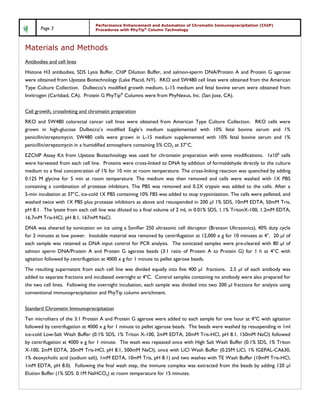
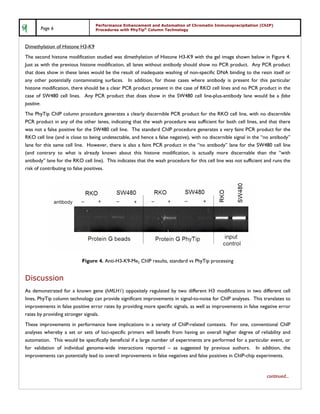
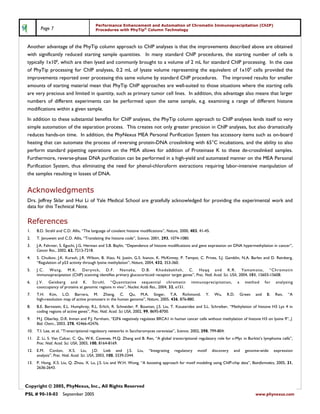
3) Data is presented showing PhyTip columns increase histone modification detection at the hMLH1 gene in colon cancer cells.