Functions
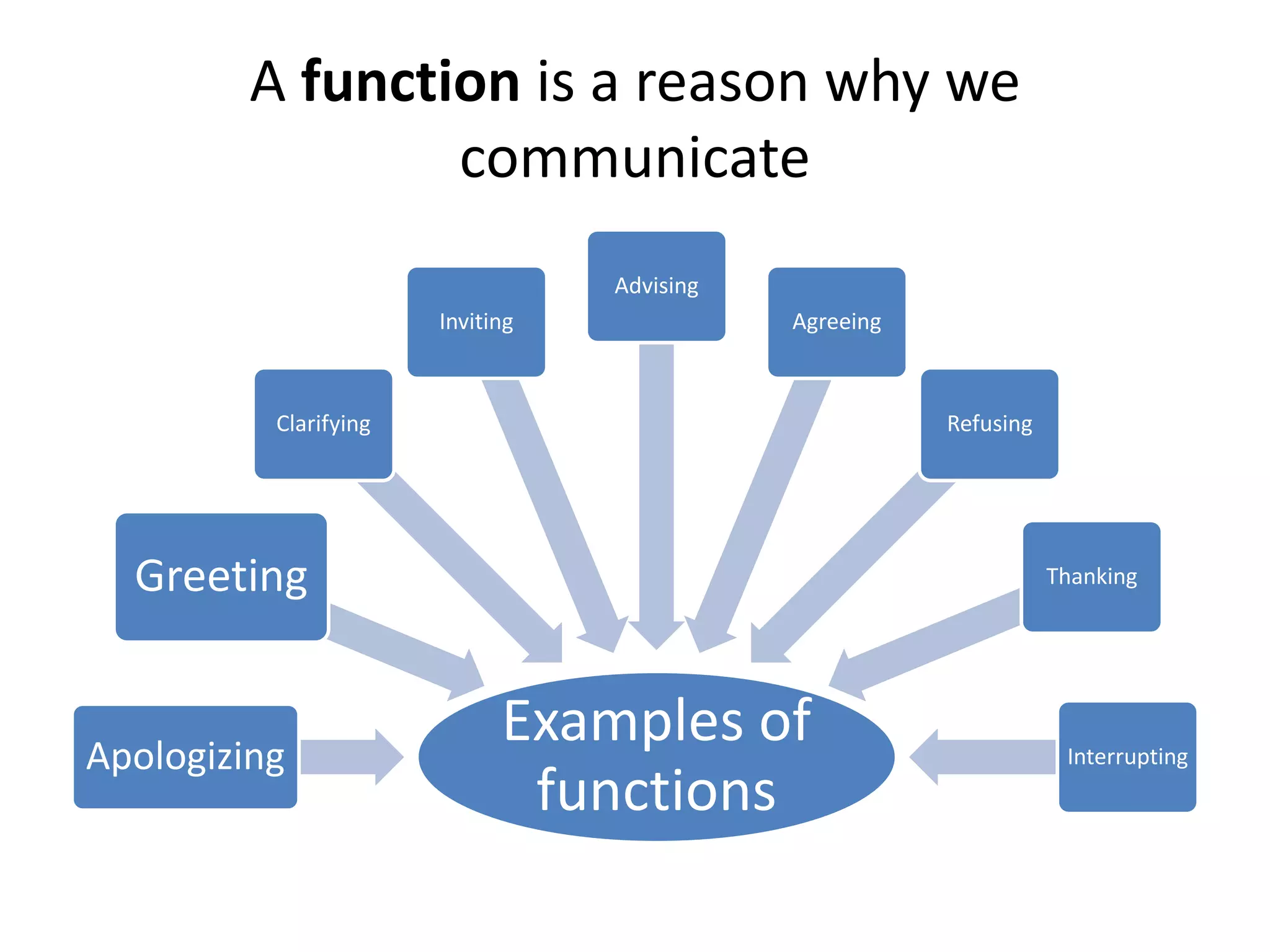
A function is a reason why we
communicate
Examples of
functions
Apologizing
Greeting
Clarifying
Inviting
Advising
Agreeing
Refusing
Thanking
Interrupting
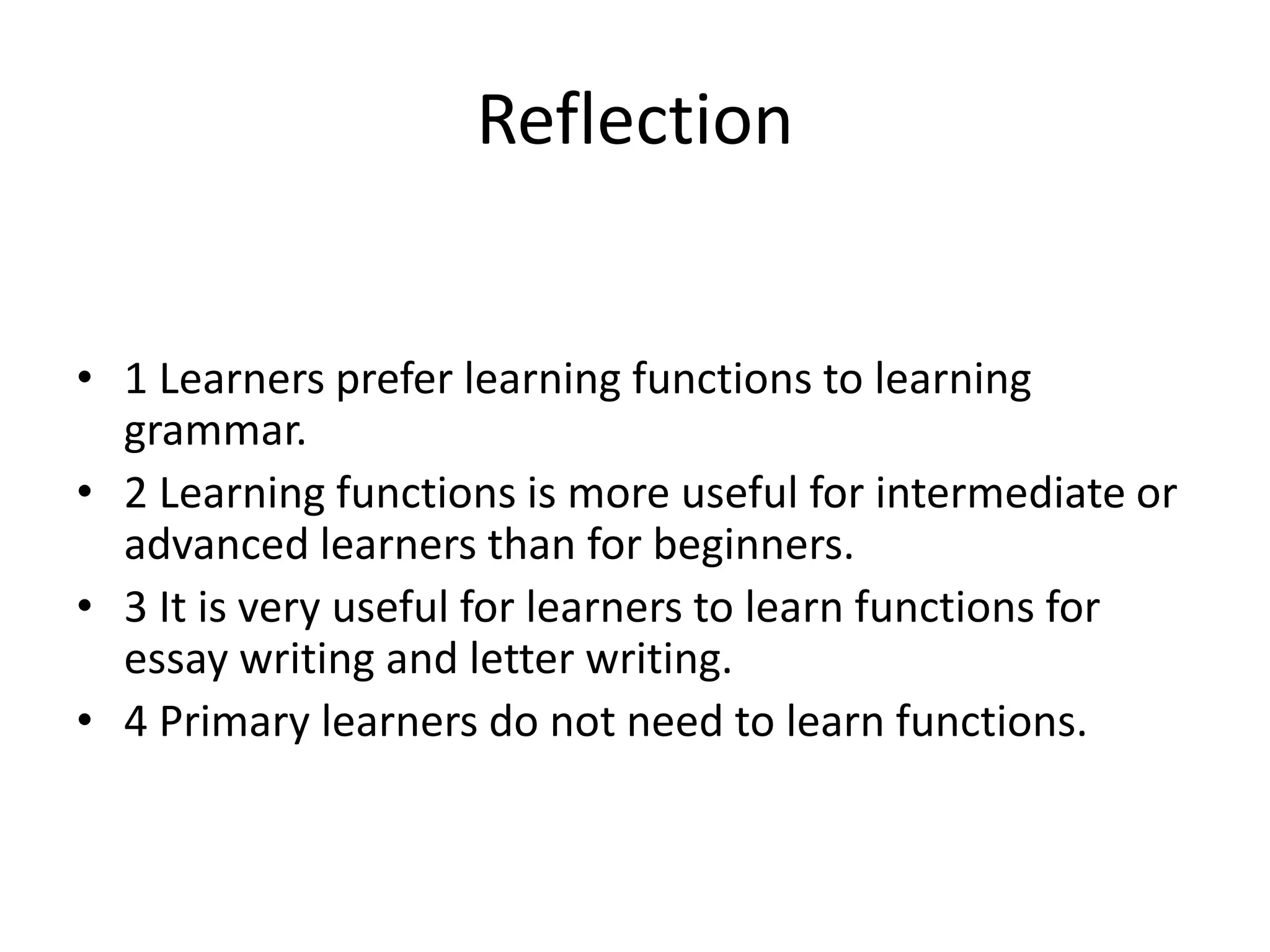
Reflection
• 1 Learners prefer learning functions to learning
grammar.
• 2 Learning functions is more useful for intermediate or
advanced learners than for beginners.
• 3 It is very useful for learners to learn functions for
essay writing and letter writing.
• 4 Primary learners do not need to learn functions.
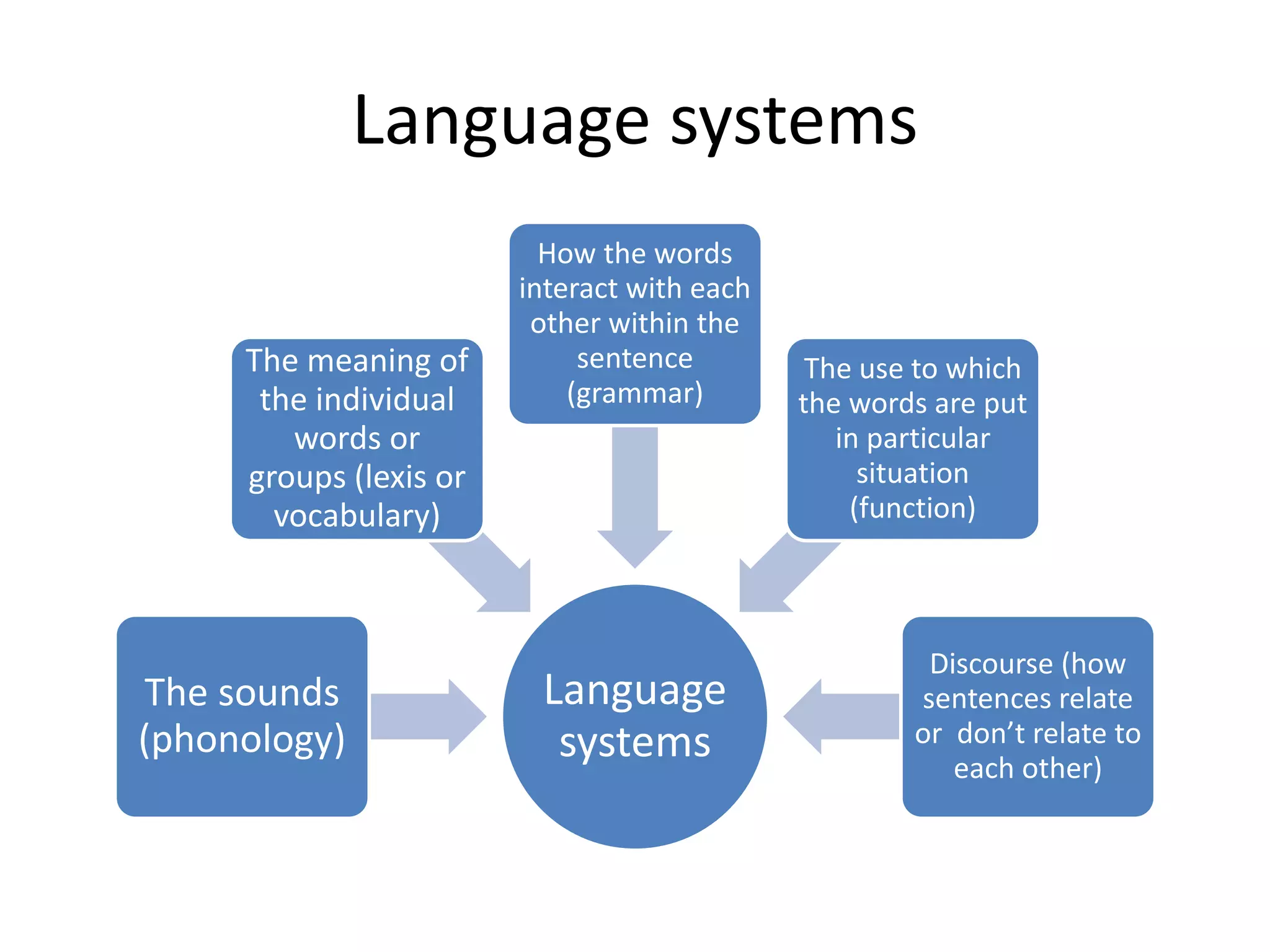
Language systems
Language
systems
The sounds
(phonology)
The meaning of
the individual
words or
groups (lexis or
vocabulary)
How the words
interact with each
other within the
sentence
(grammar)
The use to which
the words are put
in particular
situation
(function)
Discourse (how
sentences relate
or don’t relate to
each other)
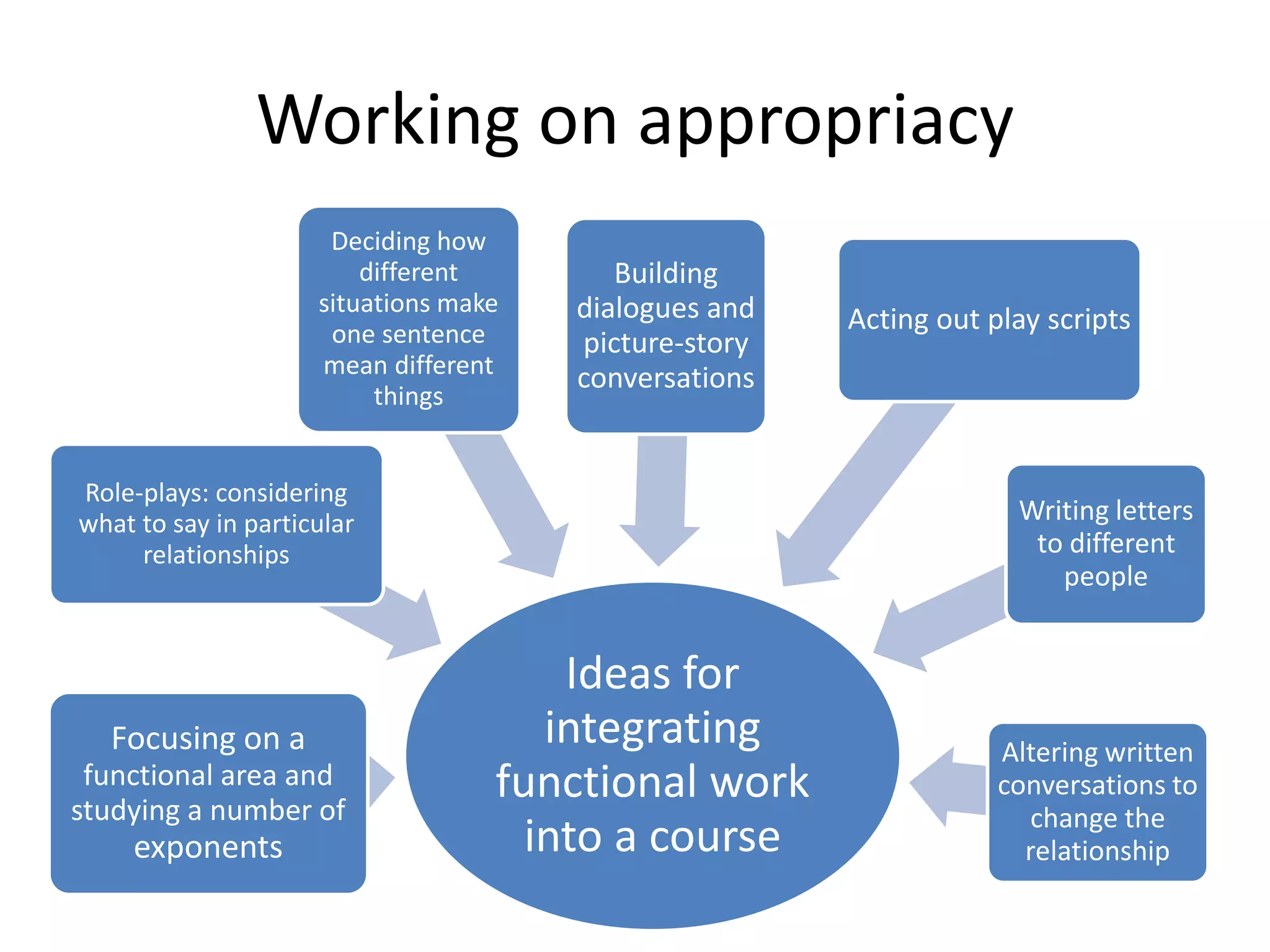
Working on appropriacy
Ideas for
integrating
functional work
into a course
Focusing on a
functional area and
studying a number of
exponents
Role-plays: considering
what to say in particular
relationships
Deciding how
different
situations make
one sentence
mean different
things
Building
dialogues and
picture-story
conversations
Acting out play scripts
Writing letters
to different
people
Altering written
conversations to
change the
relationship

Teaching functions

  • 1.
  • 2.
    A function isa reason why we communicate Examples of functions Apologizing Greeting Clarifying Inviting Advising Agreeing Refusing Thanking Interrupting
  • 3.
    Reflection • 1 Learnersprefer learning functions to learning grammar. • 2 Learning functions is more useful for intermediate or advanced learners than for beginners. • 3 It is very useful for learners to learn functions for essay writing and letter writing. • 4 Primary learners do not need to learn functions.
  • 4.
    Language systems Language systems The sounds (phonology) Themeaning of the individual words or groups (lexis or vocabulary) How the words interact with each other within the sentence (grammar) The use to which the words are put in particular situation (function) Discourse (how sentences relate or don’t relate to each other)
  • 5.
    Working on appropriacy Ideasfor integrating functional work into a course Focusing on a functional area and studying a number of exponents Role-plays: considering what to say in particular relationships Deciding how different situations make one sentence mean different things Building dialogues and picture-story conversations Acting out play scripts Writing letters to different people Altering written conversations to change the relationship